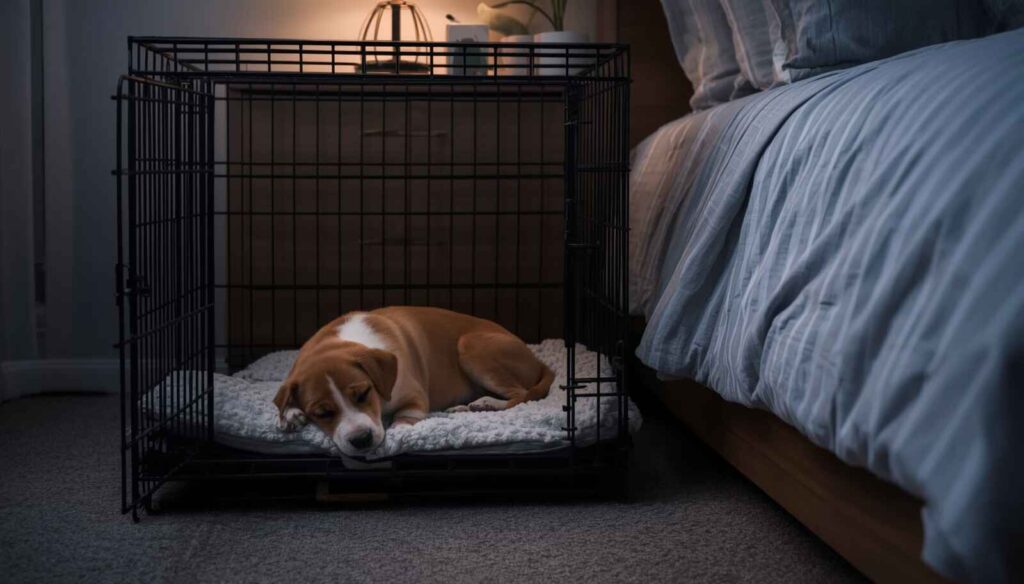
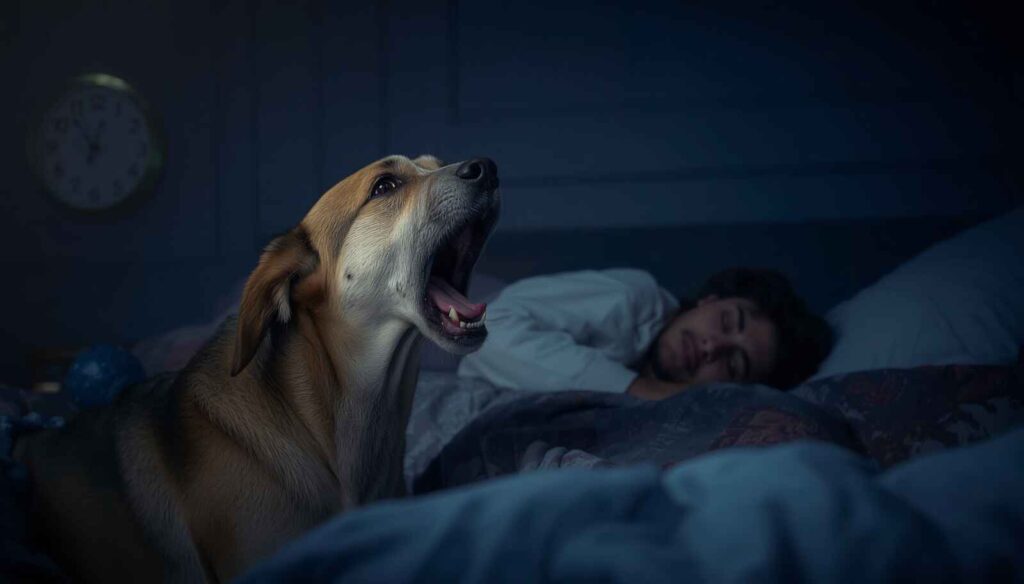
You’ve been lying awake. Again. Your dog is going off at 2am, and you have no idea why — or how to make it stop without feeling like a terrible pet parent.
You’re not alone. Nighttime barking is one of the most common complaints from dog owners across the UK, Canada, and Australia. And the good news? It’s almost always fixable — once you understand why it’s happening.
This guide walks you through everything: the real causes, the practical fixes, what to avoid, and how to build a long-term plan that gives both you and your dog a proper night’s sleep.
Why Dogs Bark at Night: It’s Never “Just Because”
Dogs don’t bark to annoy you. Every bark has a reason — and at night, those reasons tend to fall into a handful of clear categories.
They Hear or Smell Something You Don’t
Dogs have hearing that’s four times sharper than ours. That fox rustling through your garden at midnight? Your dog noticed. The neighbour’s cat on the fence? Absolutely noticed.
These environmental triggers are the most common cause of nighttime barking, especially in suburban and semi-rural areas. Your dog isn’t being dramatic — they’re doing exactly what their instincts tell them to do: alert the pack (that’s you) to something outside.
Separation Anxiety or Loneliness
If your dog sleeps in a different room and starts barking within 20–30 minutes of you going to bed, loneliness or mild anxiety may be the culprit.
This is especially common in dogs who’ve been rehomed, dogs with a strong bond to one person, or dogs who haven’t been gradually taught that being alone at night is okay.
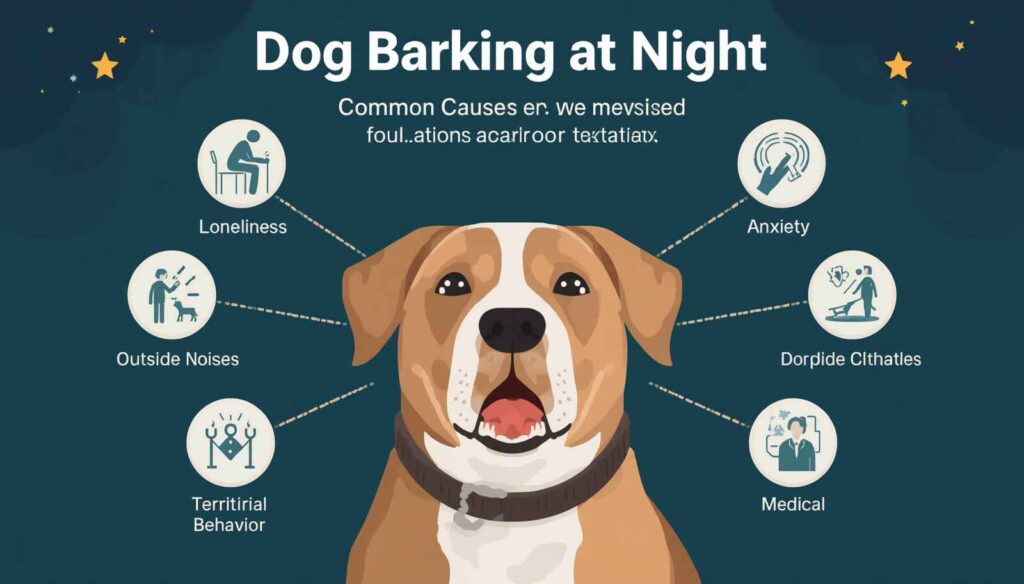
They Need the Toilet
A dog with a full bladder will bark at night. This is particularly true for puppies (who can’t hold it more than a few hours), senior dogs with weaker bladder control, or adult dogs who’ve had a large meal or lots of water close to bedtime.
Pain, Discomfort, or Illness
This one’s easy to miss. A dog who suddenly starts barking at night — especially an older dog who was previously quiet — may be in pain or dealing with a health issue.
Cognitive Dysfunction Syndrome (CDS), which is similar to dementia in humans, is common in dogs over 10 and often causes nighttime restlessness and barking. Arthritis, digestive discomfort, or even vision loss can also trigger it.
If the barking started suddenly with no environmental change, get your vet involved. Don’t skip this step.
Boredom or Under-Stimulation
A dog who hasn’t had enough physical or mental exercise during the day will find ways to entertain themselves at night. Barking is one of them.
This is extremely common in working breeds — Border Collies, Huskies, German Shepherds — who need significantly more activity than the average walk around the block provides.
How to Stop a Dog from Barking at Night: Step-by-Step Solutions

Now that you know why it happens, here’s how to actually fix it.
Step 1: Rule Out Health Issues First
Before you try any training method, make sure your dog isn’t barking because they’re in pain or unwell. Book a vet check if:
- The barking started suddenly without explanation
- Your dog is over 8 years old
- They seem confused, disoriented, or restless alongside the barking
- You notice changes in appetite, toileting habits, or movement
Health issues won’t be fixed by training. Address the physical cause first.
Step 2: Tire Them Out (Properly) Before Bed
A well-exercised dog sleeps better. It sounds simple, but a lot of owners underestimate how much exercise their dog actually needs.
Aim for a proper walk or active play session 1–2 hours before bed — not right before, as this can overstimulate some dogs. For high-energy breeds, this might mean 60–90 minutes of activity, not just a short toilet trip around the block.
Mental stimulation counts too. Sniff walks (where you let them lead and sniff freely), puzzle feeders, or a training session in the evening can genuinely help reduce nighttime restlessness.
Step 3: Set a Consistent Bedtime Routine
Dogs are creatures of habit. A predictable evening routine signals to their nervous system that it’s time to wind down.
Try something like:
- 7pm: Evening walk
- 8pm: Last meal (keep it at least 3 hours before bed)
- 9pm: Calm, quiet time — no rough play or loud TV
- 10pm: Final toilet trip outside
- 10:15pm: Settle into their sleeping spot
Stick to this for 2–3 weeks and most dogs will naturally start relaxing as the routine kicks in.
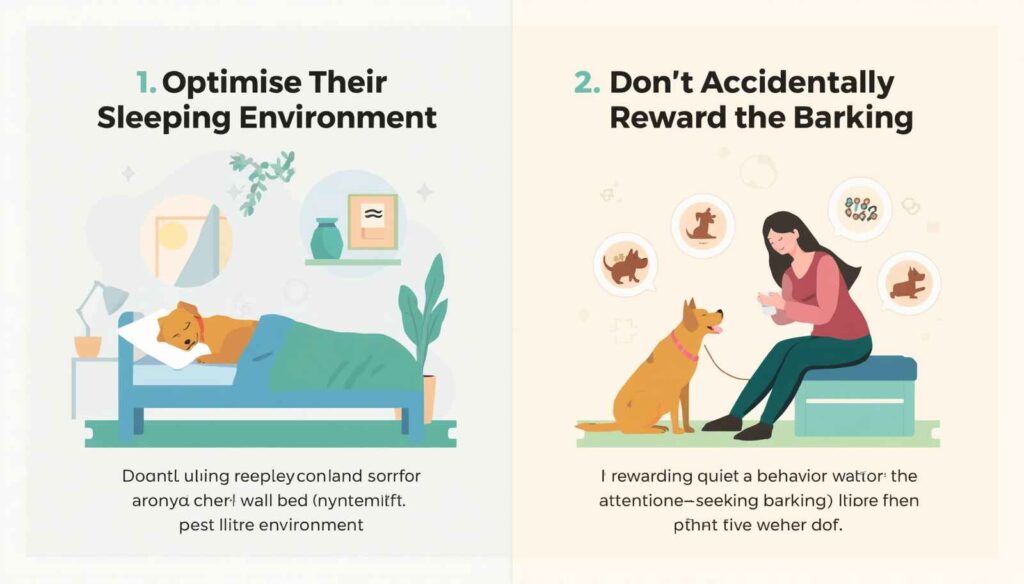
Step 4: Optimise Their Sleeping Environment
Where and how your dog sleeps matters more than most people realise.
Block out visual triggers. If your dog sleeps near a window and barks at movement outside, try moving their bed, using frosted window film on the lower panes, or using a room-darkening curtain.
Reduce noise triggers. A white noise machine or a low-volume radio can mask outside sounds enough to prevent barking. This is especially helpful in areas with foxes, urban noise, or early-morning traffic.
Make their space genuinely comfortable. An orthopaedic bed for older dogs, a covered crate for dogs who prefer an enclosed den — getting the sleeping setup right can make a real difference.
Step 5: Teach the “Quiet” Cue (Before You Need It)
Most owners try to stop barking while it’s happening, which rarely works. Teaching “quiet” as a cue works much better when practised during calm moments in the day.
Here’s how:
- Trigger a bark (knock on a surface or ring the doorbell)
- Let your dog bark 2–3 times
- Calmly say “quiet” and hold a treat near their nose
- The moment they stop to sniff the treat, mark it with “yes!” and reward
- Repeat daily, gradually increasing the silence before the treat
Once this is solid during the day, you can use the cue at night — quietly, calmly, without frustration.
Step 6: Don’t Accidentally Reward the Barking
This is where many well-meaning owners make things worse.
If you go to your dog every time they bark — even to shush them, stroke them, or tell them off — you’re teaching them that barking = you appearing. That’s a powerful reward, even if it doesn’t feel like one.
The rule: only go to your dog when they’re quiet. If they bark, wait for a pause (even a brief one), then calmly go in and reward the quiet. It takes patience, but it works.
Step 7: Address Separation Anxiety Separately
If your dog is barking out of anxiety rather than alerting or boredom, the approach is different.
Start by making their sleeping area feel safer — a worn t-shirt with your scent, a specific calming phrase at bedtime, a puzzle toy to settle them. For dogs with significant anxiety, a gradual desensitisation programme works best, and in some cases, a vet referral to a clinical behaviourist may be the most effective route.
Don’t punish anxious barking. It increases anxiety and makes everything harder.
Puppies and Night Barking: What’s Normal, What’s Not

Puppies crying and barking at night is completely normal for the first few weeks in a new home. They’ve just left their mother and littermates — it’s a stressful transition.
For the first 1–2 weeks, keeping your puppy’s crate in your bedroom can help bridge this gap. Once they’re settled, you can gradually move them to their permanent sleeping spot.
Puppies under 16 weeks genuinely can’t hold their bladder all night. Set an alarm for a middle-of-the-night toilet trip rather than waiting for the barking — this prevents the barking from becoming a habit in the first place.
When to Get Professional Help
Most nighttime barking resolves with consistent effort over 2–4 weeks. But there are times when professional input is the smartest move:
- Barking has persisted for more than a month despite consistent training
- Your dog shows signs of significant anxiety (destructive behaviour, self-harm, toileting inside)
- You’ve ruled out health issues but can’t identify a cause
- The situation is affecting your sleep, work, or relationships seriously
A certified clinical animal behaviourist (look for CCAB or CAAB credentials in the UK, Australia, or Canada) can assess your specific dog and give you a tailored plan. Many now offer online consultations.
What About the Neighbours?
If your dog barks at night while you’re at work or asleep and neighbours have complained, act promptly.
- Let your neighbours know you’re actively working on it — goodwill goes a long way
- Consider a dog camera with two-way audio so you can speak to your dog remotely
- A dog sitter, dog walker for an evening session, or doggy daycare can help on particularly difficult days
- Some councils in the UK and Australia have noise complaint processes — getting ahead of this is better than reacting to it

Calming Tools: What’s Worth Trying
These aren’t magic fixes, but they can support your other efforts:
- Adaptil diffusers or collars — synthetic dog-appeasing pheromone, widely used by vets
- Thundershirts — compression wraps that help some anxious dogs feel more secure
- Calming supplements — products with L-theanine, chamomile, or valerian (check with your vet first)
- White noise machines — genuinely effective for masking environmental triggers
Avoid bark collars, especially citronella or shock-based ones. They address the symptom without the cause, often increase anxiety, and are increasingly restricted or discouraged by veterinary bodies in the UK, Australia, and Canada.
Frequently Asked Questions
1.Why has my dog suddenly started barking at night when they never used to?
A sudden change usually points to something new: a health issue, a change in their environment (new neighbours, new smells, new sounds), or a stressful life event. Rule out pain or illness first, then assess what’s changed in their world.
2.Should I just ignore my dog barking at night?
Ignoring works for attention-seeking barking — but only if you’re consistent. The problem is most people give in eventually, which actually makes the barking worse (intermittent reinforcement is very powerful). If you’re going to use an ignore approach, it has to be all-or-nothing. And if your dog is barking out of fear, pain, or a genuine need, ignoring is the wrong strategy.
3.How long does it take to stop a dog from barking at night?
With consistent effort, most dogs show significant improvement within 2–4 weeks. Puppies may take longer as they mature. Rescue dogs or those with anxiety may take longer still, especially if the cause has been reinforced over time.
4.Can I use treats to stop barking?
Yes — but timing is everything. Never give a treat while your dog is barking, as this rewards the bark. Always wait for quiet, then reward. Used correctly, treats are one of the most effective training tools available.
5.My dog barks at night when I’m not home. What can I do?
Start by identifying what’s triggering the barking — a camera can help with this. Look at whether your dog is getting enough exercise before you leave, and consider whether separation anxiety is a factor. A dog walker for an evening visit, a sitter, or doggy daycare are practical short-term solutions while you work on the underlying cause.
6.Are there any breeds that are harder to stop from barking at night?
Some breeds were selectively bred to be alert and vocal — Beagles, Huskies, Terriers, and guarding breeds among them. This doesn’t mean they can’t be trained, but it does mean you may need more consistency, more time, and potentially professional support compared to a naturally quieter breed.
7.When should I take my dog to the vet about nighttime barking?
If the barking started suddenly, if your dog is over 8 years old, if they seem confused or disoriented, or if other symptoms are present (changes in appetite, movement, toileting), book a vet appointment before trying any behavioural approach.
A Final Word
Stopping a dog from barking at night isn’t about punishment or quick fixes — it’s about understanding what your dog is trying to tell you and systematically addressing it.
Start with health. Build a routine. Optimise their environment. Train calmly and consistently. And give it time.
Most dogs — even the persistent barkers — can learn to sleep quietly through the night. And when they do, you’ll sleep better too.
#. Related Articles: