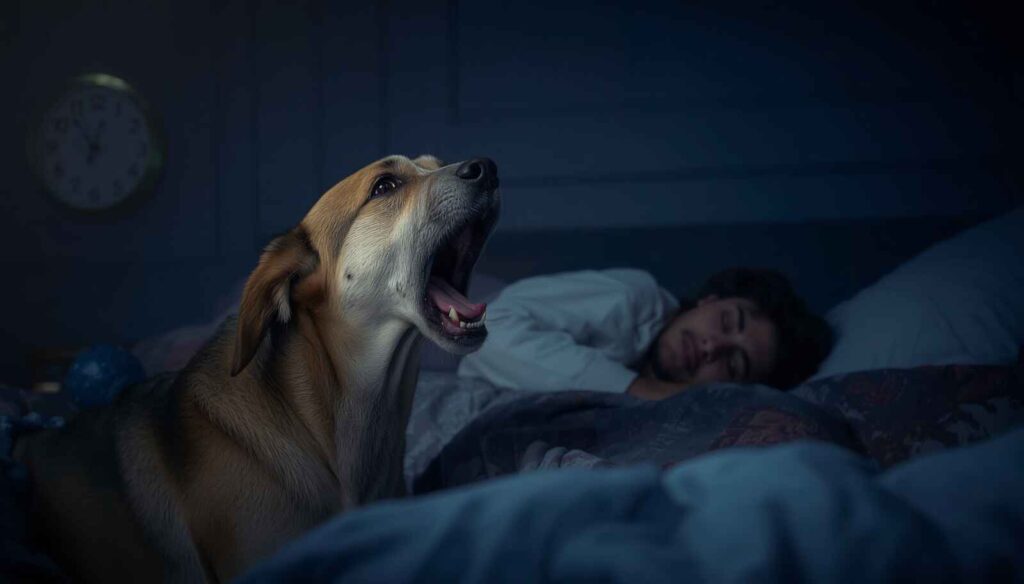
You brought your puppy home. You were so excited. And then 2 AM happened.
The whimpering. The howling. The guilt of not knowing whether to go comfort them or stay firm. If that sounds familiar, you’re not alone — nighttime crate training is one of the most exhausting (and most misunderstood) parts of raising a new puppy.
The good news? It doesn’t have to be this hard. With the right setup, a realistic schedule, and a few tricks most guides skip over, most puppies settle into their crate at night within 1–3 weeks.
This guide walks you through everything — from picking the right crate to handling midnight crying without losing your mind.
Why Crate Training at Night Actually Works (When Done Right)
A lot of new dog owners feel guilty about crating their puppy at night. It can feel like you’re locking them up. But here’s the thing: dogs are den animals by nature. A cosy, secure crate mimics the kind of small, enclosed space their wild ancestors would sleep in.
When introduced properly, a crate becomes their space — not a punishment. It gives puppies a sense of safety, helps them learn bladder control, and protects your home from midnight chewing disasters.
The key phrase there is when introduced properly. Crate training fails when it’s rushed, when the crate is too big, or when it’s used as a way to isolate a puppy rather than comfort them.
Choosing the Right Crate: Size Matters More Than You Think
Before you train anything, you need the right crate. This is where many owners go wrong — they buy a large crate thinking “room to grow,” not realising it’s actually working against them.
The rule of thumb: Your puppy should be able to stand up, turn around, and lie down comfortably. That’s it. No extra space.
Why? Because if there’s too much room, puppies will sleep on one side and use the other as a toilet. A snug crate uses their natural instinct not to soil their sleeping area.
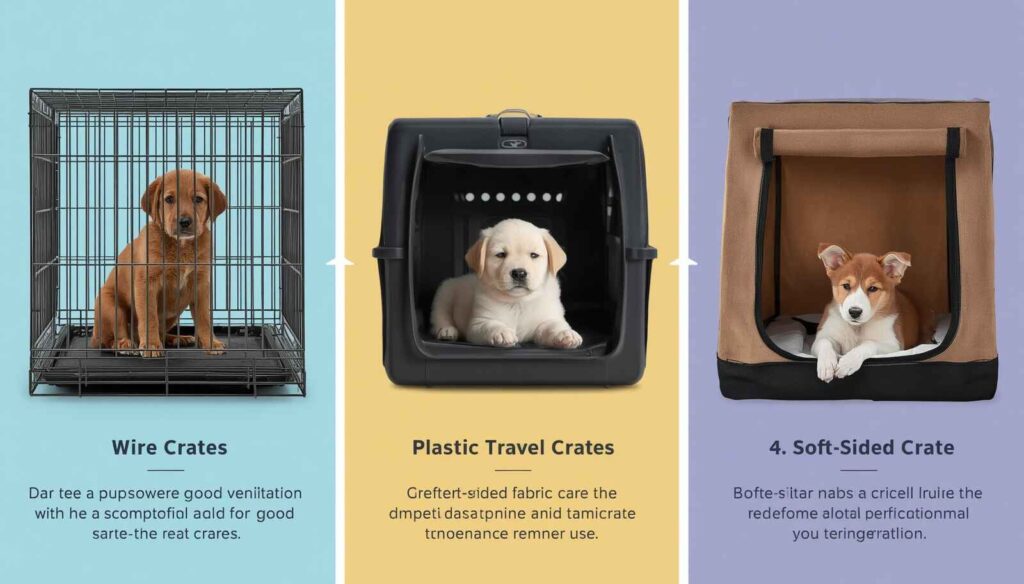
Types of crates to consider:
- Wire crates — Great airflow, easy to clean, adjustable with a divider panel as your pup grows. Best all-rounder for most breeds.
- Plastic travel crates — More enclosed and den-like, which some anxious puppies actually prefer.
- Soft-sided crates — Lightweight and portable, but not suitable for heavy chewers or escape artists.
If you’re buying for a breed that will grow significantly (think Labrador, German Shepherd, Golden Retriever), buy the adult size and use a divider to block off the extra space while they’re young.
Setting Up the Crate for a Good Night’s Sleep
The crate itself is just the start. How you set it up makes a huge difference.
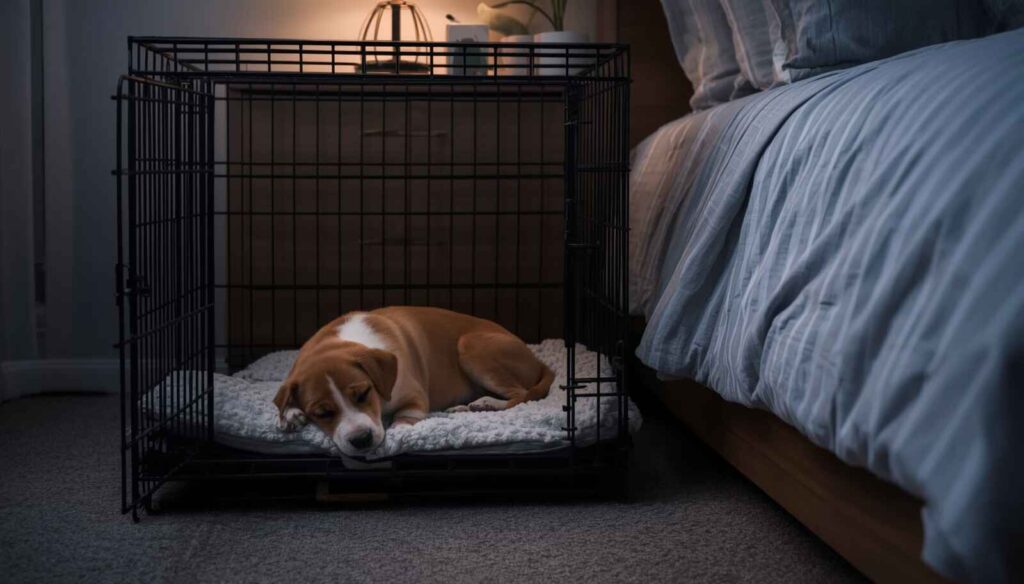
Location: Place the crate in your bedroom, especially in the first few weeks. This isn’t about co-sleeping — it’s about your puppy being able to hear and smell you. It dramatically reduces anxiety-driven whining. You can move it gradually over time if you’d prefer them to sleep elsewhere.
Bedding: Use a soft blanket or a puppy-specific mat. Some owners swear by putting an item of worn clothing (a t-shirt you’ve slept in) inside — the scent is genuinely calming.
Temperature: UK, Australian, and Canadian climates vary a lot. Make sure the crate isn’t near a draught, a heating vent, or in direct sun. Puppies can’t regulate body temperature well in the early weeks.
A ticking clock trick: This one sounds odd, but it works. Wrapping a warm water bottle and a ticking clock in a towel and placing it near the crate can mimic the heartbeat and warmth of their littermates. Especially helpful in the first week.
How to Crate Train a Puppy at Night: Step-by-Step
Don’t rush this. Going too fast is the number one reason crate training fails.
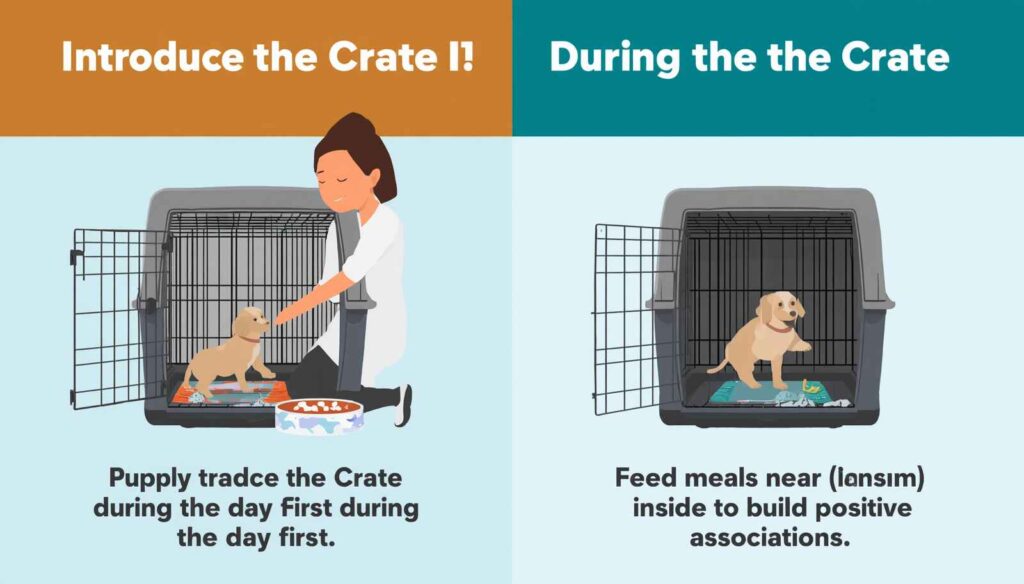
Step 1: Introduce the Crate During the Day First
Never put a puppy in the crate for the first time at bedtime. That’s too much pressure.
Start by leaving the crate door open and letting them sniff around it. Toss in a few treats or a favourite toy. Let them go in and out on their own terms. Do this over a day or two before any overnight attempts.
Step 2: Feed Meals Near (Then Inside) the Crate
Start placing their food bowl near the crate entrance. Gradually move it just inside the door, then further in over a few days. This builds a powerful positive association — crate = good things happen here.
Step 3: Practice Short Daytime Sessions
Once they’re comfortable going in, close the door for just 2–3 minutes while you’re right there. Sit next to the crate. Speak calmly. Let them out before they get distressed. Gradually build up to 20–30 minute sessions.
This teaches them that the closed door isn’t permanent — you always come back.
Step 4: Build Up to Overnight Crating
By the end of the first week, most puppies are ready to try overnight. Here’s how to set it up:
- Take your puppy out for a toilet break right before bed (10–11 PM ideally).
- Put them in the crate with a chew or Kong filled with something tasty.
- Keep the lights low, avoid exciting play — wind-down time is just as important for puppies as it is for toddlers.
- Set an alarm for a middle-of-the-night toilet break (more on that below).
Night time Toilet Breaks: How Often Does Your Puppy Actually Need One?

This is the question every tired dog owner Googles at 3 AM.
A rough guide by age:
| Age | Max time in crate overnight |
|---|---|
| 8–10 weeks | 2–3 hours |
| 10–12 weeks | 3–4 hours |
| 3–4 months | 4–5 hours |
| 5–6 months | 5–6 hours |
| 6+ months | Up to 7–8 hours |
These are maximums, not targets. Some puppies need more breaks; some need fewer. Watch your individual dog.
When you do take them out at night, keep it boring on purpose. No talking, no playing, no lights on if you can help it. Clip on the lead, go outside, wait for them to toilet, say a calm “good dog,” and straight back to the crate. You want them to learn: night-time toilet is functional, not fun.
Handling the Whining: What to Do (and What Not to Do)
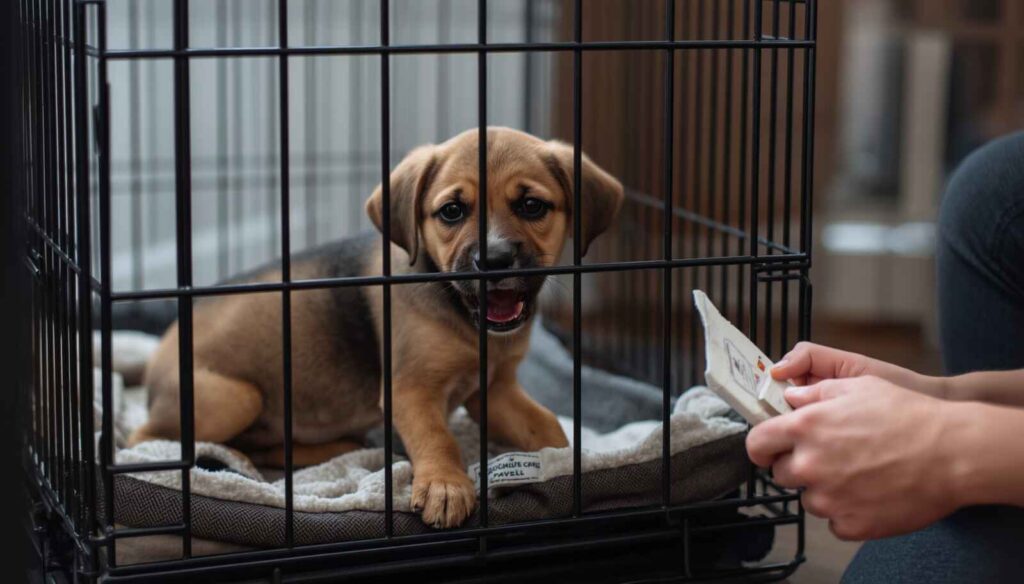
This is the hardest part. And the advice you hear varies wildly.
First, learn to tell the difference between two types of whining:
- “I need the toilet” whining — usually urgent, escalating, and happening after a few hours of sleep.
- “I’m not happy about this” whining — often starts immediately when you put them in, or happens on and off. It’s protest, not emergency.
For the first type: go to them. Quietly. Take them out.
For the second type: wait a few minutes before responding. If you rush in every time they make a sound, you accidentally train them to whine more — because it always works.
What genuinely helps:
- A tired puppy is a quiet puppy. Don’t skip the last play session of the evening.
- Cover the crate with a blanket (leave one side open for air) — the reduced visual stimulation helps many puppies settle.
- A puppy calming spray near the crate (lavender or DAP-based products are widely available in the UK, Australia, and Canada).
- White noise or a low radio in the room.
What makes it worse:
- Giving in immediately every time they cry
- Moving them to the bed “just this once” — it resets everything
- Scolding them for whining (it increases anxiety, not compliance)
Common Mistakes That Set Back Your Progress
Even well-meaning owners make these:
- Crating as punishment. Never put your puppy in the crate after they’ve done something wrong. The crate must stay a positive space.
- Too much time in the crate during the day too. If your puppy spends 4+ hours in the crate during the day AND overnight, that’s too much. Balance it with active time.
- Rushing the process. Puppies aren’t born knowing what a crate is. Give them time to learn.
- Inconsistency. Crate training only works if you stick to it. Letting them sleep in the bed sometimes and the crate other times creates confusion and prolongs the process.
A Simple 2-Week Nighttime Crate Training Schedule
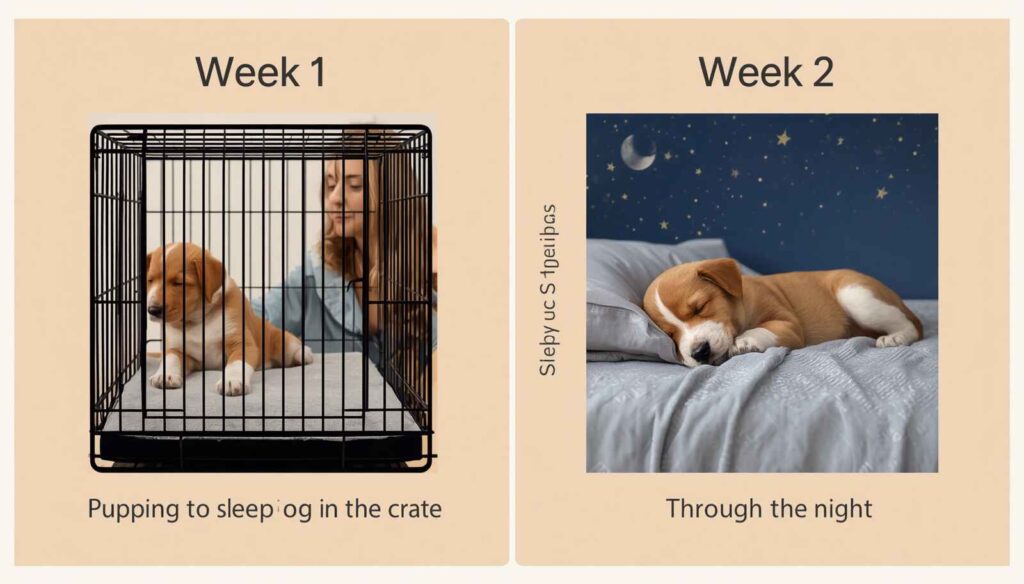
Week 1:
- Crate introductions and positive associations during the day
- First overnight attempts from night 4–5
- Set alarms for every 2–3 hours
Week 2:
- Stretch overnight stretches by 30–60 minutes every few days
- Puppy should be starting to settle within 10–15 minutes of crating
- Begin moving crate to its permanent location if needed
By the end of two weeks, most puppies are sleeping through with just one mid-night break (or none at all if they’re older).
Frequently Asked Questions
1.What’s the best age to start crate training at night?
You can start from the day you bring your puppy home — usually around 8 weeks. The earlier you start, the easier it tends to be, because they haven’t yet developed habits of sleeping elsewhere.
2.My puppy whines for hours. Should I just ignore it?
Not entirely. First, rule out a toilet need. If they’ve recently been out and it’s clearly protest whining, you can let them settle (5–10 minutes), but don’t leave them in genuine distress. The goal is calm persistence, not cold abandonment.
3.Should I put water in the crate overnight?
Generally, no — especially in the early weeks. Water overnight leads to more toilet trips. Make sure your puppy has a good drink about an hour before bed and remove the bowl after that. For hot Australian summers, a small water attachment on the crate side can help.
4.Is it cruel to crate a puppy overnight?
Not when it’s done right. Crating a puppy with proper introduction, appropriate sizing, and regular toilet breaks is not cruel — it’s actually one of the kindest things you can do for their development. The cruelty comes from using a crate as a punishment or leaving a puppy confined for excessive hours.
5.When can I stop using the crate at night?
Most dogs can be trusted to sleep freely by 12–18 months, once they’re past the destructive chewing stage and fully toilet trained. Some owners keep using the crate long-term because their dog genuinely loves it — and that’s completely fine too.
6.My puppy escapes the crate. What do I do?
Check the latches are fully secure. If it’s a soft-sided crate, you may need to upgrade to a wire or heavy-duty crate. Escape attempts usually mean the puppy hasn’t built a positive association with the crate yet — go back to basics and slow down the process.
7.What if my puppy absolutely hates the crate?
Some puppies take longer. If you’re two weeks in and making no progress, consider: Is the crate size right? Is it positioned well? Are you building up too fast? In rare cases, some dogs genuinely do better with a puppy-proofed room or a playpen instead — there’s no one-size-fits-all rule.
Final Thoughts
Nighttime crate training is a short-term investment with long-term rewards. The first week is the hardest. The second week gets easier. By week three, most puppies are sleeping through — and so are you.
Be consistent, be patient, and remember: every time you stick to the routine, you’re helping your puppy understand what the world looks like. That’s not cruelty. That’s love with a plan.
You’ve got this.
#. Related Articles: