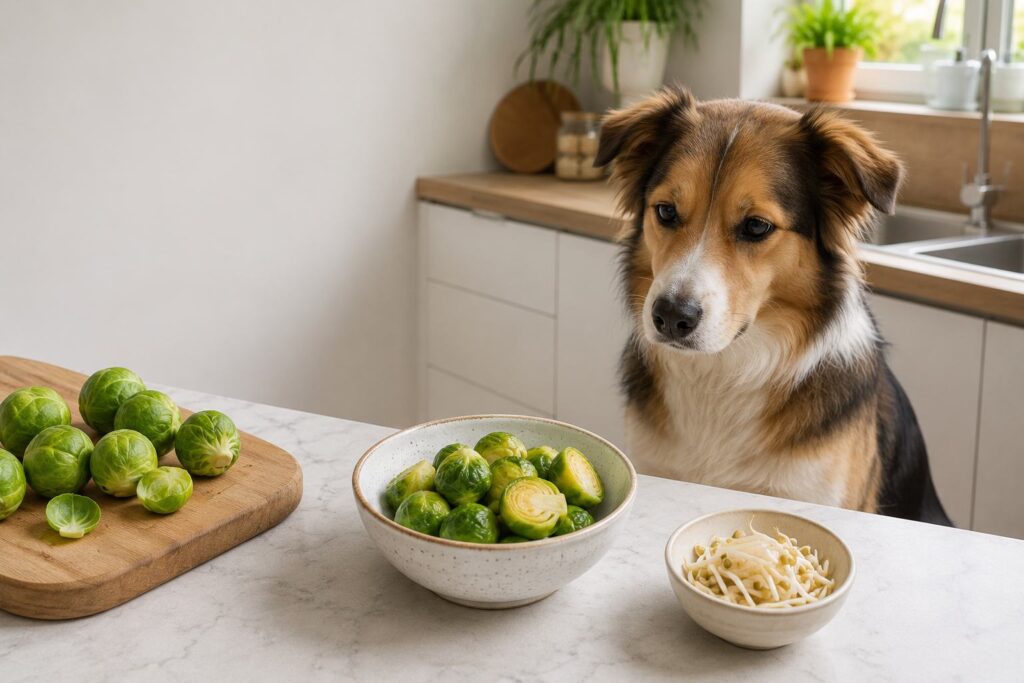

So you’re halfway through a prawn stir-fry, your dog is giving you the look, and you’re wondering — can I actually share this? Good news: you’ve landed in the right place.
The short answer is yes, dogs can eat prawns — but with a few important conditions. Get those right and prawns can be a tasty, nutritious little treat. Get them wrong and you could be dealing with a very unhappy pup (and a very messy carpet).
Let’s walk through everything you need to know.
Are Prawns Actually Good for Dogs?
Prawns aren’t just a tasty snack — they pack a decent nutritional punch for dogs too. Here’s what makes them worth considering:
- High-quality protein – Prawns are lean and protein-rich, which supports muscle health and keeps your dog feeling full.
- Omega-3 fatty acids – These are brilliant for coat health, joint function, and reducing inflammation. Especially useful for older dogs or breeds prone to joint issues.
- Phosphorus – Supports healthy kidney function and bone development.
- Vitamin B12 – Crucial for your dog’s nervous system and digestive health.
- Antioxidants – Prawns contain astaxanthin, an antioxidant that may support immune function.
- Low in fat and calories – Great for dogs watching their weight.
For context, a single medium prawn has roughly 6–7 calories. So even a few as a treat won’t tip the scales.

What Are the Risks of Feeding Prawns to Dogs?
Before you head to the fishmonger, let’s be honest about the risks too.
Shells and Tails: A Real Choking Hazard
Prawn shells are sharp and hard. For small dogs especially, they can cause choking or damage the digestive tract. The tail is similarly risky. Always remove both before offering prawns to your dog — no exceptions.
Raw Prawns Can Carry Bacteria and Parasites
Raw seafood can harbour bacteria like Salmonella and Listeria, as well as intestinal parasites. These can make your dog seriously ill. Raw prawns should always be cooked first.
Allergies Do Happen
Some dogs are allergic to shellfish. If your dog has never had prawns before, start with a tiny piece and watch for these signs over the next 24 hours:
- Itching or hives
- Swollen face or paws
- Vomiting or diarrhoea
- Excessive licking
If you notice any of these, skip the prawns and have a chat with your vet.
High Cholesterol (for Some Dogs)
Prawns are relatively high in cholesterol. For most healthy dogs, this isn’t a concern in small amounts. But if your dog has existing heart issues or a vet-managed diet, check with your vet before introducing prawns.
Sodium Content
Prawns naturally contain some sodium. This is fine in small quantities, but shouldn’t be a regular large-portion food — especially for dogs with kidney or heart conditions.
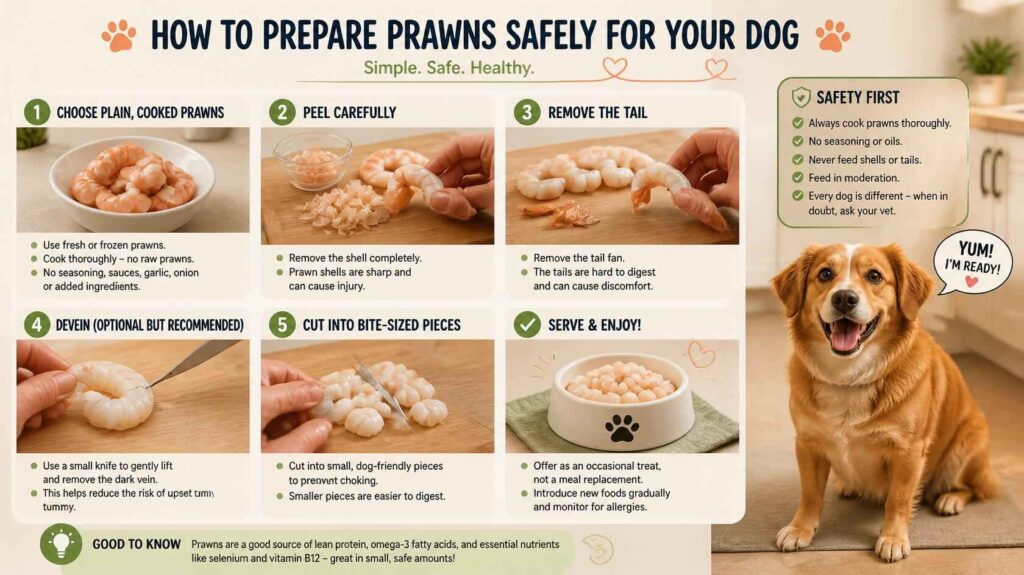
How to Safely Prepare Prawns for Your Dog
This is where most owners go wrong. The preparation matters just as much as the ingredient itself.
Here’s the right way to do it:
- Buy fresh or frozen plain prawns — no added sauces, marinades, or preservatives.
- Defrost properly — if frozen, thaw in the fridge overnight. Never microwave.
- Remove the shell, tail, and head — every time, no shortcuts.
- Devein the prawn — the dark line running along the back is the digestive tract. It’s not toxic but it’s not pleasant. Remove it.
- Cook thoroughly — boil or steam until fully opaque. No oil, no butter, no seasoning.
- Let it cool completely before giving it to your dog.
- Cut into small pieces — especially for small or medium breeds.
That’s it. Plain. Simple. Safe.
How Many Prawns Can a Dog Have?
Treats — including prawns — should make up no more than 10% of your dog’s daily calorie intake. Here’s a rough guide:
| Dog Size | Safe Serving |
|---|---|
| Small (under 10kg) | 1–2 prawns occasionally |
| Medium (10–25kg) | 2–4 prawns occasionally |
| Large (25kg+) | 4–6 prawns occasionally |
“Occasionally” means a few times a week at most — not every day. Prawns are a treat, not a meal replacement.
Can Dogs Eat Specific Prawn Preparations?
Can Dogs Eat Cooked Prawns?
Yes — this is the only recommended way. Plain, fully cooked, shell-off prawns are safe and nutritious.
Can Dogs Eat Raw Prawns?
No. Raw prawns carry bacteria and parasites that can harm your dog. Always cook them first.
Can Dogs Eat King Prawns?
Yes, the same rules apply. King prawns are just larger — remove the shell and tail, cook thoroughly, and cut into smaller pieces for your dog.
Can Dogs Eat Frozen Prawns?
Yes, but defrost and cook them first. Frozen plain prawns with no added salt or seasoning are perfectly fine once prepared correctly.
Can Dogs Eat Garlic Prawns?
Absolutely not. Garlic is toxic to dogs. It damages red blood cells and can cause anaemia. Even small amounts can build up over time. Garlic prawns, no matter how tempting they smell, are off-limits for your dog.
Can Dogs Eat Prawn Crackers?
No. Prawn crackers are highly processed, deep-fried, and loaded with salt, artificial flavourings, and additives. They offer zero nutritional value and can upset your dog’s stomach. The “prawn” in prawn crackers is minimal anyway — mostly starch and flavouring.
Can Dogs Eat Prawn Cocktail Crisps?
No. Like prawn crackers, these are made for humans — high in salt, artificial flavours, and preservatives. Even one or two crisps are more salt than your dog needs. Not worth the risk.
Can Dogs Eat Prawn Toast?
No. Prawn toast is fried and usually contains onion, garlic, and sesame oil. Both onion and garlic are toxic to dogs. Skip it entirely.
Can Dogs Eat a Prawn Cocktail?
No. The Marie Rose sauce (or similar) used in prawn cocktail contains onion powder, which is toxic to dogs, along with high amounts of salt and sugar. The sauce alone makes this a firm no.
Can Puppies Eat Prawns?
Technically yes, but it’s worth waiting until your puppy is at least 12 weeks old and fully weaned. Their digestive systems are still developing and any new food — especially one as rich as seafood — should be introduced very slowly. One small piece, see how they respond, and go from there.

Are Shrimps and Prawns the Same Thing?
In the UK and Australia, “prawn” is the common term. In Canada and parts of North America, “shrimp” is more often used — though technically there are biological differences between the two species. For the purposes of your dog’s diet, they’re nutritionally very similar and the same rules apply to both.
Signs Your Dog Has Eaten Something They Shouldn’t
If your dog manages to sneak a prawn cocktail off the table or crunches a prawn shell, watch for:
- Vomiting or retching
- Diarrhoea
- Lethargy or unusual quietness
- Pawing at their mouth
- Swollen belly or signs of discomfort
If symptoms are severe or don’t pass within 12–24 hours, contact your vet. If you know your dog ate garlic or onion, don’t wait — call your vet straight away.
Healthier Alternatives to Prawns
If your dog loves seafood flavours but you want lower-risk options:
- Plain cooked salmon – Excellent source of omega-3s, widely loved by dogs
- Cooked white fish (cod, haddock) – Lean, easy to digest, low in mercury
- Sardines in spring water – Brilliant for coat health, just drain the water
- Plain cooked tuna – Fine occasionally, but limit due to mercury
Always serve these plain — no added oil, salt, or sauces.
FAQ: Can Dogs Eat Prawns?
1.Are prawns toxic to dogs?
No, plain cooked prawns are not toxic to dogs. The danger comes from raw prawns (bacteria/parasites), shells and tails (choking), and prawn-based dishes prepared with toxic ingredients like garlic or onion.
2.Can prawns cause diarrhoea in dogs?
Yes, they can — especially if your dog isn’t used to seafood, eats too many at once, or has a mild sensitivity. Start with one small piece and increase gradually.
3.My dog ate a prawn shell. What should I do?
Monitor closely. One small shell may pass without issue, but sharp shell fragments can occasionally cause internal irritation. If your dog is vomiting, retching, or seems in pain, contact your vet.
4.Can dogs eat prawns every day?
It’s not recommended. Prawns should be an occasional treat, not a daily food. Too much of any single food — even a healthy one — can lead to nutritional imbalances.
5.Are tiger prawns safe for dogs?
Yes, the same rules apply. Cook them thoroughly, remove shells and tails, and serve plain.
6.Can I give my dog the prawn heads?
It’s best not to. Heads can be crunchy, sharp, and harder to digest. They’re also more likely to carry bacteria. Remove the head along with the shell before serving.
7.Do I need to deworm my dog if they eat prawns?
Not specifically because of prawns. Regular deworming as advised by your vet is good practice regardless. If you’re worried your dog ate raw or undercooked prawns, mention it to your vet at their next check-up.
Final Thoughts
Prawns can be a lovely, nutritious treat for your dog — as long as you do the prep properly. Cook them, peel them, skip the seasoning, and keep portions sensible. That’s really all there is to it.
The foods to absolutely avoid are garlic prawns, prawn crackers, prawn toast, prawn cocktail (with sauce), and anything raw or unpeeled.
When in doubt, your vet is always the best port of call — especially if your dog has existing health conditions or you’re introducing seafood for the first time.
Your dog will thank you. Probably with enthusiastic tail-wagging and some very hopeful eyes next time you’re in the kitchen.
Always consult your vet before making significant changes to your dog’s diet, especially if they have underlying health conditions.
#. Related Articles: