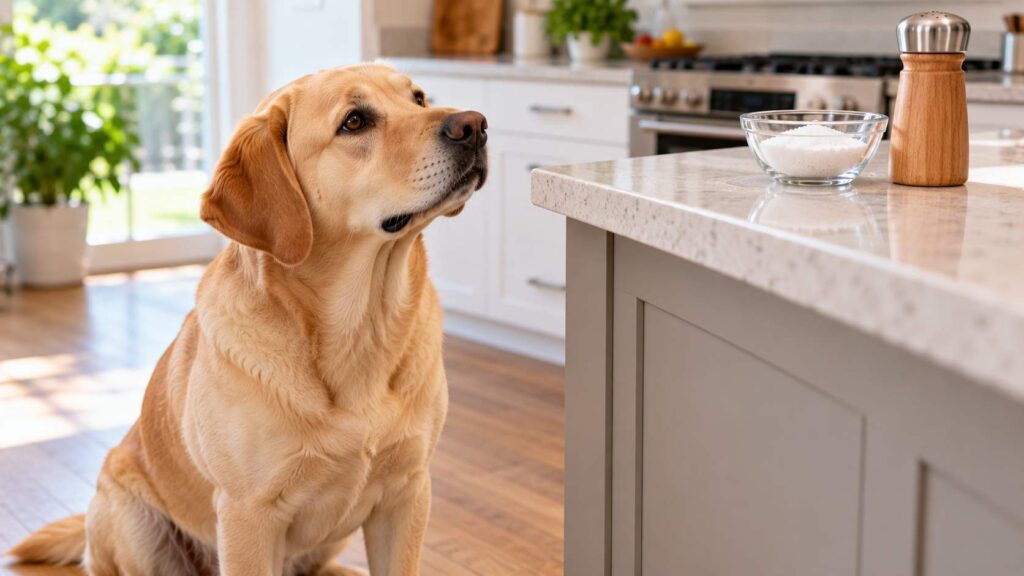
You turn around and your dog is licking the bottom of an empty crisp packet, or you find a salt shaker on its side on the kitchen floor.
So, can dogs eat salt? Yes, dogs need small amounts of sodium and chloride in their diet. An occasional lick of lightly salted food is unlikely to cause salt poisoning in most healthy adult dogs. But swallowing too much salt, particularly from a concentrated source, can be dangerous.
The risk depends on what your dog ate, how much they swallowed, their size, their health and whether they have access to drinking water.
If you suspect your dog has swallowed a substantial amount of salt or is showing concerning symptoms, contact a veterinarian immediately. Otherwise, this guide will help you understand what matters and what to do next.
First, Identify What Your Dog Actually Ate
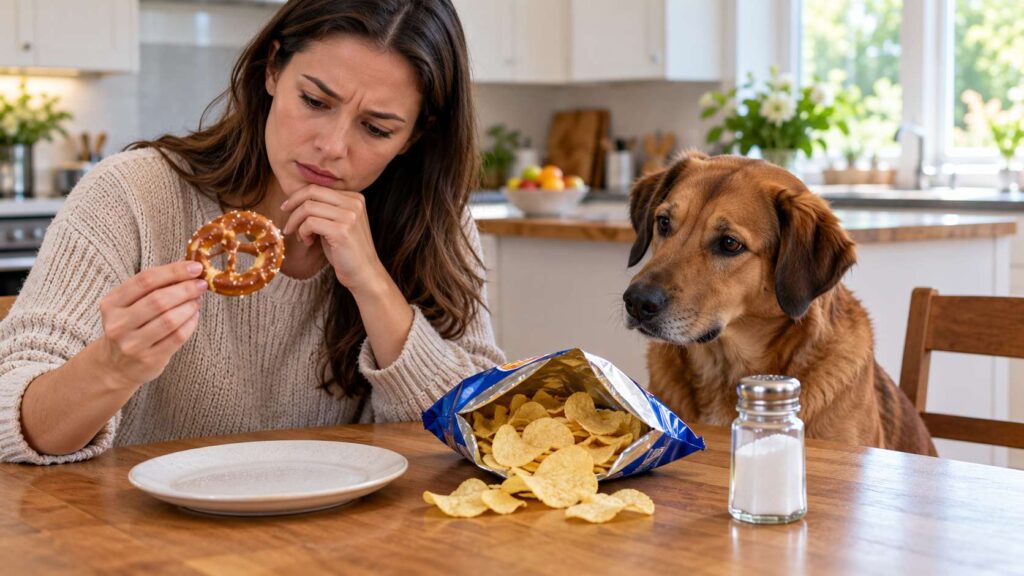
Before anything else, work out where the salt came from. A dog that licked a pretzel and a dog that swallowed homemade salt dough are in very different situations.
A Lick, a Salty Snack, or Concentrated Salt?
Salt exposures generally fall into three groups:
- Incidental exposure: A lick of a salted cracker, a dropped crisp or a small piece of seasoned food.
- Larger amounts of salty food: A whole bag of crisps, several salted pretzels or a large portion of heavily seasoned meat.
- Concentrated salt sources: Table salt swallowed directly, salt dough, homemade play dough, rock salt or certain de-icing products.
The source matters because concentrated salt can deliver a substantial amount of sodium chloride in a relatively small quantity.
However, food isn’t automatically harmless because the salt is mixed with other ingredients. The total amount consumed still matters.
Five Details That Change the Risk
When assessing a possible salt exposure, these five details are particularly important:
- Your dog’s weight. The same amount represents a larger dose per kilogram for a Chihuahua than for a Labrador.
- The product and its ingredients. Salt dough is different from a salted cracker, and some foods contain additional hazards.
- How much was swallowed. Even a rough estimate helps. Check how much is missing from the packet or container.
- How long ago it happened. Timing helps your veterinarian assess the exposure and decide what action is appropriate.
- Symptoms, water access and health history. Dehydration, limited drinking water and certain medical conditions can increase concern.
For example, a healthy adult Labrador that steals one lightly salted crisp presents a different concern from a small puppy that swallows an unknown amount of salt dough.
Neither situation should be judged by the salty taste alone.
When the Situation Needs Veterinary Advice Now
Contact your veterinarian or an emergency veterinary clinic promptly if:
- You suspect your dog swallowed a substantial amount of salt.
- The source was salt dough or another concentrated salt product.
- Your dog develops wobbliness, tremors, seizures or unusual disorientation.
- Your dog has repeated vomiting, marked weakness or collapses.
- You cannot estimate the amount consumed, particularly if your dog is small, young or medically vulnerable.
If your dog is having seizures, collapsing or struggling to remain conscious, seek emergency veterinary care immediately.
Animal poison services may also provide guidance, although availability and fees vary between the UK, Canada, Australia and the United States.
Quick Situation Checklist
- Identify the product or salt source.
- Estimate how much is missing.
- Record approximately when the ingestion happened.
- Check for other hazardous ingredients, including onion, garlic or xylitol where relevant.
- Note any symptoms and whether your dog has had access to water.
- Keep the packaging or recipe available for your veterinarian.
If the exposure may be significant, make the veterinary call while gathering these details rather than delaying for a perfect estimate.
The Signs That Change What You Should Do Next

You don’t need to diagnose salt poisoning yourself. What matters is recognising when symptoms could indicate a serious problem.
Early Signs That Deserve Attention
After excessive salt ingestion, possible early signs include:
- Vomiting.
- Diarrhoea.
- Increased thirst.
- Lethargy or weakness.
- Unusual behaviour, including restlessness or reduced interest in food.
These symptoms are not specific to salt poisoning. A dog may vomit after eating rich or unfamiliar food without developing a dangerous sodium imbalance.
However, vomiting, unusual thirst or weakness following suspected substantial salt ingestion warrants prompt veterinary advice.
Neurological Signs That May Indicate a Serious Emergency
Severe sodium disturbances can affect the nervous system.
Warning signs include:
- Unsteady or drunken walking.
- Muscle tremors or twitching.
- Seizures.
- Marked disorientation.
- Collapse or difficulty responding normally.
These signs require immediate emergency veterinary attention, regardless of whether salt poisoning is the suspected cause.
Why a Dog Can Seem Normal at First
Symptoms don’t always appear immediately.
Their onset depends on the amount swallowed, the type of exposure, water availability and the individual dog’s condition.
A dog that appears perfectly normal twenty minutes after swallowing a substantial quantity of salt may still develop symptoms later.
The Pet Poison Helpline identifies vomiting, diarrhoea, unsteady walking, tremors, seizures and collapse as possible signs of salt poisoning. These symptoms may not all appear immediately, so a dog that seems normal after a substantial salt ingestion may still need urgent veterinary assessment.
That is why veterinarians may recommend assessment after a significant exposure even when the dog initially appears well.
Warning: Don’t Wait for Severe Symptoms
- Contact a veterinarian promptly after suspected substantial salt ingestion.
- Never use salt or saltwater to make your dog vomit. This can itself cause dangerous poisoning.
- Don’t force large amounts of water into your dog.
- Don’t attempt homemade electrolyte treatments.
- Don’t give medications or induce vomiting unless a veterinarian specifically instructs you to do so.
If your dog is unconscious, having seizures or unable to swallow normally, do not put anything into their mouth.
Why the Same Amount of Salt Does Not Affect Every Dog Equally

Owners understandably want a number: How much salt is too much for a dog?
Unfortunately, there isn’t one universal amount that can be declared safe for every dog and every situation.
Body Size Is Only One Part of the Calculation
Body weight matters because the same quantity of salt produces a larger dose per kilogram in a smaller dog.
But weight isn’t the only consideration.
Veterinarians also assess:
- The estimated amount of sodium chloride swallowed.
- Whether it came from concentrated salt or a mixed food.
- The dog’s hydration and access to water.
- Existing medical conditions.
- Symptoms and time since ingestion.
Veterinary references, including the Merck Veterinary Manual, describe reported toxic doses of salt in animals.
However, reported toxic doses are not safe feeding limits or reliable thresholds below which poisoning cannot occur.
A dog may require veterinary assessment even when the estimated exposure is below a published toxicology figure.
Water Access Changes the Picture
Sodium and water are closely connected.
When blood sodium becomes excessively concentrated, water moves out of cells, including brain cells. This can interfere with normal cellular function.
A dog without adequate drinking water may be particularly vulnerable to sodium disturbances.
Normal access to fresh water helps maintain hydration, but it does not guarantee protection after a substantial salt ingestion.
Important distinction: Keeping fresh drinking water available is not the same as forcing a dog to drink large volumes to treat suspected poisoning.
Veterinary treatment may require carefully controlled fluid administration, depending on the dog’s condition and blood sodium concentration.
Puppies and Dogs With Medical Conditions
Puppies and small dogs deserve additional caution because relatively small quantities can represent substantial exposures for their body weight.
Dogs with kidney disease, certain heart conditions or disorders affecting fluid balance may also need individual assessment.
For example, a dog receiving a veterinarian-prescribed sodium-restricted diet should not routinely be given salty table scraps.
However, having heart or kidney disease does not automatically mean that every dog needs the same sodium restriction.
Dietary decisions should be based on the individual diagnosis and veterinary recommendations.
Salt Is Essential, So Why Can Too Much Be Dangerous?

It may seem contradictory that something a dog needs can also cause poisoning.
The difference is between the sodium required for normal body function and an excessive sodium load that overwhelms the body’s ability to maintain balance.
What Sodium and Chloride Do in a Dog’s Body
Sodium and chloride are essential electrolytes.
They help:
- Maintain fluid balance inside and outside cells.
- Support normal nerve signalling.
- Contribute to muscle function.
- Maintain normal cellular processes.
The kidneys, thirst response and other regulatory mechanisms help maintain appropriate electrolyte concentrations.
Healthy dogs eating suitable complete and balanced diets generally receive the sodium and chloride they need from their food.
What Happens When Blood Sodium Becomes Too High?
The medical term for an abnormally elevated blood sodium concentration is hypernatraemia, also spelled hypernatremia in North American English.
When blood sodium rises excessively, water moves from inside cells into the surrounding fluid.
Brain cells are particularly vulnerable to these changes.
In severe cases, affected dogs may develop:
- Neurological abnormalities.
- Muscle tremors.
- Loss of coordination.
- Seizures.
- Altered consciousness.
An important distinction is that hypernatraemia does not always result from eating salt. It can also develop when an animal loses excessive water or cannot drink enough.
Likewise, eating a salty food does not automatically mean a dog has developed hypernatraemia.
Why Most Dogs Do Not Need Salt Added to Their Meals
Complete and balanced commercial dog foods are formulated to meet established nutritional requirements, including appropriate amounts of sodium and chloride.
Nutritional frameworks from organisations such as AAFCO and FEDIAF address these essential nutrients.
For a healthy dog eating an appropriate complete diet, adding table salt is generally unnecessary.
Homemade diets require more care.
A homemade recipe may be deficient in certain nutrients, but adding salt without knowing the diet’s complete nutritional composition is not a reliable solution.
If you regularly prepare homemade meals, ask your veterinarian about a recipe formulated by a qualified veterinary nutritionist.
The goal is adequate sodium—not as little sodium as possible.
Not All Salty Exposures Look Alike
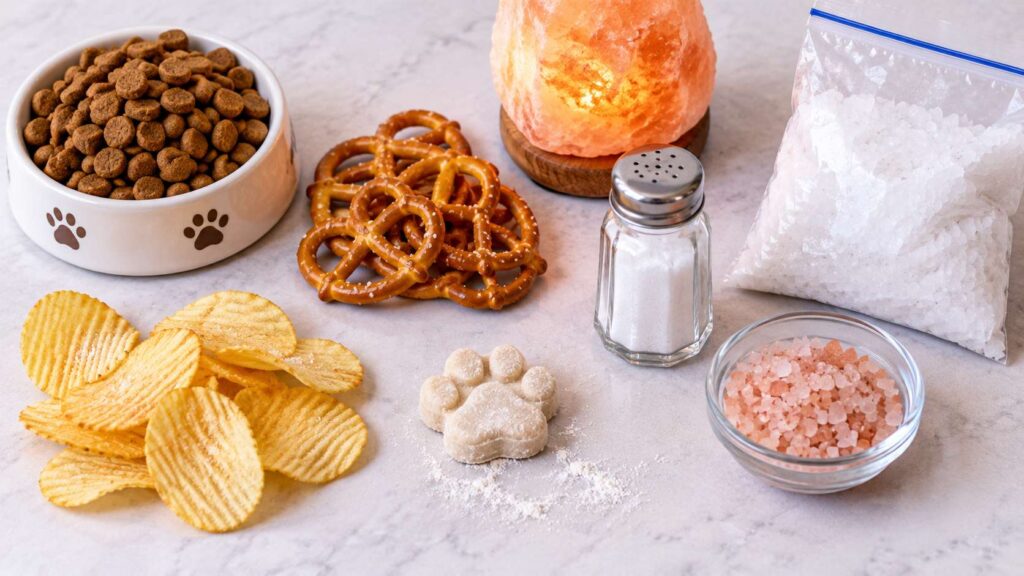
Salt turns up in more places than the kitchen salt shaker. Some exposures involve ordinary food, while others can deliver dangerous amounts of sodium chloride in a relatively small quantity.
The table below highlights common sources and what owners should check.
| Exposure source | Main concern | Important additional check |
|---|---|---|
| Ordinary complete dog food | Normal dietary sodium | Whether the diet meets your dog’s nutritional needs |
| Salted crisps or chips | Added salt and fat | Quantity, seasonings and other ingredients |
| Pretzels or salted popcorn | Added sodium | Portion size and ingredients |
| Seasoned meat | Salt plus other potentially harmful ingredients | Onion, garlic and fat content |
| Salt dough | Concentrated salt | Amount swallowed; seek prompt veterinary advice |
| Seawater | Excess sodium ingestion | Amount consumed, repeated swallowing and symptoms |
| Himalayan salt lamp | Repeated licking or ingestion | Access, missing material and symptoms |
| De-icing products | Salt and potentially other chemicals | Exact formulation and estimated exposure |
Important: This table compares exposure sources, not safe quantities. Even a product that seems relatively harmless can become concerning when a dog consumes enough of it.
Why Salted Human Food Requires an Ingredient Check
With salty snacks, salt isn’t always the only concern.
Seasoned foods may contain onion or garlic powder, both of which are toxic to dogs. Fatty foods can also cause digestive upset and may contribute to pancreatitis in susceptible dogs.
For example, if your dog steals a piece of takeaway pizza, the concern isn’t simply the salt in the cheese. The toppings, sauces, seasonings and amount eaten all matter.
The same applies to burgers, processed meats and salted seafood.
If your dog gets into takeaway leftovers, check the complete ingredient list rather than judging the risk by how salty the food tastes.
Our guides on whether dogs can eat pizza and whether dogs can eat hamburgers explain these additional ingredient risks in more detail.
Household and Outdoor Sources Owners Often Overlook
Some potentially serious salt exposures have nothing to do with food.
- Salt dough ornaments and homemade play dough: These can contain high concentrations of salt. Dogs may swallow pieces while chewing or playing, and even relatively small amounts can be concerning depending on the dog’s size and the recipe. Suspected ingestion warrants prompt veterinary advice.
- Seawater: Dogs may swallow seawater while swimming, retrieving toys or playing in waves. Repeated or substantial ingestion can lead to dangerous sodium exposure.
- Himalayan salt lamps: Repeated licking or chewing can expose a dog to excessive salt. Keep these lamps inaccessible, particularly if your dog has shown interest in licking them.
- Road de-icers: Products vary in composition. Some contain sodium chloride, while others contain different salts or chemicals. If your dog licks or swallows a de-icing product, identify the exact formulation and contact your veterinarian for advice.
Practical tip: If your dog swallows salt dough, a de-icing product or another concentrated salt source, keep the packaging or recipe available. It can help your veterinarian estimate the exposure and identify additional hazards.
The Salt Label Can Tell You More Than the Taste
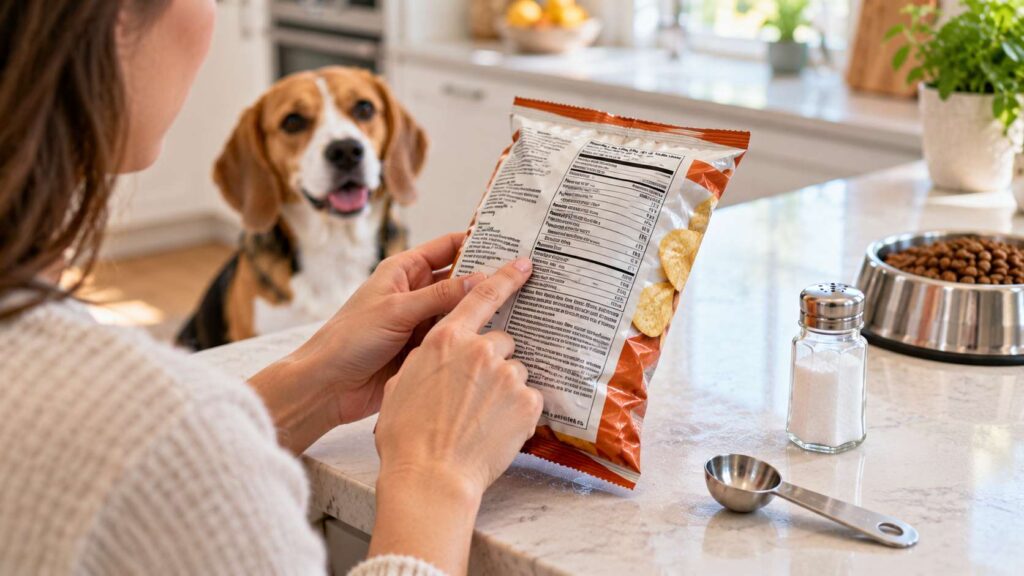
A food doesn’t need to taste extremely salty to contain a substantial amount of sodium.
Understanding the label can help you compare everyday foods and explain a possible exposure to your veterinarian.
Sodium and Salt Are Not the Same Label Measurement
Many nutrition labels list sodium, while others list salt.
Table salt is sodium chloride, which contains approximately 39% sodium by weight. That means the equivalent salt content is roughly 2.5 times the sodium amount.
Here’s a hypothetical example:
A snack label lists 400 mg of sodium per 30 g serving.
That is equivalent to approximately 1,000 mg (1 g) of salt.
If your dog ate two servings, the estimated sodium exposure would be twice the amount listed for one serving.
However, this conversion does not tell you whether the exposure is safe. Your dog’s weight, the actual quantity eaten and other circumstances still matter.
Human nutrition labels are designed for people, not as feeding guides for dogs.
Does Sea Salt or Himalayan Salt Make a Difference?
Not in a way that makes either one a safer choice for dogs.
Table salt, sea salt and Himalayan pink salt all consist predominantly of sodium chloride.
Their colours, textures and trace mineral content may differ, but those differences do not remove the risks associated with excessive sodium intake.
Himalayan pink salt is not a safer substitute for ordinary table salt when feeding a dog.
When a Low-Sodium Diet Actually Makes Sense
Some dogs with particular heart conditions or other medical problems may need veterinarian-directed sodium restriction.
However, the appropriate level depends on the diagnosis, disease severity and overall diet.
A healthy dog eating suitable complete and balanced food generally does not need a sodium-restricted diet.
Reducing sodium without veterinary guidance isn’t automatically beneficial and could result in an inappropriate nutritional balance.
If your dog has heart or kidney disease, discuss their regular food, treats and table scraps with your veterinarian before changing their sodium intake.
Quick Tips for Reading Labels
- Check the serving size before comparing sodium amounts.
- Notice whether the label lists sodium or salt.
- Compare equivalent quantities, such as values per 100 g.
- Read the full ingredient list, not just the sodium figure.
- Don’t use human dietary sodium recommendations as feeding limits for dogs.
What a Veterinarian Needs to Know, and What Happens Next
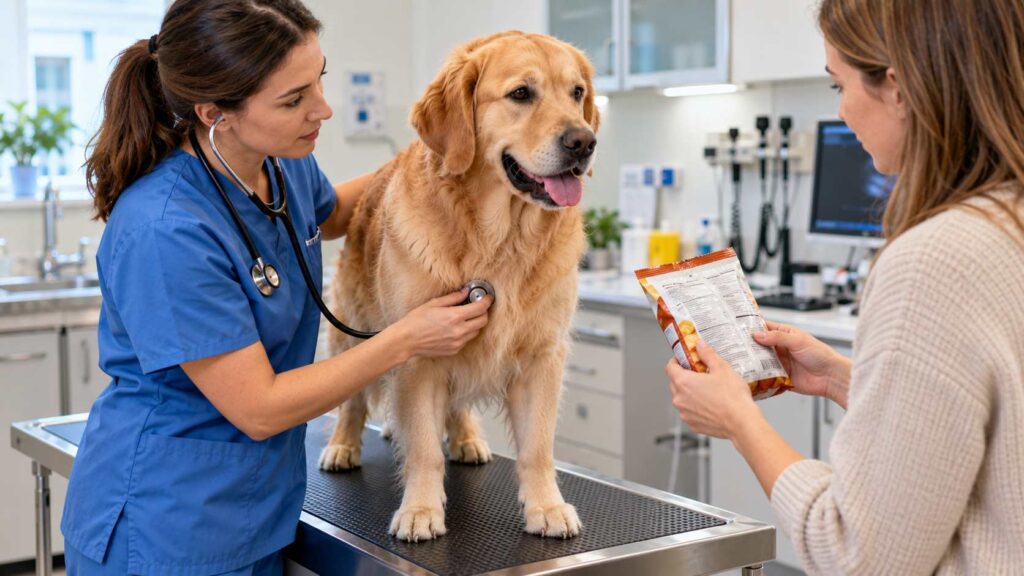
If your dog has swallowed a potentially dangerous amount of salt, a veterinarian can assess the exposure and decide whether examination, testing or treatment is necessary.
Having a few details ready makes that assessment easier, but don’t delay an urgent call while trying to gather perfect information.
Information Worth Having Ready Before You Call
- Your dog’s approximate weight and age.
- The product packaging, ingredients or recipe.
- How much you think was swallowed.
- Approximately when it happened.
- Any symptoms you’ve noticed.
- Whether your dog had access to drinking water.
- Existing medical conditions and medications.
If you don’t know the exact quantity, explain what you found.
For example, telling your veterinarian that your dog chewed a salt dough ornament and approximately half is missing is more useful than guessing how many grams of salt were swallowed.
How Salt Poisoning May Be Assessed
Your veterinarian will usually begin with the exposure history and a physical examination, including an assessment of your dog’s neurological condition.
Depending on the circumstances, further evaluation may include:
- Blood sodium and other electrolyte measurements.
- Kidney function tests.
- Assessment of hydration status.
- Repeat blood testing to monitor changes.
- Observation or hospitalisation when necessary.
Not every dog that eats something salty requires blood tests or hospital treatment.
The decision depends on the estimated exposure, symptoms and veterinary findings.
An important distinction is that salt ingestion does not automatically mean a dog has developed hypernatraemia. Blood testing helps establish whether a significant sodium disturbance is present.
Why Treatment Cannot Be Reduced to Giving More Water

It’s tempting to think that the solution to excessive salt intake is simply giving a dog lots of water.
Unfortunately, severe sodium disturbances are more complicated.
When blood sodium becomes abnormally high, water moves out of cells, including brain cells. If certain sodium disturbances are corrected too rapidly, fluid can move back into brain cells and cause dangerous swelling.
The Merck Veterinary Manual explains that treating salt toxicosis requires carefully correcting fluid and electrolyte imbalances while monitoring blood sodium concentrations. Lowering sodium too rapidly, particularly in cases that have developed over time, can cause dangerous swelling of brain tissue.
Depending on the dog’s condition, veterinary treatment may involve carefully calculated fluids and repeated blood tests to monitor sodium concentrations.
This is not something owners can safely reproduce at home by forcing water or giving homemade electrolyte mixtures.
Veterinary Advice: What to Do After Suspected Significant Salt Ingestion
- Remove access to the salt source.
- Contact your veterinarian or emergency clinic promptly.
- Keep the product packaging or recipe available.
- Follow professional instructions about water, food and transport.
- Do not induce vomiting or administer home treatments unless specifically instructed by a veterinarian.
What Influences Recovery?
Recovery depends on several factors:
- The severity of the sodium disturbance.
- Whether neurological symptoms have developed.
- How quickly appropriate veterinary care begins.
- Existing medical conditions.
- The dog’s response to treatment.
Dogs with less severe exposures may recover well, particularly when the problem is recognised and managed promptly.
However, severe salt poisoning can be life-threatening and may cause lasting neurological complications.
There is no reliable recovery timeline that applies to every dog. Your veterinarian can provide a more meaningful prognosis after assessing your dog’s condition and, when necessary, monitoring their blood sodium levels.
Small Habits That Prevent the Next Salt Scare
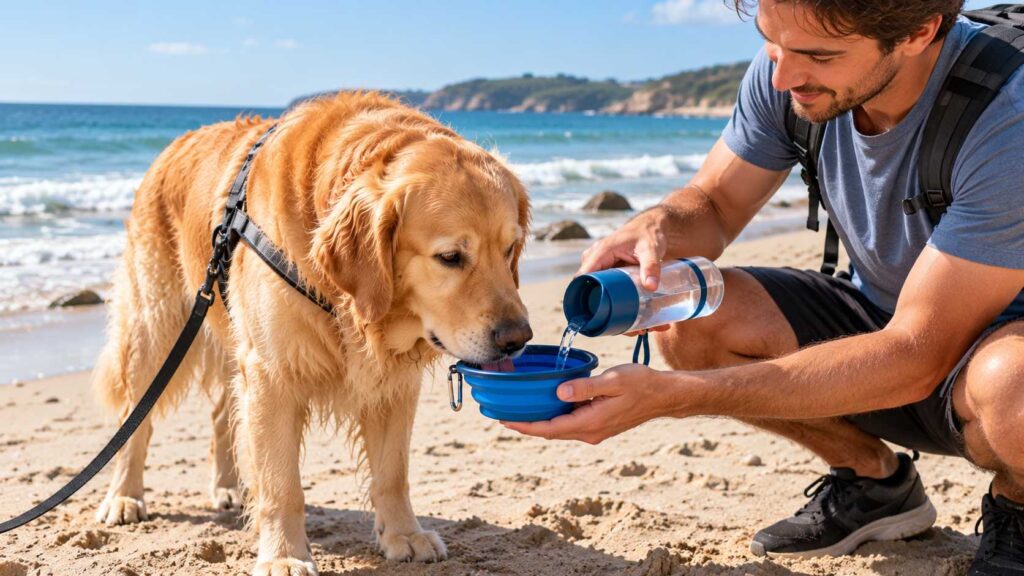
Most accidental salt exposures can be reduced with a few practical changes at home and outdoors.
In the Kitchen
- Store salt and seasonings in closed cupboards.
- Keep salty snacks away from low tables and accessible countertops.
- Check ingredients before sharing human food.
- Avoid adding unnecessary salt to your dog’s meals.
- Clean up spilled salt promptly.
At the Beach and Outdoors
- Carry fresh drinking water and offer it regularly.
- Discourage your dog from drinking seawater.
- Watch dogs that repeatedly swallow water while swimming or retrieving toys.
- Take breaks during extended beach activities.
- Prevent access to de-icing products and contaminated puddles during winter walks.
A dog doesn’t have to deliberately drink from the sea to swallow seawater. Repeatedly retrieving a ball from the waves can also lead to ingestion.
If your dog develops vomiting, unusual thirst, weakness or other concerning signs after a beach visit, seek veterinary advice and mention the possible seawater exposure.
Around the Home
- Store salt dough ornaments and homemade play dough securely.
- Keep Himalayan salt lamps where your dog cannot lick or chew them.
- Clean up spilled salt immediately.
- Check the ingredients of household products.
- Store rock salt and de-icing products in inaccessible locations.
Quick Tips for Everyday Prevention
- Feed an appropriate complete and balanced dog food.
- Choose plain, dog-appropriate treats instead of heavily salted human snacks.
- Don’t use salt as a routine dietary supplement.
- Keep concentrated salt sources out of reach.
- Ask your veterinarian before changing sodium intake for a medical condition.
Common Mistakes That Can Make a Salt Incident Worse
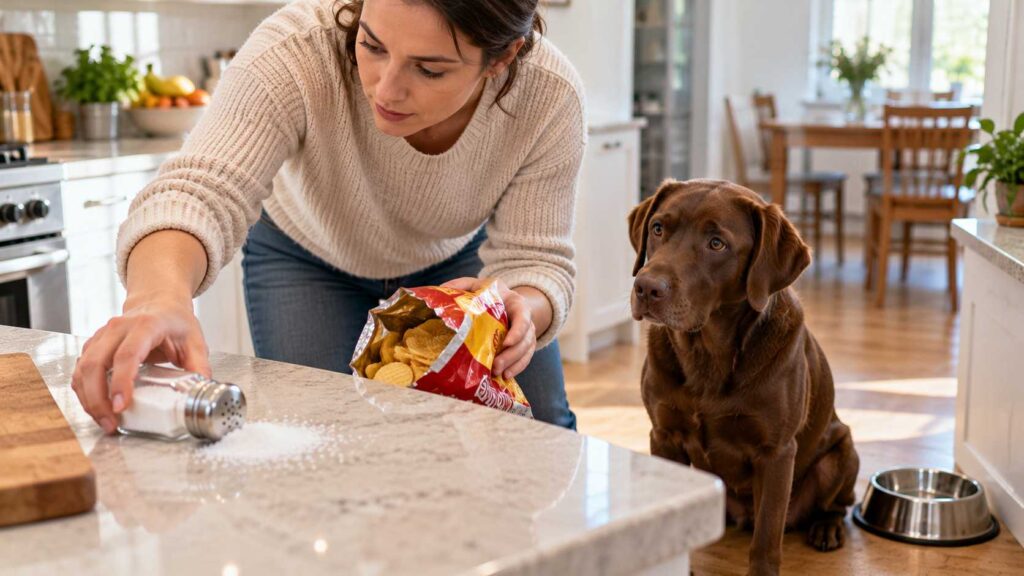
Even well-meaning owners can make decisions that increase the risk after their dog eats something salty.
1. Assuming every amount of salt is poisonous. Dogs need sodium, and small amounts in a complete and balanced diet are normal. An occasional lick of lightly salted food is unlikely to cause poisoning in most healthy adult dogs.
2. Assuming a small dog can tolerate what a large dog can. The same quantity of salt represents a much larger dose per kilogram for a Chihuahua than for a Labrador. Body weight matters, although it isn’t the only risk factor.
3. Treating published toxic doses as safe limits. Veterinary toxicology figures describe amounts associated with poisoning. They don’t establish a universally safe quantity for every dog.
4. Waiting for seizures before calling a vet. Neurological symptoms can indicate severe poisoning. If your dog has swallowed a substantial amount of salt, seek veterinary advice before serious signs develop.
5. Using salt to make a dog vomit. This is dangerous and can cause salt poisoning itself. Never attempt to induce vomiting at home unless a veterinarian specifically instructs you to do so.
6. Forcing large amounts of water. Water is important for normal hydration, but forcing a dog to drink is not a safe treatment for suspected salt poisoning. Severe sodium disturbances require carefully managed veterinary care.
7. Believing sea salt is safer. Sea salt and Himalayan pink salt still contain substantial sodium chloride. Their appearance and trace minerals don’t make excessive amounts harmless.
8. Adding salt to homemade dog food without guidance. Homemade diets need proper nutritional formulation. Adding salt without assessing the complete recipe may create an unnecessary sodium excess.
9. Ignoring other harmful ingredients in salty snacks. Onion and garlic are toxic to dogs, while fatty foods may cause digestive upset or contribute to pancreatitis in susceptible animals. Always check the full ingredient list.
10. Assuming no symptoms means no problem. A dog may appear normal shortly after a significant ingestion. Symptoms can develop later, so don’t delay veterinary advice when the exposure itself is concerning.
Before You Share Something Salty Again
A quick mental check can prevent unnecessary risks.
Before offering your dog a bite of human food, ask yourself:
- Does my dog actually need this food?
- Is it heavily salted?
- Does it contain other potentially harmful ingredients?
- Does my dog have a medical condition that requires special dietary advice?
- Is there a safer, unseasoned alternative?
For example, if you’re preparing chicken for dinner, setting aside a small portion of plain, thoroughly cooked, boneless chicken before adding salt, sauces or seasonings is generally a better choice than sharing the finished meal.
Key takeaway: Dogs need appropriate dietary sodium, but they don’t need extra salt sprinkled onto their food. A suitable complete and balanced diet normally provides what a healthy dog requires.
The Bottom Line: Think About the Exposure, Not Just the Salt
Can dogs eat salt? Dogs need sodium, but they generally don’t need added table salt or salty human snacks.
An occasional minor exposure is different from swallowing a substantial amount of concentrated salt. The source, quantity, body weight, hydration and health of your dog all influence the risk.
Before sharing human food, check the ingredients and choose an unseasoned alternative whenever possible.
If you suspect your dog has swallowed a significant amount of salt, contact your veterinarian promptly rather than waiting for symptoms or attempting home treatment.
Frequently Asked Questions
1. Can dogs eat a small amount of salt?
Yes. Dogs need sodium and chloride, and small amounts naturally occur in complete dog foods. An occasional lick of lightly salted food is unlikely to cause salt poisoning in most healthy adult dogs. However, deliberately adding salt to meals is generally unnecessary, and concentrated salt should never be offered as a treat.
2. How much salt is too much for a dog?
There is no single safe amount that applies to every dog. Risk depends on body weight, the quantity swallowed, the salt source, water access and existing health conditions. Published toxic-dose figures should not be treated as safe limits. If your dog has swallowed a substantial or uncertain amount, contact your veterinarian promptly.
3. What if my dog ate salt but seems completely normal?
A normal appearance immediately after ingestion doesn’t rule out poisoning. Symptoms may develop later, particularly after substantial or concentrated salt exposure. Contact your veterinarian or an animal poison service if the amount could be significant, even if your dog currently seems well. Don’t wait for symptoms before seeking advice.
4. How quickly can salt poisoning symptoms appear?
Symptoms may develop within hours, although timing varies depending on the amount consumed, water availability and the individual dog. Vomiting, diarrhoea and increased thirst may occur before more serious neurological signs. Because the timing is unpredictable, suspected significant ingestion warrants prompt veterinary advice rather than waiting to see what happens.
5. Can dogs recover from salt poisoning?
Yes, recovery is possible, particularly when the exposure is recognised and treated promptly. However, severe poisoning can cause seizures, neurological injury and potentially death. The prognosis depends on the severity of the sodium disturbance, the dog’s overall health and their response to carefully managed veterinary treatment.
6. Can dogs eat food cooked with salt?
A small amount of lightly salted food isn’t automatically poisonous, but plain, unseasoned alternatives are generally preferable. For example, offer a little thoroughly cooked, boneless chicken without added salt or sauces. Always check for onion, garlic and excessive fat.
Our guides on plain cooked prawns for dogs and preparing fish safely for dogs explain how to serve these foods without unnecessary seasonings.
7. Can dogs develop high blood sodium without eating salt?
Yes. High blood sodium, called hypernatraemia, can also develop when a dog loses excessive water or cannot drink enough. Severe vomiting, diarrhoea and certain medical conditions may contribute to dehydration and sodium disturbances.
A dog with repeated vomiting, marked weakness or signs of significant dehydration needs prompt veterinary assessment. Our guide to vomiting in dogs explains additional warning signs to watch for.
#. Related Articles: