Two dogs of the same breed can need very different amounts of exercise. So when you ask, “How much exercise should my pet get?”, the answer depends on more than breed or size. You’ve probably seen recommendations ranging from 30 minutes to two hours a day and wondered which one applies to your dog.
This guide focuses specifically on dogs. We’ll look at how age, health, fitness, breed and recovery affect exercise needs, then explore practical routines, different activities and the warning signs that tell you when to slow down or call your vet.
The Daily Exercise Answer, Without a One-Size-Fits-All Rule
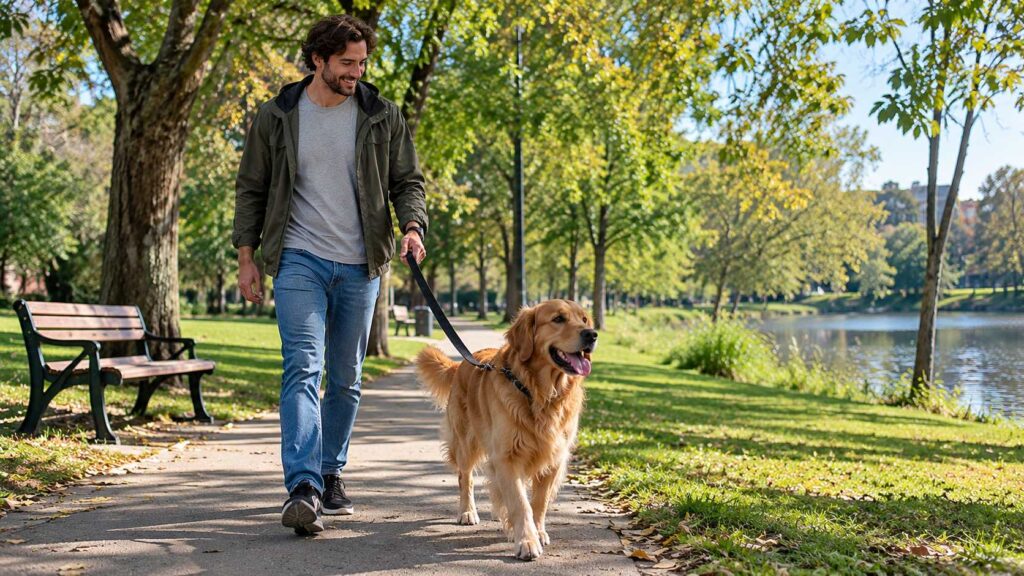
Many healthy adult dogs benefit from around 30–60 minutes of daily physical activity, while some active breeds may need considerably more. However, 30 minutes is not a universal minimum, and an hour is not automatically appropriate for every dog.
Animal welfare organisations such as the PDSA emphasise that exercise requirements depend on factors including breed, age, health and individual fitness.
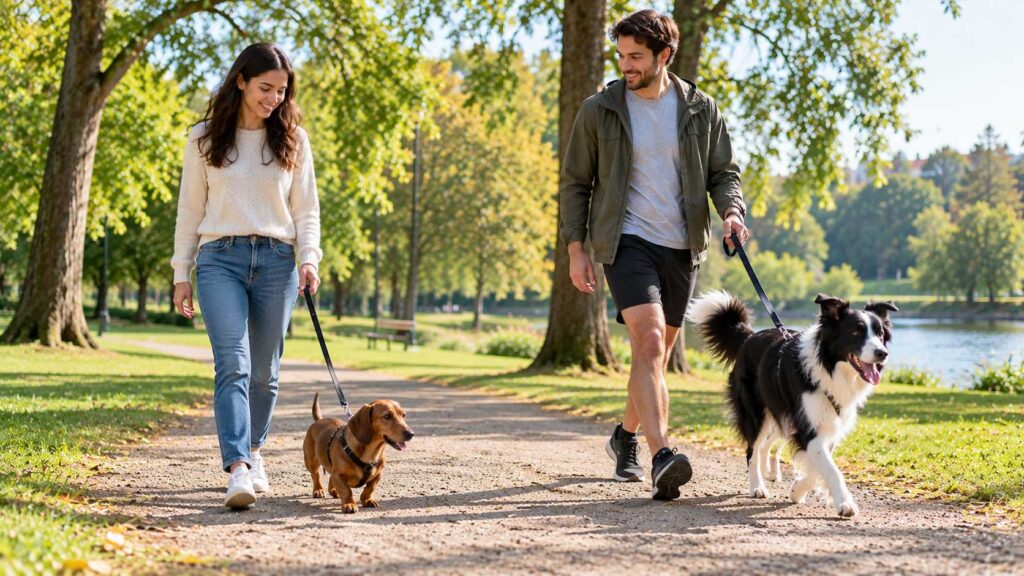
It helps to think about total daily activity rather than walking time alone. Walking, appropriate play and other physical activities contribute to exercise, while sniffing and training provide valuable mental enrichment.
Breed recommendations are useful starting points, but they cannot tell you whether your dog has painful joints, is carrying excess weight or is physically prepared for a long hike.
Is 30 Minutes Enough, or Does Your Dog Need More?
Sometimes, 30 minutes of suitable activity may be enough, particularly for a dog with lower exercise tolerance or specific health limitations. A healthy, energetic Border Collie or Spaniel, however, may need substantially more physical activity and mental engagement.
Look at how your dog responds.
A dog that moves comfortably, enjoys its routine and recovers normally is showing encouraging signs. Persistent restlessness may suggest a need for more appropriate activity or enrichment, but it can also reflect anxiety, discomfort or other problems.
Don’t automatically increase exercise because your dog seems unsettled. Consider the whole picture first.
Should You Count Minutes, Miles or Activity Quality?
None tells the whole story.
A 30-minute walk uphill over uneven ground places different demands on the body than a relaxed walk along a flat pavement. A slower outing with plenty of opportunities to sniff may provide substantial mental enrichment without the same level of physical exertion.
Duration, intensity, terrain and recovery all matter.
Activity trackers can help you identify changes in your dog’s routine, but step counts cannot determine whether a particular exercise session was safe or appropriate.
Before Choosing a Routine, Check These Six Things
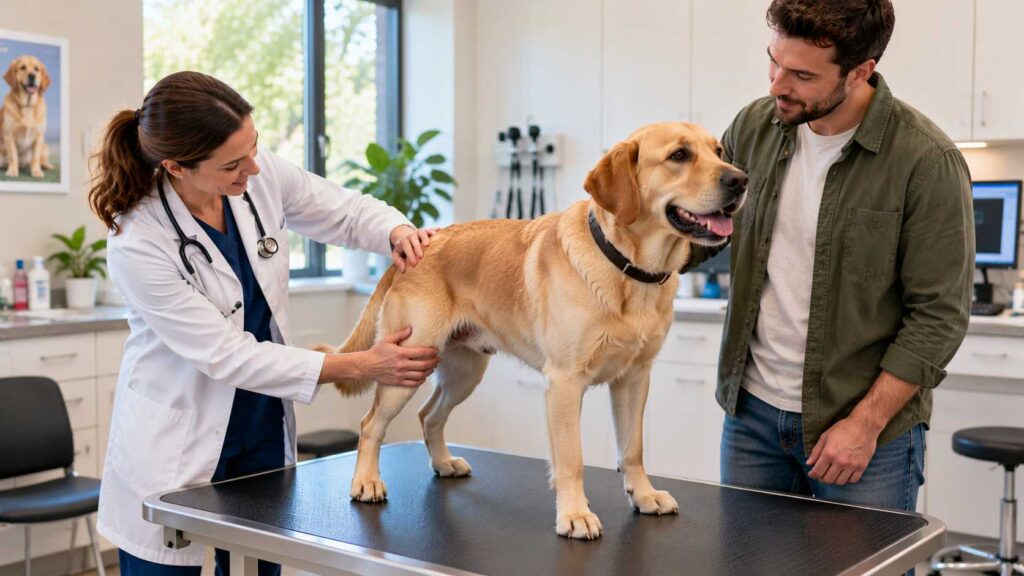
Instead of choosing a number from a breed chart, consider the factors that actually influence your dog’s exercise needs.
The Six-Factor Exercise Check
- Age and stage of life: Puppies, adults and senior dogs have different developmental and physical needs.
- Breed tendencies and body shape: A Greyhound, Bulldog and Border Collie differ in their physical characteristics and typical activity patterns.
- Current fitness and body condition: What your dog can comfortably manage today matters more than what its breed might theoretically manage.
- Medical conditions, pain or veterinary restrictions: Individual veterinary instructions take priority over general recommendations.
- Weather, terrain and environment: Hot pavements, icy paths, steep hills and slippery surfaces can change what is appropriate.
- Comfort during and after activity: Movement, breathing, behaviour and recovery provide important clues about exercise tolerance.
Consider two adult Labradors.
One has comfortably completed regular hour-long walks for years. The other has spent several months being relatively inactive.
Even though they’re the same breed, suddenly taking both on a strenuous two-hour hike would expose the less-conditioned dog to greater risk of overexertion or injury.
The lesson: Start with your dog’s current abilities, not simply its breed label.
Match the Movement to Your Dog’s Stage of Life
Puppies: Exploration Without Forced Endurance
Puppies need opportunities to explore, play and develop coordination, with plenty of rest between activities.
Their bones, joints and other tissues are still developing. Prolonged forced running, repetitive high-impact jumping and exercise that pushes a tired puppy to continue are best avoided.
Allow age-appropriate play at a comfortable pace, but remember that an excited puppy may not recognise when it needs a break.
You may have heard the five-minutes-per-month-of-age rule. Although widely repeated, this formula is not a scientifically established exercise limit for every puppy. The PDSA’s puppy exercise guidance explains why this rule should not be treated as a universal recommendation.
A puppy’s breed, development, health, activity type and individual tolerance all matter.
For large and giant breeds, discuss appropriate exercise progression with your veterinarian.
Before taking your puppy into public areas, also ask your vet about vaccination status and local disease risks. Safe early socialisation remains important, but the environment should match your puppy’s level of protection.
Adult Dogs: Build Around Their Actual Fitness
Adult dogs vary enormously.
A fit working dog may comfortably manage activities that would overwhelm an inactive dog of the same breed.
Start with what your dog already tolerates well. If it is accustomed to short walks, don’t suddenly introduce strenuous running or a long-distance hike.
Increase activity gradually, allowing time for adaptation and recovery.
Variety also matters. A combination of walking, appropriate play, sniffing opportunities and short training sessions can provide a more balanced routine than repeating the same activity every day.
Senior Dogs: Keep Moving, but Adapt the Demands
Older dogs can still benefit from regular, comfortable movement. Appropriate activity helps maintain mobility and muscle function, although individual health conditions may require adjustments.
Some senior dogs do better with shorter, slower walks and more frequent rest periods. Others remain active well into their later years.
Watch for:
- Stiffness after resting.
- Difficulty getting up.
- Reluctance to climb stairs.
- Limping or changes in stride.
- Slowing down during familiar walks.
- Unusual tiredness after activity.
These changes may indicate pain or another health problem rather than normal ageing alone.
Don’t assume your dog simply needs less exercise because it’s getting older. Arrange a veterinary assessment if mobility or exercise tolerance changes.
Which Activities Give Your Dog the Most Value?
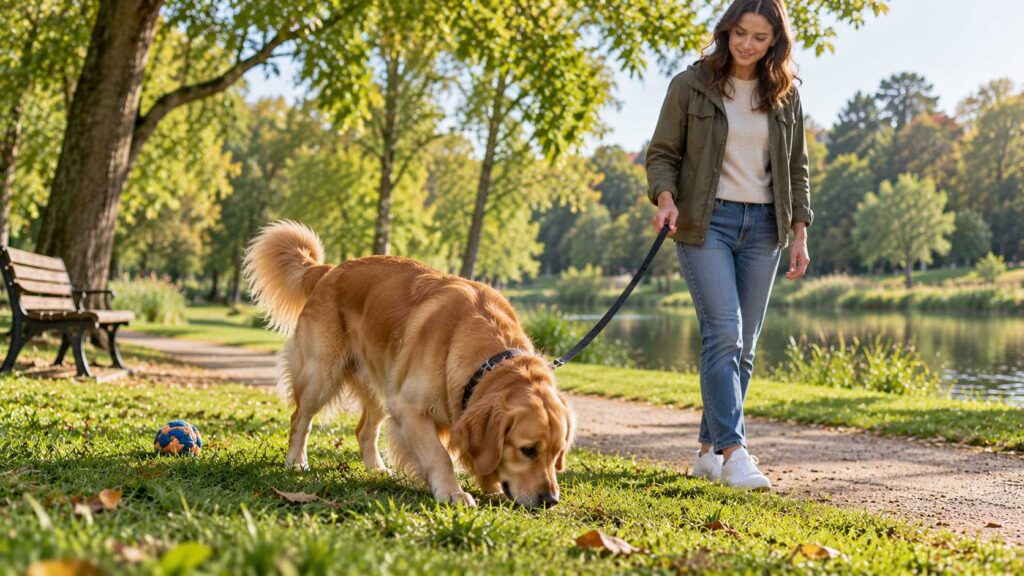
A Sniff Walk and a Fast Walk Are Not the Same Experience
A brisk walk can provide sustained physical activity. A slower walk with opportunities to sniff offers a different benefit: mental enrichment.
Dogs use scent to explore and gather information about their surroundings. Allowing time for this natural behaviour can make walks more engaging.
That doesn’t mean a sniff walk provides the same cardiovascular workout as brisk walking.
A balanced routine may include both, depending on your dog’s abilities and needs.
Play, Training and Low-Impact Alternatives
Fetch, tug, scent games, training and supervised swimming can all contribute to an enjoyable routine.
However, different activities place different demands on the body.
For example, repetitive high-speed fetch involves sudden acceleration, braking and turning, which may be unsuitable for dogs with joint problems or poor conditioning.
Swimming may offer a lower-impact option for some dogs, but it isn’t appropriate for every breed or medical condition. Dogs must be supervised around water.
Indoor enrichment, including puzzle feeders and scent games, is useful when outdoor activity is limited.
| Activity | Main benefit | Important limitation |
|---|---|---|
| Relaxed sniff walk | Gentle movement and sensory enrichment | May provide less aerobic exercise |
| Brisk walk | Sustained physical activity | Must suit current fitness |
| Fetch | Play and potentially vigorous exercise | Repetitive sprinting and sudden stops can strain joints |
| Swimming | Potential low-impact movement | Requires supervision and a suitable dog and location |
| Scent games | Mental stimulation | Cannot fully replace physical activity |
| Training games | Engagement and coordination | Physical demands vary |
Remember: Mental enrichment and physical exercise complement one another. Neither automatically replaces the other.
Try a Routine That Fits Your Dog and Your Day
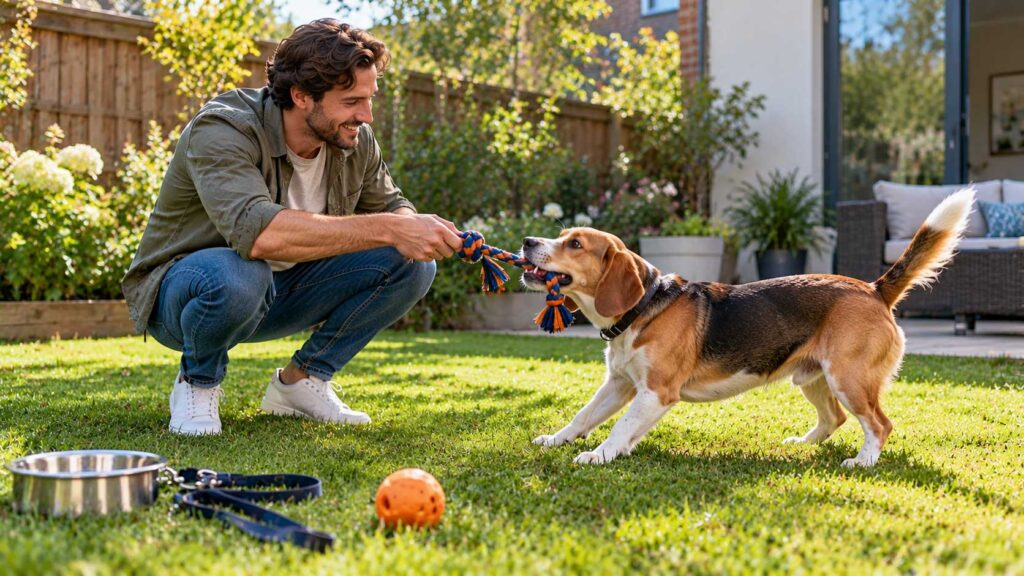
These are examples, not fixed schedules. Adjust them to your dog’s age, health, fitness and individual needs.
Three Everyday Exercise Scenarios
Scenario A: A healthy adult dog. Start with a morning walk that includes some sniffing time, add a play or training session in the afternoon, and finish with another outing in the evening. Adjust the duration and intensity to your dog’s fitness. Notice whether they recover comfortably and settle afterwards.
Scenario B: A busy owner with limited time. Split activity into manageable sessions. Try a suitable walk before work, scent games or training when you get home, and another outing in the evening. Short training sessions can fit naturally into daily routines. Remember that toilet breaks are important, but a quick trip outside doesn’t necessarily provide enough exercise or enrichment.
Scenario C: An older or less-fit dog. Try shorter, slower walks on comfortable, even surfaces, with rest between sessions. Add gentle mental activities such as scent games. Watch for stiffness later that day or the following morning. If your dog becomes uncomfortable, the routine may need adjusting, and a veterinary assessment may be appropriate.
How to Increase Activity Without Doing Too Much Too Soon
If your dog would benefit from more movement, increase activity gradually rather than making sudden changes.
- Establish a baseline. Identify what your dog can currently do without discomfort or unusual fatigue.
- Make small increases. Add a few minutes to a familiar walk before introducing more demanding activities.
- Change one thing at a time. Increasing duration, pace and difficulty together makes it harder to recognise what your dog can tolerate.
- Monitor recovery. Check how your dog moves during exercise, after resting and the following day.
- Respond to warning signs. Stop the activity if your dog limps, becomes unusually tired or shows distress. Seek veterinary advice, particularly if symptoms are significant, persistent or recurring.
For example, if your dog comfortably manages two 15-minute walks, you might gradually lengthen one walk while keeping the other familiar. There’s no need to introduce hills or running at the same time.
Dogs with obesity, existing medical conditions or a history of injury may need a veterinary-guided exercise plan.
Quick Tips for Safer Daily Exercise
- Carry fresh water, especially during longer outings or warm weather.
- Choose suitable surfaces and avoid hot tarmac, sharp gravel and slippery paths.
- Allow time for sniffing and exploration.
- Use a comfortable, properly fitted harness or collar.
- Include rest breaks during longer activities.
- Adjust exercise to the weather and your dog’s condition.
- Keep the routine flexible, but investigate unusual or persistent changes in energy or willingness to exercise.
Read Your Dog’s Response, Not Just the Clock
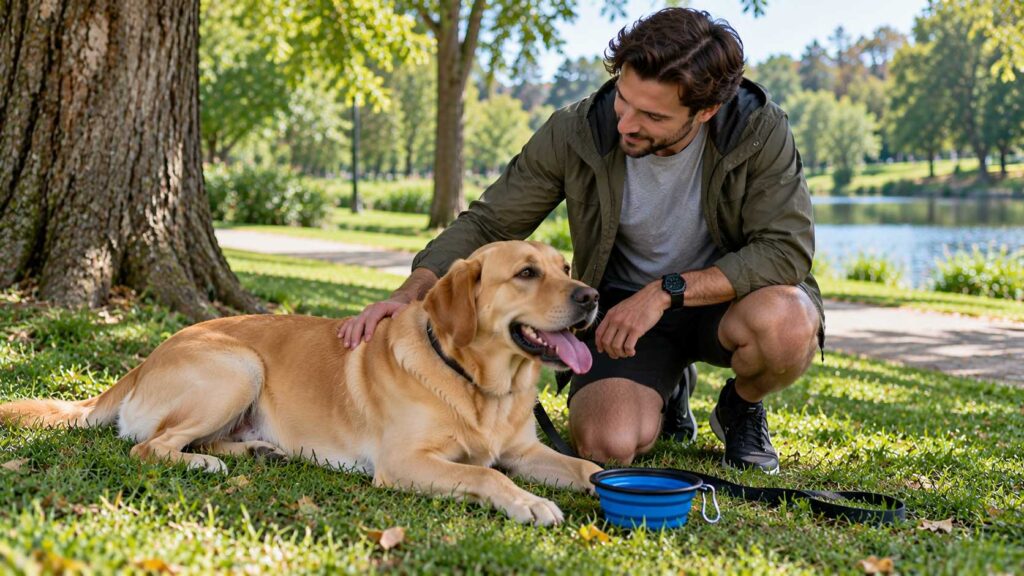
Signs the Current Routine May Be Working
Your dog moves comfortably, participates willingly and recovers normally after activity. There’s no new limping, unusual stiffness or unexpected change in energy.
Their behaviour also remains consistent with what’s normal for them.
These are encouraging signs that the routine may be suitable, although they don’t guarantee that every exercise need is being met.
Signs Your Dog May Need a Different Kind of Activity
Restlessness, pacing, excessive attention-seeking or destructive chewing may indicate that your dog needs more appropriate physical activity or mental enrichment.
For example, a dog that walks the same route every day but has few opportunities to sniff, explore or interact may benefit from greater variety rather than simply walking farther.
However, not every behaviour problem is caused by insufficient exercise.
Anxiety, pain, frustration, inadequate training and medical conditions can produce similar signs. If your dog’s behaviour changes suddenly or becomes persistent, arrange a veterinary assessment rather than automatically increasing exercise.
Signs You May Be Asking Too Much
Watch for:
- Unusual tiredness or slowing down.
- Repeatedly lagging behind.
- Reluctance to continue walking.
- Limping or changes in gait.
- Unusual panting or difficulty recovering.
- Stiffness or soreness after resting.
- Reduced willingness to exercise the following day.
An excited dog may continue playing even when physically tired, so don’t rely entirely on their enthusiasm.
Stop the activity if concerning symptoms appear. Significant, persistent or recurring symptoms warrant veterinary assessment, while severe breathing difficulty, collapse or suspected heatstroke require emergency care.
Warning: When Exercise Becomes an Emergency
Stop exercising immediately and seek emergency veterinary care if your dog:
- Collapses or cannot stand.
- Has severe difficulty breathing.
- Shows signs of suspected heatstroke, such as excessive panting, heavy drooling, weakness, vomiting or confusion after heat exposure or exertion.
- Becomes severely weak, disorientated or unresponsive.
- Shows other signs of serious, sudden distress.
If you suspect heatstroke, begin cooling your dog immediately while arranging emergency veterinary care.
Move them to a cooler area and wet their body with cool tap water, avoiding the nose and mouth. Use airflow from a fan or air conditioning where available. Do not delay cooling while waiting for veterinary instructions.
Contact the emergency clinic promptly and follow its advice during transport. Even if your dog appears to improve, suspected heatstroke requires urgent veterinary assessment because internal complications can develop.
When Health Changes the Exercise Plan
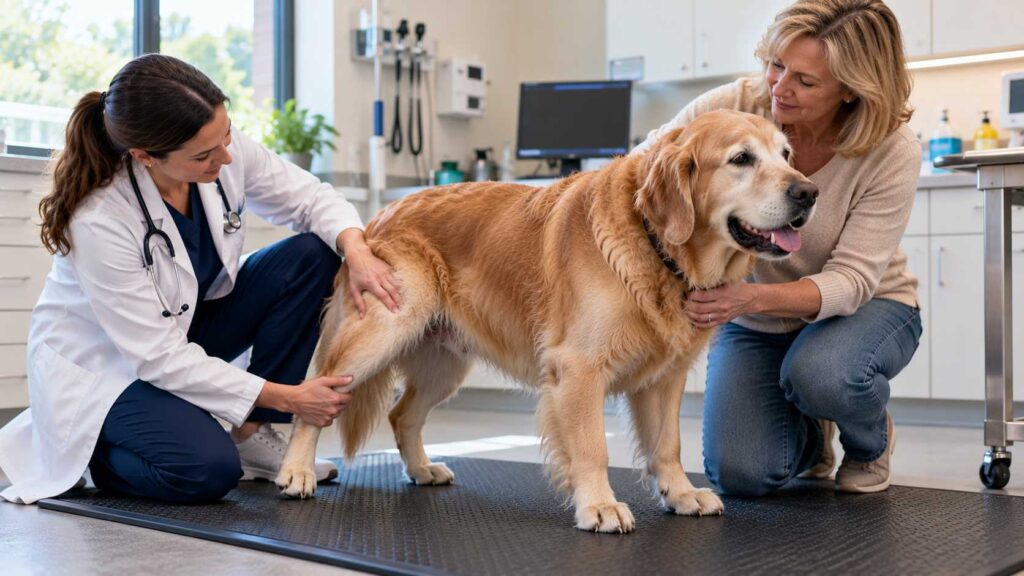
Joint Pain, Arthritis and Reduced Mobility
Dogs with arthritis or other joint problems often benefit from appropriate, controlled movement rather than prolonged inactivity.
Shorter walks, consistent routines and suitable low-impact activities may help maintain mobility without placing unnecessary strain on painful joints.
However, exercise should be adjusted according to the dog’s condition and comfort. During a painful flare-up, your veterinarian may recommend temporary activity restrictions.
Watch for stiffness after resting, reluctance to climb stairs, limping or difficulty getting up.
Don’t assume that stiffness is simply part of ageing. Pain management, weight control and an individual exercise plan can make a meaningful difference to a dog’s comfort.
Overweight Dogs and Dogs Returning to Exercise
If your dog is overweight or has been inactive for an extended period, avoid suddenly introducing long walks, running or strenuous games.
Excess body weight can increase strain on joints, while poor conditioning makes demanding activity harder to tolerate.
Begin with comfortable, manageable exercise and increase gradually according to your dog’s response.
For example, an overweight dog accustomed to brief toilet outings may need a very different starting routine from an overweight dog already walking regularly.
Weight management also depends heavily on appropriate nutrition. Exercise alone may not achieve the desired weight loss.
Ask your veterinarian to assess your dog’s body condition, identify a suitable weight-management plan and recommend safe activity levels.
Breathing Problems, Heart Conditions and Recovery From Surgery
Flat-faced, or brachycephalic, breeds such as Bulldogs and Pugs may have difficulty breathing during exertion, particularly in warm or humid weather.
Dogs with brachycephalic obstructive airway syndrome (BOAS) can experience significant exercise intolerance. Loud breathing, struggling to keep up or needing frequent stops should not automatically be dismissed as normal breed characteristics.
Dogs with diagnosed heart or respiratory conditions may also need individual exercise restrictions.
After surgery or injury, follow your veterinarian’s specific instructions. Even if your dog appears energetic, running, jumping or unrestricted play may interfere with recovery.
General exercise recommendations should never override veterinary restrictions.
Vet Advice: Making the Most of an Appointment
Arrange a veterinary assessment if your dog develops new exercise intolerance, limping, persistent stiffness or an unexplained change in mobility.
Veterinary guidance is also valuable before substantially increasing activity in an older, overweight or medically vulnerable dog.
Before the appointment, record:
- How long and how often your dog exercises.
- The type and intensity of activity.
- When discomfort or unusual tiredness appears.
- How quickly your dog recovers.
- Any changes in walking, breathing or behaviour.
Ask your veterinarian what activities are appropriate, how to increase exercise safely and which symptoms should prompt you to stop.
For ongoing mobility problems, your vet may recommend a qualified veterinary rehabilitation professional.
Change the Plan When the Environment Changes
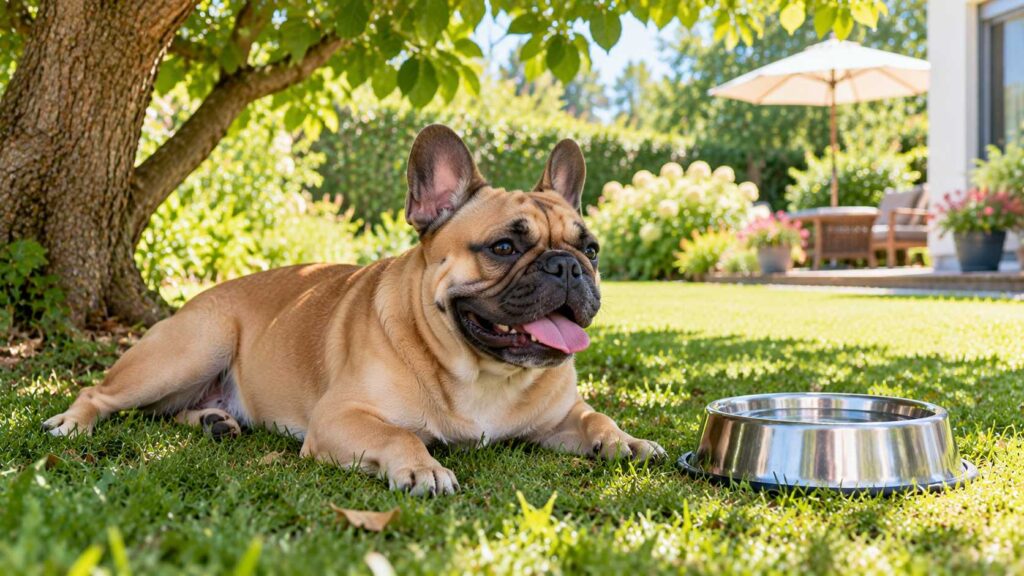
Heat, Humidity and Hot Pavement
Dogs can develop heat-related illness during exercise, especially in hot or humid conditions. Unlike humans, they rely heavily on panting to regulate body temperature.
On warm days, consider cooler times for walks, choose shaded routes and provide access to fresh water.
Check pavement temperature before walking. If a surface feels uncomfortably hot against the back of your hand, avoid it. However, this simple check cannot establish whether the air temperature or humidity is safe for exercise.
Flat-faced dogs, overweight dogs, older dogs and those with heart or respiratory conditions may be particularly vulnerable.
Australian summers can bring extreme heat, but dangerous conditions also occur during heatwaves in the UK, Canada and the United States.
Important: Walking early or late reduces some heat exposure, but it does not guarantee safety during very hot or humid weather.
Cold, Ice, Rain and Slippery Surfaces
Cold tolerance varies according to a dog’s size, coat, age, health and familiarity with the conditions.
Small, short-coated, very young and older dogs may need additional protection in cold weather.
Ice and slippery paths increase the risk of falls, while road salt and de-icing chemicals can irritate paws.
After winter walks, check and clean your dog’s paws, particularly if they’ve been exposed to treated roads or pavements.
A suitable coat may help dogs that struggle with the cold, while reflective equipment improves visibility during dark mornings and evenings.
During severe Canadian winters, shorter outings and appropriate indoor activities may be safer than prolonged outdoor exercise.
In wet UK weather, focus on safe footing, visibility and your dog’s comfort rather than automatically cancelling every walk.
When Outdoor Exercise Isn’t Suitable
If extreme weather makes outdoor exercise unsafe, use appropriate indoor activities to provide movement and mental enrichment.
Options include:
- Scent games using hidden treats or toys.
- Short, positive-reinforcement training sessions.
- Gentle tug games.
- Food puzzles and snuffle mats.
- Controlled indoor play in a clear, non-slip area.
Avoid encouraging high-speed running, sharp turns or repeated jumping on slippery floors.
Indoor enrichment can help maintain a satisfying routine during temporary weather restrictions, although it may not provide the same physical exercise as outdoor activity.
The goal isn’t to complete a fixed number of minutes regardless of conditions. It’s to keep your dog appropriately active without compromising their safety.
Exercise Mistakes That Can Quietly Cause Problems
- Treating breed charts as fixed rules. Use them as a starting point, then adjust exercise to your dog’s age, fitness, health and individual needs.
- Following rigid puppy formulas. Don’t rely on age-based minute limits alone. Consider your puppy’s development, activity type and need for rest.
- Increasing activity too quickly. Sudden increases in walking distance or intensity can lead to overexertion and injury. Build up gradually.
- Assuming a garden is enough. Garden play counts as activity, but access to outdoor space doesn’t guarantee adequate exercise or mental enrichment.
- Relying heavily on repetitive fetch. Repeated sprinting, jumping and sharp turns can place considerable strain on joints. Include gentler activities.
- Ignoring stiffness or unusual tiredness. Limping, reduced mobility and unexpected fatigue may indicate pain or another health problem.
- Exercising in unsafe temperatures. Hot, humid or icy conditions can make familiar activities dangerous. Adjust the routine or choose safer alternatives.
- Using longer walks to fix every behaviour problem. Restlessness and destructive behaviour aren’t always caused by insufficient exercise. Training, enrichment, anxiety management or veterinary assessment may be more appropriate.
A Simple Way to Review Your Dog’s Routine Each Week
You don’t need a complicated fitness tracker to understand how your dog is coping. A few observations throughout the week can help you recognise what works and when something needs adjusting.
The Four Questions Worth Asking
- Was my dog comfortable during activity? Look for normal movement, manageable breathing and a willingness to participate without signs of distress.
- Did they recover normally? Notice whether your dog returns to their usual behaviour and moves comfortably after resting and the following day.
- Did they receive suitable physical and mental stimulation? Consider walking, play, sniffing opportunities and training rather than focusing only on distance.
- Has anything changed that I should mention to my vet? New limping, stiffness, unusual fatigue or reduced exercise tolerance deserves attention.
If your dog is consistently comfortable and recovering well, that’s encouraging. If problems appear, adjust the activity and seek veterinary advice when appropriate.
What to Track, and What Not to Obsess Over
Keep a simple weekly record of:
- Activity: What your dog did and approximately how long it lasted.
- Intensity: Whether the activity was gentle, moderate or particularly demanding.
- Recovery: How your dog behaved afterwards and the following morning.
- Physical changes: Any limping, stiffness, unusual panting or reduced stamina.
- Conditions: Weather, terrain or other factors that affected the routine.
For example, if your dog seems comfortable during a longer weekend walk but struggles to get up the next morning, that information is worth recording and discussing with your vet.
Activity trackers can reveal useful patterns, but they cannot identify pain or determine your dog’s ideal exercise requirement.
Pay more attention to changes in your dog’s comfort and behaviour than to reaching a particular step count.
Frequently Asked Questions
1. How many walks does a dog need each day?
Many dogs benefit from two or more walks daily, but the appropriate number depends on age, health, fitness and individual needs.
Puppies may need more frequent, shorter outings, while some senior dogs benefit from several gentle walks. Remember that toilet breaks, physical exercise and mental enrichment serve different purposes.
2. Is one 30-minute walk enough for my dog?
It may be enough for some dogs, particularly those with lower activity requirements or medical limitations, but many healthy, active dogs need more.
Consider your dog’s fitness, breed tendencies, other daily activities and recovery. Restlessness alone doesn’t prove that more exercise is needed, especially if anxiety, discomfort or inadequate enrichment may be involved.
3. Does playing in the garden count as exercise?
Yes. Running, playing and exploring in the garden can contribute to daily physical activity.
However, simply having access to a garden doesn’t guarantee that your dog exercises. Walks also provide opportunities to encounter different smells and environments.
A combination of suitable outdoor activities, interactive play and enrichment is generally more useful than relying on garden access alone.
4. Can my dog have a rest day?
Yes. A lighter day can be appropriate after unusually demanding activity or as part of a balanced routine.
For many healthy dogs, this might mean shorter walks, gentle play and mental enrichment rather than complete inactivity.
However, if your dog needs a rest day because they’re limping, unusually weak or struggling to move, don’t assume ordinary exercise fatigue is the cause. Contact your veterinarian for advice.
5. Why is my dog still restless after a long walk?
A long walk doesn’t always provide enough mental enrichment. Your dog may benefit from opportunities to sniff, explore, train or participate in appropriate interactive games.
However, persistent restlessness can also be associated with anxiety, pain or other medical and behavioural concerns.
If the behaviour is new, worsening or accompanied by other changes, arrange a veterinary assessment before increasing exercise.
6. Should I walk my dog if they are limping?
Don’t continue normal exercise while your dog is limping.
Stop the activity, restrict strenuous movement and contact your veterinarian for guidance. Even a mild limp can indicate pain or injury.
Seek urgent veterinary care if your dog cannot bear weight, has a visibly deformed or severely swollen limb, experiences significant pain or has suffered a serious injury.
Never give human painkillers unless specifically directed by your veterinarian.
7. Is a longer walk better than two shorter walks?
Not necessarily.
Two shorter walks provide separate opportunities for movement, toileting and exploration. They may also be easier for puppies, senior dogs and dogs with reduced exercise tolerance.
A longer walk may suit a healthy, well-conditioned dog, provided the activity and conditions are appropriate.
Choose the routine your dog can comfortably manage rather than assuming longer always means better.
The Best Exercise Target Is One Your Dog Can Handle Well
There’s no magic number that works for every dog. The right routine provides suitable physical activity, mental enrichment and enough time to recover.
Pay attention to how your dog moves, behaves and feels after exercise. Make gradual adjustments when necessary, and remember that changes in stamina, mobility or breathing may require veterinary assessment.
Your dog’s comfort matters more than reaching an arbitrary exercise target.
This week, review your dog’s age, current activity and recovery. Choose one manageable improvement, perhaps adding a sniff-focused walk or a short training game, and observe how they respond over the next seven days.
If your dog develops unexplained exercise intolerance, persistent stiffness or other concerning symptoms, speak to your veterinarian rather than trying to solve the problem with more activity.
#. Related Articles:
1. How to Leash Train a Dog That Pulls A Safe?