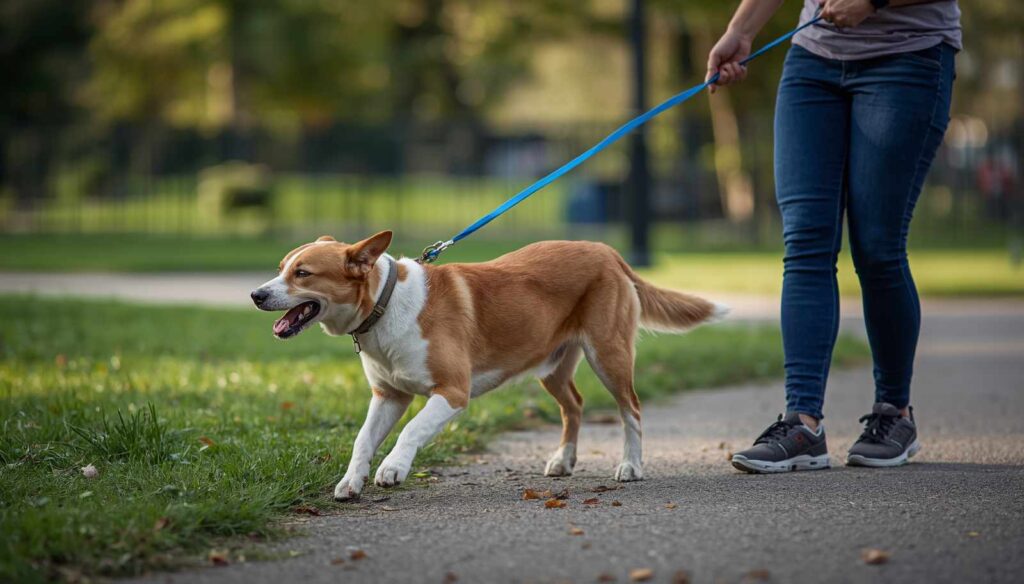
How to leash train a dog that pulls is one of the most common challenges dog owners face. If every walk feels like your dog is dragging you down the street, don’t worry—loose-leash walking is a skill that can be taught with patience, consistency, and reward-based training.
You are barely out the door and already your arm feels as though it is being pulled from its socket. Your dog is nose-down, zigzagging across the pavement and dragging you toward every lamppost, squirrel, and passing dog as though the walk is a race they are determined to win.
If that sounds familiar, take a breath. Pulling does not mean your dog is stubborn, dominant, or badly bred. It usually means they have learned that pulling gets them closer to something they want—and nobody has yet shown them a better way to walk.
Loose-leash walking is a taught skill, not something dogs naturally understand. When pulling leads to a smell, another dog, or simply continued forward movement, the behaviour is rewarded and becomes more likely to happen again.
The solution is not punishment. The American Veterinary Society of Animal Behavior recommends reward-based training and advises against leash corrections, prong collars, choke chains, and other aversive methods because of their potential effects on welfare and the dog–owner relationship.
In practical terms, teaching a dog not to pull means:
- preventing a tight lead from moving them toward what they want
- rewarding moments of slack before pulling begins
- practising first in easy environments
- gradually adding distance, duration, and distractions
Consistency matters more than any special trick or piece of equipment. This guide explains why dogs pull, how to choose safer walking gear, what to do the moment the lead tightens, and how to adjust the plan when progress stalls.
First, Work Out Why Your Dog Is Pulling
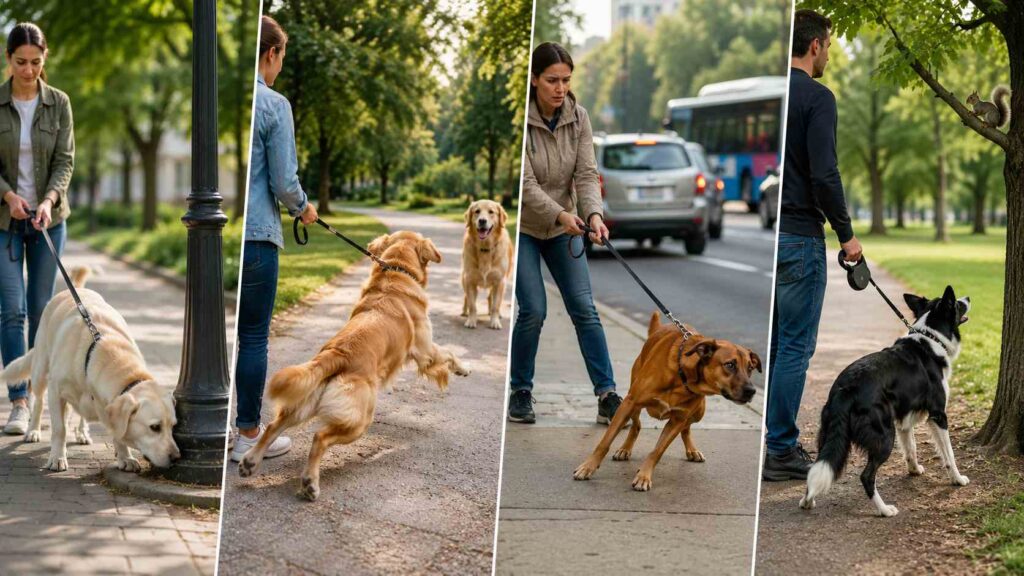
Not all pulling has the same cause. Before choosing a training method, look at what happens immediately before the pulling begins and what your dog is trying to reach—or escape.
Pulling Towards Smells
A dog who keeps their nose down, zigzags across the path, and surges toward grass verges or lampposts is usually following scent rather than challenging the handler.
Trying to eliminate sniffing entirely can make walks more frustrating. Instead, use access to a scent as a reward: ask for a few loose-leash steps, then release your dog to sniff.
Excitement or Over-Arousal
Some dogs are already highly aroused before the lead is clipped on. They may whine, jump, spin, rush through the doorway, or ignore familiar cues.
In this state, outdoor training often falls apart before it begins. Practise calm lead attachment and door exits separately, and start the walk only when your dog can briefly respond to you.
Wanting to Greet Dogs or People
Pulling toward another dog or person may come from social excitement or frustration at being restrained. However, barking, stiff posture, growling, or repeated lunging can also indicate fear or leash reactivity.
Do not assume every dog pulling forward wants a friendly greeting. Create more distance if your dog cannot look away, take food, or respond to a familiar cue.
Fear or the Urge to Escape
A dog pulling away from traffic, loud noises, unfamiliar streets, or approaching people may be trying to create distance.
Watch for:
- a tucked tail
- lowered posture
- ears held back
- scanning or freezing
- refusal of treats
- attempts to turn toward home
This is not a loose-leash problem alone. Move to a safer distance and avoid dragging or forcing the dog closer to what frightens them.
Chasing Wildlife or Vehicles
Sudden, explosive pulling combined with a fixed stare may be triggered by wildlife, bicycles, runners, or moving vehicles.
Treat this as a safety issue first. Use secure, well-fitted equipment, maintain enough distance to prevent a full chase response, and practise disengagement in easier situations. Training beside traffic or close to wildlife is not the place to test an unreliable setup.
Handler Pace or a Lead That Is Too Short
Sometimes tension develops because the dog naturally walks faster than the handler or because the lead is so short that slack is almost impossible.
Try a safe fixed-length lead that provides enough room for a visible curve without allowing the dog to reach traffic or cross unpredictably in front of you. Brief changes of pace can also help a dog learn to follow your movement.
Pain or Physical Discomfort
A sudden change in walking behaviour deserves attention. Contact your veterinarian if a dog who previously walked comfortably begins pulling unusually, stopping repeatedly, lagging behind, refusing to walk, or moving with an uneven gait.
Also watch for:
- coughing or gagging against the collar
- noisy or difficult breathing
- neck, back, or shoulder sensitivity
- limping or stiffness
- unusual tiredness
- reluctance to wear the usual equipment
Hard pulling against a collar can place excessive pressure on delicate structures in the neck, so equipment choice is especially important for dogs with airway, neck, spinal, or eye conditions.
What Loose-Leash Walking Actually Looks Like
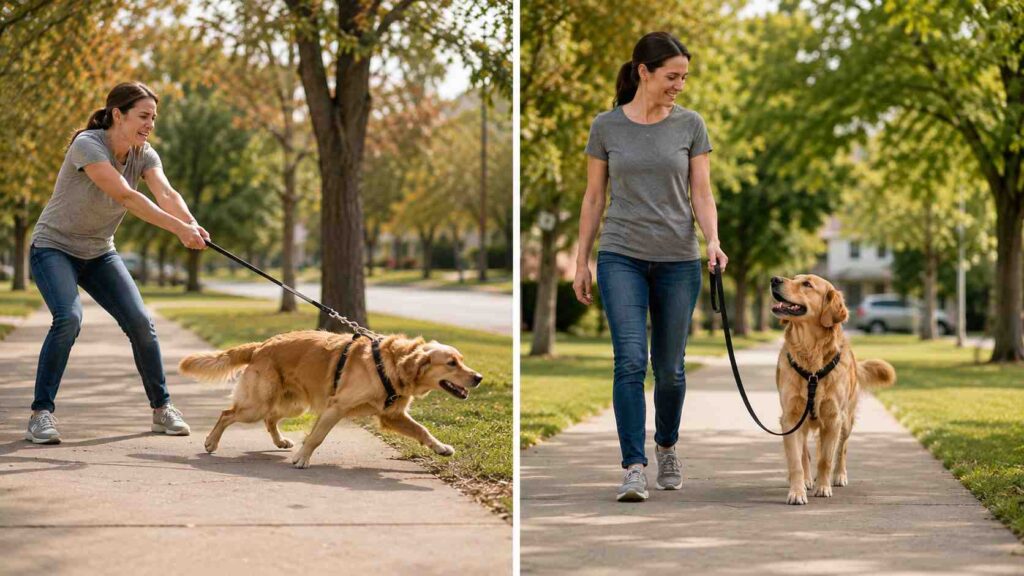
A useful mental image is a soft J-shaped curve in the lead. It should hang with visible slack rather than forming a straight, tight line between you and your dog.
Your dog does not need to stay glued to your leg or maintain constant eye contact. During an everyday walk, they may move slightly ahead, beside you, or briefly behind you. The important rule is that they are not continuously pulling against the lead.
Loose-leash walking is different from formal heelwork. Heelwork asks the dog to maintain a precise position close to the handler, usually for short periods. Loose-leash walking gives the dog more freedom to explore while remaining safe and responsive.
Before training, decide what your everyday walking rules will be:
- How far ahead may your dog walk?
- Which cue means “walk close”?
- Which cue releases them to sniff?
- Are on-leash greetings allowed?
- What behaviour opens the front door?
- What happens the moment the lead becomes tight?
Clear, consistent rules make learning much easier for both the dog and every person who walks them.
Getting Set Up Before You Start
Training goes far more smoothly with a little preparation.
Start Somewhere Boring
Begin in your living room, hallway, garden, or on a quiet street—not in a busy park. Your dog needs to understand the skill before you expect them to use it around cyclists, other dogs, traffic, and interesting smells.
Choose a Clear Marker
Use a clicker or a short, consistent word such as “yes.” The marker tells your dog exactly which moment earned the reward. Say it once, then deliver the treat promptly.
Use Rewards Worth Working For
Choose small, soft treats that are easy to swallow, such as cooked chicken or tiny pieces of cheese. Outdoors, your reward is competing with the entire environment, so dry kibble may not be motivating enough.
Keep portions tiny and reduce your dog’s regular food slightly if you are using a lot of treats. Dogs with food allergies, sensitive stomachs, pancreatitis, or prescription diets may need vet-approved alternatives.
Agree on the Rules as a Household
Everyone who walks the dog should respond to pulling in the same way. If one person stops whenever the lead tightens while another allows the dog to pull toward whatever they want, the behaviour becomes unpredictable—and often harder to change.
Choosing the Right Equipment
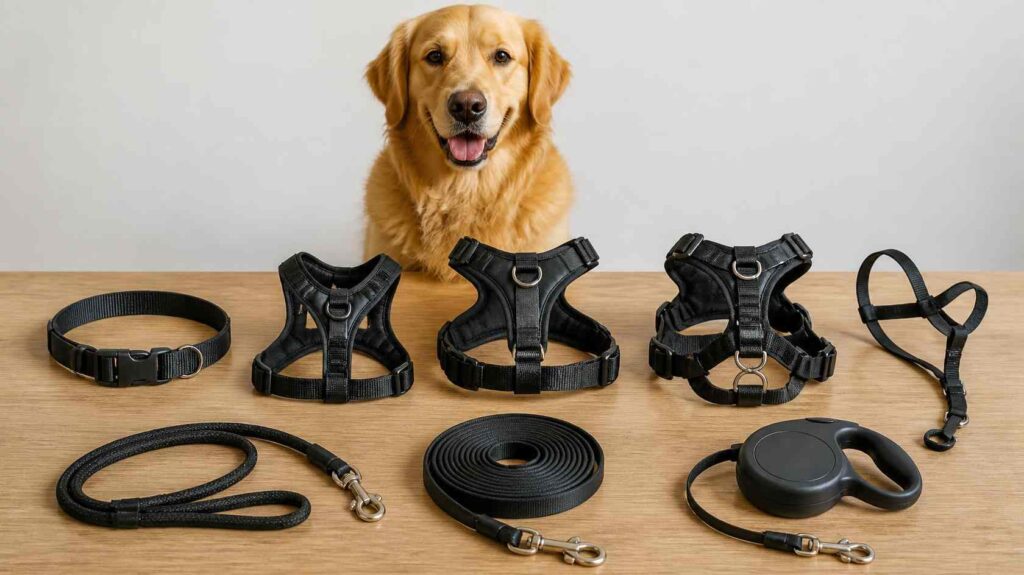
Equipment will not teach your dog to stop pulling, but the right setup can make training safer and easier to manage.
| Equipment | Main Benefit | Main Limitation | Best Use | Watch Out For |
|---|---|---|---|---|
| Flat collar | Simple and familiar | Pressure is applied to the neck | Dogs with established leash manners | Repeated tension, coughing, or gagging |
| Back-clip harness | Reduces direct neck pressure | Offers limited control over forward pulling | General walking and calm dogs | Pulling may remain comfortable and easy to practise |
| Front-clip harness | Helps redirect forward force | Can twist if poorly fitted | Moderate pullers | Shoulder restriction, rubbing, or poor fit |
| Dual-clip harness | Provides two points of control | Requires more handling skill | Strong dogs and gradual training | Constant opposing pressure from both clips |
| Head halter | Offers greater control of head direction | Requires slow conditioning | Strong dogs under professional guidance | Never jerk the lead; use a backup attachment |
| Long line (5–10 m) | Allows controlled freedom and sniffing | Not suitable for loose-leash training | Open spaces away from roads | Never attach to a neck collar |
| Retractable lead | Gives variable range | Encourages continuous tension and reduces control | Limited use after reliable training | Avoid near roads, crowds, and other dogs |
The harness should fit securely without rubbing, twisting, or restricting shoulder movement. For dogs that can reverse out of equipment, consider a backup connector between the harness and collar. If your dog has neck, airway, or spinal concerns, your veterinarian can help you choose the safest walking equipment. You can also read VCA Animal Hospitals’ guide on collar and harness options for more information.
Avoid using choke chains, prong collars, shock collars, or slip leads as a quick fix for pulling. These tools do not teach the dog what to do instead and may increase pain, fear, or defensive behaviour. A dog that coughs, gags, struggles to breathe, or shows neck discomfort during walks should be assessed by a veterinarian.
The Training Method: Stop, Wait, Reward
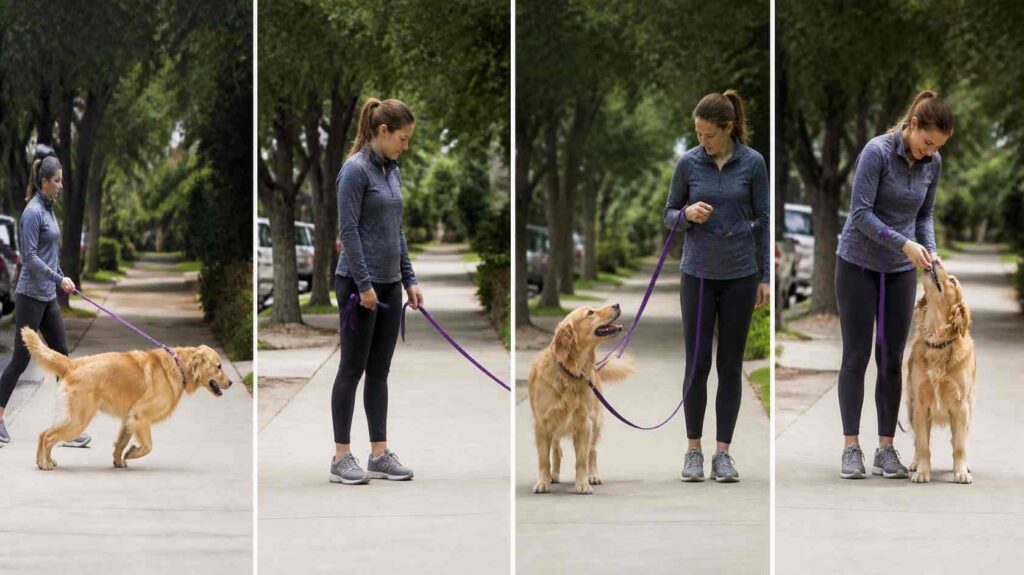
The basic rule is simple: a tight lead stops progress, while a loose lead makes good things happen. This reward-based approach is also supported by the American Veterinary Society of Animal Behavior (AVSAB), which recommends positive reinforcement over punishment-based training methods for teaching dogs new behaviors.
Teach Attention Indoors First
Say your dog’s name once. The moment they look toward you, mark the behaviour and reward them.
Practise a few short repetitions at a time. Avoid repeating their name if they do not respond; instead, move to a quieter area or use a better reward.
Reward the Position You Want
Walk slowly around your hallway or garden. Whenever your dog is near you with a loose lead, mark and reward beside your leg.
Treat placement matters. Holding food too high may encourage jumping, while throwing it ahead can encourage surging forward. Delivering the reward close to your side helps your dog understand where reinforcement happens.
Stop the Moment the Lead Tightens
As soon as the lead becomes taut:
- Stop moving.
- Keep your arms relaxed.
- Do not pull your dog back or repeat commands.
- Wait for the lead to loosen or for your dog to turn toward you.
- Mark, reward, and continue walking.
For example, if your dog pulls toward a lamppost, do not let the tight lead carry them there. Wait for slack, reward it, then continue toward the lamppost. The sniff itself can become part of the reward.
Change Direction When Standing Still Causes Frustration
Some dogs become more excited when the handler simply stops. They may bark, jump, spin, or bite the lead.
In that case, calmly turn and walk in the opposite direction before frustration escalates. Avoid snapping the lead or dragging the dog around. Practise this turn indoors first so it feels like a familiar movement rather than a punishment.
Add a Cue After the Behaviour Is Working
Once your dog is regularly moving beside you with a loose lead, introduce a cue such as “close” or “with me.”
Say the cue as your dog moves into the correct position, then mark and reward. Repeating a cue before the dog understands it only teaches them that the word can be ignored.
Build Distractions Gradually
Increase difficulty in small stages:
- indoors
- garden or driveway
- quiet pavement
- distant people
- joggers or cyclists
- dogs at a safe distance
- busier environments
When you move to a harder setting, reward more frequently and expect fewer successful steps at first. Dogs do not automatically transfer a skill learned at home to every new place.
When It Isn’t Working
My Dog Will Not Take Treats Outside
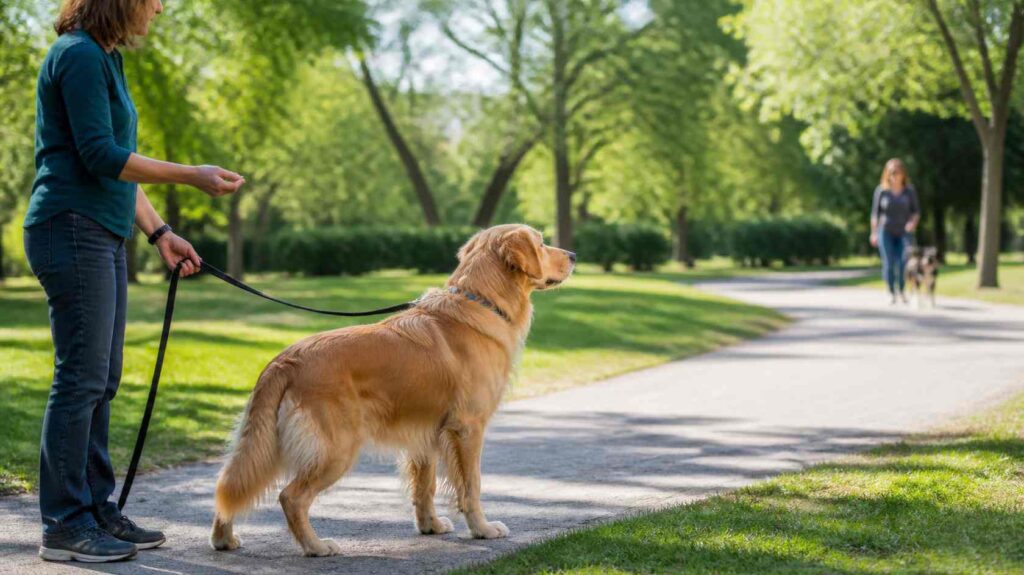
The environment may be too difficult, your dog may be overexcited or frightened, or the reward may not be valuable enough.
Increase distance from the distraction and return to an easier location. A dog that normally enjoys food but suddenly refuses it outdoors may be too stressed to learn at that moment.
My Dog Goes Wild Near Other Dogs
Do not assume the behaviour is friendly excitement. Pulling, barking, freezing, stiff posture, or lunging may involve frustration, fear, or leash reactivity.
Create enough distance for your dog to notice the other dog without losing control. Reward calm glances and voluntary attention, then move away before they become overwhelmed. Do not force greetings or close the distance simply because your dog is pulling forward.
My Dog Pulls Harder When I Stop
Standing still may be too frustrating, or the reward they want may be too close. Use a calm direction change, move farther from the distraction, and reward before the lead becomes fully tight.
Nothing Has Changed After Several Weeks
Check the details before changing the entire method:
- Are you rewarding before your dog reaches the end of the lead?
- Does pulling still succeed during rushed or casual walks?
- Are all family members using the same rules?
- Is the training location too difficult?
- Are rewards delivered beside you and without delay?
- Are sessions short enough to prevent frustration?
Progress should be measured in more than complete pull-free walks. Look for longer stretches of slack lead, quicker recovery after distractions, and more voluntary check-ins.
If pulling involves lunging, panic, aggression, repeated escape attempts, or a handler who cannot safely control the dog, contact a qualified reward-based trainer or veterinary behaviour professional. Seek veterinary advice first if the behaviour appeared suddenly or is accompanied by pain, coughing, breathing changes, stiffness, or unusual fatigue.
Mistakes That Quietly Undo Your Progress
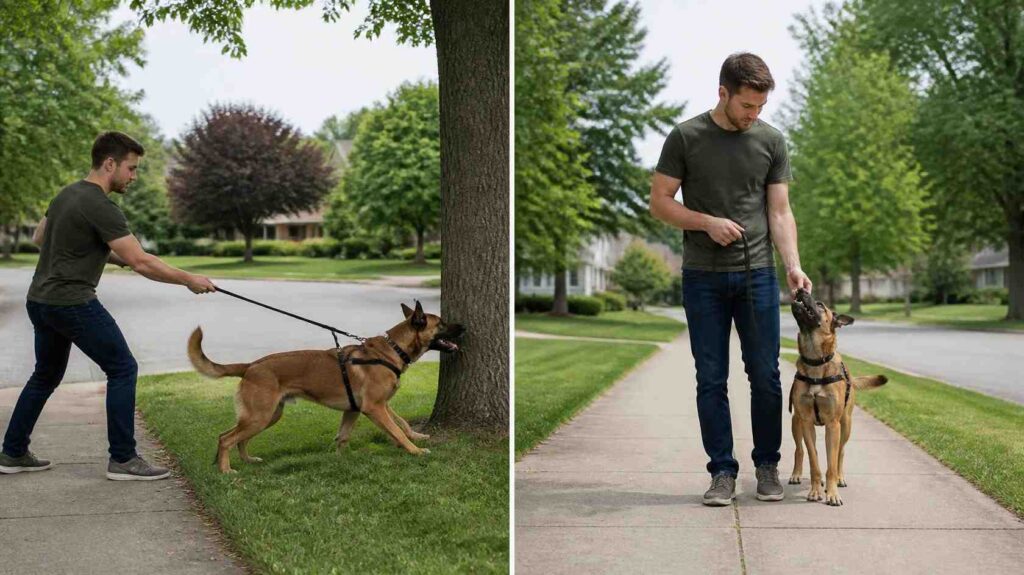
Letting Pulling Work Sometimes
If pulling occasionally gets your dog to a smell, another dog, or the end of the street, the habit stays rewarding. Inconsistent results can make pulling especially persistent because your dog learns that it may pay off if they keep trying.
Rewarding Too Late
Timing matters. If the treat arrives after your dog has jumped, crossed in front of you, or tightened the lead again, you may reinforce the wrong behaviour. Mark the exact moment the lead becomes slack, then reward promptly.
Starting Somewhere Too Difficult
A busy park full of dogs, cyclists, children, and wildlife is not a fair starting point. Begin somewhere your dog can still respond to their name and take food, then increase distractions gradually.
Trying to Tire the Dog Out Instead of Training
Exercise can reduce excess energy, but exhaustion does not teach loose-leash walking. Over-exercising can also be risky for puppies, senior dogs, brachycephalic breeds, and dogs with joint or heart conditions.
Expecting a Perfect Heel for the Whole Walk
A formal heel is a separate, more demanding skill. For everyday walks, the realistic goal is a slack lead, safe movement, and regular check-ins—not constant eye contact or a fixed position beside your leg.
When to Get Extra Help
Contact a qualified reward-based trainer if pulling continues despite consistent practice, your timing is difficult to manage, or your dog is strong enough to create a genuine fall or injury risk.
Seek help from a qualified behaviour professional if your dog:
- barks or lunges at dogs, people, vehicles, or wildlife
- appears fearful or panicked outside
- cannot disengage from triggers
- redirects onto the lead or handler
- takes a long time to settle after a trigger has passed
These behaviours often involve fear, frustration, or reactivity rather than ordinary leash manners.
See your veterinarian first if the problem began suddenly or your dog shows:
- stiffness, limping, or an uneven gait
- reluctance to walk or repeated stopping
- coughing, gagging, or noisy breathing
- neck, back, or shoulder sensitivity
- unusual tiredness or reduced exercise tolerance
Training cannot resolve pain, airway problems, or another physical condition, and continuing to push through discomfort may make the behaviour worse.
The Bottom Line
There is no product or trick that reliably stops pulling overnight. What works is consistent, reward-based practice: stop forward movement when the lead tightens, reward slack before pulling begins, and make each new environment easy enough for your dog to succeed.
Progress is rarely perfectly linear. One walk may feel effortless and the next may fall apart because the location is busier, your dog is more excited, or the reward is not valuable enough. Measure improvement in longer stretches of slack lead, quicker recovery around distractions, and more voluntary check-ins—not perfection.
Frequently Asked Questions
1.Should My Dog Return All the Way to My Side Before I Start Walking Again, or Is Any Slack Enough?
Any genuine slack is enough to resume walking. Your dog does not need to return to a strict heel position unless that is a separate behaviour you have deliberately trained.
In the early stages, waiting for a full return may frustrate the dog and slow learning. The immediate lesson should be simple: a tight lead stops movement, and a loose lead allows it to continue.
2.Is Loose-Leash Walking the Same Thing as a Formal Heel?
No. A formal heel asks the dog to maintain a precise position beside the handler and usually involves sustained attention.
Loose-leash walking simply means the lead remains slack. Your dog may walk slightly ahead, beside you, or briefly behind you while still having room to sniff and explore safely.
3.Can Sniffing Be Used as Part of Training Rather Than Something to Stop?
Yes. Sniffing can be one of the most useful rewards available during a walk.
Ask for a few loose-leash steps toward the sniffing spot, give a release cue such as “go sniff,” and allow a short sniffing break. This teaches your dog that calm walking earns access to the environment.
4.Why Does My Dog Pull More on the Way Home Than on the Way Out?
Some dogs are eager to return to food, rest, familiar smells, or another predictable reward at home. Others rush because the return route is familiar and less mentally tiring.
Reward check-ins on the way back, vary the route occasionally, and include brief sniffing opportunities so the journey home does not become one long pull toward the front door.
A sudden new urgency to return home, especially with fear, fatigue, or discomfort, should be discussed with your veterinarian.
5.Does a Front-Clip Harness Stop Pulling by Itself?
No. A front-clip harness may give the handler more control and reduce the dog’s ability to drive straight forward, but it does not teach loose-leash walking.
The behaviour changes through consistent reinforcement. The harness is a management tool that can make training safer while the skill develops.
6.My Dog Walks Nicely for One Family Member but Pulls Badly With Another—Why?
Dogs respond to each handler’s pace, timing, leash tension, cues, and consistency.
One person may reward earlier, walk at a more comfortable speed, or prevent pulling from succeeding. Agree on the same cue, equipment, reward position, and response to a tight lead so the rules remain predictable.
7.How Do I Know Whether My Dog’s Pulling Is a Medical Issue Rather Than a Training Problem?
A medical problem is more likely when the behaviour appears suddenly or is accompanied by physical changes.
Arrange a veterinary examination if your dog:
previously walked comfortably but now pulls, stops, or refuses to continue
limps, moves stiffly, or appears uneven
coughs, gags, or struggles against neck pressure
tires more quickly than usual
reacts when the collar, harness, neck, shoulders, or back are touched
These signs can point to pain, equipment discomfort, airway sensitivity, or another medical issue that should be addressed before training continues.
#. Related Articles:
1. How to Train a Stubborn Dog to Sit?