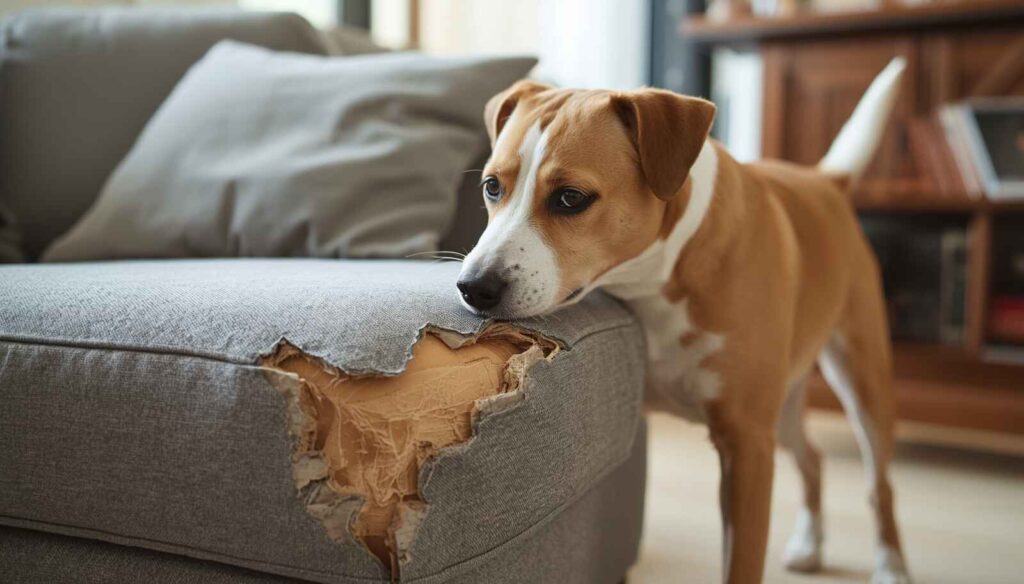
You walked into the living room, and there it was — a leg of your favourite chair reduced to something resembling a gnawed bone. Sound familiar? If you’re dealing with a dog who treats your furniture like a personal buffet, you’re not alone. Thousands of dog owners across the UK, Canada, and Australia search for this exact problem every single day.
The good news? This is fixable. Not overnight, but with the right approach, you can teach your dog to leave your sofa alone — permanently.
Let’s get into it.
Why Your Dog Is Chewing the Furniture (It’s Not Spite)
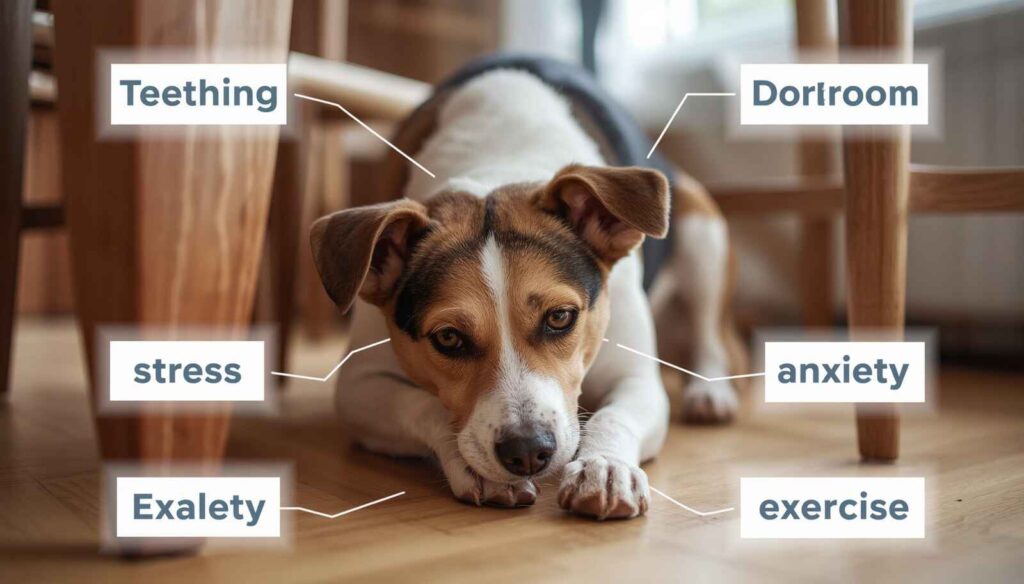
Before you can fix the problem, you need to understand why it’s happening. Dogs don’t chew your couch to get revenge. They do it because something is going on — physically, emotionally, or behaviourally.
They’re Bored Out of Their Mind
A bored dog is a destructive dog. It’s almost that simple. If your dog isn’t getting enough mental and physical stimulation, they will find their own entertainment. And unfortunately, your furniture makes for a very satisfying chew toy.
This is especially common in high-energy breeds like Border Collies, Labradors, and Huskies — all incredibly popular across Australia and Canada especially.
They’re Still a Puppy (Teething Is Real)
Puppies between 3 and 6 months old are teething. Their gums ache. Chewing brings relief. They’re not being bad — they’re doing exactly what their body is telling them to do. The problem is, they haven’t yet learned what is acceptable to chew.
Separation Anxiety Is Driving the Behaviour
If the chewing only happens when you leave the house, this is a big clue. Separation anxiety causes real stress in dogs, and chewing is one of the ways they cope with that stress. It’s a self-soothing behaviour — much like how some people bite their nails when they’re anxious.
They’ve Never Been Taught the Rules
This is more common than people admit. Dogs don’t automatically know the sofa is off-limits. If no one has ever clearly communicated “that is not yours to chew,” why would they stop?
Dental Discomfort or Underlying Health Issues
Occasionally, excessive chewing can point to dental pain or nutritional deficiencies. It’s worth ruling this out if the behaviour comes on suddenly, especially in an older dog who was previously fine.
How to Stop a Dog from Chewing Furniture: A Real-World Guide
1. Give Them Something Better to Chew
This is step one — always. Before you correct the behaviour, you need to offer an alternative. Stock up on a variety of chew toys and see which ones your dog actually goes for. Every dog has preferences.
Good options to try:
- Rubber chew toys (KONG is a classic — stuff it with peanut butter or wet food and freeze it for longer-lasting entertainment)
- Natural chews like bully sticks, antlers, or yak chews
- Rope toys for dogs who like the texture of fabric
- Puzzle feeders that make them work for kibble or treats
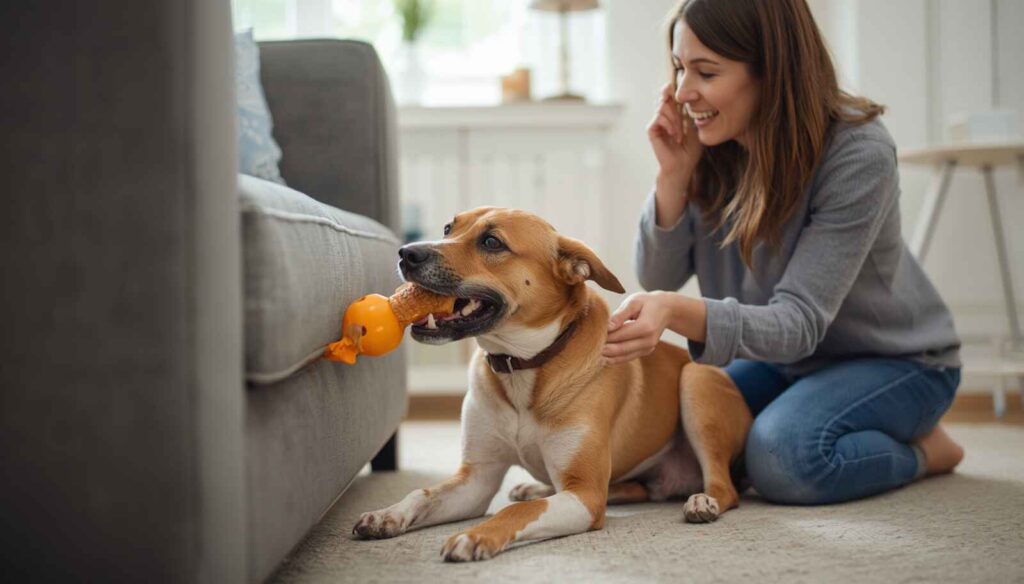
The goal is to make the right choice the obvious choice. When your dog reaches for a toy instead of a table leg, reward them with genuine enthusiasm.
2. Use Deterrent Sprays — But Use Them Correctly
Bitter apple spray and other furniture deterrents genuinely work for a lot of dogs — but only when used properly. Most people spray once, forget about it, and wonder why it stopped working.
Here’s how to do it right:
- Apply the spray to the furniture consistently — every 1–2 days at first
- Let your dog sniff it before they chew so they learn what that smell means
- Combine it with redirection (see below) — spray alone rarely solves the problem
Some dogs aren’t bothered by bitter apple. If that’s yours, try citrus-based sprays or white vinegar diluted with water. Test a small hidden area first to make sure it won’t damage your furniture.
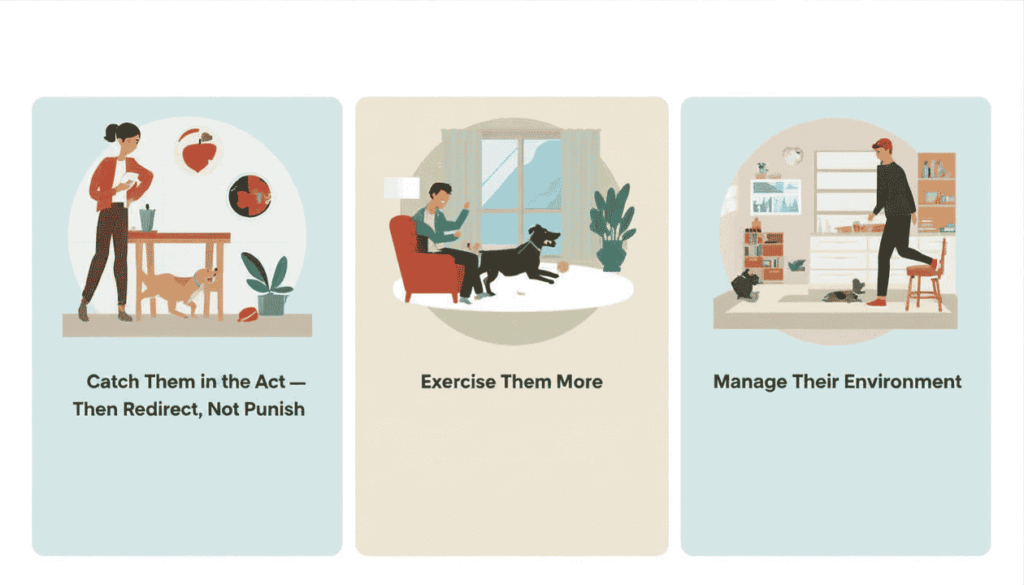
3. Catch Them in the Act — Then Redirect, Not Punish
If you catch your dog chewing the sofa, a calm, firm “No” or “Leave it” is enough. Then immediately hand them a chew toy and praise them when they take it.
What you should never do is punish them after the fact. If you come home to a destroyed cushion and scold your dog, they will have absolutely no idea what they did wrong. Dogs live in the present. That moment has passed for them.
Punishment after the fact creates confusion and anxiety — it doesn’t teach them anything useful.
4. Exercise Them More (Yes, Really)
This one isn’t glamorous advice, but it’s probably the most effective thing on this list. A tired dog is a well-behaved dog. If your dog is getting an adequate amount of exercise, they simply won’t have the energy to chew through your furniture.
Aim for:
- At least 30–60 minutes of physical activity daily for most breeds
- Mental stimulation through training sessions, scent games, or puzzle toys
- “Sniff walks” where you let them explore at their own pace — sniffing is genuinely exhausting for dogs
If you’re in a colder climate like Canada during winter, indoor activities like hide-and-seek with treats or learning new tricks can burn a surprising amount of energy.
5. Manage Their Environment (Don’t Set Them Up to Fail)
You wouldn’t leave a toddler alone in a room full of things they shouldn’t touch. The same logic applies to dogs, especially young ones.
Practical management ideas:
- Use baby gates to limit access to certain rooms when you’re not home
- Try a crate for short periods — when done correctly, crates become a safe den, not a punishment
- Use furniture covers or slipcovers on pieces your dog tends to target
- Keep your dog in the room you’re in — most chewing happens when they’re unsupervised
Crate training gets a bad rap, but when introduced gradually and with positive associations (treats, favourite toys, meals inside), most dogs genuinely come to love their crate. It keeps them safe and your furniture intact.
6. Teach “Leave It” and Make It Stick
The “Leave It” command is one of the most useful things you can teach your dog. Once they understand it reliably, you can use it in real-time whenever they go near something they shouldn’t.
Simple way to teach it:
- Hold a treat in your closed fist.
- Let your dog sniff and paw at your hand. Say nothing.
- The moment they pull back or stop, say “Leave it” and reward them with a different treat from your other hand.
- Practise daily for just 5 minutes.
Once they get it with treats, you can generalise it to furniture, shoes, and anything else they fancy chewing.
7. Address Separation Anxiety Specifically
If you’ve identified separation anxiety as the cause, the solution requires a specific approach — not just more toys.
Start by practising short departures. Leave for 30 seconds. Come back. Leave for a minute. Come back. Gradually increase the time. The goal is to teach your dog that your leaving is not the end of the world.
Other things that help:
- Leaving a worn piece of your clothing near their bed (your scent is comforting)
- Putting on calm background noise or a dog-specific playlist (yes, these exist)
- Avoiding overly emotional goodbyes — a calm, matter-of-fact exit is better
If the anxiety is severe — think howling, accidents, or destruction every single time you leave — speak to your vet. They may suggest working with a certified animal behaviourist, or in some cases, short-term medication alongside behaviour modification.
8. Be Consistent Across the Whole Household
This is where a lot of people quietly sabotage themselves. If you’re firmly redirecting your dog away from the sofa but your partner lets them chew on an old shoe, the dog gets confused. Mixed signals slow down the entire process.
Everyone in the home needs to follow the same rules. That includes kids. Decide what is and isn’t allowed, communicate it clearly, and stick to it.
When to Talk to a Professional

Most furniture chewing is manageable with the steps above. But if you’ve been consistent for several weeks and nothing is improving, it might be time to bring in a professional.
Signs it’s worth seeking help:
- The chewing is escalating despite intervention
- Your dog shows other anxious or aggressive behaviours
- You suspect an underlying medical issue
- The destruction is causing serious stress in your household
A qualified dog trainer or animal behaviourist can observe your dog, identify what’s driving the behaviour, and give you a personalised plan. In the UK, look for someone registered with the APDT (Association of Pet Dog Trainers). In Australia, try the PPGA. In Canada, look for a CPDT-KA certified trainer.
FAQ: Your Top Questions Answered
1.How do I stop my dog from chewing furniture when I’m not home?
Manage their environment first — use a crate, baby gates, or confine them to a dog-proofed room. Leave plenty of engaging chew toys and frozen treats to occupy them. If the issue is separation anxiety, work on gradual alone-time training.
2.What smells or tastes stop dogs from chewing furniture?
Most dogs dislike the smell of citrus, white vinegar, and bitter apple. You can buy commercial bitter sprays or make a DIY version with diluted white vinegar. Apply consistently to targeted furniture.
3.At what age do dogs stop chewing everything?
Puppies typically chew most intensely between 3 and 8 months during teething. However, if chewing becomes a habit or is driven by boredom or anxiety, it can continue well into adulthood — which is why addressing the root cause matters.
4.Is it okay to use a crate to stop furniture chewing?
Yes, when introduced properly. A crate is a management tool, not a punishment. Introduce it gradually with positive associations. Never leave a dog crated for more than 4 hours at a stretch.
5.My dog only chews furniture when I leave. What does that mean?
This is a classic sign of separation anxiety. The chewing is a coping mechanism. Work on desensitising your dog to departures — start with very short absences and build up slowly. If it’s severe, consult your vet.
6.Can I train an older dog to stop chewing furniture?
Absolutely. Older dogs can learn new behaviours — they often learn faster than puppies because they have longer attention spans. Be patient and consistent, and the results will come.
7.Do deterrent sprays damage furniture?
Most are safe, but always test a small hidden area first. Some sprays can affect certain finishes or fabrics. When in doubt, try a DIY solution or use physical barriers instead.
Final Thoughts
Stopping your dog from chewing furniture isn’t about punishing bad behaviour — it’s about understanding why it’s happening and then giving your dog what they actually need: appropriate outlets, clear guidance, enough exercise, and consistent boundaries.
Start with the basics: provide good chew toys, manage their environment, and exercise them properly. Add deterrent sprays and training commands for extra support. And if the behaviour is rooted in anxiety, address that kindly and patiently.
Your sofa will thank you. And so will your dog.
#. Related Articles:
1. How to Leash Train a Dog That Pulls?