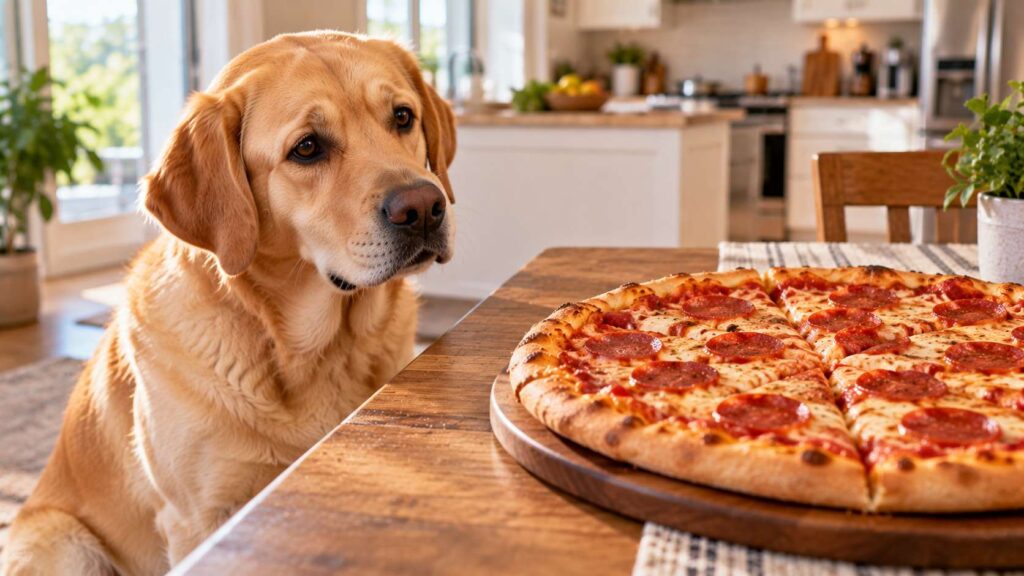
Can dogs eat pizza? You turn your back for ten seconds, and a slice is gone. Your dog looks suspiciously innocent, and now you’re wondering whether this is a shrug-it-off moment or a phone-the-vet moment. The answer depends on what was in the pizza, how much disappeared, your dog’s size and health, and whether any of it was raw dough.
Short answer: Pizza isn’t a recommended food for dogs. A small piece of plain, fully baked crust is unlikely to cause serious harm to most healthy adult dogs. However, onion, garlic, raw yeast dough, and large amounts of fatty toppings can pose significant risks. Even a plain-looking slice may contain harmful seasonings.
If your dog has already eaten pizza, start with the next section. If you’re reading this before sharing a bite, the ingredient comparisons below will help you make a safer choice.
Before You Check the Toppings, Check Your Dog

When a dog steals pizza, a few facts determine what happens next. Gather these details promptly, but don’t delay veterinary care if your dog has severe symptoms or has eaten something potentially dangerous.
Five Facts That Change the Picture
- What kind of pizza was it? Plain cheese, pepperoni, vegetable, garlic-heavy, or homemade? Check the sauce and crust seasonings too.
- How much is missing? A corner of crust and half a pizza are very different exposures.
- When did it happen? Timing can affect treatment options, and some symptoms may not appear immediately.
- How big is your dog? A Chihuahua and a Great Dane may face different risks from the same quantity.
- Does your dog have any health conditions? Previous pancreatitis, diabetes, gastrointestinal disease, or a prescribed diet may change the advice your veterinarian gives.
Your dog’s current behaviour matters too. Vomiting, unusual tiredness, abdominal discomfort, or changes in breathing should be reported to your veterinarian.
When You Don’t Know What Was on It
This happens with takeaway or delivery pizza. Someone else ordered it, the box is half-shredded, and nobody remembers whether the base had garlic butter.
Keep the box, receipt, or online order details. Check the restaurant’s ingredient information or contact the restaurant directly.
However, don’t assume an ingredient is absent simply because it isn’t listed among the visible toppings. Commercial sauces, meat products, and seasoning blends may contain onion or garlic powder.
If you suspect a toxic ingredient and cannot confirm the recipe, contact your veterinarian promptly rather than waiting for symptoms.
Three Levels of Concern
It helps to think in levels of concern rather than simply deciding whether your dog is fine or needs emergency treatment.
- Lower concern: A healthy adult dog eats a tiny amount of confirmed plain, fully baked crust and remains well. Serious illness is less likely, although digestive upset is possible. If you’re uncertain about the ingredients or your dog’s individual risk, contact your vet.
- Prompt veterinary advice: Your dog eats pizza containing known or suspected onion, garlic, chives, leeks, chocolate, grapes, or raisins. Raw yeast dough also requires immediate veterinary advice. Contact your vet promptly if a puppy, small dog, or medically vulnerable dog eats a concerning amount of pizza.
- Emergency veterinary care: Your dog collapses, has difficulty breathing, develops severe abdominal pain or swelling, becomes profoundly weak, or repeatedly retches without producing vomit.
These categories are not fixed diagnoses. A veterinarian may recommend urgent treatment even when a dog appears normal, depending on the ingredients and estimated exposure.
The Pizza Incident Checklist
- Identify the pizza type, sauce, toppings, and seasonings.
- Estimate how much your dog ate.
- Record approximately when it happened.
- Check for vomiting, drooling, weakness, abdominal discomfort, or unusual behaviour.
- Look for missing packaging, foil, or plastic.
- Keep the ingredient list or order information available.
- Contact your veterinarian when the ingredients, amount, medical history, or symptoms raise concern.
Quick tip: If you call your veterinarian, have your dog’s approximate weight ready. This can help them assess the exposure more accurately.
The Problem May Be Something You Can’t See
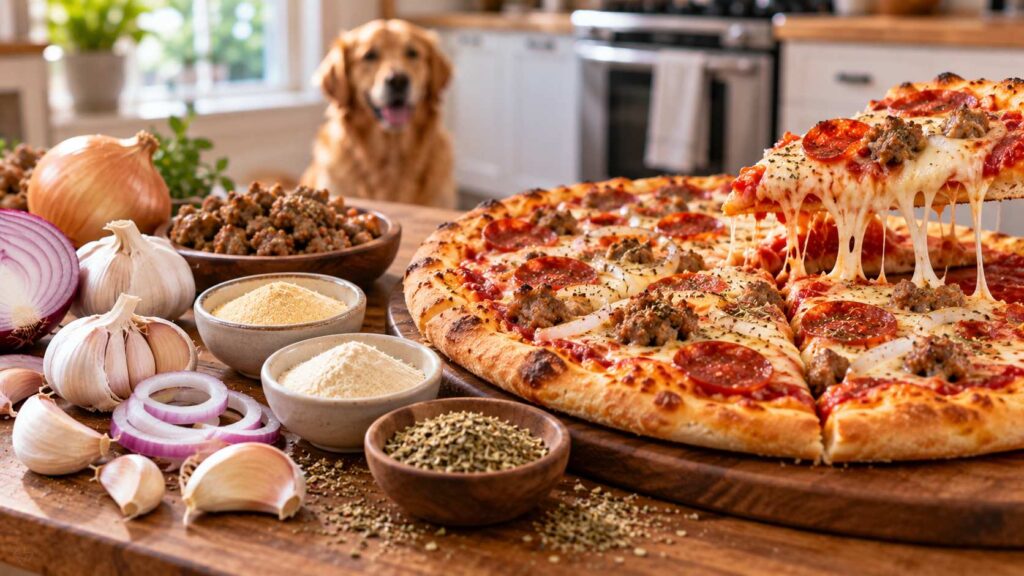
Some of the most concerning pizza ingredients aren’t obvious when you look at a slice. They may be mixed into the sauce, baked into the crust, or hidden in a seasoning blend.
Onion and Garlic Hide in More Places Than You’d Think
Onion and garlic belong to the Allium family and are toxic to dogs.
They contain compounds that can damage red blood cells, potentially causing haemolytic anaemia, a condition in which red blood cells are destroyed faster than the body can replace them.
According to the Merck Veterinary Manual, Allium poisoning can occur following exposure to raw, cooked, or dried forms. Concentrated powders are particularly important to consider because relatively small quantities can contain substantial amounts of the original ingredient.
Potential sources in pizza include:
- Tomato sauce containing onion or garlic powder.
- Garlic-seasoned or herb-crusted bases.
- Garlic butter brushed onto the crust.
- Processed meats containing onion or garlic seasoning.
- Seasoning blends added before or after baking.
The risk depends on the amount consumed, the dog’s body weight, and other individual factors. There is no universal quantity of seasoned pizza that can be declared safe for every dog.
Warning: Hidden Seasonings Are Not Harmless
- Cooking does not reliably eliminate the toxic effects of onion or garlic.
- Powdered forms can be more concentrated than fresh ingredients.
- Signs of red blood cell damage may take several days to become apparent.
- A dog that appears healthy immediately after exposure may still require treatment.
- Contact your veterinarian promptly after known or suspected concerning exposure.
- Never induce vomiting unless specifically instructed by a veterinarian or animal poison professional.
Why Picking Off the Toppings Doesn’t Fix It
Lifting the pepperoni off a slice before sharing it might seem like a reasonable compromise, but it doesn’t necessarily remove the risk.
The sauce may already contain onion or garlic. Seasoning can be baked into the crust, and oils from processed meats may remain on the surface.
Removing visible toppings also doesn’t reduce the fat or salt already present in the cheese and base.
If you don’t know exactly how the pizza was prepared, don’t assume the remaining crust is plain or safe.
Other Ingredients Worth a Second Look
- Chives and leeks: These are also members of the Allium family and can damage red blood cells.
- Salty toppings: Cured meats, anchovies, and heavily salted cheeses can contribute substantial sodium. Severe sodium poisoning is a separate concern that depends on the amount consumed and other circumstances.
- Fatty meats: Sausage, bacon, and pepperoni may cause digestive upset and can contribute to pancreatitis in susceptible dogs.
- Dessert-style pizzas: Some contain chocolate, raisins, or grapes, which present additional poisoning risks.
- Unusual sauces: Specialty recipes may contain ingredients not found in ordinary pizza, making ingredient verification important.
Not every ingredient presents the same danger. A fatty topping and a toxic seasoning require different assessments.
One Pizza, Several Very Different Risks
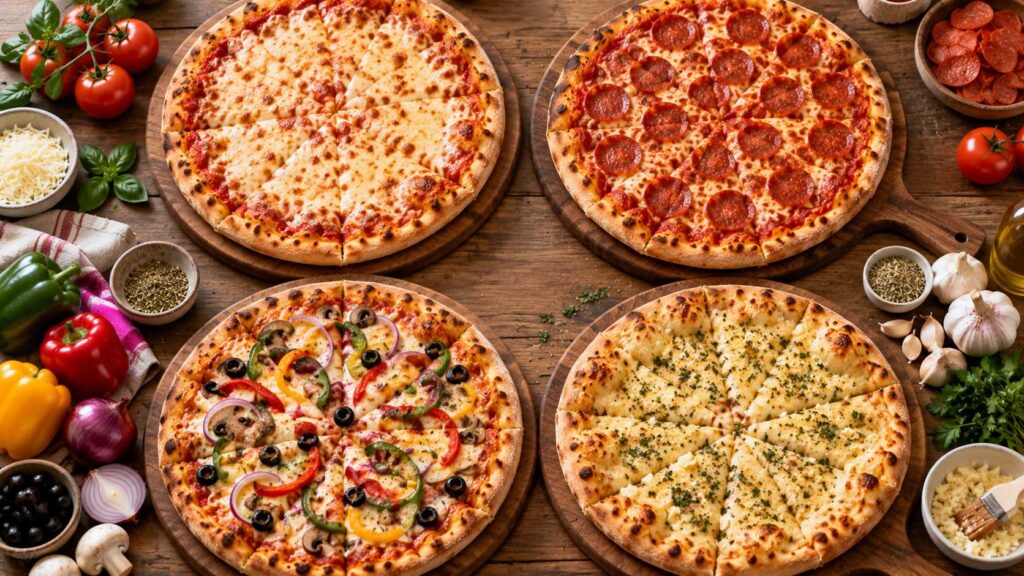
Calling something “pizza” covers an enormous range of recipes. A plain baked crust and a garlic-loaded meat feast are not the same hazard.
Cheese, Pepperoni, or Vegetable?
A plain cheese pizza without harmful seasonings may present fewer toxicity concerns than one containing onion or garlic, but that doesn’t make it a suitable treat.
Cheese adds fat and calories, while the sauce or crust may still contain hidden seasonings.
Pepperoni and sausage pizzas introduce additional fat, salt, and potentially garlic or onion powder.
Vegetable pizza sounds healthier, but it may contain onion, garlic, or other unsuitable toppings.
Homemade pizza isn’t automatically safer either. Its suitability depends entirely on the ingredients and preparation.
The pizza’s name is less important than its actual recipe.
The Crust Question: Baked, Seasoned, or Raw?
A small piece of fully baked, unseasoned pizza crust is not inherently poisonous to most dogs. However, it provides little nutritional benefit and may cause digestive upset, particularly in sensitive dogs.
Garlic-seasoned crust changes the situation because it may contain toxic Allium ingredients.
Cheese-stuffed crust adds extra fat and calories, and its seasonings still need checking.
Raw yeast dough is a different and potentially much more serious problem.
Inside a dog’s warm stomach, uncooked yeast dough can continue expanding. This may cause painful abdominal distension and serious complications.
As the yeast ferments, it produces ethanol, which can be absorbed into the bloodstream and cause alcohol poisoning.
Signs may include:
- Abdominal swelling or discomfort.
- Vomiting or attempts to vomit.
- Weakness or unusual sleepiness.
- Poor coordination.
- Depression of the nervous system.
If your dog eats raw yeast dough, seek immediate veterinary advice, even if they appear normal.
Do not wait for the dough to expand or attempt home treatment.
Sauce and Cheese Deserve Their Own Look
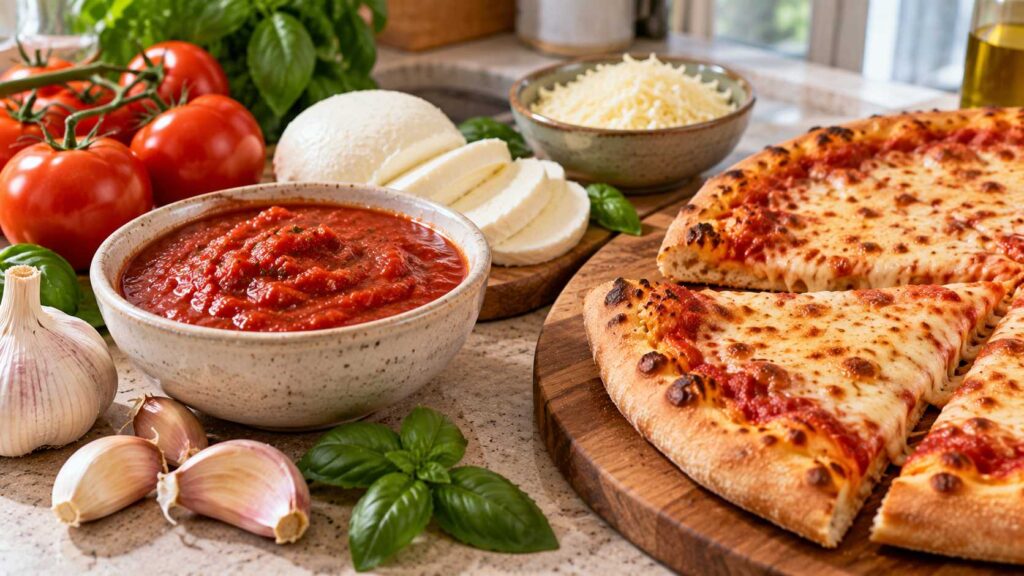
Plain, ripe tomato flesh is generally not the main concern with pizza sauce. The bigger issue is what has been added to it.
Commercial sauces commonly contain garlic, onion, salt, or other seasonings. Their safety cannot be judged from the tomato content alone.
Cheese presents a different set of concerns.
Some dogs have difficulty digesting lactose, which can lead to gas, diarrhoea, or abdominal discomfort. Others tolerate small amounts of certain cheeses without obvious problems.
Lactose intolerance is not the same as a true dairy allergy, which involves an immune response.
Pizza cheese is also relatively fatty and calorie-dense. A large portion may cause gastrointestinal upset, particularly in dogs with sensitive digestion or a history of pancreatitis.
Quick Comparison
| Pizza component or type | Main concern | How to think about it |
|---|---|---|
| Plain baked crust | Extra calories, possible digestive upset | Lower concern if genuinely plain and eaten in a small amount |
| Garlic-seasoned crust | Allium toxicity | Contact a veterinarian promptly |
| Raw yeast dough | Stomach expansion and ethanol production | Seek immediate veterinary advice |
| Cheese pizza | Fat, lactose, possible hidden seasonings | Check the entire recipe, not just the cheese |
| Pepperoni pizza | Fat, salt, possible onion or garlic seasoning | More concerning than plain baked crust |
| Vegetable pizza | Onion, garlic, and other topping-specific risks | Not automatically safe |
| Pizza sauce | Hidden onion, garlic, and salt | Risk depends on the ingredients |
| Homemade pizza | Recipe-dependent risks | Homemade does not automatically mean dog-safe |
The safest approach is not to offer ordinary human pizza as a treat. If your dog has already eaten some, use the actual ingredients, estimated quantity, and your dog’s condition to guide the next step with your veterinarian.
What If Your Dog Ate the Whole Slice?
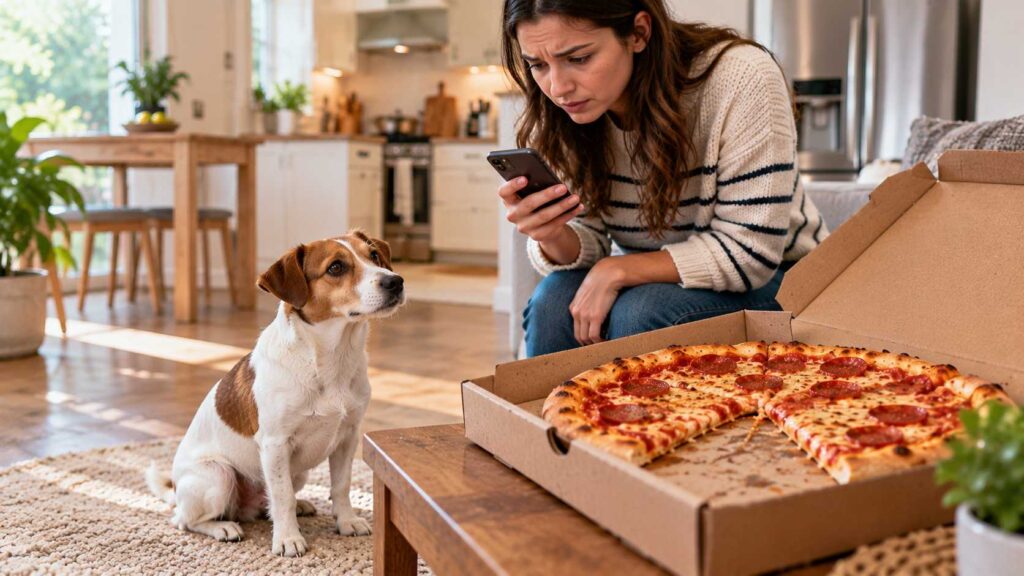
A Bite, a Slice, and a Whole Pizza Aren’t the Same
There’s no magic number of grams that makes pizza safe or unsafe. Risk depends on how much your dog ate, which ingredients were present, their concentration, your dog’s body weight, how long ago it happened, and any existing health conditions.
A small piece of plain baked crust is very different from a slice containing garlic or onion powder. Likewise, eating several slices of fatty pizza raises different concerns from swallowing a small amount of unseasoned bread.
That’s why there’s no reliable universal “safe slice size” chart. The ingredients and your dog’s individual circumstances matter more than the number of slices alone.
Why Breed Matters Less Than Your Individual Dog
It’s tempting to think, “Big dogs are fine, small dogs aren’t.” Body weight certainly matters because the same amount of a toxic ingredient represents a larger dose per kilogram for a smaller dog.
But size isn’t the whole story.
Age, medical history, and individual sensitivity can also affect the outcome. Puppies, older dogs with underlying health conditions, and dogs with digestive disorders may need closer attention.
For example, a Labrador with a history of pancreatitis may face greater problems after eating fatty pepperoni pizza than a healthy terrier that ate a small piece of plain crust.
A dog’s breed alone cannot tell you whether a particular pizza exposure is safe.
Three Realistic Situations
- A healthy adult dog nibbles a little plain baked crust. If the crust is confirmed to contain no harmful seasonings and the dog remains well, serious illness is unlikely. Mild digestive upset is possible. Brief observation may be reasonable, but contact your vet if symptoms develop or you’re uncertain about the ingredients.
- A small dog steals a pepperoni slice with unknown seasonings. Call your veterinarian promptly. The fat content, possible onion or garlic powder, and the dog’s body weight all need consideration. Don’t wait for symptoms if toxic ingredients may be involved.
- A puppy eats raw yeast dough. This requires immediate veterinary advice. The dough can expand inside the stomach and produce ethanol during fermentation. A puppy that initially appears healthy may still be at risk.
These examples illustrate why different exposures require different responses. They are not substitutes for an individual veterinary assessment.
What to Have Ready Before You Call the Vet
Having the right details ready can help your veterinarian assess the situation more efficiently.
- Your dog’s approximate weight and age.
- The pizza type, toppings, sauce, and known seasonings.
- The estimated amount eaten.
- Approximately when it happened.
- Any symptoms, even if they seem mild.
- Existing medical conditions and medications.
- Whether packaging, foil, or plastic may also have been swallowed.
Quick tip: Keep the pizza box, ingredient list, or online order confirmation. If it was takeaway pizza, the restaurant may be able to clarify what was used in the sauce or crust.
Don’t delay calling your veterinarian while trying to collect every detail.
The Symptoms That Matter More Than the Pizza Size
Upset Stomach Isn’t the Same as Poisoning
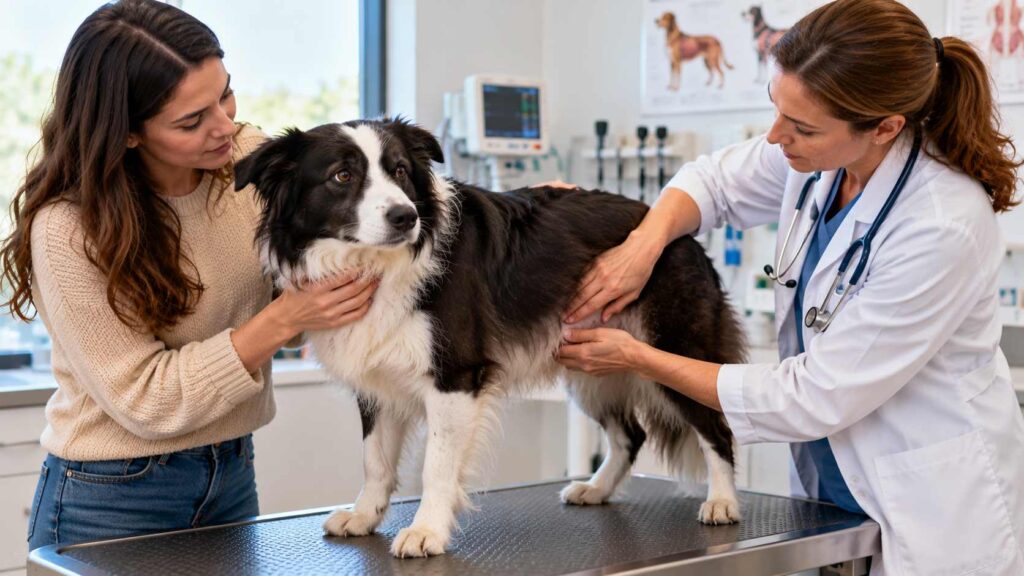
Vomiting, diarrhoea, gas, and reduced appetite can occur after dogs eat unfamiliar or rich foods. Sometimes, these symptoms are mild and settle without complications.
However, digestive upset doesn’t automatically mean poisoning, and the absence of severe symptoms doesn’t rule it out.
For example, a dog that ate fatty cheese pizza might develop temporary diarrhoea. A dog that consumed onion or garlic could initially appear normal while red blood cell damage develops.
The distinction matters because treatment decisions depend on the exposure, not just the symptoms.
Contact your veterinarian if vomiting or diarrhoea persists, symptoms worsen, your dog becomes unusually quiet, or they cannot keep water down. Puppies and medically vulnerable dogs may need assessment sooner.
When Fatty Food Raises Pancreatitis Concerns
Pancreatitis is inflammation of the pancreas. According to VCA Animal Hospitals, a high-fat meal can contribute to an episode in susceptible dogs, although not every dog that eats fatty food will develop the condition.
Pizza containing pepperoni, sausage, bacon, or large amounts of cheese may be particularly rich in fat.
Possible signs include:
- Repeated vomiting.
- Abdominal pain or a hunched posture.
- Loss of appetite.
- Unusual tiredness or weakness.
- Diarrhoea.
- Reluctance to move or apparent discomfort.
These symptoms can also occur with other gastrointestinal conditions, so pancreatitis cannot be diagnosed from symptoms alone.
A veterinarian may use the dog’s history, physical examination, blood tests, and sometimes abdominal imaging to investigate.
If your dog develops repeated vomiting, significant abdominal pain, or marked lethargy after eating pizza, seek prompt veterinary assessment. Severe symptoms require emergency care.
Dogs with previous pancreatitis deserve particular caution, even if they have tolerated fatty foods before.
Why the Dangerous Signs Can Show Up Later

This is one of the trickiest parts of pizza-related poisoning.
After onion or garlic exposure, a dog may look completely normal initially. According to the Merck Veterinary Manual, signs associated with Allium-related red blood cell damage can be delayed for several days.
Warning signs may include:
- Pale or whitish gums: A possible sign of anaemia.
- Weakness or tiring easily: Reduced oxygen delivery may affect activity.
- Reddish or dark urine: Can occur when damaged red blood cells release haemoglobin.
- Faster or laboured breathing: May develop with significant anaemia.
- Reduced appetite or unusual lethargy: Possible signs of illness that deserve attention.
These signs do not prove onion or garlic poisoning, but they require veterinary assessment.
Importantly, a dog appearing healthy today does not guarantee that a potentially toxic exposure was harmless.
If your dog has eaten pizza containing onion or garlic, contact your veterinarian promptly rather than waiting for these symptoms to appear.
Emergency Signs
Get emergency veterinary care immediately if your dog develops:
- Collapse or loss of consciousness.
- Severe abdominal pain.
- Repeated retching without producing vomit.
- A swollen, tight, or rapidly enlarging abdomen.
- Difficulty breathing.
- Severe weakness or inability to stand.
Repeated unproductive retching with abdominal swelling can indicate gastric dilatation-volvulus (GDV), a life-threatening emergency that requires immediate treatment.
Do not assume these symptoms are simply caused by overeating.
Warning: Don’t Wait for Symptoms in a Suspected Poisoning
- Contact a veterinarian promptly after known or suspected ingestion of toxic ingredients.
- Seek immediate veterinary advice if your dog has eaten raw yeast dough.
- Go to an emergency veterinary clinic if severe symptoms develop.
- Never induce vomiting at home unless specifically instructed by a veterinarian or animal poison professional.
- Do not give human medications or attempt home remedies without veterinary guidance.
If your dog is already showing serious symptoms, seeking treatment takes priority over identifying every ingredient.
The Overlooked Risk: Pizza Packaging
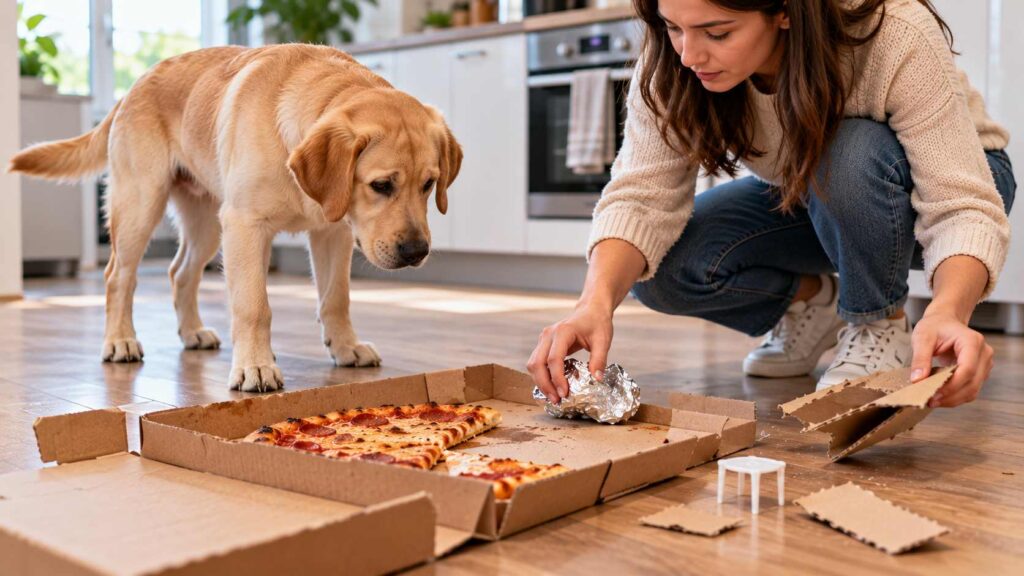
Dogs that steal pizza don’t always stop at the food. They may swallow pieces of the packaging too.
Aluminium foil, plastic pizza savers, cardboard, and greaseproof paper can create choking hazards or become lodged in the digestive tract.
Not every swallowed piece will cause an obstruction, but the risk depends on the material, its size and shape, and the dog’s size.
Possible warning signs include:
- Repeated vomiting.
- Refusing food.
- Abdominal pain or swelling.
- Lethargy.
- Difficulty passing stool.
Some intestinal blockages require surgery, and delaying treatment can lead to serious complications.
If you suspect your dog swallowed pizza packaging, contact your veterinarian promptly, even if they appear normal.
Don’t try to make your dog vomit or give food, oil, or other substances to force the material through. Your veterinarian can determine whether examination, imaging, monitoring, or treatment is appropriate.
Why Some Dogs Need Extra Caution
Puppies and small dogs. The same quantity of a toxic ingredient represents a greater exposure relative to body weight in a smaller dog. Puppies may also be more vulnerable to dehydration from vomiting or diarrhoea. Suspected toxic ingredients or raw dough ingestion warrant prompt veterinary advice.
Dogs with a history of pancreatitis or digestive disease. Fatty pizza can be particularly problematic for dogs with previous pancreatitis or certain gastrointestinal conditions. If your dog develops symptoms or consumes a substantial amount of rich pizza, contact your veterinarian promptly.
Dogs with diabetes or on prescription diets. Unexpected food can disrupt carefully managed feeding routines. Dogs receiving insulin need particular attention if they vomit, refuse their usual meals, or develop signs of illness. Follow your veterinarian’s individual instructions, and never change insulin doses without professional guidance.
Older dogs and dogs with other medical conditions. Age alone doesn’t determine risk, but underlying illnesses may affect how well a dog tolerates digestive upset or other complications.
Your dog’s medical history matters more than any universal pizza-serving guideline.
If Your Dog Wants Pizza, Change the Treat, Not the Rules
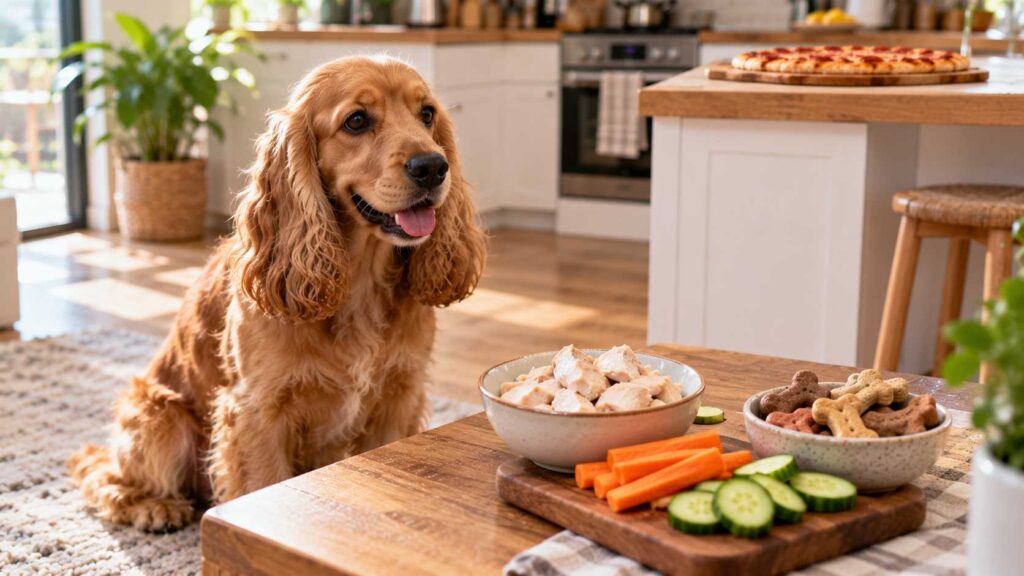
Dogs don’t need pizza to enjoy a tasty reward. Often, they’re simply interested in the smell, the food you’re eating, or the attention that comes with sharing.
Fortunately, there are easier ways to give them something enjoyable without the unnecessary risks.
Better Alternatives
Suitable options for many healthy dogs include:
- Plain cooked chicken: Small, boneless pieces without skin, seasoning, onion, or garlic.
- Commercial dog treats: Choose products appropriate for your dog’s size, age, and dietary needs.
- Dog-safe vegetables: Small pieces of carrot or cucumber, prepared in a size your dog can chew safely.
- Simple homemade dog treats: Made with ingredients known to be suitable for your individual dog.
Introduce unfamiliar treats gradually, especially if your dog has a sensitive stomach.
Treats should generally account for no more than approximately 10% of your dog’s daily calorie intake, with the remainder coming from an appropriate complete and balanced diet.
That allowance includes training rewards, chews, table scraps, and other extras—not just the treat you’re offering at that moment.
What Makes a Homemade Treat Safer?
A homemade treat doesn’t need to resemble pizza to be appealing.
Keep these principles in mind:
- Avoid onion, garlic, chives, leeks, and other toxic ingredients.
- Skip heavily salted or seasoned foods.
- Keep fat content appropriate for your dog.
- Serve small, manageable portions.
- Account for allergies, intolerances, and existing medical conditions.
- Avoid using treats as a replacement for balanced meals.
If your dog follows a prescription diet or has a condition such as pancreatitis, check with your veterinarian before introducing homemade treats.
Preventing the Next Theft
A few practical habits can prevent another stressful pizza incident:
- Keep pizza, leftovers, and delivery boxes out of your dog’s reach.
- Dispose of food scraps and packaging in a secure bin.
- Teach a reliable “leave it” cue using positive reinforcement.
- Avoid rewarding begging by repeatedly sharing food from the table.
- Offer an appropriate dog treat or food puzzle during family meals.
- Remind visitors and children not to share pizza without checking with you first.
Quick tip: If your dog frequently steals food, focus on preventing access rather than relying on commands alone. Keeping tempting food out of reach is usually more dependable than expecting perfect obedience around an unattended pizza.
The aim isn’t to make your dog afraid of food. It’s to make safe choices easy and prevent a moment of curiosity from turning into a veterinary emergency.
Common Mistakes That Make Pizza Incidents Harder
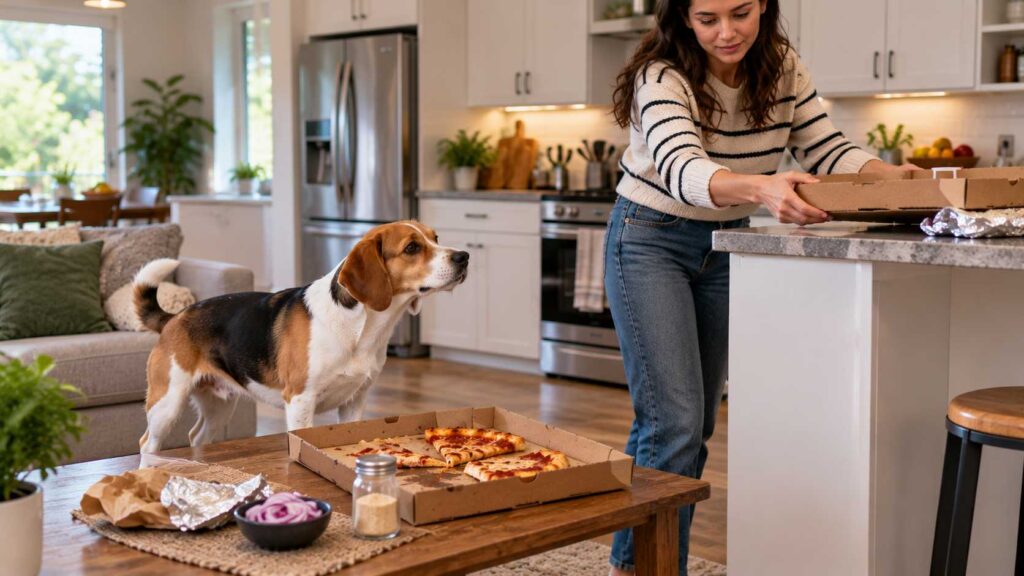
Even well-meaning dog owners can overlook important details when their dog steals pizza. These are the mistakes worth avoiding:
- Assuming a small amount is always harmless. Even a small portion may contain potentially toxic ingredients.
- Overlooking hidden onion or garlic powder. These seasonings can be present in sauces, crusts, and processed meats.
- Treating all pizza crusts alike. Plain baked crust, garlic-seasoned crust, and raw yeast dough carry very different risks.
- Waiting for symptoms after suspected poisoning. Signs of onion or garlic toxicity may not appear immediately.
- Assuming a previous uneventful exposure proves safety. Ingredients, quantities, and your dog’s health can change the outcome.
- Giving human medication without veterinary advice. Some medicines intended for people can be harmful to dogs.
- Trying to induce vomiting at home. This can cause complications and should only be done under professional direction.
- Forgetting about swallowed packaging. Foil, plastic, and other materials may cause choking or intestinal obstruction.
- Assuming every vomiting episode means pancreatitis. Several conditions can cause similar symptoms, and a veterinary examination may be needed.
- Relying on a generic serving guide. The actual ingredients, amount eaten, body weight, and medical history matter more than a universal portion recommendation.
The most useful habit is simple: check what your dog actually ate before deciding how serious the situation might be.
What Your Vet Needs to Know
If your dog has eaten pizza containing potentially harmful ingredients, contacting your veterinarian promptly is the safest approach.
You don’t need to know every detail before calling. However, a few pieces of information can help your vet assess the situation more accurately.
Have This Ready
- Your dog’s approximate weight and age.
- Relevant medical history and current medications.
- The pizza’s ingredients, including sauce, toppings, and seasonings.
- How much pizza your dog may have eaten.
- Approximately when the incident happened.
- Any symptoms, including vomiting, diarrhoea, weakness, or unusual behaviour.
- Whether packaging, foil, cardboard, or plastic may also have been swallowed.
Quick tip: Keep the pizza box, receipt, or online order confirmation. If the ingredients are unclear, your veterinarian may ask you to contact the restaurant.
Don’t delay seeking help while trying to collect every detail, especially if your dog is showing serious symptoms.
What a Vet Might Do
Your veterinarian will usually begin by assessing what your dog ate, when it happened, and whether any symptoms are present.
Depending on the exposure, they may recommend:
- A physical examination.
- Blood tests to investigate suspected toxicity or other complications.
- Abdominal imaging if an obstruction or another serious problem is suspected.
- Monitoring, supportive care, or other treatment appropriate to the diagnosis.
For some recent ingestions, a veterinarian may consider medically supervised decontamination. Never attempt to induce vomiting yourself unless specifically instructed by a veterinary professional.
If your dog needs treatment, recovery will depend on the underlying problem and its severity. Mild digestive upset may resolve relatively quickly, while poisoning, pancreatitis, or an intestinal obstruction can require more extensive care.
Before leaving the clinic, ask which symptoms should prompt a return visit and whether follow-up testing is necessary.
Where to Get Help
- United Kingdom: Contact your regular veterinarian or an emergency veterinary practice.
- Canada: Contact your veterinarian or a local emergency animal hospital.
- Australia: Contact your veterinarian, an emergency veterinary service, or the Animal Poisons Helpline.
- United States: Contact your veterinarian, the ASPCA Animal Poison Control Center, or Pet Poison Helpline.
Animal poison services may charge consultation fees. If your dog is collapsing, struggling to breathe, or showing other severe symptoms, seek emergency veterinary care immediately.
For additional veterinary information, the Merck Veterinary Manual provides guidance on onion and garlic toxicity, while organisations such as PDSA and RSPCA offer practical advice on protecting dogs from harmful foods.
These resources can support your understanding, but they cannot replace advice tailored to your dog’s specific exposure.
Key Takeaways
- Pizza isn’t a recommended treat for dogs. Its ingredients and nutritional composition make it unsuitable for regular feeding.
- Onion, garlic, and raw yeast dough are major safety concerns. Fatty toppings can also cause problems, particularly in susceptible dogs.
- Plain baked crust is different from seasoned crust or raw dough. Preparation and ingredients matter.
- Portion size alone doesn’t determine safety. Consider the ingredients, your dog’s weight, and medical history.
- Some symptoms can be delayed. A dog may initially appear healthy after a potentially toxic exposure.
- Don’t forget the packaging. Swallowed foil, plastic, or other materials can create additional hazards.
- When the exposure is uncertain or concerning, contact your veterinarian. Don’t wait for symptoms after suspected poisoning.
Frequently Asked Questions
1. Can dogs eat a small piece of plain crust?
A tiny amount of fully baked, unseasoned pizza crust is unlikely to cause serious harm to most healthy adult dogs. However, it offers little nutritional benefit and may cause digestive upset.
Avoid crust containing garlic, onion, or other harmful seasonings. Raw yeast dough is particularly dangerous and requires immediate veterinary advice if swallowed.
2. My dog ate pizza but seems fine. Should I still worry?
It depends on the ingredients, amount eaten, and your dog’s individual circumstances.
If the pizza contained onion, garlic, or another potentially toxic ingredient, contact your veterinarian promptly, even if your dog appears normal. Some signs of poisoning can take several days to develop.
If you’re unsure what the pizza contained, ask your veterinarian for guidance rather than relying on the absence of symptoms.
3. Is mozzarella-only pizza okay?
Mozzarella itself isn’t generally considered toxic to dogs, but it contains fat and lactose, which may cause digestive problems in sensitive animals.
A pizza topped only with mozzarella may still contain garlic or onion in the sauce or crust.
Mozzarella-only doesn’t necessarily mean seasoning-free, so ordinary cheese pizza is not a recommended dog treat.
4. Is garlic powder on pizza really dangerous?
Yes. Garlic powder contains concentrated Allium compounds that can damage a dog’s red blood cells and potentially cause haemolytic anaemia.
The risk depends on the amount consumed and your dog’s body weight, among other factors.
If your dog has eaten pizza containing garlic powder, contact your veterinarian promptly for an individual risk assessment. Don’t wait for symptoms to develop.
5. How soon might a dog get sick after eating pizza?
The timing depends on what your dog ate and the type of problem involved.
Digestive upset may develop within hours, while signs of pancreatitis can appear later. Onion- or garlic-related red blood cell damage may not produce obvious symptoms for several days.
There is no single timeline that applies to every dog or pizza exposure.
If potentially toxic ingredients were involved, seek veterinary advice immediately rather than waiting to see whether your dog becomes ill.
6. Can puppies eat pizza?
Pizza is best avoided for puppies.
Their smaller body weight means a given quantity of a harmful ingredient can represent a greater exposure relative to their size. Rich or unfamiliar foods may also cause digestive upset.
Puppies that develop vomiting or diarrhoea can become dehydrated more quickly than healthy adult dogs.
If your puppy eats pizza containing potentially toxic ingredients or raw yeast dough, contact your veterinarian promptly.
7. What if I don’t know what was on a restaurant pizza?
Check the restaurant’s website, ingredient information, or your order confirmation. You can also contact the restaurant and ask specifically about onion, garlic, seasoning blends, and crust preparation.
Remember that visible toppings don’t reveal everything in the sauce or dough.
If your dog has already eaten the pizza and you cannot establish whether harmful ingredients were present, contact your veterinarian for advice. Have your dog’s approximate weight, the amount eaten, and the time of ingestion ready.
The Decision to Make Before Sharing Your Next Slice
Pizza is made for people, not dogs. What looks like a harmless bite may contain onion, garlic, excessive fat, or other ingredients your dog shouldn’t eat.
If your dog steals some, check the ingredients, estimate the amount, and consider your dog’s health before deciding what to do. Seek prompt veterinary advice for potentially toxic exposures, and don’t wait if serious symptoms appear.
The easiest way to avoid the worry is to keep pizza out of reach and offer a suitable dog treat instead.
Your dog still gets something tasty, and you can enjoy your slice without wondering whether it was safe to share.
For more practical feeding advice, explore our other dog food safety guides before introducing unfamiliar human foods to your dog’s diet.
#. Related Articles: