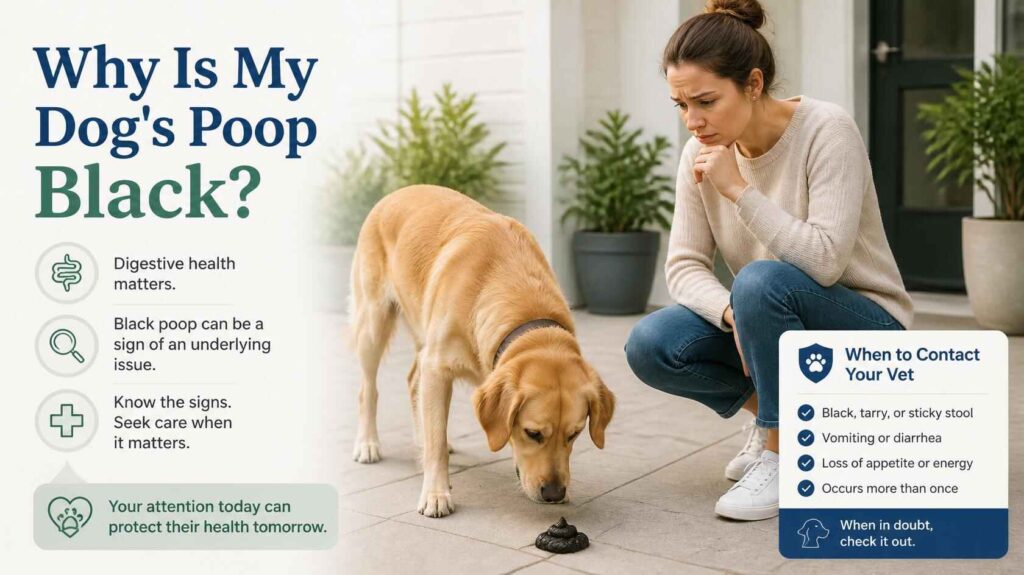

It’s 11 PM and your dog is hunched in the corner, ignoring dinner, after making three urgent trips outside. Or perhaps they vomited once after a walk and now seem completely normal, leaving you unsure whether the problem has passed or is only beginning.
The first thing to understand is that an “upset stomach” is not a diagnosis. It is an informal term for symptoms such as vomiting, diarrhoea, nausea, appetite changes and abdominal discomfort. These signs can follow something relatively minor, such as eating unfamiliar food, but they can also occur with pancreatitis, poisoning, an intestinal blockage or gastric dilatation-volvulus.
Because very different conditions can look similar at first, the safest approach is to assess urgency before trying food, supplements or home remedies.
Start Here — How Urgent Is Your Dog’s Stomach Problem?
Usually Reasonable to Monitor Briefly
Brief home monitoring may be reasonable when all of the following apply:
- There has been only one mild episode of vomiting or loose stool.
- Your dog remains bright, responsive and mostly themselves.
- They can drink without vomiting.
- There is no blood in the vomit or stool.
- They are not showing obvious abdominal pain.
- There is no known access to toxins, medication, rubbish or swallowable objects.
- Their breathing, walking and posture appear normal.
- They are a healthy adult dog without a significant medical condition.
Continue watching closely. A dog that initially seems well can still worsen, particularly after eating something harmful.
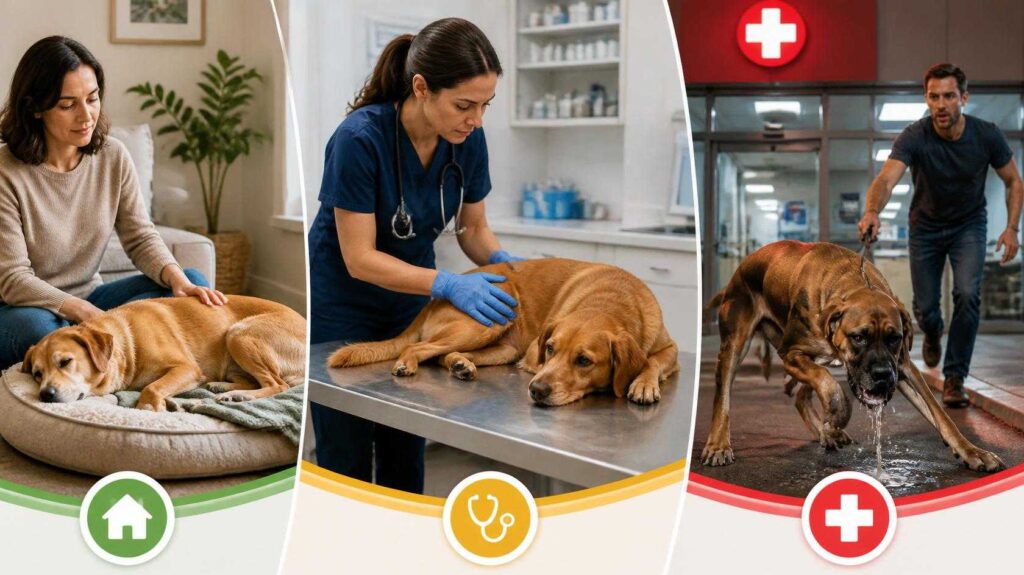
Contact a Vet Promptly
Contact your veterinarian the same day if you notice:
- Repeated vomiting or diarrhoea.
- Reduced appetite lasting beyond one missed meal.
- Blood or persistent mucus in the stool.
- Noticeable lethargy or unusual behaviour.
- Symptoms that keep returning.
- Digestive signs after starting or changing medication.
- A previous history of pancreatitis.
- Difficulty judging whether your dog is hydrated.
- Symptoms after scavenging, eating rich food or raiding the bin.
- Digestive signs in a puppy, senior dog or dog with an existing illness.
Puppies, toy breeds, elderly dogs and dogs with diabetes, kidney disease, liver disease or other medical conditions can deteriorate more quickly and should be assessed sooner.
Seek Emergency Care Now
Do not wait for a routine appointment if your dog has:
- Repeated dry retching with little or nothing coming up.
- A swollen, tight or painful abdomen.
- Collapse, severe weakness or inability to stand.
- Pale, white, grey or blue-tinged gums.
- Difficulty breathing.
- Seizures, tremors or severe disorientation.
- Blood in the vomit.
- Black, sticky or tar-like stool.
- Repeated vomiting that prevents water from staying down.
- Suspected poisoning.
- Suspected foreign-object ingestion.
- Rapidly worsening symptoms.
If your dog has repeated vomiting, blood in the vomit, continuous retching, signs of dehydration, or a swollen abdomen, seek veterinary advice without delay. The PDSA also advises prompt veterinary assessment for dogs showing severe or worsening vomiting, especially when warning signs are present.
Emergency warning: Repeated unproductive retching, abdominal enlargement, restlessness, heavy drooling and weakness can indicate gastric dilatation-volvulus, commonly called bloat. This is a life-threatening emergency that requires immediate veterinary treatment. It is more common in large, deep-chested dogs, but any dog showing these signs needs urgent care. Do not monitor the condition at home or wait to see whether it improves.
What Does an “Upset Stomach” Actually Mean?
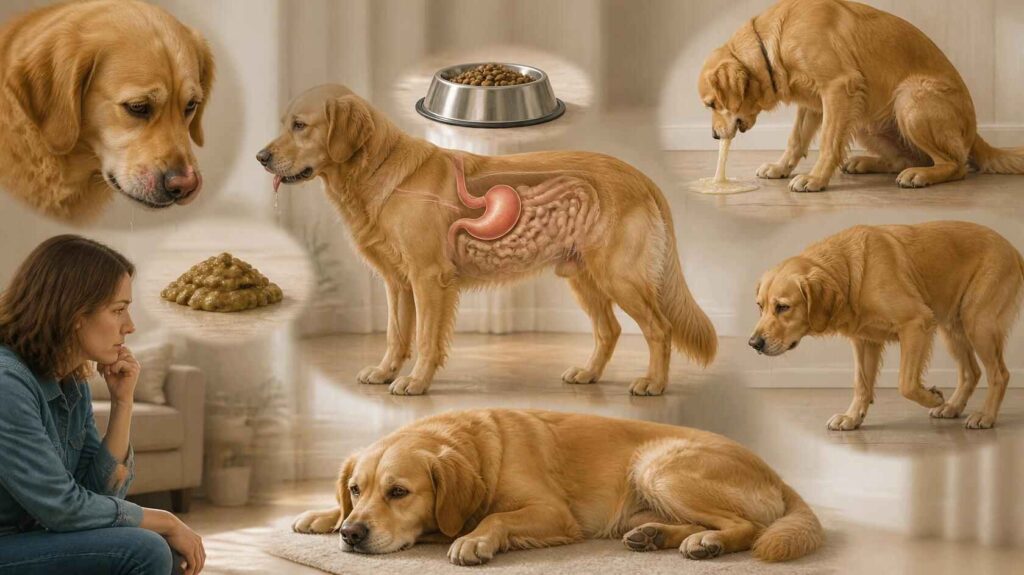
Digestive Symptoms, Not a Single Disease
“Upset stomach” can describe a problem involving the stomach or intestines, but digestive symptoms may also arise from the pancreas, liver, kidneys or a wider illness affecting the whole body.
The symptoms alone usually cannot identify the cause. Vomiting after eating rich leftovers, for example, may be simple dietary indiscretion, but repeated vomiting with abdominal pain could also suggest pancreatitis or an obstruction. Veterinary assessment becomes important when signs are severe, persistent or recurrent.
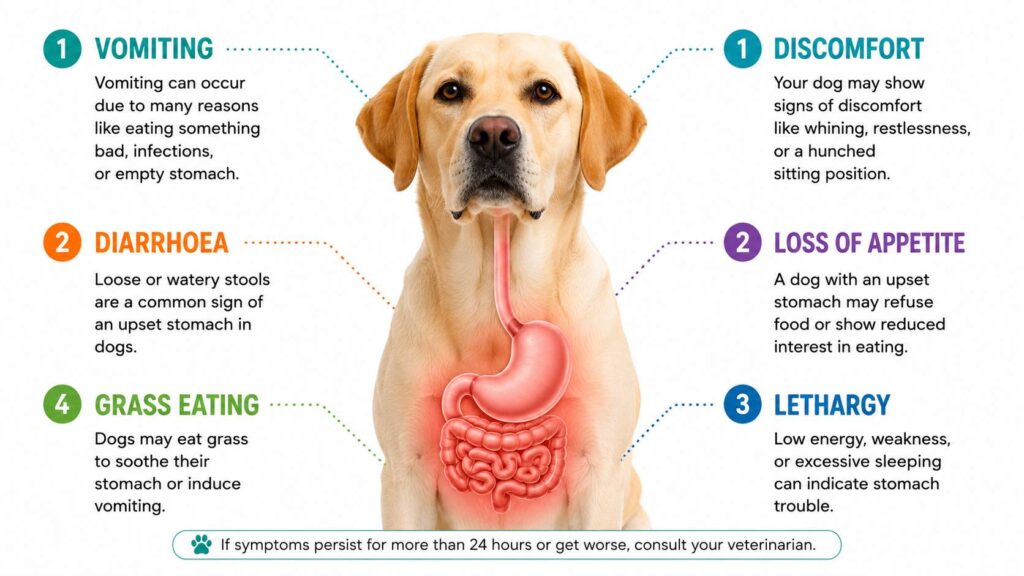
Signs Owners Commonly Notice
- Vomiting.
- Diarrhoea or soft stool.
- Reduced appetite.
- Drooling.
- Lip licking or repeated swallowing.
- Eating grass.
- Flatulence.
- Rumbling stomach noises, known as borborygmi.
- Restlessness.
- A hunched posture.
- The “prayer position,” with the front legs lowered and the rear end raised.
- Reduced energy.
These signs can suggest nausea or abdominal discomfort, but none confirms a specific diagnosis.
Signs That Are Easy to Miss
- Approaching food and then walking away.
- Turning away from favourite treats.
- Difficulty settling or repeatedly changing position.
- Frequent stretching.
- Asking to go outside more often.
- Reluctance to walk, jump or climb stairs.
- Drinking less than usual.
- Drinking and then bringing the water back up.
- Reduced or unusually infrequent urination.
- Repeated swallowing when no food is present.
- Becoming unusually quiet or withdrawn.
A single subtle sign may not be alarming on its own. Several signs together, or any sign that worsens, should lower the threshold for contacting a veterinarian.
Is Your Dog Vomiting, Regurgitating, or Retching?
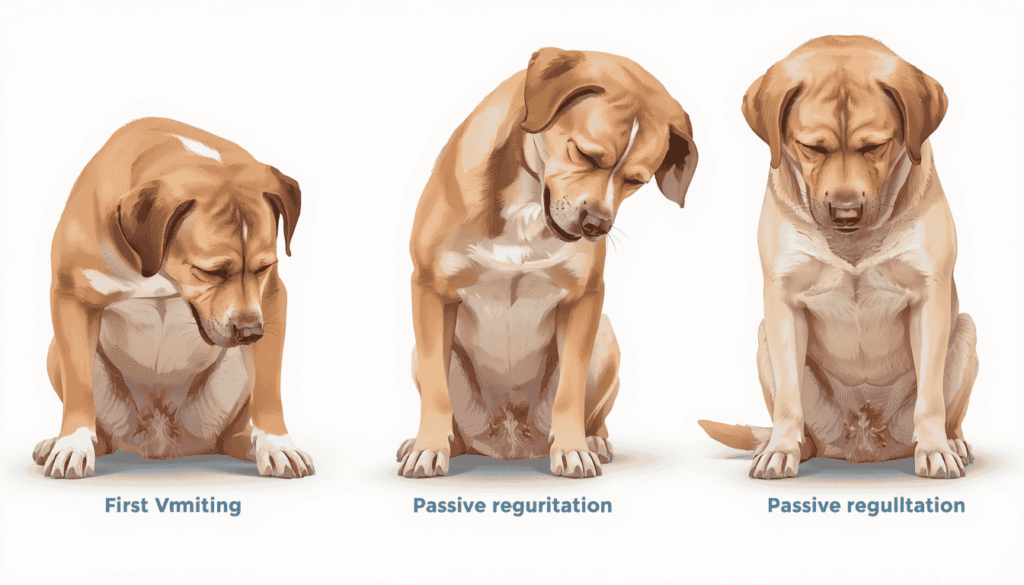
These events are often confused, but the difference can change what the symptoms suggest and how urgently your dog should be assessed.
Comparison Table: Similar-Looking Digestive Events
| Observation | Vomiting | Regurgitation | Gagging or Coughing | Unproductive Retching |
|---|---|---|---|---|
| Effort | Active abdominal heaving | Usually passive | Throat or airway movement | Repeated straining |
| Timing | Often follows nausea | Commonly occurs soon after eating or drinking | May follow coughing or swallowing | May repeat continuously |
| Material brought up | Partly digested food, liquid or bile | Undigested food or fluid | Little or none | Little to nothing |
| Likely concern | Stomach, intestinal or systemic illness | Oesophageal problem | Throat or airway problem | Possible emergency, including bloat |
| What to do | Monitor frequency and overall condition | Contact a vet if repeated | Arrange an assessment if persistent | Seek emergency care if accompanied by swelling or distress |
Regurgitation is commonly mistaken for vomiting. It is usually passive, with little warning or abdominal effort, because the material comes back from the oesophagus rather than the stomach. That distinction gives your veterinarian an important clue.For a more detailed explanation of how regurgitation differs from vomiting, see the Merck Veterinary Manual.
Repeated retching with little or nothing produced is different. When it occurs with a swollen abdomen, restlessness, drooling or weakness, it may indicate gastric dilatation-volvulus and requires emergency care rather than a routine appointment.
Use the Seven-Question Stomach Check
Before offering food, supplements or home remedies, ask:
- How many times has your dog vomited or had diarrhoea?
- Is water staying down?
- Is your dog alert and walking normally?
- Is there blood, black stool or unusual material present?
- Does the abdomen appear painful, tight or swollen?
- Could your dog have reached rubbish, toxins, medication or a swallowable object?
- Is your dog a puppy, senior, toy breed or living with an existing health condition?
The answers matter more than the appearance of one isolated stool or vomit. A single soft stool in a bright adult dog is very different from the same stool accompanied by weakness, pain or repeated vomiting.
Record Before You Clean Up
- Take a clear photograph of the vomit or stool.
- Note the time of each episode.
- Keep a rough count of how often it happens.
- Check for packaging, plant material, bones or object fragments.
- Save a fresh stool sample in a clean, sealed container if a veterinary visit is likely.
- Write down any recent food changes, new treats, medications or possible scavenging.
Watch More Than Just the Mess
Monitor your dog’s:
- Energy and responsiveness.
- Ability to drink without vomiting.
- Appetite.
- Urination.
- Breathing.
- Posture and movement.
- Signs of pain or difficulty settling.
A dog’s overall condition often tells you more about urgency than the colour of the vomit or stool alone.
What Might Have Caused This?
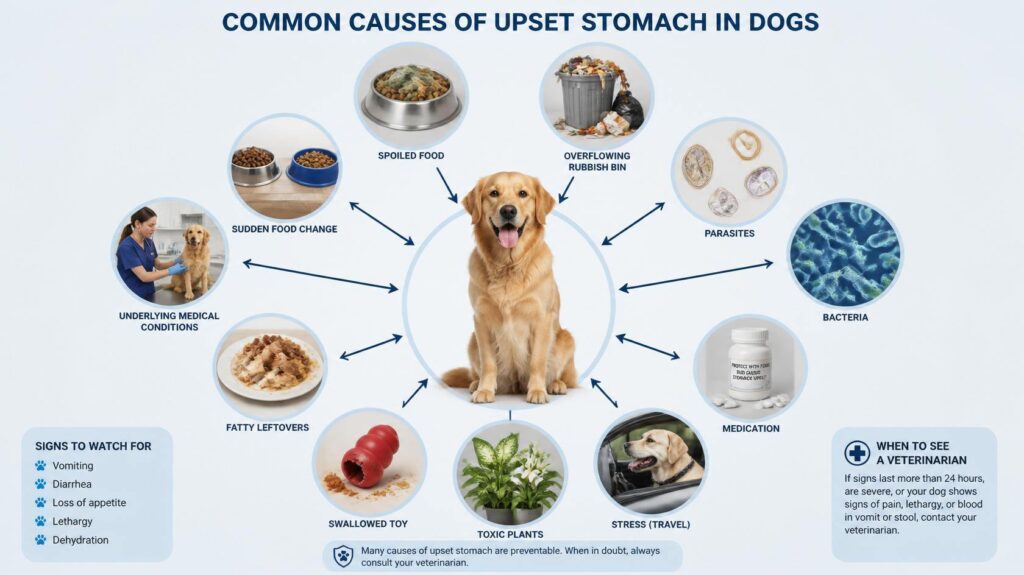
Food and Feeding
Common everyday triggers include:
- Raiding the bin or compost.
- Fatty leftovers.
- A sudden change of food.
- An unusually large meal.
- A new treat or chew.
- Spoiled food.
- Food intolerance.
- Eating bones, wrappers or other unsuitable items.
A true food allergy is less likely to explain one isolated episode and more often causes recurring signs that need proper veterinary investigation.
Stress and Environment
Boarding, travel, moving house, fireworks, anxiety and motion sickness can affect the digestive system even when no unsuitable food was eaten.
Environmental exposures may also matter. Overheating, drinking sea water, scavenging outdoors or accessing compost, garden products or rodent bait can all cause gastrointestinal signs and may require urgent veterinary advice.
Infectious and Parasitic Causes
Viral and bacterial infections, intestinal worms and organisms such as Giardia can cause vomiting or diarrhoea. Risk may be higher after:
- Contact with affected dogs.
- Boarding or daycare.
- Drinking from contaminated water.
- Eating faeces or scavenged material.
- Walking in heavily contaminated areas.
- Incomplete vaccination or parasite prevention.
Until an infectious cause is ruled out, avoid dog parks, daycare and shared food or water bowls.
Medication-Related Causes
Digestive signs can occur after:
- Antibiotics.
- Anti-inflammatory medication.
- Steroids.
- New supplements.
- Recent worming treatment.
- Medication dose changes.
- Accidental ingestion of human medicine.
Do not stop a prescribed medication or give another medicine to counteract the symptoms without speaking to the prescribing veterinarian.
More Serious Medical Causes
Vomiting, diarrhoea or appetite loss may also occur with:
- Pancreatitis.
- Foreign-body obstruction.
- Gastritis or gastroenteritis.
- Acute haemorrhagic diarrhoea syndrome.
- Parvovirus.
- Liver or kidney disease.
- Addison’s disease.
- Diabetes-related complications.
- Chronic enteropathy.
- Intestinal tumours, particularly in older dogs.
A dog can still pass stool during an early or partial obstruction, and vomiting without diarrhoea can still indicate a serious problem. Continuing to eat small amounts does not rule out illness either.
Repeated “minor” episodes also deserve attention. A dog that regularly needs bland food, vomits every few weeks or has alternating normal and loose stools may have an underlying condition rather than a series of unrelated stomach upsets.
What Can You Safely Do at Home?
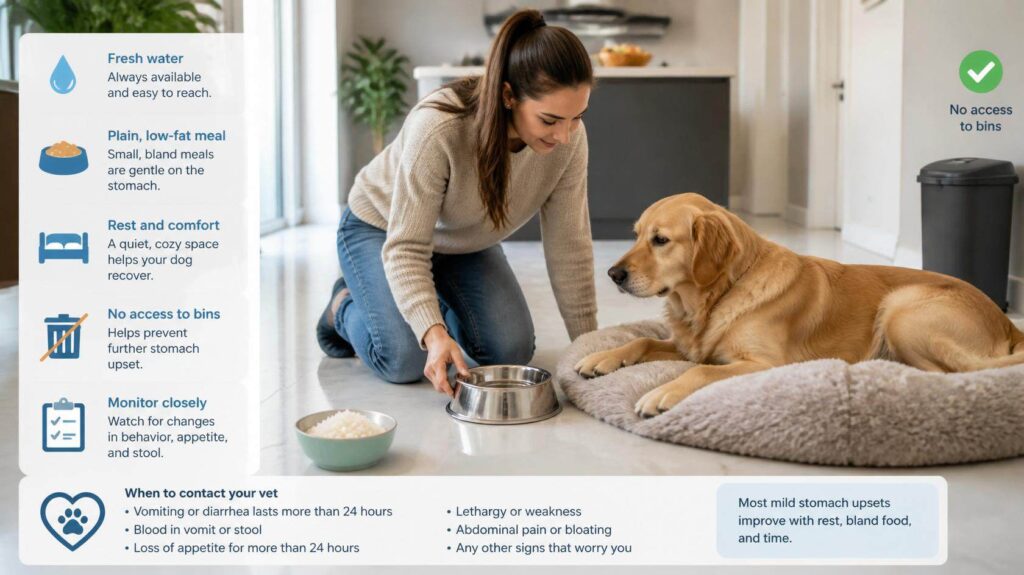
Home care is only appropriate after emergency warning signs have been ruled out. Its purpose is to support a stable dog while the stomach settles, not to treat an unknown underlying disease.
Rest First
Provide:
- A quiet place to rest.
- Short, calm toilet breaks.
- No strenuous exercise.
- No access to rubbish, compost, toys or chews that could be swallowed.
- A temporary break from treats and rich food.
- Separation from dog parks or daycare when infection is possible.
Rest does not mean ignoring the dog. Continue checking their drinking, urination, energy and comfort.
Hydration, Carefully
Focus on whether water stays down rather than simply encouraging your dog to drink more.
- Do not force large amounts of water.
- Do not syringe water into a weak, drowsy or nauseated dog.
- Avoid allowing a very thirsty dog to gulp an entire bowl at once.
- Watch whether drinking triggers further vomiting.
- Monitor whether your dog is still urinating.
If your dog repeatedly vomits after drinking or cannot keep water down, contact a veterinarian promptly. Ongoing fluid loss may require anti-sickness treatment and veterinary fluid therapy.
Should You Withhold Food?
This depends on the dog, the symptoms and the advice of your veterinarian.
A brief pause from food may sometimes be considered for an otherwise healthy adult dog that is actively vomiting, but fasting is not automatically appropriate for:
- Puppies.
- Toy breeds.
- Senior or underweight dogs.
- Pregnant or nursing dogs.
- Diabetic dogs.
- Dogs with chronic illness.
- Dogs taking medication that must be given with food.
- Dogs with persistent vomiting or suspected obstruction.
Do not withhold water unless a veterinarian specifically instructs you to. When in doubt, call your clinic before fasting your dog.
Small, Digestible Meals
Once vomiting has stopped and your dog is interested in food, offer small portions rather than one full meal.
Suitable short-term food should generally be:
- Easy to digest.
- Low in fat.
- Plain and unseasoned.
- Offered in several small meals.
A veterinary gastrointestinal diet is often the most nutritionally controlled option. A homemade bland meal may be suitable for some otherwise healthy dogs, but it should only be used short term and may not be appropriate for dogs with pancreatitis, food sensitivities or prescription-diet requirements.
Stop feeding and seek advice if eating triggers more vomiting, abdominal pain or worsening lethargy.
Getting Back to Normal Food
Once vomiting has stopped and the stool, appetite and energy are improving, gradually reintroduce the usual diet over several days.
- Start with mostly the temporary diet and a small amount of normal food.
- Increase the normal food gradually.
- Avoid treats and rich extras during the transition.
- Do not switch between several different foods.
If symptoms return, pause the transition and contact your veterinarian rather than repeatedly starting new home remedies.
Bland Food, Pumpkin, Probiotics, or Bone Broth — What Actually Helps?
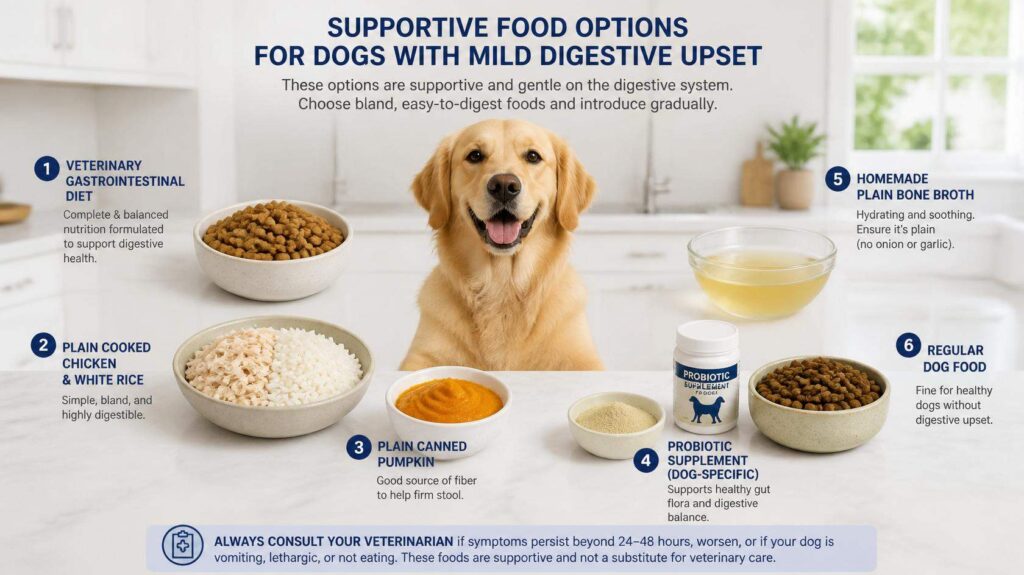
Comparison Table: Common Home-Support Options
| Option | Possible Role | Main Limitation | Check First |
|---|---|---|---|
| Veterinary gastrointestinal diet | Easily digested and nutritionally controlled | May require veterinary recommendation | Suitability for the dog’s medical condition |
| Plain lean protein and carbohydrate | Short-term dietary support | Not complete and balanced for long-term feeding | Food allergy, pancreatitis or prescription diet |
| Plain pumpkin, not pie filling | Fibre may help some cases of loose stool | Not suitable for every type of diarrhoea | Active vomiting, excess fibre or worsening signs |
| Dog-specific probiotic | May support some dogs with gastrointestinal disturbance | Strains, evidence and product quality vary | Immunocompromised or medically complex dogs |
| Homemade bone broth | May encourage some dogs to drink | Often too fatty, salty or heavily seasoned | Onion, garlic, sweeteners and added flavourings |
| Normal dog food | Maintains dietary consistency | May be poorly tolerated during an active episode | Large portions, rich food or continued vomiting |
“Natural” does not automatically mean safe. Commercial broth and stock often contain onion, garlic, salt or fat, while homemade meals can become too rich if skin, oil, gravy or fatty meat is included.
Pumpkin, fibre and probiotics are not universal treatments. They may help some dogs, do little for others or worsen symptoms when the underlying problem is obstruction, pancreatitis, infection or active vomiting.
Chicken and rice is also not appropriate for every dog. It is unsuitable for dogs with chicken sensitivity, may be too limited for prolonged feeding and can interfere with a prescribed diet or veterinary food trial. Treat bland food as temporary support, not a cure.
Dogs Who Need a Different Approach
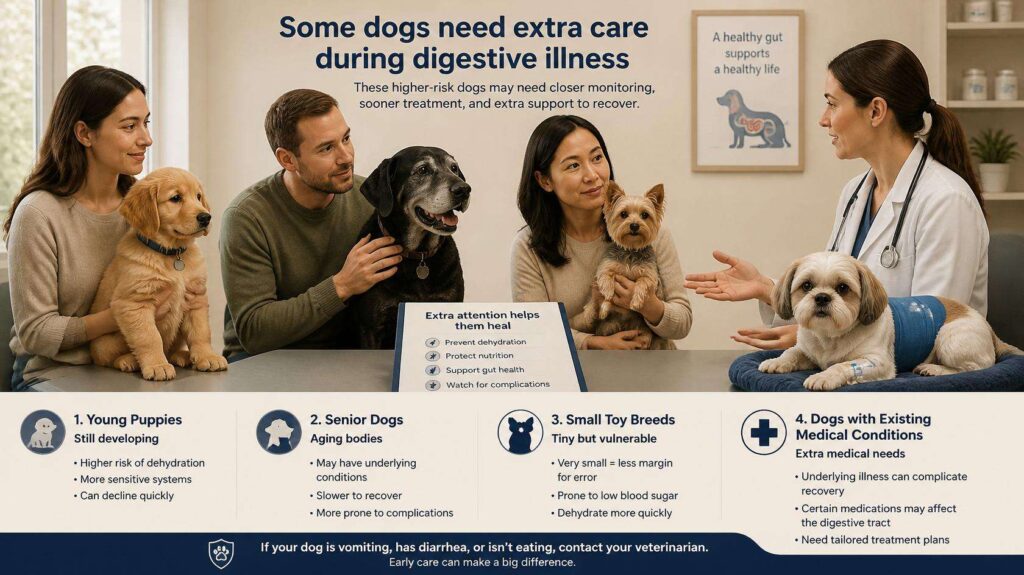
Puppies
Puppies can dehydrate and lose energy quickly, especially if vomiting and diarrhoea occur together. Incompletely vaccinated puppies also need prompt assessment because infections such as parvovirus can cause severe gastrointestinal illness.
Do not fast a puppy or rely on home remedies without veterinary guidance. Contact your vet sooner if a puppy is vomiting, has repeated diarrhoea, refuses food, seems unusually quiet or cannot keep water down.
Senior Dogs
Older dogs may have less reserve to cope with fluid loss, and digestive symptoms are more likely to be linked to an underlying condition or medication. Appetite loss, weakness, repeated vomiting or a sudden change in behaviour warrants prompt veterinary advice.
Toy and Small Breeds
Small dogs have lower fluid and energy reserves, so repeated vomiting, diarrhoea or food refusal can affect them quickly. Use a lower threshold for calling your vet rather than waiting for symptoms to become severe.
Dogs With Existing Health Conditions
Generic home-care advice may not be appropriate for dogs with:
- Diabetes.
- Kidney or liver disease.
- Addison’s disease.
- Previous pancreatitis.
- Pregnancy or nursing.
- Prescription diets.
- Medication that must be given with food.
Contact your veterinarian for advice tailored to the dog’s condition and current treatment.
Comparison Table: Risk by Life Stage
| Dog Type | Why Risk May Be Higher | Recommended Threshold |
|---|---|---|
| Healthy adult | May tolerate one isolated mild episode | Brief monitoring if otherwise bright and stable |
| Puppy | Faster dehydration, infection risk and reduced energy reserves | Contact a vet earlier |
| Senior dog | Underlying disease and medication effects are more likely | Prompt assessment |
| Toy or small breed | Faster fluid and calorie loss | Lower threshold for veterinary help |
| Chronically ill dog | Greater risk of complications or treatment conflicts | Seek individual veterinary advice |
| Previous pancreatitis | Symptoms may recur after rich or fatty food | Contact the vet promptly |
When It Keeps Coming Back
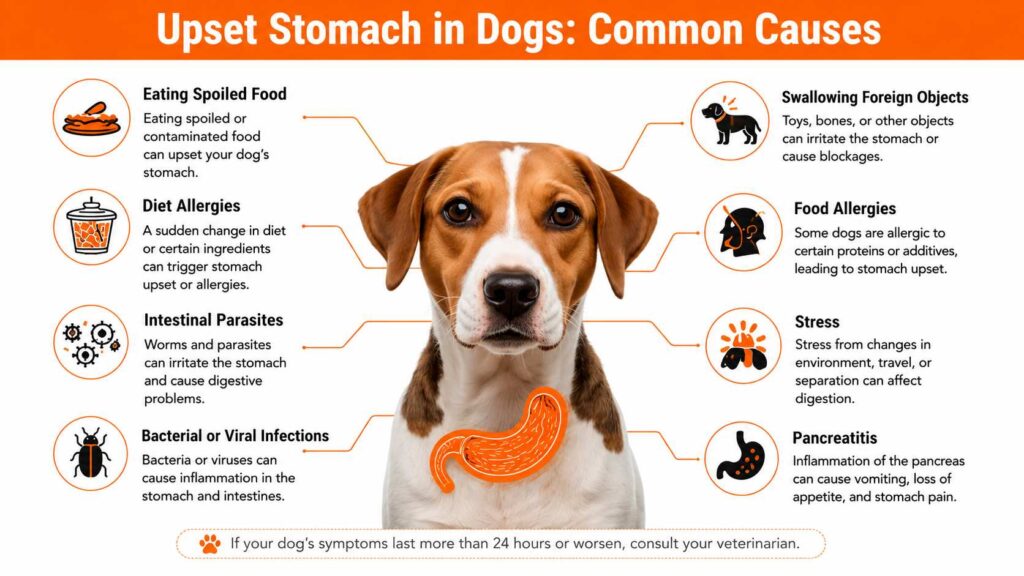
One mild episode is different from symptoms that never fully settle or return every few weeks. Recurrent vomiting or diarrhoea may be associated with parasites, food-responsive disease, chronic enteropathy, pancreatic problems or illness outside the digestive tract.
Arrange a veterinary assessment if you notice:
- Weight loss or poor body condition.
- Blood or persistent mucus in the stool.
- Repeated morning vomiting.
- Alternating normal and loose stools.
- Increased thirst or urination.
- Ongoing appetite changes.
- Symptoms after several different foods.
- Frequent reliance on bland meals.
Avoid repeatedly switching diets whenever symptoms appear. Each change adds another variable, can prolong digestive upset and makes a properly managed food trial harder to interpret.
Vet Advice: What a Workup May Include
Depending on the dog’s history and symptoms, a veterinarian may recommend:
- A full history and physical examination.
- Hydration assessment.
- Faecal or parasite testing.
- Parvovirus testing where relevant.
- Blood tests.
- Abdominal X-rays or ultrasound.
- Anti-sickness treatment or fluid therapy.
- A veterinary gastrointestinal or elimination diet.
- Treatment directed at the underlying cause.
Bringing photographs, a medication list and a fresh stool sample where practical can make the appointment more useful.
Common Mistakes That Can Make Recovery Harder
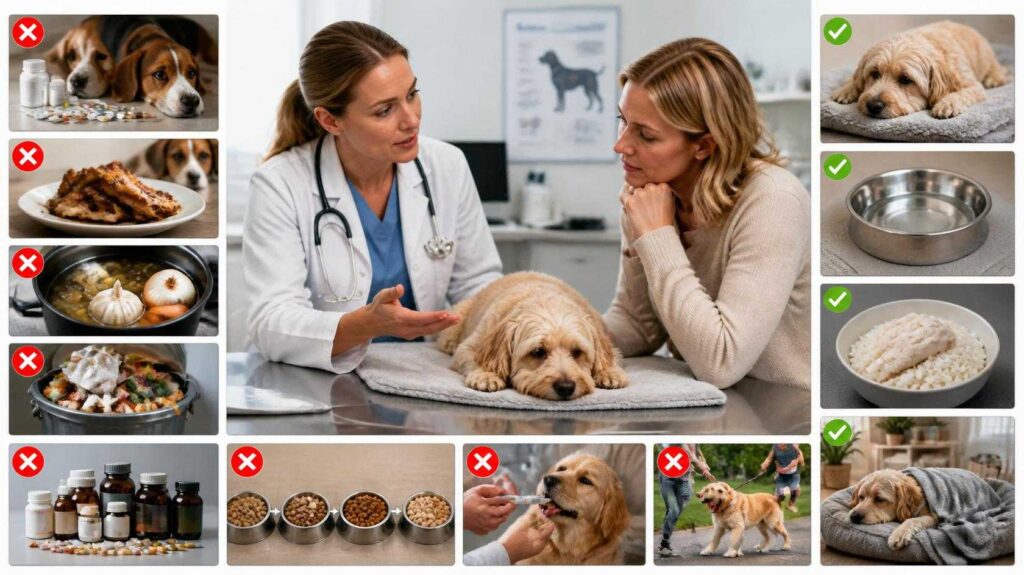
- Giving human medicines without veterinary approval. Ibuprofen and naproxen are toxic to dogs, while paracetamol, aspirin and other medicines should only be used when specifically prescribed.
- Using Pepto-Bismol, Imodium or antacids without veterinary guidance. Some dogs, including certain herding breeds with drug-sensitivity mutations, may be at greater risk from loperamide.
- Trying to induce vomiting with salt, hydrogen peroxide, mustard or other home methods.
- Offering milk, oil or another supposed antidote after suspected poisoning.
- Force-feeding or syringing large amounts of water.
- Feeding fatty meat, skin, cheese, gravy or leftovers.
- Using broth containing onion, garlic, excessive salt or added seasoning.
- Feeding chicken and rice for weeks instead of returning to a complete diet.
- Starting several supplements or remedies at the same time.
- Assuming pumpkin treats every form of diarrhoea.
- Switching diets repeatedly.
- Delaying care because the dog is still eating small amounts.
- Assuming diarrhoea must be present for an intestinal blockage.
- Continuing normal exercise during active illness.
- Allowing a potentially infectious dog to share bowls or mix closely with other dogs.
Country-Specific Risks Worth Knowing
United Kingdom
- Mouldy food and compost.
- Slug pellets and rodent-control products.
- Rich seasonal leftovers.
- Human medication left within reach.
- Scavenging during walks.
Canada
- Antifreeze.
- Compost and mouldy food.
- Rodent-control products.
- Rich holiday food.
- Wildlife remains and outdoor scavenging.
Australia
- Heat-related illness.
- Sea-water ingestion.
- Compost.
- Snail and rodent bait.
- Toxic garden plants.
- Beach and park scavenging.
Suspected toxin exposure should be treated as urgent. Contact a veterinarian or an appropriate animal poison service rather than waiting for symptoms or attempting treatment at home.
Reducing Future Digestive Upsets
- Change food gradually, usually over several days unless your veterinarian advises otherwise.
- Measure meals rather than free-feeding or offering frequent extras.
- Limit rich leftovers and introduce new treats one at a time.
- Secure bins, compost and household chemicals.
- Keep medicines and swallowable objects out of reach.
- Maintain vaccination and parasite prevention according to veterinary advice.
- Investigate recurring symptoms rather than managing them indefinitely with bland food.
Quick Reference Checklist
Before Monitoring at Home
Confirm that:
- Your dog is alert and responsive.
- Water stays down.
- There is no abdominal swelling or severe pain.
- There is no suspected toxin or swallowed object.
- There is no repeated dry retching.
- Your dog has not collapsed or become markedly weak.
- Your dog is not a vulnerable puppy or medically unstable adult.
Before Calling the Vet
Have the following information ready:
- When the symptoms started.
- Number of vomiting or diarrhoea episodes.
- Appearance of the vomit or stool.
- Whether water stays down.
- Appetite and energy level.
- Urination.
- Recent food changes or scavenging.
- Possible toxin or foreign-object exposure.
- Current medicines and supplements.
- Vaccination and parasite-prevention status.
- Photographs or a fresh stool sample, where practical.
Many mild stomach upsets do settle with rest, careful monitoring and an appropriate return to food. The important part is not diagnosing the cause yourself; it is recognising when the pattern no longer looks mild.
You know your dog’s normal behaviour better than anyone. If they seem significantly different, symptoms are worsening or you are uneasy about waiting, contact your veterinarian.
Frequently Asked Questions
1.Can a dog have an upset stomach without vomiting or diarrhoea?
Yes. Nausea or abdominal discomfort may cause reduced appetite, drooling, lip licking, repeated swallowing, restlessness or a hunched posture without obvious vomiting or diarrhoea. Contact your vet if these signs persist, worsen or occur with weakness, pain or abdominal swelling.
2.How can I tell if my dog feels nauseous?
Common signs include excessive drooling, lip licking, repeated swallowing, eating grass, restlessness and approaching food before turning away. These behaviours are not specific to nausea, so repeated or severe signs should be assessed by a veterinarian.
3.Should I feed my dog after one episode of vomiting?
A healthy adult dog that has vomited once but remains bright and keeps water down may be able to tolerate a small, low-fat meal after the stomach has settled. Do not feed if vomiting continues, the abdomen appears painful or swollen, or the dog seems unwell. Puppies and medically vulnerable dogs need individual veterinary advice.
4.What should I do if my dog vomits after drinking water?
Prevent rapid gulping and offer only small opportunities to drink while you contact your veterinarian for guidance. If even small amounts repeatedly come back up, your dog may need anti-sickness treatment and fluid support. Do not force or syringe water.
5.Is chicken and rice safe for every dog?
No. It may be suitable as a short-term option for some healthy dogs, but it is not appropriate for dogs with chicken sensitivity, previous pancreatitis, certain medical conditions or an existing prescription diet. It is also not complete and balanced for long-term feeding.
6.Can too much fibre make diarrhoea worse?
Yes. Pumpkin or another fibre source may help some dogs, but too much can increase gas, stool volume or diarrhoea. Fibre is not appropriate for every cause of digestive upset, particularly when vomiting, pain or possible obstruction is present.
7.Can a dog still pass stool with an intestinal blockage?
Yes. A dog may continue passing stool during an early or partial blockage because material already beyond the obstruction can still leave the body. Vomiting, abdominal pain, poor appetite, repeated retching or suspected object ingestion still require prompt veterinary advice.
If your dog repeatedly develops digestive symptoms or seems unable to tolerate several foods, arrange a proper veterinary assessment rather than continuing with diet changes and home remedies.
#. Related Articles:
1. Why Is My Dog Throwing Up Clear Liquid?