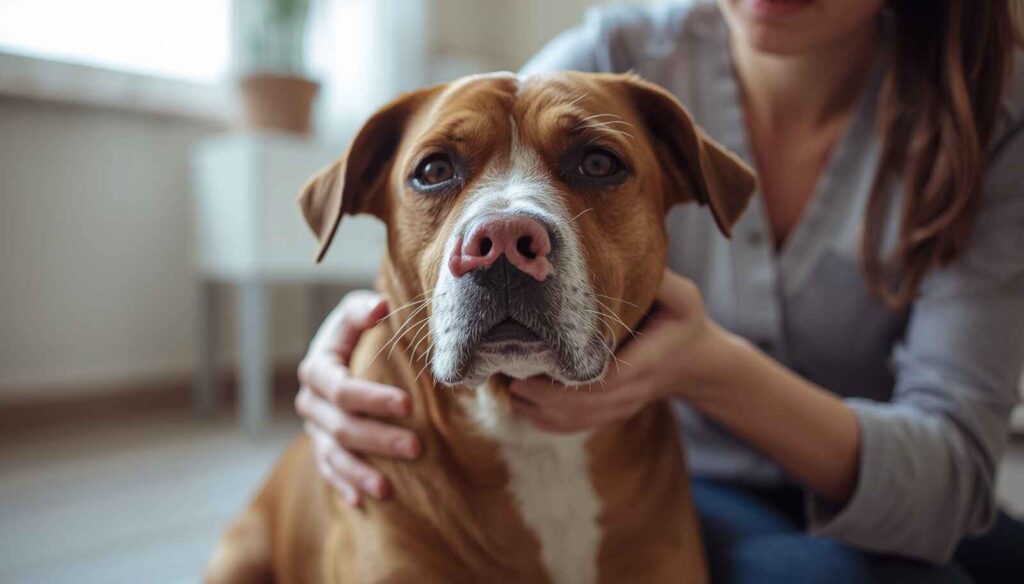
Here’s the thing most articles don’t tell you upfront: a runny nose in dogs is incredibly common and usually nothing to panic about. But sometimes it’s your dog’s way of telling you something important. This guide will help you tell the difference — calmly and clearly.
You’re watching your dog and notice a little wetness around their snout. Or maybe they’ve been sneezing more than usual and there’s a clear dribble coming out. Your first instinct? Is my dog sick?
The honest answer: it depends. Dogs can have runny noses for dozens of reasons — from playing in cold air to a serious nasal infection. This guide walks you through all of them, in plain English, so you know exactly what to do next.
What Does a Normal Dog’s Nose Look Like?
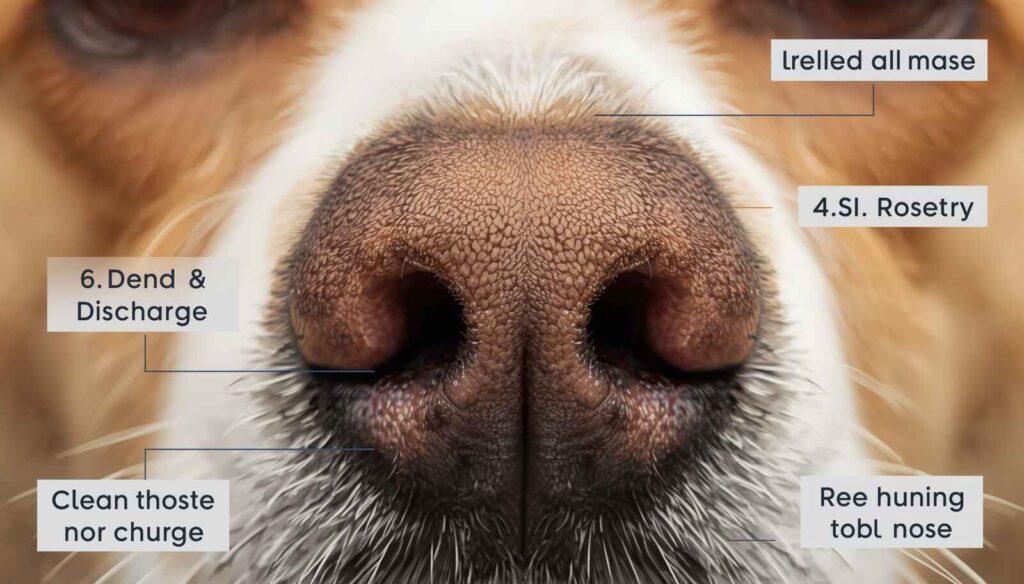
First, a quick baseline. A healthy dog’s nose is typically cool and slightly moist. A small amount of clear, watery discharge is completely normal — it helps with scent detection and temperature regulation.
Where it gets concerning is the type, colour, and volume of the discharge. That’s your real clue. Here’s a quick reference:
Clear & Watery -> Usually harmless. Could be allergies, excitement, or cold weather.
White or Cloudy -> May indicate early infection or irritation. Worth monitoring.
Yellow or Green -> Often signals a bacterial infection. See a vet soon.
Bloody or Brown -> Needs prompt veterinary attention — could be trauma, polyp, or tumour.
Thick & Crusty -> Possible chronic condition or distemper. Check with a vet.
Common Reasons Your Dog Has a Runny Nose
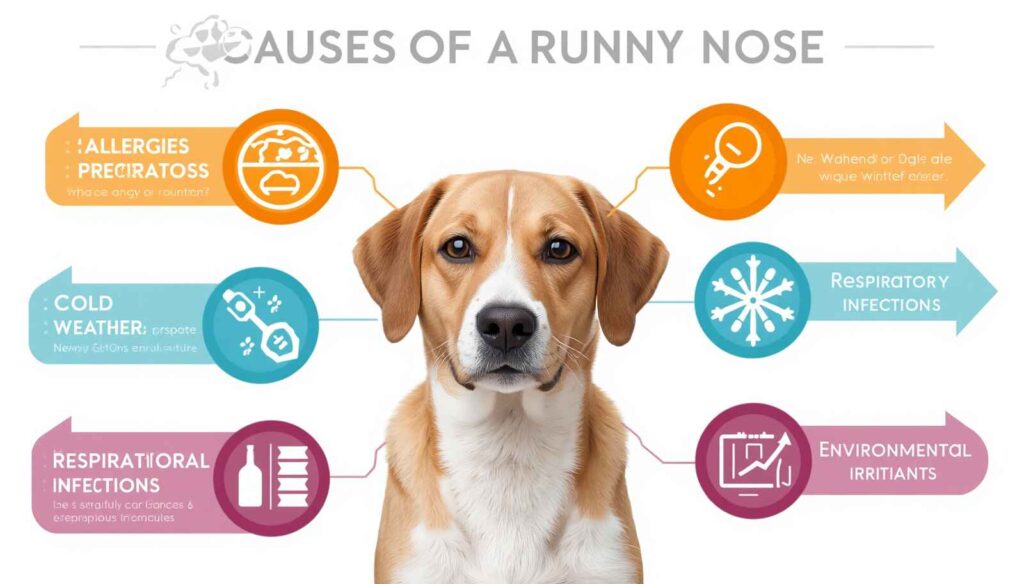
1. Allergies — the most common culprit
Just like humans, dogs can be allergic to pollen, grass, dust mites, mould, or certain foods. This is especially common in spring and summer when plant pollen is high — something pet owners in the UK, Canada, and Australia all know too well.
Allergy-related discharge is almost always clear and watery. You’ll often see it alongside sneezing, itchy skin, or watery eyes. Unlike infections, allergies don’t come with a fever or lethargy.
Quick tip: If your dog’s runny nose follows a seasonal pattern — worse in spring or autumn — allergies are a very likely cause. Mention this pattern to your vet as it speeds up diagnosis significantly.
2. Upper respiratory infections
Bacterial or viral infections of the upper airway are a common cause of a runny nose in dogs — especially puppies or dogs that spend time in kennels, dog parks, or doggy daycare.
Canine infectious respiratory disease complex (sometimes called “kennel cough”) is a classic example. You’ll typically notice a thick or coloured discharge alongside coughing, sneezing, and a general “under the weather” vibe.
3. A foreign object stuck in the nostril
This one surprises many owners. Dogs are curious sniffers and can inhale grass seeds, bits of bark, dirt, or small plant material right into their nasal passages. When that happens, the body responds with sudden, intense, one-sided discharge — often with the dog pawing at their nose or sneezing violently.
Important: If the discharge is coming from only one nostril and started suddenly, a foreign object is a strong possibility. Don’t try to remove it yourself — this needs a vet.
4. Dental disease
This one flies under the radar. The roots of your dog’s upper teeth sit very close to the nasal cavity. A badly infected tooth root — especially the upper carnassial tooth — can cause bacteria to work their way up into the sinuses, resulting in a persistent, often one-sided runny nose.
If your dog has bad breath alongside nasal discharge, don’t skip the dental check-up. It could be the root cause (literally).
5. Nasal polyps or tumours
Less common, but worth knowing about. Benign growths (polyps) or tumours can develop inside the nasal cavity. These tend to cause chronic, progressive discharge — sometimes accompanied by facial swelling, snoring, or nosebleeds. They’re more common in older dogs.
6. Breed-specific anatomy (brachycephalic dogs)
If you have a flat-faced breed — Pugs, French Bulldogs, Bulldogs, Shih Tzus, Cavalier King Charles Spaniels — a runny nose is practically baked into their DNA. Their compressed nasal passages don’t drain as efficiently, making mild discharge a near-constant feature.
That said, “normal for the breed” doesn’t mean “ignore it.” Any change from their usual baseline still deserves attention.
7. Excitement, exercise, or cold weather
Sometimes the explanation is wonderfully simple. Dogs can develop clear, watery discharge when they’re very excited, during vigorous exercise, or after sniffing cold air. This usually resolves on its own within minutes and is nothing to worry about.
Warning Signs That Need a Vet Visit
A runny nose on its own isn’t always an emergency. But combine it with any of the following, and it’s time to call your vet:
- Discharge is yellow, green, bloody, or has an unusual smell
- Discharge is coming from only one nostril
- Your dog is struggling to breathe through their nose
- Swelling around the nose or face
- Loss of appetite or significant lethargy
- Persistent sneezing that started suddenly
- Pawing at the nose or face
- Nosebleeds
- The runny nose has lasted more than a few days with no improvement
Puppies need extra caution. A runny nose in a young pup — especially one that hasn’t been fully vaccinated — can be a sign of canine distemper, a serious viral illness. Don’t wait it out. See a vet promptly.
What the Vet Will Do
If you bring your dog in for a persistent or concerning runny nose, your vet will likely:
- Take a clinical history — when it started, what the discharge looks like, any other symptoms
- Perform a physical exam — checking the nose, mouth, teeth, throat, and lymph nodes
- Run tests if needed — blood work, nasal swabs, allergy testing, or imaging (X-rays, CT scan) for complex cases
- Check the teeth — especially if one-sided discharge is present
Treatment will depend entirely on what’s causing the problem — ranging from antihistamines for allergies, to antibiotics for infection, to dental extraction or minor surgery for more complex cases.
How to Comfort Your Dog at Home (When It’s Not Serious)
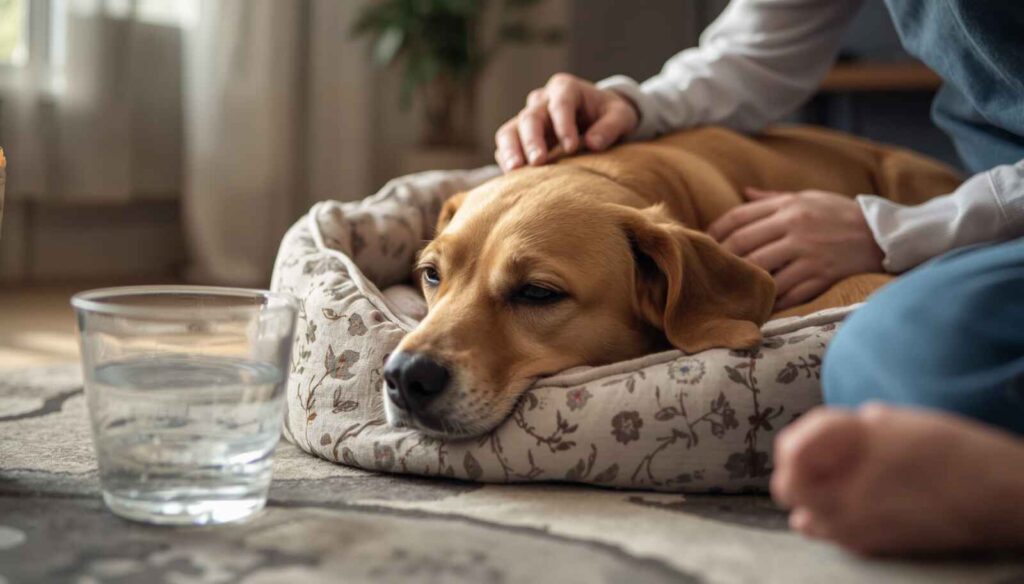
If the discharge is clear, your dog is eating normally, and they seem otherwise fine, there are simple things you can do while you monitor the situation:
- Gently wipe the nose with a soft, damp cloth to prevent crusting and discomfort. Do this 2–3 times a day.
- Use a cool-mist humidifier near their sleeping area — especially helpful in dry winter months. It helps keep nasal passages from drying out.
- Keep them well hydrated — make sure fresh water is always available. Hydration helps thin mucus.
- Reduce known allergen exposure — if pollen is high, limit outdoor time in the morning when counts peak. Wipe their paws and face when they come inside.
- Feed them well — a nutritious diet supports immune function. Look for foods with omega-3 fatty acids, which have mild anti-inflammatory properties.
Never give your dog human cold or flu medications. Decongestants like pseudoephedrine are toxic to dogs. Always ask your vet before giving any medication.
Preventing a Runny Nose in Dogs
You can’t prevent every sniffle, but these habits go a long way:
- Keep vaccinations up to date — this protects against viral respiratory infections
- Regular dental check-ups (at least once a year) to catch tooth root issues early
- Use pet-safe, fragrance-free cleaning products at home — strong chemical smells irritate nasal passages
- Avoid letting your dog sniff in long grass where seeds and plant material can be inhaled
- Don’t smoke indoors — second-hand smoke is a nasal irritant for dogs
- Annual vet check-ups to catch underlying conditions before they worsen
Frequently Asked Questions
1.Can a dog’s runny nose go away on its own?
Yes — in many cases it does. If the discharge is clear, watery, and your dog is otherwise healthy and happy, it may simply be a reaction to cold air, excitement, or mild seasonal pollen. Give it 24–48 hours. If it persists or worsens, book a vet visit.
2.Is a runny nose in dogs always caused by allergies?
Not at all. While allergies are common, plenty of other things can cause it — infections, dental disease, foreign objects, or even just cold weather. The colour and consistency of the discharge, along with other symptoms, helps narrow down the cause.
3.What colour discharge is healthy vs. concerning?
Clear and watery is generally fine. White or slightly cloudy may be early irritation. Yellow or green usually indicates infection. Blood-tinged or brown discharge always warrants a vet visit, as does anything with a foul smell or unusual thickness.
4.Should I be worried if only one nostril is runny?
Yes, one-sided discharge is more concerning than discharge from both nostrils. It’s a common sign that something is obstructing or affecting just one side — like a foreign object, dental infection, or a nasal polyp. A vet check is recommended.
5.What can I give my dog for a runny nose?
At home, keeping their nose clean, offering plenty of water, and using a humidifier can help with comfort. Never give human cold medications. Your vet may prescribe antihistamines, antibiotics, or other treatments depending on the cause.
6.Can flat-faced dogs always have a runny nose?
Brachycephalic breeds (Pugs, French Bulldogs, etc.) are prone to mild, clear discharge due to their anatomy. However, you should still monitor for changes — coloured discharge, one-sided drainage, or any breathing difficulty is not something to write off as “just their breed.”
7.Is a runny nose contagious to other dogs?
If the cause is a viral or bacterial infection — like kennel cough — then yes, it can spread to other dogs. Isolate your dog from others while they’re symptomatic and consult your vet about whether kennel cough vaccination is appropriate if you use boarding or doggy daycare.
Final Thoughts
A runny nose in your dog is usually nothing dramatic — but it’s always worth paying attention to. The key is knowing what’s “normal sniffles” and what’s “this needs a vet.”
Clear discharge + happy dog + no other symptoms = monitor at home. Coloured discharge + other symptoms + anything one-sided = call your vet.
When in doubt, trust your gut. You know your dog better than anyone. A quick phone call to your vet for peace of mind is always the right move — and it’s always better to check than to wait too long.
#. Related Articles:
1. Home Remedies for Dog Bad Breath?