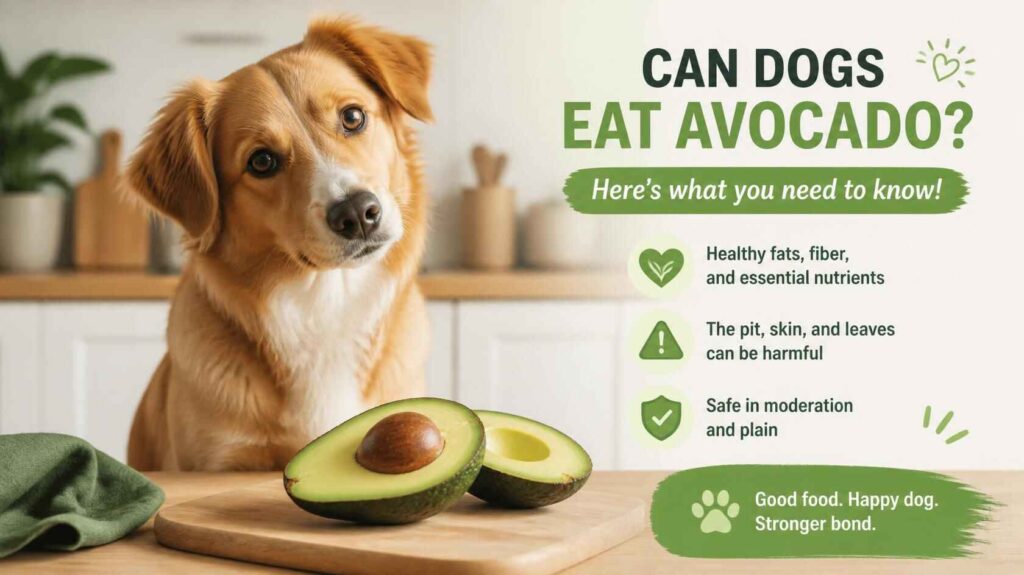
Can dogs eat avocado? A tiny accidental bite of plain avocado flesh is unlikely to seriously harm most healthy adult dogs, but the skin, pit, plant material, and prepared foods such as guacamole can present very different risks.
You’re making guacamole, a piece of avocado skin slips off the counter, and your dog swallows it before you can react. Or perhaps the whole avocado disappears from the worktop, pit and all. Search online and you’ll find one source calling avocado “toxic” and another describing it as a healthy treat—which is not very helpful when you’re trying to decide whether your dog needs a vet.
Dogs appear to be less sensitive to persin, the compound associated with avocado toxicity, than animals such as birds, rabbits, and horses. However, less sensitive does not mean risk-free. A lick of plain flesh, a swallowed pit, and a bowl of guacamole are three very different situations.
A small lick of plain avocado flesh, a swallowed pit, and a serving of guacamole are three very different situations. The safest response depends on what your dog ate, how much was eaten, your dog’s size, overall health, and whether any symptoms have already developed.
What Actually Matters: Five Quick Questions
Before deciding how concerned to be, work through these five questions:
- What did your dog eat? Plain flesh, skin, the pit or stone, leaves, bark, avocado oil, or a prepared food such as guacamole?
- How much was eaten? A lick, a few small pieces, most of the fruit, or an unknown amount?
- When did it happen? Minutes ago, several hours ago, or are symptoms appearing today after something eaten yesterday?
- Which dog ate it? A healthy adult Labrador and a 3 kg Chihuahua puppy do not carry the same level of risk.
- Are symptoms already present? Vomiting, drooling, repeated swallowing, breathing difficulty, lethargy, or abdominal pain can change the urgency.
These details are also what your veterinary team will want to know. If possible, save the packaging, recipe, remaining avocado, or a photograph of what was eaten.

Quick Verdict
- Tiny accidental lick of plain flesh, healthy adult dog, no symptoms: Often suitable for close monitoring, but contact your vet if your dog has pancreatitis, digestive disease, or another relevant condition.
- Large amount of flesh eaten: Call your vet, particularly if your dog is small, overweight, sensitive to fatty foods, or has a history of pancreatitis.
- Skin or peel eaten: Contact your vet for individual advice. The skin is difficult to digest and may contain more persin than the flesh.
- Pit or stone swallowed: Phone your vet promptly, even if your dog appears normal. A swallowed pit can cause choking or a digestive obstruction.
- Guacamole eaten: Check every ingredient. Onion, garlic, excessive salt, chilli, and other seasonings may create greater concern than the avocado itself.
- Leaves, bark, or other plant material eaten: Contact your vet or an animal poison service for advice.
- Deliberate regular feeding: Avoid it. Avocado offers no essential benefit that cannot be obtained from a complete diet or safer treats.
Warning: Difficulty breathing, active choking, collapse, repeated vomiting, severe abdominal pain, or an inability to keep water down requires urgent veterinary attention. Do not induce vomiting or give oil, milk, bread, laxatives, or other home remedies unless a veterinarian specifically instructs you to do so.
Why the Advice Sounds So Contradictory

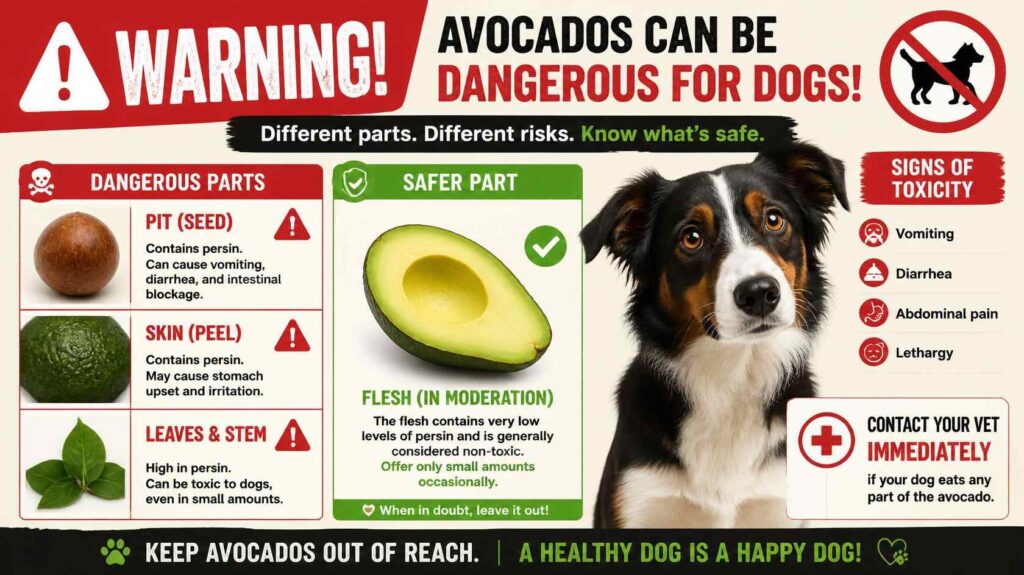
The compound behind avocado’s reputation is persin, a natural fungicidal substance found throughout the avocado plant, including the flesh, skin, leaves, bark, and pit. The amount varies between different parts of the plant.
Some animals are highly sensitive to persin. Birds, rabbits, horses, and certain livestock can develop serious illness after avocado exposure. Dogs appear to tolerate persin better, and severe persin poisoning in dogs is considered uncommon.
That fact is often repeated online without enough context. A lower risk of severe persin poisoning does not make avocado a recommended dog treat. Dogs may still develop vomiting, diarrhoea, reduced appetite, or abdominal discomfort. Avocado is also high in fat, which may be unsuitable for dogs with previous pancreatitis, hyperlipidaemia, obesity, or a prescribed low-fat diet.
Most importantly, the pit creates a separate physical danger that has nothing to do with persin.
There is also no reliable universal “safe dose” of avocado for dogs. Risk varies according to:
- The part of the avocado eaten
- The amount consumed
- The dog’s body size
- Existing medical conditions
- Whether other ingredients were involved
- Whether the exposure was accidental or repeated
Claims that a specific amount is guaranteed to be safe—or fatal—should be treated cautiously.
The Pit Is the Real Emergency
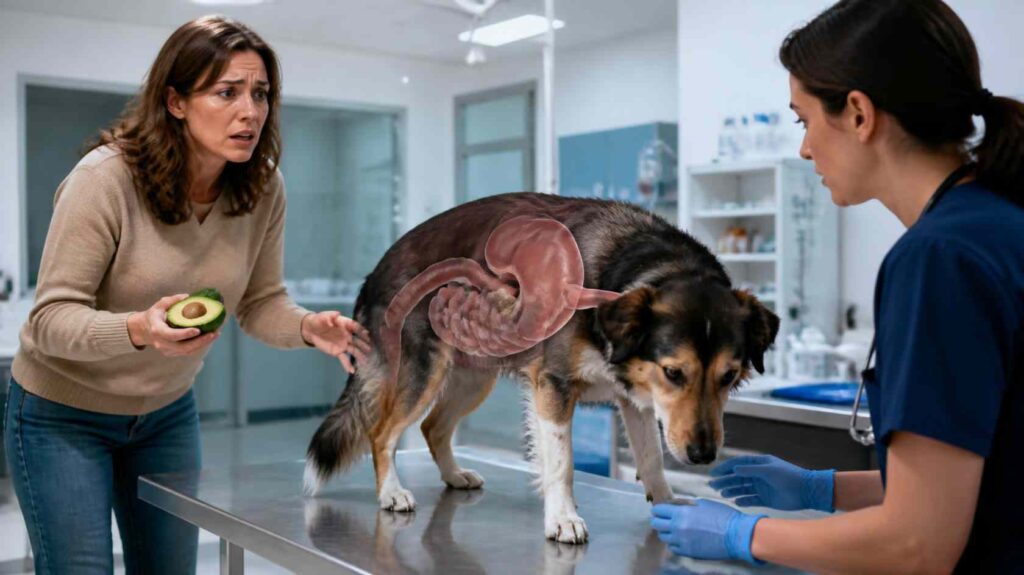
If your dog swallowed a whole avocado pit, this is the most urgent part of the situation. The pit is hard, smooth, and large enough to become lodged in the throat, oesophagus, stomach, or intestines.
Signs the Pit May Be Stuck in the Throat or Oesophagus
Watch for:
- Gagging or retching
- Repeated swallowing
- Excessive drooling
- Pawing at the mouth
- Regurgitating food or water
- Sudden distress
Difficulty breathing, blue or pale gums, weakness, or collapse is an emergency. Go to an emergency veterinary clinic immediately.
Signs of a Stomach or Intestinal Obstruction
A pit that reaches the stomach may still become lodged later. Warning signs can include:
- Repeated vomiting
- Refusal to eat
- Inability to keep water down
- Abdominal pain or a tense abdomen
- Lethargy or restlessness
- Reduced stool production
- Straining to pass stool
- Abdominal swelling
- Weakness
A common mistake is assuming that a dog is safe because it looks normal immediately after swallowing the pit. Obstruction symptoms may not appear until hours later or even the following day.
Do not wait for symptoms before contacting your vet. Call as soon as you know—or strongly suspect—that the pit is missing. A large dog is not guaranteed to pass it safely, and feeding bulky food or oil will not reliably move it through the digestive tract.
Your veterinarian may recommend:
- A physical examination
- Abdominal radiographs
- Ultrasound
- Endoscopic removal if the pit is still accessible
- Surgery if it has caused or is likely to cause an obstruction
Early veterinary assessment can provide more treatment options than waiting until the dog becomes seriously unwell.
The Fat Problem Nobody Mentions
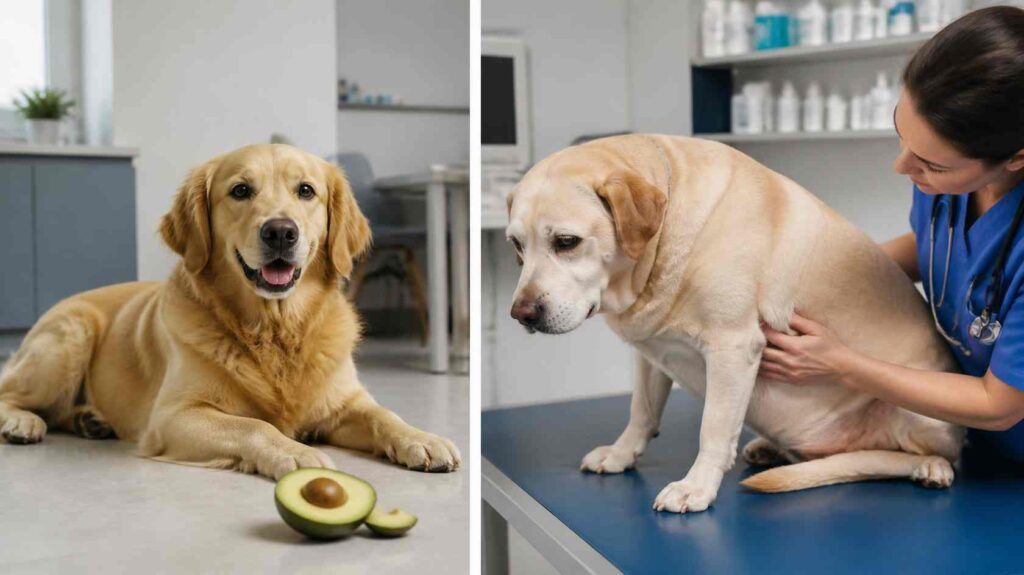
Separate from persin, avocado flesh is high in fat. A small amount may cause no problem in a healthy adult dog, although some dogs develop vomiting, diarrhoea, or abdominal discomfort.The concern is greater in dogs prone to pancreatitis, especially those with a previous history of the condition or a prescribed low-fat diet.
The concern is greater in dogs prone to pancreatitis, a painful inflammation of the pancreas that can be triggered by fatty foods. Risk may be higher in dogs that:
- Have had pancreatitis before
- Are overweight
- Have hyperlipidaemia or another diagnosed fat-processing disorder
- Have chronic digestive problems
- Are taking medication that affects fat metabolism
- Have been prescribed a low-fat diet
For these dogs, avocado should be avoided rather than offered “in moderation.”
Signs that may point to pancreatitis include:
- Repeated vomiting
- Refusal to eat
- Marked lethargy
- A tense, painful, or hunched posture
- Restlessness or difficulty getting comfortable
- Diarrhoea
- Inability to keep water down
If these signs appear after avocado or any other fatty meal, contact your vet the same day. Repeated vomiting, severe abdominal pain, weakness, or an inability to retain water requires more urgent assessment.
Guacamole Is a Different Conversation
If your dog raided the guacamole bowl, the avocado may not be the most important ingredient.
Many guacamole recipes contain onion or garlic, including onion powder and garlic powder. These ingredients can damage a dog’s red blood cells and should be taken seriously. Salt, chilli, hot sauce, lime, cheese, and seasoning blends can add further digestive or toxicological concerns.
Before deciding what to do:
- Check the complete ingredient list or recipe
- Estimate how much your dog ate
- Note the time of ingestion
- Save the packaging or take a photograph of the label
- Record your dog’s approximate weight
If onion, garlic, or an unfamiliar ingredient was present, call your vet promptly rather than waiting for symptoms.
The same rule applies to avocado toast, dips, sandwiches, salads, sauces, and other prepared foods: assess the entire dish, not just the avocado.
What to Do Based on What Happened
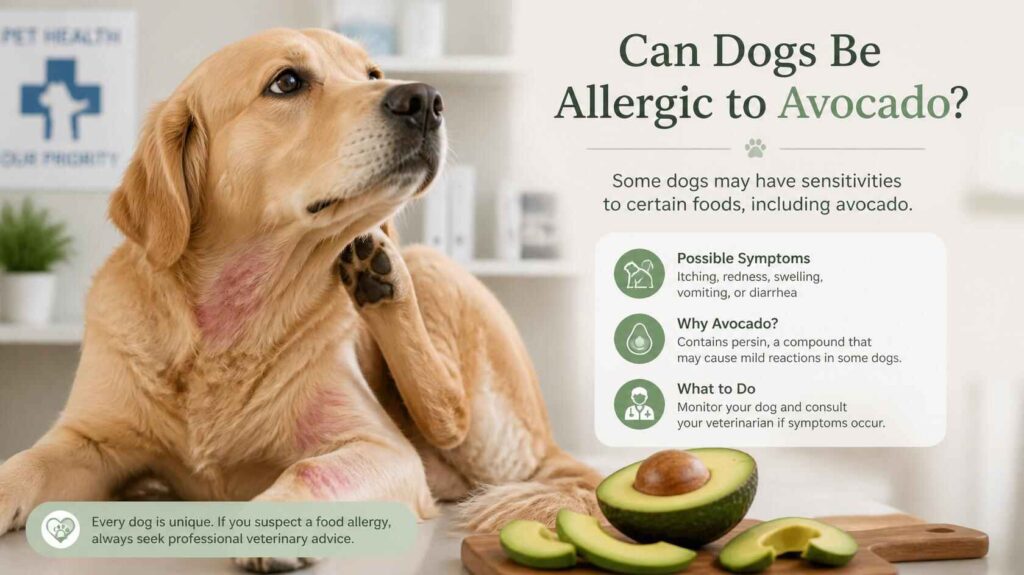
Tiny Lick of Plain Flesh
- Remove the remaining food.
- Confirm that no skin, pit, or seasoning was involved.
- Note the time of ingestion.
- Monitor for vomiting, diarrhoea, loss of appetite, or unusual lethargy over the next 12–24 hours.
- Contact your vet sooner if your dog has pancreatitis, a sensitive stomach, or another relevant medical condition.
Several Pieces or a Large Serving
- Estimate the amount eaten.
- Consider your dog’s size and medical history.
- Contact your vet, particularly if your dog is small, a puppy, overweight, or prone to pancreatitis.
- Watch closely for repeated vomiting, abdominal pain, or refusal to eat.
Skin or Plant Material
- Contact your vet or an animal poison service for advice.
- Save a sample or photograph of what was eaten.
- Prevent further access to the avocado plant, fallen fruit, compost, or rubbish.
- Monitor for digestive symptoms, but do not wait for symptoms if a large amount was eaten.
Pit Swallowed
- Call your vet immediately, even if your dog appears normal.
- Do not induce vomiting unless specifically instructed.
- Do not give oil, milk, bread, laxatives, or bulky food to help the pit pass.
- Do not assume a large dog will pass it safely.
- Seek emergency help at once if your dog is gagging, struggling to breathe, collapsing, or repeatedly retching.
Unless your vet advises otherwise, avoid offering more food until you have spoken with the clinic.
Guacamole or Another Prepared Dish
- Check every ingredient.
- Look specifically for onion, garlic, salt, chilli, sweeteners, and seasoning powders.
- Save the label or recipe.
- Call your vet promptly if the ingredients are unsafe or uncertain.
Your Dog Is Already Vomiting
- Count how many times your dog has vomited.
- Check whether water stays down.
- Look for abdominal pain, weakness, reduced appetite, or a swollen abdomen.
- Contact your vet the same day if vomiting is repeated.
- Seek urgent care if your dog cannot keep water down, appears severely painful, or becomes weak or unresponsive.
Mild Upset vs. Pancreatitis vs. Obstruction

| Feature | Mild digestive upset | Pancreatitis concern | Pit obstruction |
|---|---|---|---|
| Typical trigger | Small amount of flesh or dietary intolerance | Large fatty intake or a susceptible dog | Swallowed pit or stone |
| Vomiting | Mild and may settle | Often repeated | Often repeated or progressively worse |
| Appetite | Slightly reduced or normal | Usually reduced | Usually reduced |
| Abdominal pain | Mild or absent | Common | Common |
| Stool changes | Loose stool may occur | Diarrhoea may occur | Reduced stool or straining may occur |
| Water retention | Usually normal | May become difficult | May become difficult |
| Other clues | Dog otherwise appears well | Hunched posture, lethargy, restlessness | History of missing pit, abdominal swelling, delayed symptoms |
| What to do | Monitor closely if the exposure was minor | Contact your vet the same day | Contact your vet promptly, even before symptoms appear |
Dogs That Need Extra Caution
Some dogs have less room for error with avocado than others.
Puppies have smaller digestive tracts and can dehydrate quickly if vomiting or diarrhoea develops. Small dogs also receive a much larger dose relative to their body weight, and an avocado pit is proportionally more dangerous for them to swallow.
Avocado should be avoided entirely in dogs with:
- A history of pancreatitis
- Obesity
- Hyperlipidaemia or another fat-processing disorder
- Chronic digestive disease
- A prescribed low-fat diet
Senior dogs and those with existing medical conditions may also cope less well with dehydration or complications. In these cases, a quick call to the vet is safer than relying on a wait-and-see approach.
Safer Treats Your Dog Will Actually Enjoy

Avocado does not fill a nutritional gap in a complete, balanced dog diet. Safer, lower-fat options include:
- Cucumber slices
- Carrot pieces
- Blueberries
- Apple pieces with the core and seeds removed
- Watermelon with the rind and seeds removed
- Plain green beans
Introduce new foods gradually, keep portions small, and cut each treat to a size your dog can chew safely. Treats should remain a minor part of the daily diet rather than replacing balanced food.
Preventing a Repeat
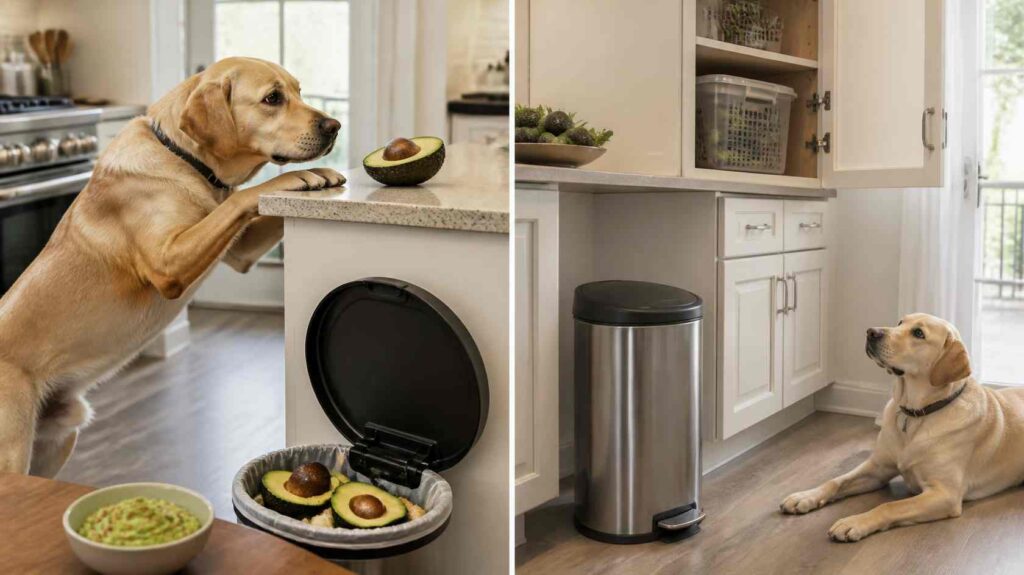
Store avocados somewhere your dog cannot reach, such as inside the fridge or a closed cupboard—not in a fruit bowl near the edge of a counter.
Dispose of pits and skins immediately in a secured rubbish bin. Open bins and compost heaps are common places for dogs to find discarded food.
If you have an avocado tree in the garden, fence off the area or supervise your dog outdoors. Collect fallen fruit, leaves, and pits promptly.
In multi-pet households, remember that birds and rabbits are more sensitive to persin than dogs. Keep avocado and avocado plants away from every pet in the home.
Common Mistakes Owners Make
- Assuming that because dogs tolerate persin better than some animals, avocado is a recommended treat
- Feeding a large portion because avocado is considered healthy for people
- Waiting for symptoms after a pit goes missing instead of calling the vet
- Assuming a large dog will automatically pass the pit
- Treating choking and intestinal obstruction as the same problem
- Giving guacamole without checking for onion or garlic
- Trying to induce vomiting without veterinary guidance
- Giving oil, milk, bread, or laxatives to help a pit pass
- Feeding avocado to a dog with a known history of pancreatitis
- Ignoring vomiting because the dog initially appears bright and active
When to Call the Vet
Home monitoring may be reasonable only when all of the following are true:
- Your dog ate a tiny amount of plain avocado flesh
- No skin, pit, plant material, or seasoning was involved
- Your dog is a healthy adult
- There is no history of pancreatitis or another relevant condition
- No symptoms are present
Contact your vet promptly if:
- A pit or stone was swallowed
- Skin, leaves, bark, or other plant material was eaten
- A large or unknown amount was consumed
- The dog is a puppy or very small
- Your dog has a history of pancreatitis
- A prepared dish contained unknown ingredients
- Vomiting, diarrhoea, lethargy, or abdominal discomfort develops
Treat the situation as an emergency if your dog:
- Is struggling to breathe
- Is actively choking
- Collapses
- Repeatedly retches without bringing anything up
- Cannot keep water down
- Shows severe abdominal pain
- Becomes weak or unresponsive
When you call, have the following information ready:
- What was eaten
- Approximately how much
- When it happened
- Your dog’s weight
- Current symptoms
- Relevant medical history
- The recipe, packaging, or ingredient label if available
The Bottom Line
Avocado is not the dramatic “one bite is fatal” food that some sources make it out to be, but it is still not a useful treat for dogs.
A tiny accidental taste of plain flesh is unlikely to cause serious harm to most healthy adult dogs. The skin and plant material deserve greater caution, the pit is a genuine choking and obstruction hazard, and guacamole may contain ingredients that are more dangerous than the avocado itself.
When the amount, ingredients, or part eaten is uncertain, your veterinarian is a better source of advice than a generic serving guide.
Frequently Asked Questions
1.Can dogs eat a tiny piece of avocado flesh?
A small accidental taste is unlikely to cause serious harm to a healthy adult dog, although mild vomiting, diarrhoea, or abdominal discomfort can occur. It is still better not to offer avocado deliberately, especially if your dog is overweight, has a sensitive stomach, or has had pancreatitis.
2.Is avocado toxic to dogs or just unhealthy?
It can present several different risks. Persin is the toxin associated with avocado, but dogs appear less sensitive to it than birds, rabbits, and horses. The flesh is more commonly a fat and digestive-upset concern, while the pit creates a serious choking and obstruction risk. Skin, leaves, bark, and other plant material may contain more persin than the flesh.
3.How much avocado is dangerous for a dog?
There is no confirmed universal safe or toxic dose for dogs. Risk depends on the amount eaten, the part involved, your dog’s size, and any existing health conditions. A small amount of flesh and a swallowed pit should never be treated as equivalent exposures.
4.My dog swallowed an avocado pit but seems fine. Do I still need to call the vet?
Yes. A dog can appear normal immediately after swallowing a pit and still develop an obstruction later. Symptoms may not appear until the pit moves further through the digestive tract. Calling early gives your vet more options than waiting until vomiting, pain, or weakness develops.
5.Can dogs eat guacamole?
No. Guacamole often contains onion, garlic, salt, chilli, and other ingredients that can be harmful to dogs. Onion and garlic are especially concerning because they can damage red blood cells. Check the complete recipe or ingredient label and contact your vet if unsafe ingredients were present.
6.Is avocado oil in dog food or shampoo dangerous?
Avocado oil in a formulated commercial product is different from feeding whole avocado. The amount is controlled, and there is no pit or skin present. However, oils are still high in fat, and topical products may contain fragrances or other additives. Ask your vet or the manufacturer about a specific product, particularly if your dog has pancreatitis, allergies, or sensitive skin.
7.What are better treat options than avocado?
Cucumber, carrot, blueberries, apple without the core and seeds, watermelon without the rind and seeds, and plain green beans are all lower-fat options with easier portion control. Serve them plain and cut them into pieces suited to your dog’s size.
#. Related Articles: