

Your dog gave you those eyes while you were peeling an orange. Before you hand a slice over, here’s everything you need to know — the benefits, the real risks, and exactly how much is safe.
The short answer: yes, most dogs can eat oranges. But like most things in life, the details matter. The flesh of an orange is non-toxic to dogs and even contains some genuinely useful nutrients. The peel, however, is a different story — and so is the amount you give.
Whether you’re in the UK, Canada, or Australia, orange season comes around every year and curious dogs will find a way to investigate. This guide gives you the complete picture so you can make the right call for your specific dog.
What parts of an orange are safe for dogs?
Not every part of an orange is created equal. Here’s a quick breakdown before we go deeper:
Safe parts -> Ripe orange flesh (peeled, no seeds) , Small amounts as an occasional treat
Avoid these -> Orange peel and rind , Seeds and pith (white stringy part) , Orange juice and processed products
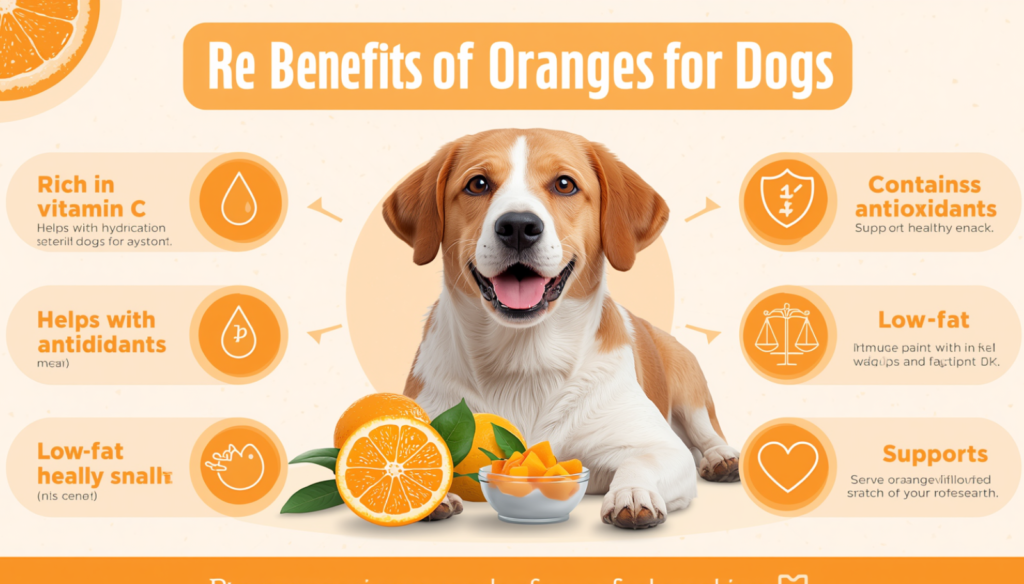
Real benefits of oranges for dogs (not just hype)
Oranges do offer some genuine nutritional upside — but it’s worth being honest about what’s meaningful and what’s just marketing filler.
Vitamin C — helpful, but dogs make their own
Unlike humans, dogs synthesise vitamin C in their liver. So they don’t technically need it from food. That said, dogs under stress, recovering from illness, or in heavy exercise can sometimes benefit from extra vitamin C — and a small piece of orange can contribute modestly.
Potassium and folate for muscle and cell health
Oranges contain potassium, which supports healthy muscle function and heart rhythm. Folate (vitamin B9) plays a role in DNA production and healthy red blood cell formation. These aren’t magic — but they’re real nutrients that do real things.
Hydration on a hot day
Oranges are roughly 87% water. On a warm summer day — especially relevant if you’re walking your dog in Queensland or on a hot UK afternoon — a small piece of orange can add a little extra hydration alongside their water bowl. Think of it as a juicy treat, not a water replacement.
Fibre for digestion
The flesh contains soluble fibre, which can support healthy digestion in small amounts. Too much, however, flips to a laxative effect — so small servings matter here too.
Vet-informed tip
Oranges offer real but modest benefits. They’re a nice occasional treat, not a health supplement. Don’t replace a balanced diet with citrus.
The real risks — what you actually need to watch for
This is where most articles get vague. Let’s be specific.
High natural sugar content
A medium navel orange contains around 12g of natural sugar. That’s significant for a dog — especially a small breed. Too much sugar contributes to weight gain over time, and for dogs already managing obesity, it adds up fast.
For diabetic dogs, this is a hard no. The natural sugars in oranges spike blood glucose just like any other carbohydrate source. If your dog is on insulin or has a metabolic condition, skip the orange and talk to your vet before introducing any fruit.
Gastrointestinal upset
Even in healthy dogs, citric acid can cause nausea, vomiting, or loose stools — particularly if your dog has a sensitive stomach. If you’re introducing oranges for the first time, start tiny. One small segment. Watch for any stomach upset over the next 12 hours before offering more.
Orange peel is genuinely problematic
The peel contains essential oils — limonene and linalool — that are toxic to dogs in concentrated amounts. The peel is also much harder to digest and can cause intestinal blockages, especially in smaller breeds. Throw the peel away, every time.
Never give your dog
Orange peel, seeds, orange juice, orange-flavoured human snacks, candied orange — these all pose more risk than the plain fruit. The simpler the better.
How much orange can a dog safely eat?
Treats — including healthy fruit — should make up no more than 10% of your dog’s daily calorie intake. Here’s a practical guide by size:
| Dog size | Example breeds | Max serving | Frequency |
|---|---|---|---|
| Small (under 10kg) | Chihuahua, Shih Tzu, Cavoodle | 1 small segment | Occasionally |
| Medium (10–25kg) | Labrador, Border Collie, Staffy | 2–3 segments | 2–3x per week |
| Large (25kg+) | German Shepherd, Golden Retriever | Up to half an orange | 2–3x per week |
| Diabetic or overweight | Any breed | None | Avoid — ask your vet |
Important note
These are general guidelines. Your individual dog’s health, age, weight, and activity level all matter. When in doubt, less is more — and your vet always has the final word.

Can puppies eat oranges?
Technically yes, but it’s not worth the hassle. Puppies have more sensitive digestive systems than adult dogs, and their caloric needs are tightly balanced around growth. The citric acid in oranges is more likely to cause stomach upset in a pup.
If you want to introduce orange to a puppy, wait until they’re at least 6 months old, consult your vet first, and start with a piece no bigger than your thumbnail. Watch carefully before making it a habit.
Can dogs drink orange juice?
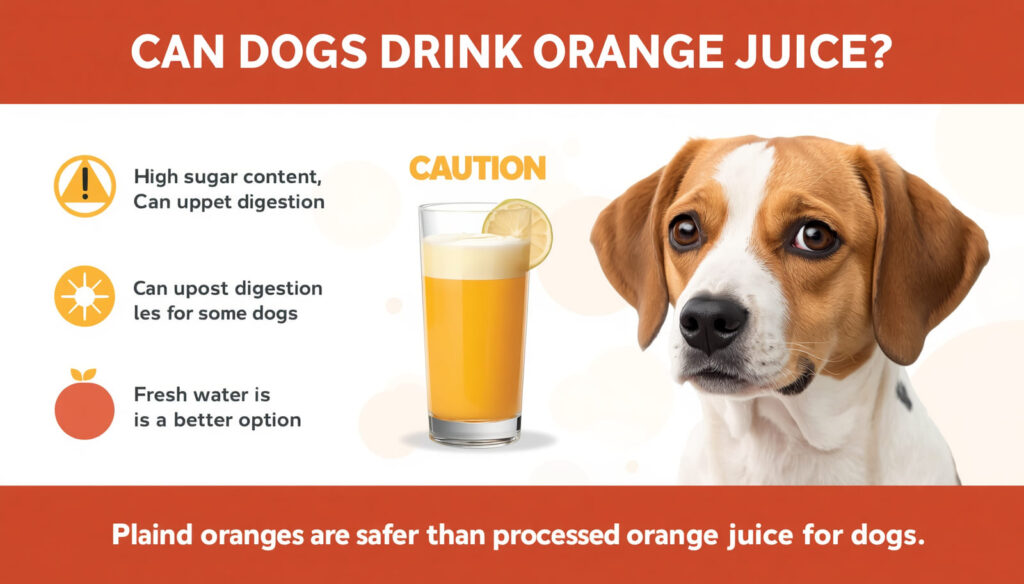
No — and this is a firm one. Even 100% fresh-squeezed orange juice is too concentrated in sugar and citric acid for dogs. Store-bought orange juice often has added sugars or artificial sweeteners like xylitol, which is actively poisonous to dogs.
If your dog licks a drop off the floor, don’t panic — it’s the dose that makes the poison. But deliberately offering juice? Skip it entirely.
How to introduce oranges to your dog — step by step
- Peel the orange completely — remove all rind, pith (white parts), and seeds. Only the flesh goes to your dog.
- Break off a small segment and cut it into smaller pieces for safety, especially for small dogs who might bolt it down.
- Offer just one piece the first time. Sit with your dog and observe — are they interested? Do they enjoy it?
- Wait 12–24 hours and watch for any signs of stomach upset: vomiting, diarrhoea, excessive drooling, or lethargy.
- If all is well, you can offer a small serving again in a few days. Don’t make it a daily habit.
Real-life tip
Freeze small orange segments for a refreshing summer treat — great for hot days in Queensland or a warm Canadian summer. Just make sure they’re peeled and seedless before freezing.
What about other citrus fruits?
You might be wondering about the rest of the citrus family:
Mandarins -> Generally safe
Higher sugar than oranges — even smaller servings
Clementines -> Generally safe
Similar rules as oranges — flesh only, no peel
Lemons -> Not recommended
Very acidic, most dogs dislike them and can get upset stomachs
Limes -> Avoid
More toxic compounds, especially in peel — not worth the risk
Grapefruit -> Avoid
Psoralen compounds in grapefruit are toxic to dogs
Frequently asked questions
1.Are oranges poisonous to dogs?
No — orange flesh is not poisonous to dogs. However, the peel and concentrated essential oils in the skin can be toxic. The seeds are also a concern due to trace amounts of cyanogenic compounds. Stick to peeled, seedless flesh and you’re in the safe zone for most healthy adult dogs.
2.My dog ate orange peel — what should I do?
A small accidental nibble of peel is unlikely to cause serious harm, but watch for vomiting, drooling, diarrhoea, or lethargy over the next few hours. If your dog ate a large amount of peel or is showing any worrying symptoms, call your vet or an emergency animal clinic. In the UK, you can reach the Animal Poison Line on 01202 509000.
3.Can dogs eat oranges every day?
It’s better to keep oranges as an occasional treat rather than a daily snack. The natural sugar content adds up over time, and daily citrus can contribute to weight gain or digestive sensitivity. Two to three times a week, in appropriate amounts for your dog’s size, is a sensible upper limit.
4.Do all dogs like oranges?
Definitely not — and that’s completely normal. Many dogs are actually put off by the strong citrus smell. Don’t force it. If your dog sniffs the orange and walks away, respect that. There are plenty of other healthy fruit options like blueberries, watermelon (seedless), or apple slices that dogs often enjoy more.
5.Are oranges good for dogs with digestive issues?
If your dog has IBS, colitis, or a generally sensitive stomach, citrus fruit may make things worse, not better. The citric acid and fibre can both irritate an already-upset gut. Play it safe and consult your vet before introducing oranges to a dog with any ongoing digestive condition.
6.What fruit is completely off-limits for dogs?
Grapes and raisins are the most dangerous — even tiny amounts can cause kidney failure in dogs. Cherries (pits and leaves contain cyanide), avocado (persin toxin), and unripe tomatoes are also problematic. Always check before introducing a new fruit to your dog’s diet.
The bottom line:
dogs can eat oranges safely, as long as you keep it simple — peeled flesh only, no seeds, no peel, and sensible serving sizes matched to your dog’s size and health. For most healthy adult dogs, a segment or two as an occasional treat is perfectly fine. If your dog is diabetic, overweight, or has a sensitive stomach, skip the orange or speak to your vet first. And if your dog turns their nose up at it entirely? That’s fine too — they know what they like.
#. Related Articles: