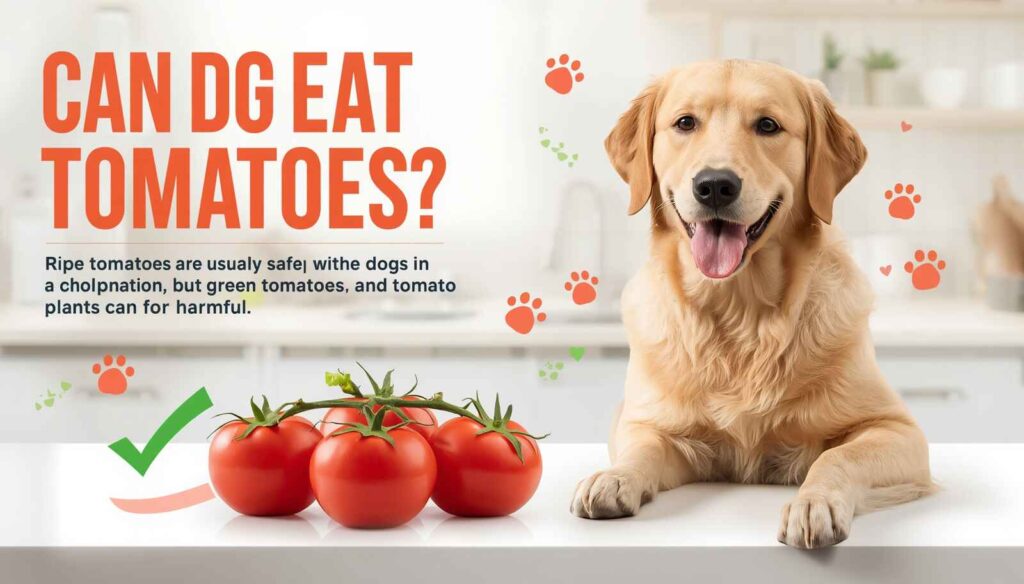
Can dogs eat tomatoes? Yes, dogs can eat small amounts of fully ripe, plain tomato, but unripe tomatoes and the green parts of the tomato plant need more caution.
A piece of ripe tomato is very different from a chewed vine, an unripe tomato from the garden or tomato sauce containing other ingredients. The safest approach is to identify what your dog ate, how much they may have eaten and whether any plant material or other ingredients were involved.
If your dog has already eaten tomato plant material or an unknown amount of unripe tomato, go straight to the “My Dog Already Ate Tomato — Work Through This First” section rather than waiting for symptoms to appear.
First, Identify What Your Dog Actually Ate
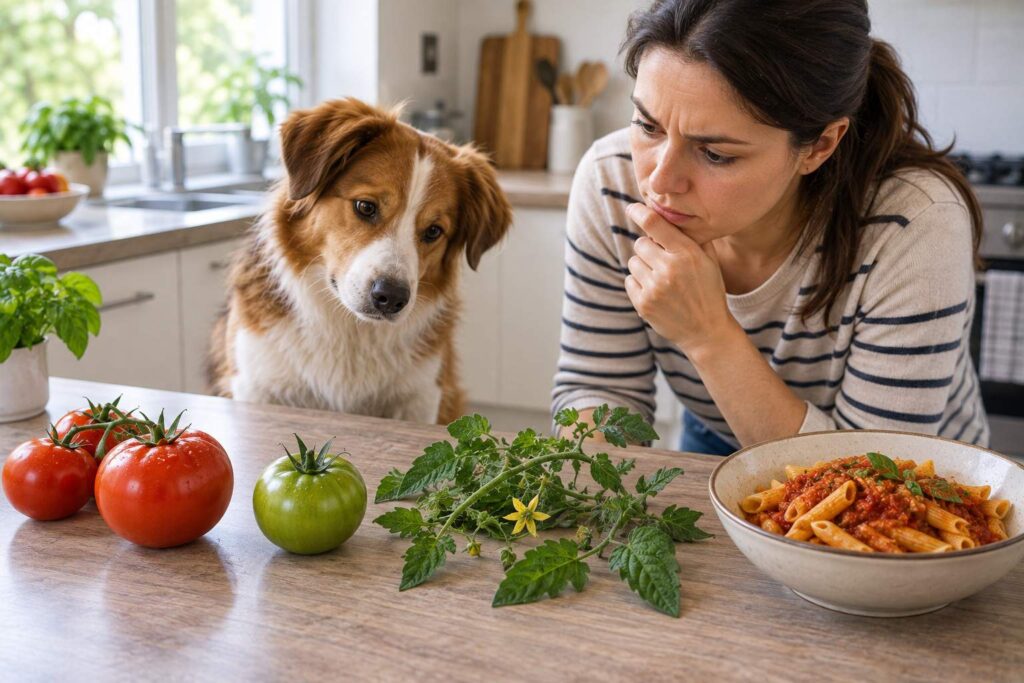
Before deciding whether there is a problem, work out exactly what was involved. This matters more than applying one blanket rule to every tomato exposure.
Fully Ripe Tomato Fruit
The flesh, skin and seeds of a fully ripe edible tomato are considered non-toxic to dogs. ASPCA guidance specifically distinguishes ripe tomato fruit from the toxic tomato plant.
Plain ripe tomato can therefore be offered occasionally in appropriately sized pieces, provided it agrees with your dog’s stomach.
Unripe or Partly Ripe Tomato
Immature tomatoes contain higher concentrations of the plant compounds associated with tomato toxicity, so they should not be deliberately fed to dogs.
Don’t rely on colour alone when judging ripeness. Most tomatoes turn red as they mature, but some varieties ripen yellow, orange, purple or even remain partly green. What matters is whether the fruit is fully mature for that particular variety.
Stem, Calyx, Leaves or Vine
The small green leafy cap attached to the tomato is called the calyx. Together with the stem, leaves, vines and flowers, it is part of the tomato plant rather than the edible ripe fruit.
These green plant parts contain higher concentrations of potentially harmful compounds and should be kept away from dogs.
Tomato Inside Another Food
Tomato sauce, soup, ketchup, pizza, pasta, salsa, chutney, baked beans and sardines in tomato sauce need to be assessed as complete recipes, not simply as tomatoes.
Onion, garlic, excessive salt, sweeteners, rich fats and other ingredients may make a prepared food more concerning than the tomato itself.
Tomato Risk at a Glance
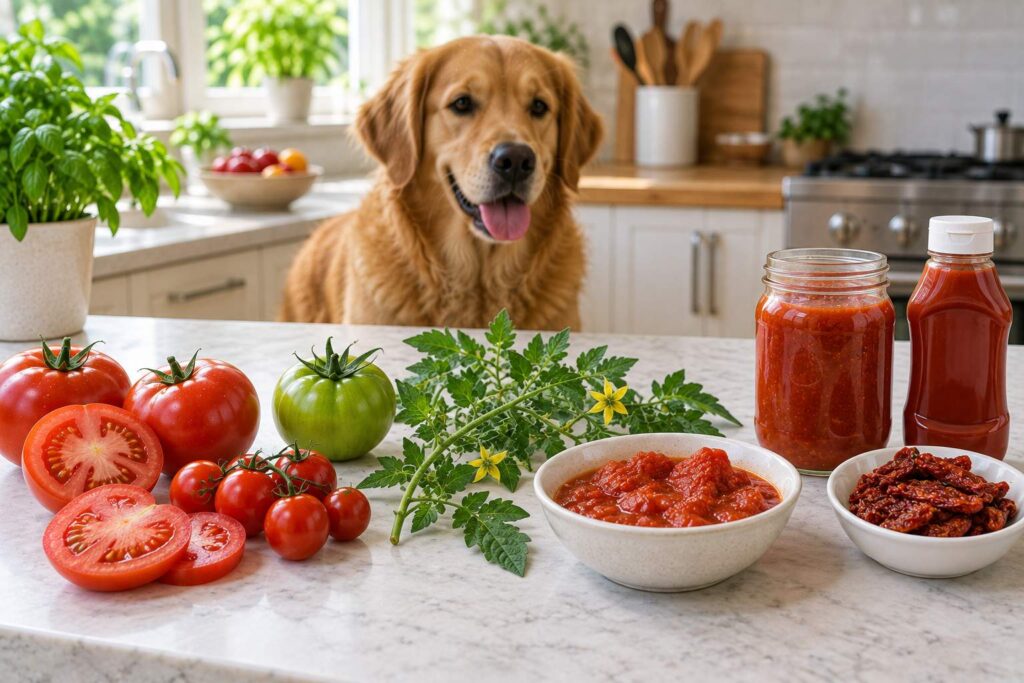
| Exposure | Main Concern | Feeding Status | Extra Check Needed |
|---|---|---|---|
| Fully ripe plain tomato | Portion size and digestive tolerance | Usually lowest concern | Preparation and piece size |
| Cherry or grape tomato | Choking and portion size | Cut appropriately before feeding | Dog’s size and eating style |
| Unripe tomato | Higher plant-compound exposure | Avoid deliberate feeding | Amount eaten and dog’s size |
| Stem, calyx, leaves or vine | Tomato plant exposure | Avoid | Amount, timing and symptoms |
| Plain cooked ripe tomato | Portion and preparation | Can be suitable if completely plain | Added ingredients |
| Canned tomato | Salt or other additives | Product-dependent | Ingredient label |
| Shop-bought tomato sauce | Onion, garlic, salt or other ingredients | Usually best avoided | Full ingredient list |
| Ketchup | Salt, sugar and additives | Poor treat choice | Ingredient label |
| Soup, pizza sauce or pasta sauce | Multiple ingredients | Often unsuitable | Entire recipe |
| Sun-dried tomato | Salt, oil and seasoning | Product-dependent | Preparation and ingredients |
Why Ripeness Changes the Safety Question
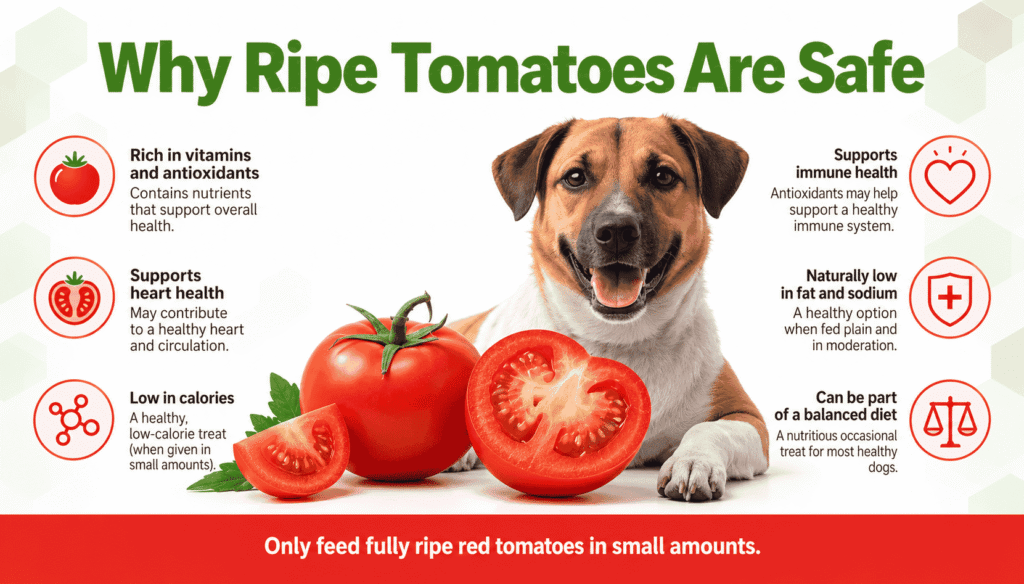
The Compounds Behind the Concern
Tomatoes belong to the nightshade family and naturally contain glycoalkaloids, including tomatine and related compounds. These chemicals help protect the growing plant.
The important point for dog owners is not the chemistry itself but where these compounds are concentrated. Immature fruit and green plant material contain considerably more than fully ripe tomato fruit. Their levels fall as the tomato matures, which is why veterinary poison-control guidance treats ripe fruit differently from leaves, stems, vines and unripe tomatoes.
The ASPCA lists ripe tomato fruit as non-toxic while warning about tomato plant exposure.
Colour Isn’t the Whole Story
“Red tomato safe, green tomato unsafe” is an easy rule to remember, but it isn’t completely accurate.
Some perfectly ripe tomato varieties are yellow, orange, purple or green-toned. If you’re deliberately sharing tomato with your dog, use a fruit you know is fully ripe for its variety and remove all attached plant material.
If you cannot confidently tell whether a tomato is mature, don’t use it as a dog treat.
Cooking Doesn’t “Fix” Unripe Tomato or Plant Material
Cooking should not be used as a way to make immature tomatoes, vines, leaves or stems suitable for dogs. Processing may alter plant compounds, but it should not be treated as a reliable detoxification method.
For intentional feeding, stick to fully ripe fruit with the plant material removed.
My Dog Already Ate Tomato — Work Through This First

If your dog has helped themselves before you could stop them, gather as much of the following information as you can:
- What exactly was eaten: ripe fruit, unripe fruit, plant material or a prepared food?
- Was the tomato fully ripe?
- Were any stems, calyxes, leaves, flowers or vines involved?
- Roughly how much could be missing?
- Is the amount known, or are you guessing?
- How much does your dog weigh?
- How long ago did the exposure happen?
- Has your dog vomited or developed diarrhoea?
- Are they drooling more than usual?
- Do they seem unusually tired or weak?
- Are they wobbly, stumbling or having difficulty walking normally?
- Have you noticed tremors, collapse or any other significant change?
- If it was a packaged or prepared food, do you still have the label or recipe?
- Does your dog have an existing medical condition or follow a prescription or elimination diet?
These details are far more useful to a veterinarian or animal poison service than simply saying, “My dog ate some tomato.”
A dog that steals a small piece of fully ripe tomato is in a very different situation from a dog that has been chewing tomato vines in the garden. Likewise, a dog that eats pasta sauce may need the other ingredients assessed rather than the tomato alone.
Warning: Do not try to calculate a homemade “toxic dose” from the number of tomatoes eaten, and do not induce vomiting unless a veterinarian or animal poison professional specifically tells you to do so. Risk depends on the plant part, maturity, amount consumed, your dog’s size and any symptoms that have developed.
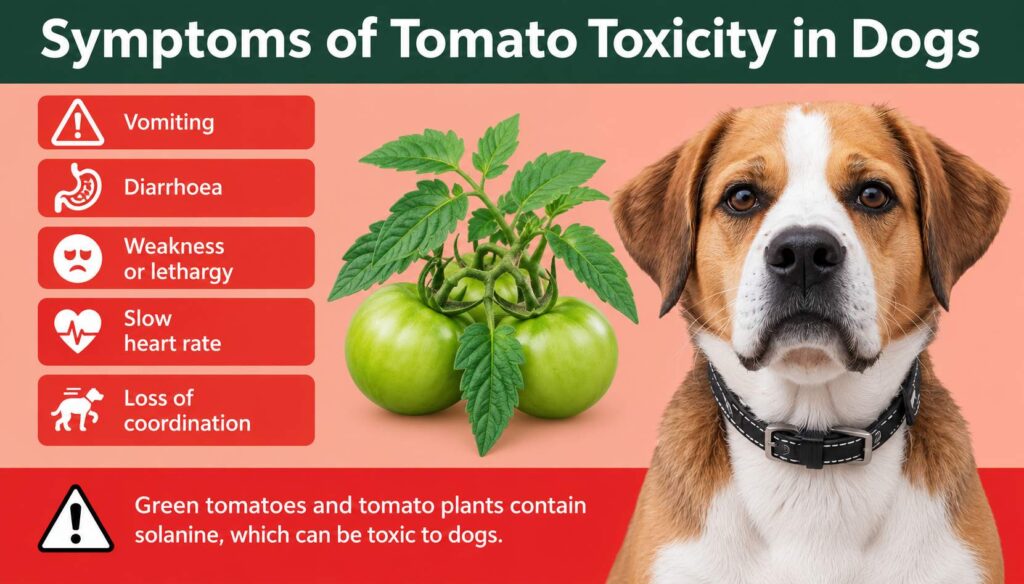
Possible signs reported after significant tomato plant or unripe-fruit exposure include vomiting, diarrhoea, excessive drooling, reduced appetite, lethargy, weakness and abnormal coordination. More serious exposures can produce additional neurological or cardiovascular effects.
If your dog has eaten a meaningful amount of tomato plant material, consumed an unknown quantity of unripe tomatoes, or is showing concerning symptoms, contact your veterinarian or an animal poison service promptly rather than waiting to see whether the problem becomes worse.
What Happens After Different Exposures
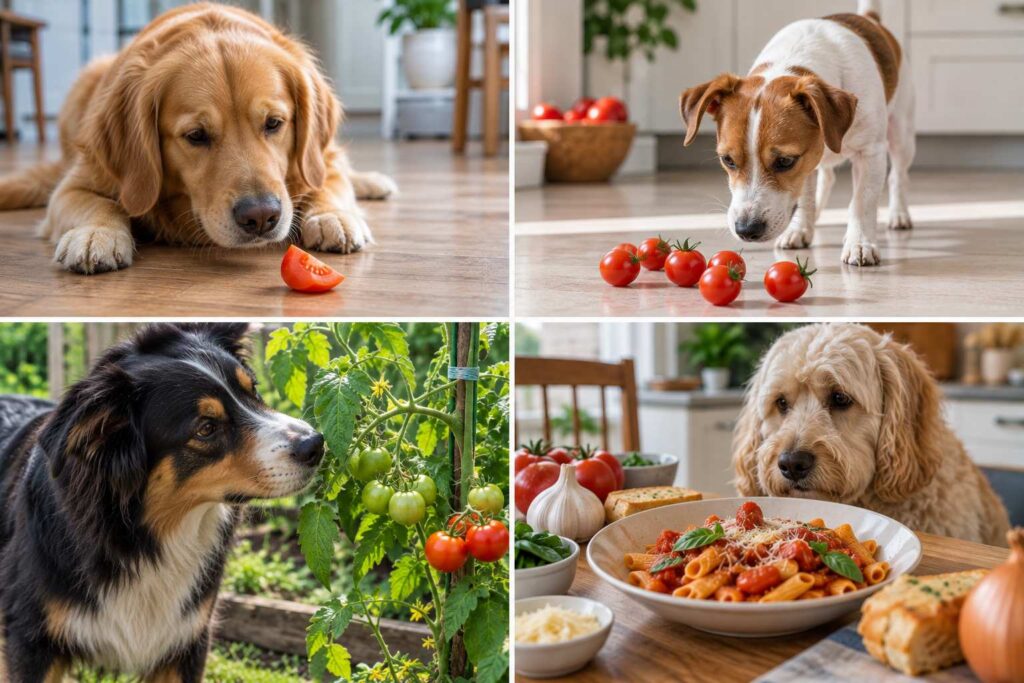
A small amount of fully ripe, plain tomato is usually a low-concern exposure. Some dogs may develop mild digestive upset after trying a new food or eating more than usual, but that is different from the concern created by unripe fruit or tomato plant material.
An unknown amount is harder to assess safely. Don’t try to work backwards from a rough guess such as “there were three tomatoes on the counter.” Instead, gather what you can: what was eaten, what may be missing, your dog’s size, how long ago it happened, and whether any symptoms have appeared.
Unripe tomatoes, stems, leaves, vines or other plant material deserve more caution. The significance depends on the plant part, amount eaten, your dog’s body size and how they are behaving afterwards.
With tomato sauce or a prepared meal, the tomato may not be the main concern at all. Onion, garlic, excessive salt, rich ingredients or other additives can change the risk, so check the whole recipe or label.
A Few Real-World Examples
- A large dog steals one small slice of fully ripe tomato from the chopping board — generally a low-concern exposure; monitor for digestive upset.
- A small dog swallows several whole cherry tomatoes — the amount and the risk of choking matter more than tomato toxicity if the fruit was fully ripe.
- A dog chews a tomato vine in the garden — treat this as a plant exposure, not ordinary tomato feeding.
- A dog eats pasta covered in tomato sauce containing onion — the onion may be the more important toxicological concern.
- A dog eats fallen garden tomatoes along with leaves and stems — assess this as a mixed plant exposure rather than assuming it was only ripe fruit.
Don’t Treat Every Tomato Incident the Same
A few rules make these situations much easier to handle:
- Don’t induce vomiting unless a veterinarian or animal poison professional specifically instructs you to.
- Don’t rely on generic online “toxic dose” calculators; they cannot reliably account for ripeness, plant part, quantity or the individual dog.
- Don’t deliberately feed tomato leaves, vines, stems, calyxes or unripe fruit.
- Don’t assume cooking makes unripe tomato or plant material safe.
- Contact your veterinarian promptly after a meaningful plant exposure or if concerning symptoms develop.
- Check the complete ingredient list before deciding that a tomato-based product is safe.
Symptoms That Change the Situation

Possible Mild Digestive Signs
A dog that eats unfamiliar food or too much ripe tomato may develop:
- Vomiting
- Loose stool or diarrhoea
- Mild stomach discomfort
- Temporary reduction in appetite
These signs are not specific to tomato toxicity and can occur after many dietary indiscretions.
More Concerning Signs
Seek veterinary advice promptly if your dog develops signs such as:
- Marked lethargy
- Weakness
- Excessive drooling
- Wobbliness or poor coordination
- Tremors
- Collapse
These signs deserve particular attention after known or suspected ingestion of unripe tomato or tomato plant material.
Why Symptoms Alone Don’t Give You the Diagnosis
Vomiting, weakness and lethargy occur with many illnesses and poisonings, so symptoms alone cannot confirm “tomato poisoning.”
The exposure history matters just as much: what part was eaten, whether the fruit was ripe, how much may have been consumed, your dog’s size and when the exposure occurred.
What Helps Most If You Call a Vet
Have these details ready if possible:
- Your dog’s weight
- Exactly what was eaten
- Whether the fruit was fully ripe
- Any leaves, stems, vines or calyx involved
- Approximate quantity
- Time since ingestion
- Current symptoms
- Packaging or ingredient label for prepared foods
- A photo of the plant or remaining food if identification is uncertain
- Existing medical conditions
- Current medications
- Any prescription or elimination diet
Professional advice becomes more important when plant material or unripe fruit was eaten, the quantity is unknown, a relatively small dog may have had a substantial exposure, symptoms are persistent or neurological, or another potentially hazardous ingredient was involved.
If You Want to Feed Tomato, Prepare the Fruit — Not the Plant
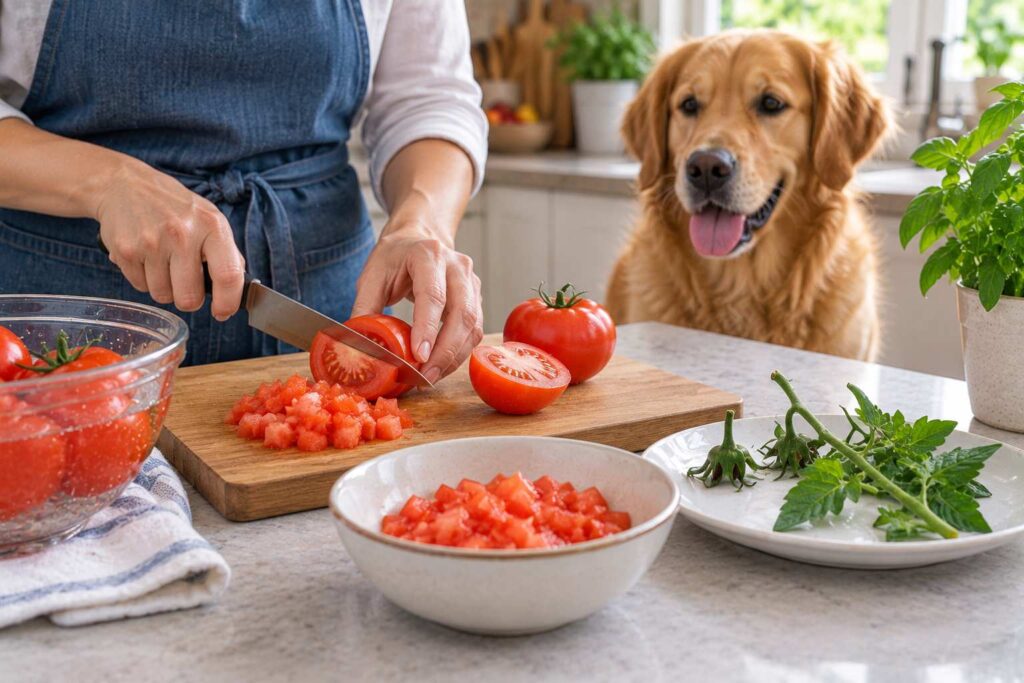
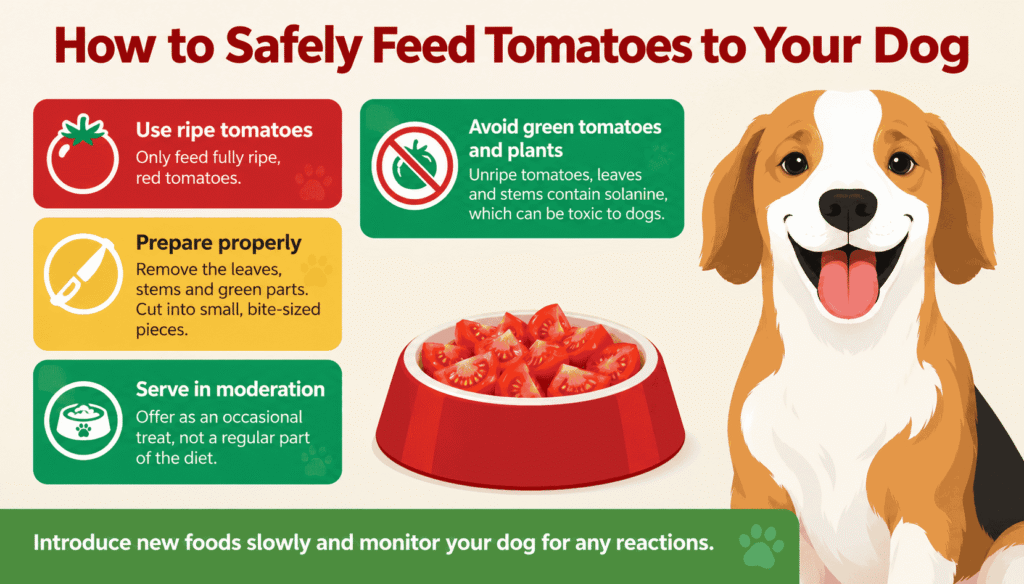
Choose a fully ripe edible tomato and remove the stem, calyx and any other attached plant material. Wash the fruit and cut it into pieces appropriate for your dog’s size.
Take extra care with cherry and grape tomatoes. Their round shape makes them easy for some dogs to gulp whole, so cutting them into suitable pieces can reduce choking risk.
Start with a small amount the first time and see how your dog tolerates it.
Quick Tips
- Serve tomato plain.
- Skip salt, seasoning, sauces and oils.
- Remove all green plant material.
- Cut small round tomatoes before offering them to dogs that gulp food.
- Stop feeding it if your dog repeatedly develops digestive upset.
- Count tomato as part of the dog’s normal treat allowance, not as an addition to it.
How Much Tomato Belongs in a Dog’s Diet?
Two different questions often get mixed together here:
How much ripe tomato should I offer as a treat?
and
How much unripe tomato or plant material could cause poisoning?
They are not the same question.
There is no useful home formula such as “X tomatoes per kilogram” that can safely determine the risk from suspected plant exposure. Tomato size, maturity, plant part, quantity eaten and dog size all matter, so a significant or uncertain exposure is better assessed by a veterinary professional.
For deliberate feeding, tomato should remain an occasional extra rather than a dietary requirement. A complete and balanced dog food should already provide the nutrients your dog needs, so tomatoes do not need to be added for lycopene, vitamin C or potassium.
Think of ripe tomato as you would any other optional treat: small, plain and suitable for your dog’s size. The WSAVA recommends that treats and other extras make up no more than about 10% of a healthy dog’s daily calories, with the rest coming from a complete and balanced diet. That 10% is the allowance for all treats combined, not a target amount of tomato.
Cherry Tomatoes, Grape Tomatoes and Small Dogs
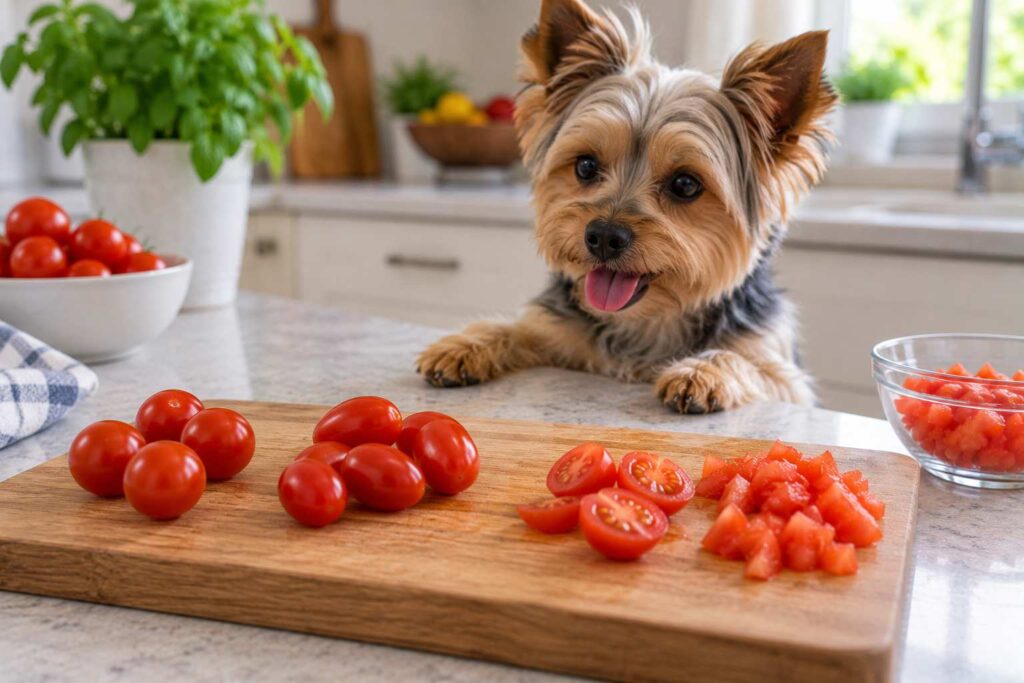
Ripeness rules still apply: a fully ripe cherry or grape tomato is in the same lower-concern category as a ripe standard tomato. The bigger practical issue is shape and swallowing. Small, round tomatoes can be a choking hazard, especially for puppies, small dogs and dogs that gulp food.
Cut them into pieces appropriate for your dog’s size rather than relying on a fixed “safe number.” With ripe cherry tomatoes, the immediate concern is often how they are eaten, not simply how many are offered.
Skin, Seeds and the Leafy Top Aren’t the Same Thing
The skin of a fully ripe tomato is normally fine as part of the fruit, although some dogs with sensitive stomachs may tolerate peeled tomato more easily.
The seeds do not need to be removed as a routine safety measure. The calyx and stem are different because they are plant material. Remove the green leafy top, stem and any attached vine before deliberately offering tomato to your dog.
Tomato Products Need Their Own Ingredient Check
Plain cooked tomato, canned tomatoes, tomato purée or paste, ketchup, pasta or pizza sauce, tomato soup, salsa, chutney, sun-dried tomatoes, and sardines or baked beans in tomato sauce are all different products. Treating them as “basically tomato” can overlook the ingredients that actually change the risk.
Before sharing any prepared tomato food, check the full recipe or label for:
- Onion or garlic
- High levels of salt
- Added sugar or sweeteners
- Oils or rich fats
- Spices and seasonings
- Any other ingredient that may be unsuitable for dogs
Many prepared tomato products are poor dog treats even when the tomato itself is fully ripe. A lick of plain cooked tomato and a serving of heavily seasoned pasta sauce are not equivalent exposures.
Why Tomato in Commercial Dog Food Is a Different Question
Seeing a tomato-derived ingredient on a dog food label does not mean the food contains the same parts of the plant you would avoid feeding at home.
Commercial dog food is formulated as a complete product, with ingredients included in controlled amounts for a specific nutritional purpose. That is a separate question from whether you should hand your dog a fresh tomato slice, a green tomato or leftovers covered in sauce.
Common Mistakes Dog Owners Make With Tomatoes
- Assuming red always means safe and green always means toxic without checking actual ripeness
- Leaving the calyx or stem attached
- Offering whole cherry or grape tomatoes to dogs that gulp food
- Assuming cooking automatically makes unripe tomato or plant material safe
- Treating ketchup as if it were equivalent to plain ripe tomato
- Looking only for the word “tomato” instead of reading the whole ingredient list
- Overfeeding tomato because it is relatively low in calories
- Adding tomato every day because of its vitamins or antioxidants
- Trying to calculate a “toxic dose” using an online formula
- Waiting for symptoms after a meaningful plant exposure instead of seeking professional advice
- Making a dog vomit without veterinary or poison-service guidance
- Adding tomato to a prescription or elimination diet without checking with the vet managing that diet
Garden and Allotment Safety
If you grow tomatoes at home, prevention is easier than trying to work out later how much plant material your dog may have eaten.
Restrict access to the plants, pick up fallen fruit, remove pruning waste promptly and keep compost secure. Puppies and dogs that habitually chew plants need closer supervision, particularly when tomatoes are growing at nose level or fallen fruit is mixed with leaves and stems.
Quick Decision Guide
Dog ate a little fully ripe, plain tomato: Work out roughly how much was eaten and monitor for digestive upset.
Dog ate an unripe tomato: Consider the amount, your dog’s size, how long ago it happened and whether any symptoms are present. Seek veterinary advice if the exposure was more than trivial or you are unsure.
Dog chewed leaves, stem or vine: Treat this as a tomato-plant exposure rather than ordinary fruit feeding.
Dog ate tomato sauce or a prepared meal: Check the full ingredient list. Onion, garlic, excessive salt or other ingredients may matter more than the tomato.
You’re not sure what or how much was eaten: That uncertainty matters. Contact your veterinarian or an animal poison service if a meaningful plant or unripe-fruit exposure cannot be ruled out.
The Bottom Line
A small amount of fully ripe, plain tomato can be an occasional treat for most healthy dogs. Remove the stem and leafy top, cut the fruit appropriately for your dog’s size and keep portions modest.
Unripe tomatoes and tomato plant material are a different exposure and deserve more caution. Prepared tomato foods also need to be judged by their entire ingredient list, not by the tomato alone.
If your dog has eaten leaves, stems, vines, an uncertain amount of unripe tomato, or is showing concerning symptoms, contact your veterinarian or an animal poison service rather than relying on ordinary tomato-feeding advice.
Frequently Asked Questions
1. Can dogs eat tomato skin?
Yes. The skin of a fully ripe tomato is generally fine as part of the fruit. If your dog has a sensitive stomach and repeatedly develops digestive upset, you can remove the skin, but it does not normally need to be peeled for safety.
2. Can dogs eat tomato seeds?
Yes. The seeds in a fully ripe tomato do not normally need to be removed before offering a small piece to your dog.
3. Can puppies eat tomatoes?
A small amount of fully ripe, plain tomato can be offered to some puppies, but there is little nutritional reason to make it a regular treat.
Because puppies are smaller and can be more prone to swallowing food whole, keep pieces appropriately sized and avoid unripe tomatoes and all tomato plant material. If your puppy has a medical condition or is on a veterinary diet, check with your vet before adding extras.
4. Does cooking make green tomatoes safe to feed?
No. Cooking should not be treated as a reliable way to make unripe tomatoes, leaves, stems or vines suitable for dogs. For intentional feeding, use fully ripe fruit and remove the plant material.
5. My dog ate one tomato leaf — what should I do?
Remove access to the plant and work out approximately when the leaf was eaten and whether more plant material could be missing.
A single small leaf is a different exposure from a dog chewing through several stems or vines, but the amount and your dog’s size still matter. If you are unsure how much was eaten, your dog develops symptoms, or additional plant material may have been consumed, contact your veterinarian or an animal poison service for advice.
6. Should I make my dog vomit after eating tomato plant material?
Not unless a veterinarian or animal poison professional specifically instructs you to. Inducing vomiting is not appropriate in every situation and can cause additional problems if done incorrectly.
7. Are tomatoes beneficial enough to feed regularly?
Not really. Fully ripe tomato contains nutrients and plant compounds such as lycopene, but a dog eating a complete and balanced diet does not need tomato to meet its nutritional requirements.
Treat it as an optional occasional extra rather than something that needs to be added to the bowl every day.
#. Related Articles: