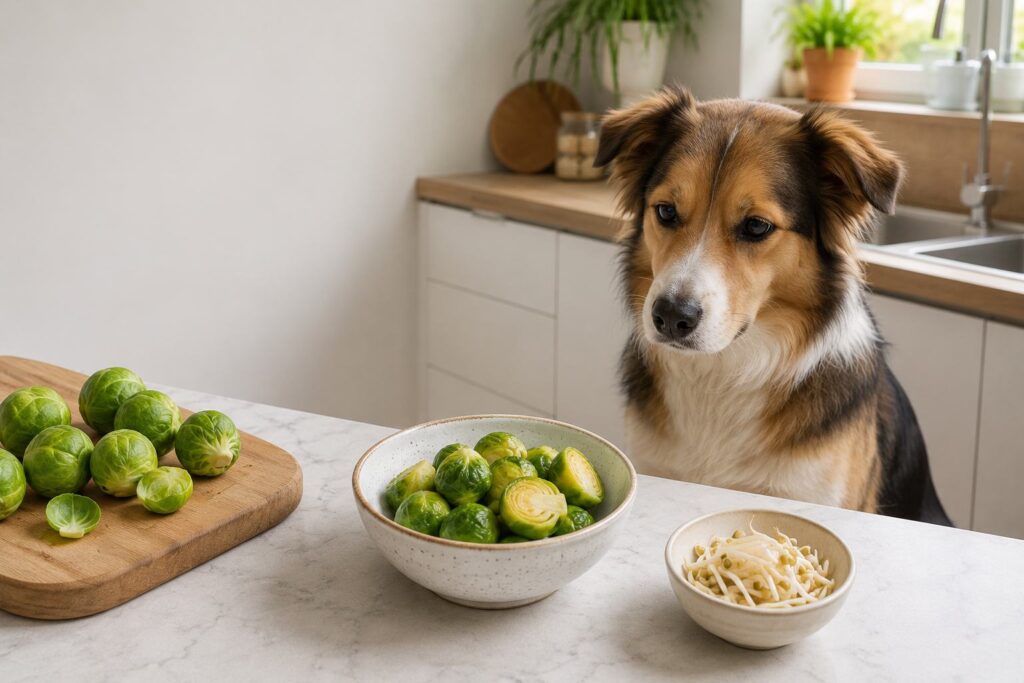

Can dogs eat blueberries? Yes — plain, ripe blueberries are generally safe for most healthy dogs when offered in moderation. But before you toss one over, it helps to know exactly what you’re giving your dog.
“Blueberries” can mean very different things. A few fresh berries are not the same as a blueberry muffin, sweetened yoghurt, jam, or a sugar-free dessert. Even with plain fruit, safe does not mean unlimited.
Four things matter most:
- What form is it in — fresh, frozen, dried, or part of a recipe?
- How much is on offer?
- How does your dog eat — carefully, or by gulping food whole?
- Does your dog have any dietary or medical restrictions?
If your dog has already eaten something blueberry-related and you’re trying to decide what to do next, skip ahead to the “My Dog Already Ate Some — What Now?” section below. Otherwise, start by identifying the food in front of you.
What Have You Actually Got? Identify the Form First

Before anything else, look at what’s in front of you. The word “blueberry” can describe several very different foods.
Plain fresh blueberries. Ripe, washed, and served without anything added, this is the simplest option for most healthy dogs.
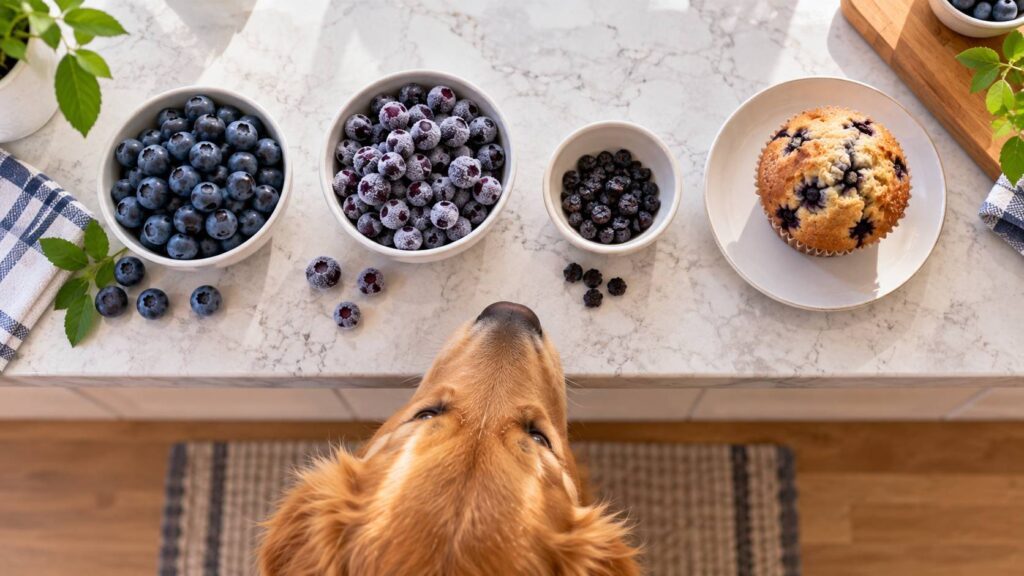
Frozen or thawed blueberries. Nutritionally, they are still blueberries, but texture changes the feeding decision. Whole frozen berries can be hard and slippery, so small dogs, puppies, and dogs that gulp food may do better with berries that have been thawed, halved, or lightly mashed.
Dried and freeze-dried blueberries. Removing water makes the fruit more concentrated by weight and much easier to overfeed. Some products also contain added sugar or other ingredients, so check the label rather than treating dried berries as a straight swap for fresh ones.
Blueberry-flavoured human foods. Yoghurt, muffins, pancakes, jam, pie, smoothies, juice, and baby food need a separate assessment. The blueberry itself may be harmless while the rest of the recipe is not. Added sugar, rich ingredients, chocolate, grapes or raisins, alcohol, and sugar substitutes such as xylitol can completely change the risk.
The Six-Point Safety Check
Before you feed anything blueberry-related, run through this quick check:
- Is it a known edible blueberry rather than an unidentified wild berry?
- Is it fresh and free from mould or spoilage?
- Has fresh fruit been washed?
- Are there any added ingredients?
- Is the size and texture appropriate for the way your dog eats?
- Does it fit within your dog’s usual treat allowance for the day?
If all six points look good, a small amount of plain blueberry is generally a reasonable treat for a healthy dog.
What Blueberries Actually Offer — and What They Don’t

Blueberries contain dietary fibre, water, vitamin K, manganese, vitamin C, and plant compounds such as anthocyanins. They are also relatively low in calories compared with many biscuits, cheese cubes, or processed treats.
That does not make them medicine.
Antioxidants are one of the most heavily marketed reasons to feed blueberries, but there is an important distinction between a food containing antioxidant compounds and that food being proven to prevent or treat disease when fed as a treat. Blueberries should not be promoted as a cancer preventative, an immune-system treatment, or a cure for cognitive decline in older dogs.
The same principle applies to fibre and vitamins. A few berries can contribute small amounts, but a normal treat portion is not a therapeutic dose and should not be used to correct an unbalanced diet.
A complete and balanced dog food, or a properly formulated homemade diet, should remain the nutritional foundation. Blueberries are an optional extra.
How Many Blueberries Can a Dog Have?

There is no single medically precise number of blueberries that is right for every dog. Berry size varies, calorie needs vary, and individual tolerance matters.
It is more useful to think in three stages.
First taste. Start with a very small amount. One blueberry is enough for a first introduction, especially for a small dog or puppy. Introducing new foods gradually makes it easier to spot digestive upset.
Routine portion. Once your dog has eaten blueberries without a problem, a few berries can be used as an occasional treat. Larger dogs can generally accommodate more than toy breeds, but there is no need to work towards a large serving.
Overall treat budget. The World Small Animal Veterinary Association recommends that treats and other extras make up no more than about 10% of a healthy dog’s daily calorie intake. That limit includes all extras combined — blueberries, training treats, chews, table scraps, and anything else outside the main diet.
| Dog profile | First taste | Routine approach | Preparation notes | Extra caution |
|---|---|---|---|---|
| Toy/small dog | 1 berry | A few berries | Halve, thaw, or mash if needed | Gulping and choking |
| Medium dog | 1–2 berries | Small treat portion | Whole fresh berries are often manageable | Count other treats |
| Large dog | 1–2 berries | Small handful at most, depending on diet | Whole fresh berries are usually manageable | Avoid repeated “handful” feeding |
| Puppy | 1 berry | Keep portions small | Halve or mash for very small puppies | Developing digestion and chewing ability |
| Overweight dog | 1 berry | Small, occasional portion | Fresh rather than sweetened dried fruit | Keep within calorie plan |
These are practical starting points, not toxic-dose thresholds. If your dog is on a calorie-controlled diet, your vet may recommend a different allowance.
Fresh, Frozen, Dried, or Baked? A Quick Comparison
| Form | Generally suitable? | Main consideration | What to check |
|---|---|---|---|
| Fresh | Yes, for most healthy dogs | Portion size and swallowing style | Wash and check freshness |
| Frozen whole | Sometimes | Hard, slippery texture | Dog size and whether they chew |
| Thawed or mashed | Yes | Easier texture for many small dogs | Keep plain |
| Dried | With caution | Easy to overfeed; may contain added sugar | Full ingredient list |
| Freeze-dried | With caution | More concentrated by weight | Plain, no additives |
| Canned or puree | Depends | Syrup, sweeteners, or extra ingredients | Full ingredient list |
| Yoghurt | Depends | Sugar, dairy tolerance, sweeteners | Check every ingredient |
| Muffins, cakes, pancakes | Best avoided as dog treats | Sugar, fat, and potentially unsafe ingredients | Recipe or label |
| Jam or preserves | Best avoided | High sugar; some sugar-free versions may use sweeteners | Full ingredient list |
| Juice or smoothies | Best avoided as routine treats | Concentrated sugars and mixed ingredients | Full ingredient list |
Sugar-free does not automatically mean safer. The FDA warns that xylitol can be present in some sugar-free foods and baked goods and can cause a dangerous drop in blood glucose in dogs. If you think your dog has eaten a product containing xylitol, contact a veterinarian, emergency clinic, or animal poison-control service promptly rather than waiting for symptoms.
The Real Danger Often Isn’t the Blueberry

This is where many feeding mistakes happen. Before giving your dog anything blueberry-flavoured, check the entire ingredient list, not just the fruit on the front of the pack.
Potentially serious ingredients include:
- Xylitol — a sweetener found in some sugar-free or reduced-sugar foods that can cause dangerous hypoglycaemia in dogs
- Grapes or raisins — sometimes added to muffins, scones, cereals, or baked products and potentially toxic to dogs
- Chocolate — occasionally combined with blueberries in cakes, muffins, or desserts
- Alcohol — possible in some desserts, sauces, or baked recipes
- Very fatty or rich ingredients — may cause gastrointestinal upset and can be a concern for dogs prone to pancreatitis
A dog that has eaten too many plain blueberries and a dog that has eaten a blueberry muffin containing xylitol or raisins are facing very different risks. What else was in the food often matters more than the blueberries themselves.
What Can Go Wrong With Plain Blueberries
Plain blueberries are low risk for most healthy dogs, but they can still cause problems in the wrong amount or form.
Overfeeding. A large serving can lead to loose stools, gas, vomiting, or general stomach upset, particularly if your dog is not used to fruit.
Choking. Eating style matters as much as body size. Puppies, small dogs, fast eaters, dogs with dental problems, and dogs that swallow treats whole may struggle with firm or frozen berries. Thawing, halving, or mashing them can make feeding easier.
Spoiled fruit. Do not use mouldy, fermented, or badly spoiled berries as a way to avoid food waste. Discard fruit that is no longer fit to eat.
Individual sensitivity. Some dogs develop digestive upset after even a modest amount of a new food. If blueberries repeatedly cause vomiting, diarrhoea, itching, or another unusual reaction, stop feeding them and speak with your vet.
My Dog Already Ate Some — What Now?

A few plain blueberries. For most healthy dogs, a small accidental serving is unlikely to cause a problem. Monitor your dog and avoid adding lots of other unfamiliar treats that day.
A large quantity of plain blueberries. Digestive upset is the main concern. Watch for repeated vomiting, significant diarrhoea, abdominal discomfort, unusual lethargy, or difficulty keeping water down. Provide access to fresh water and contact your vet if symptoms are persistent, severe, or concerning.
A blueberry muffin, cake, yoghurt, smoothie, or other prepared food. Find the packaging or recipe and check the complete ingredient list. Note what your dog ate, approximately how much, and when it happened. Do not assume the blueberry is the important ingredient.
A product containing xylitol, grapes, raisins, chocolate, alcohol, or another potentially toxic ingredient. Contact your veterinarian, emergency veterinary clinic, or an appropriate animal poison service promptly. Do not wait for symptoms to appear, and do not induce vomiting unless a veterinary professional specifically tells you to.
If you need veterinary advice, have the following information ready:
- Your dog’s approximate weight
- The exact food or product eaten
- The ingredient list or packaging, if available
- Roughly how much was eaten
- How long ago it happened
- Any symptoms you have noticed
- Relevant medical conditions or medications
When Blueberries Need a Different Answer

For most healthy dogs, a few plain blueberries are a simple treat. Dogs with medical or dietary restrictions need a more individual decision.
Weight-loss plans. Low-calorie does not mean calorie-free. Blueberries still count toward the day’s treats and should be included in your dog’s overall calorie plan.
Diabetes. Blueberries contain natural sugars, but that does not automatically make them forbidden. Dogs with diabetes often have carefully controlled meals and treat routines, so ask your vet before making blueberries a regular addition.
Sensitive digestion. Introduce a very small amount and stop if it causes vomiting, diarrhoea, or discomfort.
Pancreatitis history or other managed conditions. Blueberries are naturally low in fat, but that alone does not make them appropriate for every medically managed dog. If your dog is following a specific veterinary feeding plan, check before adding extras.
Prescription or therapeutic diets. Even nutritious treats can alter the intended balance of a veterinary diet or add ingredients the diet is designed to restrict.
Elimination diet trials. Do not add blueberries unless your vet has specifically approved them. A seemingly harmless extra can interfere with the trial and make the results harder to interpret.
Puppies and Blueberries
Puppies can have plain blueberries once they are weaned and established on an appropriate complete puppy diet, but keep the portion small.
Start with a single berry and see how your puppy tolerates it. For very small puppies or those that gulp food, halve, mash, or thaw the berry rather than offering a hard frozen one whole.
Most importantly, do not let fruit and training rewards displace puppy food. Growing dogs have specific nutritional requirements, and their main diet should provide the calories and nutrients needed for development.
Blueberries vs Similar-Looking Treats

| Food | Same risk profile as blueberries? | Key difference |
|---|---|---|
| Blackberries | Broadly similar | Generally suitable in modest portions |
| Raspberries | Broadly similar | Best kept to small portions |
| Strawberries | Broadly similar | Remove the leafy top and serve in manageable pieces |
| Grapes | No — toxic | Can cause acute kidney injury in dogs; do not feed |
| Raisins | No — toxic | Dried grapes; carry the same serious toxicity concern |
| Commercial dog biscuits | Different category | Often more calorie-dense; portions still matter |
It’s worth making this distinction clear: small, round fruits do not share the same safety profile just because they look alike. Blueberries are generally safe in moderation, while grapes and raisins are a veterinary emergency concern because even relatively small exposures can be dangerous and there is no reliably safe amount.
Quick Feeding Tips
- Wash fresh blueberries before serving
- Start with a very small amount the first time
- Thaw, halve, or mash berries for small dogs, puppies, or gulpers
- Use individual berries for training rather than handfuls
- Count blueberries within the day’s total treat allowance
- Check the full ingredient list on anything other than plain fruit
- Keep blueberries as an optional treat, not a substitute for a complete diet
Common Mistakes Owners Make

- Treating “healthy” as “unlimited”
- Giving a full portion on the first try
- Forgetting to count other treats eaten that day
- Offering a whole frozen berry to a small or fast-eating dog
- Treating dried and fresh berries as equivalent portions
- Assuming blueberry yoghurt is automatically dog-safe
- Giving muffins, cakes, or other baked goods without checking the ingredients
- Using blueberries as a remedy for a health problem
- Assuming any wild blue berry is a blueberry
- Adding treats during a vet-supervised elimination diet
When to Call the Vet
Ask your vet before making blueberries a regular part of the diet if your dog has diabetes, kidney disease, a history of pancreatitis, ongoing digestive problems, or is eating a prescription or therapeutic diet. The same applies during an elimination diet trial, when even a small unplanned extra can interfere with the results.
Seek prompt veterinary or poison-control advice if your dog has eaten a product containing xylitol, grapes, raisins, chocolate, alcohol, or another potentially toxic ingredient. You should also call if your dog develops repeated vomiting, marked lethargy, abdominal pain, difficulty swallowing, blood in the stool, or any other concerning symptoms.
Final Decision Checklist
Go ahead: it’s a known, plain blueberry; fresh and washed; offered in a sensible amount; the texture suits your dog; and there are no relevant medical or dietary restrictions.
Pause and check: it’s frozen and going to a small or fast-eating dog, it is dried or canned, your dog is on a controlled diet, or a larger-than-planned amount has been eaten.
Get advice now: the product contains xylitol, grapes, raisins, chocolate, or another potentially toxic ingredient; your dog is showing concerning symptoms; or you cannot confirm what was eaten.
The Bottom Line
Blueberries can be a useful occasional treat for most healthy dogs. They’re relatively low in calories, easy to portion, and simple to serve when offered plain.
They are not a superfood treatment, and there is no need to add them to a dog already eating a complete and balanced diet. The most useful habit is not simply asking, “Are blueberries safe?” but checking what form they are in, how much is being offered, and whether they suit your individual dog.
Frequently Asked Questions
1. Can dogs eat blueberries every day?
A few plain blueberries can fit into many healthy dogs’ diets, but there is no need to feed them daily. What matters more is keeping all treats and extras within an appropriate calorie allowance.
2. Is there a toxic amount of plain blueberries?
There is no recognised toxic dose for plain blueberries. Eating too many is more likely to cause gastrointestinal upset than poisoning. That is very different from eating grapes, raisins, or a blueberry product containing a toxic ingredient.
3. Should blueberries be cut for small dogs?
They do not always need to be, but halving or mashing them is a sensible precaution for very small dogs, puppies, dogs with dental problems, and those that swallow treats whole.
4. Should frozen blueberries be thawed before serving?
Not necessarily for a larger dog that chews carefully, but thawing or mashing them is the safer option for small dogs, puppies, and gulpers because frozen berries are firmer and more slippery.
5. Can dogs eat dried blueberries?
Plain dried blueberries can be offered in very small amounts, but check the label carefully. Drying removes water and makes the fruit more concentrated by weight, and some products contain added sugar or other ingredients.
6. Do blueberries genuinely help older dogs’ brains?
Research has explored antioxidant-enriched diets in ageing dogs, but that does not prove that feeding a few blueberries will prevent or treat canine cognitive decline. Blueberries can be part of a varied diet, but they should not be presented as a treatment.
7. Can dogs eat blueberries straight from the bush?
Only if you are certain the plant is a known edible blueberry and the fruit is clean and suitable to eat. Do not let a dog forage indiscriminately for unidentified wild berries, and avoid intentionally feeding leaves or stems.
#. Related Articles: