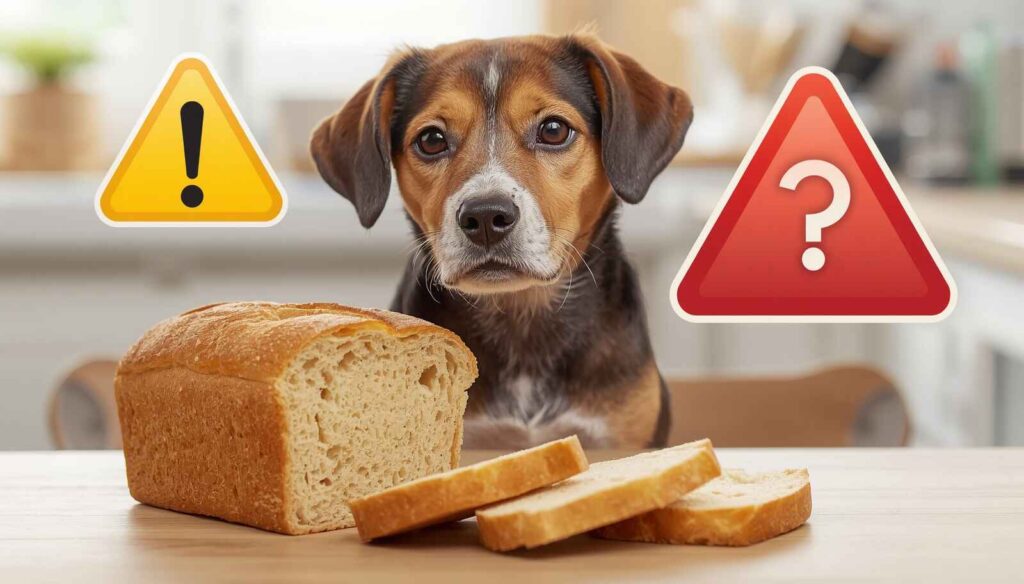
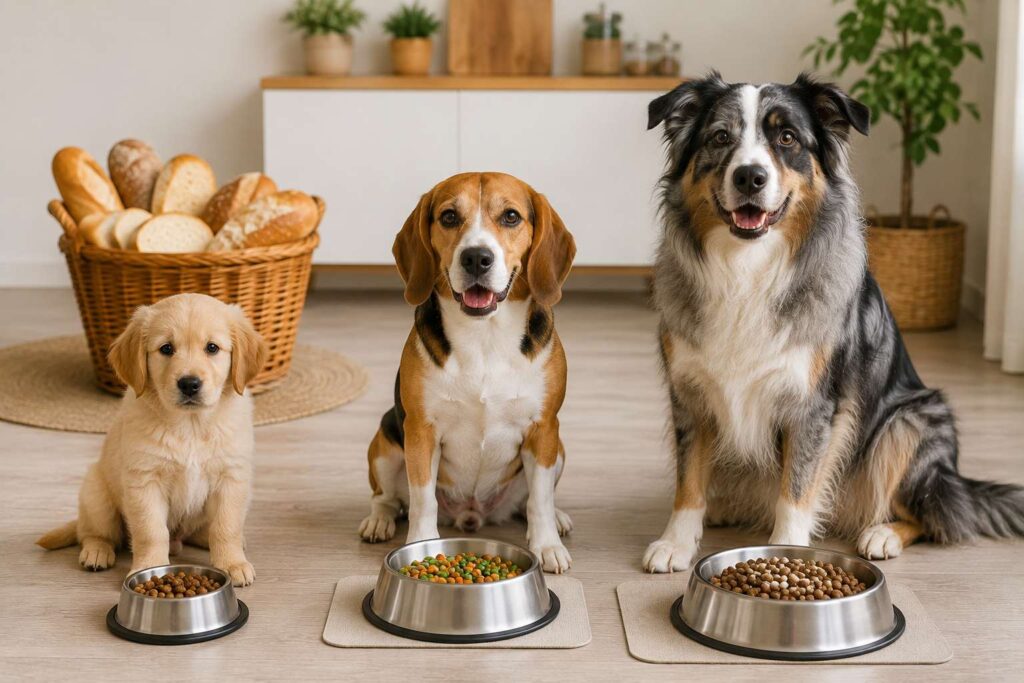
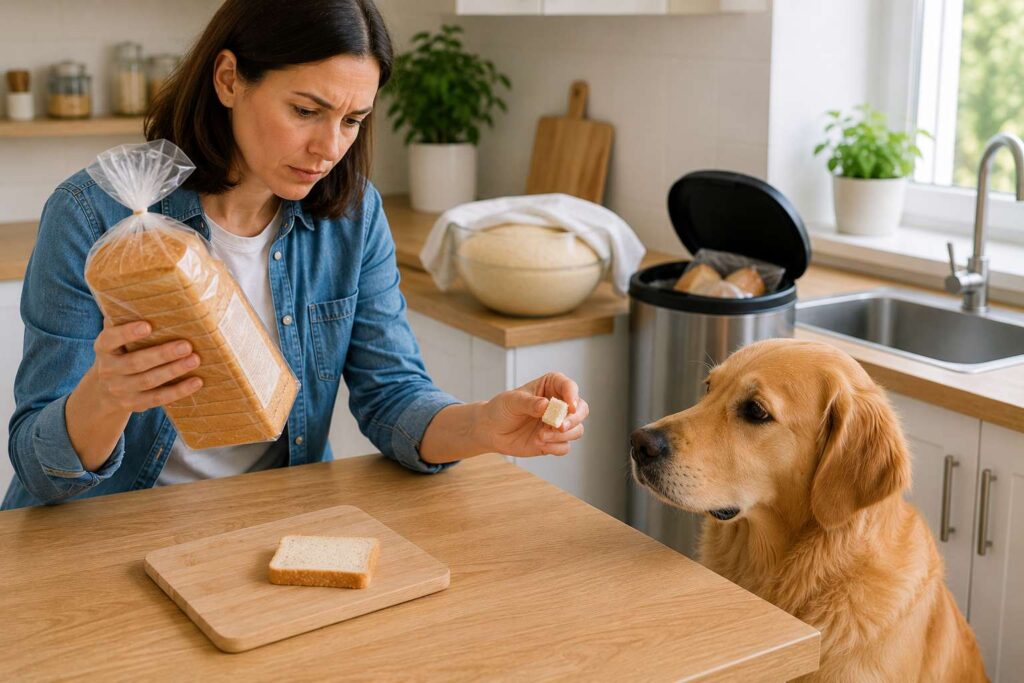
Your dog’s sitting there with those pleading eyes while a crust falls off your sandwich. Do you let it slide, or should you be worried? Now picture a different scene: you turn your back for thirty seconds while kneading dough, and when you look again, half of it is gone from the counter. Same food group, completely different level of concern.
That’s really the heart of this topic. “Bread” isn’t one food with one safety rating. It covers everything from a plain slice of white toast to raisin-studded fruit loaf to raw, yeasty dough that’s still rising — and each of those calls for a different response.
Rather than giving you a blanket yes-or-no answer, this guide helps you work out whether your dog is likely fine, needs monitoring, or needs veterinary advice now. The most important question isn’t simply “Was it bread?” It’s what kind of bread, what was in it, how much was eaten, and whether it was fully baked or still raw dough.
The Quick Answer
Can dogs eat bread? A small amount of plain, fully baked white, brown, wholemeal, or whole-wheat bread is generally not toxic to most healthy dogs. It isn’t nutritionally necessary, though, and several common bread ingredients — including raisins, sultanas, currants, garlic, onion, and xylitol — can make an otherwise ordinary-looking loaf dangerous.
Raw yeast dough is a separate and more urgent problem because it can continue expanding and fermenting inside the stomach.
Before deciding what to do, check what your dog actually ate rather than relying on the name of the bread.
Start Here: What Did Your Dog Actually Eat?
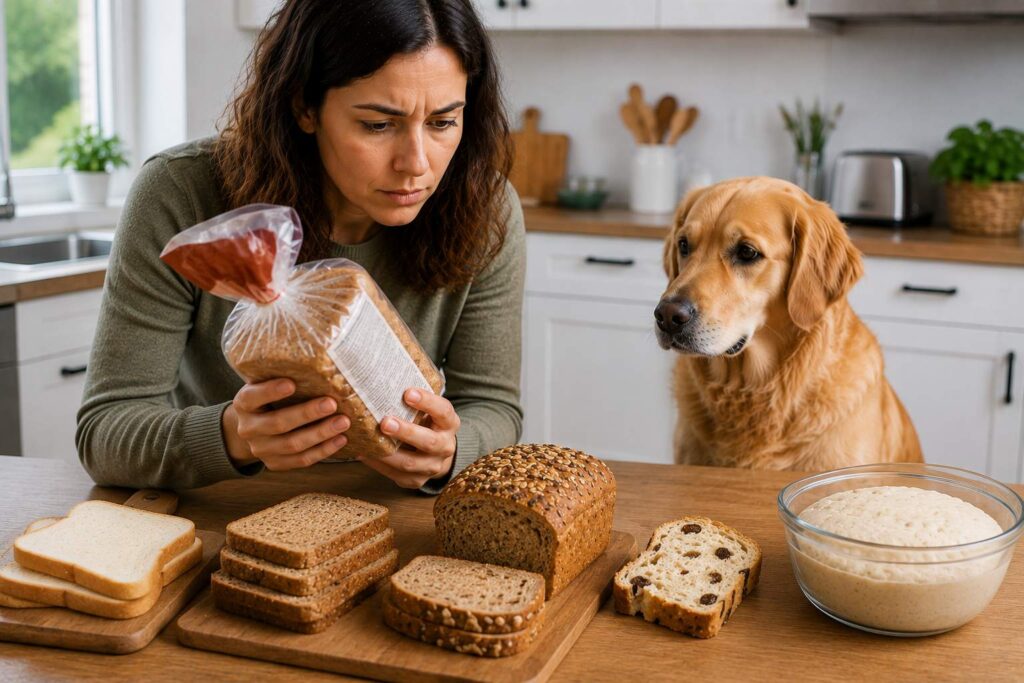
Before worrying about quantities, sort the situation into one of these categories. It changes what matters next.
Fully Baked Plain Bread
White, brown, wholemeal, plain crusts, and plain toast generally fall into the lower-risk category when they contain no problematic ingredients and only a small amount has been eaten.
Bread With Extra Ingredients
Sweet breads, savoury breads, nut or seed loaves, filled rolls, sandwiches, and topped toast need closer inspection. The bread itself may be relatively harmless while an ingredient, filling, seasoning, or spread changes the risk completely.
Raw Dough or an Active Sourdough Starter
This is a different exposure from baked bread. Raw yeast-containing dough can continue fermenting after it is swallowed and should not be assessed using the same advice as a finished loaf.
Stale Bread Versus Mouldy Bread
These aren’t the same thing. Stale bread has simply lost moisture and freshness. Mouldy bread may contain harmful mycotoxins and should not be fed to dogs.
Quick tip: Don’t judge bread by its colour or marketing. “Wholegrain,” “organic,” “artisan,” “homemade,” and “gluten-free” do not automatically mean dog-safe. Check the complete ingredient list.
The Bread Risk Map
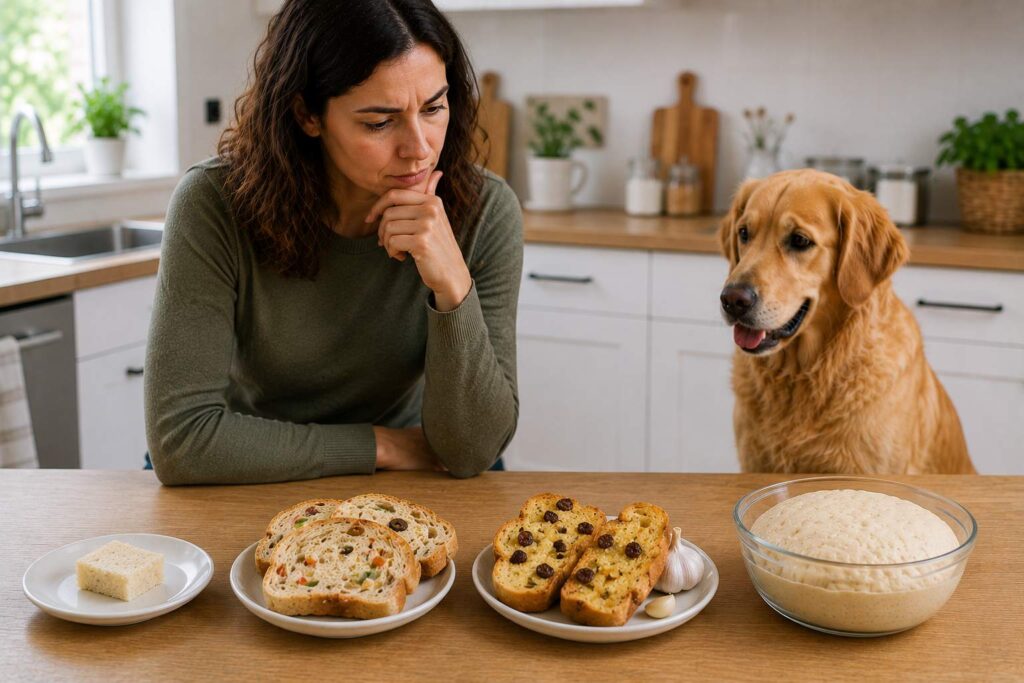
| Bread situation | Main issue | General concern level | What to check next |
|---|---|---|---|
| Small amount of plain baked bread | Calories, digestive tolerance | Usually lower | Portion size and your dog’s health |
| Wholemeal or whole-wheat bread | Same basic issues as plain bread | Usually lower | Ingredients and portion |
| Specialty or flavoured bread | Hidden ingredients | Variable | Full ingredient list |
| Raisin, sultana, or currant bread | Grape-family toxicity | High | Contact your vet promptly |
| Garlic or onion bread | Allium toxicity | Potentially serious | Ingredients and amount eaten |
| Xylitol-containing baked goods | Severe hypoglycaemia, possible liver injury | High | Seek urgent veterinary advice |
| Raw yeast dough | Stomach expansion and ethanol production | Emergency concern | Contact your vet immediately |
| Mouldy bread | Possible mycotoxins | Potentially serious | Contact your vet, especially if symptoms develop |
| Large amount or whole loaf | Quantity plus ingredient risk | Variable | Dog’s size, amount eaten, ingredients, and packaging |
Why Plain Bread Being “Safe” Doesn’t Make It a Good Idea
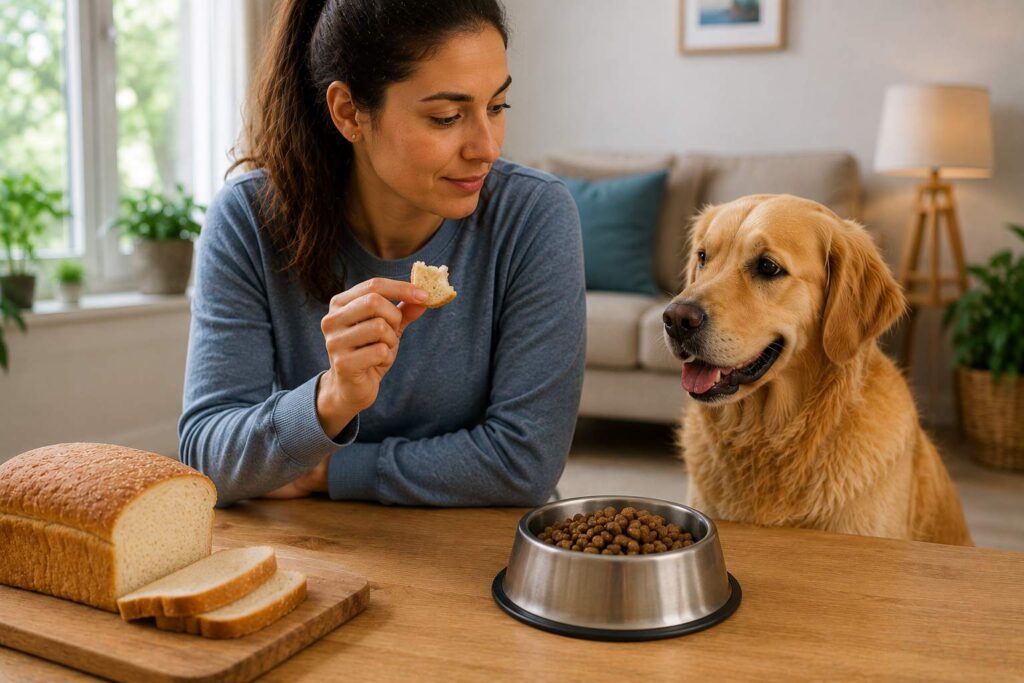
Non-toxic and nutritious are two different questions.
Bread mainly adds calories and carbohydrate to your dog’s diet. Wholemeal varieties may provide more fibre than white bread, but that doesn’t make bread a useful dietary addition for a dog already eating a complete and balanced food.
Wholemeal isn’t automatically the “healthier” dog treat either. In practice, the ingredients, portion size, and your dog’s individual diet matter far more than whether the loaf is white or brown.
It’s also better to think in terms of total treats rather than numbers of slices. WSAVA recommends keeping treats and other extras to no more than about 10% of a healthy dog’s daily calories, with the rest coming from a complete and balanced diet.
That 10% is an upper limit for all treats and extras combined — not a bread allowance.
When the Ingredient Matters More Than the Bread Itself
This is where most bread-related safety problems arise. Two loaves can look similar on the counter while presenting very different risks to a dog.
Raisins, Sultanas, Currants and Grapes
These commonly appear in fruit loaves, hot cross buns, and other baked products. Grapes and their dried forms can cause acute kidney injury in dogs, and susceptibility varies enough that owners should not rely on a universal “safe amount.”
If your dog eats bread containing raisins, sultanas, currants, or grapes, contact your veterinarian promptly rather than waiting for symptoms.
Don’t try to make raisin bread safe by picking out the visible fruit. Small pieces may remain, the amount originally present may be uncertain, and the product itself should be treated as a raisin-containing food.
Garlic, Onion and Related Ingredients
Garlic, onion, and other members of the allium family can damage canine red blood cells and may lead to anaemia.
Don’t look only for obvious pieces. Savoury breads may contain:
- Garlic powder
- Onion powder
- Garlic butter
- Seasoning mixes
- Garlic or onion fillings
That makes garlic bread, flavoured naan, and many savoury artisan loaves different from plain bread.
Signs of allium toxicity may be delayed, so a dog appearing normal shortly after an exposure doesn’t necessarily mean the risk has passed.
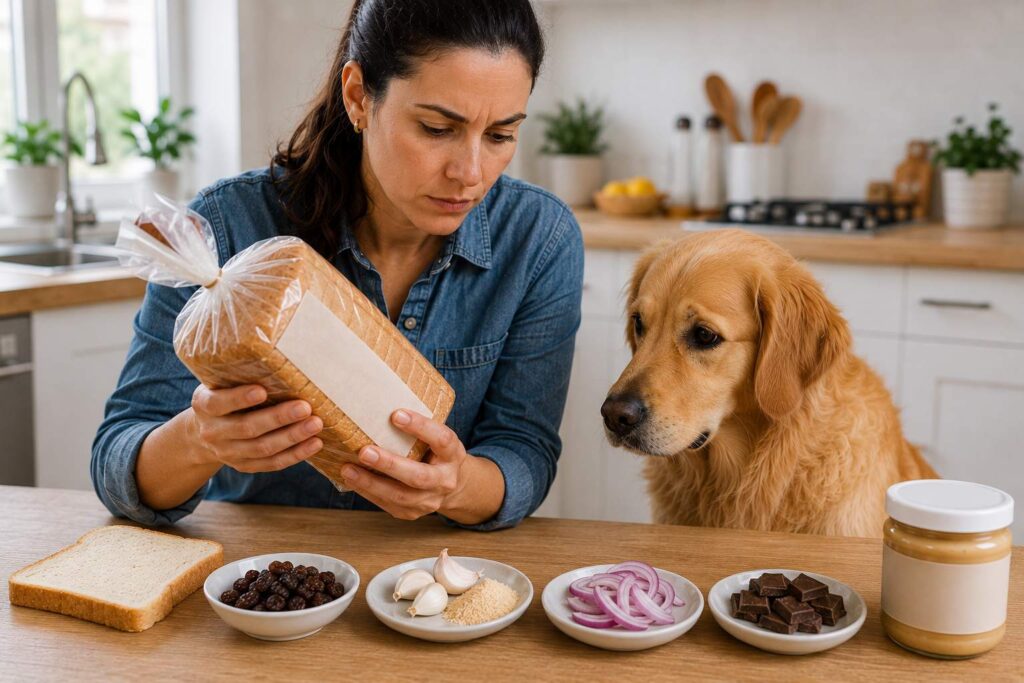
Xylitol and “Sugar-Free” Products
Xylitol is particularly dangerous to dogs because it can trigger a rapid insulin release and cause severe hypoglycaemia. Some exposures are also associated with serious liver injury.
Check speciality or sugar-free baked products carefully. Xylitol may sometimes appear on labels under names such as birch sugar.
Also check what’s spread on the bread. A peanut butter sandwich, for example, should be assessed by the ingredients in the peanut butter as well as the loaf itself.
If you know or suspect your dog has eaten xylitol, seek veterinary advice immediately rather than waiting for symptoms.
Chocolate and Macadamia Nuts
These are less common in everyday loaves but can appear in sweet breads, buns, and bakery products. Both can be toxic to dogs.
The relevant question is not simply how much bread was eaten, but how much of the toxic ingredient may have been consumed relative to the dog’s body weight.
High-Fat, High-Salt Additions
Butter-heavy breads, cheese breads, pastries, and rich sandwich fillings are not equivalent to plain toast.
They may cause vomiting or diarrhoea, and a particularly fatty meal can be a concern in dogs susceptible to pancreatitis. Large amounts of salty foods may also be inappropriate, particularly for dogs with medical conditions requiring dietary restriction.
So when your dog steals a loaded sandwich or buttery pastry, assess the whole food — not just the bread holding it together.
Raw Dough Is a Completely Different Situation
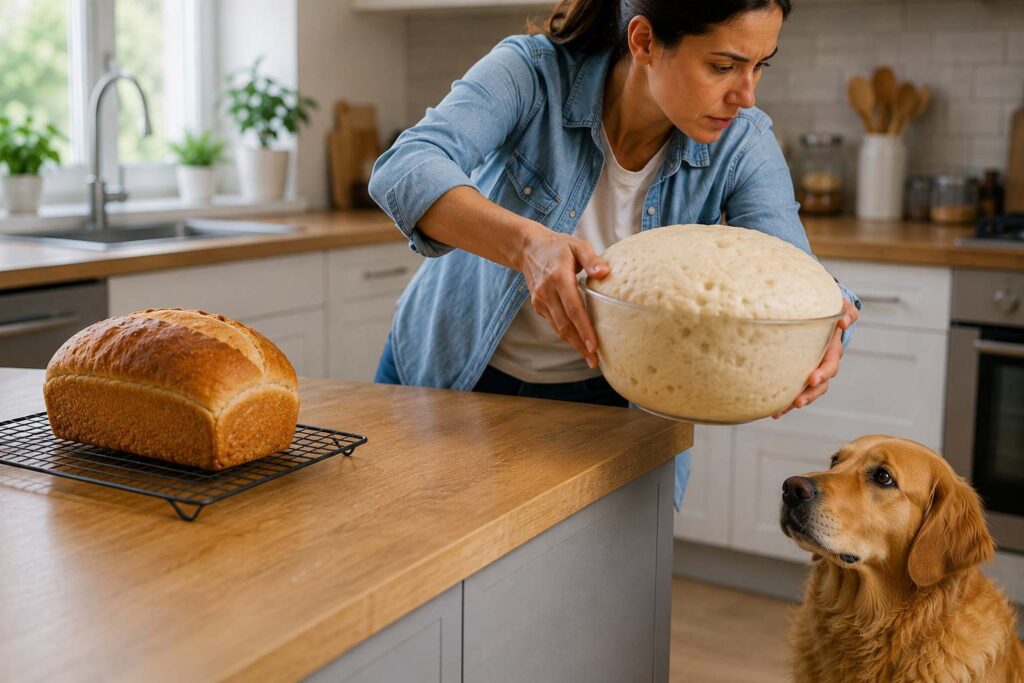
If you bake at home, this is the part to take seriously, because raw yeast dough behaves very differently from baked bread once it reaches a dog’s stomach.
The stomach is warm enough for fermentation to continue. As that happens, two problems can develop at the same time: the dough can expand as gas is produced, and ethanol can be generated during fermentation. The Merck Veterinary Manual describes raw bread dough exposure as a risk for gastric distension as well as alcohol toxicosis.
Baked sourdough and active sourdough starter should also be treated differently. A small amount of plain, fully baked sourdough is assessed much like other baked bread. Raw sourdough starter or unbaked sourdough dough is a different exposure because active fermentation is still relevant.
Signs That Need Urgent Veterinary Attention
- Noticeably swollen or distended abdomen
- Repeated retching without bringing anything up
- Weakness or wobbliness
- Unusual sleepiness or disorientation
- Collapse
- Tremors or seizures
Warning Box
If you suspect your dog has eaten raw yeast-containing dough, contact your veterinarian promptly. Do not wait for obvious symptoms to develop, and do not try to induce vomiting unless a veterinary professional specifically tells you to.
Your Dog Already Ate Bread — Work Through This
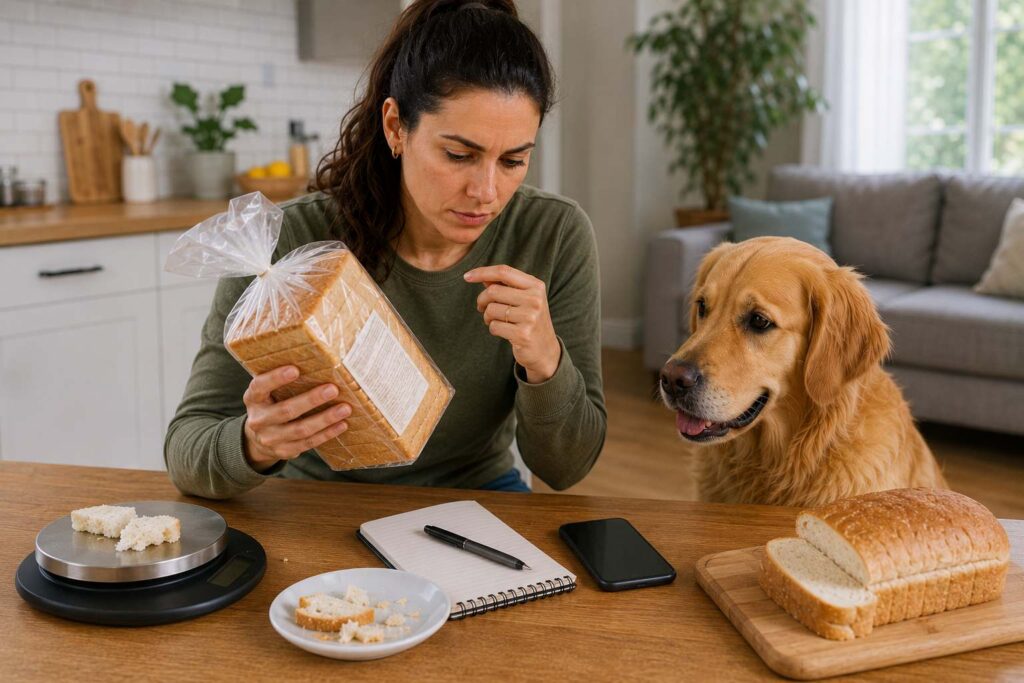
Before deciding what to do, gather the information that actually changes the risk:
- What exact product was eaten
- Whether it was baked bread, raw dough, or sourdough starter
- What ingredients, toppings, or fillings were involved
- Roughly how much was eaten
- Your dog’s approximate weight
- When it happened
- Any symptoms so far
- Whether you still have the packaging, label, or recipe
Then match the incident to the closest situation.
A Tiny Amount of Plain Baked Bread
This is generally a lower-risk situation for a healthy dog. Check that the bread was genuinely plain and monitor for digestive upset.
Several Slices or Most of a Loaf
Now quantity matters more. Recheck the ingredient list, consider your dog’s size, and make sure no wrapper or packaging was swallowed.
A whole loaf for a small dog is not the same situation as one slice for a large dog.
The Bread Contained a Known Toxic Ingredient
Focus on the ingredient, not on whether your dog currently looks well.
Raisins, sultanas, currants, xylitol, garlic, onion, chocolate, and macadamia nuts can all change the urgency of the situation. For potentially serious exposures, contact your vet rather than waiting for symptoms.
It’s an Unknown Bakery or Homemade Loaf
Don’t guess from appearance. If possible, check the bakery’s ingredient information or ask whoever made the bread.
If you cannot confirm the ingredients and there is a realistic chance it contained something toxic, seek veterinary advice.
Raw Dough or Mouldy Bread
Treat either as a separate concern rather than as ordinary bread exposure. Raw dough carries fermentation and expansion risks, while mouldy food may contain mycotoxins.
Bread Dogs Commonly Encounter, and What Actually Matters
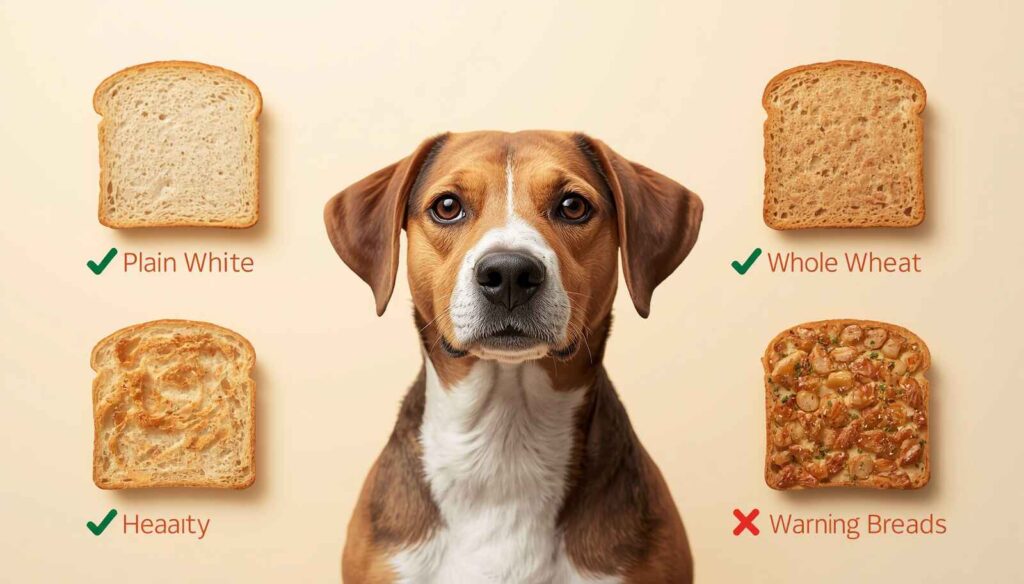
White vs Brown or Wholemeal
Neither is necessary in a dog’s diet. For a healthy dog, plain ingredients and portion size matter far more than the colour of the loaf.
Toast vs Crust
Plain toast and crust are assessed much like the bread they came from. The more important question is what has been added on top.
Seeded and Multigrain Bread
Check the specific seeds, nuts, dried fruit, and seasonings rather than assuming every seeded loaf has the same safety profile.
Rye and Pumpernickel
Again, the recipe matters more than the name. Look for added raisins, nuts, sweeteners, or seasonings.
Banana, Pumpkin, and Other Sweet Breads
These are highly recipe-dependent. Sugar, added fats, chocolate, nuts, raisins, and sweeteners can all be present, so the headline ingredient does not tell you whether the finished loaf is dog-safe.
Bread With Butter, Peanut Butter, Jam, or Cheese
Evaluate the topping separately. With peanut butter in particular, check the full ingredient list for xylitol before offering any.
Sandwiches
With sandwiches, the bread may be the least important part. Check the filling, spread, sauce, and seasoning before deciding whether the exposure is low risk.
Is Bread Actually Useful for an Upset Stomach?
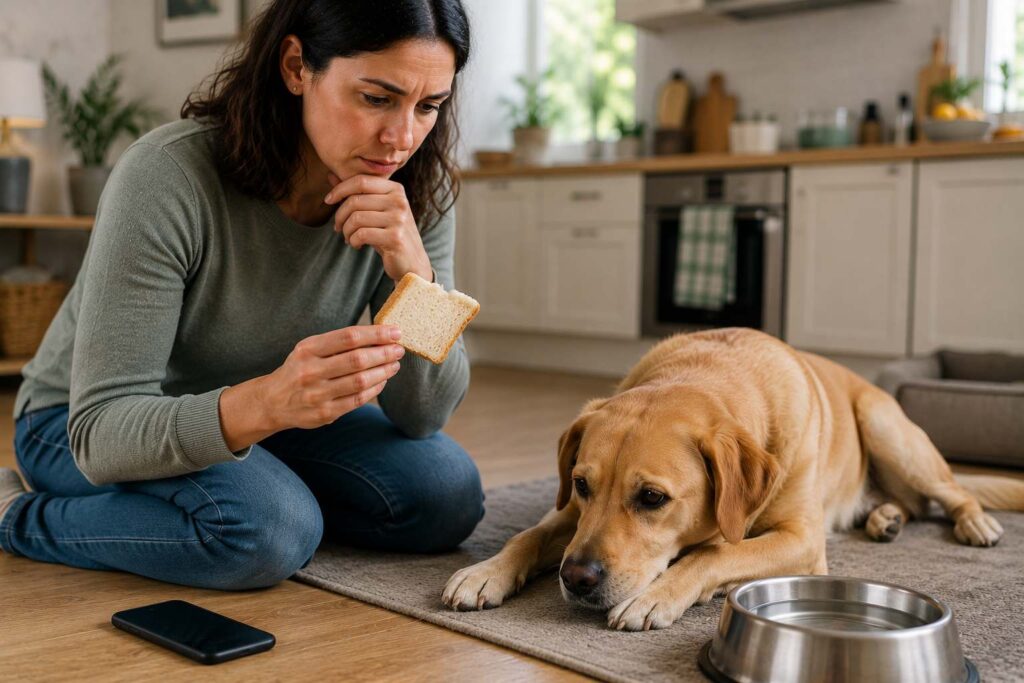
Plain bread is sometimes recommended online for vomiting or diarrhoea, but bread is not a treatment for gastrointestinal disease and it does not reliably “soak up” whatever is causing the problem.
It’s also better not to assume that chicken and rice is automatically the right next step for every dog. A short-term bland diet may sometimes be recommended by a veterinarian, but the appropriate food depends on the dog’s age, health, symptoms, and likely cause of the upset.
If vomiting or diarrhoea is persistent, severe, bloody, recurrent, or accompanied by lethargy, abdominal pain, dehydration, or loss of appetite, contact your vet rather than experimenting with human foods.
The same principle applies if your dog has swallowed a bone, sharp object, medication, toxin, or another foreign material. Do not rely on bread to cushion, wrap, or absorb it. What to do next depends on exactly what was swallowed, how much, when it happened, and your dog’s condition, so veterinary advice is the safer route.
Dogs Who Might Be Better Off Skipping Bread Altogether
Some dogs have more reason than others to avoid bread, even when the loaf itself is plain.
- Dogs on a weight-management plan, because the extra calories work against the goal.
- Dogs on a prescription or therapeutic diet, where unapproved extras can interfere with the intended nutritional plan.
- Dogs undergoing a food elimination trial, because outside foods can make the results harder to interpret.
- Dogs with a suspected food sensitivity, where wheat intolerance, food allergy, and gluten-specific disease should not be treated as interchangeable without veterinary assessment.
- Dogs with a history of gastrointestinal sensitivity, especially if bread has previously triggered vomiting, diarrhoea, or discomfort.
- Puppies, because they have less room in the diet for low-value extras while they are growing, and frequent sharing of human food can also encourage habits that are hard to undo later.
Common Mistakes Owners Make With Bread
- Assuming wholemeal or brown bread is automatically the healthy option.
- Feeding bread every day simply because it is not usually toxic.
- Overlooking sandwich fillings, spreads, and sauces.
- Missing garlic or onion powder in an ingredient list.
- Assuming homemade, artisan, organic, or gluten-free means dog-safe.
- Picking raisins out of raisin bread and feeding the rest.
- Treating stale and mouldy bread as the same thing.
- Confusing baked sourdough with active sourdough starter.
- Using “a couple of slices” as a universal safe amount regardless of dog size.
- Feeding bread for diarrhoea without addressing the underlying cause.
- Waiting for symptoms after a known toxic ingredient exposure.
- Trying to induce vomiting without professional guidance.
Quick Tips for Safer Decisions
- Stick to plain, fully baked bread if you share any at all.
- Keep portions genuinely small.
- Read the full ingredient list, not just the front of the packet.
- Assess toppings, spreads, and fillings separately.
- Treat “sugar-free” labelling as a reason to check the sweetener carefully.
- Keep raw dough and active sourdough starter well out of reach while baking.
- Dispose of mouldy bread where your dog cannot get to it.
- Keep bread as an occasional extra rather than part of regular meals.
- Save the packaging or recipe after an accidental ingestion.
- If a potentially toxic ingredient is involved, call your vet rather than waiting to see what happens.
What to Tell Your Vet
If you need to call, having a few details ready can make the assessment much easier:
- Your dog’s approximate weight
- The exact product eaten
- The ingredient list or recipe, if available
- An estimate of how much was eaten
- Whether it was baked bread, raw dough, or sourdough starter
- When the incident happened
- Any symptoms so far
- Any existing health conditions or dietary restrictions
- Whether packaging or wrapping may also have been swallowed
Do not wait for symptoms to appear after a known or suspected exposure to raw yeast dough, raisins/sultanas/currants, xylitol, mouldy food, or another potentially toxic ingredient. Contact your veterinarian promptly.
Seek urgent veterinary care if you see:
- Severe abdominal swelling
- Repeated unproductive retching
- Weakness or collapse
- Marked disorientation or poor coordination
- Tremors or seizures
- Breathing difficulty
- Severe or repeated vomiting
Key Takeaways
- Bread safety depends more on form, ingredients, and amount than on the loaf’s name or colour.
- A small amount of plain, fully baked bread is generally lower risk for most healthy adult dogs.
- Raisins, sultanas, currants, garlic, onion, xylitol, chocolate, and some nuts can change the situation completely.
- Raw yeast dough is a separate and potentially serious exposure because it can expand and produce ethanol.
- Mouldy bread should not be fed because of possible mycotoxin contamination.
- Bread is not a reliable treatment for vomiting, diarrhoea, poisoning, or swallowed objects.
- When a concerning ingredient is involved, veterinary advice is safer than waiting for symptoms.
The Bottom Line
There’s no single answer to “can dogs eat bread” that covers every situation. A small piece of plain toast and stolen raisin bread may both be called bread, but medically they are very different exposures.
The safest habit is not memorising dozens of bread types. Instead, check what form it was in, what ingredients were present, how much was eaten, your dog’s size and health, when it happened, and whether symptoms have developed.
If you cannot work out what was in a loaf your dog has eaten, do not assume the best. Checking the label, recipe, or bakery ingredients — and calling your vet when a genuine risk is possible — is far safer than guessing.
Frequently Asked Questions
1. Can Dogs Eat Bread Every Day?
A small amount of plain bread is unlikely to poison a healthy dog, but that does not make it a good daily habit. Bread adds calories without offering much nutritional value, so it is better kept as an occasional extra.
2. Can Puppies Eat Bread?
A tiny amount of plain, fully baked bread is not automatically toxic to a puppy, but it should not become a routine treat. Puppies need most of their calories from a complete diet designed to support growth, and unnecessary extras can displace more useful nutrition.
3. Can Dogs Eat Sourdough Bread?
A small amount of plain, fully baked sourdough is assessed much like other baked bread. Active sourdough starter or unbaked sourdough dough is different because fermentation can continue after it is swallowed.
4. My Dog Ate a Whole Loaf of Plain Bread — What Should I Do?
First check the ingredient list and make sure no wrapper or packaging was swallowed. Then consider your dog’s size and how much is missing.
Even if the loaf was plain, a large amount can cause significant gastrointestinal discomfort or bloating. Contact your veterinarian for advice if your dog is small relative to the amount eaten, develops abdominal swelling, repeated vomiting, pain, lethargy, or if you are unsure about the ingredients.
5. Can I Just Pick the Raisins Out of Raisin Bread and Feed My Dog the Rest?
No. Raisin bread should be treated as a raisin-containing food, not as ordinary bread that can be made safe by removing the visible fruit.
Dogs vary in their susceptibility to grape and raisin toxicity, so it is better not to experiment with an assumed safe amount.
6. Is Bread Good for a Dog With Diarrhoea?
Bread is not a treatment for diarrhoea and does not address its cause.
A veterinarian may sometimes recommend a temporary diet change for uncomplicated gastrointestinal upset, but the right approach depends on the dog and the symptoms. Persistent, severe, bloody, or recurrent diarrhoea should be discussed with your vet rather than managed with bread.
7. Why Is Raw Dough More Dangerous Than Baked Bread?
Raw yeast-containing dough can continue fermenting inside the warm stomach. That fermentation produces gas, which can make the dough expand, and ethanol, which can cause alcohol toxicosis.
Once bread is fully baked, that active fermentation hazard is no longer present. That’s why raw dough should be treated as a separate exposure rather than as a stronger version of ordinary bread.
#. Related Articles: