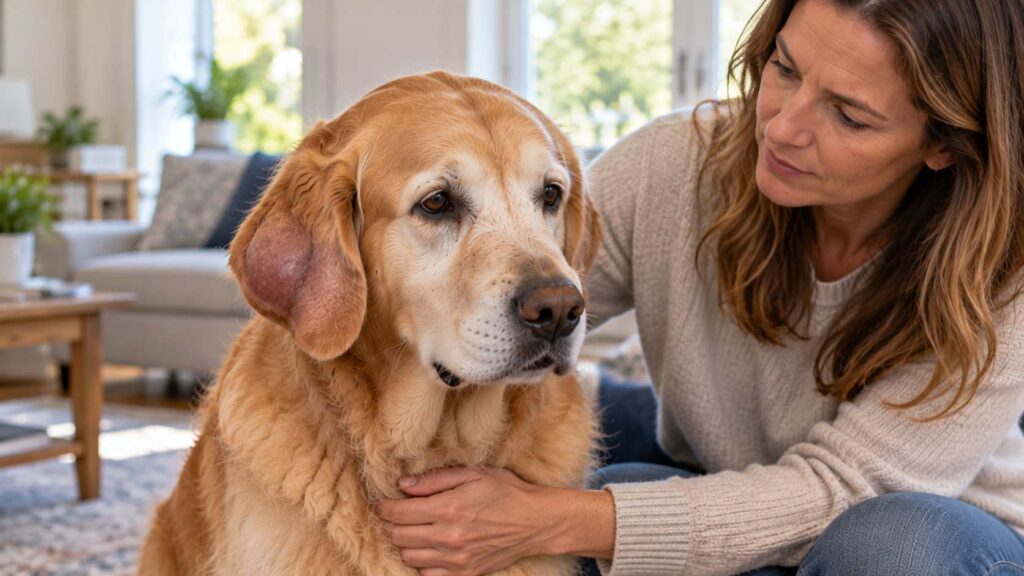
How to Treat Hematoma in Dog’s Ear at Home is often the first thing you search when you notice your dog’s ear flap has puffed up like a small water balloon. It may feel soft, warm, or unusually thick, and your dog might keep shaking their head.
Home care can help protect your dog’s ear and keep them comfortable while you arrange an appointment. However, there is no reliably safe, proven way to drain or cure an aural hematoma at home.
An aural hematoma (spelled haematoma in the UK and Australia) is a collection of blood within the ear flap. A veterinarian needs to confirm the diagnosis, assess the swelling, and investigate what caused it.
This guide explains what you can safely do at home, which warning signs matter, what to avoid, and what to expect from veterinary treatment.
First, Decide How Urgently Your Dog Needs Help
Most uncomplicated ear hematomas aren’t immediately life-threatening, but they can be painful and shouldn’t be ignored. The urgency depends on your dog’s symptoms, not just the size of the swelling.
Signs That Need Emergency Veterinary Attention
Seek emergency veterinary care if your dog has:
- Heavy bleeding that won’t stop or a serious ear injury.
- Loss of balance, stumbling, circling, or abnormal side-to-side eye movements.
- Collapse, severe distress, or extreme weakness.
- Repeated vomiting accompanied by balance problems or other concerning neurological signs.
These symptoms aren’t typical of a simple ear hematoma. They may indicate a more serious injury, inner-ear disease, or another medical problem.
Signs That Need Prompt Veterinary Assessment
Contact your veterinarian promptly if you notice:
- New swelling in one or both ear flaps.
- Swelling that is increasing or becoming more painful.
- Frequent head shaking or scratching.
- Ear discharge, an unpleasant smell, or redness inside the ear.
- Your dog resisting touch around the affected ear.
Rapidly increasing swelling or significant pain warrants same-day veterinary advice.
What If Your Dog Seems Completely Normal?
Some dogs continue eating, playing, and behaving normally despite having an ear hematoma.
That doesn’t necessarily mean the swelling is painless or harmless. Dogs may show discomfort subtly, and an untreated hematoma can lead to lasting changes in the ear flap.
Arrange a veterinary examination even if your dog otherwise seems well.
| What you’re seeing | What to do |
|---|---|
| New swelling, dog otherwise comfortable | Contact your vet promptly |
| Rapidly growing swelling or obvious pain | Seek same-day veterinary advice |
| Heavy bleeding, collapse, or balance problems | Seek emergency veterinary care |
| Swelling with scratching, odor, or discharge | Arrange prompt examination of the ear flap and canal |
What You Can Safely Do at Home Before the Appointment
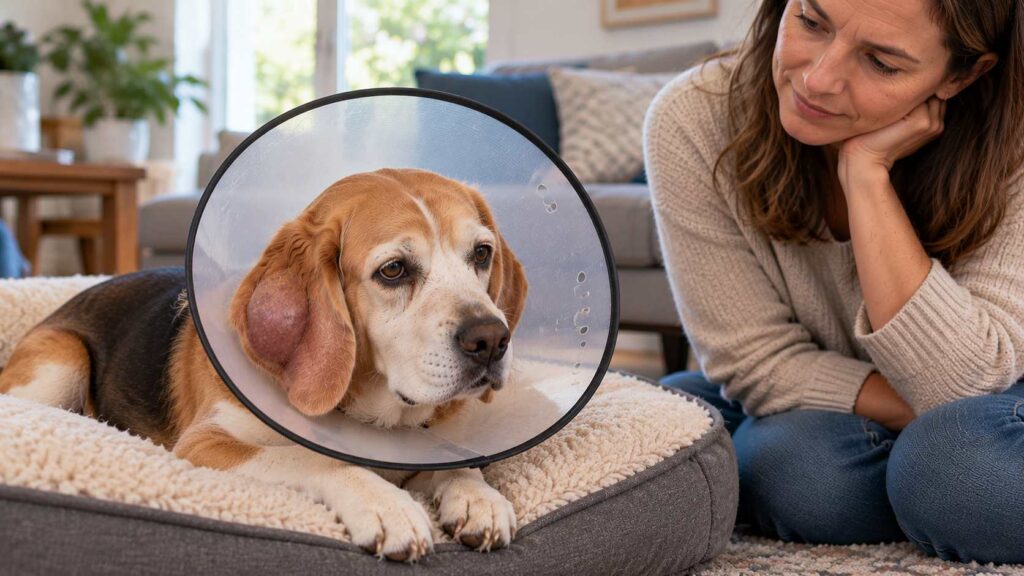
The goal of home care is to prevent additional injury, reduce unnecessary discomfort, and monitor changes until your veterinarian can examine the ear.
Protect the Ear From Further Scratching
Repeated scratching and head shaking can aggravate an existing hematoma.
A properly fitted Elizabethan collar, commonly called a cone, can help prevent your dog from scratching the affected ear.
Make sure the collar:
- Extends far enough to prevent your dog from reaching the ear.
- Fits securely without restricting breathing or swallowing.
- Allows your dog to eat and drink comfortably.
- Does not rub against the swollen ear.
Supervise your dog while they adjust to wearing it.
Important: A cone can prevent scratching, but it cannot reliably stop head shaking. Persistent shaking often indicates an underlying problem that needs veterinary attention.
According to PDSA’s veterinary guidance, an aural hematoma needs veterinary assessment, even if your dog seems otherwise well. A protective collar can help prevent further scratching, but it cannot remove the trapped blood. Never attempt to drain the swelling yourself, as this can cause additional injury or infection.
Keep Your Dog Comfortable Without Touching the Swelling
Provide a quiet resting area and avoid rough play or activities that might injure the ear.
Short, calm walks are generally reasonable if your dog otherwise feels well.
Avoid squeezing, massaging, or repeatedly checking the swelling by pressing on it. Manipulating the affected tissue can cause pain and potentially worsen the injury.
Should You Use a Cold Compress?
A cool compress may offer temporary comfort, but it won’t remove the accumulated blood.
Ask your veterinarian whether one is appropriate for your dog.
If approved:
- Wrap a cool pack in a soft cloth.
- Hold it gently against the affected area without applying pressure.
- Keep the application brief.
- Stop immediately if your dog becomes uncomfortable.
Never apply ice directly to the skin.
A cold compress is a comfort measure, not a substitute for veterinary treatment.
What to Record Before Calling the Vet
A few details can help your veterinarian assess the situation:
- When you first noticed the swelling.
- Whether it has increased or decreased in size.
- Recent scratching, head shaking, rough play, or injury.
- Any ear odor, discharge, or previous infections.
- Current medications and existing health conditions.
- Photographs showing changes in the swelling.
For example, if your dog began shaking their head several days before the swelling appeared, mention that during the appointment. It may help your veterinarian identify an underlying ear problem.
Quick Checklist While You Wait
- Contact your veterinary clinic.
- Prevent scratching with a suitable collar if needed.
- Keep your dog calm and supervised.
- Photograph the swelling without manipulating it.
- Record relevant symptoms and medications.
- Avoid unapproved ear drops, painkillers, and bandages.
- Follow the clinic’s advice about appointment urgency.
Is It Really an Ear Hematoma?
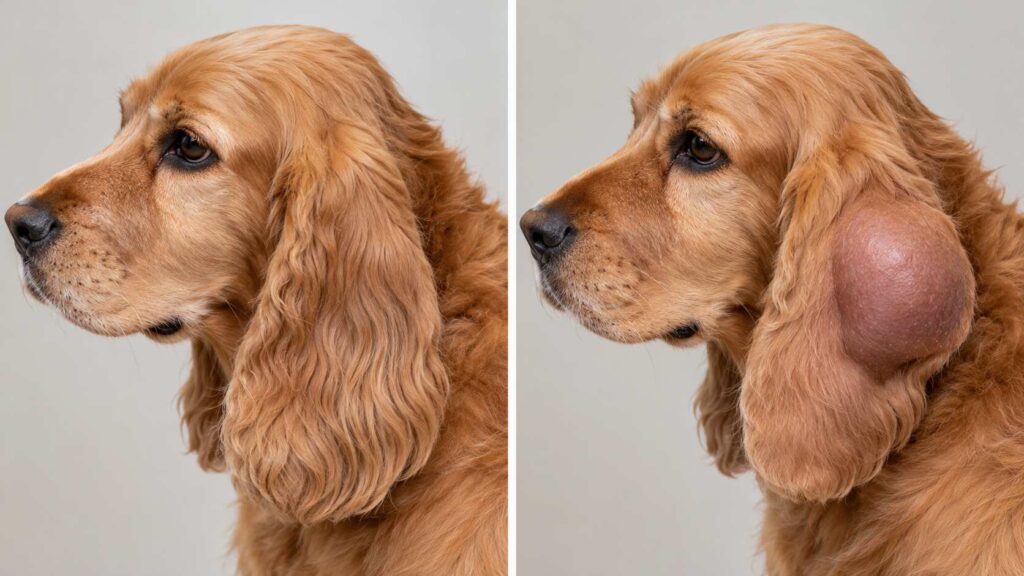
What Happens Inside the Ear Flap?
The external ear flap, called the pinna, contains cartilage covered by skin and supplied by small blood vessels.
When blood vessels are damaged, blood can collect within the tissues of the ear flap, separating tissue layers and producing a noticeable swelling.
This collection of blood is called an aural hematoma or auricular hematoma.
The swelling may involve a small portion of the ear or much of the flap.
Signs That Suggest an Aural Hematoma
Common signs include:
- A soft, fluid-filled, or firm swelling.
- An unusually thick or heavy ear flap.
- Warmth or tenderness.
- A drooping or altered ear shape.
- Repeated head shaking or scratching.
A newly formed hematoma may feel soft and fluctuant. Older hematomas can become firmer as the blood organizes and scar tissue develops.
However, appearance and texture alone cannot confirm the diagnosis.
Other Conditions That Can Look Similar
Not every swollen ear contains blood.
Other possibilities include:
- An abscess caused by infection.
- A bite wound or other traumatic injury.
- An insect sting reaction.
- Local inflammation.
- A cyst or growth.
- Disease affecting the ear canal.
A veterinarian can examine the swelling and determine whether additional testing is necessary.
The Problem May Have Started Before the Swelling Appeared
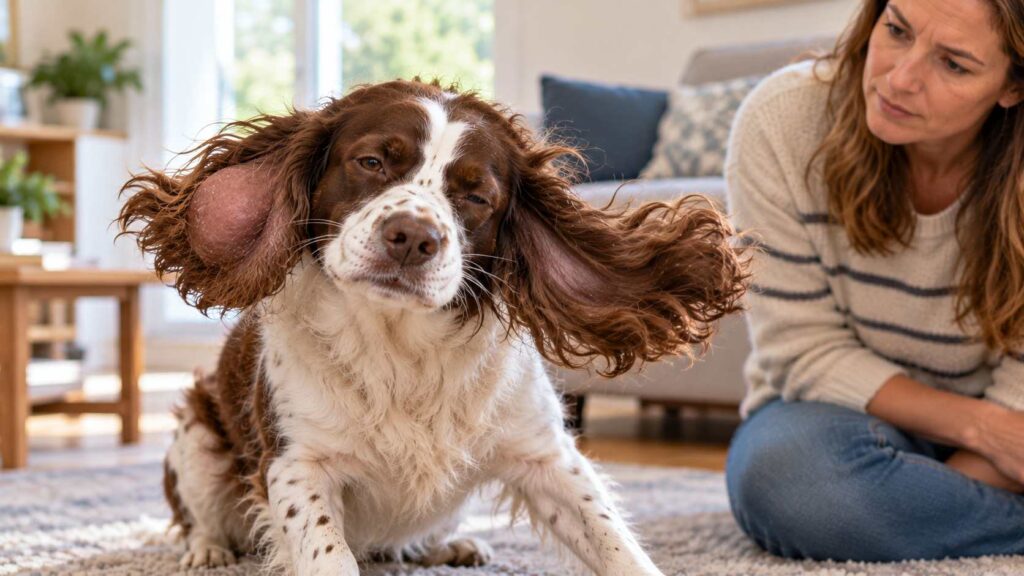
An ear hematoma often develops after repeated head shaking, scratching, or direct trauma.
Identifying the underlying cause matters because treating the swollen flap alone may not prevent the problem from returning.
Ear Infections and Inflammation
Inflammation of the external ear canal, known as otitis externa, is a common contributing problem.
An inflamed ear may become itchy or painful, prompting repeated shaking and scratching that can injure blood vessels within the flap.
Possible signs include:
- Redness inside the ear.
- Unpleasant odor.
- Discharge.
- Frequent head shaking.
- Discomfort when the ear is touched.
Not every case of otitis externa involves a bacterial or yeast infection. Allergies and other inflammatory conditions can also be responsible.
Allergies, Ear Mites, and Foreign Material
Allergic skin disease can cause recurring ear inflammation and itching.
Ear mites are another possible cause, particularly in younger dogs, although they are not responsible for every itchy ear.
Foreign material, such as a grass seed lodged in the ear canal, can also trigger sudden, forceful head shaking.
Trauma and Less Common Causes
An ear hematoma may occasionally follow:
- Rough play.
- A direct blow to the ear.
- Bite injuries.
- Other physical trauma.
Some hematomas develop without an obvious history of scratching or head shaking.
If hematomas recur or appear without a clear explanation, your veterinarian may investigate additional contributing conditions.
Veterinary insight: The hematoma and the underlying ear disease are separate problems. Both may need treatment to achieve a lasting result.
Which Home Remedies Help, and Which Create Risks?
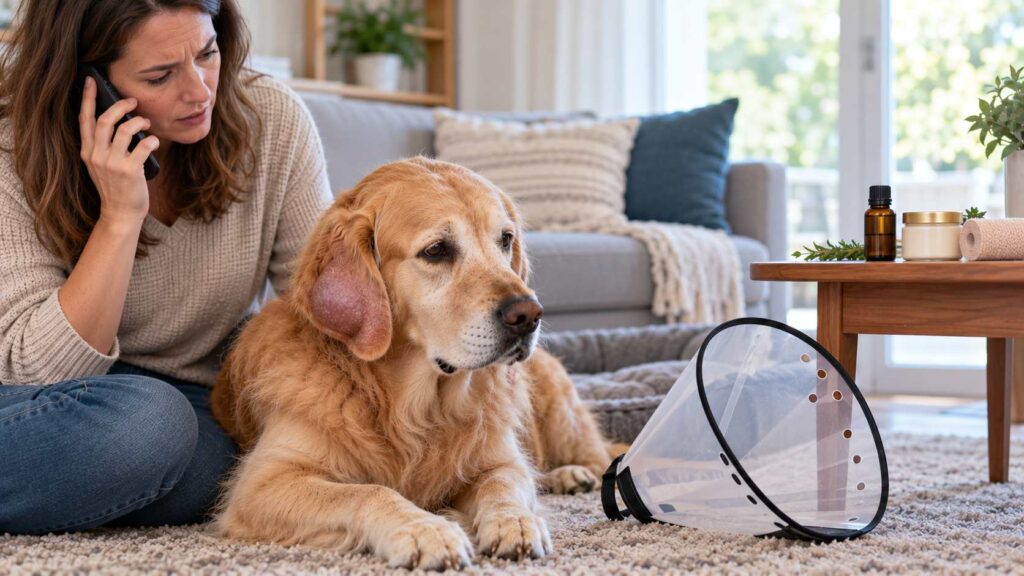
Online advice about dog ear hematomas often mixes reasonable comfort measures with unproven or potentially harmful treatments.
The distinction is important: something that reduces scratching or discomfort does not necessarily treat the hematoma itself.
| Approach | What it might do | Important limitation |
|---|---|---|
| Elizabethan collar | Helps prevent scratching | Doesn’t remove accumulated blood |
| Calm activity | May reduce further trauma | Doesn’t resolve the hematoma |
| Vet-approved cool compress | May provide temporary comfort | Not a proven cure |
| Warm compress | Uncertain benefit | Avoid unless your vet recommends it |
| Oils and herbal mixtures | No established curative benefit | May irritate the skin or cause toxicity |
| DIY needle drainage | No appropriate role in home care | Risks infection, bleeding, tissue damage, and recurrence |
| Tight homemade bandage | Not recommended | May restrict circulation and damage tissue |
Why Natural Does Not Automatically Mean Safe
Essential oils, herbal rinses, and supplements may sound gentle, but they can cause problems, especially when applied to inflamed skin. Some essential oils are toxic to dogs if absorbed or swallowed during grooming.
There is no reliable evidence that these remedies can safely shrink or cure an aural hematoma. Avoid using them without veterinary approval.
Why Human Pain Medication Is Not an Option
It’s tempting to reach for a household painkiller when your dog seems uncomfortable. However, human medications can cause serious harm.
Ibuprofen and naproxen can cause stomach ulcers, gastrointestinal bleeding, and kidney damage in dogs. Paracetamol (acetaminophen) can also be dangerous when given incorrectly.
Never give human pain medication without specific veterinary instructions. Your veterinarian can recommend appropriate pain relief based on your dog’s condition, weight, and medical history.
Warning: Don’t Try to Drain the Ear Yourself
- Never puncture the swelling with a needle or make an incision.
- Do not squeeze or massage the blood-filled pocket.
- Home drainage can cause bleeding, infection, and cartilage damage.
- The swelling may refill even after fluid has been removed.
- Avoid tight homemade bandages or wraps around the head.
If the swelling bursts or begins bleeding, contact your veterinarian promptly. Heavy or uncontrolled bleeding requires emergency veterinary attention.
What Can Happen If the Hematoma Is Left Alone?
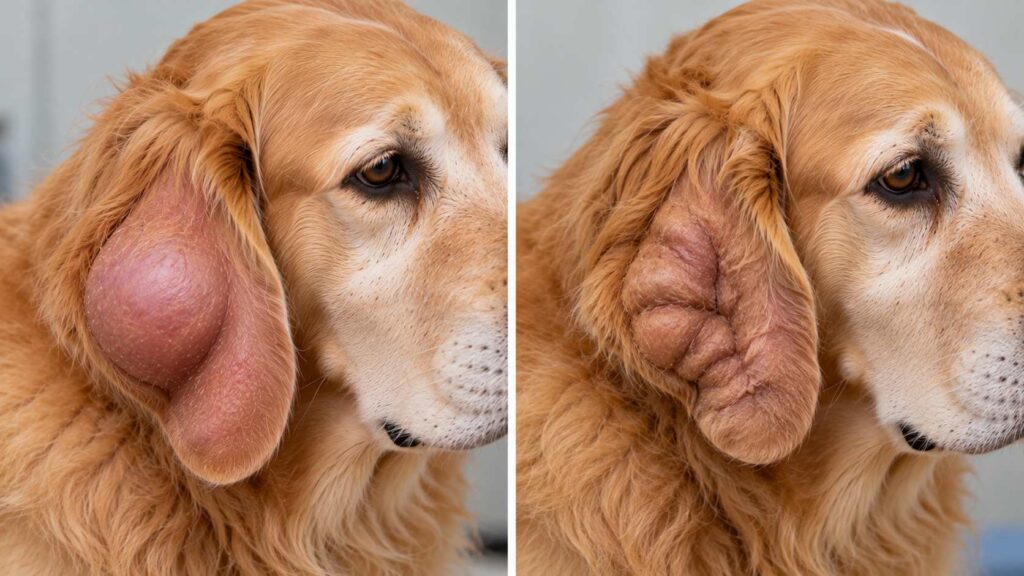
Can It Resolve Without Surgery?
Sometimes. The body may gradually reabsorb the accumulated blood without surgical treatment.
However, this can take several weeks or longer, and the outcome is unpredictable. Your dog may experience discomfort during that time, while an underlying ear infection or inflammatory condition remains untreated.
Spontaneous healing is possible, but it doesn’t mean waiting without veterinary advice is the safest choice.
A veterinarian can assess whether observation, medical management, or a procedure is appropriate.
Why Some Ears Become Thick or Wrinkled
As the hematoma heals, inflammation and scar tissue can alter the ear flap’s structure.
The ear may become thicker, folded, wrinkled, or permanently distorted. This appearance is sometimes called cauliflower ear.
These changes are often cosmetic, but substantial scarring may occasionally affect the shape of the ear canal opening and complicate ongoing ear care.
Not every untreated hematoma causes permanent deformity, and treatment cannot guarantee a perfectly normal appearance.
Why Waiting May Complicate Treatment
Over time, accumulated blood can clot and become more organized, while scar tissue develops around the affected area.
An older hematoma may require different treatment considerations than a newly formed one.
Delaying assessment can also allow the original cause of head shaking or scratching to continue, increasing discomfort and the possibility of further ear injury.
What Your Veterinarian Can Do That Home Care Cannot
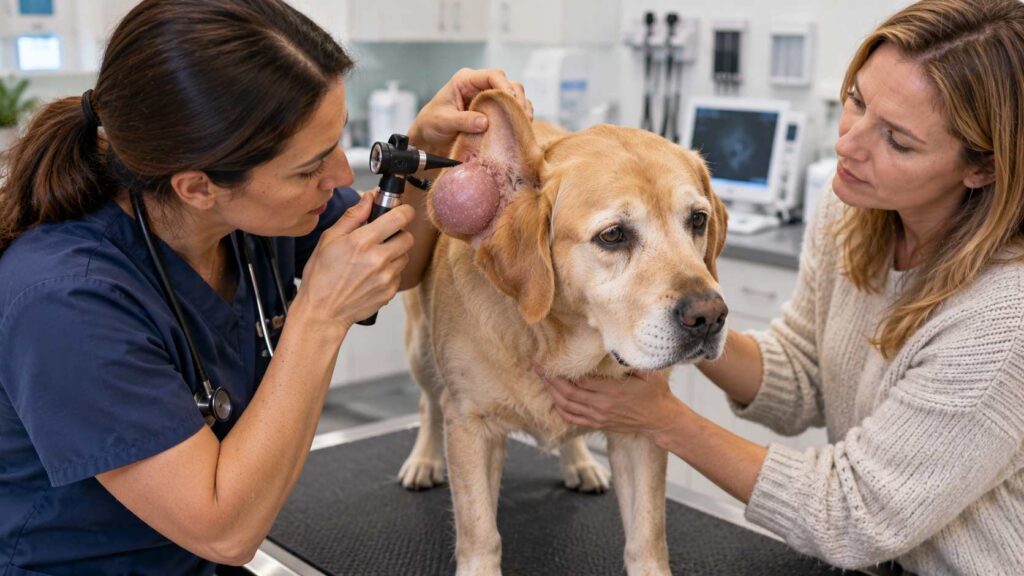
Veterinary treatment aims to relieve discomfort, manage the blood-filled pocket, and address whatever caused the ear injury. Not every dog needs surgery, but the right approach depends on the hematoma and your dog’s overall health.
Confirm the Diagnosis and Examine the Ear Canal
Your veterinarian will examine the swelling and look inside both ears with an otoscope, provided your dog can tolerate the examination.
They may also collect a sample from the ear canal to check for yeast, bacteria, mites, or signs of inflammation.
If the diagnosis is uncertain, the veterinarian may sample the swelling or recommend further tests. Dogs with recurring ear problems may also need an investigation for allergies or other underlying conditions.
This matters because treating the swollen flap without addressing the cause of head shaking can increase the risk of recurrence.
Veterinary Aspiration and Medical Management
Aspiration involves using a sterile needle to withdraw fluid from the hematoma.
It can reduce swelling without an extensive procedure, but the pocket frequently refills. Some dogs may also need sedation, depending on their discomfort and ability to remain still.
In selected cases, veterinarians combine drainage with medications such as corticosteroids to help manage inflammation and reduce fluid reaccumulation.
However, nonsurgical approaches are not equally effective for every hematoma. Ask your veterinarian why a particular treatment is suitable for your dog and what happens if the swelling returns.
Surgical Treatment
Surgery is often considered for larger, persistent, or recurring hematomas.
The veterinarian typically makes an incision to remove accumulated blood and clots, then places sutures to help the affected tissue layers heal together and reduce the space where fluid could collect again.
Some techniques use drains or other methods to manage the hematoma cavity.
Surgery generally requires anesthesia. Afterward, your dog may need pain medication, an Elizabethan collar, activity restrictions, and follow-up appointments.
Possible complications include infection, renewed swelling, wound problems, or permanent changes in the ear’s appearance.
The Merck Veterinary Manual explains that surgical treatment commonly involves removing accumulated blood and placing sutures, sometimes with drains, to reduce the space where fluid can collect again. Treating underlying ear inflammation or infection is also important because continued head shaking and scratching may contribute to recurrence.
How the Veterinarian Chooses a Treatment
Your veterinarian will consider:
- The hematoma’s size, location, and duration.
- Your dog’s general health and anesthesia risk.
- Whether the ear canal has an underlying problem.
- Previous hematomas or unsuccessful treatments.
- Your ability to manage aftercare and attend follow-up visits.
| Option | When it may be considered | Main limitation | Recovery and follow-up |
|---|---|---|---|
| Aspiration | Selected smaller or recent hematomas, or when surgery is less suitable | Fluid commonly reaccumulates | Monitoring and possible repeat visits |
| Medical treatment with or without drainage | Suitable cases assessed by a veterinarian | Results vary; underlying causes still need treatment | Depends on the medication and response |
| Surgery | Larger, persistent, or recurring hematomas | Requires anesthesia and carries procedural risks | Collar, wound care, and rechecks, often over several weeks |
Vet Advice: No treatment guarantees that the ear will regain its original shape. The best option is the one that addresses your dog’s discomfort, the hematoma itself, and the underlying cause.
If Cost or Anesthesia Is Your Biggest Concern

What Influences the Veterinary Bill?
Treatment costs vary considerably between clinics and countries, including the US, UK, Canada, and Australia.
The main factors are:
- Initial examination and diagnostic tests.
- Hematoma size and complexity.
- Treatment method.
- Sedation or anesthesia.
- Medications and aftercare.
- Follow-up appointments or repeat procedures.
A less expensive initial treatment may not be the cheapest overall if the hematoma repeatedly refills.
Ask for an itemized estimate that includes likely follow-up costs.
Questions to Ask About Treatment Alternatives
Before deciding, ask your veterinarian:
- Is a nonsurgical option reasonable for my dog?
- How likely is the hematoma to return with each approach?
- What does the estimate include, and what might cost extra?
- Will my dog need sedation or general anesthesia?
- What aftercare and follow-up appointments are required?
- How do my dog’s age and medical conditions affect treatment risks?
Age alone does not determine whether a dog can safely undergo anesthesia. Your veterinarian will assess their overall health, medical history, and any necessary pre-anesthetic tests.
When You Cannot Get an Immediate Appointment
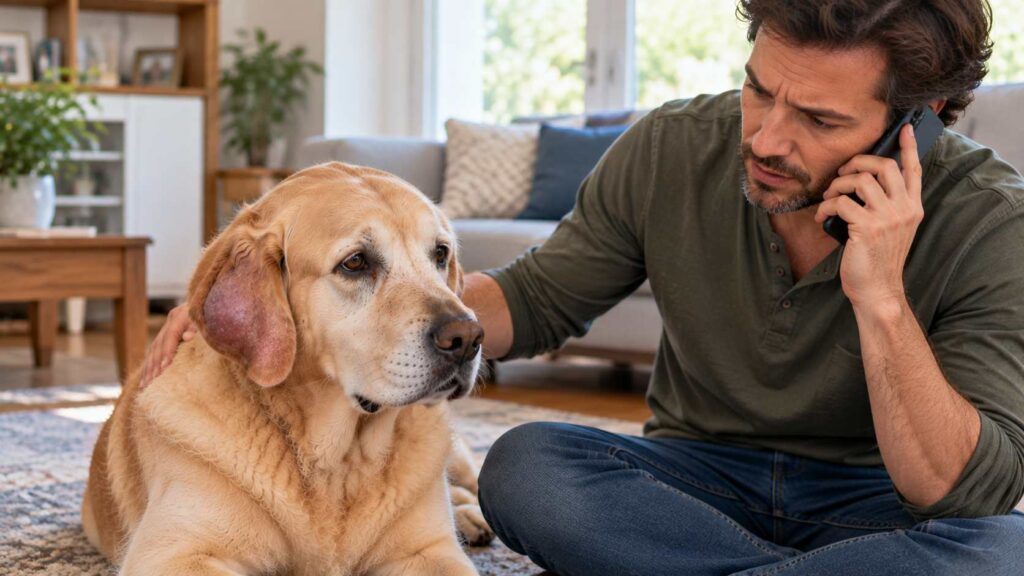
Call your veterinary clinic and describe the swelling, when it appeared, and whether your dog is showing pain or other symptoms.
The clinic can advise whether same-day assessment is necessary or whether your dog can safely wait for the next available appointment.
If costs are a concern, ask about payment options or local veterinary assistance programs. In the UK, the PDSA may provide veterinary services to eligible owners.
While waiting, prevent scratching, keep your dog comfortable, and avoid attempting home drainage.
If the swelling grows rapidly, your dog develops significant pain, or emergency warning signs appear, seek more urgent veterinary advice.
After Treatment, the Ear Still Needs Attention
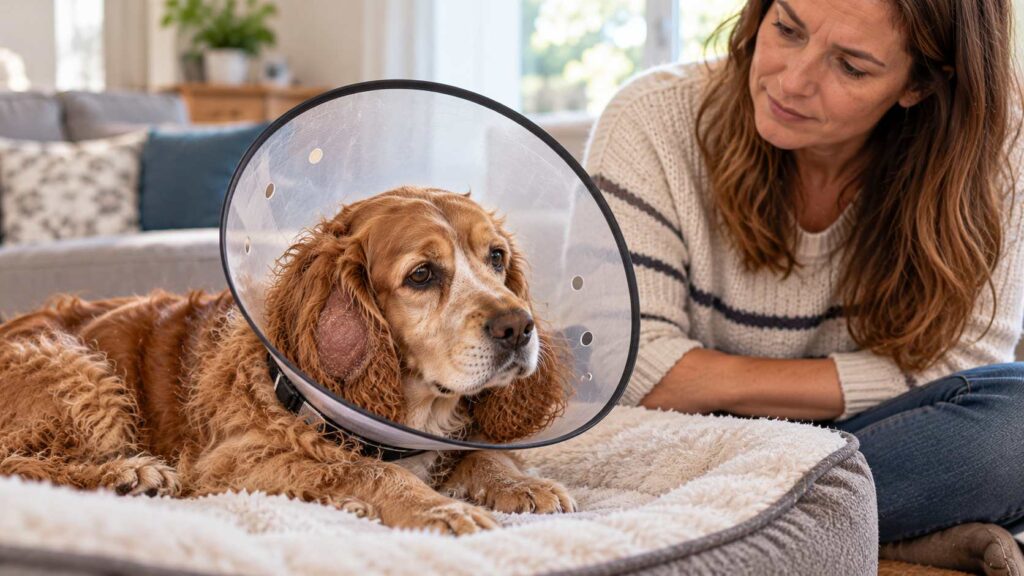
What Recovery May Involve
Recovery depends on the treatment used and whether your dog has an underlying ear condition.
Your veterinarian may recommend:
- Prescribed pain relief or other medications.
- An Elizabethan collar to prevent scratching.
- Temporary activity restrictions.
- A professionally applied bandage or drain.
- Follow-up examinations and possible suture removal.
Some swelling or minor drainage may be expected after certain procedures, but your veterinarian should explain what is normal for your dog’s treatment.
Follow the written discharge instructions, particularly regarding wound care, medication, and collar use.
Changes Worth Reporting to the Vet
Contact your veterinarian if you notice:
- Swelling that increases instead of settling.
- Pain that becomes worse.
- Persistent bleeding or unusual discharge.
- A wound that opens, becomes increasingly red, or develops an unpleasant odor.
- A displaced bandage or drain.
- Continued or worsening head shaking.
Seek urgent care for uncontrolled bleeding, severe distress, collapse, or balance problems.
Why the Hematoma Might Return
Recurrence can happen if fluid collects again or the underlying ear irritation remains unresolved.
For example, a dog may recover from hematoma surgery but continue shaking its head because of untreated allergic ear inflammation.
If swelling returns, contact your veterinarian rather than waiting to see whether it disappears.
Quick Recovery Tips
- Follow the written discharge instructions.
- Keep the cone on for the recommended period.
- Leave veterinary bandages and drains alone unless instructed otherwise.
- Give medications exactly as prescribed.
- Avoid rough play until your veterinarian approves normal activity.
- Attend every scheduled recheck, even if the ear looks better.
Common Mistakes That Can Make an Ear Hematoma Worse
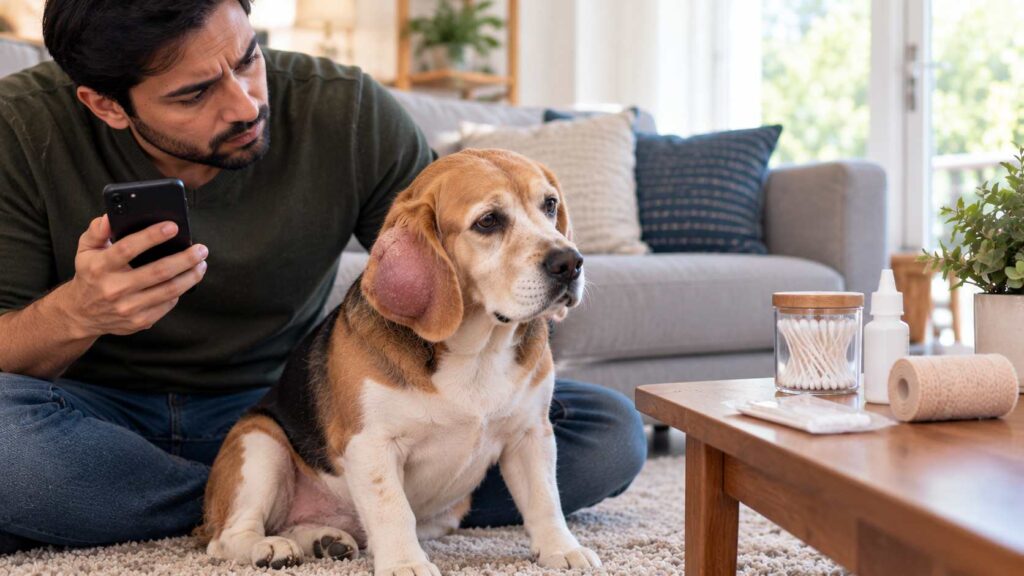
Even careful owners can accidentally make an ear injury worse.
Avoid these common mistakes:
- Assuming a happy dog doesn’t need an examination: Some dogs show little obvious discomfort despite significant swelling.
- Trying to puncture or squeeze the hematoma: This can cause infection, bleeding, and additional tissue damage.
- Applying oils, creams, or herbal remedies: Unapproved products may irritate the ear without treating the blood-filled pocket.
- Giving leftover medication: Human painkillers and previously prescribed pet medications may be unsafe or inappropriate.
- Wrapping the head tightly: Homemade bandages can restrict circulation or damage the ear.
- Cleaning an inflamed ear aggressively: This may increase pain or worsen an existing injury.
- Ignoring repeated head shaking: Persistent irritation may be the reason the hematoma developed.
- Skipping follow-up appointments: The ear may look improved before healing is complete.
Preventing the Next Ear Flap Injury
Not every hematoma is preventable, but managing recurring ear irritation can reduce the risk of another episode.
Address the Reason Your Dog Shakes Its Head
Frequent head shaking or scratching deserves attention, even when the ear flap looks normal.
Possible causes include ear inflammation, infection, allergies, mites, or foreign material.
For example, if your dog repeatedly develops itchy ears during allergy flare-ups, managing that condition with your veterinarian may help reduce further ear injuries.
Watch for early signs such as redness, discharge, odor, and sensitivity around the ears.
Keep Ear Care Appropriate for Your Dog
Ask your veterinarian which ear cleaner is suitable and how often your dog actually needs it.
Not every dog requires routine ear cleaning, and excessive cleaning can irritate sensitive ear canals.
Avoid cotton swabs deep inside the ear, harsh cleaning solutions, and unapproved products.
If your dog has recurring ear problems, a tailored ear-care plan is more useful than repeatedly treating symptoms without identifying their cause.
Key Takeaways
- An aural hematoma is a collection of blood within the ear flap, often associated with head shaking, scratching, or trauma.
- Home care can help protect the ear and reduce further injury, but it cannot reliably cure the hematoma.
- Never attempt home drainage or give human pain medication without veterinary instructions.
- Veterinary options include aspiration, selected medical treatments, and surgery.
- Treating the underlying cause is essential for reducing the risk of recurrence.
Frequently Asked Questions
1. Can an Ear Hematoma Heal Without Surgery?
Yes. Some hematomas gradually resolve without surgery, while others respond to veterinarian-directed nonsurgical treatment.
However, natural healing may take weeks or longer and can leave permanent changes in the ear flap. Your veterinarian can determine whether a nonsurgical approach is appropriate.
2. How Long Does an Ear Hematoma Take to Heal?
Healing depends on the hematoma’s size, duration, and treatment.
Without treatment, resolution may take weeks to months. After surgery, initial recovery often takes a few weeks, although complete healing and follow-up requirements vary.
Your veterinarian can give a more accurate timeline for your dog.
3. Is an Ear Hematoma Painful?
It can be. The swollen ear flap may feel heavy, stretched, and tender.
Some dogs show obvious discomfort, while others continue eating and playing normally. Behavior alone isn’t a reliable way to judge pain.
4. What If My Dog’s Ear Hematoma Bursts?
Contact your veterinarian promptly.
Prevent scratching and avoid squeezing the swelling or applying home remedies.
If the ear is actively bleeding, you can hold clean gauze gently against the area without squeezing the hematoma, provided your dog tolerates it.
Heavy or uncontrolled bleeding requires emergency veterinary attention.
5. Can Antibiotics Cure an Ear Hematoma?
No. Antibiotics cannot remove blood trapped within the ear flap.
They may be appropriate if your veterinarian diagnoses a bacterial infection, but not every dog with an ear hematoma needs them.
6. Will the Ear Return to Its Normal Shape?
Some dogs recover with little visible change. Others develop permanent thickening, wrinkles, or distortion.
The outcome depends on the hematoma and how it heals. Even with treatment, a completely normal ear shape cannot be guaranteed.
7. Can an Older Dog Be Treated Without General Anesthesia?
Sometimes. Aspiration or selected medical treatments may be options for certain dogs.
However, older age does not automatically make anesthesia unsafe. Your veterinarian will assess your dog’s overall health and explain the risks and benefits of each treatment.
The Best Next Step Is to Protect the Ear and Find the Cause
Home care has an important role, but it’s a supporting one.
A properly fitted cone, calm activity, and a few photographs can help protect your dog’s ear while you arrange an appointment. They cannot replace an examination or treatment when it’s needed.
Avoid needles, unapproved remedies, and tight homemade bandages. These approaches can cause more harm than relief.
Contact your veterinarian, explain when the swelling appeared, and mention any recent head shaking, scratching, or ear problems.
Once the hematoma has been assessed, work with your veterinarian to address the underlying cause. Managing recurring ear infections, allergies, or other sources of irritation gives your dog a better chance of avoiding another painful swollen ear.
#. Related Articles:
1. What Causes Sudden Hind Leg Weakness in Dogs?
2. Librela for Dogs Side Effects?