
Your dog sneezed twice this morning. Now there’s a bit of a runny nose, and instead of bouncing at the door for a walk, they’re curled up on the sofa. It’s natural to wonder: can dogs get colds?
Dogs can develop respiratory illnesses that look a lot like a human cold, but “dog cold” isn’t a specific diagnosis. Sneezing, coughing and nasal discharge can come from several infectious and non-infectious causes.
Before trying to name the illness, ask three questions: Is your dog breathing comfortably? Have they been around other dogs recently—at daycare, a park, grooming facility or boarding kennel? And are the symptoms mild and stable, or getting worse?
Those answers are usually more useful than the word “cold” itself. This guide will help you work out what deserves monitoring, what warrants a call to your vet and what needs urgent attention.
Check How Your Dog Is Breathing Before You Do Anything Else

Before worrying about which infection your dog might have, spend 30 seconds quietly watching them breathe while they’re resting.
A cough can sound alarming, but breathing effort is the more important first check.
Signs That May Fit a Mild Respiratory Illness
Mild cold-like respiratory signs can include:
- Occasional coughing or sneezing
- Clear discharge from the nose or eyes
- Mildly reduced energy
- A slightly reduced appetite
- Remaining alert, responsive and comfortable between episodes
These signs can occur with relatively mild respiratory disease, but they don’t identify the cause. A dog that seems well between coughing episodes can still have a contagious infection, so continue watching for changes rather than assuming it’s harmless.
A Cough Isn’t the Same as Real Breathing Trouble
Coughing usually happens in episodes. Your dog coughs, perhaps several times in succession, and then returns to breathing comfortably.
Respiratory distress is different. The effort to breathe continues between coughing episodes. You may notice the chest or abdomen working harder than usual, an abnormal posture or obvious difficulty moving air.
Breathing Difficulty Needs Urgent Attention, Not Home Care
Warning: Breathing problems can be an emergency.
Seek urgent veterinary care if your dog has:
- Laboured or obviously difficult breathing
- Strong abdominal effort with each breath
- Open-mouth breathing that isn’t explained by heat or recent exercise
- The head or neck stretched forward while trying to breathe
- Blue, grey or unusually pale gums
- Severe weakness or collapse
These are not symptoms to monitor at home as a “cold.”
“Dog Cold” Isn’t One Single Illness
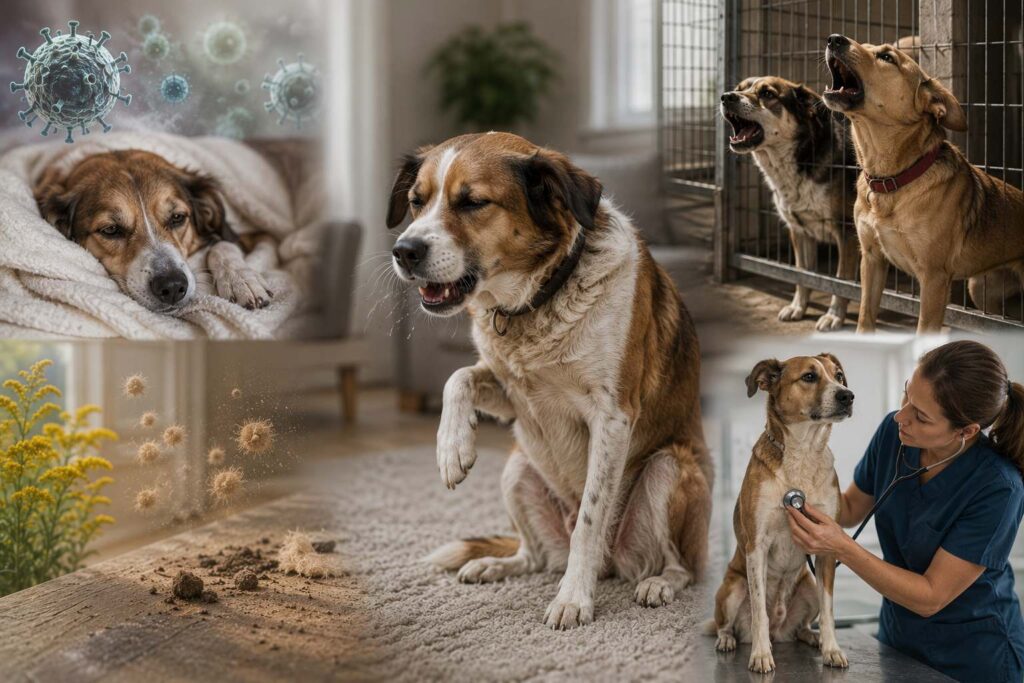
Once you’ve ruled out obvious breathing distress, the next step is understanding why several different conditions can produce the same sniffles and coughs.
Canine Infectious Respiratory Disease Complex, Explained Simply
Veterinarians often use the term Canine Infectious Respiratory Disease Complex (CIRDC) for a group of contagious respiratory illnesses that can look very similar.
The Merck Veterinary Manual explains that CIRDC can involve several viral and bacterial pathogens. Possible infectious agents include Bordetella bronchiseptica, canine parainfluenza virus, canine adenovirus type 2, canine influenza viruses and other respiratory pathogens. More than one organism can sometimes be involved.
That’s why hearing a cough or seeing a runny nose isn’t enough to identify the exact cause.
Where Kennel Cough Fits In
“Kennel cough” is commonly used for infectious tracheobronchitis, a contagious upper-airway illness associated with several possible infectious agents.
A classic clue is a harsh, dry, honking cough, sometimes followed by gagging or retching.
Despite the name, your dog doesn’t need to have stayed in a kennel. Close-contact settings such as daycare, grooming facilities, shelters, dog parks and other places where dogs mix can provide opportunities for respiratory infections to spread.
What About Canine Influenza?
Canine influenza is caused by influenza viruses that infect dogs. Its signs can overlap with other respiratory illnesses, which is one reason symptoms alone shouldn’t be used for a home diagnosis.
Its importance also varies by location and exposure history. If canine influenza is a concern where you live—or your dog has recently been in a higher-risk environment—your veterinarian can advise whether it belongs on the list of possibilities.
When It Might Not Be Infectious at All
Not every cough or sneeze is caused by an infection.
Other possibilities can include:
- Allergies or environmental irritation
- Smoke or chemical exposure
- A foreign object in the airway
- Chronic bronchial or airway disease
- Structural airway problems
- Certain heart or lung conditions
The Merck Veterinary Manual notes that chronic coughing can have causes ranging from airway disease and inhaled irritants to heart or lung disorders.
That matters especially when a cough is persistent, unusual for your dog or occurs without an obvious recent exposure to other dogs.
Comparison: Similar Signs, Different Clues

| Situation | Typical Signs | Exposure Clues | What Raises Concern | Next Step |
|---|---|---|---|---|
| Mild cold-like respiratory signs | Occasional sneezing, mild cough, clear nasal discharge | May or may not follow contact with other dogs | Symptoms persist, become more frequent or worsen | Monitor closely and contact your vet if you’re concerned |
| Kennel-cough-type illness | Dry, harsh or honking cough; possible gagging | Recent daycare, boarding, grooming, dog park or other close dog contact | Lethargy, reduced appetite, fever or breathing changes | Contact your vet |
| Allergy or irritation | Sneezing, watery eyes, nasal signs | Environmental trigger may be present | Persistent, recurrent or unusual symptoms | Veterinary assessment if ongoing |
| More serious respiratory illness | Cough with broader signs of illness | Variable | Laboured breathing, marked lethargy, worsening condition | Prompt or urgent veterinary care |
| Non-infectious mimic | Persistent or unusual cough pattern | Often no obvious infectious exposure | Older dog, underlying disease or chronic symptoms | Veterinary investigation |
Use this table as a decision aid, not a diagnostic tool. Different respiratory and non-respiratory conditions can look remarkably similar, and a veterinarian may need your dog’s history, physical examination and sometimes further testing to determine what’s actually happening.
Think Back — Where Has Your Dog Actually Been?
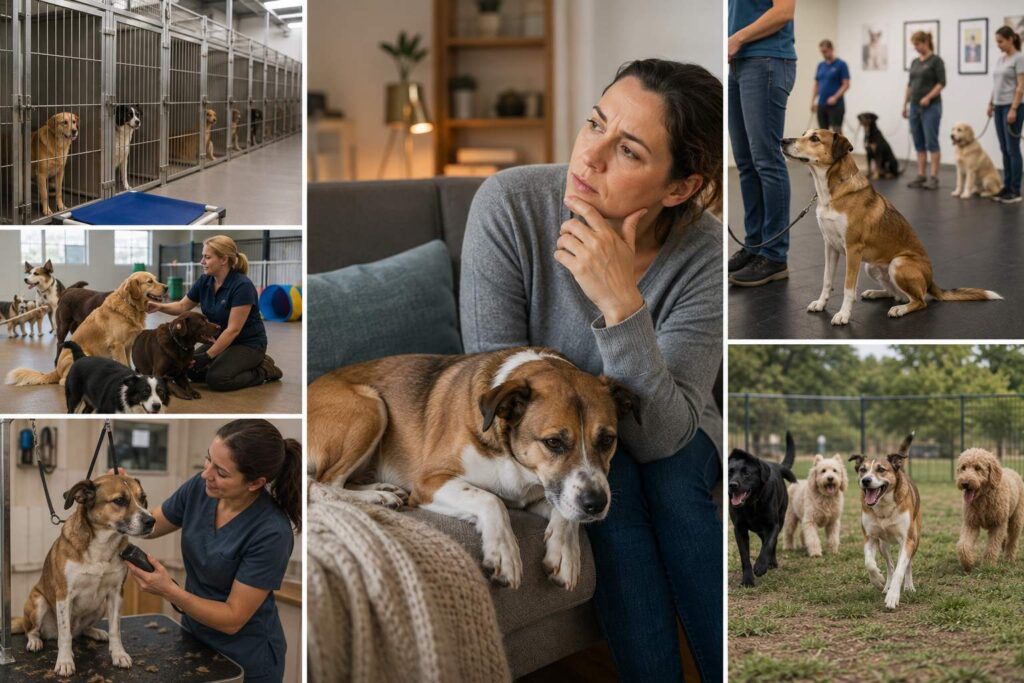
Rather than jumping straight to treatment, think back over the days before the coughing or sneezing began. Recent contact with other dogs can be one of the most useful clues when a respiratory infection is suspected.
Places and Situations Worth Considering
Ask yourself whether your dog has recently been to:
- A boarding kennel
- Doggy daycare
- The groomer
- A dog park
- A training class or dog show
- A shelter or rescue
- A busy veterinary clinic
- A multi-dog household
Also consider simple close contact with another dog that was coughing or seemed unwell. Respiratory illnesses such as kennel cough can spread readily where susceptible dogs are housed or socialise closely together.
Why Other Dogs May Matter More Than Your Own Cold
For many common canine respiratory illnesses, recent dog-to-dog exposure is more relevant than the fact that someone in your household has a human cold.
Close contact and shared environments can allow respiratory pathogens to spread between dogs. That’s why a cough appearing after daycare, boarding or another high-contact setting is worth mentioning when you speak to your vet.
Can Dogs Catch Your Cold? Can You Catch Theirs?
The viruses responsible for a typical human common cold are not the usual causes of respiratory illness in dogs. In the everyday situation where you have a cold and your dog starts sneezing, you shouldn’t automatically assume you infected them.
The reverse is also generally true for common canine respiratory infections: they are primarily diseases of dogs. However, not every infectious organism follows the same rules, so avoid treating “nothing ever passes between dogs and people” as an absolute. Normal hygiene—washing your hands and keeping bowls and feeding areas clean—is still sensible.
Does Cold Weather Really Cause It?
Cold weather itself doesn’t infect a dog. A respiratory infection requires an infectious cause.
Temperature, humidity, ventilation, stress and changes in how dogs are housed can influence susceptibility to some respiratory illnesses, but saying that a dog simply “caught a cold from being outside in the cold” is too simplistic. Merck notes that environmental conditions such as extremes of temperature, humidity and ventilation can influence kennel-cough susceptibility and severity.
Still Eating, Still Playing — Does That Mean It’s Nothing?

A dog who’s coughing occasionally but still eating, interested in walks and behaving normally is more reassuring than a dog who is lethargic, refusing food or struggling to breathe. But it doesn’t prove the problem is harmless.
Dogs with relatively mild respiratory disease may still be contagious, and their condition can change. Instead of judging everything from one good moment, watch the trend:
- Better: coughing or sneezing is becoming less frequent and your dog remains comfortable.
- Same: symptoms aren’t worsening, but they’re not resolving either.
- Worse: coughing is becoming more frequent, appetite or energy is dropping, or new symptoms are appearing.
A worsening pattern is a good reason to contact your vet, even if the illness initially looked mild.
Cough, Gag, Retch: Why the Difference Matters
Coughing can be surprisingly difficult to describe. A cough is a forceful expulsion of air from the respiratory tract, and its sound can vary depending on where the irritation is occurring.
With kennel-cough-type illness, a harsh or honking cough may be followed by gagging or retching, which can make owners think their dog is vomiting or has something stuck in the throat.
Don’t use the sound alone to rule out choking or another airway problem. If your dog appears unable to breathe normally, is repeatedly distressed, or you genuinely suspect something is lodged in the airway, seek veterinary help rather than assuming it’s kennel cough.
A Quick At-Home Check Before You Ring the Vet
Run through this before you call. Having these details ready can make the conversation with your vet much more useful:
- When did the coughing or sneezing start?
- Is it occasional or coming in repeated bouts?
- Does the cough sound dry, harsh, honking or moist?
- Does gagging or retching follow the cough?
- Is there nasal discharge? What does it look like?
- Are the eyes watery or producing discharge?
- Is your dog eating and drinking normally?
- Has their energy level changed?
- Is breathing comfortable while they’re resting?
- Have they recently boarded, attended daycare, been groomed or visited a dog park?
- Have they been near another coughing dog?
- Is another dog in your household unwell?
- Are their vaccinations current according to your vet’s recommendations?
- Does your dog have an existing heart, lung or airway condition?
- Have you already given any medication?
Quick tip: If possible, take a short video of the coughing episode. A dog may not cough during the appointment, and seeing or hearing an episode can give your vet useful context.
Don’t try to diagnose the cause from the colour of nasal discharge or the sound of the cough alone. Those details are clues, not diagnoses.
Caring for Your Dog While You Wait or While They Recover

If your dog’s symptoms are mild, breathing is comfortable and your vet hasn’t advised otherwise, simple supportive care can help while you monitor them.
Rest
Keep things calm. Provide a comfortable place to rest and ease back on strenuous exercise while your dog is unwell.
If exercise or excitement reliably triggers prolonged coughing, mention that to your vet rather than pushing through the usual routine.
Hydration
Keep fresh water available and pay attention to whether your dog is actually drinking.
Don’t force water into your dog’s mouth. If drinking drops noticeably, especially alongside poor appetite, lethargy or worsening symptoms, tell your vet.
Limit Contact With Other Dogs
Skip dog parks, daycare, boarding and other close-contact dog activities while an infectious respiratory illness is possible.
If you have several dogs at home, avoid shared bowls and toys where practical and ask your vet how long separation is appropriate. Don’t assume that the moment the cough disappears automatically marks the end of any contagious period.
Watch the Trend
Check your dog regularly rather than constantly. Note whether symptoms are:
- Improving
- Staying about the same
- Becoming more frequent or severe
- Being joined by new signs such as poor appetite, lethargy or breathing changes
That pattern is often more useful than focusing on a single sneeze or coughing episode.
A Word on Medication: Human Cold Remedies Aren’t Safe to Improvise With

Medication Warning
Don’t give your dog human cold or flu remedies, painkillers, decongestants or leftover prescription medication unless a veterinarian specifically tells you to use that product for your dog.
Medicines that are safe for people are not automatically safe for dogs. The FDA specifically warns that common human pain medicines can cause serious adverse effects in pets, and acetaminophen can cause liver and red-blood-cell damage in dogs.
If your dog has swallowed human medication accidentally, contact your veterinarian or an animal poison service promptly and have the product packaging available.
Cough suppressants aren’t automatically appropriate either. A cough can serve a useful airway-clearing function, and treatment depends on its underlying cause; veterinary antitussives are used selectively.
Common Mistakes Worth Avoiding
A few understandable assumptions can lead owners in the wrong direction:
- Assuming every sneeze means infection. Irritation and other non-infectious causes can produce similar signs.
- Assuming every cough is kennel cough. Coughing is a nonspecific sign with several possible causes.
- Taking a coughing dog to the park or daycare. If the illness is contagious, this exposes other dogs unnecessarily.
- Reaching for supplements or “immune boosters.” These shouldn’t replace appropriate veterinary care, vaccination or basic supportive care.
- Using leftover antibiotics. Kennel-cough-type disease can involve several infectious agents, and antibiotics are not automatically required in uncomplicated cases.
- Waiting until your dog looks seriously ill. Persistent or worsening symptoms, reduced appetite, marked lethargy or breathing changes are reasons to seek veterinary advice earlier.
Some Dogs Need a Lower Threshold for Concern
Not every dog carries the same risk. Age, existing health problems, airway anatomy and vaccination status can all affect how seriously respiratory symptoms should be taken.
Puppies
Puppies are more vulnerable to complications from respiratory disease than healthy adult dogs. Merck notes that kennel cough can progress to bronchopneumonia in puppies, so a young dog with worsening coughing, lethargy, poor appetite or breathing changes deserves earlier veterinary attention.
Vaccination status also matters, particularly if the puppy hasn’t completed their recommended vaccine series.
Senior Dogs
A new cough in an older dog deserves a closer look rather than an automatic “it’s just a cold” label.
Senior dogs may have less reserve when they’re ill, and persistent coughing can also be associated with conditions unrelated to an infection. If the cough is new, frequent or continuing, contact your vet rather than relying on home treatment alone.
Dogs With Existing Heart, Lung, or Immune Conditions
If your dog already has a diagnosed heart, lung, airway or immune-related condition, a new cough or breathing change may need earlier assessment.
The important question isn’t simply whether the symptoms resemble a cold, but whether they’re different from your dog’s normal baseline.
Flat-Faced Breeds
French Bulldogs, Pugs, Bulldogs, Boston Terriers and other flat-faced dogs may already make more breathing noise than dogs with longer muzzles.
That can make a new respiratory problem harder to recognise. Pay attention to changes from your dog’s usual breathing pattern, especially increased effort, inability to settle, or unusual open-mouth breathing.
Breathing difficulty should never be dismissed as “normal for the breed.”
When to Move From Monitoring to a Vet Visit
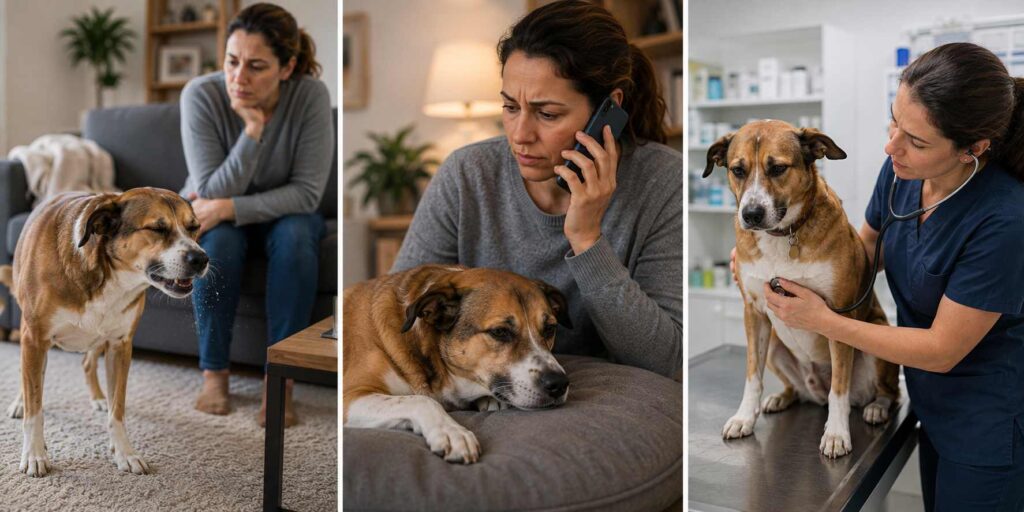
Contact Your Vet Promptly If:
Contact your vet if:
- The cough is persistent, frequent or getting worse.
- Your dog becomes noticeably lethargic.
- Appetite or drinking drops significantly.
- Nasal discharge becomes thick or is accompanied by other signs of illness.
- You suspect a fever.
- Your dog is a puppy, senior or medically vulnerable.
- There’s known exposure to another dog with respiratory disease.
- More than one dog in your household becomes symptomatic.
A change in the overall pattern matters more than any single sneeze or cough.
Seek Urgent Care If:
Seek urgent veterinary care if your dog has:
- Laboured or obviously difficult breathing
- Strong abdominal effort with each breath
- Blue or grey gums or muzzle
- Severe weakness
- Collapse
Cornell classifies signs such as open-mouth rapid breathing, abdominal effort, blue-tinged gums, an extended head and neck, weakness and collapse as indicators of respiratory distress requiring urgent care.
Call Before You Walk In
If your dog is coughing or you suspect a contagious respiratory illness, ring the clinic before arriving.
That gives staff a chance to tell you where to wait or how to enter without unnecessarily exposing other dogs.
What Helps Your Vet Help Your Dog

Give Them the Full Story
Be ready to describe:
- When symptoms started
- Whether they’re improving or worsening
- Recent contact with other dogs
- Boarding, daycare, grooming or dog-park visits
- Vaccination history
- Changes in appetite, drinking or energy
- Existing medical conditions
- Any medication already given
That history can be just as useful as the cough itself.
A Short Video Can Be Worth a Thousand Words
If it’s safe to do so, record a coughing episode on your phone.
The sound, frequency and whether gagging or retching follows can give your veterinarian useful context—especially if your dog happens to stop coughing as soon as you reach the clinic.
What a Vet Visit Might Involve
For a mild case, assessment may begin with the history and a physical examination, including listening to the heart and lungs.
When symptoms are persistent, severe or suggest pneumonia or another underlying problem, further investigation may be appropriate. Merck notes that chest radiographs and respiratory PCR testing can be used in selected kennel-cough cases to assess severity, rule out other causes or investigate the infectious agent involved.
Why Antibiotics Aren’t Automatic
Antibiotics aren’t automatically needed just because a dog has a respiratory infection.
Many canine respiratory illnesses involve viruses, and uncomplicated kennel cough is often self-limiting. Merck notes that antibiotics are generally unnecessary unless there is evidence of pneumonia or another indication for antimicrobial treatment.
That’s why leftover antibiotics from a previous illness aren’t a sensible shortcut. Treatment should match what your veterinarian actually finds.
Preventing the Next Bout
Vaccination Is a Conversation, Not a Checkbox
There’s no single vaccine that protects against every illness owners call a “dog cold.”
Different vaccines target different respiratory pathogens. AAHA’s canine vaccination guidance treats vaccines such as Bordetella and canine influenza as risk-based, meaning recommendations can depend on factors such as lifestyle, geographic location and exposure. Dogs that board, attend daycare, visit dog parks, travel or regularly mix with groups of dogs may have different needs from dogs with little dog-to-dog contact.
Ask your veterinarian which respiratory vaccines make sense for your dog’s actual routine rather than assuming every dog needs exactly the same plan.
Manage Exposure Sensibly
You can’t eliminate every respiratory risk, but you can reduce avoidable exposure:
- Keep a coughing or sneezing dog away from communal dog settings.
- Avoid close contact with dogs that are clearly unwell.
- Follow local veterinary advice if a respiratory outbreak is reported.
- Be especially thoughtful about daycare, boarding and other high-density environments when your dog is unwell.
Merck notes that kennel cough spreads readily among susceptible dogs housed in close-contact environments such as daycare, boarding facilities and veterinary hospitals.
The Unglamorous Basics Still Matter
A complete and balanced diet, routine veterinary care, appropriate exercise and sensible preventive healthcare provide a much stronger foundation than supplements marketed with vague “immune boosting” claims.
Be sceptical of products that promise to prevent or treat respiratory infections without good evidence.
Quick Tips If Your Dog Starts Coughing or Sneezing Today

- Check breathing before anything else.
- Think back over recent contact with other dogs.
- Watch appetite, drinking and energy as well as the cough.
- Note whether symptoms are improving, unchanged or worsening.
- Record a coughing episode if you can do so safely.
- Keep your dog away from other dogs while contagious illness is possible.
- Don’t give human cold medicine.
- Call the clinic before arriving if you suspect an infectious respiratory illness.
- Seek advice sooner for puppies, seniors and dogs with existing health problems.
- Treat true breathing difficulty as an emergency, not as an ordinary cough.
Real-Life Situations, Different Next Steps
A dog who sneezes a few times but remains bright, comfortable and otherwise completely normal may only need close observation at first. If the sneezing persists, becomes frequent or is joined by other symptoms, reassess.
A dog who develops a harsh, honking cough after daycare or boarding has a history that makes infectious respiratory disease more plausible. Keep them away from other dogs and contact your vet for advice.
A senior dog with a persistent new cough at rest shouldn’t automatically be assumed to have a cold. Other heart, lung and airway conditions become important considerations with age.
A dog with nasal discharge plus marked lethargy and poor appetite has moved beyond an isolated mild respiratory sign and warrants veterinary advice.
A dog who’s genuinely working hard to breathe needs urgent veterinary care. Do not spend time trying home remedies first.
Final Thoughts
Most mild canine respiratory illnesses don’t require panic, but they do deserve sensible monitoring.
The goal isn’t to diagnose your dog from the sound of a cough. Check how they’re breathing, look at the whole dog—not just the nose or throat—consider recent exposure to other dogs, and watch whether things are improving or getting worse.
If symptoms persist, your dog becomes noticeably unwell or you’re unsure what you’re seeing, contacting your vet is the safer next step. And if breathing becomes difficult, treat that as an emergency.
Frequently Asked Questions
1.Can dogs get colds the same way humans do?
Not exactly. Dogs can develop respiratory infections that cause familiar cold-like signs such as coughing, sneezing and nasal discharge, but these illnesses are caused by canine respiratory pathogens rather than simply being the same common cold people catch.
2.Is kennel cough the same as a dog cold?
Not exactly. “Dog cold” is an informal description for cold-like symptoms, while kennel cough refers to infectious tracheobronchitis and can involve several respiratory pathogens. A harsh, dry or honking cough is a common feature.
3.Can allergies really look like a cold in dogs?
Yes. Environmental irritation and allergies can produce signs such as sneezing, watery eyes or nasal symptoms that overlap with respiratory infections. Persistent or unusual symptoms are worth discussing with your vet rather than diagnosing from appearance alone.
4.Why does my dog gag after coughing?
A harsh cough can sometimes be followed by gagging or retching, particularly with kennel-cough-type illness. However, choking or an airway obstruction can look similar, so seek veterinary help if your dog appears distressed or cannot breathe normally.
5.Can a vaccinated dog still get kennel cough?
Yes. Respiratory vaccines reduce risk but don’t protect against every possible cause of canine respiratory disease. Vaccination recommendations also depend on exposure and lifestyle. AAHA specifically treats Bordetella and canine influenza vaccination as risk-based decisions for many dogs.
6.Should I keep my sick dog away from my other dogs at home?
Yes, separation is a sensible precaution when contagious respiratory illness is suspected. Avoid shared bowls and close contact where practical, and ask your veterinarian how long precautions should continue for your dog’s specific situation.
7.Does cold weather actually cause dogs to get sick?
Cold weather itself isn’t an infectious agent. Respiratory disease requires an underlying cause, although environment, stress, ventilation and changes in dog-to-dog contact can influence exposure and susceptibility.
#. Related Articles: