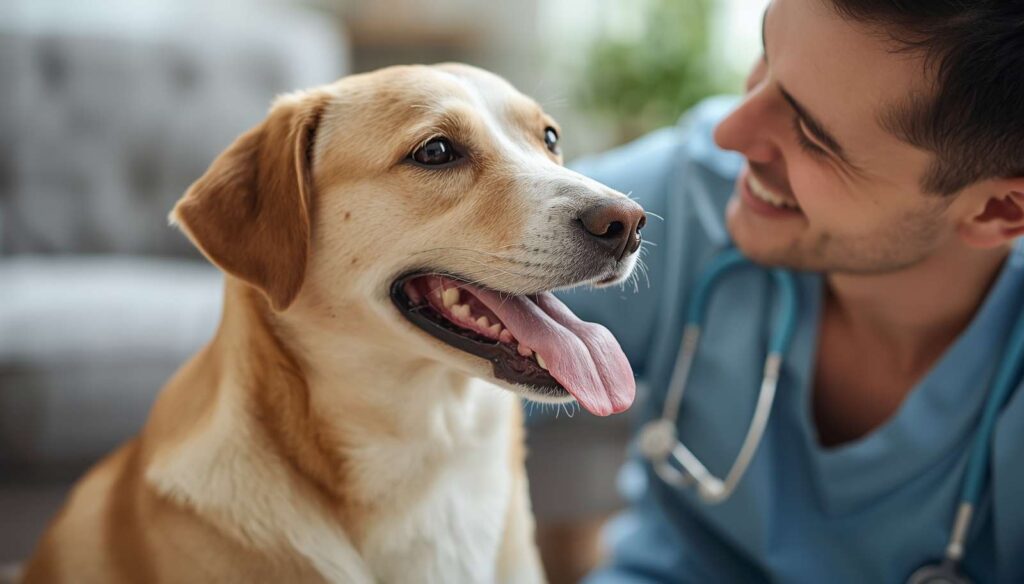
Why does my dog stick her tongue out? You may notice the tip of her tongue during a nap, after a walk, or while she is sitting quietly. In most cases, it is harmless, but a tongue that stays out constantly or appears with breathing changes, swelling, or an unusual colour may need veterinary attention.
You glance over at your dog mid-nap and there it is—the tiniest bit of pink poking out from the corner of her mouth. Or maybe you have just come in from a walk and her tongue is hanging out like a slice of ham. Perhaps it appeared out of nowhere, and now you cannot stop staring at it, trying to decide whether something is wrong.
Most of the time, a dog sticking her tongue out is simply relaxing or cooling down after activity. Dogs do not keep their tongues tucked away every second of the day, and a loose tongue tip is often harmless.
But context matters. Whether you can shrug it off or should call a vet depends on four things:
- When the behaviour happens
- Whether the tongue goes back inside
- How comfortably your dog is breathing
- Whether any other symptoms are present
This guide will help you identify the pattern you are seeing and decide whether to monitor your dog, arrange a veterinary appointment, or seek urgent care.
Quick Answer: What Does a Dog Sticking Her Tongue Out Usually Mean?
- A small tongue tip visible during sleep usually means the jaw muscles have relaxed.
- A tongue hanging out after play or a walk is commonly part of normal panting and cooling.
- Brief tongue flicks may occur with licking, food anticipation, stress, or nausea.
- A tongue that remains outside while your dog is alert may be linked to her anatomy, missing teeth, dental disease, or difficulty retracting it.
- Sudden protrusion with swelling, abnormal colour, weakness, or breathing difficulty requires urgent veterinary attention.
Tongue position alone cannot provide a diagnosis. Look at your dog’s breathing, comfort, behaviour, and ability to eat and drink as well.
First, Work Out What Your Dog Is Actually Doing
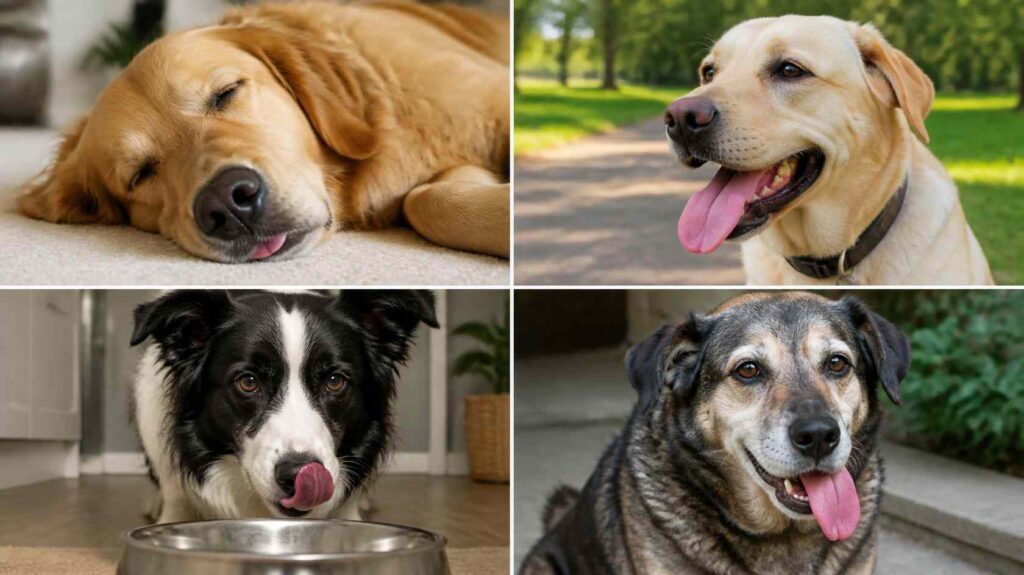
“Tongue out” can describe several very different behaviours. Identifying which one matches your dog is the most useful first step.
A Small “Blep” While Resting or Sleeping
This is the classic harmless scenario. Only the tip of the tongue is visible, your dog’s face looks loose and comfortable, and the tongue slides back inside when she wakes or changes position.
Breathing should remain slow and easy, with no excessive drooling, swelling, or difficulty waking. When it happens occasionally during deep rest, it is usually nothing to worry about.
Open-Mouth Panting With the Tongue Extended
Panting is rhythmic, open-mouth breathing that commonly occurs after exercise, during warm weather, or when a dog is excited. The tongue extends to increase the moist surface area available for evaporative cooling.
Normal panting should gradually ease as your dog rests and cools down. The important distinction is whether her breathing is settling normally or remaining heavy despite rest in a cool environment.
Brief Tongue Flicking or Lip Licking
A quick flick of the tongue is different from a tongue that stays outside the mouth. It may occur when your dog:
- Anticipates food
- Licks moisture or food from her lips
- Feels mildly nauseated
- Is nervous or uncomfortable
- Is responding to a social situation
Look at the surrounding body language. A relaxed dog waiting for a treat may lick her lips once or twice. Repeated tongue flicking alongside a tense body, tucked posture, yawning, gulping, or avoidance deserves closer attention.
A Tongue That Hangs Out Continuously
This pattern occurs when the tongue remains visible while your dog is awake, alert, and not actively panting. It may hang from one side or remain outside even when the mouth is mostly closed.
Possible explanations include:
- Jaw or facial anatomy
- Missing teeth
- Recent dental extraction
- Dental disease
- Previous mouth or jaw injury
- Difficulty moving or retracting the tongue
A constantly exposed tongue is not always an emergency, but it should be assessed if the behaviour is new, affects eating or drinking, or causes dryness, cracking, or sores.
Sudden, Abnormal Tongue Protrusion
A brand-new change is more concerning than a lifelong habit.
Contact a vet promptly if your dog suddenly begins holding her tongue out and also develops:
- Heavy drooling
- Pawing at the mouth
- Difficulty eating or swallowing
- Facial asymmetry
- Weakness or poor balance
- Tongue swelling
- Bleeding
- Noisy or laboured breathing
Sudden tongue protrusion may reflect an oral injury, foreign object, allergic reaction, dental pain, jaw problem, or less commonly a neurological issue.
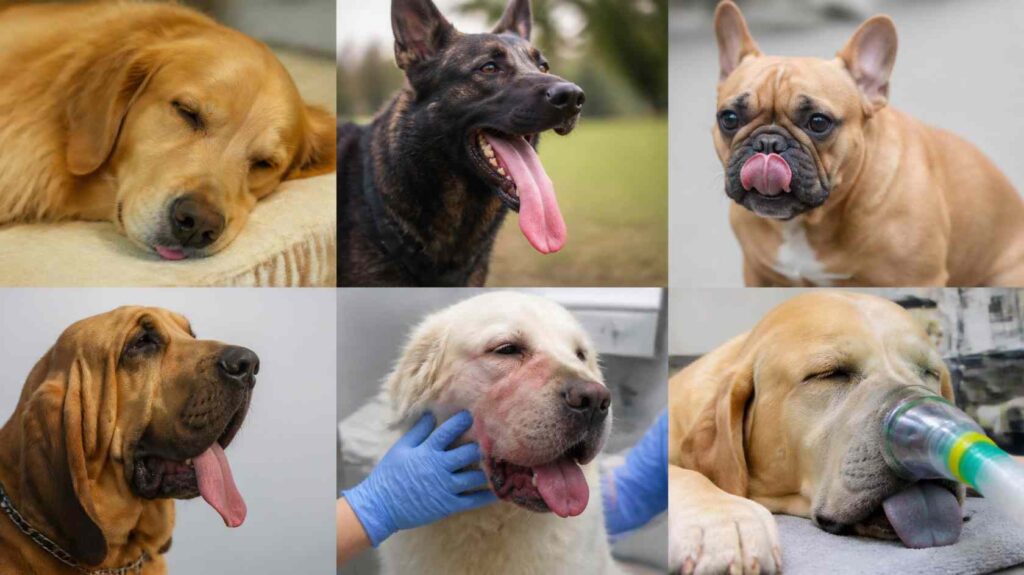
Comparison Table: Which Tongue-Out Pattern Matches Your Dog?
| Pattern | Common Context | Does the Tongue Retract? | Other Signs to Check | Suggested Action |
|---|---|---|---|---|
| Small tip visible during sleep | Deep relaxation | Usually, once awake | Comfortable breathing, normal behaviour after waking | Monitor |
| Tongue out after exercise | Panting and cooling | Yes, after recovery | Energy level, breathing effort, ability to settle | Allow rest and observe |
| Repeated tongue flicks | Stress, nausea, licking, or anticipation | Yes, quickly | Lip licking, gulping, vomiting, avoidance behaviour | Identify the trigger |
| Constant tongue hanging out | Anatomy, tooth loss, dental disease, or impaired movement | Partly or not at all | Dryness, drooling, difficulty eating or drinking | Arrange a vet check |
| Sudden swollen tongue | Allergy, sting, injury, burn, or obstruction | Often difficult | Facial swelling, trouble swallowing, noisy breathing | Emergency care |
| Blue, grey, purple, or very pale tongue | Possible oxygen or circulation problem | Not the main issue | Breathing distress, weakness, collapse | Emergency care |
A note about tongue colour: Some dogs naturally have dark spots or areas of pigmentation. Compare any colour change with your dog’s usual appearance, and remember that lighting and phone cameras can be misleading. Breathing difficulty, collapse, or a sudden colour change should never be judged from a photograph alone.
The Harmless Reasons a Tongue Pops Out
Most tongue-out moments have a simple explanation.
Deep Relaxation Loosens the Jaw
When a dog is deeply asleep or completely settled, the muscles around the jaw and lips relax. If the tongue is resting near the front or side of the mouth, a small section may slip out.
The same thing can happen while your dog is being stroked or lying in a favourite position. A tongue that returns inside when she wakes, moves, or closes her mouth is usually harmless.
Panting Helps Her Release Heat
Dogs do not rely on sweating across the body in the same way people do. Panting helps move air over moist surfaces in the mouth and upper airway, allowing heat to leave through evaporation.
Exercise, warm weather, excitement, and stress can all increase panting. Humidity makes evaporative cooling less efficient, which means a dog may need to pant harder to lose the same amount of heat.
Normal post-exercise panting should begin to ease once your dog rests in a cool, well-ventilated place. Seek veterinary advice if panting remains intense, appears at rest without an obvious reason, or is accompanied by weakness, vomiting, confusion, stumbling, or collapse.
Excitement Can Increase Panting Temporarily
Visitors, car rides, play, and anticipation can all raise a dog’s breathing rate. Her tongue may hang out even when the weather is cool.
This should settle once the excitement passes. Panting that continues after your dog is calm—or regularly wakes her from sleep—deserves further investigation.
Stress Can Trigger Tongue Flicks
Tongue flicking is sometimes part of a dog’s stress response. It may appear alongside:
- A tense or lowered body
- Ears held back
- Turning the head away
- Repeated yawning
- Whale eye
- Pacing
- Rapid breathing
- Attempts to leave the situation
Do not assume that every visible tongue means happiness. Read the whole dog rather than focusing on one body part.
She Might Just Be Licking Her Nose or Lips
Dogs briefly extend their tongues to remove food, manage saliva, or lick moisture from the nose and lips. This movement is usually over within a second.
Frequent licking combined with gulping, drooling, repeated swallowing, vomiting, or reduced appetite may point to nausea or oral discomfort rather than normal grooming.
Quick Tips: Signs the Behaviour Is Probably Low-Risk

The behaviour is more likely to be harmless when:
- Your dog has always done it.
- It happens only during sleep or deep relaxation.
- The tongue retracts normally once she becomes alert.
- Her breathing remains quiet and comfortable.
- The tongue is moist and its usual colour.
- Eating, drinking, and swallowing are unchanged.
- There is no swelling, bleeding, pain, or facial weakness.
- She remains responsive and behaves normally before and after the episode.
A sudden change should be taken more seriously, even when the tongue itself looks normal.
When Anatomy Makes the Tongue More Visible
Some dogs naturally show more tongue than others because of the way their mouth, teeth, and jaw are shaped—not because anything is wrong.
Flat-Faced Dogs Have Less Room in the Mouth
Pugs, French Bulldogs, English Bulldogs, Shih Tzus, and Boston Terriers are brachycephalic breeds, meaning they have a shortened muzzle. Their tongue still needs to fit inside a relatively compact mouth, so part of it may rest between the teeth or slip outside.
Breed anatomy can explain a visible tongue, but it does not make laboured breathing, poor exercise tolerance, or blue-tinged gums normal. Those signs point to an airway problem rather than a harmless physical trait.
Underbites and Jaw Shape Can Shift Tongue Position
An underbite, uneven jaw length, or teeth that do not meet normally can leave space for the tongue to slip between the front teeth.
If your dog has always looked this way and nothing else has changed, it may simply be part of her normal anatomy. A new or increasingly one-sided tongue position—especially in an older dog—deserves a veterinary check.
Small Breeds Often Deal With Dental Crowding
Small dogs have the same number of adult teeth as larger dogs, but those teeth are packed into a much smaller mouth. Crowding can trap plaque and make periodontal disease more likely, particularly when home dental care is inconsistent.
As dental disease progresses, loose teeth, gum pain, or tooth loss may change how the tongue sits inside the mouth.
Missing Lower Teeth Remove a Natural “Ledge” for the Tongue
The lower canine teeth help keep the tongue positioned inside the mouth. When those teeth are lost through dental disease, injury, or extraction, the tongue may begin hanging out more noticeably, often to one side.
A mild change after necessary dental treatment may be expected, but contact the treating vet if your dog is dropping food, struggling to drink, biting the exposed tongue, or developing dryness and sores.
When a Constantly Exposed Tongue Might Need a Vet Visit
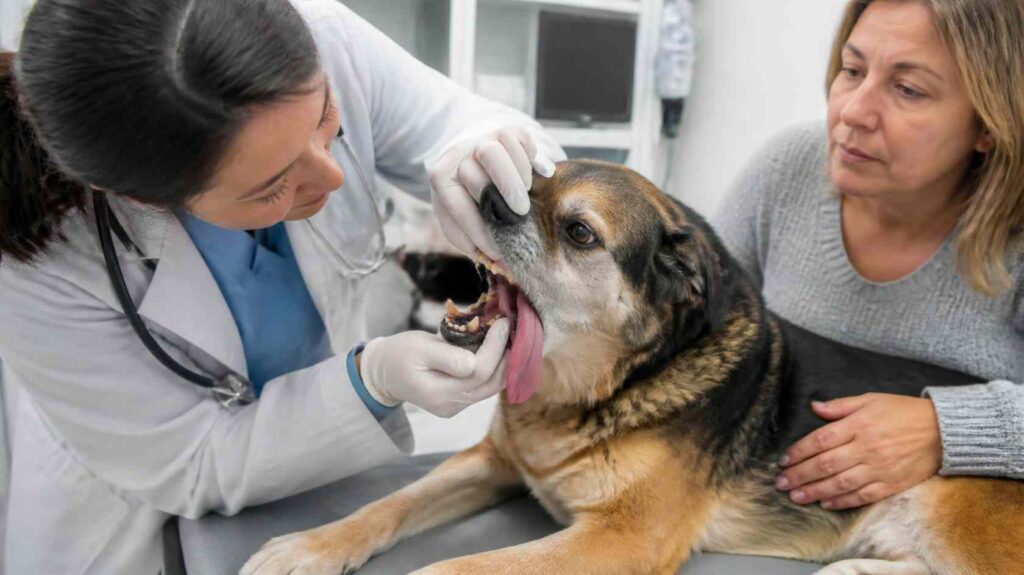
A tongue that remains outside does not always signal an emergency, but it should be assessed when the change is new, worsening, uncomfortable, or affecting normal functions such as eating and drinking.
“Hanging Tongue Syndrome” Describes a Symptom, Not a Single Disease
Hanging tongue syndrome is a descriptive term for a dog that cannot fully hold or retract her tongue. It does not identify one specific disease.
Possible causes include:
- Breed or jaw anatomy
- Missing teeth
- Previous jaw injury
- Dental disease
- Damage to the nerves or muscles involved in tongue movement
Because the underlying cause varies, there is no single treatment that suits every dog. A veterinary examination helps determine whether the tongue is simply unsupported or whether pain, injury, or impaired movement is involved.
Dental Disease or Tooth Loss
Bad breath, bleeding gums, loose or missing teeth, dropping food, chewing on one side, or refusing hard food can all point to dental pain or loss of tongue support.
Do not assume that a tongue hanging out is merely cosmetic when it appears alongside changes in eating or mouth odour.
The American Veterinary Medical Association (AVMA) also emphasizes the importance of regular dental care, as oral disease can affect a dog’s comfort, eating ability, and overall health.
Mouth Pain, Injury, or Inflammation
A tongue wound, fractured tooth, inflamed gums, burn, or jaw injury may make a dog reluctant or unable to close her mouth normally.
Watch for:
- Sudden drooling
- Pawing at the mouth
- Bleeding
- Crying when eating
- Refusing food
- Holding the jaw open
- Visible swelling
These signs warrant prompt veterinary attention.
Something Trapped in the Mouth
Stick fragments, bone splinters, string, plant material, or objects wedged between the teeth can alter the tongue’s position and cause sudden discomfort.
A dog may drool heavily, gag, paw at her face, refuse food, or hold her mouth partly open. Only inspect what you can see easily and safely. Do not reach deep into the mouth or pull on string, as it may be anchored under the tongue or farther down the digestive tract.
Oral Growths or Masses
Persistent swelling, bleeding, unpleasant mouth odour, difficulty chewing, or a visible lump may indicate an oral mass.
Growths are less common than dental disease or simple anatomical causes, so there is no reason to assume the worst. However, persistent changes should be examined rather than watched indefinitely, especially in an older dog.
Medication-Related Changes
Some medications can cause sedation, muscle relaxation, nausea, or increased panting, all of which may make the tongue more noticeable.
Do not stop or change a prescribed medication on your own. Contact the prescribing vet if the behaviour began soon after starting a new drug, follows each dose, or appears with weakness, vomiting, tremors, or unusual behaviour.
Warning: Don’t Examine the Mouth Unsafely
- Do not force the tongue back inside.
- Do not pull on the tongue to test its movement.
- Do not place your fingers deep into the mouth.
- Do not pull on string or a deeply embedded object.
- Do not apply antiseptic cream, essential oils, or human moisturiser.
- Do not give human painkillers.
A dog in pain or distress may bite even if she is normally gentle. Limit home checks to what you can see without forcing the mouth open, and leave a full oral examination to your vet.
Could It Be Related to Breathing or Heat?
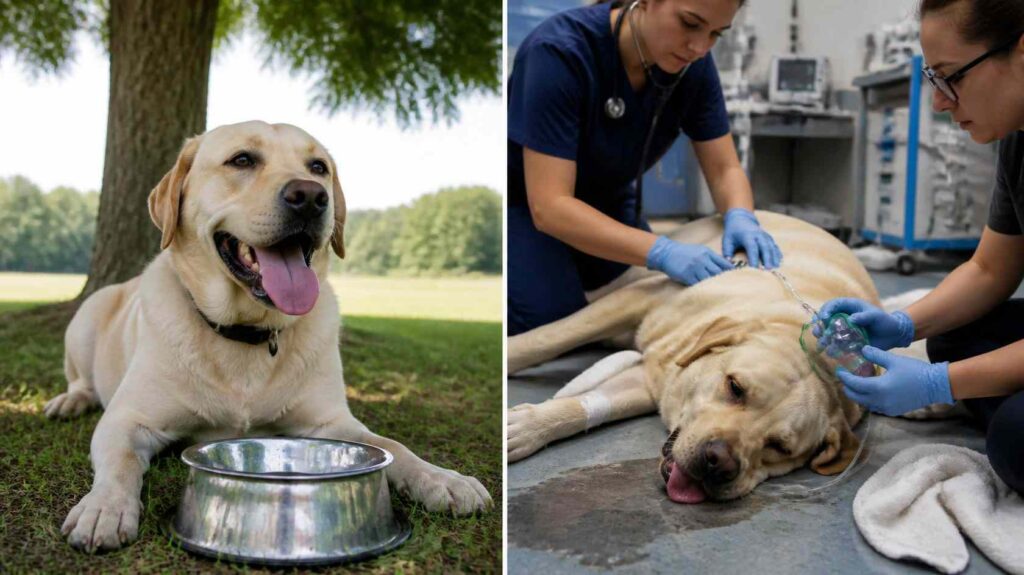
Tongue-out panting can be completely normal, but breathing effort, recovery time, and the surrounding conditions determine whether it is becoming dangerous.
Normal Cooling Panting
Panting after exercise, excitement, or time spent in warm weather is expected. A dog who is cooling normally should remain alert, hold a loose posture, and gradually return to comfortable breathing after resting in a cool, well-ventilated area.
The panting should be trending downward, not becoming louder or more intense.
Panting That Isn’t Normal
Breathing needs closer attention when your dog is panting heavily while resting, cannot settle in a cool room, or appears to be working hard for each breath.
Concerning signs include:
- Neck stretched forward
- Flared nostrils
- Belly moving forcefully with each breath
- Harsh, raspy, or high-pitched breathing
- Repeated gagging
- Wide-eyed or panicked expression
- Weakness
- Blue, grey, or very pale gums
These signs suggest respiratory distress rather than ordinary cooling.
Heatstroke Warning Signs
Heatstroke is a veterinary emergency. Warning signs may include:
- Extreme or worsening panting
- Heavy drooling
- Weakness or confusion
- Vomiting or diarrhoea
- Stumbling
- Collapse
- Seizures
- Very dark red, pale, blue, or grey gums or tongue
Move the dog away from the heat and contact an emergency vet immediately. Do not delay care while repeatedly checking the tongue or trying multiple home remedies. The Merck Veterinary Manual provides additional information on recognizing the signs of heatstroke and why prompt veterinary treatment is essential.
A Special Note for Flat-Faced Dogs
Noisy breathing in a flat-faced dog should not automatically be dismissed as “just how the breed sounds.” Their shortened airways can make it harder to move air and cool themselves, particularly during exercise, excitement, humid weather, or heat.
Poor recovery after mild activity, gagging, worsening snoring, low heat tolerance, blue-tinged gums, or collapse are signs of a genuine airway problem and require urgent veterinary attention.
What the Tongue’s Appearance Can Tell You
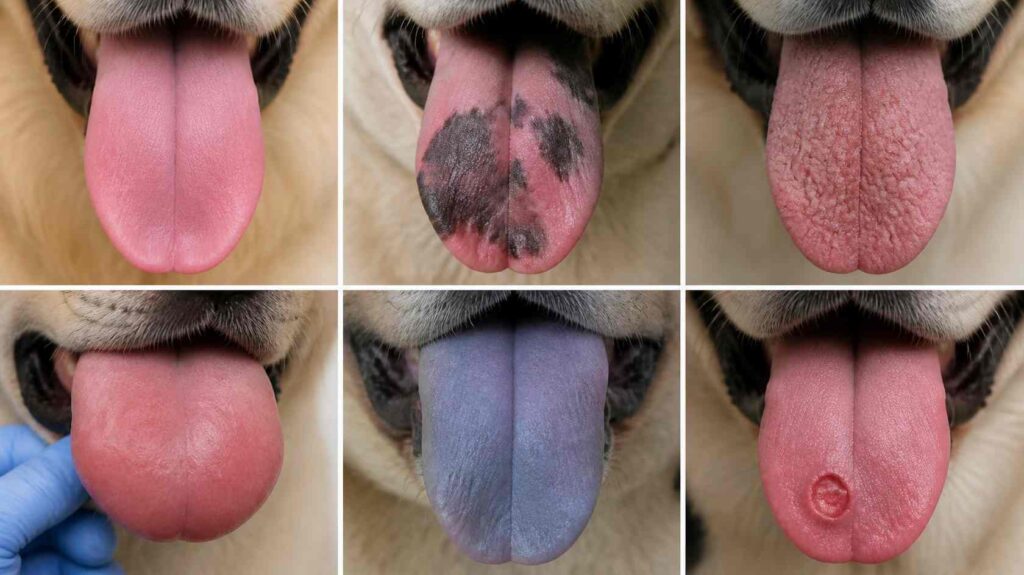
The tongue’s colour, moisture, shape, and surface can offer useful clues, but they should always be judged alongside your dog’s breathing, behaviour, and ability to eat and drink.
Normal Colour and Natural Pigmentation
Most dogs have a pink tongue, although natural black, blue-black, or dark patches are completely normal in many dogs. The most useful comparison is always with your dog’s usual appearance, since lighting, shadows, and phone cameras can make colour look different from one moment to the next.
Dry or Cracked Tongue
A tongue that remains outside the mouth can dry out more quickly than usual. Over time, this may lead to irritation, cracking, or small sores, particularly if your dog cannot retract it fully or is struggling to eat and drink comfortably.
Do not apply lip balm, antiseptic cream, petroleum jelly, essential oils, or other human products unless your vet specifically recommends them. Anything placed on the tongue is likely to be swallowed.
Swollen Tongue
An allergic reaction, insect sting, injury, infection, burn, or object trapped in the mouth can cause tongue swelling. Because rapid swelling may interfere with the airway, this is not something to monitor at home.
Seek urgent veterinary care if the tongue is enlarging, your dog is drooling heavily, her face is swelling, or swallowing or breathing looks difficult.
Pale, Blue, Purple, or Grey Tongue
A tongue or gums that suddenly look blue, purple, grey, or unusually pale may indicate a serious problem with oxygen delivery or circulation.
Check your dog’s breathing and alertness, but do not delay emergency care while repeatedly examining her mouth. Laboured breathing, weakness, collapse, or an abnormal tongue or gum colour should be treated as an emergency.
Bleeding, Ulcers, or Open Wounds
Visible tongue injuries may result from biting, chewing sharp objects, dental disease, burns, infection, or something lodged in the mouth.
Small tongue wounds can bleed heavily because the area has a rich blood supply. Even if the bleeding slows, arrange a veterinary examination if the wound is deep, keeps reopening, appears infected, or interferes with eating or drinking.
One-Sided Tongue Protrusion Deserves a Closer Look
A tongue that has always rested to one side may simply reflect anatomy or missing teeth. A sudden one-sided change deserves more attention.
Possible Non-Emergency Explanations
Stable causes include:
- Missing lower teeth
- A lifelong underbite or uneven jaw
- Previous dental surgery
- A healed jaw injury
- Long-standing difficulty retracting the tongue
If the position has remained unchanged for years and your dog eats, drinks, and behaves normally, it may be part of her usual appearance.
Signs That Raise Neurological Concern
Arrange prompt veterinary attention if a suddenly one-sided tongue appears with:
- Facial drooping
- A head tilt
- Poor balance or stumbling
- Weakness
- Difficulty swallowing
- Altered awareness
- Unequal facial movement
- Reduced or abnormal tongue movement
These signs may indicate a problem affecting the nerves, muscles, or brain rather than the mouth alone.
Keep This in Proportion
Neurological disease is not the most likely explanation when tongue position is the only change. Missing teeth, jaw shape, and dental problems are more common causes.
The key question is not simply, “Is the tongue to one side?” but, “Is this new, and are other functions changing too?”
Checklist: The 60-Second Tongue-Out Assessment

Circumstances
- Did it begin during sleep or deep relaxation?
- Did it appear after exercise?
- Is the weather hot or humid?
- Was your dog excited, frightened, or stressed?
- Did it start after dental treatment, an injury, or a new medication?
Retraction
- Does the tongue go back inside when she wakes?
- Does it retract once panting stops?
- Is it still visible when her mouth is closed?
- Is it hanging to one side?
- Is the change new or long-standing?
Breathing
- Is her breathing quiet and comfortable?
- Are there harsh, raspy, or high-pitched sounds?
- Is she using her belly to breathe?
- Can she settle comfortably?
- Does heavy panting continue while resting in a cool room?
The Tongue Itself
- Is it its usual colour?
- Does it look moist?
- Is there swelling, cracking, bleeding, or an ulcer?
- Can you see anything caught near the front of the mouth?
Do not force the mouth open or reach deeply inside.
Normal Function
- Can she eat and drink normally?
- Is food falling from her mouth?
- Does swallowing appear comfortable?
- Is she coughing or gagging while eating?
- Is there unusual drooling?
What to Record for the Vet
Note:
- When the behaviour began
- How often it happens
- How long each episode lasts
- What appears to trigger it
- Any recent dental work, medication, or mouth injury
- Changes in appetite, drinking, swallowing, or energy
A short video taken from the front and side can be especially useful, particularly if the behaviour is intermittent. Try to capture the tongue movement and any unusual breathing sounds before touching or distracting your dog.
Deciding What to Do Next
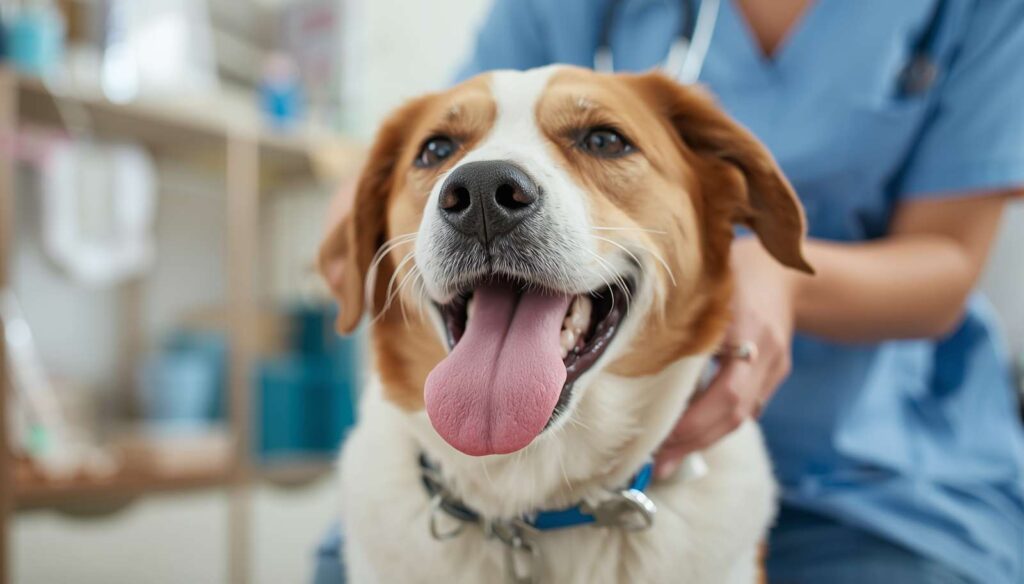
Monitor at Home
Monitoring is reasonable when:
- The trigger is obvious, such as sleep or recent exercise.
- The tongue retracts normally.
- Breathing is comfortable.
- Eating and drinking are unchanged.
- The tongue is moist and its usual colour.
- There is no swelling, wound, bleeding, or pain.
- Your dog otherwise behaves normally.
Book a Routine Vet Appointment
Arrange a non-urgent appointment when:
- The tongue is persistently exposed.
- The behaviour is becoming more frequent.
- The tongue no longer retracts fully.
- It appears dry, cracked, or irritated.
- There are signs of dental disease.
- The change followed dental surgery.
- Food or water occasionally falls from the mouth.
This category applies only when your dog is breathing and swallowing comfortably.
Get Same-Day Veterinary Advice
Call your vet the same day if:
- The change appeared suddenly.
- Your dog is drooling heavily.
- Eating, drinking, or swallowing has become difficult.
- She is pawing repeatedly at her mouth.
- The tongue suddenly sits to one side.
- Part of the face appears weak or uneven.
- You suspect a foreign object.
- There is a wound, burn, or mild swelling.
Seek Emergency Care Immediately
Seek emergency veterinary care if:
- Breathing is laboured or noisy.
- The tongue, face, or throat is swelling quickly.
- The tongue or gums are blue, purple, grey, or very pale.
- Your dog collapses or cannot stand.
- Choking is possible.
- She cannot swallow.
- Severe overheating is suspected.
- Bleeding is heavy or uncontrolled.
- She is unresponsive or having a seizure.
Do not wait to see whether these signs improve on their own.
Vet Advice: What a Veterinarian May Check
A veterinarian may assess:
- Breathing and oxygenation
- Tongue movement and retraction
- Facial and jaw nerve function
- Teeth, gums, and missing or damaged teeth
- Wounds, burns, or foreign material
- Jaw alignment
- Tongue moisture and tissue damage
- Swallowing ability
- Oral growths or swelling
- Recent medications
Depending on the examination findings, the vet may recommend a dental assessment, imaging, blood tests, or a neurological examination. Not every dog needs every test; the investigation should be guided by the specific signs present.
Looking After a Tongue That Stays Exposed
Protect It From Dryness and Injury
Check the exposed area regularly for:
- Cracking
- Redness
- Bleeding
- Ulcers
- Accidental biting
- Rubbing against teeth
Avoid prolonged exposure to extreme heat or cold, and use only products specifically approved by your vet.
Make Eating and Drinking Easier
Watch your dog during meals rather than assuming she is coping. Signs of difficulty include food falling from the mouth, taking much longer to eat, coughing, gagging, or avoiding firm food.
Your vet may recommend a softer texture, smaller pieces, or a different bowl arrangement depending on the cause. Any coughing while eating or drinking should be reported because it may indicate difficulty controlling food or water safely.
Keep Up With Dental Health
Regular dental care can reduce pain, infection, and further tooth loss. This may include:
- Toothbrushing with dog-safe toothpaste
- Routine oral checks at home
- Veterinary dental examinations
- Professional cleaning when recommended
Bad breath, bleeding gums, loose teeth, or a sudden change in chewing should be addressed early.
Schedule Rechecks if the Condition Is Ongoing
For a permanently exposed tongue, monitor:
- Moisture and surface condition
- Eating and drinking ability
- Body weight
- Dental health
- Drooling
- Progression of one-sided protrusion
- Changes in facial movement
- Breathing, especially in flat-faced breeds
Stable cases may need only routine monitoring, while worsening dryness, sores, weight loss, or swallowing problems require an earlier review.
Quick Tips: Helping Your Vet Assess an Intermittent Episode
- Record a video before touching or distracting your dog.
- Capture any unusual breathing sounds.
- Film from both the front and the side.
- Show whether the tongue retracts.
- Note the trigger and recovery time.
- Mention recent medication, dental work, or mouth trauma.
- Report changes in eating, drinking, swallowing, or energy.
Common Mistakes Dog Owners Make
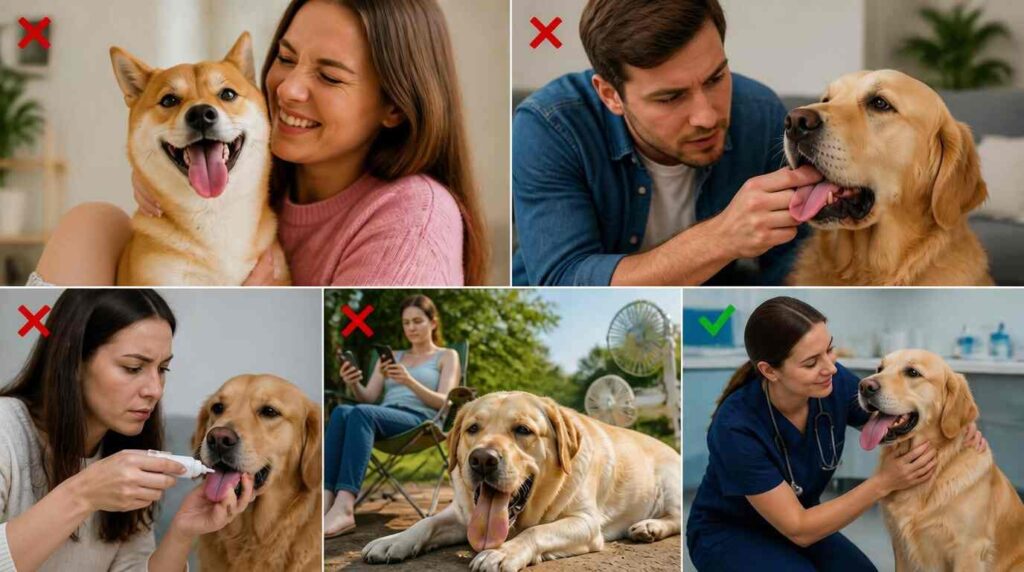
Assuming a Tongue-Out Expression Always Means Happiness
A relaxed “blep” may be harmless, but tongue flicking can also appear with stress, nausea, or discomfort. Read the whole body rather than interpreting the tongue alone.
Confusing Panting With a Constantly Exposed Tongue
Panting should ease after rest and cooling. A tongue that remains outside when the dog is calm and no longer panting is a different pattern and may require investigation.
Ignoring a Sudden Change Because the Dog Seems Fine
New changes matter, even before additional symptoms appear. Record what you see and monitor closely rather than dismissing it as a quirky new habit.
Treating Noisy Breathing in Flat-Faced Dogs as Normal
Breed-related airway anatomy may make breathing sounds common, but common does not always mean healthy. Poor exercise tolerance, prolonged recovery, gagging, blue-tinged gums, or collapse require veterinary attention.
Trying to Train the Behaviour Away
An anatomical or involuntary tongue position is not a behaviour problem. Training or punishment will not correct it and may add unnecessary stress.
Applying Human Products to the Tongue
Human moisturisers, antiseptics, numbing gels, and essential oils may irritate the tissue or be harmful when swallowed. Use only veterinary-approved products.
Comparing Tongue Colour Only With Online Photos
Natural pigmentation, lighting, and camera settings vary too much for online images to provide a reliable diagnosis. Compare the tongue and gums with your dog’s own normal colour and consider how she is breathing and behaving.
A small, occasional tongue “blep” is genuinely common and usually harmless. The signs that matter are changes in breathing, colour, comfort, movement, or normal function. When those appear—or when the behaviour is suddenly different—a call to your vet is the safest next step.
frequently asked question
1.Why Does Only the Tip of My Dog’s Tongue Stick Out?
A small tongue tip commonly appears when the jaw and facial muscles relax during sleep or rest. It may also briefly show when a dog is concentrating, licking her lips, or changing mouth position.
It is usually low-risk if it comes and goes, retracts normally, and is not accompanied by breathing changes, drooling, swelling, or difficulty eating. A tongue tip that suddenly remains outside or becomes dry and irritated should be checked by a vet.
2.Why Does My Dog Stick Her Tongue Out When I’m Petting Her?
Petting can help a dog relax, allowing the jaw muscles to loosen and the tongue tip to slip out. Some dogs also breathe with their mouths slightly open or drool when they are comfortable.
Look at the rest of her body language. A loose posture and soft expression suggest relaxation, while repeated lip licking, turning away, pinned ears, or a tense body may indicate discomfort or stress.
3.Can Nausea Cause My Dog to Lick the Air or Flick Her Tongue Repeatedly?
Yes. Repeated tongue flicking, air licking, lip licking, gulping, and frequent swallowing can occur with nausea.
An occasional lick is not usually concerning, but contact your vet if the behaviour is persistent or accompanied by vomiting, reduced appetite, abdominal discomfort, lethargy, or excessive drooling.
4.Is a Dry, Exposed Tongue Painful for My Dog?
It can become uncomfortable. Constant exposure allows moisture to evaporate, which may lead to dryness, cracking, irritation, and ulcers.
Contact your vet if the tongue looks sore, bleeds, develops a bad smell, or affects eating and drinking. Do not apply any product unless your vet confirms it is safe to use inside the mouth.
5.Are Flat-Faced Dogs More Likely to Keep Their Tongues Out Permanently?
Yes. Pugs, French Bulldogs, Shih Tzus, and other flat-faced breeds may have less room inside the mouth, allowing part of the tongue to remain visible.
The tongue itself may be harmless, but noisy or laboured breathing should never be dismissed as simply normal for the breed. Poor heat tolerance, slow recovery after exercise, gagging, weakness, or blue-tinged gums require veterinary attention.
6.Can Something Stuck in My Dog’s Mouth Cause Her Tongue to Hang Out Oddly?
Yes. Stick fragments, bone pieces, string, or plant material may cause sudden drooling, gagging, pawing at the mouth, and an abnormal tongue position.
Do not reach deeply into the mouth or pull on string or an embedded object. A painful or frightened dog may bite, and pulling could worsen an internal injury. Contact your vet for safe removal.
7.When Does Tongue-Out Behaviour Count as an Emergency?
Treat it as an emergency when tongue protrusion is accompanied by:
Laboured breathing
Rapid swelling of the tongue or face
Blue, purple, grey, or very pale gums
Collapse or severe weakness
Inability to swallow
Suspected choking
Severe overheating
Heavy, uncontrolled bleeding
Seizures or unresponsiveness
In any of these situations, seek emergency veterinary care immediately.
#. Related Articles: