

Can dogs have ADHD? It’s one of the most common questions owners ask when an energetic dog never seems to slow down. While dogs can show ADHD-like behaviours, the explanation is often more complex than simply having “ADHD.”
Your dog won’t settle. A familiar cue gets ignored halfway through, toys are abandoned within seconds, and by 8 p.m. you’re exhausted while your dog still seems fully charged. If you’ve searched “Does my dog have ADHD?” late at night, you’re not overreacting—but the answer is more nuanced than a simple yes or no.
Dogs can show ADHD-like traits, including persistent restlessness, impulsive behaviour and difficulty focusing. However, these signs do not automatically point to a behavioural disorder. More often, they are linked to an unsuitable routine, insufficient sleep, anxiety, pain, overstimulation, unmet breed-specific needs or behaviours that have been unintentionally reinforced.
This guide explains how to recognise the difference, what else may be causing the behaviour and when it is time to involve your veterinarian rather than simply adding more exercise or another puzzle toy.
Can Dogs Really Have ADHD?
Dogs can display a pattern of hyperactivity, impulsivity and inattention that resembles human ADHD, but the two should not be treated as identical conditions. In veterinary behaviour medicine, terms such as hyperkinesis and ADHD-like behaviour may be used to describe dogs whose activity and impulse-control problems are unusually persistent and interfere with normal functioning.
Hyperkinesis appears to be uncommon. A dog with this type of problem may remain restless even in a quiet, low-stimulation environment and may struggle to sleep, learn or regulate behaviour despite an appropriate routine.For more information about veterinary behavioural conditions and specialist care, see the American College of Veterinary Behaviorists.
Veterinarians and qualified behaviour professionals usually assess three related—but separate—areas:
- Hyperactivity: Near-constant movement, pacing, difficulty resting or activity that continues without an obvious trigger.
- Impulsivity: Acting immediately without pausing, such as bolting through doors, snatching food or struggling to wait briefly.
- Inattention: Difficulty maintaining focus, repeatedly abandoning tasks or failing to respond consistently to familiar cues in manageable environments.
Occasional signs are common in otherwise healthy dogs. What matters is the overall pattern: how often the behaviour occurs, whether it appears in several settings and how much it affects sleep, learning, safety and daily life.
Quick answer: Most dogs showing ADHD-like behaviour do not have a primary behavioural disorder. Concern increases when a dog cannot settle in calm environments, struggles across several situations and shows little improvement despite adequate sleep, suitable exercise, enrichment and consistent reward-based training. There is no reliable home test or online quiz that can provide a diagnosis, so persistent or severe behaviour should be discussed with a veterinarian.
Is It ADHD-Like Behaviour or Just Normal Dog Energy?
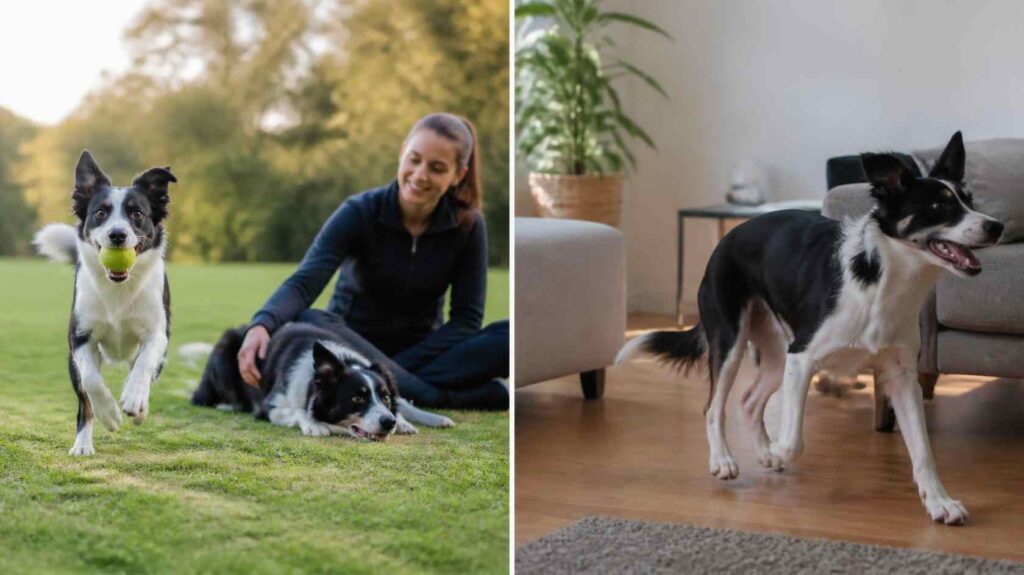
This distinction is best made by looking at patterns over time rather than one energetic evening, a difficult walk or a short period of poor focus.
| Assessment Point | Normal High Energy | Possible ADHD-Like Pattern |
|---|---|---|
| Main trigger | Play, visitors, walks or exciting events | May continue without a clear trigger |
| Ability to settle | Usually rests once physical and emotional needs are met | Remains restless in calm conditions |
| Attention | Distracted mainly in challenging environments | Struggles during simple, familiar tasks |
| Impulse control | Gradually improves with consistent training | Remains severely limited despite appropriate training |
| Recovery time | Returns to baseline reasonably quickly | Takes an unusually long time to calm |
| Sleep | Obtains regular, restful sleep | Struggles to switch off or appears chronically overtired |
| Effect of exercise | Appropriate activity generally improves regulation | Intense activity has little benefit or increases arousal |
| Daily impact | Manageable within normal routines | Disrupts learning, safety, sleep or household life |
Puppy Behaviour
Zoomies, mouthing, rapid shifts in attention and poor impulse control are common during puppyhood and adolescence. Puppies also need substantial sleep, and an overtired puppy may become more frantic, mouthy and difficult to settle rather than appearing sleepy.
Before assuming a puppy has a disorder, review whether they have:
- Regular opportunities for uninterrupted rest
- Short, age-appropriate training sessions
- A predictable daily routine
- Suitable chewing, sniffing and exploration
- Protection from excessive stimulation
Breed Drive
Some dogs were bred to work for long periods, react quickly and remain highly engaged with their surroundings. Border Collies, Jack Russell Terriers, Siberian Huskies and Belgian Malinois may need more than a brief neighbourhood walk, but breed alone never proves that a dog has ADHD-like behaviour.
A high-drive dog may still be able to rest, learn and recover once its needs are met. Problems are more concerning when the dog remains persistently dysregulated despite an appropriate routine.
Over-Arousal Versus Persistent Dysregulation
A dog that becomes highly excited when visitors arrive but settles once the situation becomes quiet is more likely experiencing trigger-based over-arousal. A dog that continues pacing, vocalising or seeking stimulation long after the trigger has disappeared may need closer assessment.
Useful questions include:
- Can the dog relax when the environment is quiet?
- How long does recovery take after excitement?
- Does the behaviour occur at home, outdoors and during training?
- Is the dog sleeping normally?
- Has the behaviour always been present, or did it begin suddenly?
The most useful measure is not simply how energetic the dog appears. It is whether the behaviour causes functional impairment—meaning it interferes with rest, learning, safety, social interaction or ordinary household life.
A dog can be demanding and energetic while still functioning well. A dog that cannot sleep, focus, recover from stimulation or remain safe requires a different level of support, beginning with a veterinary assessment to rule out pain, anxiety, medical illness and other behavioural conditions.
Conditions Often Mistaken for Canine ADHD

Before assuming a behavioural disorder, rule out the more common explanations first:
- Under-stimulation: Too little mental work, sniffing, problem-solving or training can leave a dog restless even if they receive regular walks. Physical tiredness and mental satisfaction are not the same thing.
- Over-stimulation: Constant daycare, a chaotic household or back-to-back outings with no recovery time can keep a dog stuck in a state of high arousal. Some dogs need less excitement and more predictable rest.
- Anxiety and fear: Pacing, panting, scanning the environment and being unable to settle are often mistaken for hyperactivity. Anxiety is more likely when the behaviour appears around specific triggers, such as loud noises, unfamiliar people, other dogs or being left alone.
- Learned behaviour: If jumping, barking or rushing through doors reliably produces attention, access or play, the behaviour has been reinforced. That does not mean the dog is being deliberately difficult; it means the strategy has worked before.
- Compulsive behaviour: Repetitive spinning, tail-chasing, shadow-chasing or licking can look like excess energy but may represent a separate behavioural or medical problem. Record a video and discuss repeated, difficult-to-interrupt behaviour with your vet.
- Frustration and reactivity: Fence-running, leash lunging or intense barking at barriers can resemble impulsivity but is usually linked to a particular trigger or blocked goal.
- Pain or medical discomfort: Joint pain, persistent itching, digestive discomfort, urinary problems, medication side effects and age-related cognitive changes can all appear as restlessness, irritability or difficulty sleeping.
Age of onset matters. A dog that has always been unusually active presents a different picture from one whose behaviour changes suddenly. New restlessness can signal pain, illness, medication effects, toxin exposure or, in senior dogs, cognitive dysfunction. Sudden or rapidly worsening changes deserve veterinary attention sooner rather than later.
When Restlessness Is an Emergency
Most hyperactive behaviour is not an emergency. Seek urgent veterinary help if restlessness occurs with:
- Tremors, seizures or collapse
- Severe agitation or disorientation
- Extreme panting, overheating or an abnormal heartbeat
- Repeated vomiting or a swollen abdomen
- Sudden inability to rest
- Self-injury or rapidly escalating aggression
- Suspected ingestion of human ADHD medication, including methylphenidate, amphetamines or similar stimulants
Warning: If your dog may have swallowed human stimulant medication, do not wait for symptoms. Contact your veterinarian, an emergency clinic or an animal poison service immediately. Never give a dog human ADHD medication unless it has been specifically prescribed and monitored by a veterinarian.
What a Veterinary Assessment Actually Involves

There is no single blood test, scan or home questionnaire that confirms canine hyperkinesis or “ADHD.” Diagnosis depends on the dog’s history, behaviour across different settings and the exclusion of other medical or behavioural causes.
There is no single blood test, scan or home questionnaire that confirms canine hyperkinesis or “ADHD.” Diagnosis depends on the dog’s history, behaviour across different settings and the exclusion of other medical or behavioural causes. For additional information on veterinary diagnosis and behavioural assessment, see the Merck Veterinary Manual.
A veterinarian may:
- Take a detailed behaviour history, including when the problem began, where it occurs, what triggers it and how long recovery takes
- Ask about sleep, exercise, enrichment, training methods and household routines
- Review pain, skin problems, digestive signs, urinary changes, current medication, supplements and recent dietary changes
- Perform a physical examination
- Recommend bloodwork, urine testing, pain assessment or a neurological evaluation when the history suggests a medical cause
- Refer the dog to a qualified behaviour professional if the case is complex or presents a safety risk
A short behaviour diary can make the appointment far more useful. Bring:
- Brief videos of your dog resting in a quiet room, before and after exercise and during a short training session
- A log of the trigger, behaviour, duration, intensity and recovery time
- Notes on recent changes in food, medication, sleep, exercise or routine
- Details of any escape attempts, bites, injuries or other safety incidents
Who Should You Actually Contact First?
| Professional | Main Role | Best For | Limitation |
|---|---|---|---|
| Primary-care veterinarian | Medical examination and initial behaviour review | Sudden changes, pain, illness, medication concerns | May refer complex cases |
| Reward-based trainer | Practical training, settling skills and impulse control | Everyday training gaps and household routines | Cannot diagnose medical or behavioural disorders |
| Clinical animal behaviourist | Detailed behavioural assessment and modification planning | Anxiety, reactivity and complex behaviour patterns | Qualifications vary by country |
| Veterinary behaviourist | Medical and behavioural diagnosis, treatment and medication management | Severe, complicated or high-risk cases | Access may be limited |
Professional titles differ between countries. In the UK and Australia, owners may encounter the terms veterinary behaviourist or clinical animal behaviourist. In the United States, look for a board-certified veterinary behaviorist; Canada uses both “behaviour” and “behavior” terminology.
Whatever the title, check for recognised credentials, reward-based methods and a willingness to work alongside your veterinarian. Avoid anyone who promises an instant cure, relies on intimidation or advises you to stop prescribed medication without consulting the prescribing vet.
A Practical Framework for Managing Hyperactive Behaviour

Adjust the Environment
Use baby gates, manage access to doors and create a genuinely quiet resting area away from household traffic. Predictable routines and fewer opportunities to rehearse frantic behaviour can lower background arousal.
Balance Activity With Recovery
Sniffing, foraging, chewing and short problem-solving sessions engage dogs differently from running or repetitive fetch. Follow stimulating activities with quiet recovery time rather than another burst of excitement.
Teach Regulation, Not Just Commands
Skills such as settle on a mat, wait at the door, leave it and calmly checking in with the owner are often more useful in daily life than repeatedly practising “sit.” Begin in a quiet setting and add distractions gradually.
Reinforce Calm on Purpose
If a dog receives attention only when barking, jumping or pacing, those behaviours are likely to continue. Quietly reward moments when your dog lies down, disengages from a trigger or chooses to rest without being asked. This teaches that calm behaviour is worthwhile too.
Vet advice: Arrange a veterinary appointment if the behaviour is sudden, severe, unsafe, disrupts sleep or persists despite appropriate exercise, enrichment, rest and consistent reward-based training.
Why More Exercise Isn’t Always the Answer

It’s tempting to assume a tired dog will be a calm dog, but constant high-intensity exercise can backfire. Repetitive fetch, sprinting and frantic chase games build fitness and stamina; they do not teach a dog how to switch off.
If your dog paces more, becomes mouthier or sleeps worse after exercise, the routine may need less intensity and more recovery. Try replacing some ball-throwing with:
- Long-lead sniff walks
- Food-search and foraging games
- Calm chewing or licking activities
- Short training sessions
- Uninterrupted rest after exciting outings
The goal is not simply to exhaust your dog. It is to create a routine that balances movement, mental engagement and genuine downtime.
Diet and Supplements: What the Evidence Actually Supports
There is no good evidence that one ingredient—such as sugar, colourings or a particular protein—universally causes ADHD-like behaviour in dogs. A sudden diet change may cause digestive discomfort and restlessness, but that is different from food “causing ADHD.”
Calming supplements are widely marketed, yet evidence varies and product quality is inconsistent. “Natural” does not automatically mean safe, especially when a dog takes other medication or has an underlying health condition.
Speak to your veterinarian before using calming chews, herbal products, CBD or other supplements. They can help assess whether the product is appropriate and check for possible interactions.
Common Mistakes That Make Things Worse
- Labelling every energetic puppy or working-breed dog as abnormal
- Using running or fetch as the dog’s only outlet
- Punishing excitement or using leash corrections during over-arousal
- Training in environments that are too distracting
- Constantly entertaining the dog instead of scheduling rest
- Rewarding barking or jumping without realising it
- Buying supplements before obtaining a proper assessment
- Assuming neutering will resolve hyperactivity on its own
- Treating an online quiz as a diagnosis
- Waiting for a bite, escape or road-safety scare before seeking help

How to Track Real Progress
Improvement is usually gradual, so compare patterns weekly rather than judging every difficult day.
Track:
- Time taken to settle after activity
- Duration of uninterrupted sleep
- Frequency of pacing or restless episodes
- Number of successful training repetitions
- Recovery time after visitors, walks or other triggers
- Ability to disengage and respond to a familiar cue
- Frequency of unsafe incidents, such as door-bolting
Look for practical changes. A dog may still become excited, but settle in 10 minutes instead of 30, sleep more deeply or recover faster after a trigger.
Setbacks do not necessarily mean the plan has failed. Progress is rarely perfectly linear, and some dogs need long-term routines and environmental management rather than a quick fix.
The Bottom Line
Dogs are not diagnosed with ADHD in exactly the same way as people, but they can show a persistent pattern of hyperactivity, impulsivity and inattention. Living with those behaviours can be exhausting, particularly when the dog cannot settle, sleep or remain safe.
Most restless dogs are not broken, naughty or deliberately ignoring their owners. Their behaviour may reflect age, breed-related drive, anxiety, poor sleep, pain, overstimulation, insufficient enrichment or learned habits.
A balanced routine, reward-based training and deliberate rest can make a meaningful difference. However, do not keep guessing when behaviour is severe, sudden or unsafe. If your dog is not improving despite several weeks of consistent management—or if other physical or behavioural signs are present—book a veterinary assessment.
Frequently Asked Questions
1.Can Dogs Actually Have ADHD?
Dogs can display ADHD-like traits, but there is no straightforward canine equivalent of the human diagnosis. Veterinary professionals may use terms such as hyperkinesis, hyperactivity, impulsivity or inattention. Most energetic dogs do not have a primary behavioural disorder, so other causes should be considered first.
2.What Is Canine Hyperkinesis?
Canine hyperkinesis describes an uncommon pattern of persistent overactivity, poor impulse control and difficulty settling, including in calm environments. It should only be considered after a veterinarian has assessed the dog and ruled out more common medical, environmental and behavioural explanations.
3.How Is This Different From Human ADHD?
Dogs and people may show superficially similar traits, including poor attention, impulsivity and excessive activity. However, human ADHD diagnostic criteria cannot simply be applied to dogs. The comparison helps describe behaviour; it does not provide a diagnosis.
4.Can Puppies Show ADHD-Like Behaviour?
Yes, but it is usually developmentally normal. Puppies commonly have short attention spans, zoomies, mouthing and limited impulse control. Overtired puppies can appear especially frantic, so sleep, routine and age-appropriate expectations should be reviewed before assuming a disorder.
5.Can Too Much Exercise Make Hyperactivity Worse?
It can. Frequent high-intensity exercise may increase fitness and maintain a high-arousal routine without teaching the dog to rest. Combining appropriate physical activity with sniffing, foraging, short training sessions and planned recovery is often more helpful than adding another run.
6.Is There a Test That Diagnoses ADHD in Dogs?
No single blood test, scan or online questionnaire can confirm it. Assessment may include the dog’s behavioural and medical history, a physical examination, videos from home and a behaviour diary. Testing may also be recommended to investigate pain, medication effects, neurological signs or other suspected medical causes.
7.When Does Hyperactivity Become an Emergency?
Seek urgent veterinary care if restlessness occurs with:
Tremors or seizures
Collapse
Severe agitation or disorientation
Extreme panting or overheating
Repeated vomiting
A swollen abdomen
Self-injury
Suspected ingestion of human ADHD medication
Do not wait for symptoms if your dog may have swallowed stimulant medication. Contact a veterinarian, emergency clinic or animal poison service immediately.
#. Related Articles: