
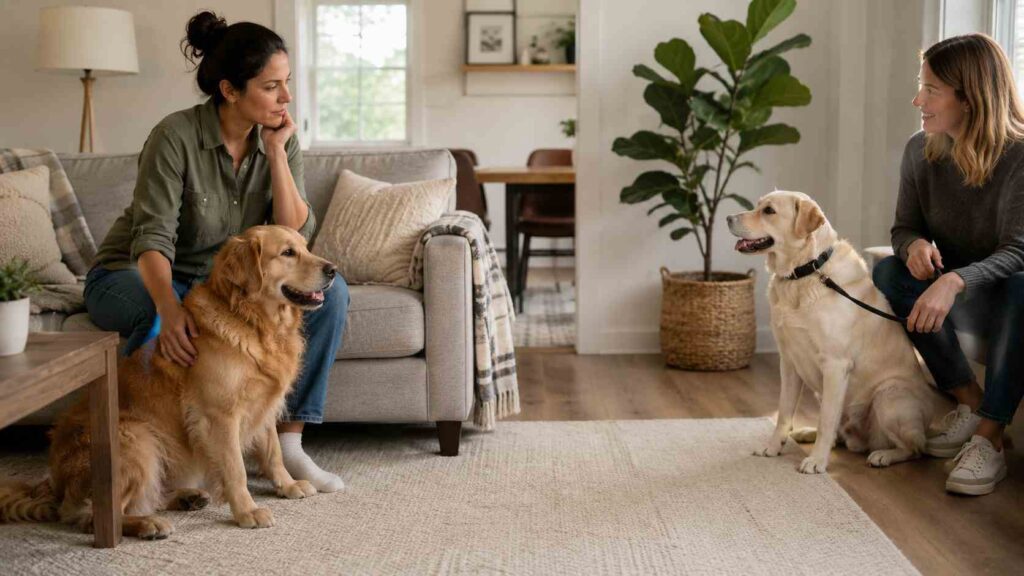
You’re watching your dog nap alone on the sofa, and the thought creeps in: “Maybe they’d be happier with a friend.”
Or maybe there’s no deep reasoning at all—you met a dog at the rescue centre and haven’t stopped thinking about them since.
Whatever brought you here, this is a bigger decision than it looks. Liking dogs isn’t the same as being ready to live with two of them, and loving your current dog doesn’t automatically mean they want a full-time canine housemate.
There’s no universal yes or no answer to “Should you get a second dog?” A better way to decide is to look at three things separately: whether your current dog is comfortable sharing their life with another dog, whether you can find a genuinely compatible match, and whether your household has the time, space, money, and patience for two.
Get those pieces right, and adding another dog can work beautifully. Get the match or timing wrong, and everyday situations—feeding, resting, play, attention, even walking through a doorway—can become sources of tension.
And here’s something worth saying upfront: the goal isn’t for your dogs to become best friends. Peaceful coexistence, where both dogs can eat, sleep, move around the home, and relax without chronic tension, is a genuine success—even if they never curl up together.
Start With the Dog You Already Have
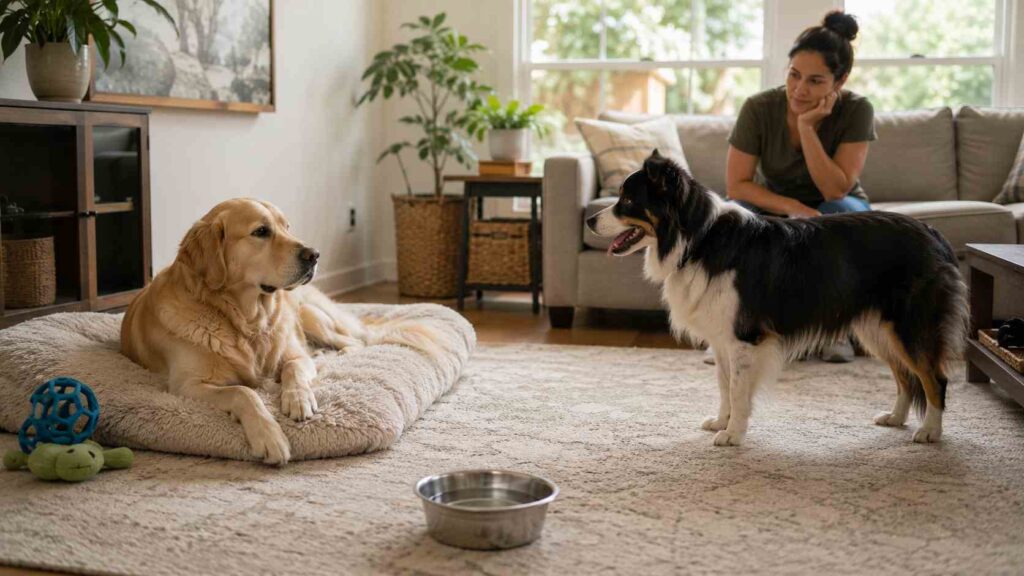
Being Social With Dogs Isn’t the Same as Being Ready for a Roommate
This is where a lot of owners get tripped up. Your dog might be brilliant at the park—greeting other dogs, playing nicely, then trotting home happily afterwards. That’s encouraging, but it doesn’t tell you how they’ll feel about sharing their home.
A park encounter is temporary. Living with another dog means regularly sharing space, access to people, resting areas, toys, and other valued resources. A dog can enjoy twenty minutes of play and still find having another dog around all day stressful.
Look beyond whether your dog plays with other dogs. Can they relax around one? Can they disengage when they’ve had enough? Can they watch another dog receive attention without becoming tense? Can they settle while another dog moves around nearby?
Those quieter moments often tell you more about potential household compatibility than an enthusiastic greeting does.
Signs Your Dog May Cope Well With a Housemate
- Relaxed body language around dogs they already know
- Able to settle instead of constantly seeking interaction
- Comfortable walking away when they’ve had enough
- Recovers reasonably quickly after exciting play
- Still checks in and responds to you when another dog is present
- No significant history of guarding food, toys, resting places, or people
- Can share general space without constantly monitoring the other dog
- Fairly predictable behaviour during repeated interactions with familiar dogs
No single sign proves that your dog wants a housemate. What you’re looking for is a pattern of relaxed, flexible behaviour, not one successful play session.
Signs You Should Slow Down
- A history of serious aggression towards other dogs
- Strong fear or reactivity around dogs
- Significant resource guarding
- Difficulty settling or disengaging around other dogs
- Persistent attempts to avoid interaction
- Extreme over-arousal that takes a long time to come down
- Stiffening, freezing, hard staring, blocking, or repeated conflict around valued resources
- A recent, unexplained change in sociability or temperament
- Your current dog’s training or daily care already feels difficult to manage
These signs don’t automatically mean you can never have another dog. They mean don’t add one before understanding what is happening.
If your dog has bitten another dog, repeatedly started serious fights, or shows significant aggression or fear, get professional guidance before bringing another dog home. A veterinarian is also an important first stop when behavior has changed suddenly, because pain or illness can contribute to irritability and reduced tolerance.
Could Your Dog Actually Prefer Being the Only Dog?
This one’s worth sitting with. Dogs vary enormously in how much canine company they enjoy. Some love living with other dogs. Others enjoy an occasional playmate but want their home and resting time to themselves. Some simply prefer human companionship.
Choosing distance isn’t automatically loneliness.
Pay attention to what your dog repeatedly chooses when they have options. Do they seek out familiar dogs and then settle comfortably near them? Or do they greet briefly and spend the rest of the time trying to create space?
Also look for subtle signs that interaction has become too much: repeatedly moving away, turning the head or body aside, becoming unusually still, hiding behind you, leaving the room, or being unable to settle.
Don’t decide that your dog needs a friend simply because being an only dog looks lonely to you. The better question is whether another dog’s presence consistently seems to make your dog more comfortable and relaxed—or gives them something they continually need to get away from.
Is Your Dog Actually Lonely — Or Is Something Else Going On?
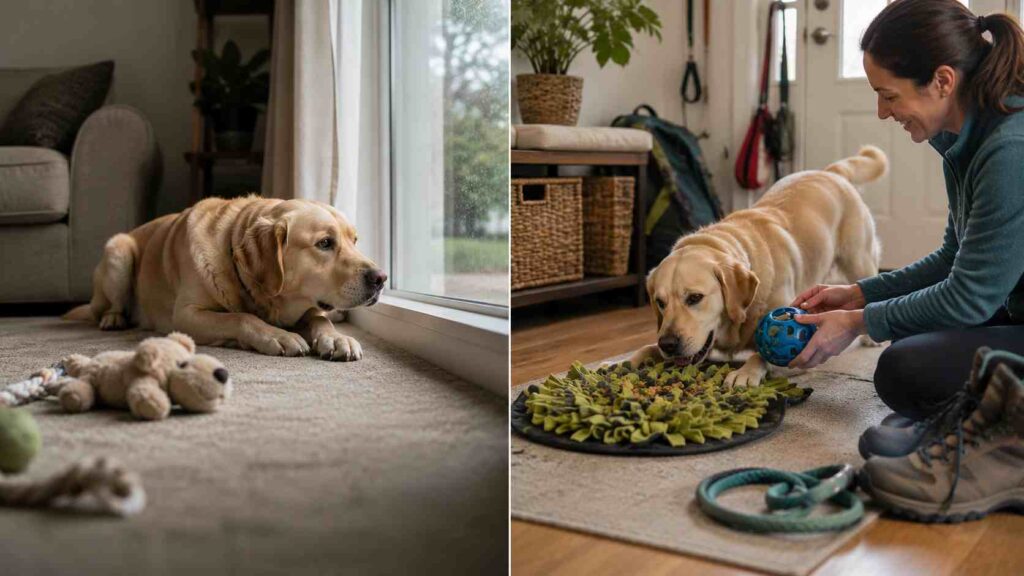
Before you assume a second dog is the fix, work out what you’re actually seeing. Boredom, under-stimulation, frustration, separation-related distress, and loneliness can look surprisingly similar from the outside, but they do not have the same solution.
A dog who paces, chews, or barks when left alone may need more appropriate exercise, mental enrichment, predictable routines, or behaviour support rather than a housemate. If your dog has become unusually withdrawn, restless, irritable, or less interested in normal activities, don’t assume they’re simply lonely. Pain, illness, or age-related changes can also affect behaviour, so a veterinary check is sensible when the change is new or unexplained.
Will a Second Dog Fix Separation Anxiety?
Usually, no. This is one of the most persistent myths about getting a second dog.
Separation-related problems are more complicated than a general dislike of being alone. Some dogs become distressed specifically when separated from a particular person, while others may react to isolation, departure cues, confinement, or a combination of factors. Because the cause varies from dog to dog, another dog cannot be relied on as treatment.
If your dog shows signs such as persistent vocalising, destructive behaviour near exits, pacing, drooling, escape attempts, or house-soiling that mainly occurs during absences, speak with your veterinarian. A qualified behaviour professional may also be needed to help identify the trigger and create an appropriate plan.
A second dog may provide companionship, but companionship and treatment are not the same thing.
Will Two Dogs Just Exercise and Entertain Each Other?
Partly. Compatible dogs may play together, chase each other, or simply enjoy sharing space, and that can be a genuine benefit.
But shared play doesn’t replace walks, sniffing opportunities, individual training, enrichment, or time with you. It can also work in the opposite direction: two young or highly excitable dogs may repeatedly wind each other up, making settling, recall, door manners, or calm behaviour harder rather than easier.
Think of dog-to-dog play as one part of their enrichment, not a substitute for meeting each dog’s individual needs.
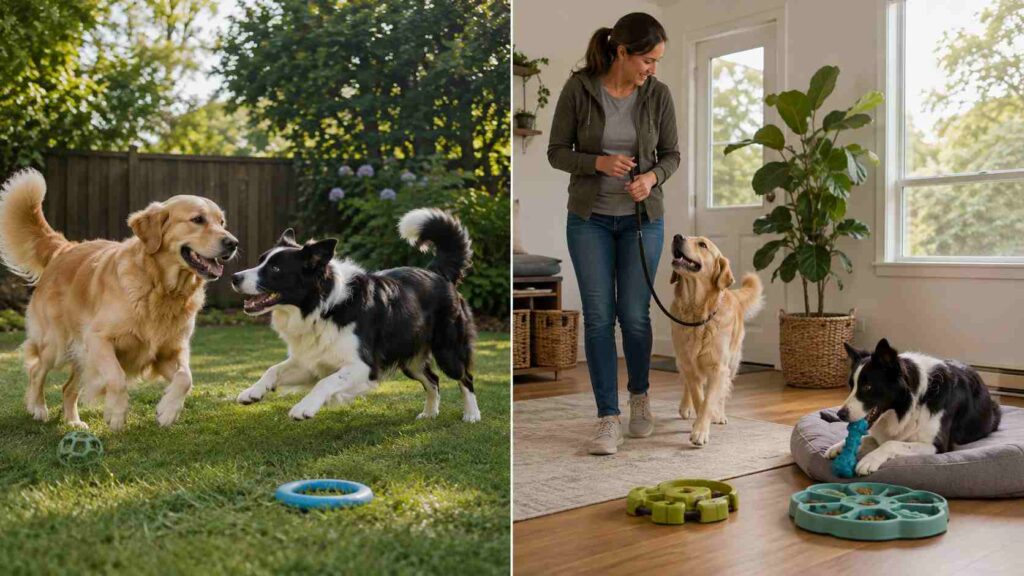
The Three-Way Compatibility Test
Think of this as a triangle: your resident dog, the potential new dog, and your household. All three need to work together. A wonderful second dog can still be the wrong match for your current dog, and two compatible dogs can still overwhelm a household that doesn’t have enough time, space, or resources.
Temperament and Social Style
Look beyond whether each dog seems “friendly.” Consider confidence, sociability, frustration tolerance, arousal level, recovery after excitement, and how much personal space each dog prefers.
A confident dog and a more cautious dog can certainly live together, but the confident dog must be capable of respecting distance and disengaging. Compatibility is less about finding identical personalities and more about whether each dog’s behaviour allows the other to feel safe and relaxed.
Energy and Play Style
A dog who loves full-contact wrestling may overwhelm one who prefers gentle chase games or short bursts of interaction.
Watch what happens when one dog has had enough. Does the other notice and back off? Can both dogs pause, shake off, sniff, or walk away before returning to play?
The ability to stop is just as important as the ability to play.
Age and Life Stage
Puppy, adolescent, adult, and senior dogs bring very different needs.
A puppy who gets along beautifully with your resident dog at four months may behave quite differently during adolescence, when arousal, confidence, and social behaviour can change. Likewise, a calm adult may have little patience for months of puppy biting and repeated play invitations.
Don’t judge a lifelong match from one easy early interaction. Relationships can change as dogs mature, and management may need to change with them.
Size and Physical Robustness
A large size difference isn’t automatically a problem. The more important issue is how the dogs interact physically.
A large but gentle dog may live very comfortably with a small dog, while a boisterous medium-sized dog could accidentally injure a tiny, elderly, arthritic, or physically fragile housemate during normal play.
Match play intensity to physical capability, not just body weight.
Sex, Breed, and Reproductive Status
Sex can be one factor to consider, but it does not guarantee compatibility. Two dogs of the same breed aren’t automatically a good match, and opposite-sex pairings aren’t automatically easier.
Temperament, history, age, social skills, resource guarding, and household management usually tell you more than breed or sex alone.
If you’re considering an intact male and female, accidental mating is a real management concern. Discuss reproductive health and prevention options with your veterinarian rather than relying on supervision alone.
Comparison Table: Which Type of Second Dog Fits Your Situation?
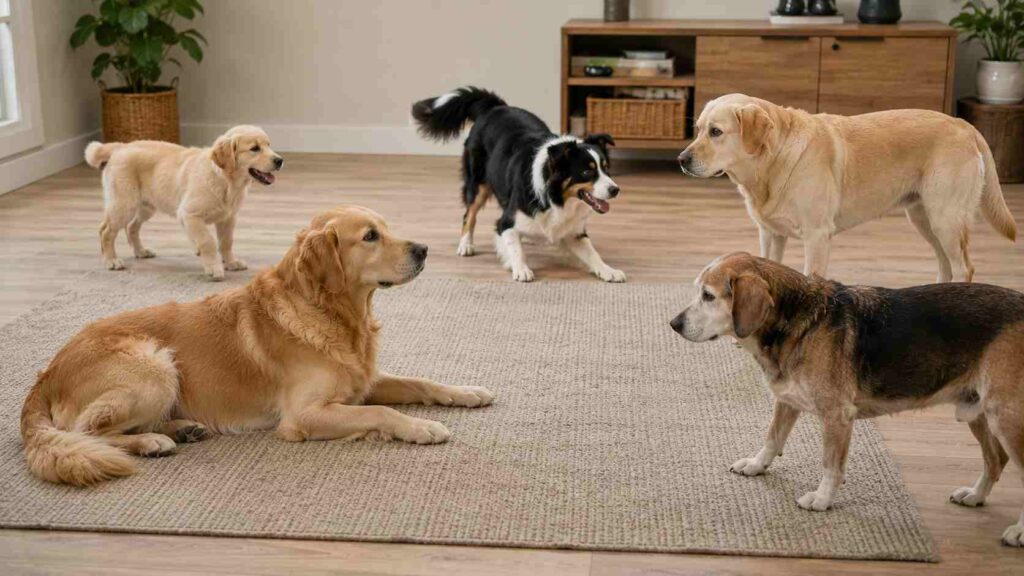
| Potential Second Dog | Possible Advantages | Possible Challenges | Especially Consider |
|---|---|---|---|
| Puppy | Can learn household routines from an early age | House-training, biting, high energy, close supervision | Your current dog’s patience, health, and tolerance for puppy behaviour |
| Adolescent | Active and often highly trainable | Higher arousal, changing social behaviour, inconsistent impulse control | Your capacity for structured training and management |
| Adult | Adult size and temperament may be easier to assess | May arrive with established habits or an incomplete history | Repeated compatibility assessment rather than one meeting |
| Senior | Often calmer and more settled | Possible medical, mobility, or medication needs | Whether both dogs’ energy and care needs genuinely match |
No age group is universally “best.” The right choice depends on the dog already living in your home and on what you can realistically manage.
The Senior Dog Question Deserves Extra Thought
If your current dog is a senior, their comfort should carry considerable weight in the decision.
When a Puppy May Be Too Much
Puppies bite, bounce, interrupt sleep, steal objects, and don’t automatically understand when another dog wants to be left alone.
An older dog with reduced stamina or mobility may struggle to escape repeated play attempts, even in a familiar home. A senior who tolerates a puppy doesn’t necessarily enjoy the interaction.
Watch whether your older dog can still rest normally, move away freely, eat comfortably, and choose when interaction happens.
Health Can Quietly Change Social Tolerance
Arthritis, dental pain, other chronic discomfort, hearing or vision loss, and cognitive changes can all reduce an older dog’s tolerance for being bumped, startled, crowded, or repeatedly approached.
A dog who happily wrestled with other dogs at six may find the same behaviour uncomfortable at twelve.
If a previously sociable older dog has recently become irritable, defensive, or unusually withdrawn around dogs, arrange a veterinary examination before assuming it’s simply an attitude problem.
Protect the Older Dog’s Right to Rest
If you do bring home a younger dog, build protected downtime into the household from day one:
- Use gates or separate rooms when needed.
- Give each dog their own bed or resting area.
- Prevent the puppy from repeatedly disturbing the senior.
- Supervise interactions rather than expecting the older dog to teach every boundary.
- Keep one-on-one time that belongs solely to your senior dog.
Your older dog should always have a practical way to leave the interaction.
Now Evaluate Yourself — Not Just Your Dog
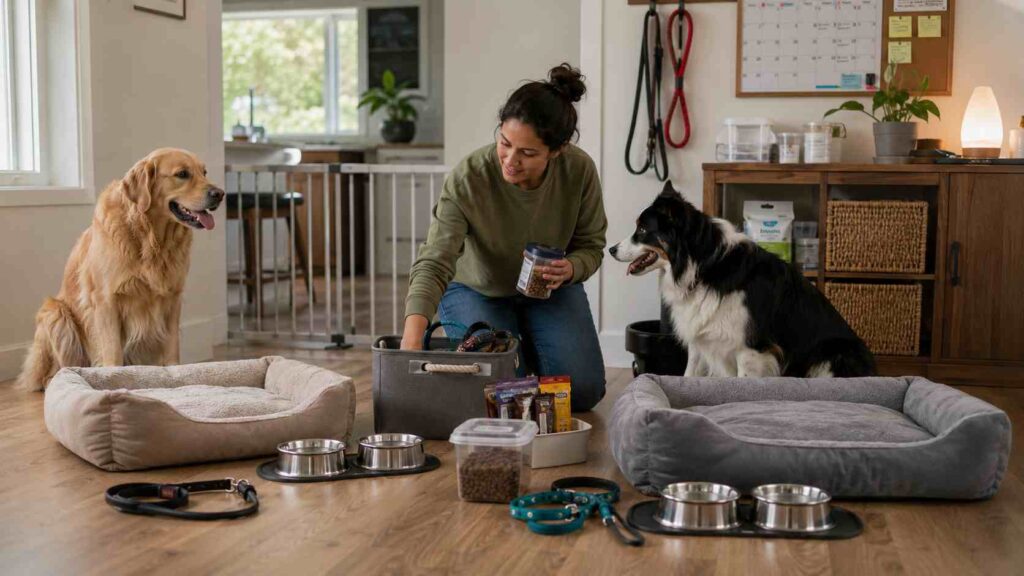
The Time Test
Two dogs don’t simply need “more time.” They may need different time.
During the adjustment period, you may need separate walks, separate training sessions, individual enrichment, supervised play, and one-on-one attention. If your current dog’s care already feels difficult to fit into the day, adding another dog is unlikely to make the routine easier.
The Money Test
Plan for two sets of ongoing expenses, including:
- Food
- Routine veterinary care
- Emergency treatment
- Insurance, where used
- Medication
- Parasite prevention
- Grooming
- Training
- Boarding, daycare, or dog walking
- Beds, leads, crates, gates, and other equipment
Don’t assume every cost will literally double, but budget as though either dog could develop needs the other doesn’t have.
The Emergency Test
Here’s the question that cuts through a lot of wishful thinking:
Could you cope financially if one dog needed emergency treatment while the other was already receiving ongoing veterinary care?
If the answer is no, building an emergency fund or reviewing insurance options before adopting can make the decision much safer.
The Space Test
You don’t need a huge house to own two dogs, but both dogs need space to disengage.
Think about whether you can provide:
- Separate resting areas
- Separate feeding locations
- Gates, pens, or rooms for temporary separation
- Safe places where one dog cannot continually follow the other
- Enough practical space to manage illness, injury, recovery, or conflict
Also check rental, housing, or local restrictions before committing.
The Whole-Family Test
A second dog affects everyone living in the home.
Consider children, cats, small pets, elderly family members, and anyone who regularly helps with care. Decide in advance who will walk, feed, train, pay for veterinary care, handle holidays, and take over if the main caregiver becomes ill.
“Everyone likes the idea” isn’t the same as everyone agreeing to the responsibility.
Checklist: Are You Actually Ready for a Second Dog?
- My current dog’s daily care already feels manageable.
- My dog can relax around dogs they know, not just play with them.
- I’m not ignoring serious aggression, fear, or resource guarding.
- My dog has a reasonably solid training foundation.
- I can provide individual training and attention to both dogs.
- I have practical ways to separate the dogs when needed.
- I can afford routine care for two dogs.
- I’ve planned specifically for unexpected veterinary expenses.
- Everyone responsible for the dogs agrees with the decision.
- I’m choosing for compatibility rather than looks, breed, or sex alone.
- I can supervise and manage the adjustment period.
- I have a realistic plan if the dogs cannot safely live together.
Mostly checked off? You may be ready to begin a careful search for a compatible dog. Several uncertainties? Resolve those first. Serious aggression, unexplained behaviour changes, health concerns, or financial limitations? Treat that as “not right now,” not necessarily “never.”
Choosing Dog #2 Without Guessing
Compatibility Beats a “Perfect” Breed
Temperament, energy, play style, age, size, and how well a dog reads and respects social cues matter more than breed reputation alone. A calm, socially appropriate dog of almost any breed may fit your household better than a high-energy dog chosen mainly because you like the breed.
Look for a dog whose needs and interaction style complement your resident dog rather than simply matching them on paper.
What a Meet-and-Greet Can — and Can’t — Tell You
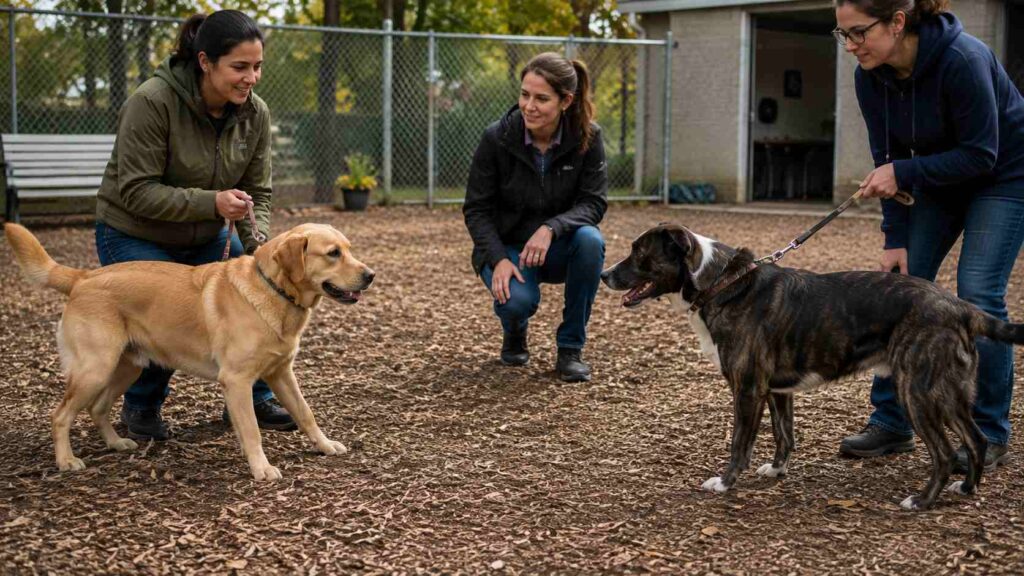
A useful introduction lets you watch for relaxed coexistence, comfortable disengagement, recovery after excitement, and play that both dogs appear to choose. Also watch for stiffness, repeated avoidance, hard staring, excessive mounting, or one dog continually trying to leave.
But one good meeting isn’t a guarantee. Novelty, excitement, an unfamiliar environment, being on lead, stress, or simple tiredness can all make a first encounter look better—or worse—than day-to-day life together.
If possible, use more than one controlled interaction before making a final decision.
Foster-to-Adopt Can Reduce the Guesswork
Some reputable rescues offer foster-to-adopt or trial arrangements that provide more time to assess how a dog fits into your household. Availability and conditions vary, and a trial period still requires careful supervision and management, but it can reveal things a brief meet-and-greet cannot.
Set Up the House Before the Second Dog Arrives
Give each dog their own bed, feeding area, water access, and safe resting space from day one. Don’t assume they need to share simply because they appear friendly.
Manage high-value items carefully, especially food, chews, bones, favourite toys, beds, and access to people if either dog becomes possessive around attention.
Set up baby gates, pens, crates where appropriate, or separate rooms so you can create distance quickly without turning every separation into a stressful event. These management tools are useful even when the dogs get along well.
The First Meeting Is Only the Beginning
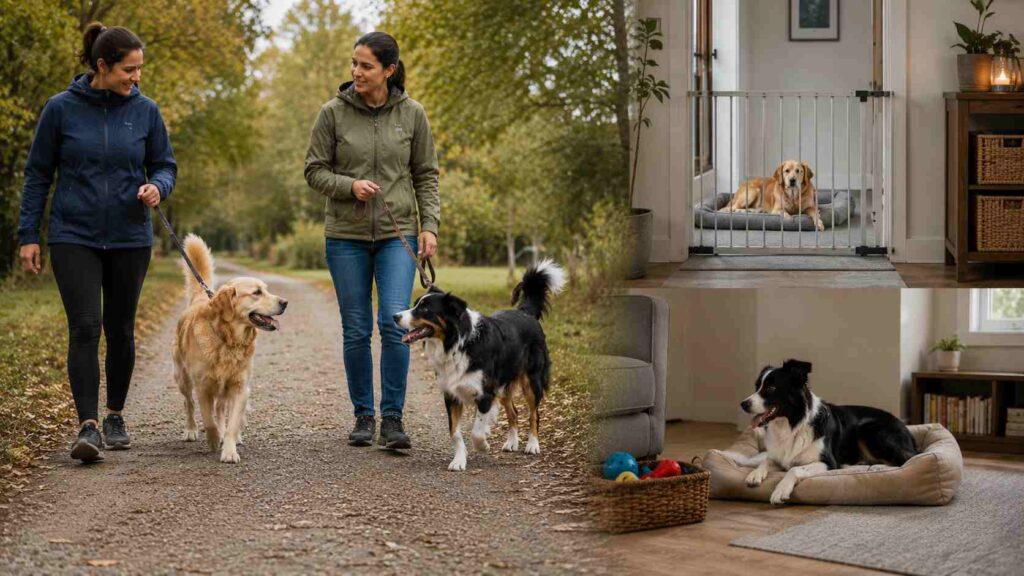
Start introductions in a neutral or low-pressure area with enough distance that neither dog feels trapped or crowded. A calm parallel walk can work well before closer interaction, provided both dogs are comfortable and handlers avoid forcing greetings.
Once the new dog comes home, slow the process down. Use short supervised interactions, regular breaks, careful management of food and valued resources, and gradual increases in freedom as both dogs show they can relax around each other.
Signs of healthy adjustment include:
- Relaxed body language
- Normal eating and sleeping
- Voluntary proximity
- Appropriate, mutual play
- Comfortable disengagement
- Ability to rest separately
- No persistent guarding or monitoring of the other dog
Signs the relationship may be under strain include:
- Persistent hiding or avoidance
- Stiff posture or freezing
- Hard staring
- Blocking access to rooms, people, or resting areas
- Repeated guarding
- Stalking or relentless following
- Difficulty sleeping or settling
- Escalating growling or snapping
- One dog repeatedly trying to escape interaction
Warning: Don’t Rush Unsupervised Time
- A good first meeting doesn’t guarantee long-term safety.
- Never force two dogs to interact.
- Don’t leave them to “work it out” if tension is building.
- Don’t punish growling; it is a warning signal that tells you the dog is uncomfortable.
- Manage food, chews, toys, and other high-value resources carefully.
- Don’t allow a puppy to repeatedly disturb a resting senior dog.
- Children should never be responsible for managing conflict between dogs.
- Never put your hands between dogs that are actively fighting.
- Repeated or escalating aggression needs professional assessment rather than more time alone.
Common Mistakes That Turn a Good Idea Into a Difficult Household
Getting a second dog to “fix” the first dog’s anxiety, boredom, reactivity, or lack of training is one of the biggest mistakes owners make. A new dog adds another set of needs; it does not automatically solve the first dog’s problems.
Other common mistakes include:
- Choosing mainly by appearance or breed instead of compatibility
- Expecting instant friendship
- Giving the dogs too much freedom too quickly
- Letting them share high-value resources before you know how they handle them
- Dropping individual training once dog #2 arrives
- Expecting the older dog to discipline or “raise” the new one
- Assuming a good relationship during puppyhood will never change
Dogs develop through adolescence and social maturity, so household dynamics may change over time. A relationship that was effortless when one dog was six months old may need more management later.
When a Second Dog Should Probably Wait
Delay the decision if your current dog has:
- Active aggression towards other dogs
- Serious resource guarding
- Uncontrolled reactivity
- Severe fear or anxiety
- Untreated pain or mobility problems
- A sudden unexplained change in temperament
- Behaviour that already feels difficult to manage safely
It may also be better to wait if you cannot physically separate two dogs when needed, your finances are stretched, household members disagree, or you’re depending on dog #2 to solve problems with dog #1.
“Not right now” can be the most responsible answer—and it doesn’t have to mean “never.”
Vet Advice: Health Checks Belong in the Decision
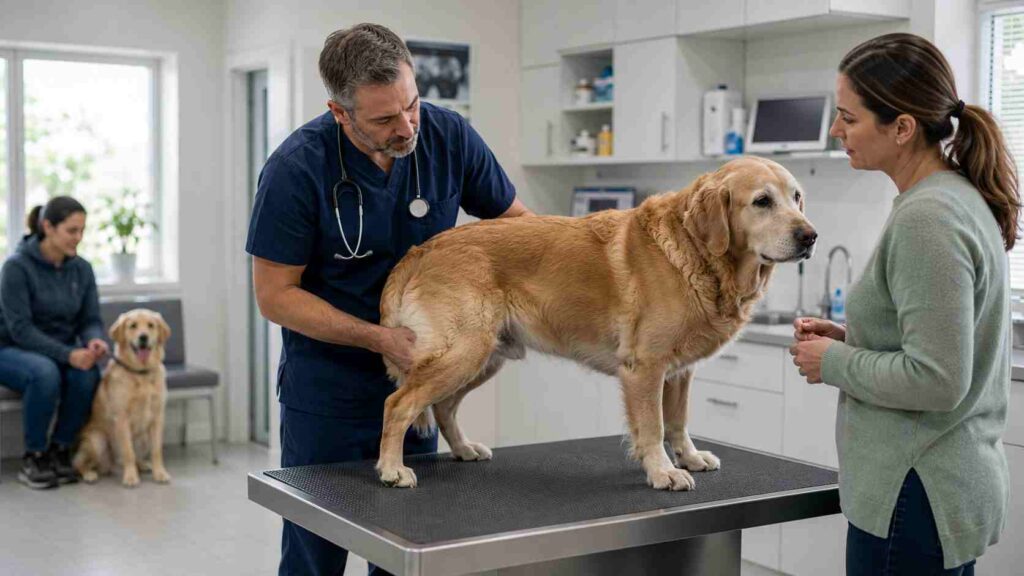
A veterinary visit before adding another dog is especially worth considering if your resident dog is older, their mobility has changed, they’ve become unexpectedly irritable, their tolerance for other dogs has recently dropped, or you suspect pain, hearing loss, or vision changes.
Pain and illness can alter social behaviour. A dog who suddenly snaps when bumped by another dog may not have become “jealous” or difficult—they may be uncomfortable.
For the incoming dog, discuss appropriate health assessment, vaccination needs, parasite prevention, infectious-disease considerations, reproductive management where relevant, and age-appropriate nutrition with your veterinarian.
If either dog has a bite history, serious dog-directed aggression, escalating resource guarding, repeated fights, or severe fear, seek help from a veterinarian and an appropriately qualified behaviour professional rather than trying to manage the problem alone.
The Goal Isn’t “Best Friends”
Success doesn’t require your dogs to cuddle, share a bed, or play all day.
A successful two-dog household is one where both dogs can:
- Relax
- Eat safely
- Sleep without being disturbed
- Receive individual attention
- Move around the home without chronic tension
- Choose interaction
- Choose distance
- Access valued resources without repeatedly needing to defend them
If your dogs mostly ignore each other but are calm and comfortable, that’s not a failed relationship. Peaceful coexistence is a successful outcome.
Three Questions Before You Say Yes
- Is my current dog ready? Consider health, behaviour, training, sociability, resource guarding, and the ability to settle around other dogs.
- Have I found a compatible dog? Compare temperament, age, energy, play style, physical robustness, social behaviour, and how each dog handles resources.
- Is my household ready? Think about time, money, space, family responsibilities, supervision, and what you’ll do if the match doesn’t work.
If most answers point clearly in one direction, you have your decision: a confident yes, a maybe once specific issues are addressed, or a genuine not right now.
All three are responsible outcomes. Getting the match right matters far more than getting another dog quickly.
Frequently Asked Questions
1.Are Dogs Generally Happier With a Second Dog?
Some are, and some genuinely aren’t. Dogs vary in how much canine companionship they enjoy. A socially confident dog that regularly seeks out and relaxes around familiar dogs may enjoy a compatible housemate, while another dog may be perfectly content as the only dog in the home.
2.How Do I Know If My Dog Actually Wants Another Dog Rather Than Just Tolerating Them?
Watch what happens after the initial excitement. Good signs include relaxed body language, voluntary proximity, comfortable play, the ability to disengage, and settling normally around the other dog.
Simply tolerating another dog for twenty minutes at the park doesn’t tell you how your dog will feel about sharing a home.
3.Can a Dog Love Other Dogs but Still Prefer Being the Only Dog at Home?
Yes. Enjoying walks, daycare, or occasional play is different from wanting another dog around food, resting areas, toys, and people every day.
Some dogs enjoy social visits but value having their home to themselves.
4.Is It Better to Get a Puppy or an Adult Dog as a Second Dog?
Neither is automatically better.
Puppies require more supervision, house-training, socialisation, and patience. Adults may have a more established temperament that’s easier to assess, although their history may not always be fully known.
Choose based on compatibility with your resident dog and what you can realistically manage.
5.Is a Male or Female Better as a Second Dog?
There is no reliable rule that guarantees success. Sex may be one factor, but temperament, age, social history, reproductive status, resource guarding, and management matter far more.
If both dogs are intact and of opposite sexes, discuss reproductive management with your veterinarian.
6.Should My Second Dog Be the Same Breed as My First?
Not necessarily. Dogs of the same breed may still have very different personalities, energy levels, and play styles.
Matching temperament and lifestyle is more useful than matching breed.
7.What If My First Dog Completely Ignores the New Dog?
That can be perfectly fine.
Some dogs prefer calm coexistence to constant interaction. If your resident dog is eating, sleeping, moving around normally, and isn’t showing persistent avoidance, tension, or stress, quiet indifference may actually be a good sign.
#. Related Articles: