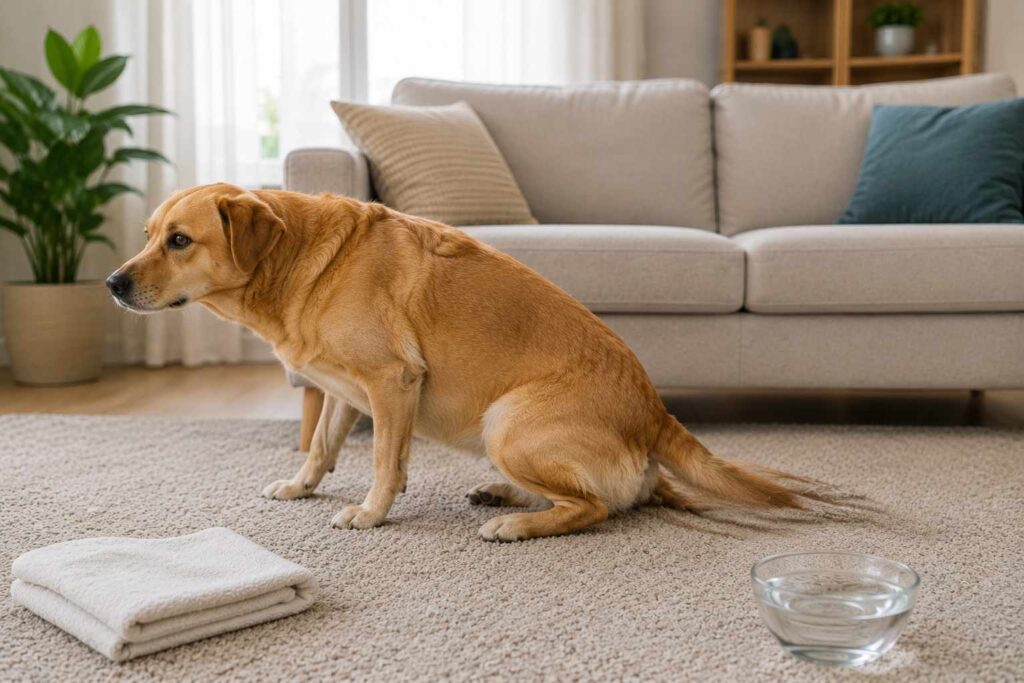
Watching your dog drag their bottom across the carpet can be awkward, but home remedies for dog scooting should never be chosen before you have some idea of what’s causing the irritation. Scooting isn’t a diagnosis — it’s a sign that something around your dog’s rear end feels itchy, uncomfortable, or painful.
Sometimes the explanation is simple, such as dried stool caught in the fur or mild irritation after a messy bowel movement. Other cases need veterinary attention. Anal gland problems are a common cause, but parasites, allergies, skin disease, stool changes, and less common problems around the anus can all trigger the same behaviour. PDSA advises checking for an obvious, simple problem first and contacting a vet when the cause isn’t clear or your dog appears uncomfortable.
So rather than trying several remedies in random order, start with what you can actually see. Here’s how to check your dog safely, what may be reasonable to try at home, and where home care should stop.
Before You Try Anything, Check What Your Dog Is Telling You
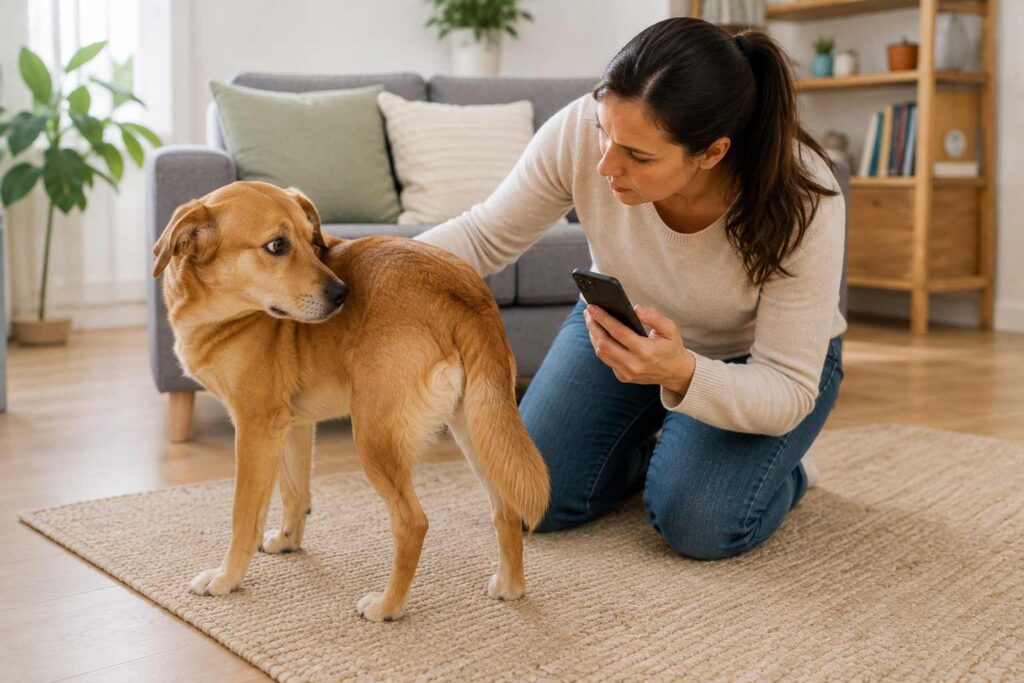
Was It One Scoot, or Is This Happening Repeatedly?
One brief scoot — especially after a messy bowel movement — is different from repeatedly dragging the bottom across the floor.
Pay closer attention if your dog:
- Scoots several times in a day
- Keeps returning to the behaviour over multiple days
- Licks, bites, or chews around the anus or base of the tail
- Suddenly sits down or looks back at their rear end
- Seems uncomfortable when sitting or passing stool
- Develops a strong, fishy smell
Frequency matters, but so do the other signs around it. Anal sac problems, for example, can cause scooting along with licking, sensitivity, straining, swelling, redness, discharge, or a characteristic fishy odor.
Take a Quick Look Under the Tail
If your dog is comfortable with being handled, gently lift the tail and look at the area in good light. Don’t squeeze or insert anything. You’re checking, not trying to diagnose or empty the anal glands yourself.
Look for:
- Dried stool or mud
- Matted fur
- Mild skin redness
- Swelling beside the anus
- Blood or pus
- An open sore or wound
- A visible lump
- Small rice-like pieces around the anus or stool
- Red tissue protruding from the anus
If your dog becomes painful, frightened, or tries to prevent you from looking, stop rather than forcing the examination.
Small white or cream-colored pieces resembling grains of rice can be tapeworm segments. The most common canine tapeworm, Dipylidium caninum, is transmitted when a dog swallows an infected flea, so appropriate flea control is part of preventing reinfection.
Contact your vet rather than trying a home remedy if you see significant swelling, blood, pus, an open wound, a new lump, or protruding rectal tissue. Anal gland abscesses can become extremely painful and may rupture if they aren’t treated promptly.
Check the Last Few Bowel Movements
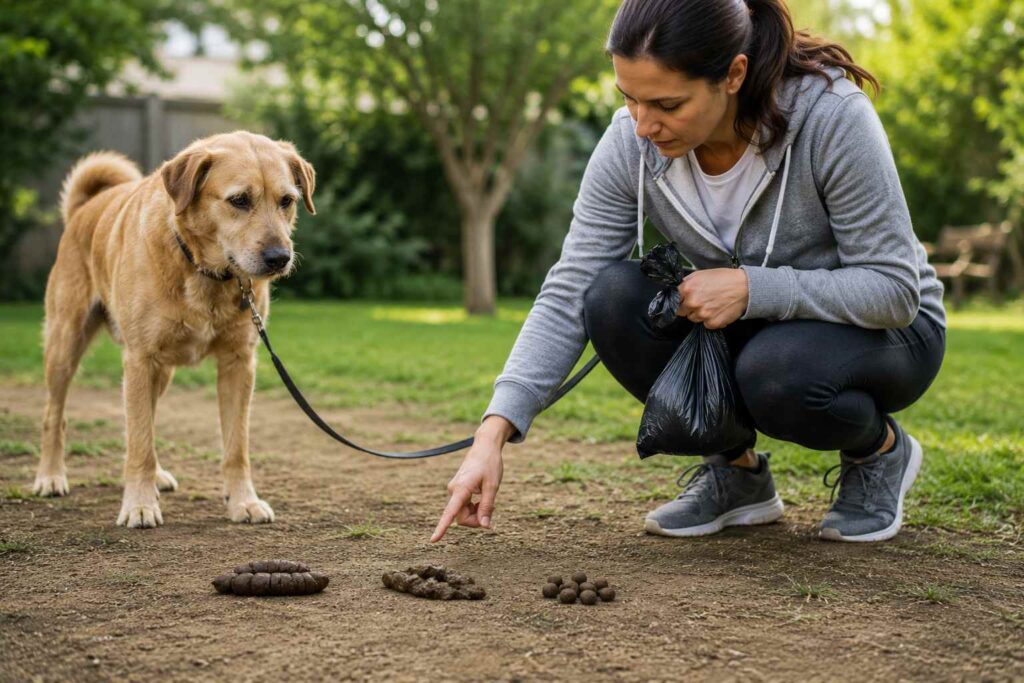
Don’t focus so closely on the scooting that you forget to look at the stool.
Ask yourself:
- Has it been normally formed?
- Has your dog had repeatedly soft stool or diarrhoea?
- Has the stool been unusually dry or hard?
- Has your dog been straining?
- Does passing stool seem painful?
This matters because anal sacs normally empty partly through pressure during defecation. Chronic diarrhoea, constipation, obesity, allergies, and a low-fibre diet are among the factors associated with anal sac disease.
That doesn’t mean every scooting dog needs more fibre. It means stool quality can provide an important clue about what needs addressing.
60-Second Scooting Check
Before trying anything at home, quickly ask:
- Is this a one-off scoot or a repeated problem?
- Is my dog licking or biting the area?
- Is there stool, mud, or matted fur around the bottom?
- Is the skin red or swollen?
- Is there blood, pus, or an open wound?
- Do I see rice-like segments around the anus or stool?
- Is there an unusually strong fishy smell?
- Has the stool been unusually soft, loose, hard, or dry?
- Is my dog straining or showing pain when passing stool?
- Is my dog eating, moving, and behaving normally?
A dog acting normally is reassuring, but it doesn’t override obvious local pain, swelling, discharge, or repeated scooting.
Match the Home Care to the Situation
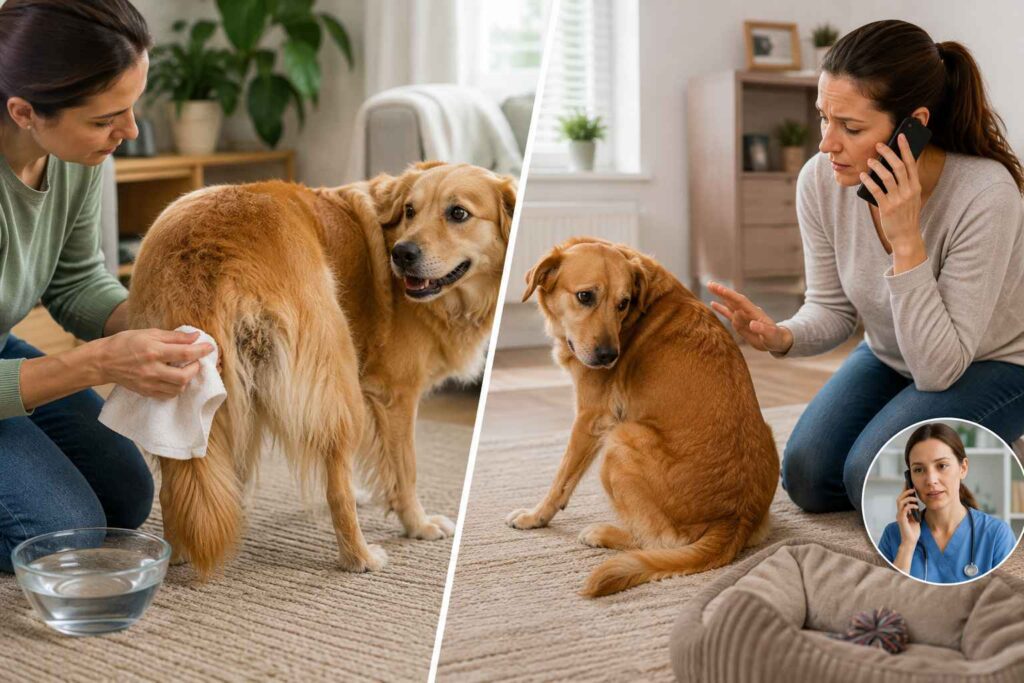
Once you’ve had a proper look, match your response to what you’re actually seeing rather than reaching for a generic fix.
If Stool or Dirt Is Caught in the Fur
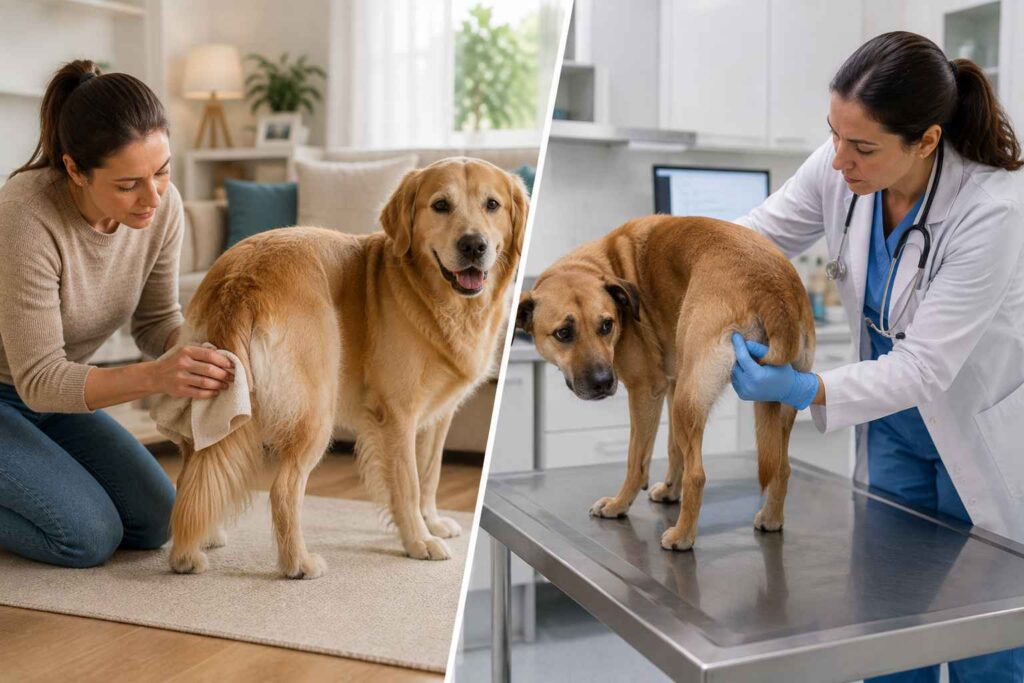
If the problem is clearly external — for example, dried stool stuck in long fur after diarrhoea — gently soften and clean the area with lukewarm water and a soft cloth. Dry the skin carefully afterwards rather than leaving it damp.
If this happens repeatedly, a professional sanitary trim may make hygiene easier.
Stop if your dog seems painful when you touch the area. What looks like dirty or matted fur can occasionally be hiding inflamed skin, discharge, or an anal gland problem.
If the Skin Looks Mildly Irritated
If you see only mild superficial irritation, with no significant swelling, wound, blood, pus, or obvious pain, keeping the area clean and dry may be enough while you monitor it.
A comfortably warm, damp compress can also be used briefly for soothing. It should never be hot, and you don’t need to press firmly.
Prevent persistent licking if possible, because repeated licking can make already irritated skin worse.
Avoid reaching for topical products from your own bathroom cabinet. Human creams, antiseptics, fragranced wipes, essential oils, and other products aren’t automatically safe just because they’re applied externally — dogs may lick them off, and irritated skin around the anus is especially sensitive.
If Scooting Is Happening With Soft Stool or Diarrhoea
Repeatedly soft stool deserves more attention than simply adding pumpkin.
First think about what changed:
- New food
- New treats
- Table scraps
- Sudden diet changes
- A recent stomach upset
Improving stool quality may help some dogs whose anal sacs aren’t emptying normally, but more fibre isn’t automatically the answer to diarrhoea. If loose stool is persistent, recurrent, bloody, associated with vomiting, or your dog otherwise seems unwell, speak to your vet rather than trying to manage it solely as an anal gland problem.
If Your Dog Is Passing Hard Stool or Straining
Check whether your dog has access to fresh water and consider whether anything recently changed in their diet or routine.
Don’t assume that simply adding a large amount of fibre will solve constipation. Repeated straining can have several causes, and difficulty passing stool is also reported with anal sac disease and other problems around the rectum.
If your dog repeatedly strains, cries when defecating, cannot pass stool normally, or seems painful, contact your vet.
If Scooting Comes With Other Signs of Itching
Scooting can sometimes be one part of a wider skin problem.
Look for clues elsewhere, such as:
- Frequent paw licking
- Recurrent ear irritation
- An itchy belly
- Red or inflamed skin
- Persistent scratching
Food allergy dermatitis and atopic dermatitis are among the conditions associated with anal sac disease, so recurring scooting in an itchy dog deserves more than repeated rear-end treatments.
If You See Rice-Like Segments
Small segments resembling grains of rice around the anus or on freshly passed stool are characteristic of tapeworm segments. These can irritate the area enough to cause scooting.
If you see them:
- Take a clear photo if possible
- Contact your vet about an appropriate deworming treatment
- Review your dog’s flea prevention
- Treat flea exposure as part of the problem
Don’t assume that every scooting dog has worms, though. The same behaviour can occur with anal sac problems and several other conditions.
The Popular Remedies — What They Can and Cannot Do
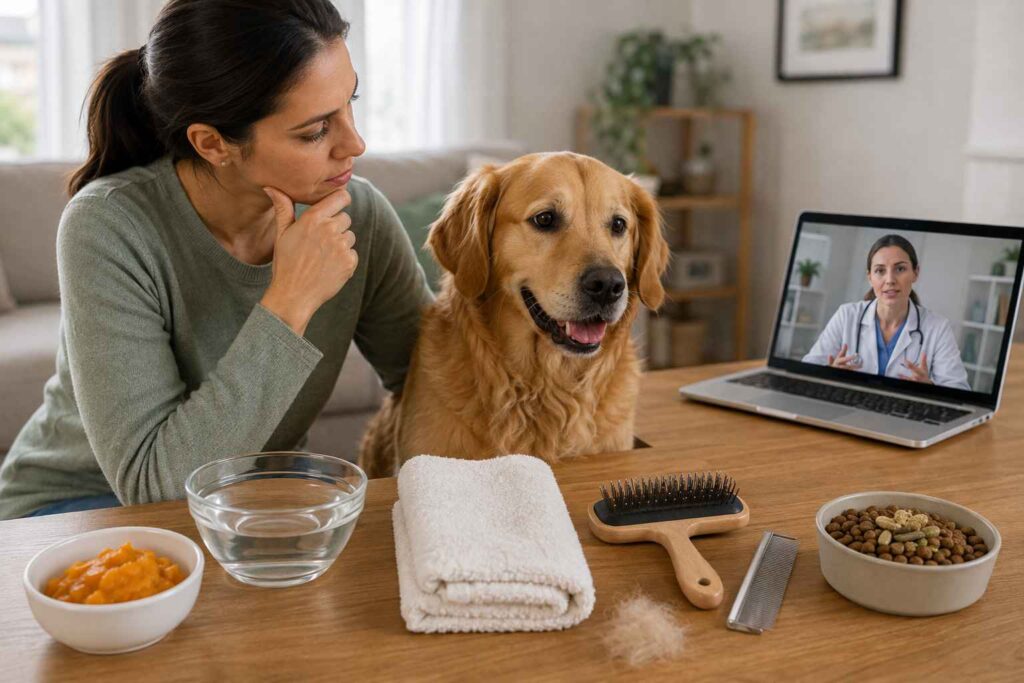
Home remedies are most useful when you understand their limitations. Something that provides comfort isn’t necessarily treating the underlying cause.
Warm Compress
A warm compress may soothe mild external discomfort and is unlikely to complicate the situation when used gently on intact skin.
It cannot:
- Empty an impacted anal sac
- Cure an anal gland infection or abscess
- Treat intestinal parasites
- Correct allergies
- Replace an examination when your dog is painful
If you can see a painful swelling, wound, pus, or blood, skip DIY treatment and contact your vet. PDSA specifically advises against treating suspected anal gland abscesses yourself.
Pumpkin
Plain pumpkin is a source of dietary fibre, and some dogs may benefit from dietary fibre as part of a broader plan to improve stool quality.
But pumpkin is not an anal gland medicine. It won’t treat an infection, kill parasites, or solve every cause of scooting.
Avoid treating internet serving-size charts as universally appropriate. A dog’s current diet, size, stool problem, calorie needs, and medical history all matter.
Fibre Supplements
Fibre may be useful for certain dogs with recurring anal sac problems, particularly when stool consistency is part of the issue. Cornell notes that adding fibre can benefit some dogs with anal sac disease.
That doesn’t translate to “the more fibre, the better.”
A dog with chronic diarrhoea, constipation, or recurrent anal sac trouble needs the underlying problem considered rather than endless adjustments with supplements.
Probiotics
Probiotics can have a role in some digestive-health plans, but they’re not a direct treatment for impacted or infected anal sacs.
If you’re considering one because your dog’s scooting regularly accompanies digestive problems, discuss the bigger pattern with your vet instead of using probiotics solely to suppress one symptom.
Hydration
Good hydration supports normal digestive function and is especially important when stool is becoming dry or hard.
However, increasing water intake won’t resolve an infected, abscessed, or significantly impacted anal sac. Think of hydration as supportive care, not treatment for anal gland disease.
Grooming
Keeping long fur around the rear clean and free from fecal debris can prevent a simple hygiene problem from becoming an ongoing source of irritation.
Regular grooming is particularly useful for dogs whose coat tends to trap stool after soft bowel movements.
But if a clean, well-groomed dog continues scooting, don’t keep treating it as a grooming problem. Persistent scooting means it’s time to look for another cause.
Comfort Measure vs Actual Treatment
| Situation | May Help at Home | What Home Care Won’t Fix | Next Step if Persistent |
|---|---|---|---|
| Stool stuck in fur | Gentle cleaning with lukewarm water | Internal anal-sac disease | Groomer or vet if recurring |
| Mild external irritation | Warm compress and keeping the area clean | Infection or abscess | Vet if it worsens or doesn’t settle |
| Recurrent soft stool | Review diet and stool pattern | Parasites, allergies, or gland infection | Veterinary assessment |
| Rice-like segments | Hygiene and reviewing flea control | The tapeworm infection itself | Appropriate parasite treatment |
| Fishy smell plus repeated scooting | Monitor for other signs | Possible gland impaction or inflammation | Veterinary examination |
| Painful swelling | Do not squeeze | Abscess or infection | Veterinary care |
| Blood, pus, or an open wound | Prevent licking or further irritation | Ruptured or infected anal sac | Prompt veterinary care |
The key distinction is simple: a comfort measure may soothe irritation, but it doesn’t necessarily treat the reason your dog is scooting. If symptoms keep returning, the underlying cause matters more than trying another remedy.
Why Scooting Isn’t Always an Anal Gland Problem
Anal-sac impaction or inflammation can cause scooting, a fishy odour, repeated licking, and discomfort around the rear. But the same behaviour can come from several unrelated problems.
Tapeworm segments may irritate the area, particularly when flea exposure is involved. Allergies — including environmental, food-related, or flea-associated skin disease — can cause itching around the anus as part of a wider skin problem. Chronic diarrhoea, repeatedly soft stool, or constipation may also contribute to anal-sac trouble by changing the way pressure is applied during bowel movements.
Sometimes the explanation is much simpler. A long-haired dog may scoot because dried stool or debris is caught in the fur after a messy bowel movement.
In female dogs, irritation around the vulva, vaginitis, or a recessed vulva can sometimes look like an anal problem. Less commonly, persistent scooting may be associated with anal furunculosis, rectal prolapse, perianal masses, or anal-sac tumours. These aren’t reasons to panic over an occasional scoot, but they are reasons persistent or unexplained scooting deserves a veterinary examination rather than repeated home treatment.
What a Fishy Smell Might Mean
A strong fishy odour commonly comes from anal-sac secretion. A small amount may be released spontaneously, especially when a dog is frightened, excited, or passing stool, so the smell alone doesn’t automatically mean something is wrong.
Pay more attention when the smell appears alongside:
- Repeated scooting
- Persistent licking
- Redness or swelling
- Discomfort when sitting
- Straining or painful defecation
- Abnormal discharge
If you notice pain, blood, pus, or a swollen area beside the anus, don’t try to express the glands yourself. Those signs can occur with infection or an abscess and warrant veterinary care.
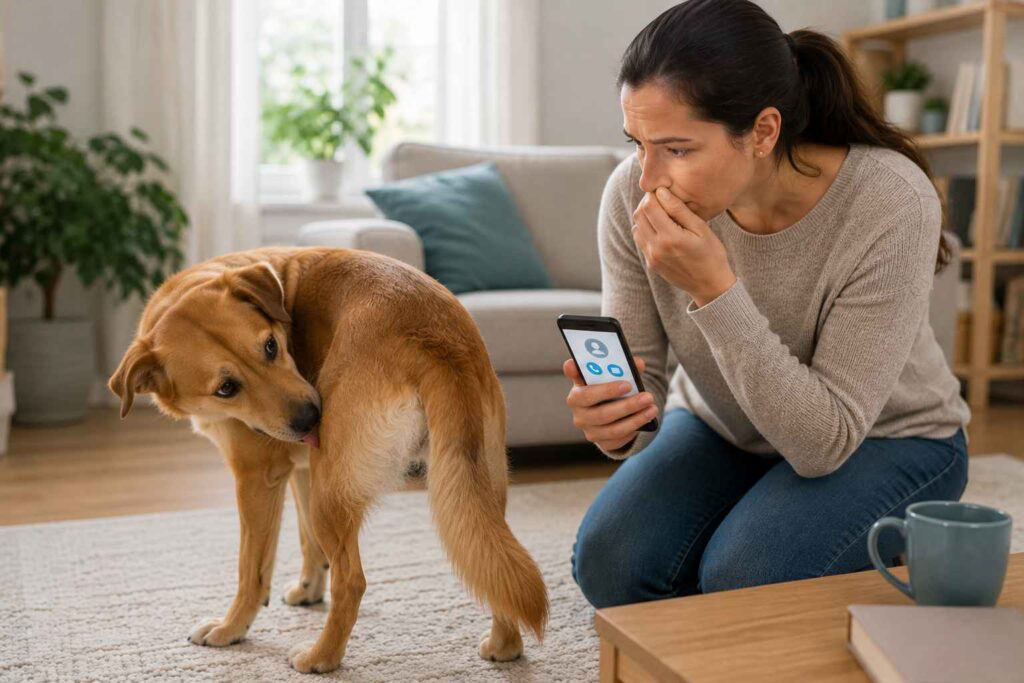
Still Scooting After Gland Expression?
A little temporary sensitivity can occur after anal-sac expression, particularly if the area was already irritated. However, ongoing or repeatedly returning scooting shouldn’t automatically lead to another expression.
If the glands have already been checked or emptied and your dog keeps scooting, the original assumption may have been incomplete. Other possibilities include:
- Allergies or skin disease
- Persistently soft or hard stool
- Parasites
- Local skin irritation
- Recurrent anal-sac inflammation
- Anatomical factors around the anal sacs
For dogs with repeated episodes, it’s more useful to discuss stool quality, diet, body condition, allergy signs, parasite control, and the pattern of recurrence with your vet than to rely on routine expression alone.
Common Mistakes That Can Make Scooting Worse
Assuming Scooting Automatically Means Worms
Scooting is too nonspecific to diagnose parasites on its own. Treating for worms without considering other causes can delay the real diagnosis.
Trying to Express the Anal Glands Yourself
Unless your veterinarian has specifically shown you how and advised you to do it, squeezing the area can cause pain, irritation, and may miss an infection or abscess that needs treatment.
Adding Large Amounts of Pumpkin or Fibre
Fibre can be useful in selected dogs, but it isn’t a universal fix. Too much — or the wrong type for your dog’s digestive problem — may worsen stool quality.
Applying Human Skin Products
Avoid hemorrhoid creams, anti-itch products, alcohol-based wipes, strong antiseptics, or other human medications around the anus unless your veterinarian specifically recommends them.
Assuming “Natural” Means Safe
Apple cider vinegar, witch hazel, essential oils, and unverified herbal dewormers are not automatically gentle or appropriate for irritated skin. Dogs also tend to lick anything applied around the rear.
Continuing Home Treatment While Symptoms Worsen
Repeatedly changing remedies while swelling, discharge, pain, or difficulty defecating develops can delay treatment of an infection or another underlying problem.
Warning: Skip Home Remedies and Contact a Vet If You See
- Red, hot, or painful swelling beside the anus
- Blood or pus
- An open wound
- Severe or increasing pain
- Crying when sitting or defecating
- Repeated straining or difficulty passing stool
- A visible or growing lump
- Red tissue protruding from the anus
- Reduced appetite or lethargy
- Rapidly worsening scooting
- Symptoms that repeatedly return despite previous treatment
Quick Tips for the Next 24 Hours
- Pay attention to frequency and pattern, not just one isolated scoot.
- Keep the rear clean and dry if debris is present.
- Never squeeze swollen or painful tissue.
- Take a clear photo of anything unusual before cleaning it away.
- Note whether stool is normal, soft, diarrhoeic, hard, or difficult to pass.
- Watch for excessive licking or chewing.
- Note any fishy odour, swelling, or discharge.
- Look for rice-like tapeworm segments around the anus or stool.
- Avoid trying several remedies at once; it becomes harder to tell what changed.
- Contact your vet sooner if pain, swelling, discharge, straining, or general illness develops.
Preventing Recurrent Scooting
Prevention depends on the cause, so the goal isn’t simply to “keep the anal glands empty.”
Aim for consistently healthy stool by avoiding abrupt diet changes and paying attention to recurring diarrhoea or constipation. Keep your dog at a healthy body condition, since excess weight can contribute to anal-sac problems in some dogs.
If scooting appears alongside paw licking, recurrent ear trouble, or other itchy skin, address the possibility of allergies rather than treating only the rear end. Maintain appropriate flea and parasite control, particularly because fleas are involved in the life cycle of the common Dipylidium tapeworm.
For long-haired dogs, keeping the fur around the rear clean and neatly trimmed can reduce fecal debris and matting. Most importantly, if scooting keeps returning despite good hygiene and normal stool, treat that recurrence as a clue that the underlying cause still needs to be found.
What Your Vet May Check If Scooting Keeps Returning
If scooting keeps coming back, your vet will usually look beyond simply asking whether the anal sacs are full.
A physical examination may include checking the skin and perianal area for redness, swelling, wounds, discharge, or masses, followed by an assessment of the anal sacs for impaction, inflammation, infection, or abnormal material. Your vet may also ask about recent stool consistency, diarrhoea or constipation, flea and parasite exposure, and whether your dog has other signs of allergies such as itchy paws, recurrent ear problems, or widespread skin irritation.
In older dogs, dogs with repeated episodes, or dogs with a new lump or unexplained swelling, further investigation may be appropriate to rule out less common underlying disease.
Persistent scooting deserves an examination aimed at finding the cause, not simply repeated gland expression. If the problem keeps returning despite previous treatment, that pattern itself is useful information for your vet.
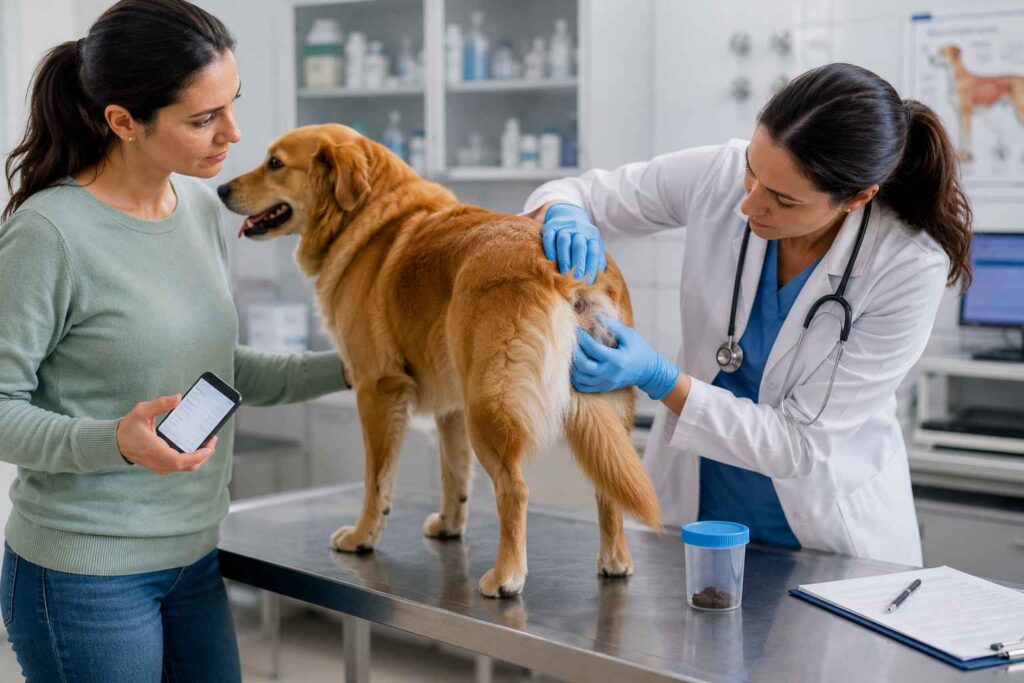
Quick Decision Guide
Probably Fine to Monitor Briefly
Brief observation may be reasonable when:
- Your dog scoots once or twice and then stops
- They seem comfortable and otherwise normal
- There is no swelling, blood, pus, or discharge
- Stool is normally formed
- You can see a small amount of stool or debris that can be gently cleaned away
If the scooting returns or other symptoms appear, reassess rather than continuing to wait.
Book a Veterinary Appointment
Arrange an examination if you notice:
- Frequent or recurring scooting
- Repeated fishy odour
- Persistent licking or chewing around the rear
- Recurrent soft stool, diarrhoea, constipation, or straining
- Suspected tapeworm segments or other parasite concerns
- Scooting that continues after anal-sac expression
- Repeated episodes with no obvious external cause
Seek Prompt Veterinary Care
Don’t rely on home remedies if your dog has:
- Painful or rapidly increasing swelling
- Blood or pus
- An open wound beside the anus
- Significant difficulty passing stool
- Marked lethargy or reduced appetite
- A visible or growing mass
- Red tissue protruding from the anus
- Severe or rapidly worsening pain
Final Thoughts
Scooting is your dog’s way of showing that something around the rear end feels uncomfortable, but there isn’t one remedy that fits every cause.
A dog that scoots once because dried stool is caught in the fur needs a very different response from one that repeatedly scoots, smells strongly fishy, and has painful swelling beside the anus. Taking a moment to look at the pattern, the skin, and the stool often tells you whether gentle home care is reasonable or whether it’s time to involve your vet.
Use home remedies for minor, clearly external problems and supportive comfort, not as a substitute for diagnosing persistent or painful scooting. When something doesn’t add up — or keeps coming back — finding the underlying cause is the quickest route to lasting relief.
Frequently Asked Questions
1.Does Dog Scooting Always Mean the Anal Glands Are Full?
No. Anal-sac problems are common, but parasites, allergies, skin irritation, stool changes, fecal debris, and other conditions around the anus can produce the same behaviour. Scooting alone isn’t enough to identify the cause.
2.Why Is My Dog Still Scooting After Having Their Anal Glands Expressed?
Expression only addresses anal-sac contents. If your dog’s scooting is being driven by allergies, skin irritation, parasites, abnormal stool, ongoing inflammation, or another condition, the behaviour may continue.
Mild temporary sensitivity can occur after expression, but persistent or worsening scooting should be discussed with your vet rather than repeatedly expressing the glands.
3.Can Soft Stool or Constipation Cause Scooting?
They can contribute. Anal sacs normally empty partly through pressure during bowel movements, so repeatedly soft stool may not provide the same pressure, while constipation and straining can also contribute to discomfort around the rear.
Persistent diarrhoea or constipation deserves attention in its own right rather than simply being treated as an anal-gland problem.
4.What Does a Fishy Smell From My Dog’s Rear Mean?
A strong fishy odour commonly comes from anal-sac secretion.
An occasional smell without other symptoms isn’t necessarily concerning. But repeated fishy odour combined with scooting, licking, swelling, pain, or abnormal discharge makes an anal-sac problem more likely and is worth having checked.
5.Should I Try to Express My Dog’s Anal Glands Myself?
Not unless your veterinarian has assessed your dog and specifically shown you an appropriate technique.
Trying to express painful, inflamed, or infected anal sacs can cause additional discomfort and may delay proper treatment. It can also make owners assume the glands are responsible when another condition is actually causing the scooting.
6.Can Allergies Really Cause Recurring Scooting?
Yes. Allergic skin disease can affect the skin around the rear as well as other areas of the body.
If scooting occurs alongside paw licking, recurrent ear trouble, belly itching, or widespread skin irritation, the allergy itself may need addressing rather than repeatedly treating the anal area.
7.When Does Dog Scooting Count as an Emergency?
Scooting itself is rarely the emergency — the accompanying signs are what matter.
Seek prompt veterinary care if your dog develops painful swelling, blood or pus, an open wound, severe difficulty passing stool, marked lethargy, a visible mass, protruding rectal tissue, or rapidly worsening pain.
#. Related Articles:
1. How Long Does It Take a Dog to Digest Food?