
Can dogs eat sugar? A small amount of ordinary table sugar is not usually considered poisonous to dogs, but that doesn’t make it a good treat. More importantly, not every “sugar” situation carries the same risk. A lick of granulated sugar from the worktop is very different from a piece of sugar-free gum disappearing from your bag.
Before deciding what to do, answer one question: what exactly did your dog eat? Was it plain sugar, a sugary dessert, something labelled “sugar-free,” or a naturally sweet food such as fruit? The answer determines whether you’re dealing mainly with unnecessary calories, possible digestive upset, another hazardous ingredient, or a genuine poisoning emergency.
This guide helps you sort out that difference without treating every sweet-food accident as the same problem.
First Question: What Exactly Did Your Dog Eat?
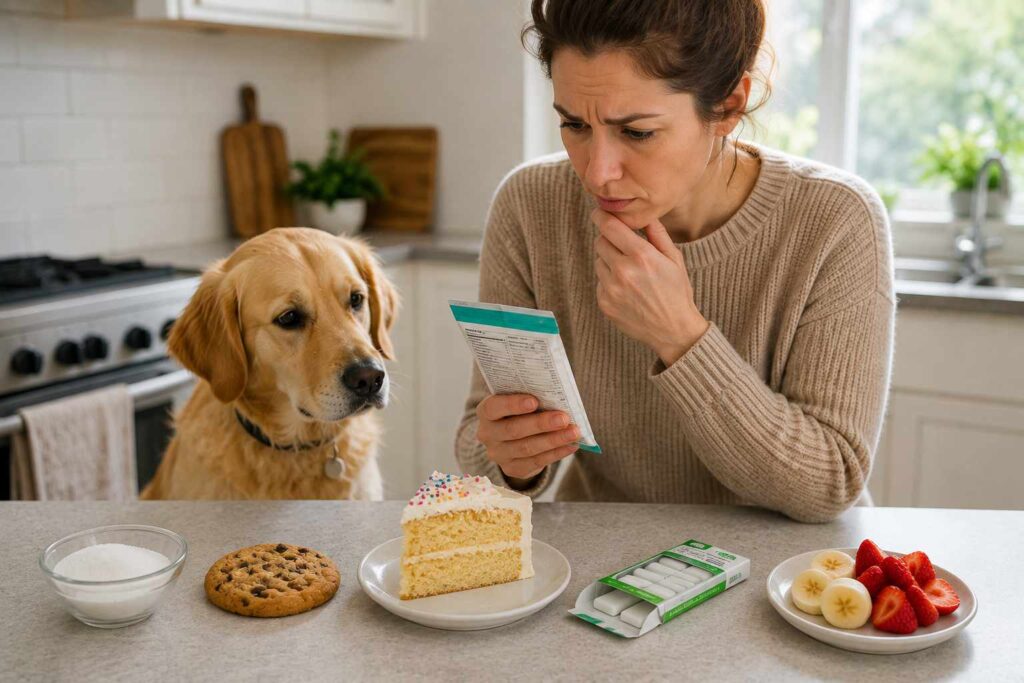
Before anything else, work out which of these four categories applies.
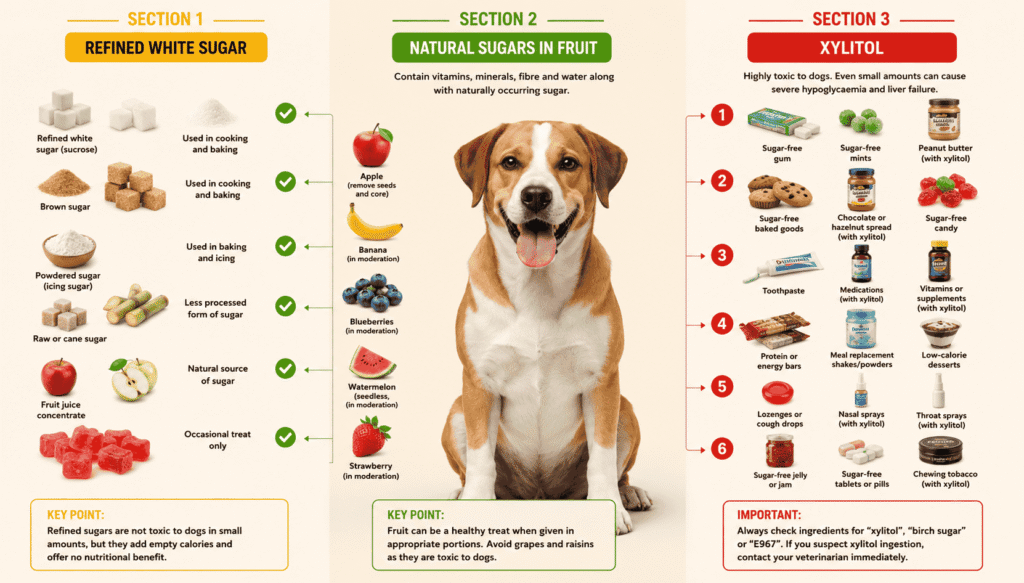
Plain table sugar. White or granulated sugar, brown sugar, icing or powdered sugar, and raw or cane sugar are all forms of added sugar. A small accidental taste is generally very different from exposure to a toxic sweetener.
A sugary human food. Biscuits or cookies, cake, frosting, cereal, ice cream, sweets, candy, and syrups need to be assessed as complete foods. Chocolate, raisins, macadamia nuts, caffeine, alcohol, high fat levels, or even swallowed packaging may matter more than the sugar itself.
A sugar-free or reduced-sugar product. This category deserves extra caution. Some chewing gums, sweets, baked goods, nut butters, oral-care products, medicines, and supplements may contain xylitol, a sweetener that can be highly toxic to dogs. Check the full ingredient list rather than relying on wording such as “sugar-free” on the front of the package.
A naturally sweet whole food. Fruit is nutritionally different from spoonfuls of refined sugar because it also contains water, fibre, and nutrients. That still doesn’t mean every fruit is safe or that portions are unlimited. Grapes and raisins, for example, are toxic to dogs and should not be treated as safe simply because their sugar is natural.
Comparison Table: Sweet Things Are Not All the Same
Here’s how common situations compare:
| What the dog ate | Main concern | What to check | Typical urgency |
|---|---|---|---|
| Small amount of plain sugar | Possible mild digestive upset; unnecessary calories | Amount eaten and dog’s size | Usually low |
| Large amount of plain sugar | Digestive upset and substantial calorie intake | Amount, dog size, symptoms | Depends on context |
| Cake, cookie, or biscuit | Other ingredients, fat, and sugar | Full ingredient list | Variable |
| Chocolate dessert | Chocolate exposure plus other ingredients | Type and amount of chocolate; dog size | Higher concern |
| Sugar-free gum or sweets | Possible xylitol | Ingredient panel immediately | Potential emergency |
| Dog-safe fruit | Portion size and total calories | Type of fruit and serving size | Usually low if appropriate |
| Syrup or honey | Concentrated added calories | Amount and other ingredients | Usually a nutrition issue |
Plain Sugar Is Usually a Nutrition Problem, Not a Poisoning One
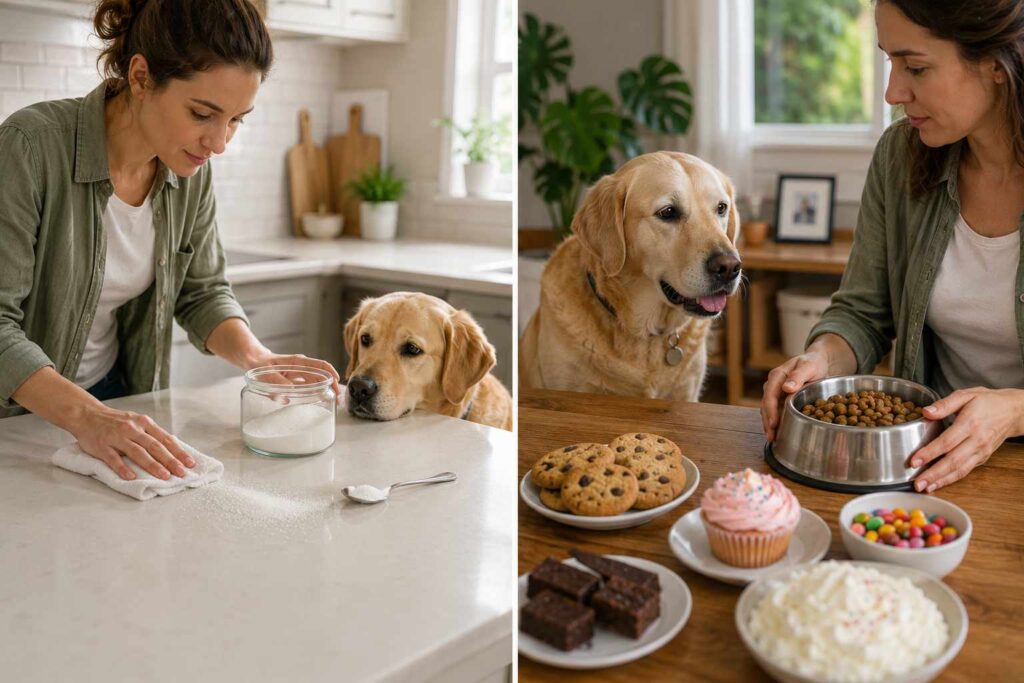
For the common scenario where a dog licks a little ordinary sugar or eats a small amount of food sweetened with it, plain sucrose is not in the same risk category as xylitol.
Dogs do not need added table sugar. A complete and balanced diet already supplies the energy and nutrients they require, while refined sugar mainly adds extra calories without offering a meaningful nutritional advantage. WSAVA recommends keeping treats to no more than 10% of a dog’s daily calories, with the remaining calories coming from a complete and balanced diet.
There is also an important difference between an accident and a habit. A dog that gets one lick of frosting is not in the same situation as a dog receiving sugary snacks every day. With a one-off incident, the more important questions are how much was eaten, what else was in the food, and whether symptoms develop. Repeated feeding is primarily a nutrition and weight-management issue.
In other words, “not toxic” does not mean “good for dogs.” A small amount of plain sugar may not poison a healthy dog, but there is still little reason to make it part of their regular diet.
What Too Much Ordinary Sugar Can Actually Do
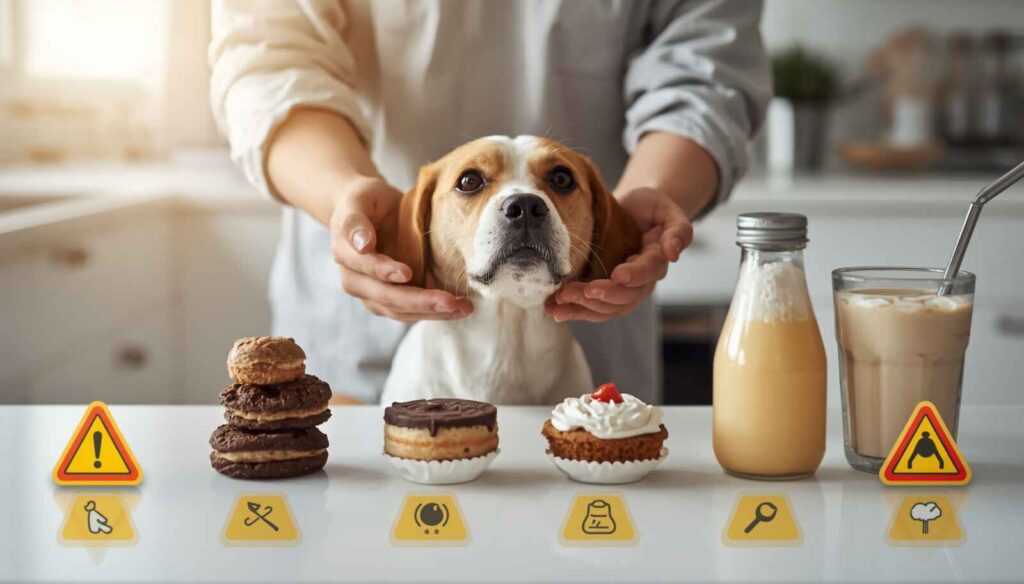
Short-term digestive upset. A larger or unfamiliar amount of sugary food may lead to vomiting, diarrhoea, gas, or abdominal discomfort. If symptoms are persistent, severe, or accompanied by lethargy, weakness, repeated vomiting, or abdominal pain, contact your veterinarian.
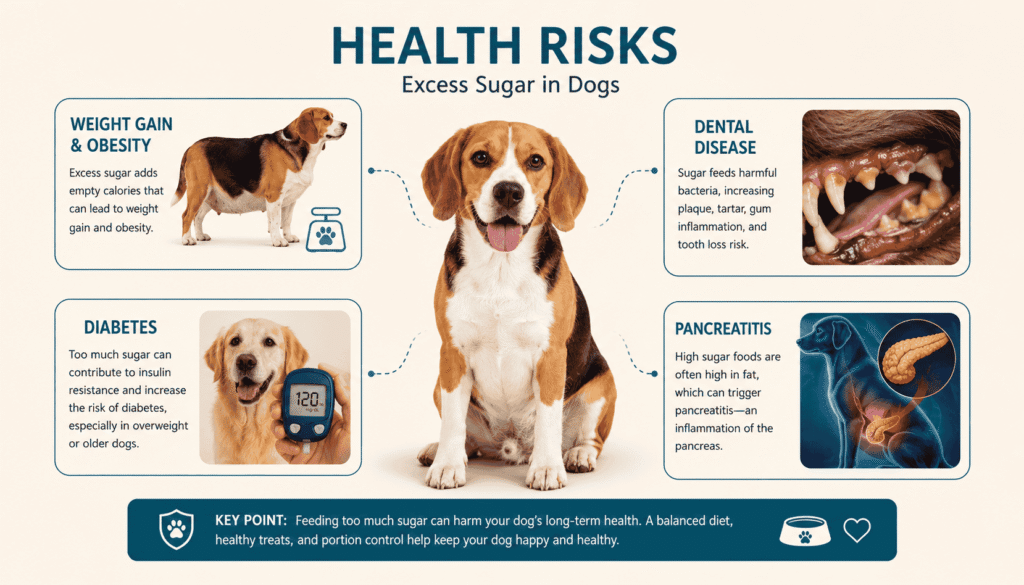
Weight gain. Sugary extras provide calories quickly. This matters especially for small dogs, where even a seemingly tiny human snack can take up a meaningful share of the day’s treat allowance.
Diet dilution. Treats and table scraps should not crowd out a nutritionally complete diet. When extras become a significant part of daily intake, the dog may consume plenty of calories while getting proportionally less of the balanced nutrition their main food is designed to provide.
Dental health. Sugary human foods offer no dental benefit and are best avoided as routine treats. Canine dental disease is more complicated than the human idea of “sugar causes cavities,” so it is better not to blame sugar alone. Regular tooth brushing, appropriate veterinary dental care, and suitable dental products matter far more.
Diabetes. Eating sugar does not simply cause diabetes in dogs. Canine diabetes is more complex than that. However, repeated excess calorie intake can contribute to unwanted weight gain, and a dog already diagnosed with diabetes needs a consistent, veterinarian-guided feeding plan rather than general treat advice.
Pancreatitis. Sugar itself should not automatically be blamed for pancreatitis. Many sugary human foods—such as frosting, doughnuts, rich cakes, and ice cream—are also high in fat, which can be a more important concern, particularly for dogs with a history of pancreatitis or fat-sensitive diets.
Before You Share Anything Sweet
- Use part of your dog’s normal food ration as training rewards when practical instead of continually adding extra treats.
- Think about total calories, not just how small the piece looks.
- Keep treats and extras to a small part of the overall diet; veterinary nutrition guidance commonly uses about 10% of daily calories as an upper limit for treats in healthy dogs.
- Read the full ingredient list, especially for sugar-free or reduced-sugar products.
- Don’t assume “natural” means safe.
- Don’t assume “sugar-free” means safer.
- Recheck familiar products occasionally because formulations can change.
- If your dog has diabetes, obesity, previous pancreatitis, another diet-sensitive condition, or a prescription diet, ask your veterinarian before adding regular treats.
The Real Emergency Risk Hides Behind the Words “Sugar-Free”
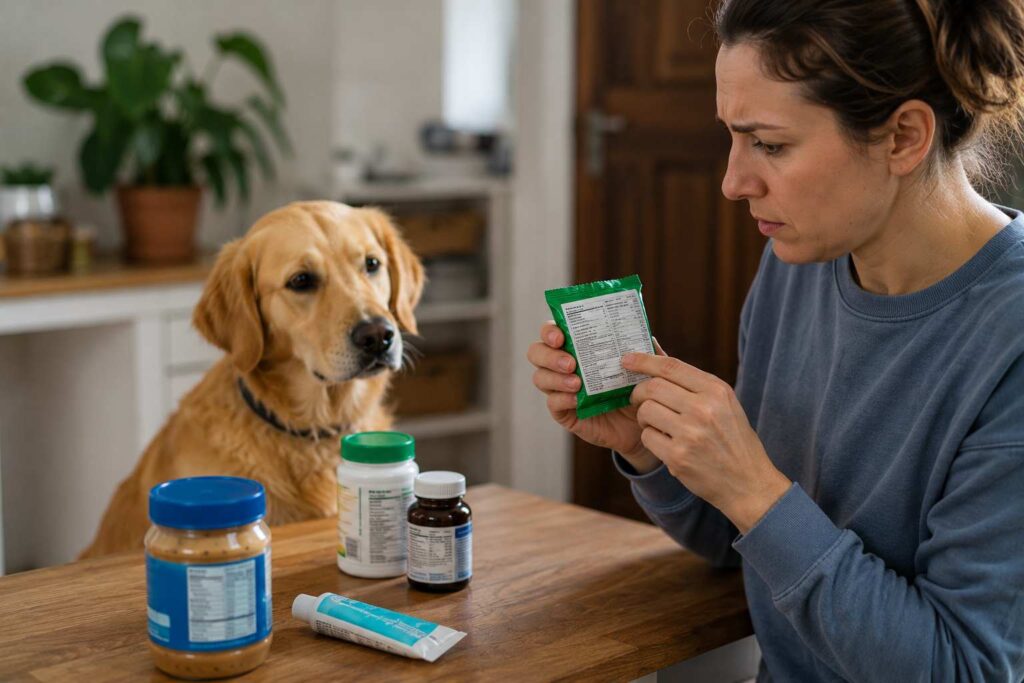
This is the part of the article where the risk can change quickly. Xylitol is not the same as ordinary sugar. In dogs, it can trigger a rapid insulin release that causes dangerously low blood sugar, and some dogs can also develop serious liver injury. Merck Veterinary Manual treats xylitol ingestion as a distinct toxicology problem, not as ordinary dietary sugar exposure.
Learn to recognise it on ingredient labels as xylitol or birch sugar. It can appear in more products than many owners expect, including:
- Sugar-free gum, mints, and sweets
- Some baked goods
- Toothpaste and other oral-care products
- Certain peanut and nut butters
- Some medicines, vitamins, and supplements
A dog may still look completely normal shortly after an exposure. Signs of hypoglycaemia can appear within about 30 minutes in some cases but may be delayed for many hours when the product slows absorption, such as certain gums. Liver-related signs can appear later still.
Warning: If a sugar-free product may contain xylitol, don’t wait for symptoms. Keep the packaging and ingredient list, note roughly how much is missing and when it was eaten, and contact your veterinarian promptly. Do not try to induce vomiting at home unless a veterinary professional specifically instructs you to; Merck advises that emesis should ideally be carried out under veterinary supervision because signs can develop rapidly.
Sometimes the Sugar Isn’t the Most Dangerous Thing in the Room
Sweet foods rarely contain sugar and nothing else. Before focusing entirely on the sugar content, check for these:
- Chocolate — a separate toxicity risk that depends on the type, amount eaten, and dog’s size
- Raisins and grapes — toxic to dogs and often hidden in cakes, biscuits, and other baked goods
- Macadamia nuts — sometimes found in cookies, confectionery, and desserts
- Caffeine — found in coffee-flavoured desserts, chocolate, and some energy products
- Alcohol — sometimes present in desserts, sauces, or drinks
- High fat content — rich cakes, frosting, doughnuts, and ice cream may be more concerning for dogs with a history of pancreatitis or fat-sensitive diets
- Wrappers, foil, sticks, or packaging — these can create choking or gastrointestinal obstruction risks even when the food itself is not highly toxic
If your dog has eaten something sweet, collect the useful details before calling your vet: the exact product, ingredient list, amount missing, your dog’s weight, when it happened, current symptoms, and whether any packaging was swallowed. A photo of the label can be especially helpful.
How Much Is Too Much? Why There’s No Single Safe Number

There is no useful universal “safe amount of sugar” that fits every dog and every product. Dog size varies enormously, calorie needs differ, medical conditions matter, and two foods containing similar amounts of sugar can have completely different risks because of their other ingredients.
For ordinary treats, it is more useful to think about the dog’s total daily treat calories than to count grams of sugar in isolation. A sugar cube, cookie, chocolate sweet, stick of sugar-free gum, and spoonful of frosting may all be described as “one piece” or “a little bit,” but they are not comparable exposures.
Xylitol needs an entirely different assessment. Its concentration can vary substantially between products, so owners should not try to estimate safety from the number of pieces eaten alone. Veterinary toxicology guidance bases risk on the estimated xylitol dose relative to the dog’s body weight and the specific product involved.
Which Dogs Need Extra Caution?
Some dogs need a more conservative approach to sugary foods even when no toxic ingredient is involved.
Puppies need a nutritionally complete diet to support growth, so sugary extras are particularly poor use of their limited treat allowance.
Toy and small breeds have lower daily calorie needs. A human-sized bite that looks insignificant can represent a much larger portion of their day’s calories than it would for a large dog.
Overweight dogs benefit from avoiding unnecessary calorie-dense extras, especially when those treats offer little nutritional value.
Diabetic dogs need consistent, individualised feeding and medication management. Do not use general online sugar recommendations to make changes to a diabetic dog’s diet.
Dogs with a history of pancreatitis or fat sensitivity need the whole food assessed rather than the sugar alone, since many desserts are also rich in fat.
Dogs on prescription or therapeutic diets may need stricter treat choices so extras do not interfere with the purpose of the diet. When in doubt, check with the veterinarian managing your dog’s condition.
Fruit Sugar Isn’t the Same Question as Added Sugar

Dog-safe fruit sits in a different nutritional category from a spoonful of table sugar. Along with naturally occurring sugars, whole fruit can provide water, fibre, and micronutrients that refined sugar doesn’t. Portion size still matters, though, and “natural” is not a guarantee of safety.
The same caution applies to honey, maple syrup, molasses, and raw or coconut sugar. They may sound more wholesome than white sugar, but they’re still concentrated sources of sugar and calories and offer little reason to add them routinely to a dog’s diet.
Grapes and raisins are the clearest reminder that natural does not mean dog-safe: both are toxic to dogs and should not be offered at all.
Sugar in Dog Food Isn’t the Same Question as Sharing Dessert
If you’ve spotted sugar on your dog’s food label, don’t judge the entire diet from that ingredient alone. Ingredient lists provide useful information, but they don’t tell you everything about the finished food’s nutritional quality or calorie balance.
The more useful questions are whether the food is nutritionally complete and appropriate for your dog’s life stage, body condition, and health needs. That’s a very different situation from adding table sugar or regularly sharing sugary human foods.
If your dog has diabetes, a weight problem, a food-sensitive condition, or is eating a therapeutic or prescription diet, ask the veterinarian managing their care before adding treats or making dietary changes.
Common Mistakes Owners Make
- Calling ordinary sugar “poison” when the usual concern is nutrition or digestive upset rather than acute toxicity
- Treating ordinary sucrose and xylitol as though they carry the same risk
- Assuming “sugar-free” automatically means safer
- Trusting a universal “safe amount” without considering the product, portion, and dog’s size
- Waiting for symptoms before seeking help after suspected xylitol exposure
- Inducing vomiting without veterinary guidance
- Checking only the front of the package instead of the full ingredient list
- Forgetting about swallowed wrappers, foil, sticks, or other packaging
- Focusing on sugar when chocolate, raisins, macadamia nuts, caffeine, alcohol, or high fat content may be the bigger concern
- Assuming brown, raw, or coconut sugar is a healthier choice for dogs
- Assuming naturally occurring sugar makes every fruit safe
- Saying sugar directly causes diabetes or pancreatitis
When to Get Professional Help
Contact your vet promptly if:
- Xylitol or birch sugar may be present
- You can’t identify everything in the product
- Chocolate, raisins, grapes, macadamia nuts, alcohol, or caffeine may be involved
- Your dog ate a large quantity relative to their size
- Packaging was swallowed with the food
- Your dog develops repeated vomiting, marked lethargy, weakness, poor coordination, tremors, seizures, collapse, or other concerning signs
- Your dog has a medical condition that could change the risk
Have this ready when you call: the product packaging or a clear photo of it, the full ingredient list, your dog’s weight, the approximate amount eaten, when it happened, any symptoms you’ve noticed, and relevant medical history. These details are far more useful than simply saying, “My dog ate something sugary.”
What not to do without veterinary direction: don’t automatically induce vomiting, don’t use an online dose calculator as a substitute for professional toxicology advice, and don’t try home remedies such as sugar water. If xylitol may be involved, don’t wait for symptoms before contacting a veterinary professional.
Better Ways to Reward Your Dog Without Reaching for the Sugar Bowl

Your dog doesn’t need sweet human food to get a worthwhile reward. Better options include:
- Using part of their normal daily food ration for training
- Offering small portions of individually verified dog-safe foods such as banana or strawberry
- Using non-food rewards such as play, attention, a favourite toy, or a sniffing opportunity on a walk
- Choosing treats for a purpose rather than simply because they’re sweet—for example, a suitable high-value training reward or a vet-approved option for giving medication
The Bottom Line
Can dogs eat sugar? A small accidental amount of ordinary table sugar is usually very different from a sugar-free product containing xylitol. That’s why the word “sugar” alone isn’t enough to judge the risk.
Start with what your dog actually ate. Check the complete ingredient list, estimate how much is missing, consider your dog’s size and health, and look for other hazards in the food or packaging. If xylitol or another toxic ingredient may be involved, contact your vet promptly rather than waiting for symptoms.
Frequently Asked Questions
1.Is table sugar toxic to dogs?
Ordinary table sugar isn’t considered a canine toxin in the same way as xylitol. A small accidental amount is unlikely to cause serious problems in an otherwise healthy dog, although larger amounts may cause digestive upset. It offers no useful reason to be fed routinely.
2.Is birch sugar the same thing as xylitol?
Yes. “Birch sugar” is another name used for xylitol. If your dog has eaten a product containing xylitol or birch sugar, contact your veterinarian promptly rather than waiting to see whether symptoms develop.
3.Why can dogs eat some fruit if sugar is a problem?
Appropriate whole fruits provide naturally occurring sugars alongside water, fibre, and nutrients, making them nutritionally different from refined table sugar. Portions still matter, and not every fruit is safe: grapes and raisins are toxic to dogs.
4.Does sugar cause diabetes in dogs?
Not in the simple sense that eating sugar directly causes canine diabetes. Diabetes in dogs is a complex disease, and a dog already diagnosed with it needs consistent feeding and an individualised management plan from their veterinarian.
5.Should I make my dog vomit after they’ve eaten something sweet?
Not unless a veterinary professional specifically tells you to. Whether vomiting is appropriate depends on what was eaten, when it happened, and your dog’s condition. Trying to induce vomiting incorrectly can create additional problems.
6.What if my dog swallowed the wrapper along with the sweet food?
Tell your vet. Wrappers, foil, sticks, and other packaging can create a separate choking or gastrointestinal obstruction risk even when the food itself is relatively low-risk.
7.Is sugar in commercial dog food the same concern as sharing dessert?
Not necessarily. A formulated dog food should be assessed as a complete diet rather than judged from one ingredient in isolation. Regularly adding table sugar or sharing sugary desserts is a separate nutritional issue, and human desserts may also contain ingredients that are unsafe for dogs.
#. Related Articles: