
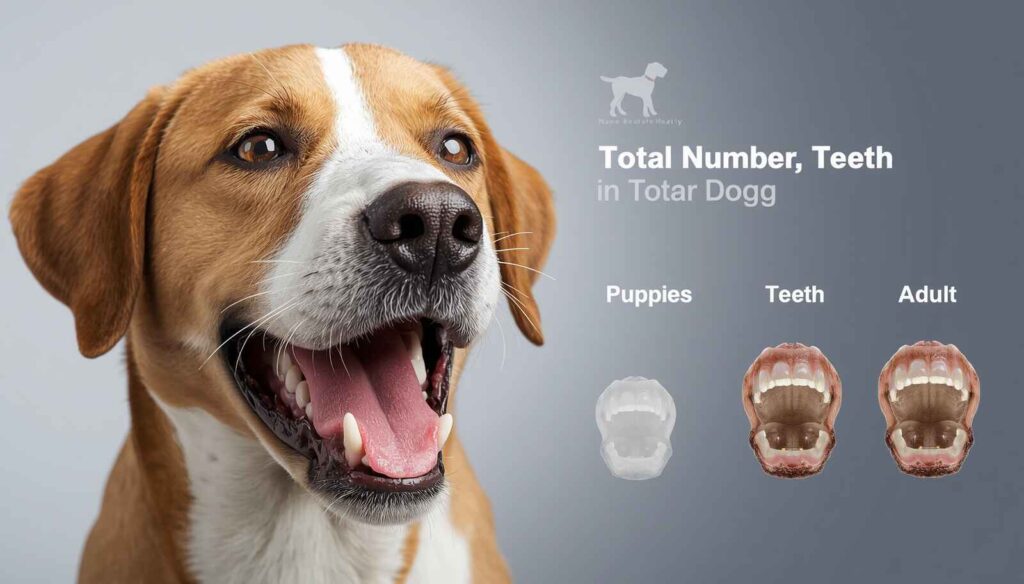
How many teeth do dogs have? Most adult dogs normally have 42 permanent teeth, while puppies have 28 deciduous, or baby, teeth.
That is the quick answer, but the number alone does not tell the whole story. You may not be able to see all 42 teeth during a home check, and having fewer visible teeth does not automatically mean something is wrong. A tooth may never have developed, may have been extracted, could still be beneath the gum, or may simply be difficult to see.
This guide explains where those 42 teeth are, how puppies transition from baby teeth to their permanent set, and what to consider if your dog’s mouth does not quite match the textbook count.
The 42-Tooth Map: What’s Actually Inside an Adult Dog’s Mouth?
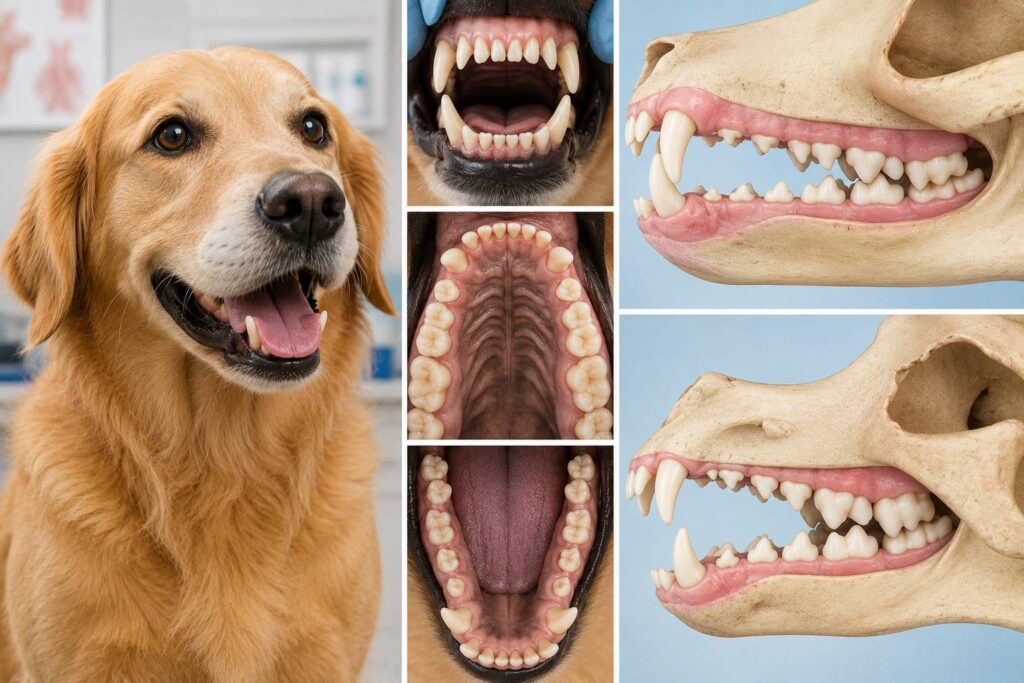
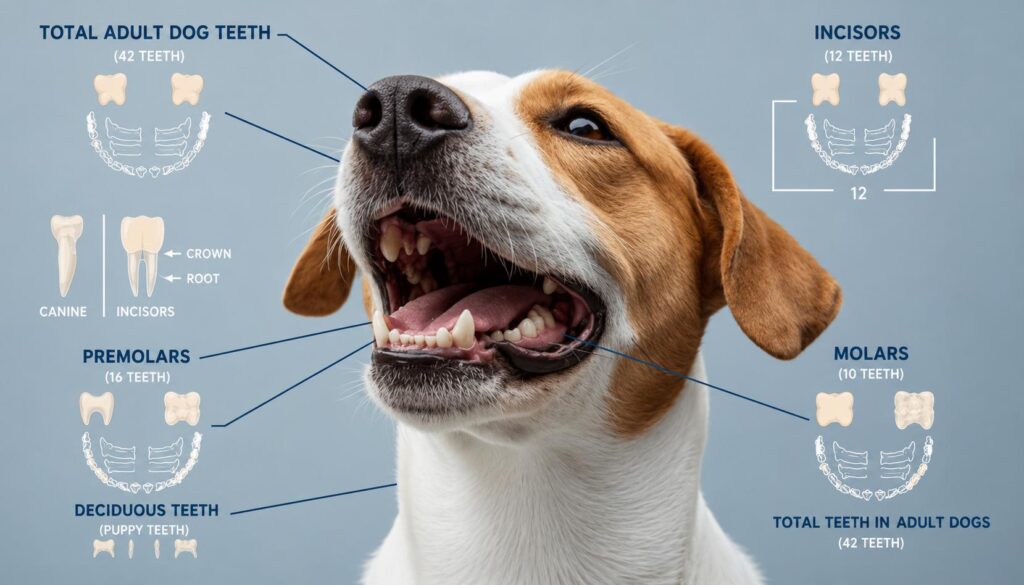
Forty-two is the standard permanent dental formula for an adult dog. Understanding where those teeth sit makes the number much easier to picture, especially because several are tucked far back in the mouth.
20 Teeth Above, 22 Below
Adult dogs normally have 20 teeth in the upper jaw and 22 in the lower jaw. The difference comes from the lower jaw having an extra molar on each side.
Most owners will not be able to see every tooth during a casual check. The rearmost molars sit far back in the mouth, and trying to reach them is neither necessary nor worth upsetting your dog. A veterinary oral examination provides a much better view when a complete assessment is needed.
Four Tooth Groups Make Up the Total
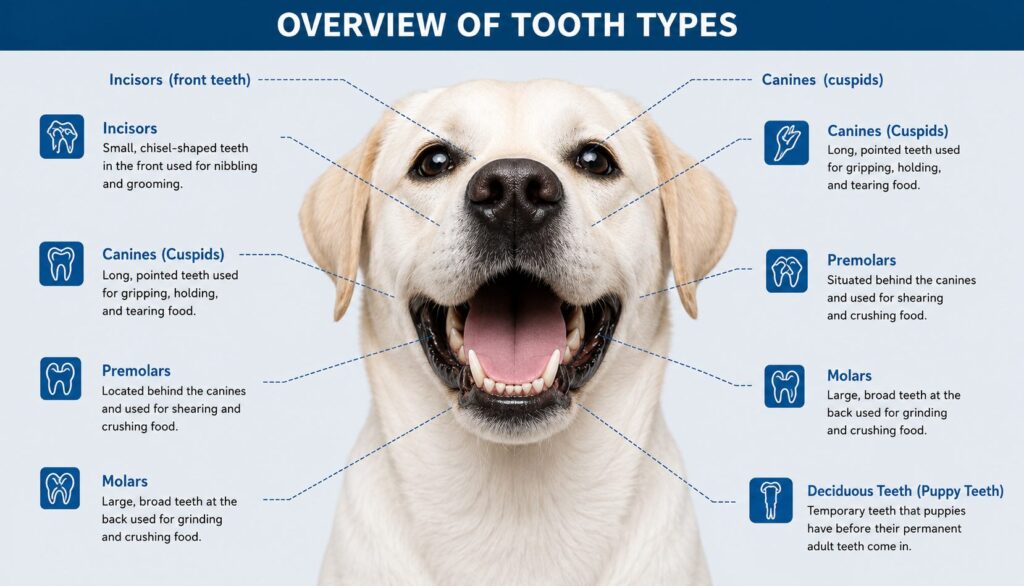
An adult dog’s 42 permanent teeth are divided into four groups:
- 12 incisors
- 4 canines
- 16 premolars
- 10 molars
Each group is shaped for a slightly different job.
What Each Type Is Built to Do
Incisors are the small teeth across the front of the mouth. Dogs use them for nibbling, grooming and picking up small objects.
Canines are the long, pointed teeth beside the incisors. They help a dog grasp and hold things.
Premolars sit behind the canines and are particularly useful for cutting and shearing food.
Molars sit farther back and help crush and process food before swallowing.
One useful anatomical detail is the carnassial pair: the upper fourth premolar and lower first molar work against each other like powerful shearing blades. You do not need to memorise their names, but these large teeth are important for cutting food and can also be vulnerable to fractures from very hard objects.
Puppy Mouth vs Adult Mouth: A Quick Comparison
| Feature | Puppy | Adult Dog |
|---|---|---|
| Expected tooth count | 28 | 42 |
| Tooth type | Deciduous (baby) | Permanent |
| Incisors | Yes | Yes |
| Canines | Yes | Yes |
| Premolars | Yes | Yes |
| Molars | No deciduous molars | Yes |
| Losing teeth expected? | Yes, during teething | No, not normally |
| Set of teeth | First set | Final set |
One detail that surprises many owners is that puppies do not have deciduous molars. Their molars arrive as permanent teeth as the jaw develops.
A Puppy’s Mouth Changes Faster Than You’d Expect
Puppy dental development happens over only a few months. The exact timing varies, so ages are best treated as useful ranges rather than strict deadlines.
The First Teeth Begin Appearing
Puppies are born without visible erupted teeth. Their deciduous teeth begin appearing during the first few weeks of life, and most puppies have their 28 baby teeth by roughly six to eight weeks of age.
These teeth are temporary and noticeably sharp, which is one reason normal puppy mouthing can feel so uncomfortable.
The “Mixed Dentition” Stage
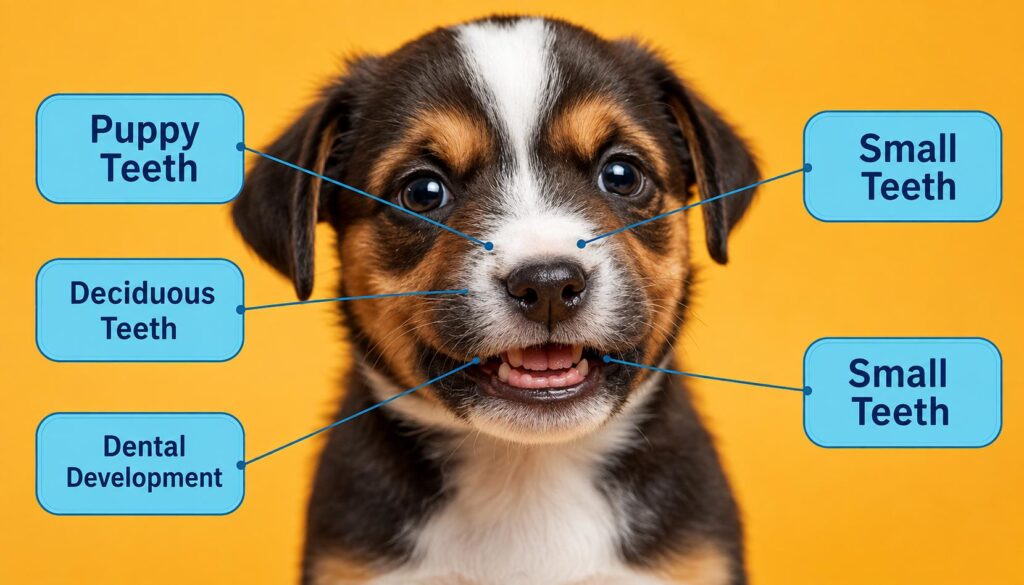
From roughly three to four months onward, baby teeth begin to fall out while permanent teeth start erupting. During this mixed dentition stage, it can be completely normal to see baby and adult teeth in the mouth at the same time.
What matters is whether the baby tooth makes way for its permanent replacement. If a permanent tooth has erupted while the corresponding baby tooth remains firmly beside it, the puppy may have a persistent deciduous tooth that deserves veterinary assessment.
When the Permanent Set Takes Over
Permanent teeth progressively replace the baby set, with the adult molars appearing as new additions. According to the Merck Veterinary Manual, most dogs have their permanent teeth by about six to seven months of age, although development varies between individuals.
If a permanent tooth you expected to see has never appeared, mention it to your vet rather than assuming it is simply absent.
Why You May Never Find the Teeth That Fell Out
Finding a tiny puppy tooth on the carpet or beside a chew toy is usually part of normal teething.
Many owners never find any at all. Puppies often swallow shed baby teeth while eating or chewing, and this is generally harmless. What is more important is how the mouth is developing and whether permanent teeth are erupting normally.
Your Dog Doesn’t Seem to Have 42 Teeth — Start Here
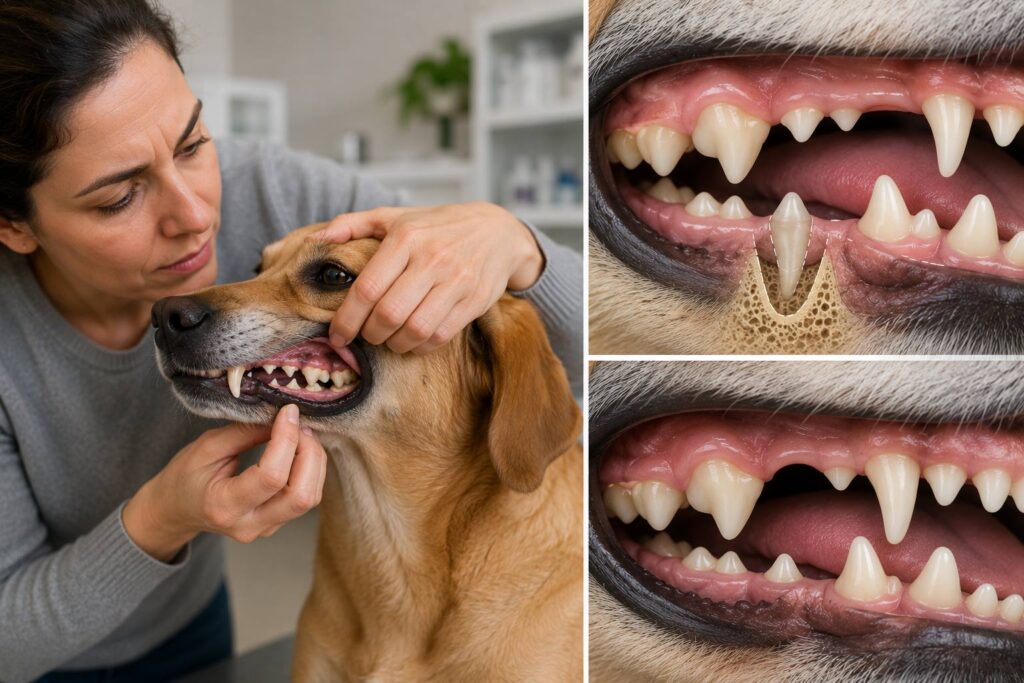
An adult dog that appears to have fewer than 42 teeth does not automatically have a dental problem. The important question is why the tooth is not visible.
A Tooth Can Be Missing for More Than One Reason
Possible explanations include:
- The tooth was congenitally absent and never developed.
- It was previously extracted.
- It is unerupted, meaning it developed but remains beneath the gum.
- It is impacted and unable to erupt normally.
- The visible crown fractured, leaving part of the tooth or root below the gumline.
- The tooth is present but simply difficult to see during a home inspection.
For an adopted adult dog with an incomplete medical history, for example, an apparently missing tooth could be the result of a previous extraction rather than a current problem.
“Not Visible” Isn’t Always the Same as “Not There”
This distinction matters because only the crown of a tooth is visible above the gum. A retained root, unerupted tooth or other abnormality beneath the gum cannot be ruled out simply by looking into the mouth.
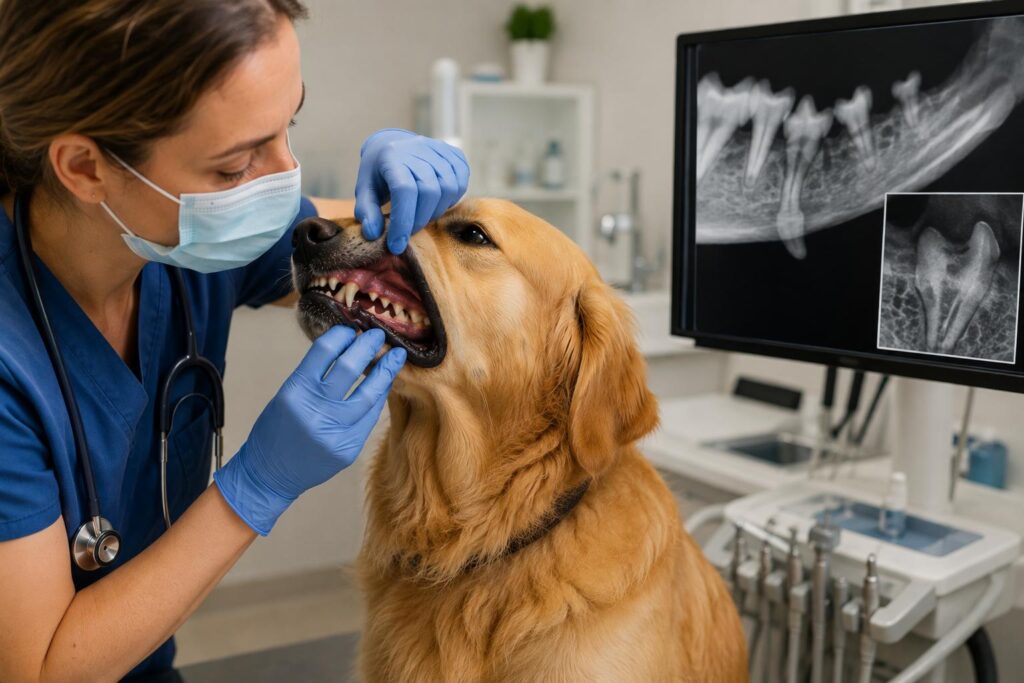
When a veterinarian needs to determine whether a supposedly missing tooth is truly absent, dental radiographs (X-rays) can show structures beneath the gumline that cannot be assessed during a visual inspection alone.
An unerupted tooth is not always harmless. In some dogs, tissue associated with an unerupted tooth can form a dentigerous or odontogenic cyst, which is one reason unexplained missing permanent teeth may warrant veterinary investigation.
What If Your Dog Has More Than 42?
Dogs can occasionally develop supernumerary teeth, meaning they have more teeth than the normal dental formula calls for.
An extra tooth does not automatically need treatment. What matters is whether it causes crowding, traps debris, affects the bite or damages nearby teeth or soft tissues. Your veterinarian can determine whether it only needs monitoring or further treatment.
What You See vs What It May Mean
| What you notice | Usually expected? | Best next step |
|---|---|---|
| Puppy loses a small baby tooth | Often | Monitor normal teething |
| Puppy appears to swallow a baby tooth | Often | Usually monitor |
| Baby and permanent tooth remain side by side | Not something to ignore | Arrange a vet assessment |
| Adult dog suddenly loses a tooth | No | Contact your vet |
| Tooth looks cracked or broken | No | Arrange a vet assessment |
| You cannot see a rear tooth during a home check | May simply be difficult to assess | Do not force the mouth open |
| Expected permanent tooth never appears | Uncertain | Ask your vet to check it |
| Facial swelling near an apparently missing tooth | Concerning | Seek prompt veterinary assessment |
Two Teeth in One Spot? Don’t Confuse This With Normal Teething
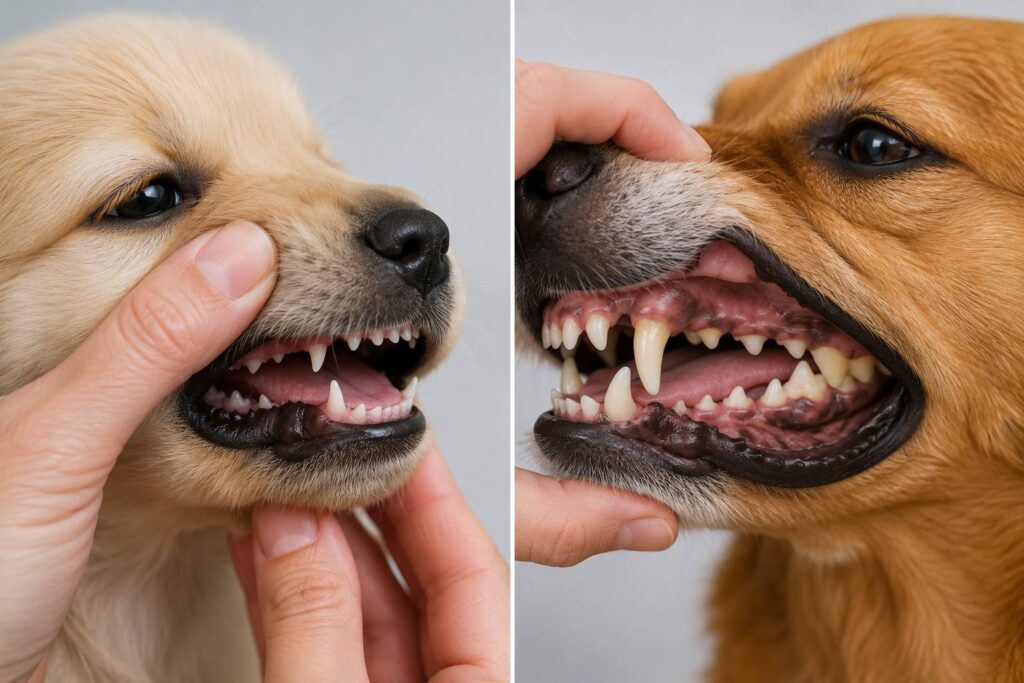
Sometimes a baby tooth does not fall out as the permanent tooth erupts beside it. This is most noticeable with the canines, where owners may see a smaller baby tooth sitting next to the larger adult tooth, creating a “double canine” appearance.
During normal mixed dentition, baby and adult teeth can briefly be present in the mouth at the same time. The concern is when the baby tooth remains after its permanent replacement has erupted into the same position. This is known as a persistent deciduous tooth, and veterinary guidance from VCA explains why it should be assessed rather than simply assumed to fall out later.
Why Leaving It Alone Can Cause Problems
A persistent baby tooth is more than a cosmetic issue. Two teeth competing for the same space can:
- Create crowding
- Trap food, plaque and debris
- Push the permanent tooth into an abnormal position
- Contribute to malocclusion, or an abnormal bite
- Irritate the gums, palate or other soft tissues
- Increase the risk of periodontal problems around that area
If you notice an adult tooth erupting beside a baby tooth that has not fallen out, do not try to loosen or pull the baby tooth yourself. A veterinarian can check whether it is likely to interfere with the developing permanent tooth and recommend the appropriate next step.
Dogs That May Need Extra Attention
Persistent baby teeth are seen more often in small breeds and short-faced (brachycephalic) dogs, where less jaw space can make crowding more of a concern.
That does not mean these dogs are supposed to have fewer permanent teeth. The standard adult dental formula is still the same; the difference is that fitting those teeth comfortably into a smaller or shorter jaw can be more challenging.
Tooth Count Is Only One Part of What “Normal” Looks Like
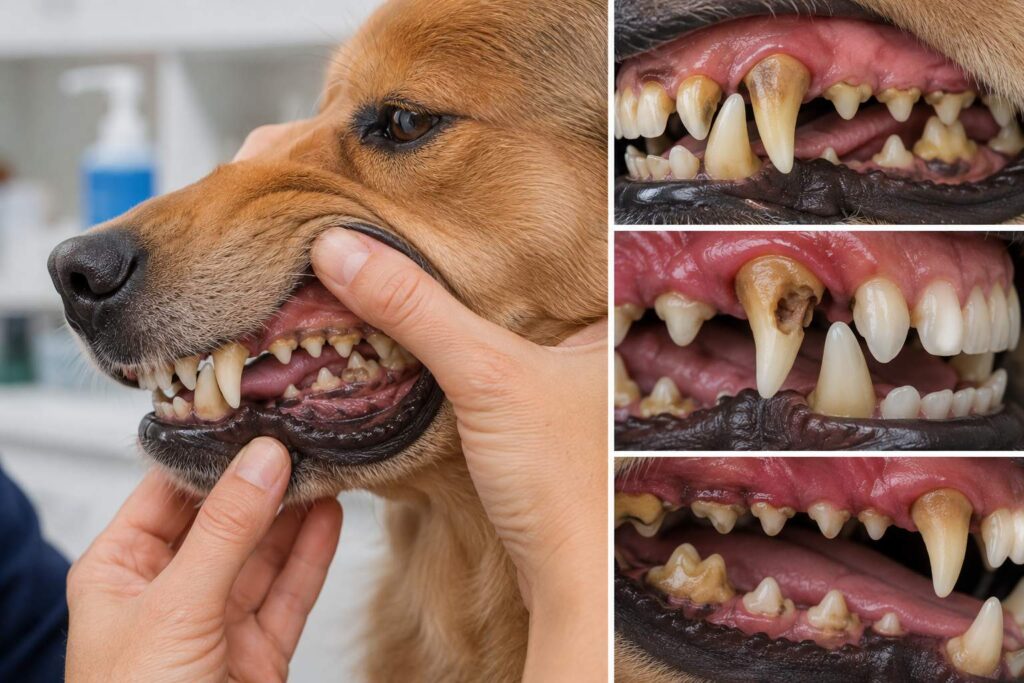
Counting 42 teeth does not automatically mean a dog’s mouth is healthy. Tooth condition, gum health, alignment and comfort matter just as much as the number itself.
A Full Set Can Still Have Dental Problems
A dog can have a complete set of teeth and still develop:
- Plaque and tartar build-up
- Red, swollen or bleeding gums
- Broken or cracked teeth
- Loose permanent teeth
- Persistent bad breath
- Painful periodontal disease
If you notice any of these while checking your dog’s teeth, they matter more than getting the count exactly right.
Eating Normally Does Not Rule Out Mouth Pain
This catches many owners out. Dogs can continue eating despite significant dental discomfort, sometimes chewing differently or favouring one side without making the problem obvious.
A normal appetite therefore does not rule out dental pain. Watch for subtler changes such as dropping food, chewing slowly, avoiding hard treats, pawing at the mouth or becoming reluctant to have the face touched.
Age Does Not Make Permanent Tooth Loss “Normal”
Puppies are expected to lose their baby teeth. Adult dogs are not expected to shed permanent teeth as part of normal ageing.
If an older dog develops loose or missing teeth, periodontal disease is one possible explanation, but trauma, fractures and other dental problems can also be involved. It is better to have the mouth assessed than to assume tooth loss is simply an unavoidable part of getting older.
Stop Counting and Call Your Vet If…
Contact your vet if you notice:
- A loose permanent tooth
- A cracked or fractured tooth
- Facial swelling
- Persistent bleeding from the mouth
- Pus or discharge
- Obvious mouth pain
- Difficulty eating or chewing
- Tooth loss following trauma
- A permanent tooth growing beside a baby tooth that has not fallen out
- A tooth pressing into the palate or other soft tissue
- A permanent tooth that never appears where expected
- Significant redness, swelling or inflammation of the gums
Safety warning: Do not force open the mouth of a dog that is painful, frightened or resisting. Never attempt to pull a tooth yourself, even if it appears loose. If your dog has facial swelling, severe oral pain, uncontrolled bleeding, or difficulty eating or breathing, seek veterinary advice promptly.
Want to Check Your Dog’s Teeth at Home? Keep It Simple

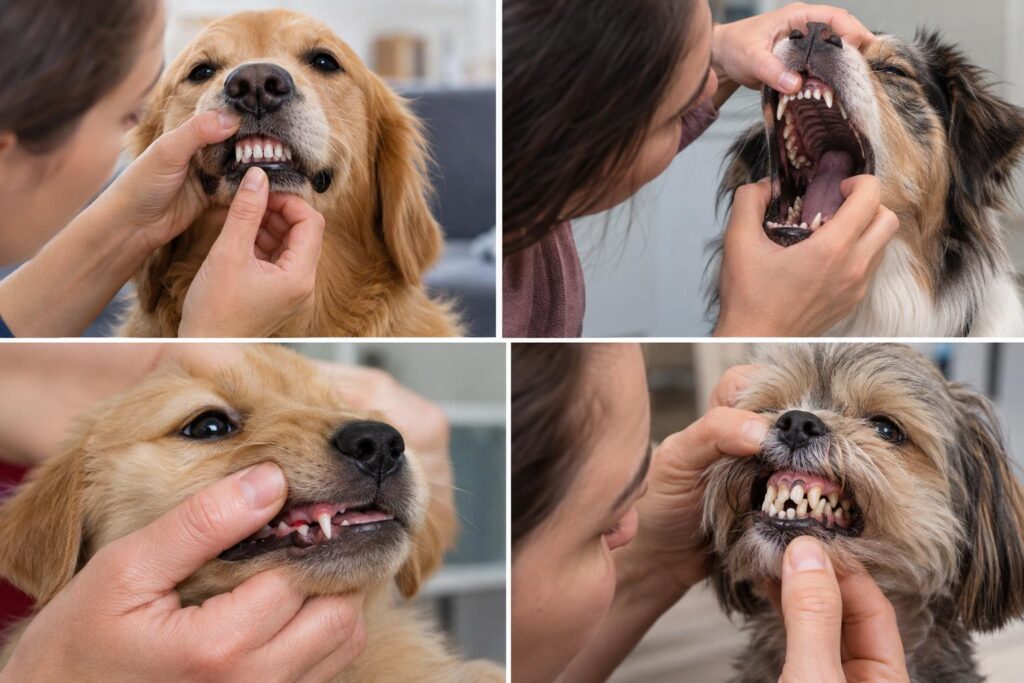
A basic visual check can help you notice changes early, but it should stay gentle and brief.
A Safe Visual Check
- Choose a time when your dog is calm and relaxed.
- Gently lift the lips rather than prying the jaws open.
- Look at the visible front and side teeth.
- Check the gums for obvious redness, swelling or bleeding.
- Look for heavy tartar, fractures or teeth that seem unusually loose.
- Notice whether two teeth appear to occupy the same position.
- Pay attention to unusual odour, drooling or signs of tenderness.
- Stop immediately if your dog resists or appears uncomfortable.
- Leave a detailed rear-mouth examination to your veterinarian.
A home check can show you what is visible, but it cannot tell you what is happening below the gumline. If a tooth appears missing, broken or abnormally positioned, a veterinary dental examination — and sometimes dental X-rays — may be needed to understand the full picture.
What a Home Check Cannot Tell You
A quick look at home can help you spot obvious changes, but it cannot show what is happening beneath the gumline. You cannot reliably confirm an unerupted tooth, a hidden root or the full extent of a fracture just by looking.
Treat a home check as an early-warning tool, not a diagnosis. If something looks missing, broken, painful or out of position, a veterinary oral examination — and sometimes dental X-rays — can provide the information you cannot see.
Common Tooth-Counting Mistakes Dog Owners Make
- Counting only the front teeth and assuming that’s the whole mouth
- Expecting to locate all 42 teeth during a home check
- Assuming every adult dog must visibly show exactly 42 teeth
- Thinking puppy teeth simply become the adult teeth rather than being replaced
- Believing puppies have baby molars — they don’t
- Trying to pull out a loose puppy tooth
- Ignoring a persistent “double canine” because it looks harmless
- Dismissing missing or loose permanent teeth in an older dog as “just ageing”
- Assuming a dog that eats normally cannot have dental pain
- Thinking 42 teeth automatically means a healthy mouth
- Trying to estimate an adult dog’s exact age from tooth wear alone
- Assuming small dogs are naturally supposed to have fewer teeth
Five Things Worth Remembering
- 28 is the normal complete puppy set.
- 42 is the normal permanent adult set.
- Puppies do not have deciduous molars — their molars arrive as permanent teeth.
- A tooth that looks missing is not necessarily gone; it may be unerupted or otherwise hidden below the gumline.
- Loose or unexpectedly lost adult teeth deserve veterinary attention, unlike normal puppy tooth shedding.
What Your Veterinarian Can Check That You Can’t See at Home
Is the Tooth Really Missing?
A veterinarian can examine the mouth systematically, chart which teeth are present and consider any known extraction or trauma history. This is much more reliable than trying to reach a perfect count at home.
If a permanent tooth appears to be missing without an obvious explanation, the question is not simply “Where did it go?” but whether it developed at all, remains beneath the gum, or has been damaged or removed previously.
When Dental X-Rays Become Useful
Dental X-rays allow a veterinarian to see structures hidden beneath the gumline. They can be particularly useful when:
- A permanent tooth never appeared
- An unerupted or impacted tooth is suspected
- A tooth has fractured and a root may remain
- Previous extraction history is uncertain
- The visible examination does not explain what is happening
A normal-looking gum surface does not necessarily reveal what is underneath it.
Why an Unerupted Tooth May Matter
An unerupted tooth is not automatically dangerous, but it should not always be assumed harmless either. In some cases, a dentigerous (odontogenic) cyst can develop around an unerupted tooth and damage nearby tissues.
That does not mean every missing-looking tooth has a cyst. It explains why a veterinarian may recommend dental imaging instead of simply assuming the tooth never developed.
Persistent Teeth and Bite Problems
If a baby tooth remains after its permanent replacement has erupted, your veterinarian can check:
- Whether the teeth are crowded
- Whether the permanent tooth is erupting at an abnormal angle
- Whether the bite is developing normally
- Whether a tooth is contacting the palate or other soft tissue
- Whether plaque and debris are becoming trapped between closely positioned teeth
This is why a persistent baby tooth is better assessed than simply left to “fall out eventually.”
Does Breed Change How Many Teeth a Dog Should Have?
Same Standard Adult Dental Formula
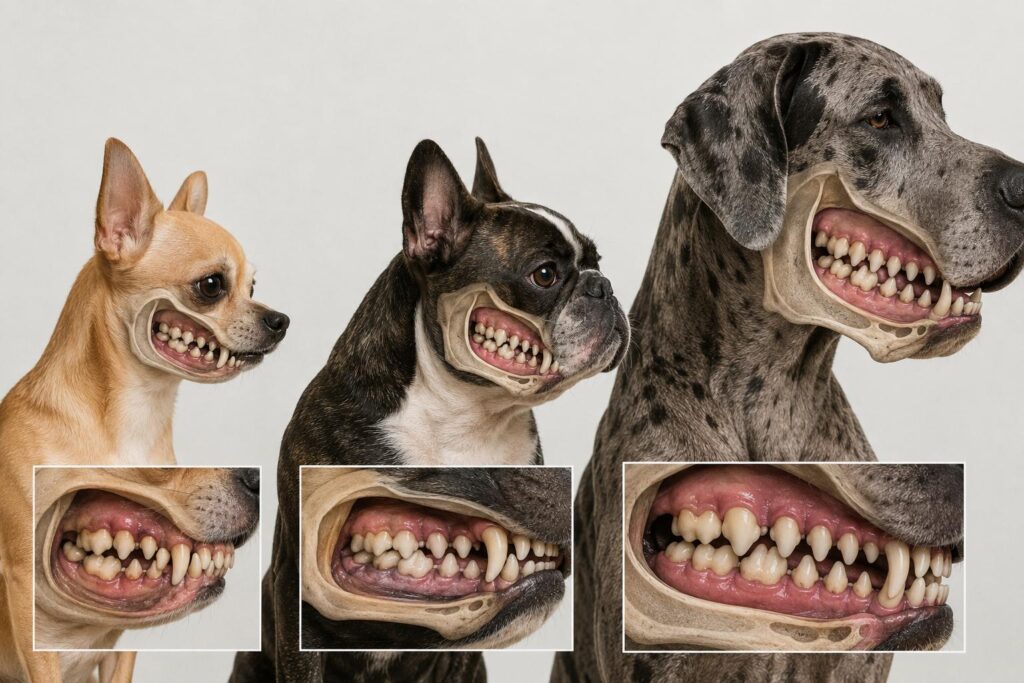
No. A Chihuahua and a Great Dane have the same standard adult dental formula of 42 permanent teeth. Being a small dog does not mean the normal expected tooth count is automatically lower.
Individual dogs can still have congenitally absent, unerupted, extracted or extra teeth, regardless of breed.
What Skull Shape Can Change
What breed and skull shape can change is how comfortably those teeth fit into the available jaw space.
When there is less room, teeth may be more crowded or positioned unusually. Crowding can also create tight spaces where plaque and debris accumulate more easily.
Small and Short-Faced Dogs
Small breeds and brachycephalic dogs, such as Pugs and French Bulldogs, can be more prone to dental crowding and persistent deciduous teeth.
The important distinction is that these dogs are not supposed to have fewer teeth simply because their jaws are smaller. Instead, the same standard complement of teeth may have less room, making alignment and dental monitoring particularly important.
A Few Dog-Tooth Facts That Make the Numbers Easier to Remember
- Dogs normally have 42 permanent teeth, compared with up to 32 permanent teeth in humans.
- Puppies have no deciduous molars; their first molars are permanent.
- The adult lower jaw contains 22 teeth, compared with 20 in the upper jaw.
- Dogs normally develop two sets of teeth: deciduous and permanent.
- Once a permanent tooth is genuinely lost, another natural replacement does not grow in.
- The carnassial teeth form a powerful shearing pair that helps dogs cut food.
Final Thoughts
Most adult dogs normally have 42 permanent teeth, while puppies have 28 baby teeth. Those numbers are useful reference points, but counting alone cannot tell you whether a dog’s mouth is healthy.
Pay more attention to changes: a permanent tooth that suddenly disappears, a persistent baby tooth sitting beside an adult one, a fracture, swelling, inflamed gums or signs of discomfort matter more than achieving a perfect home count.
Check what you can safely see without forcing your dog’s mouth open, and let your veterinarian investigate anything that looks missing, damaged or out of place.
Frequently Asked Questions
1.How many teeth should an adult dog have?
The standard adult dental formula contains 42 permanent teeth: 12 incisors, 4 canines, 16 premolars and 10 molars. Individual dogs may have fewer or occasionally extra teeth for several reasons.
2.How many teeth does a puppy have?
Puppies normally develop 28 deciduous, or baby, teeth. These are gradually replaced by permanent teeth as the puppy grows.
3.Do puppies have molars?
No. Puppies have deciduous incisors, canines and premolars, but no baby molars. Molars first appear as permanent teeth.
4.Why can’t I see all 42 of my dog’s teeth?
Several teeth, particularly those toward the back of the mouth, can be difficult to see safely during a casual home check. Not being able to count 42 yourself does not automatically mean teeth are missing.
5.Can a missing dog tooth still be under the gum?
Yes. A permanent tooth can sometimes be unerupted or impacted beneath the gumline. A visual examination alone cannot confirm this, so your veterinarian may recommend dental X-rays.
6.Is it normal for a puppy to swallow a baby tooth?
Yes. Puppies commonly swallow shed baby teeth while eating or chewing, and this is generally harmless. Many owners never find most of the teeth their puppy loses.
7.Can dogs have more than 42 teeth?
Yes, some dogs develop supernumerary teeth, or extra teeth. They are not automatically a problem, but a veterinarian should assess whether they are causing crowding, abnormal positioning or problems with the bite.
#. Related Articles:
1. How Long Does Teething Last for a Puppy?