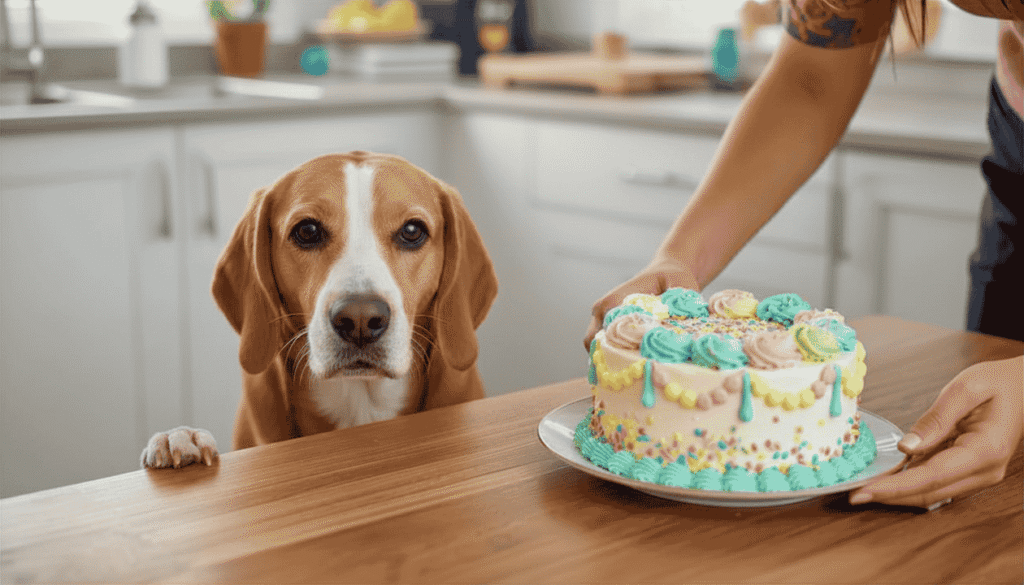
Can dogs eat cake? In most cases, ordinary human cake is not a suitable treat for dogs, and some cakes can be genuinely dangerous depending on the ingredients. If your dog has stolen a slice, the level of risk depends on what was in the cake, how much was eaten, your dog’s size and health history, and whether any symptoms have developed.
There is a big difference between a small bite of plain sponge cake and a fruit cake containing raisins and alcohol. The frosting, filling, toppings, sweeteners, and even the wrapper can sometimes matter more than the cake itself.
If your dog has just eaten cake and you are concerned, go directly to the “My Dog Ate Cake—What Should I Do Now?” section. Otherwise, the information below will help you work out what you are dealing with.
Before You Decide Whether the Cake Was Dangerous
The Six Details That Actually Matter
Before deciding whether to monitor your dog or contact a veterinarian, find out:
- What type of cake it was
- The full ingredient list, including the filling and icing
- Approximately how much was eaten
- Your dog’s approximate weight
- How long ago the cake was eaten
- Whether your dog has symptoms or an existing health condition
These are the details a veterinarian or animal poison service will usually need. Gathering them early can prevent delays if treatment is required.
Don’t Just Check the Sponge
This is where many owners make a mistake. The sponge itself may not contain a toxic ingredient, while the greatest risk is hidden in another part of the cake:
- Filling
- Frosting or icing
- Toppings and decorations
- Syrup or glaze
- Peanut butter or another flavoured spread
- Sugar-free sweeteners
- Wrappers, cases, candles, skewers, or packaging swallowed with the cake
A vanilla sponge filled with chocolate ganache is not a plain cake. Similarly, a sugar-free icing may be more concerning than ordinary icing if it contains xylitol, which may also be labelled birch sugar.
Quick First-Step Checklist
In the first few minutes:
- Move the remaining cake out of reach.
- Separate other pets that may also have eaten some.
- Photograph the packaging, recipe, or ingredient label.
- Estimate how much cake is missing.
- Note the approximate time it was eaten.
- Check whether wrappers, candles, ribbon, foil, or decorations are also missing.
- Record any vomiting, restlessness, weakness, trembling, or unusual behaviour.
If the cake contains a known toxic ingredient—or you cannot confirm what it contained—contact a veterinarian or animal poison service promptly rather than waiting for symptoms.
The Three Different Ways Cake Can Harm a Dog
It helps to divide cake-related risks into three categories because each may require a different response.
Poisoning From Toxic Ingredients
Chocolate and cocoa, xylitol, raisins, sultanas, currants, grapes, macadamia nuts, coffee or caffeine, and alcohol can all be dangerous to dogs.
The ASPCA also lists chocolate, xylitol, alcohol, coffee and caffeine, grapes, and raisins among people foods that should be kept away from pets.
These ingredients are not simply likely to cause an upset stomach. Depending on the ingredient, concentration, amount eaten, and the dog’s body weight, they may cause serious poisoning.
Chocolate risk varies considerably. Cocoa powder, baking chocolate, and dark chocolate are generally more concentrated sources of theobromine and caffeine than milk chocolate. Raisin and grape toxicity is unpredictable, so a reliably safe amount cannot be assumed. Xylitol can cause a rapid and dangerous fall in blood sugar and may also damage the liver.
Do not wait for symptoms if your dog has eaten cake containing xylitol, raisins, sultanas, currants, grapes, or a concerning amount of chocolate or cocoa.
Digestive and Metabolic Problems
Even cake without a classic toxin can still make a dog ill. Common problems include:
- Vomiting
- Diarrhoea
- Gas or abdominal discomfort
- Reduced appetite
- Excess calorie intake
- Worsening blood-sugar control in diabetic dogs
Rich cakes and frostings containing butter, cream, cream cheese, or large amounts of oil may also trigger pancreatitis, particularly in dogs that have had it before or are sensitive to fatty foods. Pancreatitis can cause repeated vomiting, loss of appetite, abdominal pain, lethargy, and dehydration and often requires veterinary treatment.
A food does not need to be poisonous to be unsuitable for a dog.
Choking and Intestinal Obstruction
The non-food parts of a cake are easy to overlook. Dogs may swallow:
- Paper cupcake cases
- Plastic cake toppers
- Candles
- Foil
- Ribbon
- Wooden skewers or cocktail sticks
- Baking paper
- Pieces of cake board
These items can cause choking, injure the mouth or digestive tract, or become lodged in the stomach or intestines. An obstruction may require urgent treatment or surgery.
Contact a veterinarian if your dog swallowed a sharp object, a large amount of packaging, or develops repeated vomiting, retching, abdominal pain, loss of appetite, difficulty passing stool, or unusual lethargy.
Cake Ingredient Risk Checklist
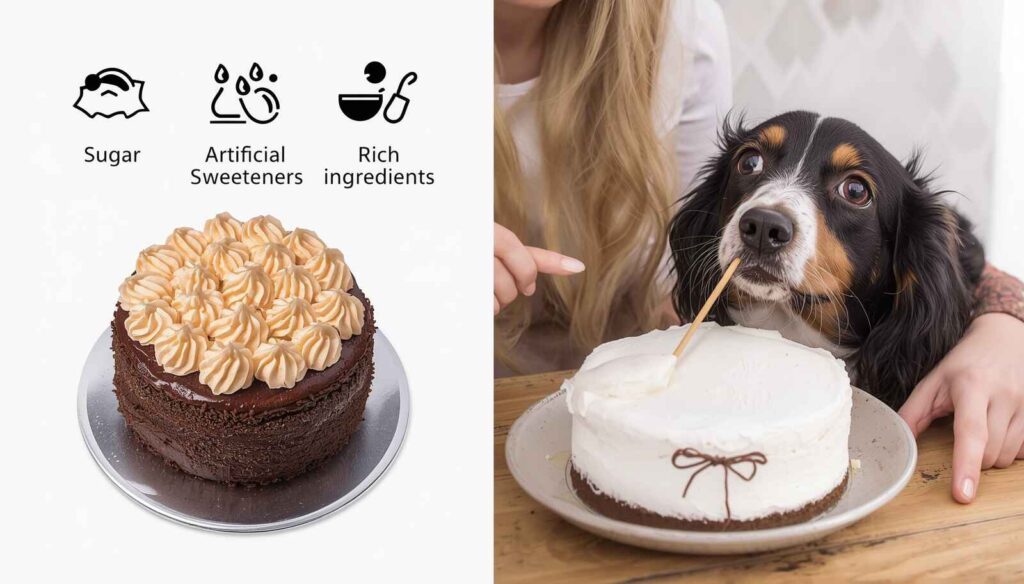
Immediate Veterinary Concern
Contact a veterinarian or animal poison service promptly if the cake contains:
- Chocolate, cocoa powder, or baking chocolate
- Xylitol, sometimes labelled birch sugar
- Raisins, sultanas, currants, or grapes
- Macadamia nuts
- Coffee, espresso, or other sources of caffeine
- Alcohol or liqueur
- An unfamiliar sweetener in a sugar-free product
These ingredients can cause poisoning rather than a simple stomach upset. The level of risk depends on the ingredient, concentration, amount eaten, and your dog’s weight.
Veterinary guidance from PDSA also warns that grapes, raisins, sultanas, and currants can be potentially fatal to dogs and may cause kidney failure.
Usually Not Toxic, but Still Unsuitable
The following ingredients are not normally considered poisonous, but large or repeated portions may cause digestive problems, excess calorie intake, or pancreatitis in susceptible dogs:
- Sugar
- Butter
- Cream
- Cream cheese
- Vegetable oil
- Large amounts of milk
- Rich frosting
- Food colouring
- Heavily processed fillings
Requires Individual Judgement
Extra caution is needed with:
- Peanut butter—confirm that it does not contain xylitol
- Nuts
- Wheat
- Eggs
- Dairy products
- Fruit fillings
- Artificial sweeteners
- Any ingredient your dog has reacted to before
Dogs with diabetes, food allergies, obesity, sensitive digestion, or a history of pancreatitis may become unwell after ingredients that another dog might tolerate.
Cakes can also contain several hazards at once. A fruit cake, for example, may combine raisins, alcohol, rich butter, nuts, and a swallowed paper case. Check the entire product rather than focusing on one ingredient.
Which Types of Cake Create the Greatest Concern?
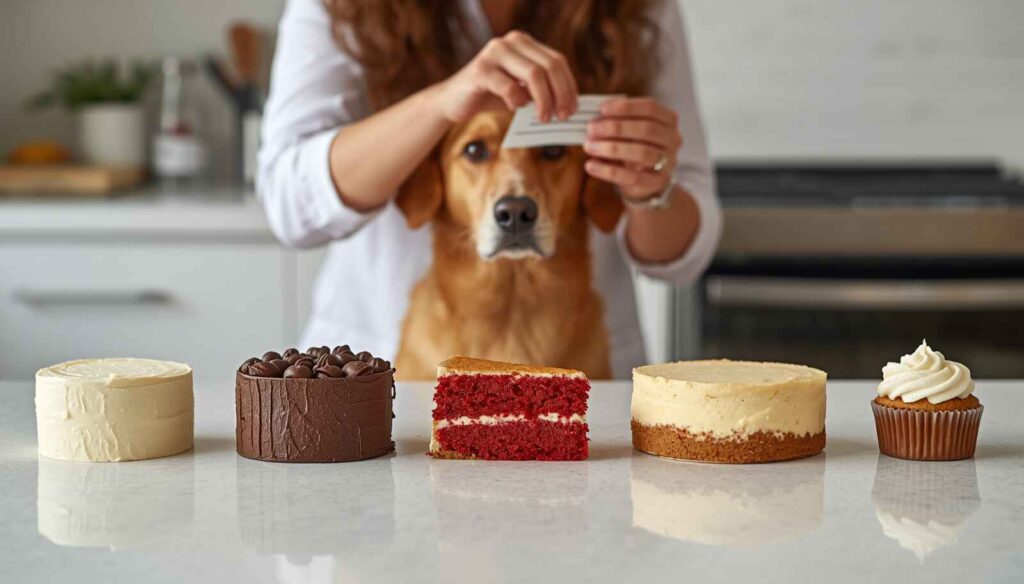
| Cake Type | Main Concerns | Typical Risk Level | Recommended Response |
|---|---|---|---|
| Plain vanilla or sponge cake | Sugar, fat, dairy, large portion | Low to moderate if genuinely plain | Check all ingredients and monitor for digestive upset |
| Chocolate cake | Theobromine, caffeine, cocoa concentration | Potentially high | Contact a veterinarian promptly |
| Red velvet cake | Cocoa, rich frosting, possible sweeteners | Moderate to high | Check the cocoa content and every frosting ingredient |
| Fruit or Christmas cake | Raisins, sultanas, currants, alcohol | High | Seek veterinary advice immediately |
| Carrot cake | Raisins, nuts, spices, cream-cheese frosting | Variable | Check the complete recipe |
| Cheesecake | High fat, dairy, sugar, possible chocolate | Moderate | Greater concern for dogs prone to pancreatitis |
| Coffee or mocha cake | Caffeine and often chocolate | High | Contact a veterinarian promptly |
| Sugar-free or keto cake | Possible xylitol or another sweetener | Potentially very high | Treat as urgent until xylitol is ruled out |
| Lemon or strawberry cake | Sugar, fat, dairy, possible sweeteners | Usually low to moderate | Verify the filling and frosting |
| Dog-specific birthday cake | Calories, allergens, portion size | Lower when properly formulated | Serve only as an occasional, portion-controlled treat |
“Vanilla” does not automatically mean safe. The frosting may contain xylitol, the filling may contain chocolate or raisins, and the ingredients in a bakery-made cake may not be immediately available.
Sugar-free cake deserves particular caution. Some products contain xylitol, which can cause a rapid, dangerous drop in a dog’s blood sugar and may also lead to liver injury.
My Dog Ate Cake—What Should I Do Now?
Step 1: Identify the Whole Product
Check every part of the cake:
- Sponge
- Frosting or icing
- Filling
- Toppings
- Syrups
- Decorations
- Wrapper or packaging
Do not rely on the cake’s flavour alone. A vanilla cake may still contain chocolate filling, raisin decorations, alcohol-based syrup, or sugar-free frosting.
Step 2: Estimate the Exposure
Work out:
- Approximately how much cake is missing
- How many dogs may have eaten it
- Your dog’s approximate weight
- When the cake was eaten
- Whether the amount is known or only a guess
If several dogs had access to the cake, do not assume they shared it equally.
Step 3: Contact the Right Professional
Call your regular veterinarian, an emergency veterinary clinic, or an animal poison service. An online toxicity calculator may provide general information, but it should not replace professional advice in a time-sensitive poisoning case.
Current poison-support options include:
- United States: ASPCA Animal Poison Control Center — (888) 426-4435
- United Kingdom: Animal PoisonLine — 01202 509000
- Australia: Animal Poisons Helpline — 1300 869 738
- Canada: Pet Poison Helpline — 1-855-764-7661
Fees may apply. If your dog is collapsing, having seizures, struggling to breathe, or showing another severe symptom, go directly to an emergency veterinary clinic while calling ahead.
Step 4: Follow Professional Instructions
Do not induce vomiting unless a veterinarian or poison specialist specifically tells you to do so.
Do not give milk, oil, salt, bread, activated charcoal, hydrogen peroxide, or another home remedy without professional instruction. These measures may be ineffective, delay appropriate treatment, or cause additional complications.
Do not wait for symptoms after a known serious exposure. With some toxins, early treatment may begin before the dog appears unwell.
Before You Call, Have This Information Ready
- Your dog’s weight, age, and breed
- Existing medical conditions and medications
- The cake’s product name or recipe
- The full ingredient label
- The approximate amount eaten
- The time of ingestion
- Any symptoms already present
- Whether a wrapper, candle, ribbon, foil, skewer, or decoration is missing
- A photograph of the remaining cake or packaging
Warning: Do Not Wait for Symptoms
Contact a veterinarian or poison service immediately if:
- Xylitol or birch sugar is listed
- Raisins, sultanas, currants, or grapes were involved
- The cake contained dark chocolate, baking chocolate, or cocoa powder
- Coffee, caffeine, alcohol, or macadamia nuts were present
- The ingredients or amount eaten are unknown
- Your dog is very small, very young, elderly, diabetic, or medically vulnerable
- Your dog swallowed packaging, a candle, ribbon, foil, or a skewer
- Your dog develops repeated vomiting, weakness, wobbliness, tremors, seizures, collapse, breathing difficulty, a rapid heartbeat, or severe abdominal pain
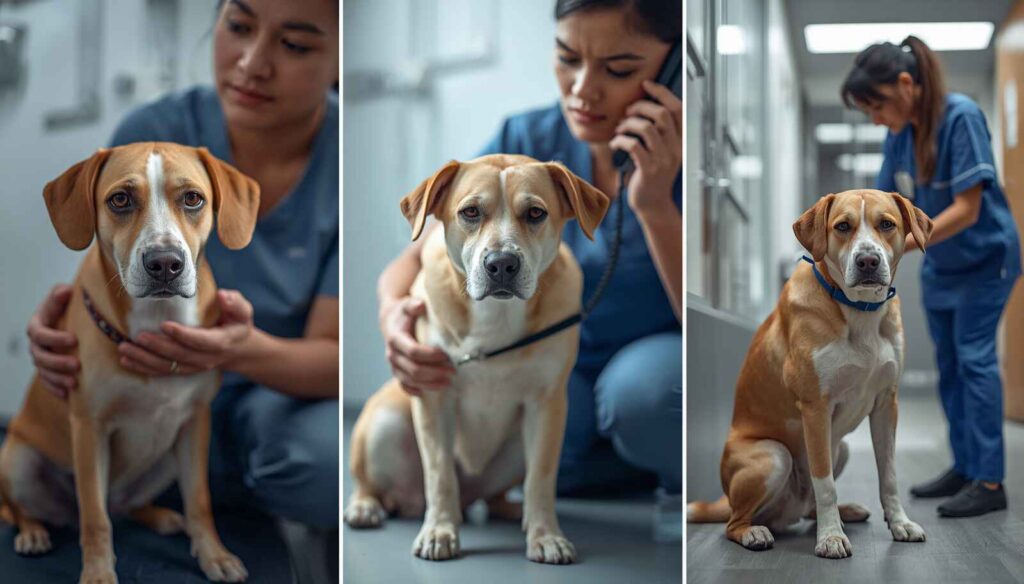
Symptoms That Change the Level of Urgency
| Observation | Possible Meaning | Action |
|---|---|---|
| No symptoms after a tiny amount of confirmed plain cake | Possibly little or no immediate effect | Monitor once you are certain there were no toxic ingredients |
| One episode of mild vomiting or soft stool | Digestive irritation | Contact a vet if it continues, worsens, or your dog is medically vulnerable |
| Repeated vomiting or diarrhoea | Significant gastrointestinal upset or possible poisoning | Seek veterinary advice promptly |
| Restlessness, panting, or a rapid heartbeat | Possible chocolate or caffeine exposure | Urgent veterinary assessment |
| Weakness, wobbliness, or unusual drowsiness | Possible low blood sugar or toxicity | Seek emergency veterinary care |
| Tremors, seizures, or collapse | Severe poisoning or another medical emergency | Immediate emergency care |
| Abdominal pain, a hunched posture, or refusing food | Possible pancreatitis or gastrointestinal obstruction | Veterinary examination |
| Repeated retching, abdominal swelling, or difficulty passing stool | Possible obstruction or another gastrointestinal emergency | Immediate veterinary care |
A dog who looks completely normal straight after eating cake is not necessarily in the clear. Some toxic effects may not be obvious immediately, and the early signs can be easy to miss.
That is why known or suspected exposure to xylitol, raisins, sultanas, currants, grapes, or a concerning amount of chocolate should be treated seriously even when your dog seems fine. Do not use the absence of symptoms as proof that it is safe to wait.
Can Dogs Eat Cake Safely? Plain Cake Isn’t Always Safe
Even when a cake contains no known toxic ingredients, excess sugar and fat can still cause problems. A large portion may lead to vomiting, diarrhoea, abdominal discomfort, and unnecessary calorie intake. Rich, fatty cakes may also trigger pancreatitis in susceptible dogs, while sugary foods are particularly unsuitable for dogs with diabetes or other conditions requiring careful dietary control.
Extra caution is needed with:
- Puppies
- Toy and small breeds
- Senior dogs
- Overweight dogs
- Diabetic dogs
- Dogs with a history of pancreatitis
- Dogs with known food allergies or intolerances
- Dogs with sensitive digestion
- Dogs eating a prescription veterinary diet
There is no universal “safe slice size” for human cake. Risk changes with the recipe, portion, dog’s body weight, and medical history. A dog tolerating cake once also does not make repeated feeding safe.
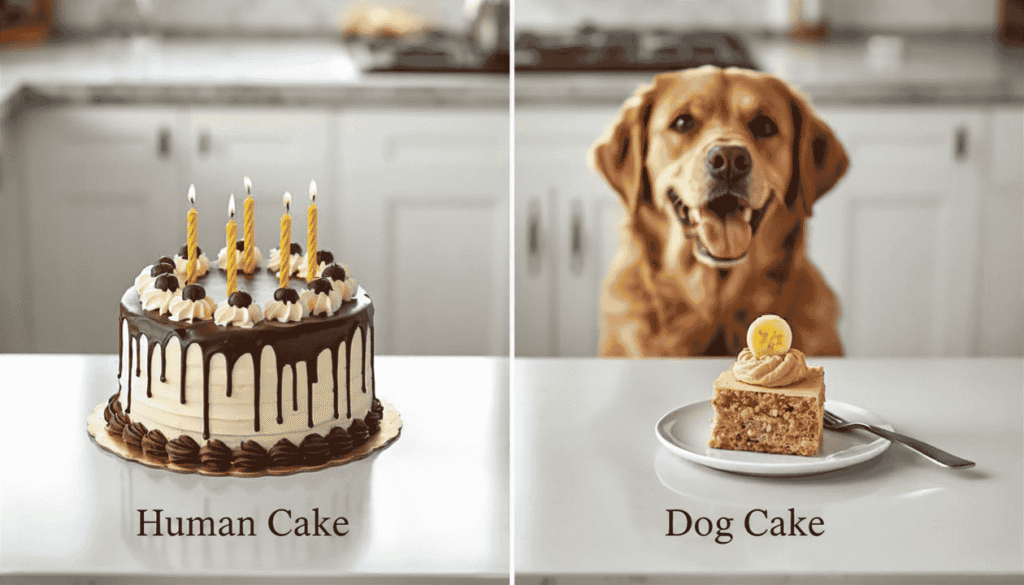
Human Cake vs Dog-Specific Celebration Cake
| Feature | Human Cake | Purpose-Made Dog Cake |
|---|---|---|
| Sweeteners | May contain sugar or xylitol | Should never contain xylitol |
| Chocolate or cocoa | Common in many recipes | Should not be included |
| Raisins and alcohol | May be present | Should not be included |
| Fat and calories | Often very high | May still be calorie-dense |
| Frosting | Buttercream, cream, fondant, or sugar-free icing | Usually simpler, but ingredients still need checking |
| Allergens | May be unclear in bakery products | Should be clearly identified |
| Portion size | Designed for people | Should be portioned for the individual dog |
| Nutritional role | Not suitable as dog food | Still an occasional treat, not a complete diet |
| Safety | Depends entirely on the recipe | Depends on ingredients, formulation, and portion size |
A Simple Dog-Friendly Celebration Cake
If you want to make a birthday treat at home, keep the recipe simple and use ingredients your dog has already tolerated.
- Mash one ripe banana.
- Mix in one egg.
- Add about four tablespoons of oat flour.
- Spoon the mixture into a lightly greased ramekin or muffin tin.
- Bake at 180°C/350°F (160°C fan) for around 15–18 minutes, or until fully cooked.
- Allow it to cool completely before serving.
For a simple topping, use a small amount of plain peanut butter only after checking the ingredient label carefully for xylitol or birch sugar.
This is still a treat, not a balanced meal. Serve a small portion appropriate for your dog rather than handing over the entire cake, especially if your dog is small, overweight, or has a medical condition. If your dog is on a prescription diet or has diabetes, pancreatitis, or significant food allergies, check with your veterinarian before introducing a homemade birthday treat.
If you would rather skip baking, a small portion of a familiar dog-safe food can work just as well. Options may include:
- Banana
- Apple pieces with the seeds and core removed
- Carrot
- Plain, fully cooked chicken without bones, skin, seasoning, onion, or garlic
The safest celebration treat is usually one your dog has eaten before without a problem.
Common Mistakes Dog Owners Make With Cake
- Assuming vanilla cake is automatically safe
- Checking the sponge but ignoring the frosting or filling
- Believing baked raisins are safer than raw raisins
- Treating “sugar-free” as the safer option
- Assuming vegan, organic, or gluten-free automatically means dog-friendly
- Waiting for symptoms after a known toxin exposure
- Trying a home remedy instead of contacting a veterinarian
- Feeding another meal to try to “dilute” the cake
- Forgetting to check for missing wrappers or decorations
- Guessing at risk without knowing the dog’s approximate weight
- Giving an entire dog-specific cake instead of a controlled portion
- Repeating the treat simply because the dog appeared fine last time
Quick Tips to Prevent Cake Theft
- Keep cakes away from counter and table edges.
- Store leftovers in closed containers.
- Clear plates as soon as people finish eating.
- Secure kitchen and outdoor bins.
- Supervise young children who may share food with the dog.
- Keep the dog away while candles, skewers, and decorations are being removed.
- Do not leave bakery boxes on the floor or low furniture.
- During parties, consider giving your dog a quiet area with their usual food, water, and a familiar dog-safe activity.
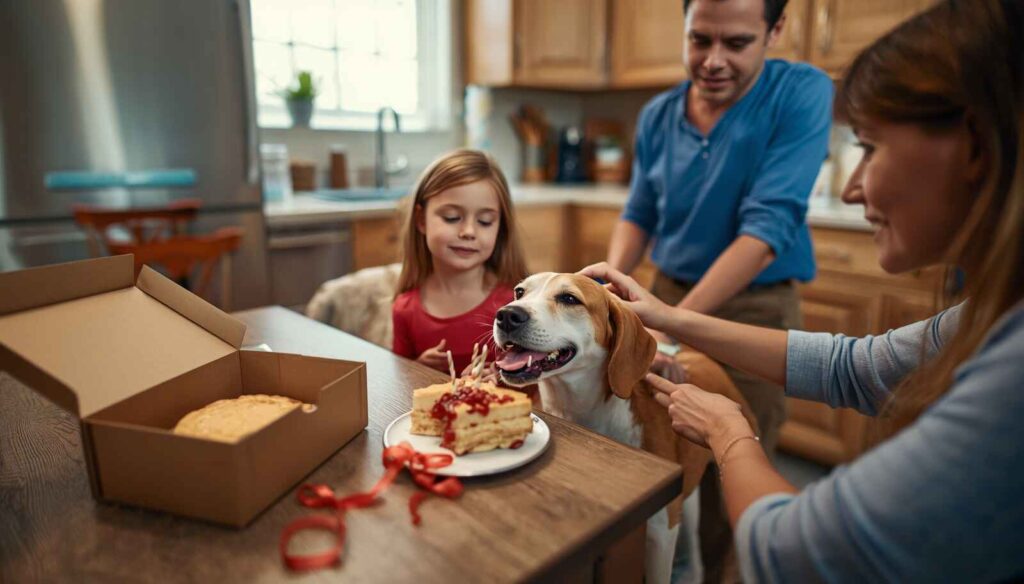
Prevention matters most during birthdays and family gatherings, when several people may assume someone else is watching the dog. A few minutes of unsupervised access is often all it takes for a determined dog to reach a plate or bakery box.
A Few Real-World Scenarios
A large, healthy dog eating one bite of confirmed plain sponge cake with no toxic ingredients is generally at low risk, although mild digestive upset is still possible.
A small dog eating a slice of dark chocolate cake is a very different situation. Because the amount eaten is larger relative to the dog’s body weight—and dark chocolate contains more theobromine than milk chocolate—it warrants prompt veterinary advice.
Fruit cake containing raisins, sultanas, currants, or alcohol can combine several serious risks and should never be treated as a “wait and see” situation.
If your dog eats a sugar-free cupcake containing a sweetener you do not recognise, treat it as urgent until xylitol has been ruled out. Save the wrapper or photograph the ingredient label so your vet or poison service can assess the product accurately.
The Bottom Line
If you are still deciding what to do, think in three paths:
- Monitor carefully: Your healthy dog ate a tiny amount of confirmed plain cake, no toxic ingredients were present, no packaging was swallowed, and your dog has no symptoms.
- Contact a veterinarian promptly: The ingredients or amount are unknown, the portion was large, your dog is medically vulnerable, or digestive symptoms persist.
- Seek urgent veterinary help: Xylitol, raisins, sultanas, currants, grapes, a concerning amount of chocolate or cocoa, coffee, caffeine, or alcohol were involved—or your dog develops weakness, wobbliness, tremors, seizures, collapse, breathing difficulty, or signs of choking.
Cake is one of those foods that can look harmless until you check what is actually in it. Read the ingredient label, consider how much your dog ate and their body weight, and call a veterinarian or animal poison service when the risk is unclear rather than guessing.
For future celebrations, choose a simple dog-safe, portion-controlled treat. Your dog can still join the party without sharing the human cake.
Frequently Asked Questions
1.Can dogs eat a small piece of plain cake?
A tiny bite of genuinely plain cake with no toxic ingredients is unlikely to cause serious harm to most healthy adult dogs. However, the sugar and fat may still cause vomiting, diarrhoea, or stomach discomfort, especially in sensitive dogs.
Plain cake is not a healthy dog treat and should not become a regular part of your dog’s diet.
2.How much cake is actually dangerous for a dog?
There is no single amount of cake that is safe or dangerous for every dog. Risk depends on the ingredients, concentration, amount eaten, your dog’s body weight, and their medical history.
For example, a small dog eating chocolate cake may receive a much higher dose of theobromine relative to its body weight than a large dog eating the same portion. With raisins or xylitol, do not try to calculate a “safe amount” at home—contact a veterinarian or animal poison service.
3.How long after eating cake can a dog become sick?
It depends on what the cake contained. Vomiting, diarrhoea, or abdominal discomfort from rich food may appear within hours, while the timing and progression of poisoning signs vary with the toxin and dose.
Do not wait for symptoms after known or suspected xylitol, raisin, sultana, currant, grape, or significant chocolate exposure. A dog appearing normal immediately after eating cake does not rule out a serious problem.
4.Should I make my dog vomit if they’ve eaten cake?
No—not unless a veterinarian or animal poison specialist specifically instructs you to do so.
Inducing vomiting is not appropriate in every situation and can cause complications if done incorrectly. Do not give hydrogen peroxide, salt, oil, or another home remedy unless a veterinary professional has given you specific instructions for your dog.
5.What if I don’t know exactly what was in the cake?
Treat unknown ingredients as a genuine uncertainty rather than assuming the best-case scenario.
Contact your veterinarian or an animal poison service with whatever information you have, including the type of cake, where it came from, approximately how much is missing, when it was eaten, and your dog’s weight. If possible, contact the bakery or person who made the cake and ask for the complete ingredient list.
6.Can dogs have a purpose-made dog cake every year?
Yes, a properly formulated dog cake can be offered as an occasional celebration treat, provided it contains no toxic ingredients and the portion is appropriate for your dog.
Check the recipe for xylitol, chocolate, raisins, sultanas, currants, and other unsafe ingredients. Dogs with diabetes, pancreatitis, food allergies, or prescription diets may need a different option recommended by their veterinarian.
7.What should I do if my dog ate the cupcake wrapper along with the cake?
Contact your veterinarian for advice, particularly if your dog is small, swallowed several wrappers, or also ate a cake containing a toxic ingredient.
Paper cases may sometimes pass through the digestive tract, but wrappers, foil, plastic, and decorations can cause choking or intestinal obstruction. Seek veterinary attention if your dog develops repeated vomiting, loss of appetite, abdominal pain, lethargy, repeated retching, or difficulty passing stool.
#. Related Articles: