Can dogs eat paracetamol? No—not from your own medicine cabinet and not unless a veterinarian has specifically told you to give it. If your dog has already swallowed paracetamol, acetaminophen, Panadol, Tylenol, or a medicine containing it, contact your vet or an animal poison service promptly rather than waiting for symptoms to appear. PDSA advises contacting a vet as soon as possible after a potentially poisonous ingestion because signs can be delayed.
Paracetamol and acetaminophen are two names for the same active drug. Depending on the dose and circumstances, poisoning in dogs can damage the liver and affect red blood cells. Although veterinarians may sometimes use paracetamol in selected dogs, that is very different from giving a human product at home without veterinary direction.
There are three situations worth separating straight away: your dog found the medicine and swallowed it accidentally, you’ve already given a dose yourself for pain or fever, or a vet specifically prescribed a paracetamol-containing medicine for your dog. The details below will help you gather the right information and understand what your vet may need to know.
Work Out What Actually Happened First
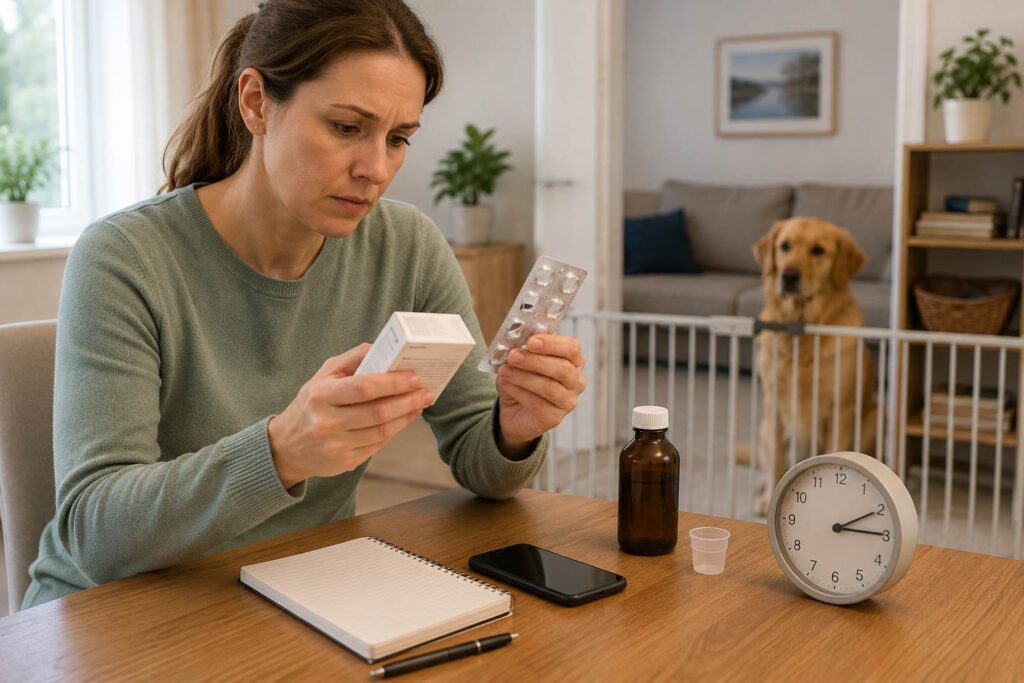
Before you call, take a moment to gather the facts—but don’t delay the call while trying to calculate the risk yourself.
A tablet was dropped or stolen. One tablet went missing from a blister pack, or your dog snatched one from a table. “Just one” isn’t enough information on its own because tablet strength and the dog’s body weight both matter.
Several tablets may be missing. If a packet has been chewed or the amount swallowed is uncertain, tell the vet exactly that. Don’t guess simply to provide a number.
You gave paracetamol yourself. Tell the vet the exact product, strength, amount, and how many times it was given. Repeated exposure can cause toxicity at lower doses than a single acute exposure.
Your dog drank children’s liquid medicine. Check the concentration on the bottle rather than assuming a liquid or children’s formulation is automatically mild.
It was a cold, flu, or combination product. These medicines may contain paracetamol alongside ingredients such as antihistamines, decongestants, caffeine, aspirin, or opioids. The complete ingredient list matters.
More than one dog had access. Tell the vet how many dogs were present, each dog’s approximate weight, and how much medication could be missing. If you don’t know which dog swallowed it, say so—the vet can advise how each animal should be assessed.
What To Have Ready Before You Call
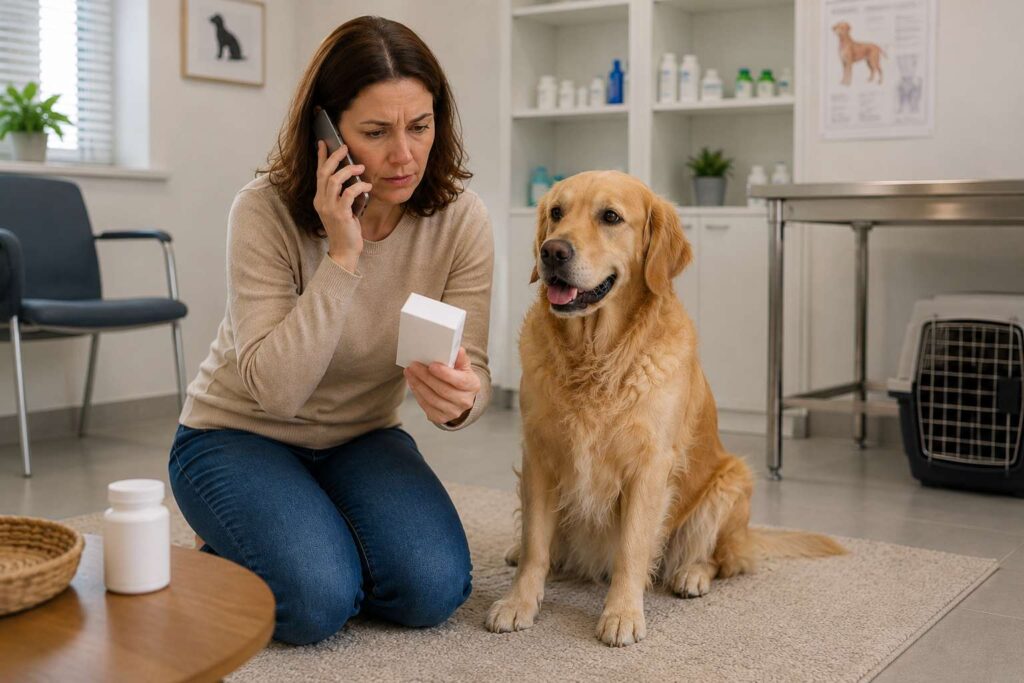
Gather whatever you can without delaying professional advice:
- Your dog’s approximate weight
- Age and relevant health conditions
- The product name and packaging, or a clear photo of it
- The strength in mg per tablet or mg per mL
- Roughly how many tablets or how much liquid may be missing
- The earliest and latest time the exposure could have happened
- Whether the product is standard or extended-release
- Every other active ingredient listed on the label
- Any symptoms your dog is showing now
- Medications or supplements your dog already takes
- Whether this was a single exposure or repeated dosing
Keep the packet, bottle, or chewed blister pack. PDSA specifically recommends taking the packaging or a photograph with you because it can help the vet identify what was swallowed.
If you genuinely don’t know the amount, say “unknown.” An honest uncertainty is more useful than a confident guess.
Why “One Tablet” Doesn’t Actually Tell You Much
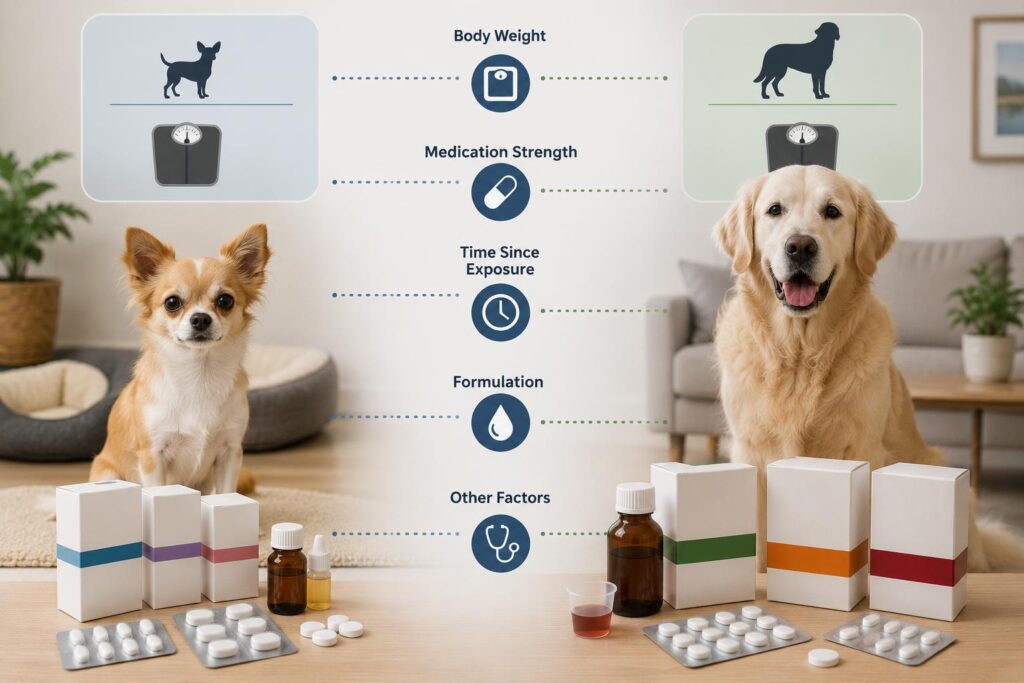
It’s easy to hear “one tablet” and assume the exposure must be minor. The problem is that tablet count is only one part of the assessment.
The strength of the medicine matters, as does your dog’s body weight. Formulation matters too: Merck Veterinary Manual notes that extended-release acetaminophen can take longer to reach peak blood concentrations than standard formulations. Repeated exposure is another important distinction because toxicity in dogs can occur at lower doses when the drug is given repeatedly.
None of this is a reason to calculate a “safe” dose at home. Published toxicology thresholds are clinical reference points, not a green light to monitor an exposure without professional advice.
| Factor | Why It Matters | What To Check |
|---|---|---|
| Dog’s weight | The same tablet creates a different exposure relative to body size | Recent or approximate weight |
| Medication strength | “One tablet” can contain different amounts | mg printed on the packet |
| Quantity | Total exposure matters | Number of tablets or volume possibly missing |
| Timing | Can influence veterinary decisions | Earliest and latest possible time |
| Formulation | Drug release and absorption can differ | Standard or extended-release |
| Single vs repeated exposure | Repeated dosing changes the assessment | Number of doses and when they were given |
| Other ingredients | Combination products may create additional risks | Full active-ingredient list |
| Health history | Existing disease and medications may affect clinical decisions | Relevant illnesses, medicines, and supplements |
Why It Can Harm a Dog Even If They Look Completely Normal
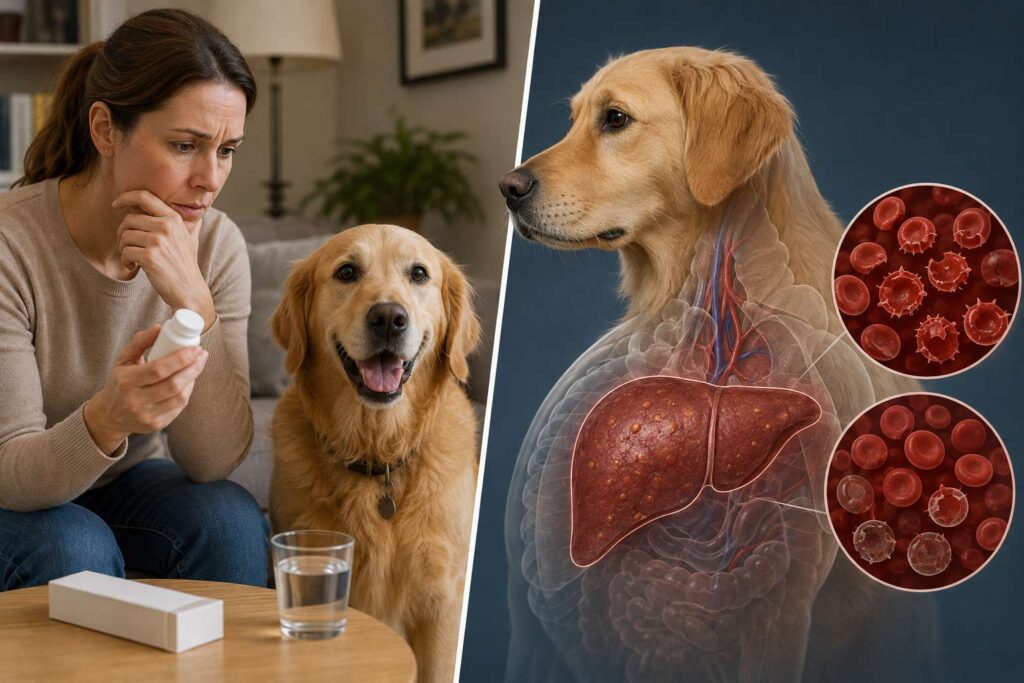
Paracetamol is metabolised in the liver. At toxic exposures, reactive metabolites can overwhelm the body’s normal protective pathways, including glutathione-dependent detoxification, and contribute to liver-cell damage. Dogs can also develop oxidative injury to red blood cells.
One important consequence is methaemoglobinaemia, in which altered haemoglobin cannot carry oxygen normally. Merck Veterinary Manual reports that acetaminophen toxicity in dogs can involve both liver damage and blood changes, with signs such as rapid breathing, lethargy, vomiting, facial or paw swelling, and, at sufficiently high exposures, abnormal brown or muddy mucous membranes.
These problems do not necessarily become visible immediately. A dog may still be walking around, eating, or behaving normally while an exposure is being assessed. That is why “my dog seems fine” should not be used as a reason to wait for symptoms before calling. PDSA likewise warns that signs of poisoning can take hours or even days to develop.
Visible signs are therefore not the best way to decide whether an exposure matters. The safer decision is based on what product was involved, how much may have been swallowed, your dog’s weight, when it happened, whether doses were repeated, and what other ingredients were present—information your veterinarian can put into context.
Signs That Can Develop After Exposure
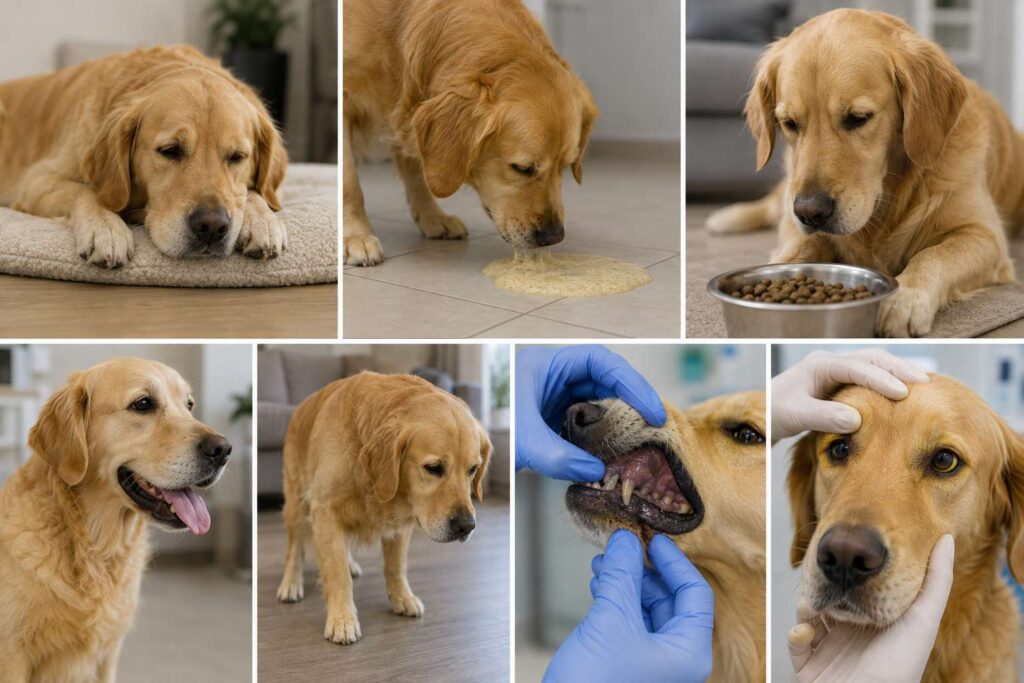
Paracetamol poisoning doesn’t always produce one neat set of symptoms at once. Some changes can appear earlier than others, and liver injury may become apparent later. Merck Veterinary Manual notes that dogs can develop both liver damage and changes affecting the blood’s ability to carry oxygen.
Early changes you might notice:
- Lethargy or unusual quietness
- Vomiting
- Reduced appetite
- Panting or faster breathing
- General weakness
- Swelling around the face or paws
Gum and breathing changes that need urgent attention:
- Blue, grey, or muddy-brown gums
- Laboured or difficult breathing
- Marked weakness or difficulty standing
- Rapid breathing that doesn’t settle with rest
These changes can occur when paracetamol affects haemoglobin and interferes with normal oxygen transport.
Signs that may point towards liver involvement:
- Yellowish gums, skin, or whites of the eyes (jaundice)
- Abdominal discomfort
- Dark or unusually coloured urine
- Persistent loss of appetite
- Worsening lethargy
Signs that mean this is an emergency:
- Collapse
- Seizures
- Severe breathing difficulty
- Extreme weakness
- Blue, grey, brown, or very pale gums
Don’t wait for several symptoms to appear together. More importantly, don’t wait for symptoms at all if you already know or suspect your dog swallowed paracetamol. A dog can look normal early in an exposure and still need prompt veterinary assessment.
Do Not Try To Treat This At Home
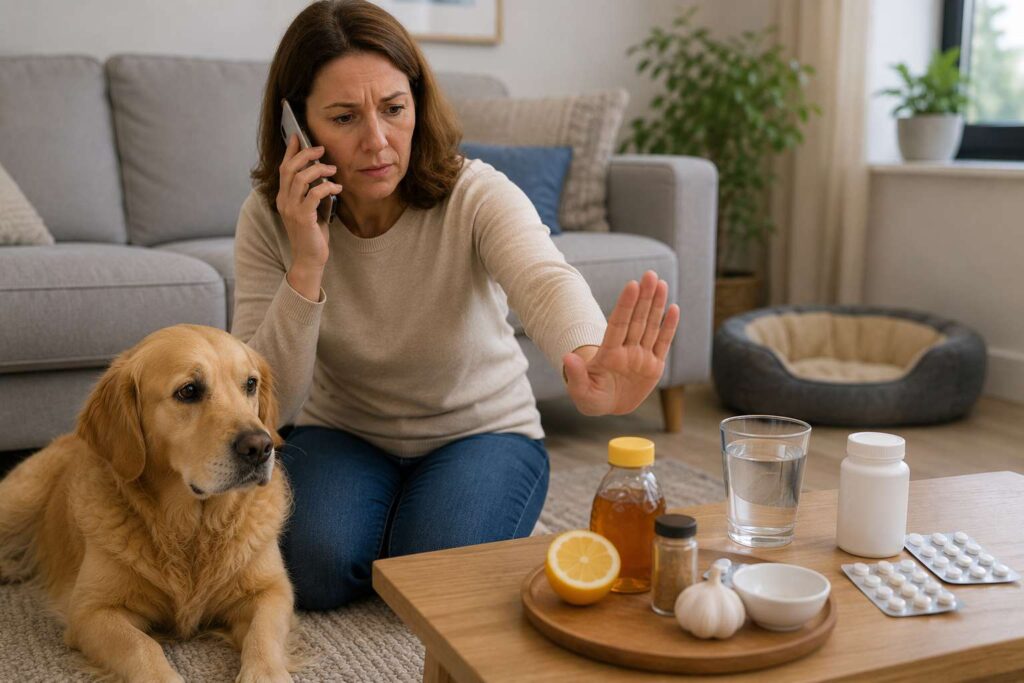
A poisoning emergency is one of those situations where well-intentioned home treatment can make matters harder rather than better.
- Don’t wait for symptoms before contacting your vet or an animal poison service.
- Don’t induce vomiting unless a veterinary professional specifically instructs you to do so.
- Don’t use salt water to make your dog vomit.
- Don’t give activated charcoal yourself.
- Don’t offer milk, bread, oil, or another supposed home “antidote.”
- Don’t substitute ibuprofen, naproxen, aspirin, or another human painkiller.
- Don’t use an online mg/kg calculator to decide that an exposure is safe.
- Don’t throw away the packet, bottle, or chewed blister pack—take it with you or photograph it.
- Don’t assume children’s liquid medicine is automatically safer.
- Don’t assume half a tablet or “only one tablet” is automatically harmless.
- Don’t give another dose because your dog still appears painful.
If your dog is already having difficulty breathing, has abnormal gum colour, collapses, has a seizure, or becomes severely weak, seek emergency veterinary care immediately.
Not Every Paracetamol Product Means the Same Exposure
Plain paracetamol tablets, acetaminophen products, children’s liquids, extended-release formulations, cold and flu medicines, and combination painkillers should not be treated as interchangeable.
The useful habit is to check the entire active-ingredient list and the strength of each ingredient, rather than relying on the brand name or assuming a children’s product is milder. Combination medicines can contain other drugs that create additional risks, so tell the vet about everything listed on the label.
Keep the original packaging whenever possible. The vet may need to know:
- The strength in mg per tablet or mg per mL
- Whether the formulation is standard or extended-release
- How much may be missing
- Every other active ingredient
- Approximately when the exposure occurred
Veterinary-Prescribed Paracetamol vs Giving It Yourself
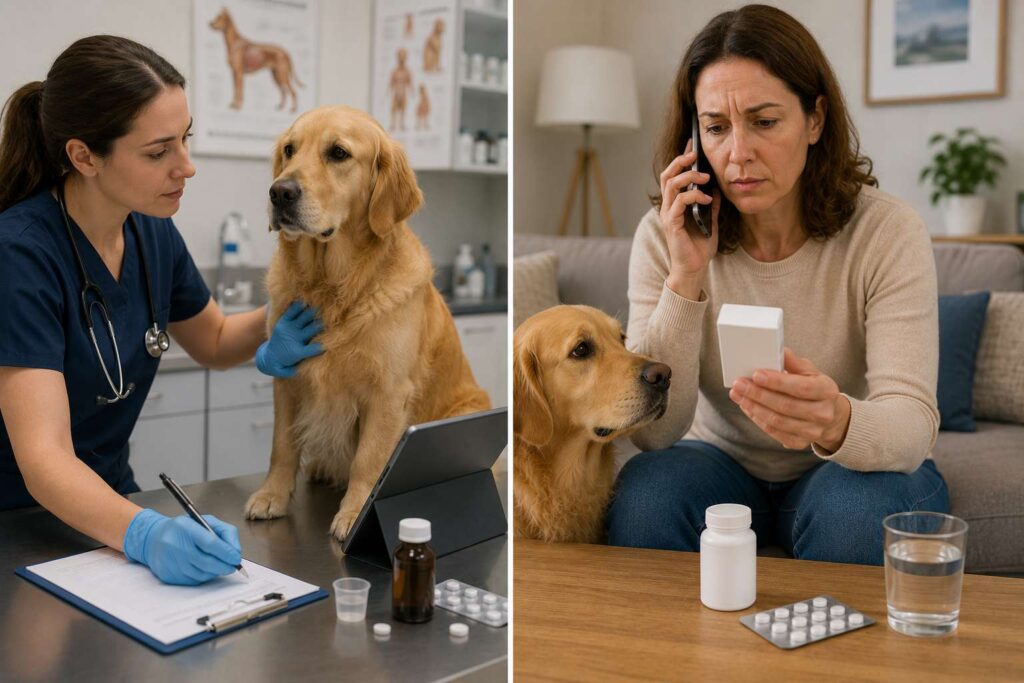
Here’s where a lot of confusion comes from: veterinarians can sometimes prescribe paracetamol-containing medicines to dogs, yet inappropriate paracetamol exposure can still cause poisoning.
In Great Britain, for example, Pardale-V is an authorised prescription-only veterinary medicine for dogs containing paracetamol and codeine phosphate. Its official product information lists uses including acute traumatic pain, complementary pain treatment, and post-operative analgesia, along with specific contraindications and dosing restrictions.
That doesn’t mean an owner should recreate the treatment with human paracetamol. Veterinary use involves a known product, a particular dog, a defined clinical reason, and professional assessment of factors such as health history and other medications.
| Veterinary-Directed Use | Owner Self-Medication |
|---|---|
| Your individual dog is assessed | The cause of pain may not have been diagnosed |
| Exact medication and formulation are known | A human product is chosen independently |
| Dose and treatment duration are set professionally | Dose may be guessed from human use or online advice |
| Health conditions and other medicines can be considered | Contraindications or interactions may be missed |
| Monitoring or follow-up can be arranged | Developing problems may go unnoticed |
| Used for a defined medical reason | Often given simply because the dog “seems sore” |
The same principle applies to an old prescription. Don’t restart leftover paracetamol-containing medication for a new problem without checking with your vet first. Your dog’s condition, current weight, other medicines, and the reason for treatment may have changed since it was prescribed.
What the Vet May Do
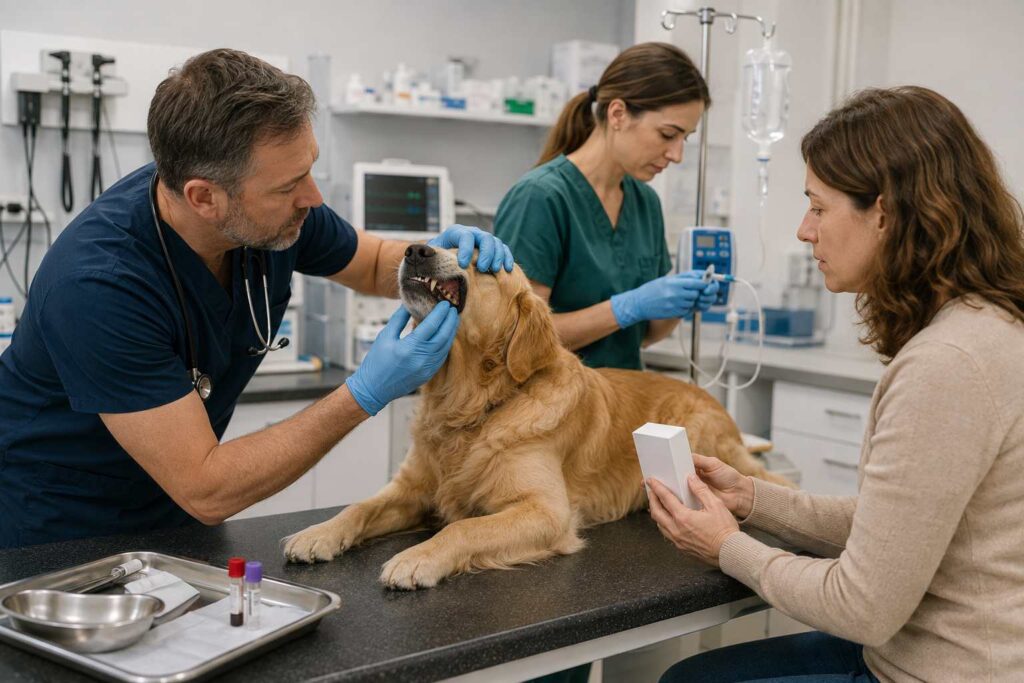
If you call about a possible paracetamol exposure, the vet will first try to reconstruct what happened: the exact product and strength, how much may be missing, when it happened, whether more than one dose was involved, your dog’s weight, and any relevant health conditions or medications.
They’ll assess your dog’s general condition, including breathing and gum colour, and may recommend blood tests to check red blood cells and liver function. Because some effects can develop later, follow-up testing may also be needed even if the first examination is reassuring.
Treatment depends on the circumstances and how much time has passed. When appropriate, a vet may use decontamination to reduce further absorption. N-acetylcysteine (NAC) is an important veterinary treatment for acetaminophen/paracetamol poisoning because it helps restore protective glutathione and limit toxic effects. Supportive treatment may include intravenous fluids, oxygen support, anti-nausea medication, or other care depending on the dog’s condition. Merck Veterinary Manual notes that treatment is aimed at limiting absorption and managing methemoglobinemia and liver injury. (merckvetmanual.com)
These treatments aren’t something to recreate at home. Early professional assessment matters because treatment options and prognosis can depend partly on how quickly the exposure is addressed.
Mistakes That Can Make the Situation Harder
A few understandable reactions can delay appropriate care or make the exposure harder to assess:
- Searching for a “safe dose” online instead of calling a professional
- Guessing how many tablets are missing instead of saying the amount is unknown
- Throwing away the packet, bottle, or chewed blister pack
- Overlooking other active ingredients in a combination product
- Waiting for vomiting, jaundice, or another symptom before seeking advice
- Giving another dose because your dog still seems uncomfortable
- Reaching for ibuprofen, aspirin, or another human painkiller instead
- Trying to induce vomiting or use a home antidote without veterinary instruction
- Assuming a normal-looking dog is automatically unaffected
If you’ve already made one of these mistakes, tell the vet what happened. Accurate information—including what you gave and when—is more useful than leaving something out because you’re worried about being judged.
Keeping Medication Out of Reach
Many accidental exposures can be prevented with a few practical habits:
- Store medicines in a closed cabinet rather than an accessible drawer or shelf.
- Keep handbags, backpacks, and overnight bags containing medication away from your dog.
- Don’t leave pill organisers on bedside tables or kitchen counters.
- Pick up dropped tablets immediately.
- Keep children’s medicines securely stored too.
- Store human and veterinary medicines separately and clearly labelled.
- Keep medicines in their original packaging when practical.
- Never give leftover prescriptions—human or veterinary—without checking with your vet first.
Remember that a determined dog may chew through a blister pack or plastic container. “In the packet” isn’t the same as “out of reach.”
What If Your Dog Is in Pain but Hasn’t Eaten Anything?
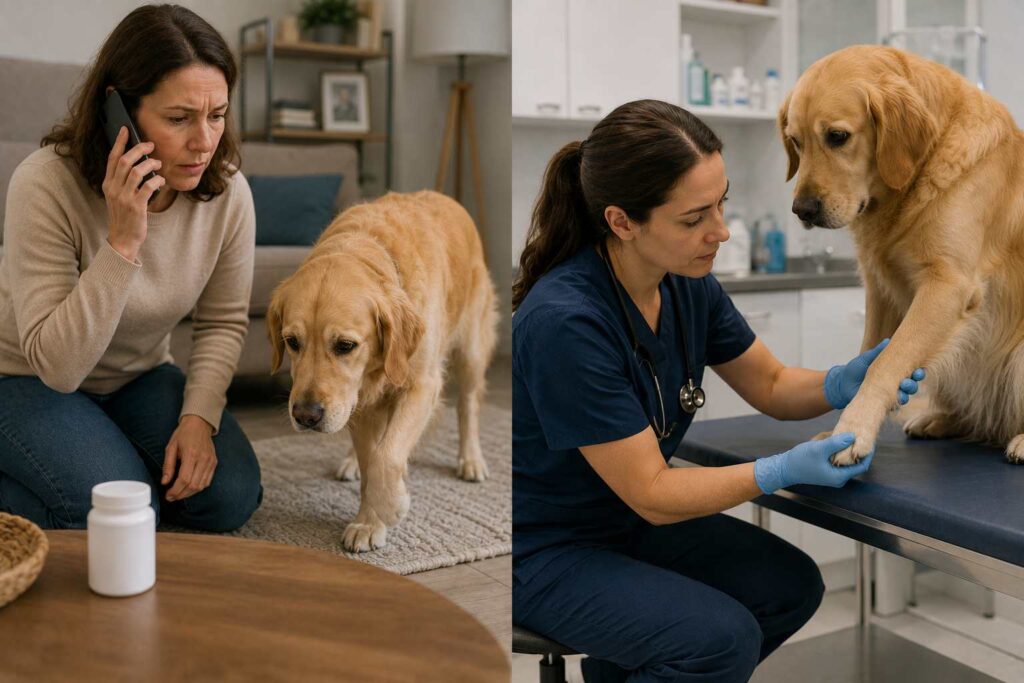
If your dog seems sore, stiff, feverish, or otherwise uncomfortable but hasn’t swallowed any medication, resist the urge to reach for paracetamol “just to help.”
Pain is a symptom, not a diagnosis. Limping might come from a minor strain, for example, but it can also be caused by a fracture, joint problem, paw injury, or another condition requiring different treatment. Human painkillers aren’t interchangeable, and switching from paracetamol to ibuprofen or aspirin isn’t a safe workaround.
Contact your vet instead. They can assess the cause of the pain and decide whether medication is needed and which veterinary treatment is appropriate for your individual dog.
The Bottom Line
If your dog has swallowed paracetamol or acetaminophen—or you have already given some without veterinary direction—contact your vet or an appropriate animal poison service promptly rather than waiting for symptoms.
Have the packaging, your dog’s approximate weight, the medication strength, estimated amount, and possible timing ready. If you don’t know exactly how much was swallowed, say so rather than guessing.
If you’re looking for pain relief instead, speak to your vet before giving anything from your medicine cabinet. Paracetamol can sometimes be used in dogs under veterinary direction, but that is very different from choosing and dosing a human product yourself.
Frequently Asked Questions
1.Is a small amount of paracetamol safe for dogs?
Don’t use a “small amount” as a home safety rule. Risk depends on the dog’s weight, product strength, amount, formulation, whether doses were repeated, and other ingredients. Veterinarians may sometimes prescribe paracetamol-containing medication to selected dogs, but that doesn’t establish a safe DIY dose for human paracetamol.
2.How quickly can problems show up after exposure?
Timing varies. Some effects can develop within hours, while evidence of liver injury may become apparent later. A dog looking normal soon after an exposure therefore doesn’t rule out poisoning. If you know or suspect your dog swallowed paracetamol, seek veterinary advice rather than waiting for symptoms.
3.Can dogs have children’s liquid paracetamol instead of tablets?
Children’s formulations aren’t automatically safer. Concentrations vary, and some liquid or flavoured human medicines may contain additional ingredients that need to be identified. If your dog drank one, check the label for the concentration and complete ingredient list and contact your vet or an animal poison service.
4.What if I genuinely don’t know how much my dog ate?
Tell the vet exactly what you know. Count any remaining tablets, check how full the bottle appears, keep the packaging, and give the earliest and latest possible exposure time. If the amount is genuinely unknown, say “unknown” rather than inventing a precise figure.
5.Does a combination cold or flu medicine change anything?
Yes. Combination medicines may contain paracetamol alongside other active ingredients, and those ingredients can introduce additional risks. Give the vet the complete product name and active-ingredient list rather than reporting only that your dog ate “paracetamol.”
6.Can a dog fully recover from paracetamol poisoning?
Recovery is possible, and prognosis is generally better when an exposure is identified and treated early. The outlook depends on factors such as the amount and formulation involved, whether exposure was repeated, the dog’s condition, and how quickly appropriate treatment begins. (merckvetmanual.com)
7.If my vet prescribed a paracetamol-based medicine before, can I use it again?
Not without checking first. The original prescription was chosen for a particular dog, condition, product, dose, and treatment period. Your dog’s weight, health, other medications, or reason for needing pain relief may now be different, so contact your vet before restarting it.
#. Related Articles:
1. Home Remedies for Dog Bad Breath?