If your dog keeps licking their lips after meals, swallowing repeatedly, or bringing food back up, it is easy to assume acid reflux is the cause and immediately start searching for a different food. However, these signs do not confirm reflux on their own, and the best diet is not a single brand that suits every dog.
The right choice depends on your dog’s diagnosis, fat tolerance, age, body condition, eating habits, and any other health problems. A dog with uncomplicated reflux may need a different nutritional approach from one with pancreatitis, food-responsive disease, a hiatal hernia, or an oesophageal disorder.
This guide provides a practical framework for choosing food safely rather than ranking products. It is suitable for dog owners in the UK, Canada, and Australia, although product formulations and labelling can vary between countries.
Diet can support treatment, but it cannot replace a veterinary diagnosis—especially when symptoms are frequent, worsening, or accompanied by weight loss, swallowing difficulty, or breathing changes.
Before Changing Food, Work Out What Is Actually Happening
Reflux, Vomiting and Regurgitation Aren’t the Same Thing
These terms are often used interchangeably, but they describe different processes and may require different treatment.
Vomiting is an active process. A dog may appear nauseous, lick their lips, drool, retch, and contract their abdomen before bringing up partially digested food, fluid, or bile.
Regurgitation is usually passive. Food or liquid may come back up suddenly without retching or obvious abdominal effort. The material is often undigested and may appear shortly after eating, although timing can vary.
Gastro-oesophageal reflux occurs when stomach contents move backwards into the oesophagus. It may cause inflammation or discomfort without producing visible vomit or regurgitated food. Some dogs mainly show repeated swallowing, lip licking, drooling, restlessness, or reluctance to eat.
The MSD Veterinary Manual explains that oesophageal disorders can cause regurgitation, swallowing difficulty, drooling, and pain, which is why repeated symptoms should be properly investigated rather than assumed to be simple reflux.
Gagging, coughing, choking, and reverse sneezing can also be mistaken for digestive symptoms. Recording a short video of an episode, when it is safe to do so, can help your veterinarian understand what is happening.

Signs That May Point to Reflux or Oesophageal Irritation
Possible signs include:
- Repeated swallowing
- Lip licking
- Drooling
- Gulping
- Burping
- Restlessness after eating
- Reluctance to eat
- Hesitation or apparent pain when swallowing
- Bringing up fluid, foam, or food
- Discomfort during the night
- Coughing after food or fluid comes back up
These signs are not specific to reflux. Occasional lip licking or grass eating, for example, is not enough to diagnose a digestive disorder.
Conditions That Can Look Like Reflux
Several medical problems can cause similar symptoms:
- Megaesophagus
- Gastritis
- Pancreatitis
- Hiatal hernia
- An oesophageal foreign body
- Oesophagitis
- Chronic enteropathy
- Food-responsive disease
- Delayed gastric emptying
- Dental, mouth, or throat pain
Repeated passive regurgitation deserves particular attention because it may indicate an oesophageal problem rather than a simple upset stomach. Regurgitated material can also enter the lungs and cause aspiration pneumonia.
What Owners May Be Seeing
| Feature | Reflux or Oesophageal Irritation | Vomiting | Regurgitation |
|---|---|---|---|
| Abdominal effort | Often absent or subtle | Usually present | Usually absent |
| Typical material | Fluid, foam, saliva, or no visible material | Partially digested food, fluid, or bile | Often undigested food or water |
| Timing | Commonly after meals or overnight | Variable | Often soon after eating, but not always |
| Other signs | Swallowing, lip licking, drooling, discomfort | Nausea, retching, abdominal contractions | Material comes up suddenly and passively |
| Recommended action | Monitor an isolated mild episode; arrange a veterinary check if recurrent | Response depends on frequency and severity | Repeated episodes require veterinary investigation |
Seek urgent veterinary help if your dog has difficulty breathing, repeatedly retches without producing anything, cannot swallow, collapses, brings up blood, develops a swollen abdomen, or coughs and becomes unwell after regurgitating.
The Five-Factor Food Suitability Test
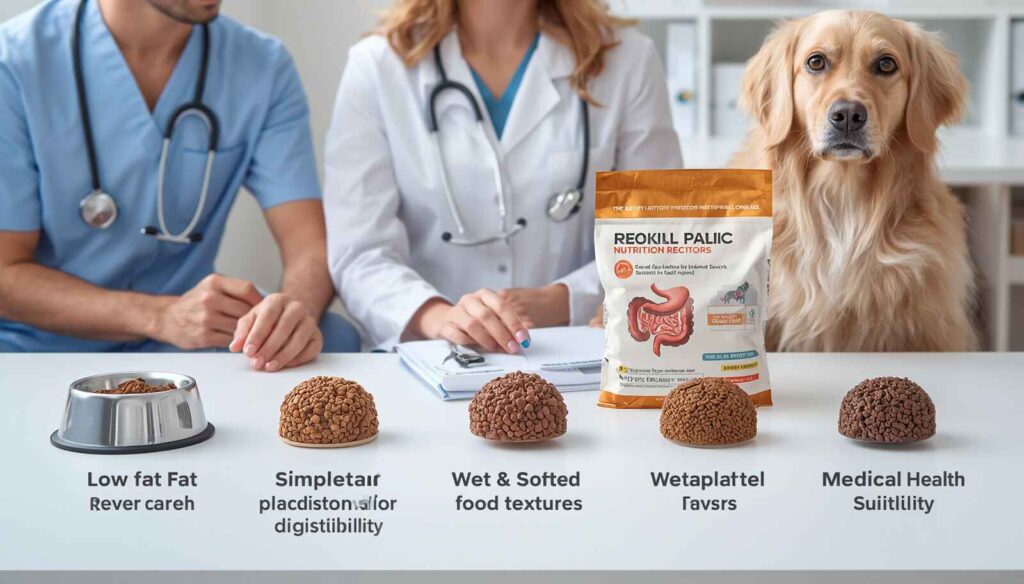
Instead of chasing brand names, run any food you are considering through these five checks.
1. Fat Level
Higher-fat meals can delay gastric emptying and may worsen reflux in some dogs. However, there is no single fat cutoff that suits every dog, so the target should be confirmed with your veterinarian—especially if pancreatitis is suspected or has been diagnosed.
Remember to count the entire diet, not just the main food. Cheese, peanut butter, dental chews, table scraps, toppers, and pill pockets can add a meaningful amount of fat.
2. Digestibility
You cannot judge digestibility from the first ingredient on the label. It depends on the complete formulation, processing, manufacturer research, feeding trials, and quality control—not whether chicken appears above turkey on the ingredient list.
WSAVA recommends looking beyond the ingredient list and considering the manufacturer’s nutrition expertise, quality-control processes, research, and ability to provide detailed nutrient information when choosing pet food.
Do not assume one protein source is automatically gentler than another. Individual tolerance matters, and a dog with food-responsive disease may need a hydrolysed or carefully selected novel-protein diet rather than simply a “lean” meat.
3. Texture
Wet food, softened kibble, and standard dry kibble may feel different to a dog with an irritated oesophagus. Some dogs are more comfortable eating soft food while inflammation settles, while others tolerate dry food without difficulty.
Texture should be chosen according to the dog’s symptoms and diagnosis. A dog that appears painful when swallowing, repeatedly regurgitates, or refuses food should be examined rather than managed by changing texture alone.
4. Nutritional Completeness
Confirm that the food is labelled complete or complete and balanced for your dog’s life stage.
A short-term bland meal is not the same as a nutritionally complete long-term diet. Chicken and rice, for example, may be used temporarily under veterinary guidance, but it does not provide all the nutrients a dog needs when fed for extended periods.
This is particularly important for puppies, pregnant dogs, seniors, and dogs that are underweight or recovering from illness.
5. Medical Fit
The food must suit the whole dog, not just the suspected reflux. Pancreatitis, kidney disease, diabetes, food allergies, chronic enteropathy, obesity, being underweight, or managing several conditions at once can all change the safest choice.
In these cases, the lowest-fat food is not automatically the best option. A veterinarian—or a veterinary nutrition specialist for complex cases—may need to balance several nutritional priorities.
Quick Checklist — Is This Food a Reasonable Option?
- Recommended or approved for your dog’s suspected or confirmed condition
- Fat content checked beyond the front-of-pack claim
- Nutritionally complete for your dog’s life stage
- Calorie content available from the manufacturer
- Texture is comfortable for your dog to eat
- Treats, chews, toppers, and pill foods can fit the plan
- Available consistently where you live
- Affordable enough for a proper monitored trial
- Does not conflict with another medical condition
The Label Test Most Owners Skip
You cannot compare the fat percentage on a wet-food label directly with the percentage on dry food. Wet food contains far more moisture, so its as-fed fat figure usually looks much lower than kibble even when the foods provide a similar amount of fat once water is removed.
A fairer comparison uses:
- Dry-matter basis, which removes moisture from the calculation
- Fat per 1,000 calories, which shows how much fat the dog receives relative to energy intake
The calorie-based figure can be especially useful because a small portion of calorie-dense food may deliver more fat than expected. If the information is not shown on the packaging, ask the manufacturer for the dry-matter fat value, calories per kilogram, or grams of fat per 1,000 kilocalories.
Terms such as “sensitive stomach,” “grain-free,” “limited ingredient,” “natural,” and “gastrointestinal” do not prove that a food is suitable for reflux.
Label Claims vs. What They Actually Prove
| Claim | What It May Suggest | What It Does Not Prove | Check Instead |
|---|---|---|---|
| Sensitive stomach | Formulated with digestive tolerance in mind | Low fat or suitability for reflux | Fat, calories, digestibility data, and intended use |
| Grain-free | Contains no common cereal grains | Better reflux control | Complete nutrient profile and medical suitability |
| Limited ingredient | Contains fewer major ingredients | High digestibility or low fat | Reason for use and full nutrient analysis |
| Natural | Marketing or ingredient positioning | Therapeutic effectiveness | Manufacturer expertise, testing, and quality control |
| Gastrointestinal | Designed for a digestive purpose | Suitability for every gastrointestinal condition | Exact therapeutic indication and nutrient profile |
Not every gastrointestinal formula is low in fat. Some are designed for food sensitivity, fibre-responsive disease, recovery, or increased calorie intake rather than reflux. Always check the actual nutrient profile instead of relying on the product category.
Which Food Format Actually Fits Your Dog?
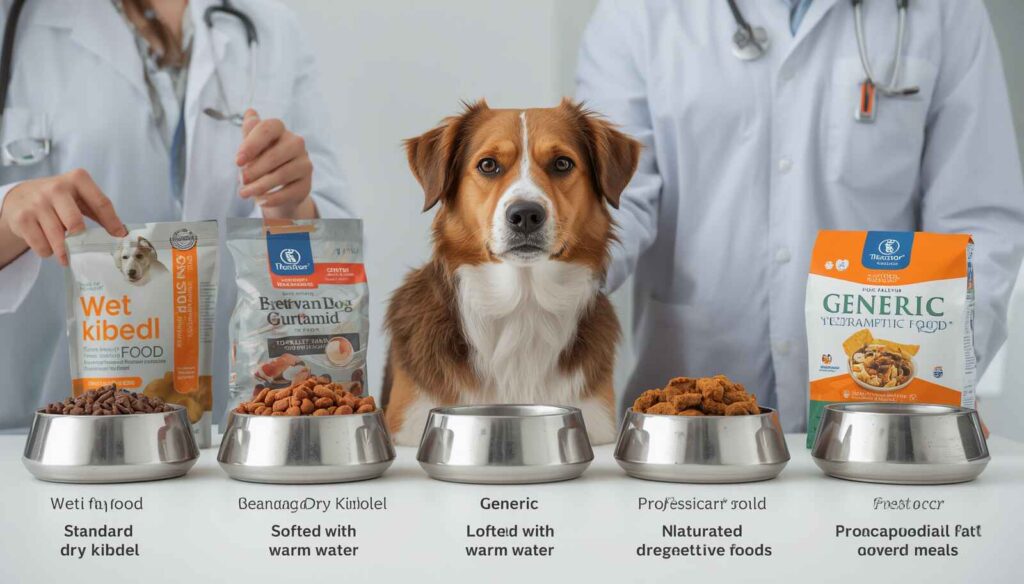
Wet Food
Wet food offers a soft texture and additional moisture, which may help dogs with oesophageal discomfort. However, it is not automatically low in fat and may be more expensive than kibble. Once opened, it must also be stored and handled carefully.
Dry Food
Dry food is convenient, economical, and easy to store. However, its texture may be uncomfortable for a dog with oesophagitis, and dogs that gulp large portions quickly may have more difficulty after meals.
The issue is not necessarily kibble itself. Portion size, eating speed, calorie density, and the individual dog’s condition all matter.
Softened Kibble
Adding warm water to a suitable kibble may make it easier to eat without changing its nutritional profile. Allow it to soften, serve it at a safe temperature, and discard uneaten food rather than leaving it at room temperature for long periods.
Veterinary Therapeutic Food
Veterinary diets are formulated for specific medical purposes and should be chosen according to diagnosis rather than brand reputation. One gastrointestinal diet may be low in fat, while another may be hydrolysed, high in fibre, or calorie-dense.
A food prescribed for one digestive disorder may not be appropriate for another.
Over-the-Counter Sensitive-Digestion Food
An over-the-counter sensitive-digestion food may be reasonable for some dogs with mild symptoms after veterinary discussion. However, these products generally offer less targeted nutritional control than therapeutic diets, so the fat level, calorie density, completeness, and intended use still need to be checked.
Homemade Food
Homemade food may have a role during a short, veterinarian-directed transition or when a recipe has been formulated by a qualified veterinary nutrition professional.
Chicken and rice is not a complete long-term diet. Feeding it for weeks can create nutritional deficiencies, even when the dog appears to tolerate it well.
Raw Food
Raw food is not a standard treatment for reflux. It may be high in fat, can expose dogs and people to harmful bacteria, and may be nutritionally incomplete unless professionally formulated.
The safest format is not necessarily the least processed one. It is the food that is nutritionally complete, medically appropriate, well tolerated, and practical to feed consistently.
Building a Reflux-Friendly Feeding Routine

Measure your dog’s full daily ration first, then divide it into smaller meals. The goal is to reduce the amount eaten at one time—not to add extra food. A kitchen scale is more accurate than estimating portions with a cup, especially for small dogs or calorie-dense foods.
For fast eaters, a slow-feeder bowl and a quiet feeding area may help. Watch your dog’s response, though. Some puzzle feeders increase frustration or air swallowing rather than improving meal pace.
Keep feeding times consistent and note whether symptoms tend to appear overnight, early in the morning, or shortly after meals. This pattern can be useful to your veterinarian. Encourage calm behaviour after eating, but avoid relying on a rigid exercise waiting period unless your vet has recommended one for your dog.
Raised bowls are not a standard treatment for acid reflux. They are more relevant to certain diagnosed oesophageal disorders, so feeding posture should be changed only with veterinary guidance.
Quick Tips
- Weigh food rather than estimating portions by cup
- Count cheese, dental chews, toppers, and pill pockets as food
- Do not introduce several supplements at once
- Record meal times and symptom times together
- Keep the original packaging during a food trial
- Divide the existing daily ration instead of increasing it
Hidden Foods That Can Undo the Diet
The main food may be appropriate, yet symptoms can continue if treats and extras are overlooked.
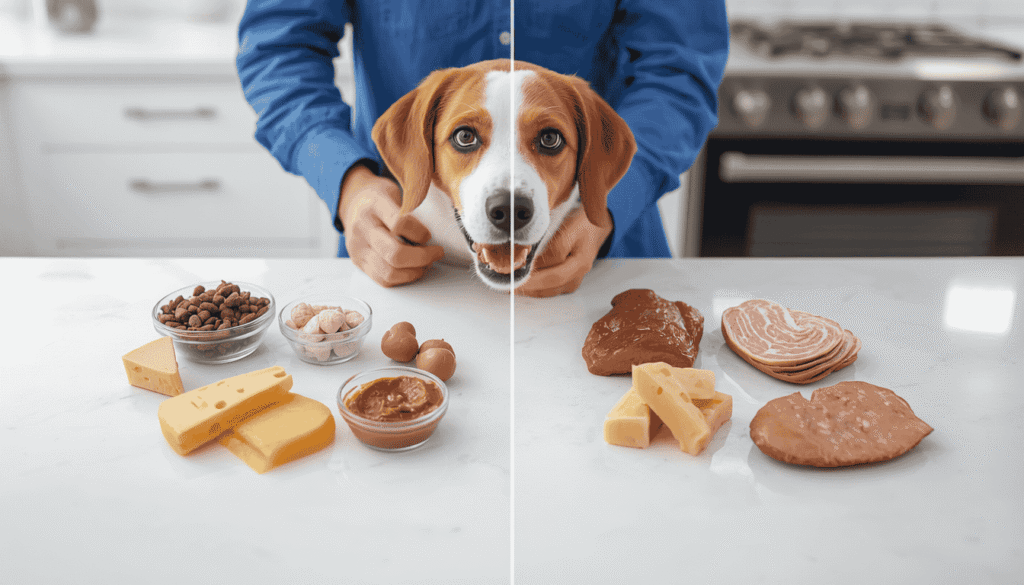
Cheese, sausages, fatty meat, poultry skin, and fried leftovers are obvious high-fat additions. Dental chews are easier to miss, so check their calorie and fat content rather than assuming they are all suitable—or all unsafe.
Pill pockets may contain peanut butter, cheese, or processed meat. If medication needs disguising, ask your veterinarian whether part of the prescribed food or another lower-fat option would work.
Even additions marketed as healthy can alter the plan. Oils, fish oil, yoghurt, broth, and extra meat all change the total calorie or fat intake. Supplements prescribed for another condition should not be stopped without veterinary advice, but they should be included when the diet is assessed.
Lower-Risk Choices vs. Hidden Triggers
| Extra | Concern | Safer Approach |
|---|---|---|
| Cheese | High in fat and calories | Ask your vet about a lower-fat medication option |
| Sausage or processed meat | Fat, salt, and seasoning | Use part of the prescribed food where possible |
| Peanut butter | Often calorie- and fat-dense | Ask for a compatible alternative |
| Fatty dental chews | May undermine the diet trial | Check the nutrient and calorie information first |
| Added oils | Increase total dietary fat | Use only when specifically recommended |
| Extra meat toppers | Add calories and may unbalance the diet | Use a measured amount approved by your vet |
Run a Proper Food Trial Instead of Brand-Hopping
Before changing anything, record:
- Current food and daily quantity
- Treats, chews, toppers, and pill foods
- Medications and supplements
- Type and timing of symptoms
- Current body weight
- Stool quality
- Appetite
Change one major variable at a time. If you alter the food, bowl height, supplements, and feeding schedule in the same week, it becomes difficult to identify what helped—or what made things worse.
Transition gradually unless your veterinarian advises an immediate change. A slower transition may be needed if your dog has previously developed diarrhoea or food refusal after a diet switch.
Signs of improvement may include:
- Fewer regurgitation episodes
- Less repeated swallowing or lip licking
- Greater comfort after meals
- A steadier appetite
- Stable body weight
- No new coughing or breathing changes
Judge the overall trend rather than one unusually good or bad day.
A trial needs reassessment if symptoms remain unchanged, become more frequent, or are joined by weight loss, painful swallowing, food refusal, vomiting, diarrhoea, or respiratory signs.
Improvement during a food trial does not prove that reflux was the original problem. The benefit may have come from smaller meals, reduced fat, slower eating, or the removal of an ingredient associated with another gastrointestinal condition.
Special Cases Worth Flagging
Puppies
Puppies have specific growth requirements, so an adult therapeutic diet should not be used without veterinary approval. Repeated vomiting, regurgitation, or food refusal is also more urgent in puppies because they can become dehydrated or weak quickly.
Senior Dogs
Senior dogs may have kidney, liver, dental, or metabolic disease alongside reduced appetite. Their medications and other nutritional needs must be considered before choosing a reflux-friendly food.
Overweight Dogs
More frequent meals must still come from the same controlled daily ration. Extra calories can worsen weight gain, which may complicate digestive and respiratory problems.
Dogs With a History of Pancreatitis
These dogs may need stricter, veterinarian-directed fat control. A food described as gastrointestinal or suitable for sensitive stomachs is not automatically appropriate for pancreatitis.
Brachycephalic Dogs
Flat-faced breeds may have overlapping airway problems, hiatal hernia, or reflux-related disease. Noisy breathing, coughing, exercise intolerance, or worsening respiratory signs should not be dismissed as a food issue.
Dogs With Multiple Medical Conditions
A dog with reflux signs plus kidney disease, diabetes, food-responsive disease, or another chronic condition may need a carefully balanced therapeutic plan. The lowest-fat food is not always the safest overall choice.
Common Mistakes That Keep Symptoms Going

- Choosing food based only on front-of-pack claims
- Comparing wet and dry fat percentages without adjusting for moisture
- Feeding smaller meals but increasing the total daily amount
- Continuing fatty treats during a diet trial
- Changing food, supplements, and feeding routine at the same time
- Feeding chicken and rice long-term instead of using it as a short veterinary-directed bridge
- Assuming symptom improvement definitively proves reflux
- Treating repeated regurgitation as ordinary vomiting
- Ignoring calories from dental chews, toppers, and pill foods
- Continuing to experiment while the dog is losing weight or becoming weaker
When Food Changes Aren’t Enough
Seek Urgent Veterinary Help For:
- Difficulty or laboured breathing
- Coughing or breathing changes after regurgitation
- Repeated unproductive retching
- A swollen or painful abdomen
- Collapse or severe weakness
- Blood in vomit
- Dark, coffee-ground-like material
- Black, tarry stool
- Suspected foreign-object ingestion
- Inability to swallow
- Inability to keep water down
Arrange a Prompt Veterinary Appointment For:
- Recurrent regurgitation
- Progressive weight loss
- Refusal to eat
- Pain or hesitation when swallowing
- Frequent nighttime episodes
- Persistent drooling
- Symptoms that continue despite a properly followed food trial
Regurgitated food or fluid can enter the lungs and cause aspiration pneumonia. Warning signs include coughing, lethargy, fever, rapid breathing, or increased breathing effort. Stop experimenting with food and seek veterinary care if these signs appear.
Do not give human antacids without veterinary direction. Do not induce vomiting in a dog that is regurgitating, and do not force-feed a dog that is struggling to swallow.
Buying Food in the UK, Canada, and Australia
For regular long-term feeding, look for food labelled complete or complete and balanced for your dog’s life stage.
Check the local version of the product rather than relying on an overseas retailer’s page. A familiar brand name does not always mean the recipe, calorie density, guaranteed analysis, or ingredient sourcing is identical in every country.
Therapeutic diets may also differ in availability. Before starting a trial, confirm that the food can be supplied consistently through your veterinarian, local retailer, or authorised distributor.
Final Action Plan
- Record the symptoms and note whether the episode looks like active vomiting or passive regurgitation.
- Seek veterinary guidance when signs are recurrent, worsening, or accompanied by weight loss, pain, or respiratory changes.
- Assess any food for fat level, digestibility, texture, nutritional completeness, and medical suitability.
- Measure the full daily ration and account for every treat, topper, chew, and pill pocket.
- Track the response consistently and return to your veterinarian if the plan is not working.
Save the checklist, photograph your dog’s current food label, and record several days of meals and symptoms before the next veterinary visit. A clear written record—and a video of an episode when safe—can be far more useful than trying to recall the details from memory.
Frequently Asked Questions
1.Is sensitive-stomach dog food always low in fat?
No. “Sensitive stomach” is not a guaranteed fat level or medical indication. Some formulas remain moderate or high in fat, so check the nutrient information and calorie content rather than relying on the product name.
2.Are all veterinary gastrointestinal diets suitable for reflux?
No. Gastrointestinal diets are designed for different conditions. Some focus on fat restriction, while others are hydrolysed, higher in fibre, or calorie-dense. Your veterinarian should match the diet to your dog’s diagnosis and wider health needs.
3.Can chicken and rice be fed every day long-term?
No. Chicken and rice is not nutritionally complete by itself. It may occasionally be used as a short veterinary-directed bridge, but feeding it for extended periods can cause nutrient deficiencies.
4.Does my dog need a raised food bowl?
Not routinely. Raised feeding is more relevant to certain diagnosed oesophageal disorders than to reflux symptoms in general. Ask your veterinarian before changing feeding posture.
5.Can puppies eat adult low-fat gastrointestinal food?
Only with veterinary approval. Puppies need nutrients in specific amounts for growth, and adult therapeutic food may not meet those requirements.
6.How long should a diet trial run before judging the results?
The correct duration depends on the suspected condition and the diet being used. Follow the timeline set by your veterinarian and track symptoms, appetite, stool quality, and body weight throughout the trial. Do not judge the result from one good or bad day.
7.Can dogs take human antacids for reflux?
Not without veterinary guidance. The correct medication and dose depend on the dog’s weight, diagnosis, other medicines, and overall health. Some human products contain ingredients or combinations that may be unsuitable.
#. Related Articles: