You’ve probably seen apple cider vinegar popping up everywhere — health blogs, pet forums, TikTok videos of dogs with gleaming coats. Someone tells you it cures everything from fleas to bad breath. Someone else says it nearly burned their dog’s ears. So which is it?
Here’s the honest answer: apple cider vinegar for dogs is not magic, but it’s not useless either. Used correctly, in the right situations, it can be a helpful home remedy. Used wrong, it can cause real harm.
This guide cuts through the noise. No selling, no hype — just practical, clear information so you can make a smart decision for your dog.
What Is Apple Cider Vinegar, Really?
Apple cider vinegar is made by fermenting crushed apples. First, yeast converts the natural sugars into alcohol. Then bacteria convert that alcohol into acetic acid — the sharp stuff that gives vinegar its bite.
The version most dog owners reach for is raw, unfiltered ACV “with the mother.” The “mother” is that cloudy, stringy stuff floating at the bottom. It’s a mix of enzymes, proteins, and beneficial bacteria — basically the sign that you’ve bought a live, minimally processed product.
Filtered, clear ACV has had the mother removed. It’s fine for cleaning but offers little benefit for your dog.
Key fact -> The acidity of ACV (typically pH 2–3) is both what makes it useful and what makes it potentially harmful. Dilution isn’t optional — it’s essential.
Genuine Benefits — and Honest Limits
Let’s be direct: most of the dramatic claims about ACV for dogs are not backed by clinical trials. There’s very little peer-reviewed research specifically on dogs. What we do have is a mix of anecdotal evidence, general antimicrobial science, and reasonable extrapolation.
Here’s a clear-eyed breakdown:
Reasonable evidence -> Mild skin pH balancing, coat shine, minor odour control, flea deterrent (topical)
Plausible but limited proof -> Digestive support, UTI prevention, ear health maintenance
Overhyped claims -> Curing infections, cancer prevention, eliminating parasites, treating serious illness
Skin and coat health
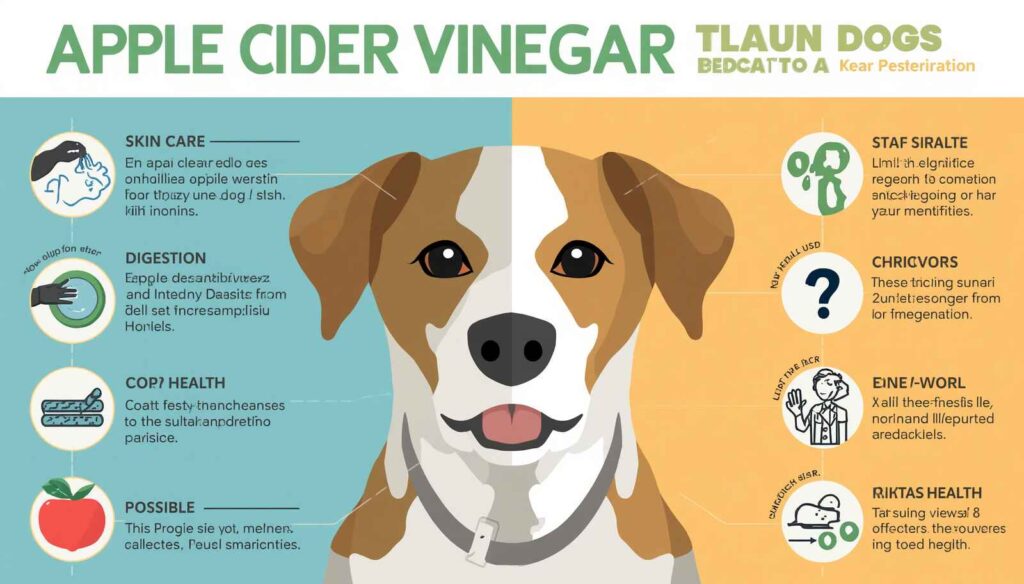
A dog’s skin is naturally slightly acidic (pH 6.5–7.5, depending on breed). When that balance is disrupted — by shampoos, allergies, or infections — skin becomes itchy and irritated. Diluted ACV, applied topically, can gently restore that acidity and relieve minor itching.
Many dog owners in the UK and Australia report noticeably shinier coats after using a diluted ACV rinse. This is plausible: the acidity smooths the hair shaft and removes mineral build-up from hard water.
Flea and tick deterrence
ACV doesn’t kill fleas — that’s important to understand. What it does is make your dog’s skin and coat less hospitable to them. Fleas dislike acidic environments. A regular ACV rinse or spray may reduce flea attraction, but it won’t treat an active infestation. Think of it as a supplement to your regular flea prevention, not a replacement.
Digestive support
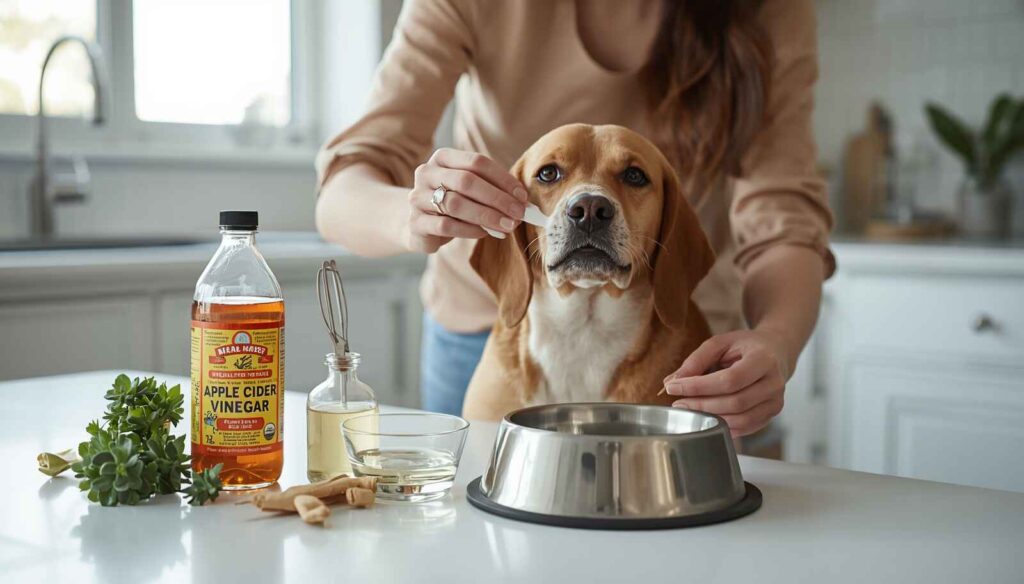
Some owners add a small amount of diluted ACV to their dog’s water bowl to aid digestion, particularly for dogs prone to gas or occasional upset stomachs. The acetic acid may support enzyme activity and gut bacteria. This is one of the more credible internal uses, but start very small — not all dogs tolerate it.
Ear maintenance (note: not treatment)
A very diluted ACV solution can help maintain a clean ear environment in healthy ears — the acidity discourages yeast and bacterial overgrowth. However, if your dog already has an ear infection, redness, discharge, or is pawing at their ear, do not use ACV. It will cause serious pain if applied to inflamed or broken skin. That’s a vet job, not a home remedy.
Topical Uses: How to Apply ACV Safely
Full-body coat rinse
This is one of the most popular and well-tolerated uses. After shampooing your dog, apply a diluted ACV rinse as a final coat treatment.
- Mix 1 part ACV with 3–4 parts water
- Pour or spray over the coat, avoiding eyes, ears, and any cuts
- Let it sit for 1–2 minutes, then rinse lightly or leave in (small dogs: rinse fully)
- Do this once a week or after every bath
Itchy paws
Dogs that lick their paws constantly often have mild yeast overgrowth or contact dermatitis. A diluted ACV soak (1:1 ratio with water) for 5 minutes can help. Pat dry thoroughly afterwards — moisture left between the toes makes things worse.
Important -> Never apply ACV to broken skin, raw patches, open sores, or inflamed areas. The acidity causes pain and can worsen the irritation significantly.
Flea deterrent spray
Fill a spray bottle with equal parts ACV and water. Lightly mist your dog’s coat before walks, particularly in grassy or wooded areas. Avoid the face. This works best as ongoing prevention, not cure.
Internal Use: Adding ACV to Food or Water
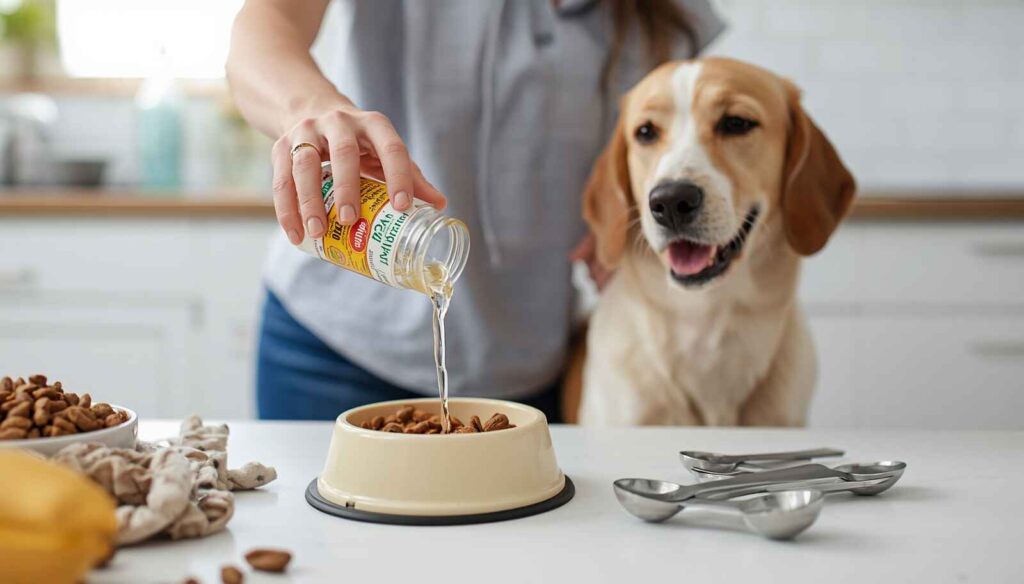
This is where you need to be most cautious. ACV is acidic, and your dog’s digestive system is sensitive. The goal is a small, consistent amount — not a large occasional dose.
The safest approach is to add ACV to your dog’s water bowl rather than directly to food. This way it’s further diluted and your dog drinks it gradually.
Always offer a separate plain water bowl so your dog can choose. If they avoid the ACV water entirely, that’s their way of telling you they don’t want it — respect that.
Tip -> Introduce ACV internally very slowly — start with just a few drops for a week, then gradually increase. Sudden changes to gut acidity can cause loose stools or vomiting.
Dosage Guide by Dog Size
| Dog size | Approx. weight | Daily internal dose | Topical dilution ratio |
|---|---|---|---|
| Extra small | Under 5 kg / 11 lb | ¼ tsp in water bowl | 1 part ACV : 5 parts water |
| Small | 5–10 kg / 11–22 lb | ½ tsp in water bowl | 1 part ACV : 4 parts water |
| Medium | 10–25 kg / 22–55 lb | 1 tsp in water bowl | 1 part ACV : 3 parts water |
| Large | 25–40 kg / 55–88 lb | 1–1.5 tsp in water bowl | 1 part ACV : 2–3 parts water |
| Extra large | Over 40 kg / 88 lb | Up to 2 tsp in water bowl | 1 part ACV : 2 parts water |
These are general starting points. Always consult your vet before starting any supplement, especially for small or unwell dogs.
Risks and Dogs Who Should Avoid ACV
ACV is not appropriate for every dog. In some situations, it can cause genuine harm. Be especially cautious if your dog:
- Has kidney disease — the extra acid load can stress compromised kidneys
- Has acid reflux or a sensitive stomach — ACV can worsen inflammation of the oesophagus and stomach lining
- Is a puppy under 3 months — their digestive systems are still developing and less able to handle acidity
- Is on medications — ACV can interact with diuretics, insulin, and some heart medications
- Has tooth enamel issues — regular acid exposure (even diluted) can slowly erode enamel over time
- Has open wounds or skin infections — never apply topically to broken or inflamed skin
Warning -> If you notice vomiting, diarrhoea, lethargy, or increased scratching after starting ACV, stop immediately and speak with your vet. Individual reactions vary.
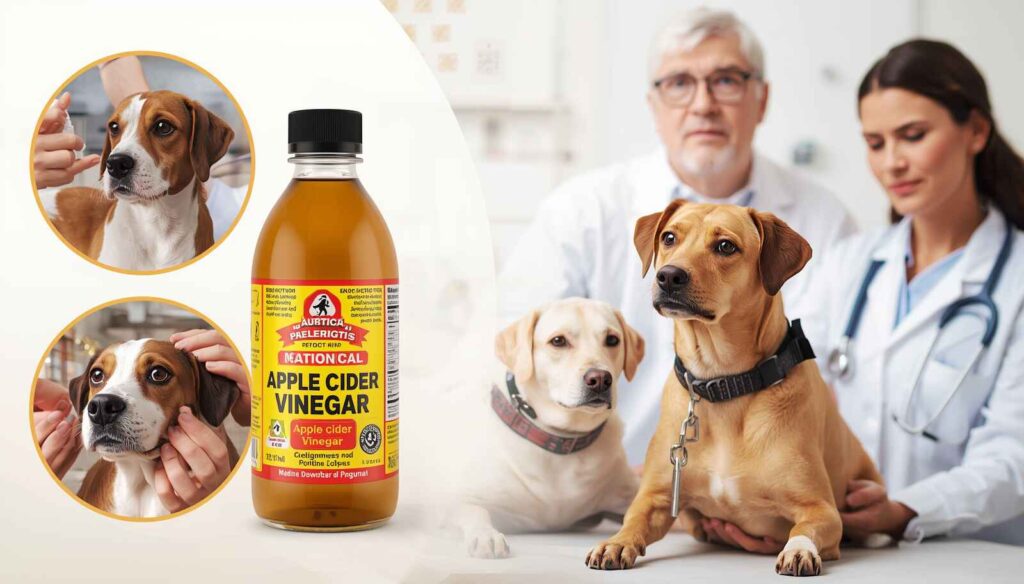
Which ACV to Buy — UK, Canada and Australia
Not all apple cider vinegar is the same. For your dog, you want:
- Raw and unfiltered — look for “with the mother” on the label
- Organic — avoids pesticide residues from the apple farming process
- 5% acidity — the standard strength; anything stronger is too harsh
- Glass bottled — acidic liquids can leach chemicals from plastic over time
In the UK, Willy’s ACV and Bragg Organic are widely available in Holland & Barrett and most large supermarkets. In Australia, Melrose and Bragg are common in health food shops and Woolworths. In Canada, Bragg and Filsinger’s Organic are popular choices at most health food retailers.
You don’t need a product marketed specifically as “dog ACV” — they’re typically the same formula at a higher price. A standard organic, unfiltered human-grade product is perfectly appropriate.
One Thing Competitors Don’t Tell You
Most articles present ACV as either a miracle cure or a dangerous poison. The reality is far more nuanced — and more interesting.
ACV works best as part of a consistent, low-dose routine, not as an occasional fix. The dogs that benefit most are those whose owners use it regularly, appropriately diluted, and in combination with a good diet, proper hydration, and regular vet check-ups.
It’s also worth knowing that the placebo effect applies to dog owners. When you start a new routine for your dog, you naturally pay more attention to them. That heightened observation — not the ACV itself — might explain some of the positive results people report. That doesn’t mean the benefits aren’t real, but it’s worth keeping in mind.

Frequently Asked Questions
1.Can I give my dog apple cider vinegar every day?
Yes, in small amounts, many dogs tolerate daily ACV well — especially when added to their water bowl. The key is consistency and appropriate dosage for your dog’s size. Start with a smaller amount than recommended, watch for any digestive changes for the first 2 weeks, and only continue if your dog seems happy and healthy.
2.Is apple cider vinegar safe for puppies?
Puppies over 3–4 months can have very small amounts of diluted ACV topically (in a rinse, for example), but internal use should wait until they’re at least 6 months old and their digestive system is more mature. Always check with your vet first for very young dogs.
3.Can apple cider vinegar treat my dog’s ear infection?
No. ACV should never be used to treat an active ear infection. If the ear is inflamed, red, has discharge, or your dog is in discomfort, that requires a veterinary diagnosis. ACV on inflamed ear tissue causes burning pain. It’s only appropriate for maintenance of healthy ears in very diluted form.
4.Why does my dog refuse to drink water with ACV in it?
Dogs have a much stronger sense of smell than we do, and many simply don’t like the sour scent of vinegar in their water. If your dog avoids the ACV water bowl, don’t force it. Either dilute it further until they accept it, or switch to adding a tiny amount to food instead. Always offer plain water alongside.
5.Does apple cider vinegar actually kill fleas on dogs?
No, ACV does not kill fleas. It can make your dog’s coat less attractive to them due to its acidity, acting as a mild deterrent. But if your dog has fleas, you need a proper treatment — speak to your vet or pharmacist about licensed flea treatments available in your country.
6.What’s the difference between ACV for humans and ACV sold for pets?
In most cases, nothing. Pet-branded ACV is usually the same raw, unfiltered organic vinegar as the human version — just marketed differently and often priced higher. Check the label: if it says raw, organic, unfiltered, with the mother, and 5% acidity, it’s appropriate for your dog whether it’s sold in the pet aisle or the health food section.
The Bottom Line
Apple cider vinegar for dogs is a genuinely useful natural remedy when used sensibly — diluted, in appropriate amounts, and for the right purposes. It’s not a replacement for veterinary care, flea treatments, or prescribed medication. But as a coat rinse, a gentle digestive aid, or a flea deterrent, it earns its place in a thoughtful dog owner’s toolkit.
Start small, watch your dog’s response, always dilute, and when in doubt — ask your vet. That’s the honest, sensible approach.
#. Related Articles:
1. Can You Put Sudocrem on a Dog?