

If your dog has just gobbled a few blackberries while you weren’t looking, you usually don’t need to panic. Plain, ripe blackberries are generally safe for most healthy dogs in small amounts. But “can dogs eat blackberries?” isn’t really a single question—the answer depends on exactly what your dog ate.
A few plain berries from a punnet are very different from a dog raiding a bramble bush, eating blackberry crumble, or getting into a sugar-free jam. The fruit itself is usually not the main concern in those situations; quantity, plant material, unknown berries, garden chemicals, or other ingredients may change the risk.
If your dog has already eaten blackberries or a blackberry-containing food and you’re concerned, jump ahead to “My Dog Already Ate Blackberries: What Should I Check Now?” further down.
First, Identify What Your Dog Actually Ate
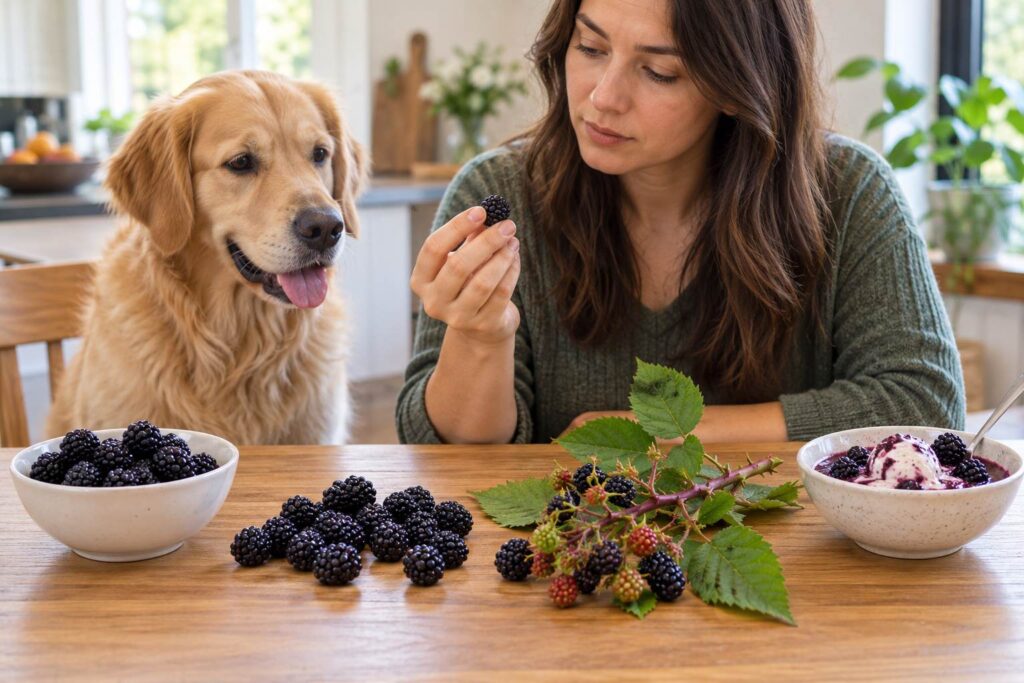
Before worrying about risk, work out which situation best matches what happened.
A Few Plain, Ripe Blackberries
This is the lowest-risk scenario. Washed, ripe, unflavoured blackberries are generally suitable as an occasional treat for most healthy dogs.
Remove stems or obvious plant debris before serving, and start with a small amount if your dog has never eaten them before.
A Large Amount of Plain Blackberries
Quantity still matters even when a food isn’t considered toxic. A dog that eats a large volume of blackberries at once gets a sudden load of fibre, natural sugars, water, and food volume, which can upset the digestive system.
With plain blackberries, the main concern after overeating is usually gastrointestinal upset rather than blackberry poisoning. Watch for vomiting, diarrhoea, gas, abdominal discomfort, or reduced appetite.
Berries Picked Directly From a Bush
Eating berries from a bramble introduces risks that aren’t present with washed supermarket fruit.
Consider:
- Whether the berries were definitely blackberries.
- Thorns or prickly canes that could injure the mouth.
- Stems, leaves, or woody material swallowed with the fruit.
- Pesticides, herbicides, or other garden chemicals.
- Mouldy or fermenting fruit beneath the bush.
If you cannot confidently identify a berry your dog ate outdoors, treat it as an unknown plant exposure rather than assuming it was a safe blackberry.
A Blackberry-Flavoured Human Food
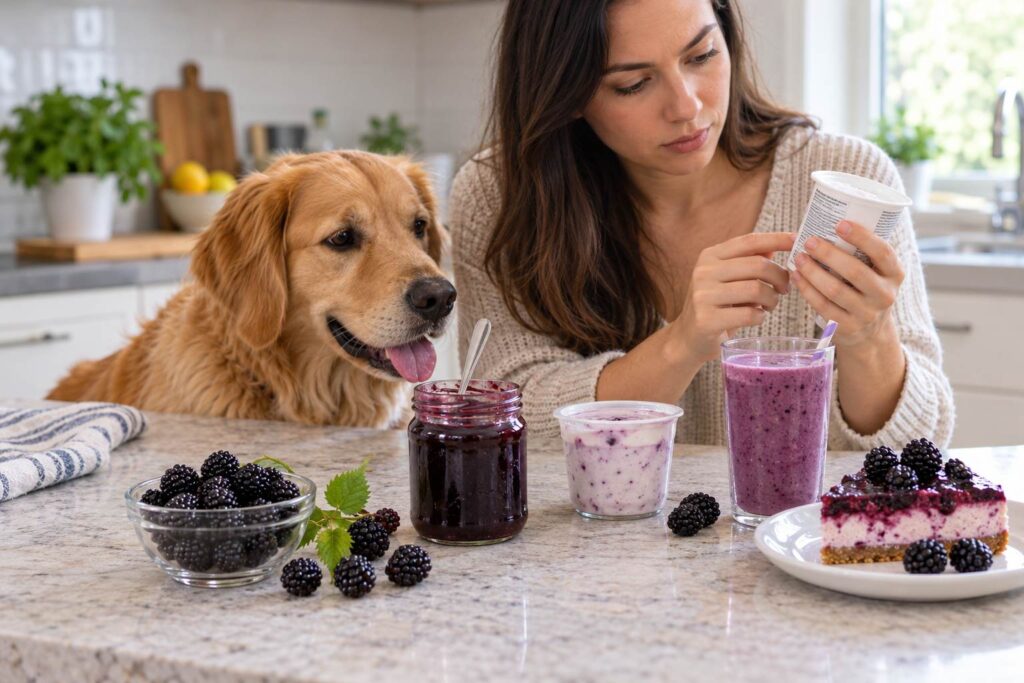
Once you’re dealing with jam, yoghurt, baked goods, sweets, or a sugar-free product, the blackberry itself may no longer be the most important ingredient.
Check the complete ingredient list. Depending on the product, concerns could include xylitol, chocolate, grapes or raisins, alcohol, excessive sugar, or other ingredients unsuitable for dogs.
A food being “blackberry flavoured” does not mean it has the same safety profile as a plain blackberry.
Quick Safety Decision Table
| Exposure | Main Concern | Suitable as a Treat? | What to Check | Vet Urgency |
|---|---|---|---|---|
| Plain fresh blackberry | Portion and tolerance | Usually, in small amounts | Amount eaten and dog’s size | Usually low |
| Large quantity of plain berries | Digestive upset | Don’t intentionally overfeed | Amount and symptoms | Depends on symptoms |
| Whole frozen berries | Gulping or choking, especially in small dogs | Sometimes | Dog size, berry size, added ingredients | Urgent if choking |
| Unknown wild berry | Incorrect identification or plant exposure | No | Berry and plant identity | Seek advice if uncertain |
| Blackberry jam or jelly | Sugar and added ingredients | Best avoided | Full ingredient list | Ingredient-dependent |
| Sugar-free blackberry product | Possible xylitol or other sweeteners | No | Ingredient label | Potential emergency |
| Blackberry dessert | Other ingredients may be more dangerous than the fruit | Usually no | Chocolate, raisins, xylitol, alcohol and other ingredients | Ingredient-dependent |
Before You Offer One: A Quick Checklist
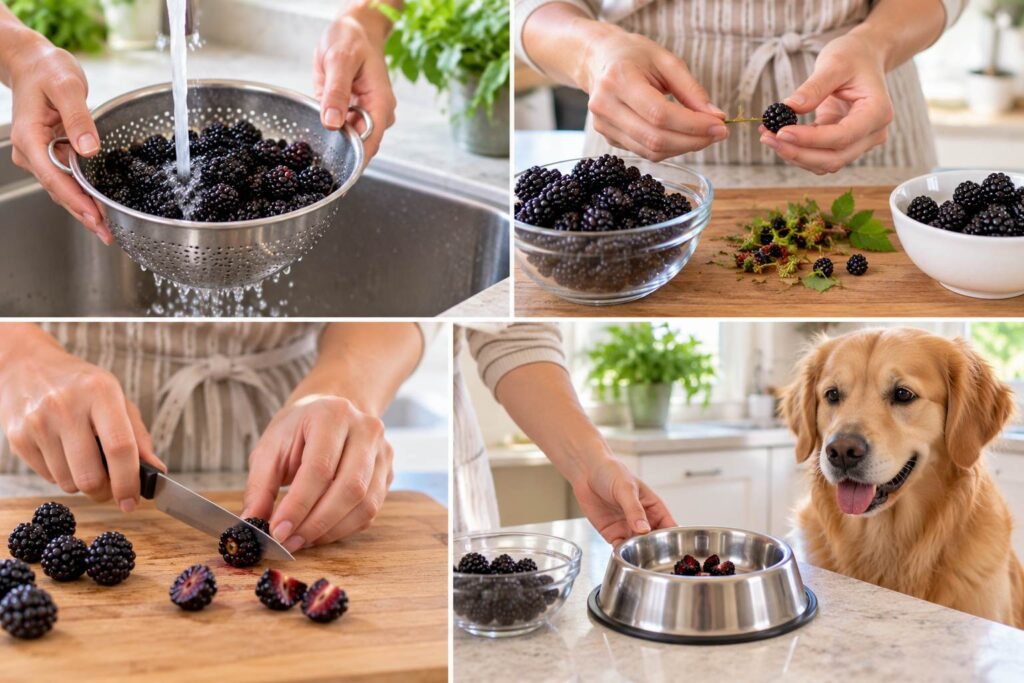
Rather than relying on the vague advice to “feed in moderation,” run through this quick check before sharing blackberries:
- Is it definitely a blackberry?
- Is it ripe, fresh, and free from mould?
- Is it completely plain?
- Has it been rinsed under running water?
- Have stems and plant debris been removed?
- Is this your dog’s first time eating blackberry?
- Is your dog a toy breed, puppy, or fast eater that tends to gulp food?
- Is your dog on a veterinary prescription or elimination diet?
- Has your dog already had other treats today?
- Are you starting with a small portion rather than a handful?
Dogs with medical conditions or those eating a veterinary therapeutic diet may need more individual advice before new treats are introduced.
How Much Is “A Small Amount,” Really?
Why Counting Berries Can Be Misleading
You’ll find charts online giving an exact number of blackberries according to a dog’s weight. Those numbers can be useful as rough examples, but they shouldn’t be treated as a scientifically defined safety threshold.
Blackberries vary in size, and dogs of the same weight can have different calorie requirements. Body condition, age, digestive sensitivity, existing medical problems, current diet, and the other treats eaten that day also matter.
For a dog trying blackberries for the first time, tolerance is more important than trying to reach an online maximum.
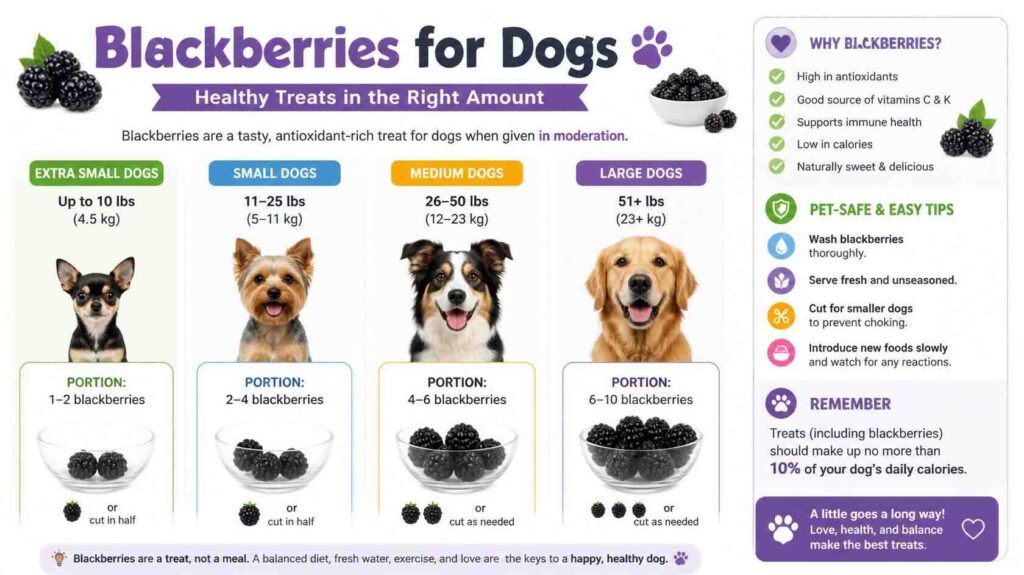
Think in Terms of a Treat Budget
A better approach is to consider blackberries as part of your dog’s overall treat allowance.
WSAVA guidance recommends that treats and other extras generally provide no more than about 10% of a healthy dog’s daily calories, with the rest coming from a complete and balanced diet.
That does not mean 10% of your dog’s diet should consist of blackberries. The allowance includes every treat, snack, table scrap, and other extra given during the day.
First Try vs Regular Treat
For the first introduction, offer less than you might eventually use as an occasional treat. A single small berry—or part of one for a tiny dog—is enough to see how your dog tolerates it.
If your dog remains comfortable and doesn’t develop digestive upset, you can continue to use blackberries occasionally within their overall treat allowance. There’s no nutritional need to increase the portion simply because your dog likes them.
Extra Care for Toy Breeds and Puppies
A whole blackberry can be a sizeable mouthful for a very small puppy or toy-breed dog, particularly one that swallows food without chewing.
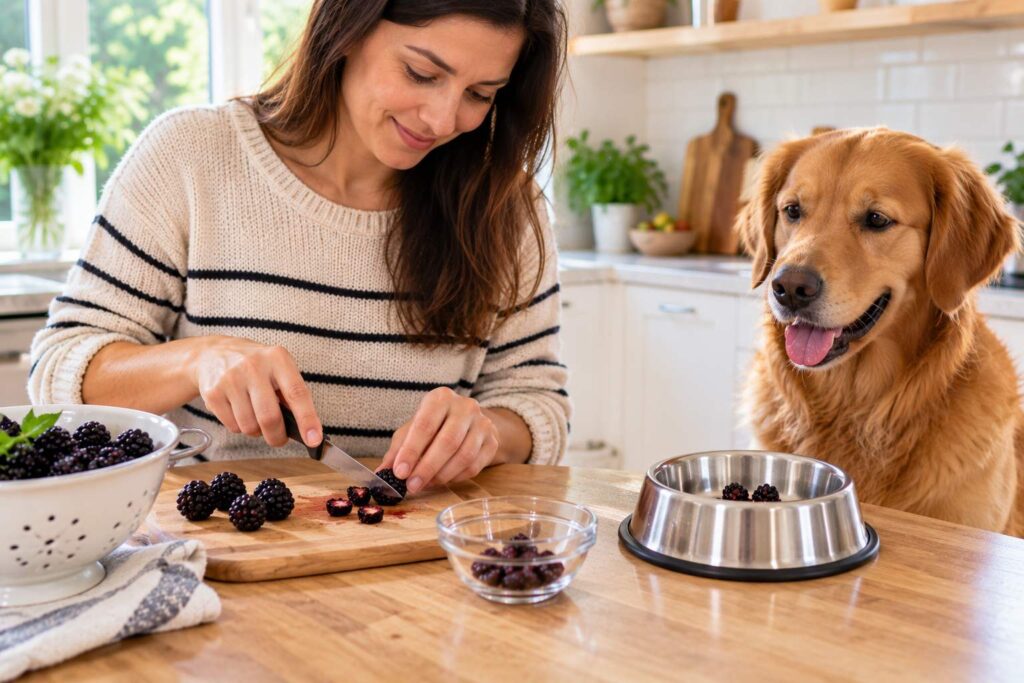
Cutting the berry into smaller pieces or lightly mashing it can make it easier to eat and gives you better control over the amount offered. Plain thawed berries can also be easier for a tiny dog to manage than a hard frozen berry.
The small seeds inside ordinary blackberries do not normally need to be removed individually before feeding.
The Nutritional Reality: A Nice Treat, Not a Supplement

Blackberries naturally provide fibre, vitamin C, vitamin K, manganese, water, natural sugars, and anthocyanins—the plant pigments responsible for their deep colour and antioxidant activity.
It’s important, though, to keep those benefits in perspective. A dog eating one or two blackberries receives only a small amount of these nutrients, and there is no good evidence that treat-sized servings prevent or treat disease. A dog eating a complete and balanced diet does not need blackberries as a vitamin or antioxidant supplement.
Think of them as an enjoyable occasional treat rather than a food your dog needs for better health.
Fresh, Frozen, Dried or Jam: The Form Changes the Answer
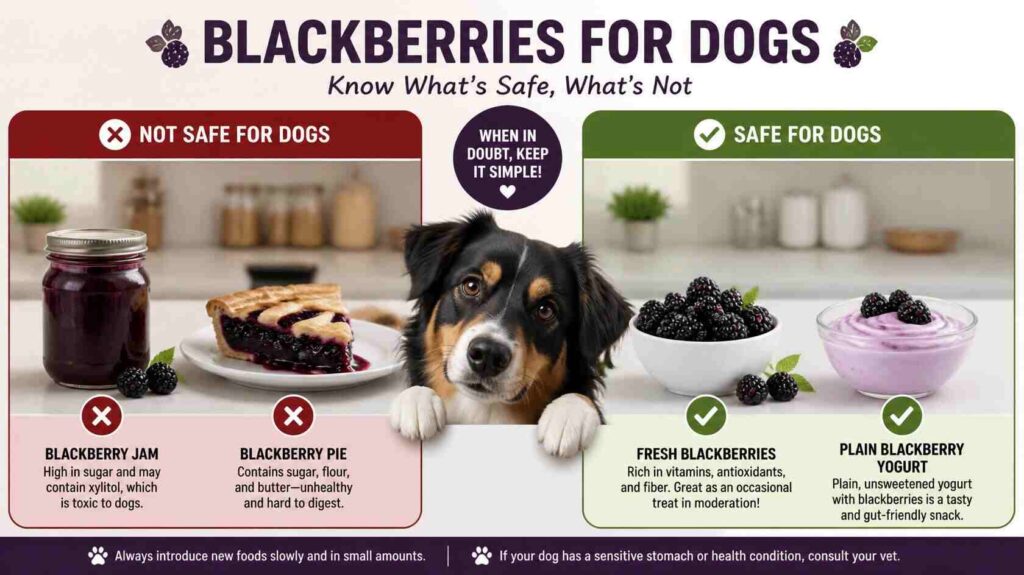
Fresh blackberries — usually the simplest option. Choose ripe, plain fruit, wash it, and remove stems or plant debris before serving.
Frozen blackberries — plain frozen berries can be suitable, but a hard berry may be awkward for a toy breed, puppy, or dog that gulps food. Letting it soften or mashing it first can make it easier to manage.
Dried or freeze-dried blackberries — drying concentrates the fruit into a smaller volume, making portions easier to overdo. Choose products without added sugar or other ingredients and serve sparingly.
Canned blackberries — check both the packing liquid and ingredient list. Fruit packed in sugary syrup is not a sensible dog treat; plain fruit without added sweeteners is the better option.
Jam, jelly, flavoured yoghurt and smoothies — don’t assume these are safe simply because they contain blackberry. They may contain large amounts of added sugar, sweeteners, dairy, or other ingredients that change the answer. Sugar-free products deserve particular attention because some may contain xylitol.
Pies, muffins, cakes and other desserts — the blackberry is often the least important part of the risk assessment. Check the entire recipe for ingredients such as chocolate, grapes or raisins, xylitol, or alcohol, as well as large amounts of fat and sugar.
Wild Blackberries Need a Different Kind of Check
Get the Identification Right First
Not every dark berry growing along a path or hedgerow is a blackberry. If you cannot confidently identify the plant, treat the exposure as an unknown berry ingestion rather than assuming it is safe.
That matters more than trying to identify a berry by colour alone.
The Bush Itself Can Cause Problems
Bramble canes and prickles can scratch the mouth, face, or paws. A dog pulling fruit directly from the plant may also swallow stems, leaves, or woody material along with the berries.
Eating a ripe blackberry is therefore not quite the same exposure as chewing on an entire blackberry bush.
Consider What Else Might Be on the Fruit
Outdoor berries can introduce risks that supermarket fruit does not. Garden or roadside plants may have been exposed to pesticides, herbicides, or other contaminants, while fruit lying underneath the bush may be mouldy or fermenting.
If your dog has eaten wild berries on a walk: stop further foraging and, if it is safe to do so, take clear photographs of the berries, leaves, and plant. Note where the plant was growing and estimate how much your dog ate. If you cannot confidently identify the berries, or your dog develops symptoms, contact your veterinarian or an appropriate animal poison service for advice.
What Happens If a Dog Eats Too Many?
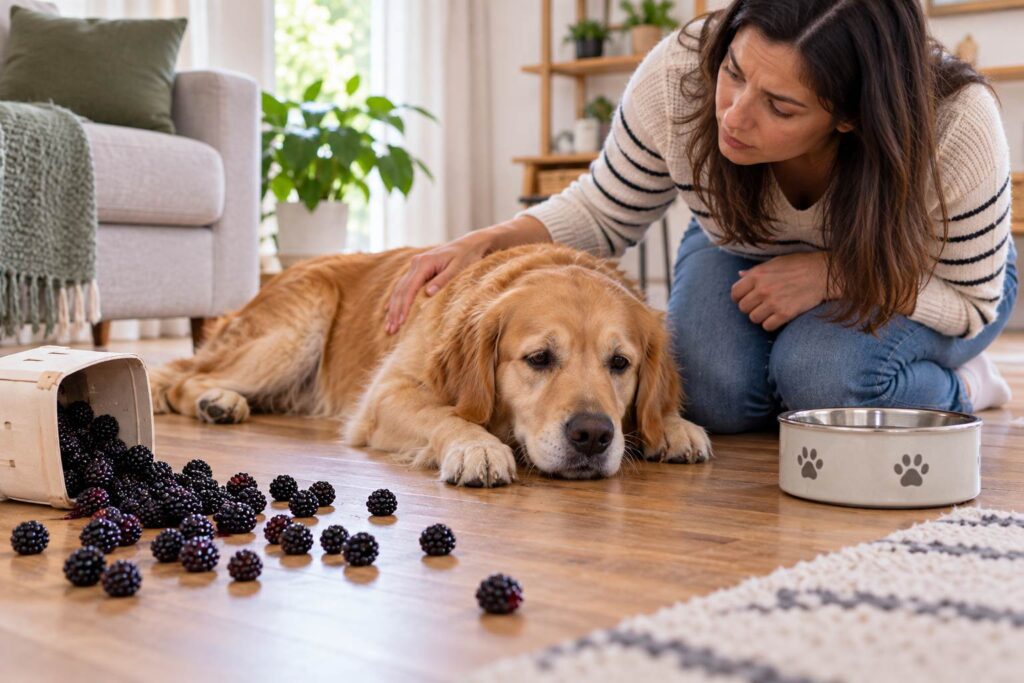
Even a non-toxic fruit can cause trouble when a dog eats a large amount. The most likely problems are loose stools, diarrhoea, gas, vomiting, abdominal discomfort, or reduced appetite as the digestive system deals with an unusually large load of fruit, fibre, sugars, and water.
A dog that steals two berries is therefore in a very different situation from one that empties an entire container.
Blackberry pigments can also make stool look unusually dark, blue-black, or purple after a substantial amount has been eaten. That can be harmless on its own, but don’t automatically blame very dark or tarry stool on the berries, particularly if your dog is weak, vomiting, painful, lethargic, or otherwise unwell.
And don’t assume one episode of loose stool means your dog is allergic to blackberries. Digestive intolerance or simple overfeeding is a more likely explanation after a one-off fruit binge. Repeated reactions after small amounts are a better reason to stop offering the food and discuss the pattern with your vet.
The Xylitol Question Needs Context
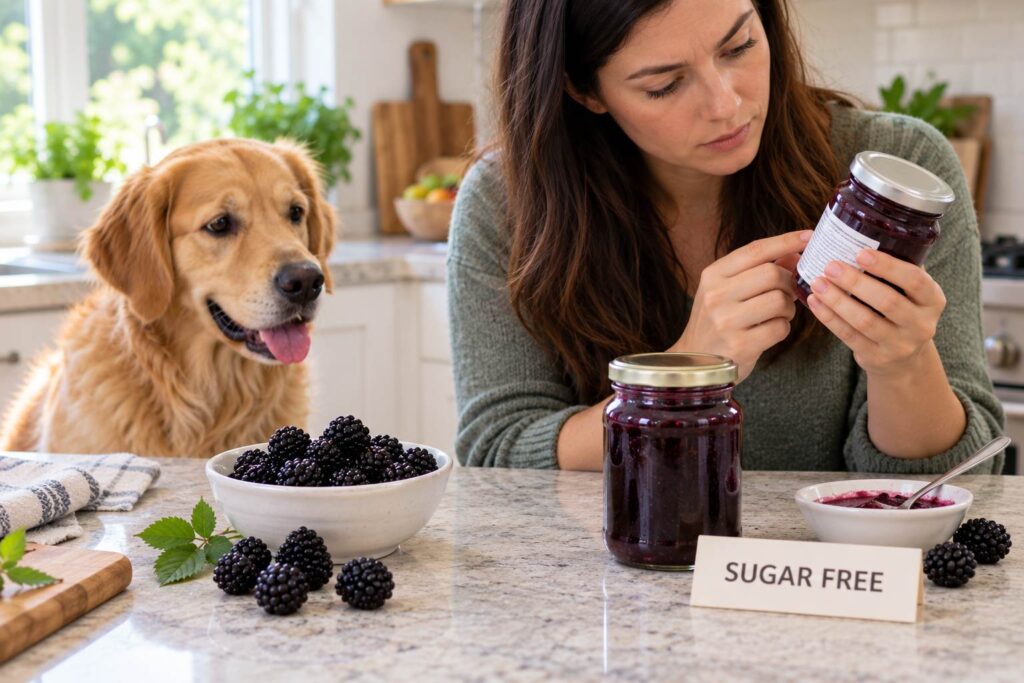
Some dog-health sources note that blackberries contain very small naturally occurring amounts of xylitol. That should not be confused with the much more serious exposure that occurs when a dog eats a manufactured product containing xylitol as an added sweetener.
A few plain fresh blackberries are not generally treated as a xylitol poisoning emergency.
The situation changes with products such as sugar-free jam, sweets, desserts, or other processed foods. Added xylitol can cause dangerous hypoglycaemia in dogs and, at sufficiently high exposures, serious liver injury.
If you suspect a blackberry-containing product has added xylitol: treat the situation as urgent. Keep the packaging, note your dog’s approximate weight and how much may have been eaten, and contact your veterinarian or an emergency veterinary service promptly. Do not try to induce vomiting unless a veterinary professional specifically instructs you to do so.
Some Dogs Need Individual Advice First
- Diabetic dogs — blackberries should fit within the dog’s veterinarian-managed diet rather than being given according to a generic online serving guide.
- Dogs with sensitive stomachs or chronic GI disease — tolerance can vary considerably. Avoid introducing a new treat during an active digestive flare-up.
- Dogs on prescription or elimination diets — even a seemingly harmless fruit can interfere with a diet trial or carefully controlled therapeutic diet.
- Overweight dogs — blackberries may be relatively low in calories, but they still count toward the day’s total treats and extras.
- Puppies — use very small portions, account for their size and tendency to gulp, and keep complete puppy food as the nutritional priority.
Blackberry vs Other Common Fruits

| Fruit | Small Plain Serving | Main Issue to Remember |
|---|---|---|
| Blackberry | Generally suitable for most healthy dogs | GI upset if too much is eaten |
| Blueberry | Generally suitable | Portion control |
| Raspberry | Generally suitable in moderation | Portion and individual tolerance |
| Strawberry | Generally suitable | Portion size and natural sugar |
| Grapes/Raisins | Unsafe | Potentially serious toxicity |
Similar appearance does not mean similar safety. Grapes and raisins are an important exception because they can cause serious poisoning in dogs, which is why owners should never assume that every fruit—or every dark berry—is safe simply because blackberries are.
Common Mistakes Owners Make
- Assuming “safe” means unlimited
- Offering a full handful the first time
- Treating an online berry count as a strict safety threshold
- Letting dogs forage freely on walks
- Assuming every dark wild berry is a blackberry
- Forgetting possible pesticide or herbicide exposure
- Feeding sweetened frozen berries without checking the label
- Giving jam simply because fresh blackberries are safe
- Assuming “sugar-free” automatically means dog-safe
- Skipping the ingredient list on processed foods
- Using blackberries as a remedy for constipation or diarrhoea
- Adding treats during a vet-prescribed elimination or therapeutic diet without checking first
My Dog Already Ate Blackberries: What Should I Check Now?

Start by working out what kind of exposure actually happened:
- What exactly did your dog eat—plain fruit or a blackberry-containing food?
- Was the berry definitely identified as a blackberry?
- Roughly how much was eaten?
- What is your dog’s approximate weight?
- How long ago did it happen?
- Were the berries fresh, mouldy, or foraged outdoors?
- Could pesticides, herbicides, or other chemicals have been involved?
- Does any packaged product contain xylitol or another potentially harmful ingredient?
- Is your dog showing any symptoms now?
A healthy large dog that ate two plain fresh berries — generally a low-concern situation. Monitor for digestive upset.
A tiny dog that swallowed several hard frozen berries — the fruit itself may be safe, but the size and texture make choking or gulping more relevant.
A dog that ate berries from an unfamiliar bush — identifying the plant takes priority. Don’t assume a dark berry was a blackberry.
A dog that ate a sugar-free blackberry dessert — check the ingredient list immediately. If xylitol is listed or suspected, contact a veterinarian or emergency veterinary service promptly.
When to Involve a Vet
Seek veterinary advice promptly if your dog has eaten an xylitol-containing product, an unidentified wild berry, or fruit that may have been contaminated with garden chemicals.
Urgent veterinary assessment is also appropriate if your dog develops:
- Choking or breathing difficulty
- Repeated vomiting
- Significant or persistent diarrhoea
- Marked lethargy or weakness
- Obvious abdominal pain
- Collapse, tremors, or seizures
- Other concerning or worsening symptoms
A very large ingestion, a very small dog, or an animal with an existing medical condition can also justify earlier veterinary advice even if symptoms have not yet appeared.
Before calling, have your dog’s approximate weight, amount eaten, time of ingestion, current symptoms, any packaging or ingredient label, and—if wild plants were involved—a clear photo of the berry and plant if you can obtain one safely.
Quick Tips for Sharing Blackberries Safely
- Choose plain, ripe, fresh fruit
- Wash berries before serving
- Remove stems and plant debris
- Start with a very small amount the first time
- Cut or mash berries for tiny dogs or dogs that gulp food
- Include blackberries within the dog’s overall treat allowance
- Avoid heavily sweetened or processed blackberry foods
- Check sugar-free products carefully for xylitol
- Don’t allow unsupervised wild-berry foraging
- Stop offering blackberries if they repeatedly cause digestive upset

The Bottom Line
Plain, ripe blackberries can be an occasional treat for most healthy dogs when portions are kept small. The more important risks usually arise when too much fruit is eaten, the berry has not been correctly identified, the dog eats directly from a treated or thorny bush, or blackberry appears inside a processed human food.
So if your dog has already eaten something, don’t focus on the word “blackberry” alone. Work out what was eaten, how much, what else was in it, and how your dog is behaving now. Those details tell you far more about the level of concern.
Frequently Asked Questions
1.Can dogs eat blackberry seeds?
Yes. The tiny seeds are a normal part of the fruit and generally do not need to be removed before serving. For small dogs, the size of the whole berry is usually more relevant than the seeds, so cutting or mashing the fruit may be helpful.
2.Can dogs eat blackberry leaves?
A small accidental nibble of plant material is different from deliberately feeding the leaves. Blackberry leaves are not a useful dog food, and chewing the plant can expose a dog to prickly canes, woody material, chemicals, or a misidentified wild plant. Discourage your dog from eating directly from brambles.
3.What if my dog ate a whole container of blackberries?
A large amount of plain blackberries is more likely to cause gastrointestinal upset than poisoning, but the dog’s size and the quantity eaten matter.
Watch for vomiting, diarrhoea, abdominal discomfort, reduced appetite, or unusual lethargy. Contact your veterinarian if the amount was substantial for your dog’s size, symptoms are significant or persistent, or you’re unsure whether anything other than plain berries was eaten.
4.Can dogs eat blackberries every day?
A small amount may fit into some healthy dogs’ diets, but there’s no nutritional reason to feed blackberries every day. They are best thought of as one possible treat among others, with all treats and extras combined kept to a small part of the overall diet.
5.Can diabetic dogs eat blackberries?
Don’t rely on a generic serving chart for a diabetic dog. Even plain fruit contributes carbohydrate and calories, and treats need to fit the dog’s individual feeding and medication plan. Ask the veterinarian managing your dog’s diabetes before making blackberries a regular treat.
6.Do blackberries help with constipation?
Blackberries contain fibre, but that does not make them a treatment for constipation. Constipation can have many causes, and adding extra fibre is not appropriate in every case. If your dog is repeatedly straining, producing very little stool, appears painful, or has ongoing constipation, speak to your veterinarian.
7.Are blackberries healthier than shop-bought dog treats?
It depends on what you’re comparing them with. Plain blackberries can be a low-calorie, minimally processed treat, while some commercial treats are more calorie-dense.
That doesn’t automatically make blackberries “better.” A suitable commercial dog treat may be perfectly appropriate, and neither option should displace a complete and balanced diet.
#. Related Articles: