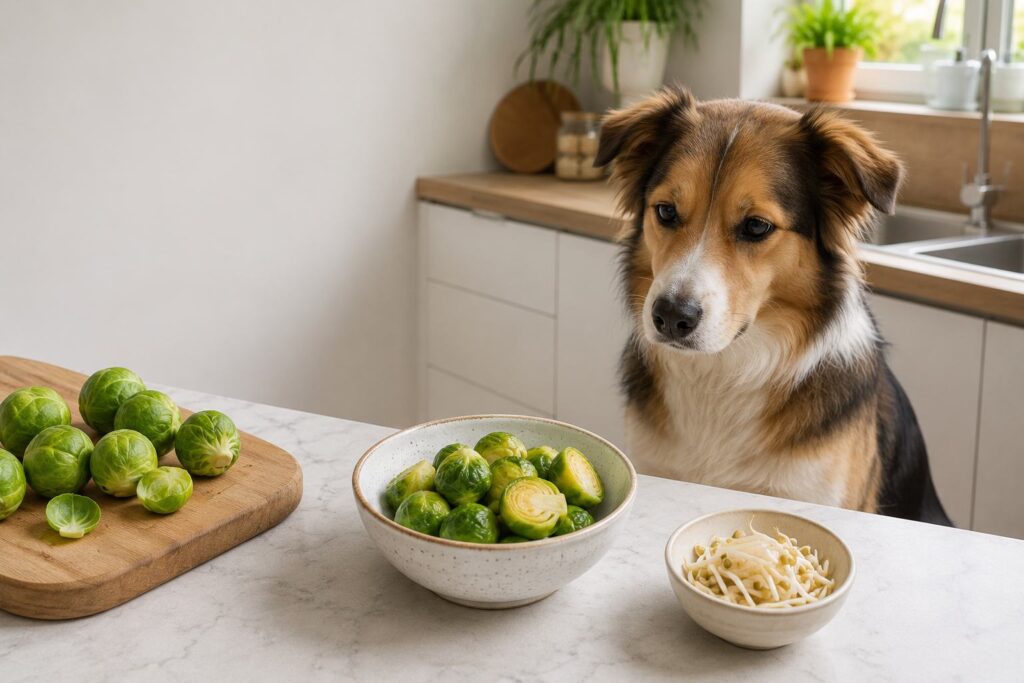

Your dog just necked half a glass of milk off the coffee table, or maybe you’re wondering whether a splash in their bowl now and then is a nice treat. Either way, you want a straight answer, not a lecture.
Can dogs drink milk? A small amount of plain milk is not usually treated as a poisoning emergency, but that doesn’t make it a particularly useful drink for dogs. Some dogs tolerate a little without trouble; others develop gas, bloating, loose stools, or diarrhoea because they don’t digest lactose well.
What matters most is what your dog drank, how much they had, their size and health history, and whether the drink contained anything besides plain milk. A couple of licks from a cereal bowl is a very different situation from drinking a chocolate milkshake.
This guide helps you sort out those differences so you can decide what actually matters for your dog.
Just Had Milk? Quick Check First

Before worrying about lactose, work out three things.
What Did They Drink?
Plain cow’s milk is a very different exposure from chocolate milk, a coffee-based drink, or a flavoured plant milk. With mixed drinks, the milk may not even be the main concern.
Check the full ingredient list for things such as:
- Chocolate or cocoa
- Caffeine
- Xylitol or other sweeteners
- Added flavourings
- Other ingredients your dog may have eaten along with the milk
If the product contains a potentially toxic ingredient, don’t wait for digestive upset before seeking veterinary advice.
How Much Did They Have?
A few licks are not the same as finishing a mug or bowl.
There isn’t one universal amount of milk that is guaranteed to be safe for every dog. A large dog licking a spoon and a Chihuahua drinking half a mug have received very different amounts relative to their body size.
Quantity also matters because a larger serving delivers more lactose, fat, and calories at once.
What Else Do You Know About Your Dog?
Think beyond the milk itself. Extra caution may be appropriate if your dog:
- Has reacted badly to dairy before
- Has a sensitive gastrointestinal tract
- Is overweight or on a calorie-controlled diet
- Has a history of pancreatitis or has been prescribed a low-fat diet
- Is on a prescription diet
- Is undergoing an elimination food trial
- Is a very young puppy
Checklist: Information Worth Having Before You Decide What to Do Next
- What exactly did your dog drink?
- Roughly how much did they have?
- How long ago did it happen?
- What is your dog’s approximate weight?
- Are there any symptoms yet?
- Does your dog have any relevant medical conditions?
- Is your dog on a prescription or elimination diet?
- Do you still have the carton, bottle, or ingredient label?
Keeping the packaging can be especially useful if you need to call your veterinarian.
Is Milk Actually Bad for Dogs, or Just Unnecessary?
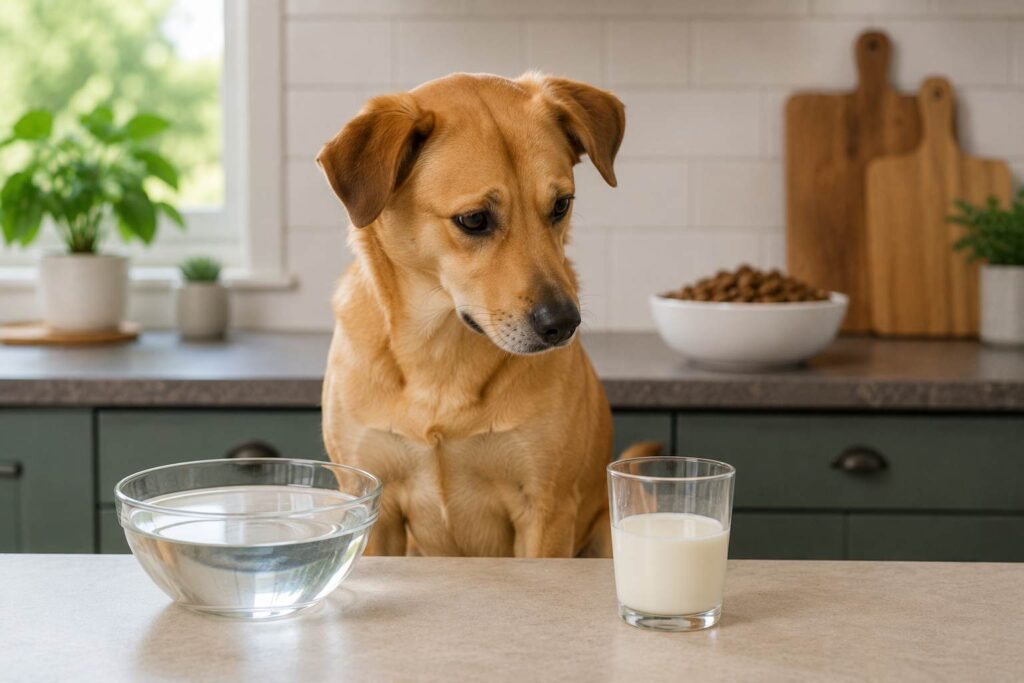
These are different questions, and treating them as the same thing causes much of the confusion around dogs and milk.
Toxicity
Plain cow’s or goat’s milk is not in the same category as recognised dog toxins such as chocolate or xylitol.
However, that changes when milk is part of another product. Chocolate milk, caffeinated drinks, sugar-free milkshakes, and flavoured beverages need to be assessed based on all their ingredients, not just the dairy.
Digestibility
This is the more common problem with plain milk.
Milk contains lactose, a sugar that must be broken down by the digestive enzyme lactase before it can be absorbed efficiently.
Dogs vary in how well they tolerate lactose. VCA Animal Hospitals notes that lactose intolerance can cause diarrhoea, bloating, and abdominal discomfort after cow’s or goat’s milk.
Nutritional Need
Milk contains nutrients such as calcium, protein, and fat, but that doesn’t mean an adult dog needs to drink it.
A healthy dog eating an appropriate complete and balanced diet should already be receiving the nutrients they need from their regular food. Milk is therefore better thought of as an optional extra, not a nutritional requirement.
Fresh water should remain your dog’s normal drink.
Individual Suitability
Two dogs can drink the same milk and respond very differently. One may show no obvious reaction after a small amount; another may develop diarrhoea or gas.
Medical history matters too. A rich, high-fat milk product may be a poor choice for a dog whose veterinarian has prescribed a low-fat diet, even if lactose itself has never caused a problem.
A useful way to assess milk is to ask four separate questions:
- Does the product contain anything toxic?
- Can this dog digest it comfortably?
- Does the dog actually need it?
- Does it fit this dog’s health and diet?
Plain milk may clear the first question while still giving you good reasons to skip it.
Why Milk Can Upset a Dog’s Stomach
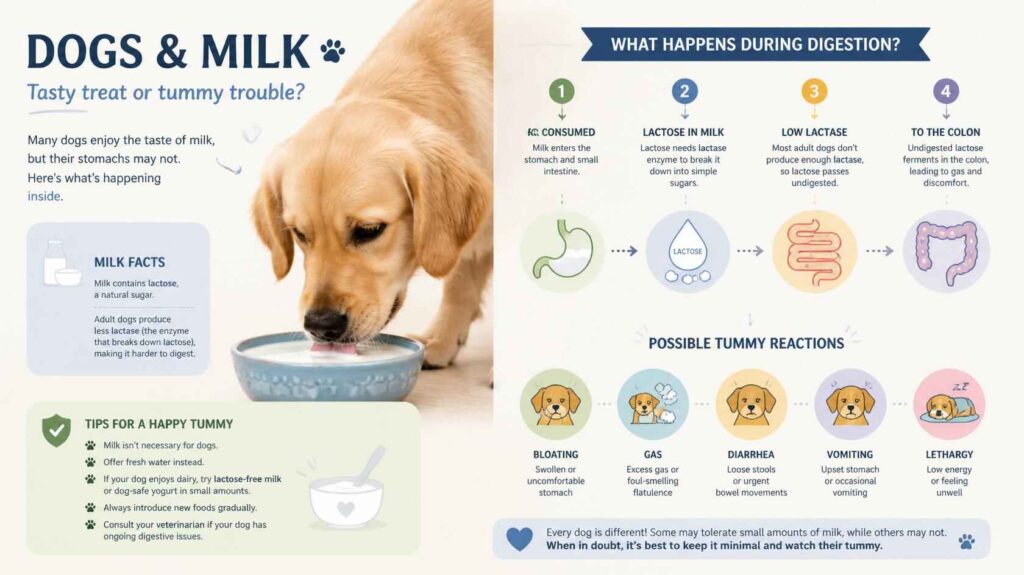
Lactose has to be broken down before it can be properly absorbed. When a dog doesn’t digest enough of it, the remaining lactose can contribute to fermentation in the gut and draw water into the intestines.
That can lead to:
- Gas
- Bloating
- Abdominal discomfort
- Gurgling from the gut
- Loose stools
- Diarrhoea
- Sometimes vomiting
Symptoms don’t necessarily appear the moment the dog finishes drinking. Digestive upset may become noticeable later as the milk moves through the gastrointestinal tract.
It’s also important not to diagnose lactose intolerance from a single messy stool. A large portion, a fatty product, another ingredient, dietary indiscretion, or an unrelated gastrointestinal problem could be responsible.
If dairy repeatedly seems to trigger the same pattern, stop deliberately testing it at home and mention the history to your veterinarian. Keeping a note of what your dog ate, how much, when they ate it, and what symptoms followed can make that conversation much more useful.
Lactose Intolerance Isn’t the Same as a Milk Allergy
These terms often get used interchangeably, but they describe different problems.
Lactose Intolerance
Lactose intolerance is primarily a digestive problem. The dog has difficulty digesting lactose efficiently, so the most typical signs involve the gastrointestinal tract, such as:
- Gas
- Bloating
- Abdominal discomfort
- Loose stools or diarrhoea
Milk-Protein Allergy
A true food allergy involves an immune response to food proteins, rather than an inability to digest lactose. Milk contains proteins including casein and whey that may be relevant in an adverse food reaction.
Food allergies can cause gastrointestinal signs, but recurrent problems may also involve the skin or ears.
That means a dog with repeated digestive upset plus ongoing itching, inflamed skin, or recurrent ear trouble shouldn’t simply be labelled “lactose intolerant” based on guesswork.
Why the Difference Matters
Food intolerance and food allergy aren’t investigated in quite the same way. Veterinary assessment may involve a detailed diet history and, when appropriate, a carefully controlled elimination diet rather than repeatedly offering dairy to see what happens.
If your dog develops recurrent gastrointestinal, skin, or ear problems that seem to follow dairy—or similar problems are occurring even when dairy isn’t being eaten—talk to your veterinarian before blaming milk alone.
Not All Milk Is the Same Risk

“Milk” covers a lot of ground, and treating every product as if it carries the same risk is where owners can go wrong.
| Milk or Product | Lactose Concern | Fat/Calorie Concern | Added Ingredient Risk | Practical Verdict |
|---|---|---|---|---|
| Plain cow’s milk (whole) | Yes | Higher | Low if unflavoured | Small amounts may be tolerated by some dogs |
| Skimmed/semi-skimmed milk | Yes — still present | Lower than whole milk | Low if unflavoured | Less fat does not mean less lactose |
| Lactose-free cow’s milk | Greatly reduced | Still contains calories | Check the label | Easier to digest for some dogs, but not nutritionally necessary |
| Goat’s milk | Yes | Product dependent | Check the label | Not lactose-free or automatically better than cow’s milk |
| Plain oat milk | No dairy lactose | Can add unnecessary calories | Sugar and flavourings may be added | Check ingredients; not a water replacement |
| Plain almond milk | No dairy lactose | Product dependent | Sweeteners and flavourings may be added | Check the full ingredient list before sharing |
| Soy milk | No dairy lactose | Product dependent | Added sugar/flavourings possible | Not a routine nutritional need |
| Coconut milk/drink | No dairy lactose | Can be high in fat | Flavoured versions may contain extras | Best treated cautiously |
| Puppy milk replacer | Specially formulated | Designed for puppy needs | Product specific | A separate category intended for young puppies |
A few myths are worth clearing up. Goat’s milk still contains lactose, so it isn’t automatically suitable for a dog that reacts badly to cow’s milk. Lactose-free milk may remove one digestive concern, but it still contributes calories and may contain fat or added ingredients.
Plant-based milks are not automatically safer either. Their recipes vary widely, so the label matters more than the word oat, almond, soy, or coconut on the front of the carton. Plain, unsweetened products avoid some unnecessary extras, but fresh water remains the better everyday drink.
When It’s Not Just Plain Milk
Plain, unflavoured milk mainly raises questions about lactose tolerance, portion size, and fat. Once other ingredients are added, the situation can change completely.
Chocolate milk and chocolate-containing milkshakes introduce a genuine chocolate toxicity risk, depending on the type and amount of chocolate consumed.
Coffee-based milk drinks may contain caffeine, which is also unsafe for dogs.
Sugar-free or heavily flavoured products deserve a careful ingredient check. Xylitol is highly toxic to dogs and may be present in some sugar-free products, so always check the complete ingredient list.
Warning: If your dog drank a product containing chocolate, caffeine, xylitol, or another potentially toxic ingredient, don’t treat the situation as simple lactose intolerance. Contact your veterinarian or an emergency veterinary service promptly for advice based on the product, amount consumed, and your dog’s weight.
Seek urgent veterinary help if your dog develops signs such as marked weakness, collapse, tremors, seizures, severe or repeated vomiting, or significant distress. Do not induce vomiting unless a veterinary professional specifically tells you to.
Puppies Are a Different Conversation Entirely

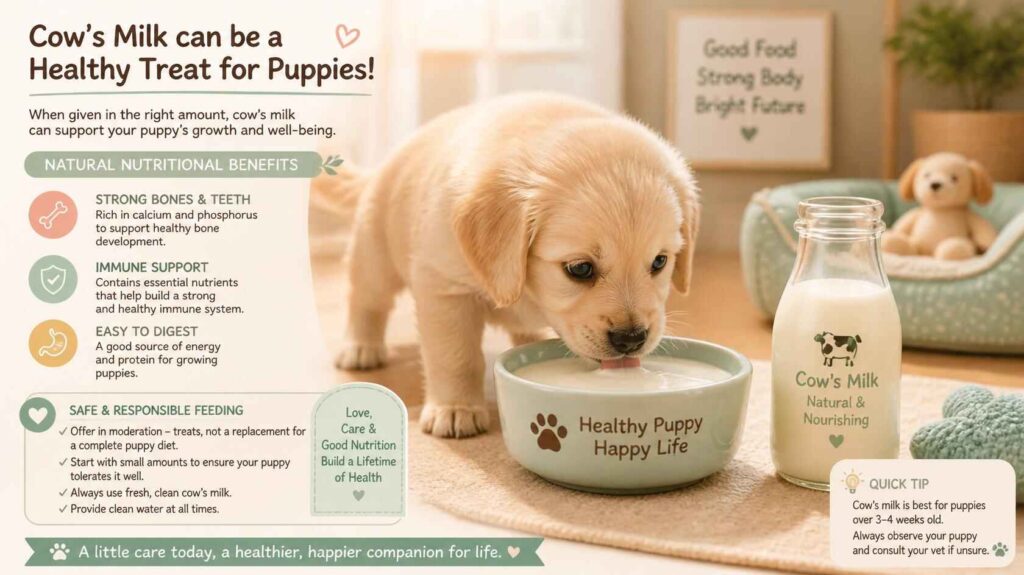
It’s an easy mistake to make: you see a tiny puppy and assume ordinary milk must be suitable because puppies naturally nurse. But a mother dog’s milk and cow’s or goat’s milk are not nutritionally interchangeable.
Newborn puppies should ideally receive their mother’s milk. When that isn’t possible, a commercial puppy milk replacer formulated for canine nutritional needs is the appropriate alternative under veterinary guidance.
Ordinary cow’s or goat’s milk is not a like-for-like replacement. Its nutrient balance differs from canine milk, and digestive upset can be especially important in a very young puppy because vomiting or diarrhoea can lead to dehydration more quickly than it would in a healthy adult dog.
If you’re hand-rearing an orphaned puppy, speak to your veterinarian about the correct milk replacer, feeding amount, schedule, and technique rather than improvising with milk from the fridge.
Once a puppy is fully weaned and eating a complete puppy food, ordinary milk is no longer a nutritional requirement. The same questions that apply to adult dogs — tolerance, quantity, ingredients, and health history — then become more relevant.
Dogs Who Need Extra Caution
Milk deserves more caution than usual for:
- Dogs with a history of pancreatitis or prescribed low-fat diets, because richer dairy products may not fit their dietary plan
- Overweight dogs, because liquid calories can be easy to overlook
- Dogs with sensitive digestion or previous dairy-related GI upset
- Dogs on veterinary prescription diets, where unplanned extras may interfere with the purpose of the diet
- Dogs on an elimination food trial, where milk or any other unapproved food can make the results harder to interpret
- Dogs with recurrent skin, ear, or digestive problems, where repeated dairy exposure may confuse an underlying food-reaction investigation
If your dog falls into one of these groups, don’t assume that “just a little” milk is automatically harmless. Their existing diet and medical history may matter more than whether the milk is whole, skimmed, goat, or lactose-free.
Does Milk Actually Do Anything for a Healthy Adult Dog?

Not much. Milk contains calcium and protein, but a dog eating a complete and balanced diet should already be getting the nutrients they need. “Contains calcium” isn’t the same as “your dog needs this.”
Milk also contains fluid, but it shouldn’t replace water. Fresh water is the appropriate everyday drink for dogs and provides hydration without adding lactose, fat, or unnecessary calories.
If your dog tolerates milk and you choose to offer a little, think of it purely as an occasional treat. It should count toward the same daily treat allowance as any other extra food. WSAVA recommends keeping treats and other extras to a small proportion of a dog’s overall daily calories so they don’t unbalance the main diet.
Milk also isn’t a reliable home remedy for constipation or an upset stomach. In a dog that doesn’t digest lactose well, it may make gastrointestinal symptoms worse rather than better.
What About Yoghurt or Cheese?
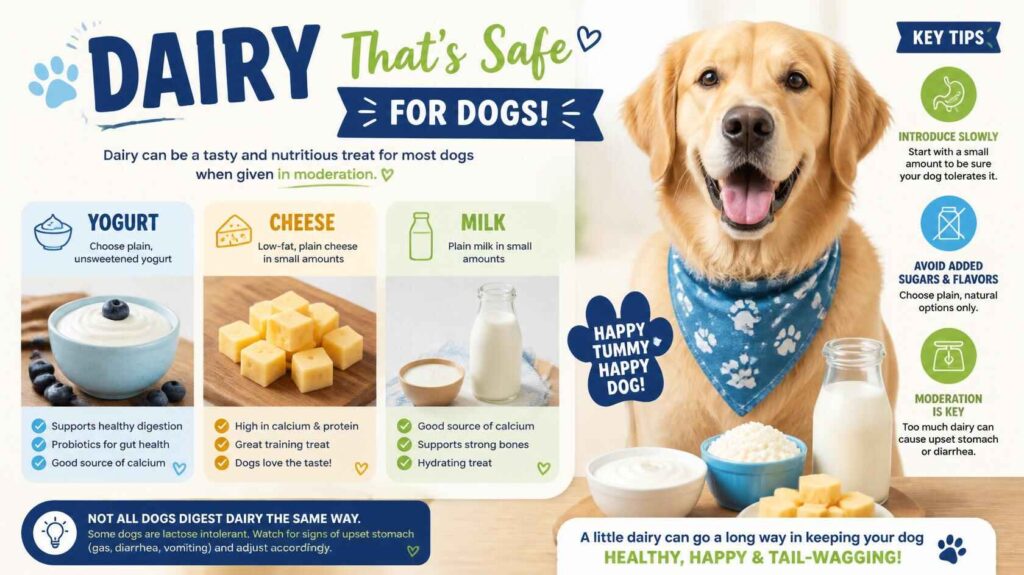
If your dog handles a spoonful of plain yoghurt or a small piece of hard cheese without trouble, that doesn’t automatically mean they’ll tolerate liquid milk.
Dairy products differ in their lactose, fat, and calorie content. Fermentation and processing can reduce the amount of lactose in some products, which helps explain why a dog may tolerate one type of dairy better than another.
The useful lesson isn’t that yoghurt or cheese is “safer” across the board. It’s that one dairy product doesn’t reliably predict your dog’s response to another. And even if your dog drinks milk without symptoms, that still doesn’t make milk a nutritional requirement.
Common Mistakes Owners Make With Milk
- Treating plain milk as though it were inherently toxic
- Assuming every dog is lactose intolerant
- Pouring a full bowl as a “treat”
- Believing goat’s milk contains no lactose
- Assuming “lactose-free” means unlimited amounts are fine
- Assuming plant-based milk is automatically healthier without checking the ingredients
- Skipping the ingredient list on flavoured or sugar-free products
- Using milk instead of fresh water
- Offering milk during a vet-directed elimination food trial
- Giving cow’s or goat’s milk to a nursing puppy instead of an appropriate puppy milk replacer
- Deliberately increasing the amount to “test” tolerance
- Assuming that because yoghurt or cheese is tolerated, milk will be too
- Forgetting that liquid treats still contribute calories
When to Watch, and When to Call the Vet
A dog that has had a small amount of plain milk and remains otherwise bright and comfortable can usually be watched for digestive upset. Mild gas, bloating, or a loose stool may occur in a dog that doesn’t tolerate lactose well.
If symptoms are mild, stop giving dairy, keep fresh water available, and monitor your dog rather than offering more milk to “test” their tolerance.
Contact your vet if vomiting or diarrhoea is repeated or persistent, your dog seems painful or unusually lethargic, they’re unable to keep water down, they’re a very young puppy, they have a relevant medical condition, or they consumed a substantial amount and you’re unsure what to expect.
Seek urgent veterinary help for marked weakness or collapse, tremors or seizures, significant abdominal pain or swelling, severe or repeated vomiting or diarrhoea, or suspected exposure to chocolate, caffeine, or xylitol. These signs should not simply be blamed on lactose intolerance.
Do not induce vomiting unless a veterinary professional specifically instructs you to.
Vet Advice: What to Have Ready
Before calling your vet, gather:
- The exact product your dog consumed
- The ingredient list or packaging
- Roughly how much was consumed
- When it happened
- Your dog’s approximate weight
- Symptoms and when they started
- Relevant health conditions
- Current medications or veterinary diets
Those details are far more useful than simply saying, “My dog drank some milk.”
Should This Dog Have Milk? Final Checklist

- Is it plain, with no chocolate, coffee, xylitol, or other concerning ingredients?
- Have you checked the full ingredient list?
- Has your dog previously tolerated dairy without digestive problems?
- Does your dog have pancreatitis, a weight problem, or another diet-sensitive condition?
- Are they on a prescription diet or elimination food trial?
- Would this be an occasional extra rather than a replacement for water?
- Are you counting it as part of their overall treat intake?
- Is this a weaned dog rather than a nursing puppy that needs appropriate canine nutrition?
If the product is plain and your healthy dog has previously tolerated dairy, a small occasional amount may be tolerated. That doesn’t mean there’s a health benefit to offering it regularly.
If several points on this checklist raise concerns, skipping the milk is the simpler choice.
Frequently Asked Questions
1.Is Milk Actually Toxic to Dogs?
Plain milk itself isn’t generally treated as a dog toxin. The more common problem is digestive upset from lactose, along with the extra fat and calories.
The answer changes if you’re dealing with a milk-based product containing chocolate, caffeine, xylitol, or another unsafe ingredient.
2.Can Dogs Have Milk Every Day?
Milk isn’t necessary as a daily drink. Even a dog that digests it comfortably is getting additional calories and potentially significant fat without needing milk for hydration or basic nutrition.
Fresh water should remain the everyday drink.
3.Does Watering Milk Down Make It Safer?
Adding water reduces how much milk there is in a given volume, but it doesn’t remove the lactose from the milk itself.
If your dog has trouble digesting lactose, dilution isn’t a reliable way to make ordinary milk suitable. There’s also no nutritional reason a dog needs diluted milk instead of fresh water.
4.Is Goat’s Milk Really Better Than Cow’s Milk for Dogs?
Not automatically. Goat’s milk still contains lactose, so switching to it doesn’t remove the main digestive issue for a lactose-sensitive dog.
Individual dogs may respond differently to different dairy products, but goat’s milk shouldn’t be treated as universally healthier or safer.
5.How Do I Know if My Dog Is Genuinely Lactose Intolerant?
Look for a repeatable pattern of digestive problems such as gas, bloating, abdominal discomfort, or diarrhoea after dairy.
One bad stomach episode isn’t enough to prove lactose intolerance because portion size, fat, other ingredients, or an unrelated gastrointestinal problem could be responsible.
If the pattern keeps recurring, stop deliberately testing dairy and discuss it with your veterinarian.
6.Can Milk Help With a Dog’s Upset Stomach or Constipation?
Milk isn’t a reliable treatment for either problem. In a dog that doesn’t digest lactose well, giving milk to an already unsettled stomach may add diarrhoea, gas, or abdominal discomfort.
Persistent constipation, vomiting, diarrhoea, pain, or appetite changes deserve veterinary advice rather than repeated home treatment with milk.
7.My Dog Is Fine With Yoghurt — Does That Mean Milk Will Be Okay Too?
Not necessarily. Different dairy products contain different amounts of lactose and fat, so a dog may tolerate plain yoghurt or certain cheeses yet develop digestive upset after liquid milk.
There’s no need to deliberately introduce milk simply because another dairy product is well tolerated.
#. Related Articles: