
Can dogs eat celery? If your dog has just stolen a piece from the chopping board or your lunch plate, you’re probably wondering whether it’s safe or whether you should call the vet.
You’re chopping celery for a soup, turn around, and find half a stalk missing—while your dog looks suspiciously pleased. Or perhaps they lifted a piece straight from your lunch plate. Either way, you’re probably wondering whether this is an emergency or nothing to worry about.
Plain, properly prepared celery is generally safe for most healthy dogs in small amounts. The bigger concerns are whole stalks, long fibrous strings, large portions, and celery served with unsafe ingredients such as onion, garlic, excessive salt, rich sauces, or xylitol-containing peanut butter.
This guide explains which forms are suitable, how to prepare celery safely, what symptoms to watch for, and when to contact your vet.
Start Here: What Kind of Celery Did Your Dog Eat?
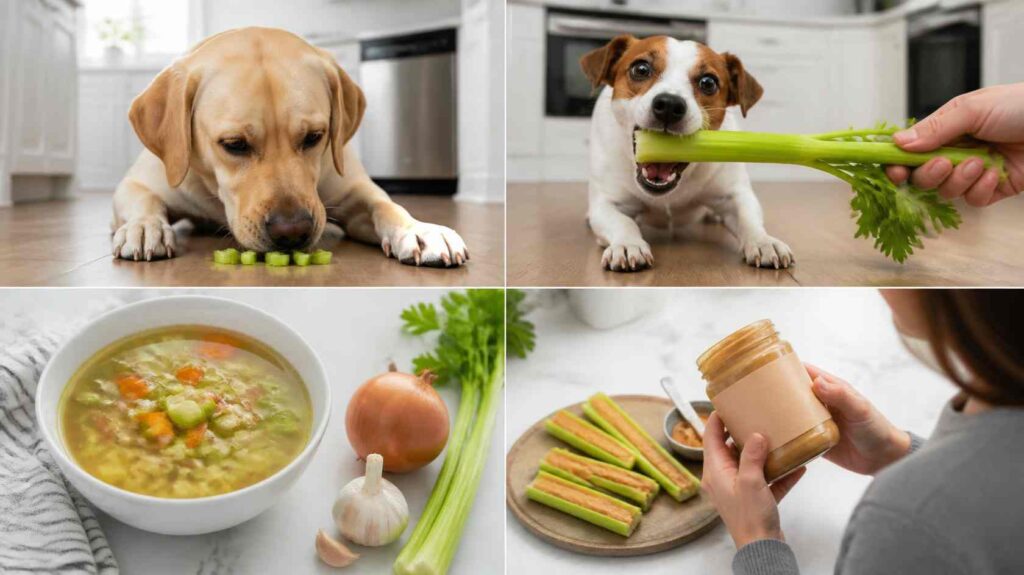
Not every food described as “celery” carries the same level of risk. Before deciding what to do, identify exactly what your dog swallowed.
A Small Piece of Plain Fresh Celery
This is usually a low-concern situation. Remove any remaining pieces, check that your dog is breathing and swallowing normally, and monitor them for digestive upset.
A healthy dog that eats one small, plain piece will rarely need treatment.
A Whole Stalk or Long Stringy Piece
The main concern is choking, particularly in:
- Small dogs
- Puppies
- Flat-faced breeds
- Dogs that gulp food
- Seniors with weak or missing teeth
- Dogs with swallowing problems
Watch for persistent gagging, pawing at the mouth, panic, repeated attempts to swallow, noisy breathing, or difficulty getting air.
Celery From Soup, Stew, Stuffing, Salad, or Dip
Check the entire ingredient list or recipe. The celery itself may be harmless, while the surrounding ingredients are not.
Potential concerns include:
- Onion
- Garlic
- Leeks
- Chives
- Excessive salt
- Stock cubes or concentrated broth
- Butter or cooking oil
- Creamy dressings
- Rich sauces
- Alcohol or other unsafe ingredients
When contacting a vet, be ready to explain what the dish contained, approximately how much your dog ate, and when it happened.
Celery With Peanut Butter
Check the peanut butter label immediately for xylitol, which may also be listed as birch sugar. Xylitol is highly dangerous to dogs and requires urgent veterinary attention.
Even xylitol-free peanut butter should be used sparingly because it can be high in fat and calories, making it unsuitable for some overweight dogs or dogs with a history of pancreatitis.
Celery Salt, Pickled Celery, Celery Juice, Celery Seed, or Celeriac
These should not be treated as interchangeable with fresh celery.
- Celery salt contains concentrated sodium.
- Pickled or canned celery may contain large amounts of salt, sugar, spices, or preservatives.
- Celery juice removes much of the fibre and provides no clear advantage over fresh celery.
- Celery seed may be concentrated or included in seasoning blends.
- Celeriac, also called celery root, is a different part of the plant with a different texture and preparation method.
Warning: When Celery Becomes an Emergency
Seek urgent veterinary care if your dog develops:
- Difficulty breathing
- Blue, grey, or very pale gums
- Collapse
- Severe distress or panic
- Inability to swallow
- Persistent choking or gagging
- Repeated unproductive retching
- Facial swelling or widespread hives
- Repeated vomiting
- Suspected xylitol ingestion
Do not blindly reach into the mouth of a conscious, distressed dog. You could push an object farther back or be bitten. Contact an emergency vet while arranging immediate transport.
Safety Really Comes Down to Form and Preparation

Celery is not equally suitable in every form. Texture, piece size, added ingredients, and the individual dog all affect how safely it can be offered.
Raw Celery
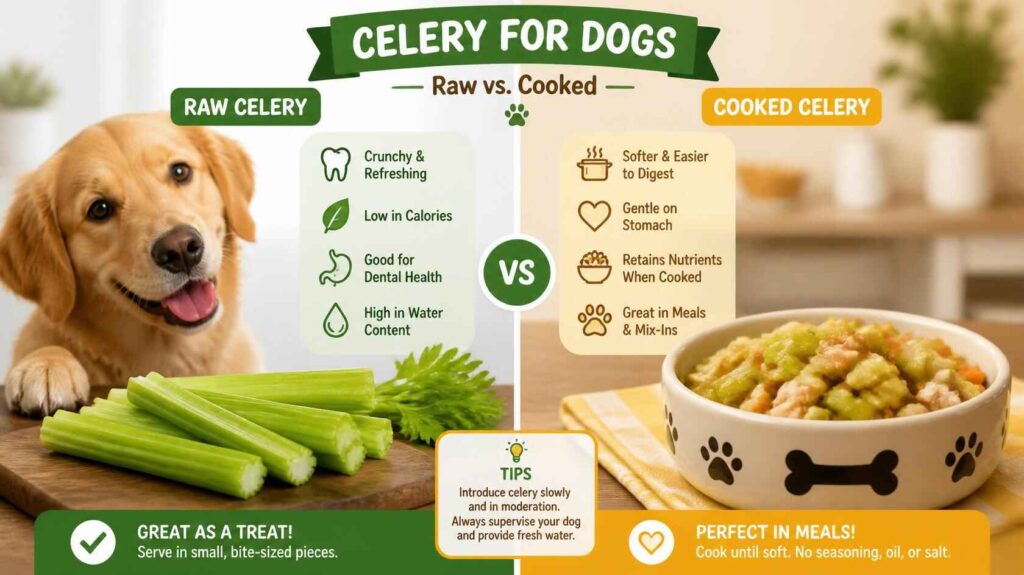
Raw celery is firm, crunchy, and fibrous. Most healthy adult dogs can manage a few small pieces, but it may be harder to chew for puppies, seniors, small breeds, and dogs with dental disease.
Cut it into short pieces across the fibres rather than offering long strips or thick round chunks.
Lightly Steamed Celery
Plain, lightly steamed celery is softer and may be easier for dogs with weak teeth or reduced chewing ability.
Serve it without:
- Salt
- Butter
- Oil
- Stock
- Onion
- Garlic
- Sauces
- Seasoning
Steaming can improve texture, but it does not make an unsafe recipe dog-friendly.
Celery Leaves and Tops
Washed celery leaves can be offered in very small amounts. Chop them finely and introduce them gradually, as their stronger flavour may not appeal to every dog.
There is no need to treat the leaves as a nutritional upgrade. They remain an optional treat, not an essential part of the diet.
Frozen Celery
Frozen celery is sometimes suggested as a puppy teething aid, but it is not suitable for every dog. A rock-hard piece may damage an already weakened tooth, and a puppy may break off and swallow a large chunk.
Avoid frozen celery for dogs with:
- Cracked or worn teeth
- Recent dental treatment
- Poor chewing habits
- A tendency to gulp
- Previous choking episodes
When offered, pieces should be small enough to manage safely and given only under close supervision.
Processed Celery Products
Celery salt, canned celery, pickled celery, creamed celery, stuffed celery, and restaurant-prepared dishes should be assessed separately from fresh celery.
Processed versions may contain salt, sugar, preservatives, rich fats, seasoning, onion, garlic, or other unsuitable ingredients.
Which Celery Forms Are Suitable for Dogs?

| Celery form | Main concern | Safer preparation | General suitability |
|---|---|---|---|
| Fresh raw celery | Choking and tough fibres | Wash, remove tough strings where practical, and cut across the fibres | Suitable as an occasional treat |
| Lightly steamed celery | Added ingredients | Serve completely plain and allow it to cool | May suit dogs with chewing difficulty |
| Celery leaves | Residue and digestive upset if overfed | Wash and chop finely | Small amounts only |
| Whole celery stalk | Choking and gulping | Do not offer whole | Best avoided |
| Frozen celery | Tooth damage and choking | Use small pieces with close supervision | Not appropriate for every dog |
| Celery with peanut butter | Xylitol, fat, and excess calories | Check the label and use only a thin amount | Conditional |
| Celery from soup or stew | Onion, garlic, stock, salt, and sauces | Check the complete recipe | Often unsuitable |
| Pickled or canned celery | Salt, sugar, spices, and preservatives | Read the full label | Usually best avoided |
| Celery salt | Concentrated sodium | Do not use as a substitute for fresh celery | Avoid |
| Celery juice | Little fibre and no clear benefit | Not needed | Unnecessary |
| Celeriac or celery root | Different texture and preparation needs | Assess separately and serve only plain | Do not assume fresh-celery guidance applies |
How to Serve It Safely
Choose fresh celery with no mould, slimy patches, or signs of spoilage.
Wash it thoroughly to remove soil and surface residue. Organic celery is not required; careful washing matters more.
Remove tough strings where practical, especially for puppies, small dogs, seniors, and dogs that tend to gulp rather than chew.
Remove tough strings where practical, especially for puppies, small dogs, seniors, and dogs that tend to gulp rather than chew. PetMD also recommends removing the fibrous strings before offering celery to dogs to help make it easier and safer to eat.
Cut the stalk across the fibres into short, bite-sized pieces. Avoid long strips, thick rounds, or whole stalks, which are harder to chew and more likely to be swallowed awkwardly.
Offer one or two small pieces the first time. Introducing new foods gradually makes it easier to spot digestive intolerance.
Stay nearby while your dog eats. Remove any piece they repeatedly try to swallow whole instead of chewing.
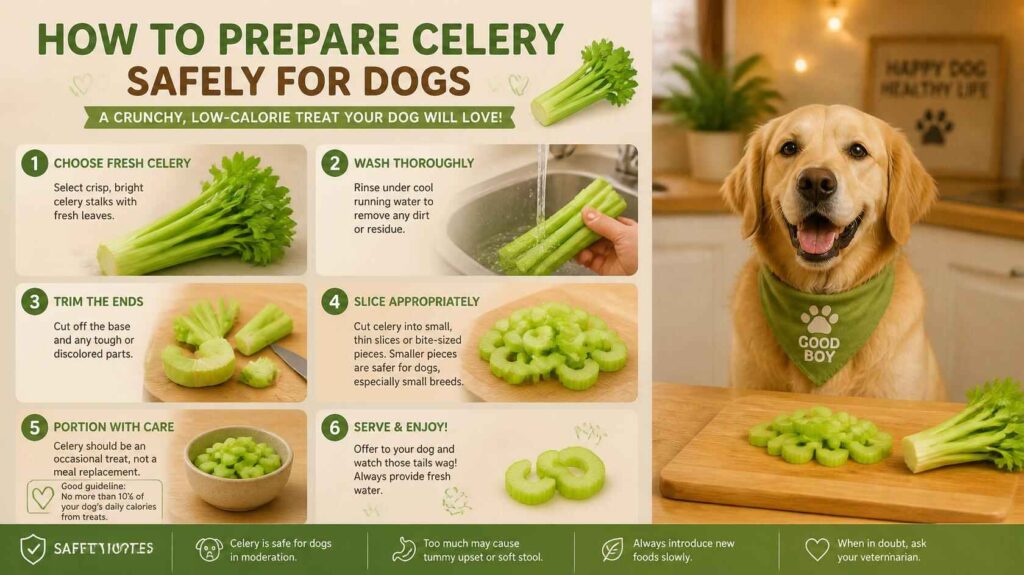
Quick Checklist Before Serving Celery
- Fresh and free from mould or spoilage
- Washed thoroughly
- Tough strings shortened or removed
- Cut into small pieces across the fibres
- Served plain, with no salt, butter, oil, sauce, or seasoning
- No onion, garlic, leek, or chives in the dish
- Any peanut butter checked carefully for xylitol
- Approved by your vet if your dog eats a prescription or elimination diet
- Portion kept small
- Dog supervised while eating
- Fresh drinking water available
How Much Is Actually Appropriate?
There is no single serving size that suits every dog. The right amount depends on body size, chewing habits, age, dental health, digestive sensitivity, and the rest of the dog’s diet.
A large dog that gulps food may need smaller pieces than a careful small dog, so chewing behaviour matters as much as weight.
For a first serving, offer one or two small pieces and wait to see how your dog responds. Even though celery is low in calories, it still counts as a treat and should not replace complete, balanced meals.
Stop offering it if your dog develops:
- Gas
- Soft stool
- Diarrhoea
- Vomiting
- Abdominal discomfort
- Reduced appetite
These signs usually mean the portion was too large or the food did not agree with that individual dog. Persistent or severe symptoms warrant veterinary advice.
What Celery Can—and Cannot—Actually Do
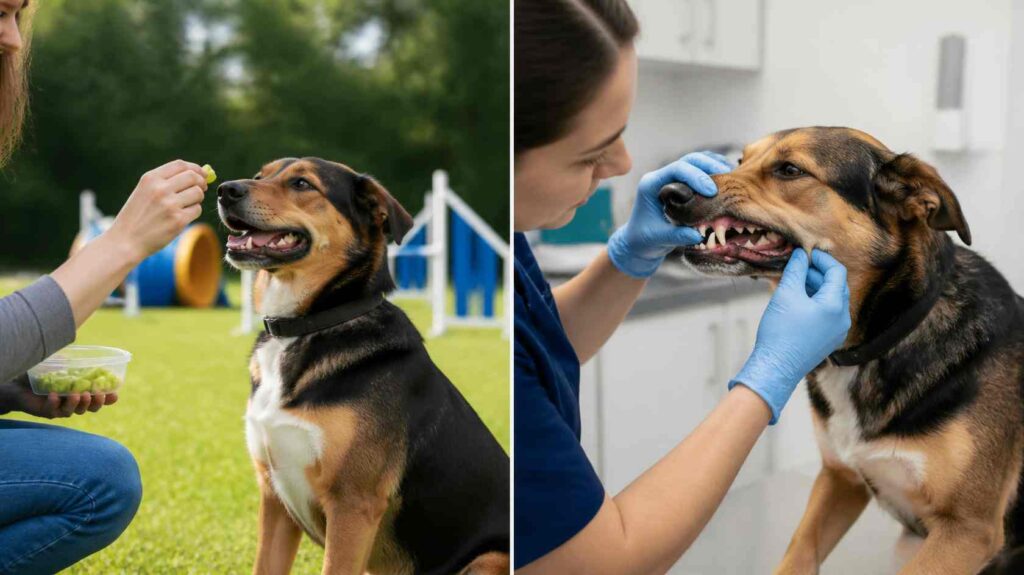
Celery is often promoted as more beneficial than it really is, so it helps to separate practical value from marketing claims.
What It Can Offer
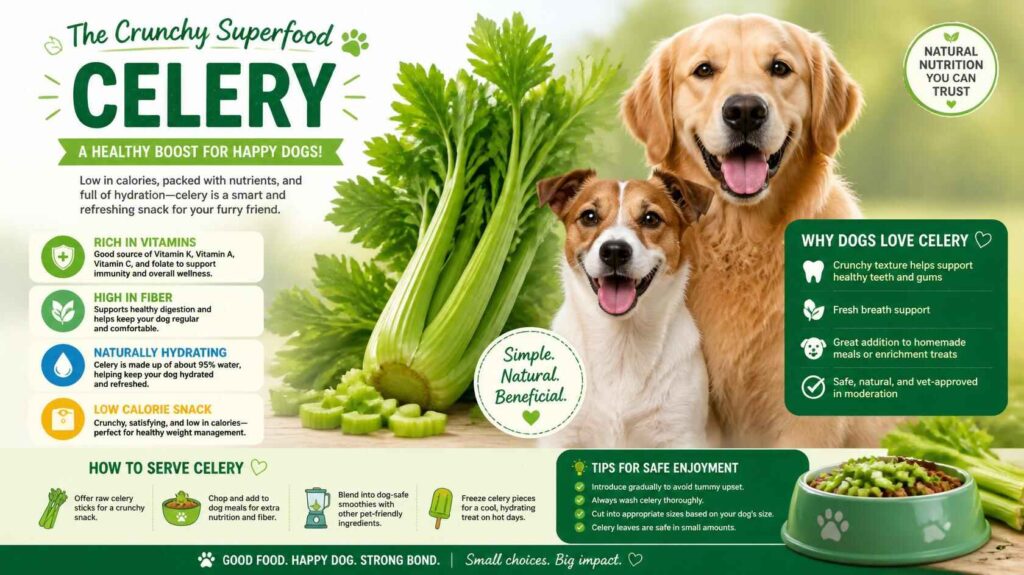
- A low-calorie alternative to richer treats
- A crunchy form of occasional enrichment
- A small contribution to fluid intake because of its high water content
- A low-fat snack for many healthy dogs
- Tiny pieces that may work as training rewards
What It Cannot Do
Celery does not cause weight loss by itself. It may support a weight-management plan only when it replaces a higher-calorie treat rather than being added on top of the existing diet.
It does not treat dehydration or replace access to fresh water.
Crunching celery is not a substitute for toothbrushing, appropriate dental products, or veterinary dental care. Persistent bad breath should be investigated rather than masked, as it can be linked to dental or medical problems.
Celery is also not a necessary supplement. A dog eating complete and balanced food should already receive the nutrients needed for normal health, as the American Kennel Club explains in its guidance on feeding celery to dogs.
Which Dogs Need Extra Caution?
Puppies
Puppies have smaller airways, developing teeth, and less reliable chewing habits. Offer only very small, soft pieces and supervise closely.
Toy and Small Breeds
Oversized pieces pose a greater choking risk. Avoid whole stalks, thick rounds, and long fibrous strips.
Brachycephalic Dogs
Bulldogs, Pugs, French Bulldogs, and other flat-faced breeds may have breathing or swallowing difficulties. Use smaller, softer pieces and watch them carefully while they eat.
Senior Dogs and Dogs With Missing Teeth
Raw celery may be too hard or uncomfortable to chew. Plain, lightly steamed celery may be easier to manage. Avoid hard frozen pieces.
Dogs That Gulp Food
These dogs need short, small pieces regardless of body size. Whole stalks and long strips are poor choices.
Dogs With Swallowing Disorders
Dogs with megaoesophagus, laryngeal disease, neurological problems, or a history of aspiration should not be given unfamiliar textures without veterinary guidance.
Dogs With Sensitive Digestion
Dogs with inflammatory bowel disease, chronic diarrhoea, or a history of food intolerance may react badly to the added fibre. Introduce celery cautiously, or avoid it unless your vet agrees it is appropriate.
Medical Conditions Worth Checking With Your Vet First

Speak with your vet before feeding celery regularly if your dog has:
- Kidney disease
- Heart disease
- Diabetes
- Pancreatitis
- Chronic gastrointestinal disease
- Dental or swallowing problems
- A prescribed weight-loss plan
- A prescription veterinary diet
- An active food-allergy elimination trial
Fresh, plain celery may be low in fat and calories, but that does not make it suitable for every medical diet. Sodium limits, potassium intake, calorie targets, digestive tolerance, and prescribed ingredients may all affect whether it is appropriate.
For dogs on elimination diets, even a seemingly harmless extra food can interfere with the trial and make the results harder to interpret. For weight management, celery only helps when it replaces a more calorie-dense treat rather than adding extra food.
When your dog has an ongoing medical condition, the safest approach is to ask the vet managing that condition before making celery a regular treat.
When to Call the Vet
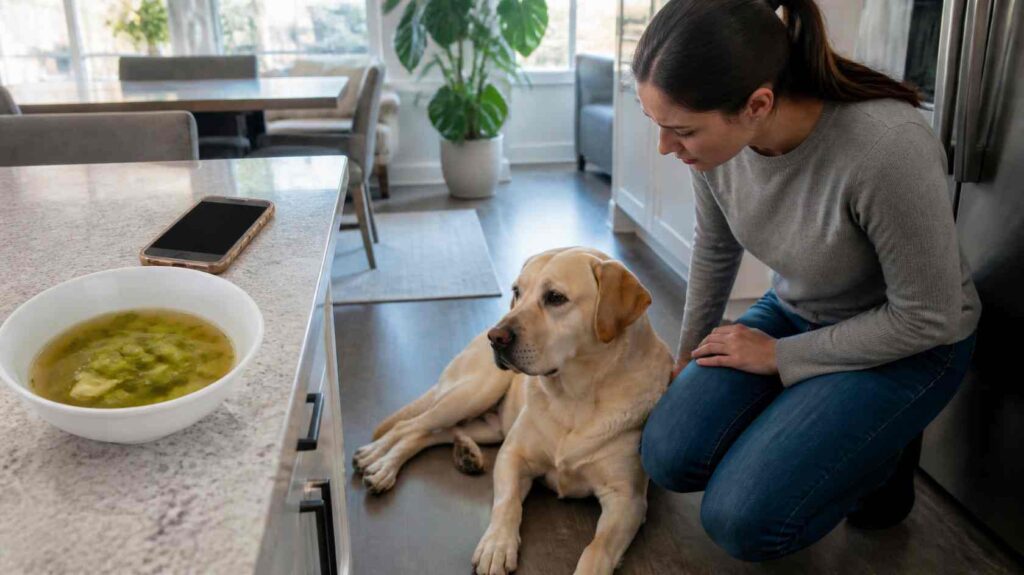
Contact your vet if your dog develops:
- Repeated vomiting
- Persistent diarrhoea
- Abdominal pain or a tense, uncomfortable belly
- Unusual lethargy
- Ongoing gagging or repeated attempts to swallow
- Loss of appetite
- Signs of discomfort after swallowing a whole stalk or large piece
- Symptoms after eating a large quantity
Seek emergency veterinary care immediately for:
- Difficulty breathing
- Blue, grey, or very pale gums
- Collapse
- Inability to swallow
- Severe choking distress
- Facial swelling
- Suspected xylitol ingestion
When you call, be ready to explain what your dog ate, how much, when it happened, whether it was plain or part of a prepared dish, and what symptoms you have noticed.
My Dog Already Ate Celery—Now What?
If your dog ate a small amount of plain, chopped celery and is breathing and behaving normally, there is usually no need to panic. Remove any remaining pieces and monitor for vomiting, diarrhoea, gagging, abdominal discomfort, or changes in appetite.
If your dog swallowed a whole stalk, a large chunk, or several long fibres, watch closely for choking, repeated gagging, retching, vomiting, or difficulty swallowing. Contact your vet if you are unsure whether the piece passed safely.
If the celery came from soup, stew, stuffing, salad, dip, or another prepared dish, check the full ingredient list. Onion, garlic, leeks, chives, xylitol, excessive salt, rich sauces, and high-fat ingredients can make the situation more serious than plain celery alone. In that case, call your vet or an animal poison service rather than waiting for symptoms to appear.
Do not blindly reach into the mouth of a conscious, distressed dog. You may push the obstruction farther back or be bitten. Arrange urgent veterinary care instead.
Common Mistakes Owners Make
- Handing over a whole stalk instead of small pieces
- Cutting thick round pieces rather than slicing across the fibres
- Assuming “non-toxic” means unlimited amounts are safe
- Adding butter, oil, ranch dressing, cheese, or seasoning
- Offering celery from soup or stew without checking for onion or garlic
- Treating celery salt as though it were the same as fresh celery
- Giving rock-hard frozen celery to a dog with weak or damaged teeth
- Filling celery with peanut butter without checking for xylitol
- Feeding celery during a prescription or elimination diet without veterinary approval
- Leaving a dog unsupervised with a large or stringy piece
Celery Compared With Other Dog-Safe Vegetables
| Vegetable | Texture | Main advantage | Main limitation |
|---|---|---|---|
| Celery | Firm and stringy | Low-calorie crunch | Choking risk and fibrous strings |
| Cucumber | Soft and water-rich | Easy low-calorie snack | May upset sensitive stomachs if overfed |
| Carrot | Hard and crunchy | Convenient training treat | Hardness and natural sugar |
| Green beans | Soft when cooked | Useful lower-calorie option | Canned versions may contain added salt |
| Courgette/zucchini | Soft when cooked | Easier for dogs with weaker teeth | Must be served plain |
| Broccoli | Firm florets | Good for occasional variety | May cause gas or digestive upset in larger amounts |
The best choice depends on the individual dog. A careful chewer may manage small pieces of raw celery well, while a senior dog with dental disease may do better with plain, softly cooked courgette or green beans.
Final Word
Celery is one of the more forgiving vegetables to share with a dog, but “generally safe” does not mean it can be served without thought.
Wash it, remove tough strings where practical, cut it into short pieces, keep it plain, and supervise your dog while they eat. Pay particular attention to celery taken from soups, dips, stuffing, or other prepared dishes, because the added ingredients often pose more risk than the celery itself.
If your dog has an existing medical condition, follows a prescription diet, swallowed a large piece, or ate celery with unknown ingredients, contact your vet for advice.
Frequently Asked Questions
1.Is celery poisonous to dogs?
No. Plain, fresh celery is not considered toxic to dogs. The main risks are choking on large or stringy pieces, digestive upset from eating too much, and unsafe ingredients in prepared dishes.
2.Can dogs eat celery leaves?
Yes, dogs can eat small amounts of washed celery leaves. They have a stronger flavour than the stalk, so some dogs may refuse them. Chop the leaves finely and do not force your dog to eat them.
3.Do celery strings need to be removed?
Removing the toughest strings is helpful, particularly for puppies, small dogs, seniors, and dogs that gulp food. Cutting the stalk across the fibres into short pieces also reduces the length of the strings and makes the celery easier to manage.
4.Can dogs eat celery every day?
A healthy dog may tolerate small amounts, but daily feeding is not necessary. Celery should remain an occasional treat and should not displace complete, balanced dog food. Stop offering it if your dog develops digestive upset.
5.Can dogs choke on celery?
Yes. Whole stalks, thick pieces, and long fibrous strips can be choking hazards, especially for small dogs and fast eaters. Cut celery into short, bite-sized pieces and supervise your dog while they eat.
6.Can dogs with diabetes eat celery?
Plain celery is low in calories and sugar, but it should still fit the dog’s individual treatment and feeding plan. Ask the vet managing your dog’s diabetes before adding celery as a regular treat.
7.Does celery clean a dog’s teeth or freshen their breath?
Not in any meaningful or lasting way. Crunching celery may briefly reduce food odour, but it does not replace toothbrushing, appropriate dental products, or veterinary dental care. Persistent bad breath should be discussed with your vet because it may indicate dental disease or another health problem.
#. Related Articles: