
Can dogs eat cucumber? Yes, plain, fresh cucumber is generally safe for most healthy dogs when served in appropriate amounts. Your dog’s sitting there watching you slice cucumber for a salad, and those eyes are impossible to ignore. Before you toss a piece over, here’s the short answer: plain, fresh cucumber is generally safe for most healthy dogs. But “safe” doesn’t mean unlimited, and it doesn’t mean every cucumber situation carries the same level of risk.
Maybe you’re planning to offer a slice as a treat. Or maybe your dog already snuck one off the counter and you’re trying to figure out whether you need to worry. Either way, what matters most is how much was eaten, the size of the pieces, how the cucumber was prepared, and whether your dog is showing any symptoms.
First, Figure Out Which Cucumber Situation You’re In
Your Dog Ate One or Two Plain Pieces
This is usually a low-concern situation. Ask yourself three quick questions: was the cucumber plain and unseasoned, was the piece a manageable size for your dog, and is your dog acting normally?
If the answer is yes to all three, monitoring at home is generally reasonable. A healthy dog that eats one or two small cucumber pieces is unlikely to need any special treatment.
Your Dog Ate Way More Than You Intended
A whole cucumber disappearing off the counter is different from a couple of slices. Cucumber itself isn’t considered toxic to dogs, but eating a large amount at once can lead to digestive upset.
Keep an eye out for:
- Vomiting
- Diarrhoea
- Excess gas
- Abdominal discomfort
- Reduced appetite
- Unusual lethargy
A mild stomach upset may settle on its own, but repeated vomiting, persistent diarrhoea, obvious pain, or worsening symptoms are reasons to contact your veterinarian.
Your Dog Swallowed a Large Chunk or Whole Section
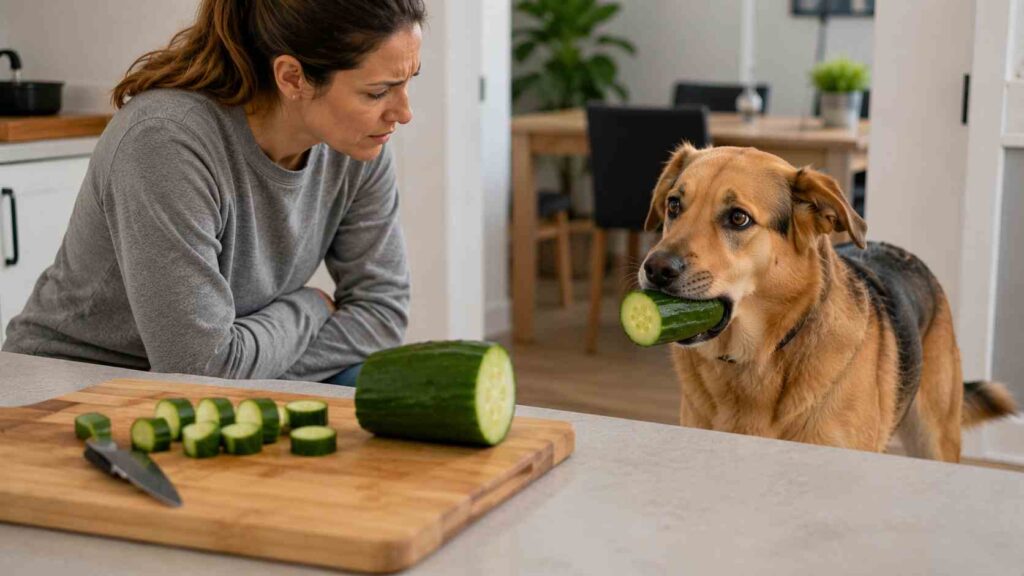
This is where you need to separate choking from a possible digestive obstruction.
A large piece can become lodged in the throat, particularly in a small dog or a dog that tends to gulp food rather than chew it. Difficulty breathing, repeated gagging, pawing at the mouth, distress, or an inability to swallow should be treated as urgent.
A swallowed chunk that makes it into the stomach may still cause trouble if it’s too large to pass normally. Watch for repeated vomiting, abdominal pain, loss of appetite, lethargy, or difficulty keeping food or water down.
If your dog is struggling to breathe or appears to be actively choking, seek emergency veterinary care immediately rather than waiting to see if the problem resolves.
Your Dog Ate Cucumber From a Human Dish
This catches a lot of owners out because it’s easy to focus on the cucumber and forget everything else on the plate.
The cucumber may be harmless, while the rest of the dish contains ingredients your dog shouldn’t have. Check for:
- Onion
- Garlic
- Excess salt
- Rich or fatty dressings
- Dips and sauces
- Spices
- Sweeteners
If your dog ate cucumber salad, pickled cucumber, or cucumber with a dip, assess the entire ingredient list, not just the vegetable.
Why Plain Cucumber Works as an Occasional Treat

Cucumber isn’t a superfood, and your dog doesn’t need it to stay healthy. But as an occasional snack, it has a few useful qualities.
It’s low in calories compared with many commercial dog biscuits, so it can be a sensible replacement for some higher-calorie treats in dogs that need to watch their weight. The important word is replacement: adding cucumber on top of an already generous treat routine won’t help with weight control.
Cucumber is also made mostly of water, which can make it a refreshing snack, especially in warm weather. But it should never replace your dog’s normal access to fresh drinking water, and it is not a treatment for dehydration. A dog that appears genuinely dehydrated, weak, unwell, or unable to keep water down needs veterinary assessment.
Cucumber contains small amounts of nutrients such as vitamin K, potassium, magnesium, and vitamin C. In the portions dogs typically eat, however, these are a bonus rather than a major nutritional contribution. A complete and balanced dog food should still provide the bulk of your dog’s nutrition.
Because cucumber is relatively low in calories, it can also work well as a training reward. Tiny diced pieces let you reward frequently without relying entirely on calorie-dense treats. Just remember that cucumber still counts as an extra and should fit within your dog’s overall treat allowance.
The Parts Owners Worry About Most
Cucumber skin is generally fine for dogs to eat. Wash the cucumber thoroughly before serving it. If your dog has a sensitive stomach or seems to struggle with the tougher peel, removing some or all of the skin is a reasonable option.
Cucumber seeds in ordinary eating cucumbers are soft and small. They aren’t generally considered a toxic part of the vegetable. Piece size, quantity, and the way your dog eats are more important safety concerns than the seeds themselves.
English, Persian, mini, and seedless cucumbers can generally be treated the same way when they’re fresh and served plain. The variety matters far less than how the cucumber is prepared.
Raw and cooked cucumber can both be offered plain. With cooked cucumber, the bigger concern is usually what has been added during preparation. Butter, salt, garlic, onion, sauces, and heavily seasoned oils can turn an otherwise simple vegetable into something unsuitable for your dog.
Preparation Matters More Than Most Owners Realise
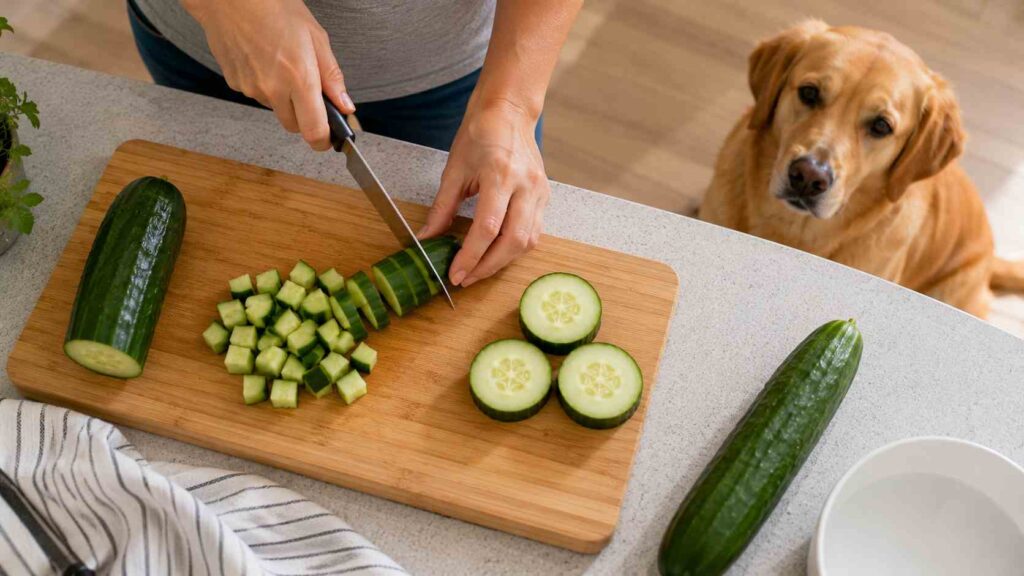
Wash cucumber before cutting it, whether it came from a supermarket, farmers’ market, or your own garden. This helps remove dirt and surface residue.
Cut it for your dog’s mouth size and eating style, rather than following one universal slice size. A toy breed may need tiny diced pieces, while a medium or large dog can handle somewhat larger bites. Even large dogs shouldn’t be handed oversized rounds or whole cucumber ends if they’re prone to swallowing treats without chewing.
The first time your dog tries cucumber, keep the portion small and offer it plain. Introducing one new food at a time makes it much easier to tell what caused the problem if your dog develops gas, vomiting, or loose stools.
Senior dogs and dogs with dental disease, missing teeth, swallowing difficulties, or a tendency to gulp may need smaller or softer pieces. And if your dog is on a prescription diet, elimination diet, or medically managed feeding plan, check with your veterinarian before making cucumber a regular treat. Even a generally safe food can interfere with a diet that’s being used for a specific medical reason.
Checklist: Before You Give Your Dog Cucumber
- Is it fresh, not spoiled or moldy?
- Has it been washed thoroughly?
- Is it plain, with no salt, seasoning, dressing, or dip?
- Is the piece small enough for your dog’s mouth and chewing style?
- Does your dog chew carefully, or tend to gulp food?
- Is this their first time trying cucumber?
- Have they already had other treats today?
- Is your dog on a prescription or elimination diet?
- Are they currently dealing with vomiting, diarrhoea, or another gastrointestinal problem?
- Will you be there to supervise while they eat it?
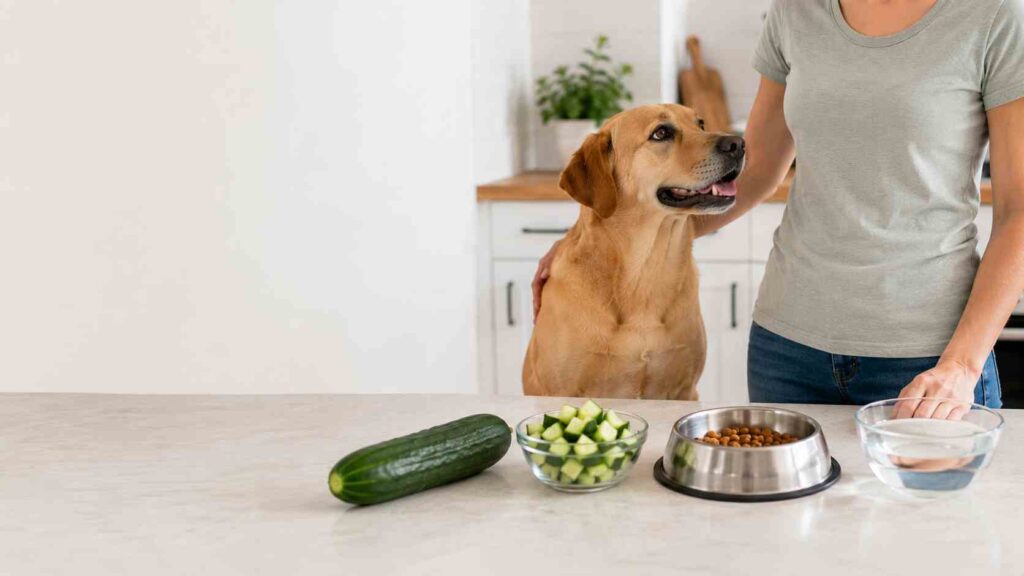
Comparison Table: Not Every “Cucumber” Situation Is the Same
| Cucumber Form | Generally Suitable? | Main Concern | Best Approach |
|---|---|---|---|
| Plain raw cucumber | Usually yes | Overfeeding, piece size | Wash and cut into manageable pieces |
| Peeled cucumber | Usually yes | Overfeeding | Useful for dogs that struggle with tougher skin |
| Cucumber with seeds | Usually yes | Texture, tolerance | Serve in small pieces |
| Frozen cucumber | Sometimes | Hard texture, gulping | Use small pieces and supervise closely |
| Plain cooked cucumber | Usually yes | Added ingredients | Keep it completely plain |
| Pickles | Best avoided | High salt, brine, seasonings | Choose fresh cucumber instead |
| Cucumber salad | Depends on ingredients | Onion, garlic, dressing, salt | Check every ingredient |
| Cucumber with dip | Usually avoid | Garlic, onion, fat, salt | Serve cucumber on its own |
| Spoiled or moldy cucumber | No | Food safety | Discard it |
How Much Is Reasonable?
There’s no single serving size that fits every dog. A better approach is to treat cucumber as part of your dog’s overall treat allowance rather than aiming for a fixed number of slices.
Veterinary nutrition guidance commonly recommends keeping treats and other extras to a small proportion of a dog’s daily calories so that most of the diet still comes from complete and balanced food.
Piece size and total portion are two different things. Cutting cucumber into small pieces reduces choking risk, but a large bowl of tiny pieces can still cause digestive upset. A toy breed may only need a few tiny cubes, while a larger dog can handle more. Chewing style matters too: a Labrador that swallows treats whole may need smaller pieces than another dog of the same size that chews carefully.
When to Be More Cautious
Some situations call for veterinary advice rather than a simple wait-and-see approach:
- Your dog is actively choking or struggling to breathe
- They swallowed a large chunk without chewing
- They are vomiting repeatedly
- Diarrhoea is persistent or severe
- There is obvious abdominal pain or swelling
- They are having trouble swallowing
- They collapse or become unusually weak
- They cannot keep food or water down
Warning: Do not try to make your dog vomit unless a veterinarian specifically tells you to. If your dog is actively choking or having difficulty breathing, do not offer more food or water. Breathing difficulty is an emergency and needs immediate veterinary care.
Dogs Who Need a Bit More Thought Before Cucumber Becomes Routine

Puppies can usually have small, appropriately sized pieces once they’re eating solid food. Introduce cucumber gradually, supervise them closely, and make sure treats don’t displace the complete puppy food they need for growth.
Overweight dogs may benefit when cucumber replaces a higher-calorie treat. It helps by reducing the calories coming from treats, not because cucumber itself causes weight loss.
Diabetic dogs may be able to have cucumber, but don’t assume that “low calorie” automatically means it fits every diabetes plan. Meal timing, insulin schedules, and prescribed diets can matter, so regular treats should be cleared with your veterinarian.
Dogs with sensitive stomachs or chronic GI conditions may tolerate a small amount of peeled cucumber, while others may develop gas, loose stools, or vomiting. If your dog has an ongoing gastrointestinal condition, follow their veterinary diet plan rather than experimenting with extras.
Dogs on prescription or elimination diets shouldn’t receive cucumber without checking first. Even a normally safe food can interfere with a carefully controlled diet trial or therapeutic feeding plan.
Senior dogs may need smaller or softer pieces if they have dental disease, missing teeth, or swallowing problems. Any therapeutic diet they’re already following should take priority over adding new treats.
If You Grow Cucumbers at Home
Homegrown cucumbers come with a few extra considerations. The cucumber fruit itself is the part to stick with; there’s no nutritional reason to deliberately feed your dog the leaves or vines.
Also think about what has been used around the plant. Pesticides, fertilisers, slug or snail products, and other garden treatments can create risks that have nothing to do with cucumber itself. Wash homegrown cucumbers thoroughly before serving, and don’t offer fruit that has been treated with a product unless you’re confident it’s safe for that use.
As with any produce, discard cucumber that’s moldy, rotten, or clearly spoiled rather than passing it on to your dog.

Common Mistakes Owners Make
- Assuming “non-toxic” means there’s no limit
- Giving thick rounds or oversized chunks to small dogs
- Handing over a whole cucumber as a makeshift chew toy
- Offering too much the first time
- Adding cucumber without accounting for other treats
- Feeding cucumber salad because “cucumber is safe” without checking the other ingredients
- Treating pickles the same as fresh cucumber
- Serving cucumber with ranch, hummus, or other dips
- Assuming cucumber can substitute for fresh drinking water
- Believing cucumber treats bad breath or cleans teeth on its own
- Feeding spoiled or moldy cucumber
- Ignoring repeated vomiting or diarrhoea because “it’s just cucumber”
When “Monitor” Should Become “Call the Vet”
A little gas or a single soft stool after eating too much cucumber may settle without treatment if your dog otherwise seems completely well. Repeated vomiting, persistent or severe diarrhoea, noticeable abdominal discomfort, unusual lethargy, or a loss of appetite that doesn’t improve deserves veterinary advice.
Difficulty breathing, active choking, collapse, an inability to swallow, or signs suggesting an obstruction after swallowing a large piece need urgent veterinary assessment. Don’t wait for these symptoms to resolve on their own.
When you call, have the useful details ready: your dog’s approximate weight, how much cucumber was eaten, the approximate size of any swallowed chunk, whether it was plain or part of another dish, when it happened, symptoms you’ve noticed, and any existing health conditions or medications.

Key Takeaways
Fresh, plain cucumber cut into manageable pieces can be a simple, low-calorie treat for most healthy dogs. Problems are more likely to come from oversized pieces, excessive amounts, pickles, seasonings, dips, or other ingredients than from plain cucumber itself.
So if your dog enjoys cucumber, there’s usually no need to make it complicated: wash it, keep it plain, cut it appropriately, and count it as part of the day’s treats. If a large piece has been swallowed or your dog develops persistent or severe symptoms, contact your veterinarian.
Frequently Asked Questions
1. Can dogs eat cucumber every day?
A small amount may be suitable for a healthy dog that tolerates it, but cucumber doesn’t need to be a daily part of the diet. Keep it within your dog’s overall treat allowance rather than letting it displace complete and balanced food.
2. Can dogs drink cucumber-infused water?
Plain water with a few fresh cucumber slices is generally different from commercially flavoured drinks. Check anything beyond plain cucumber and water carefully for added sweeteners or other ingredients. Xylitol is highly toxic to dogs, so a product containing it should never be given to them. Fresh drinking water should remain your dog’s main source of hydration.
3. Is cucumber better than carrots or celery for dogs?
Not necessarily. Cucumber has a high water content and is relatively low in calories, while carrots and celery have different textures and nutrient profiles. The best choice is one your dog tolerates, enjoys, and can eat safely in appropriately sized pieces.
4. Can cucumber cause diarrhoea in dogs?
Yes. Eating too much cucumber or suddenly introducing a large amount of any unfamiliar food can upset a dog’s digestive system. Start with a small portion. If diarrhoea is persistent, severe, accompanied by vomiting, or your dog seems unwell, contact your veterinarian.
5. Should I always peel cucumber for my dog?
No. Most dogs can eat washed cucumber skin. Peeling it can be useful if your dog finds the skin difficult to chew or seems to tolerate peeled cucumber better.
6. Can dogs eat cucumber plants or leaves from the garden?
There’s no practical reason to feed the leaves or vines deliberately. If your dog has eaten part of a cucumber plant, also consider whether pesticides, fertilisers, slug products, or other garden chemicals were used nearby. Contact your veterinarian if you’re unsure about an exposure or your dog develops symptoms.
7. What should I do if my dog ate cucumber salad?
Check the entire ingredient list rather than focusing on the cucumber. Onion, garlic, heavy dressings, excessive salt, and other added ingredients can change the risk considerably. If the salad contained a potentially harmful ingredient, or you don’t know what was in it, contact your veterinarian with the ingredient list and the approximate amount your dog ate.
#. Related Articles: