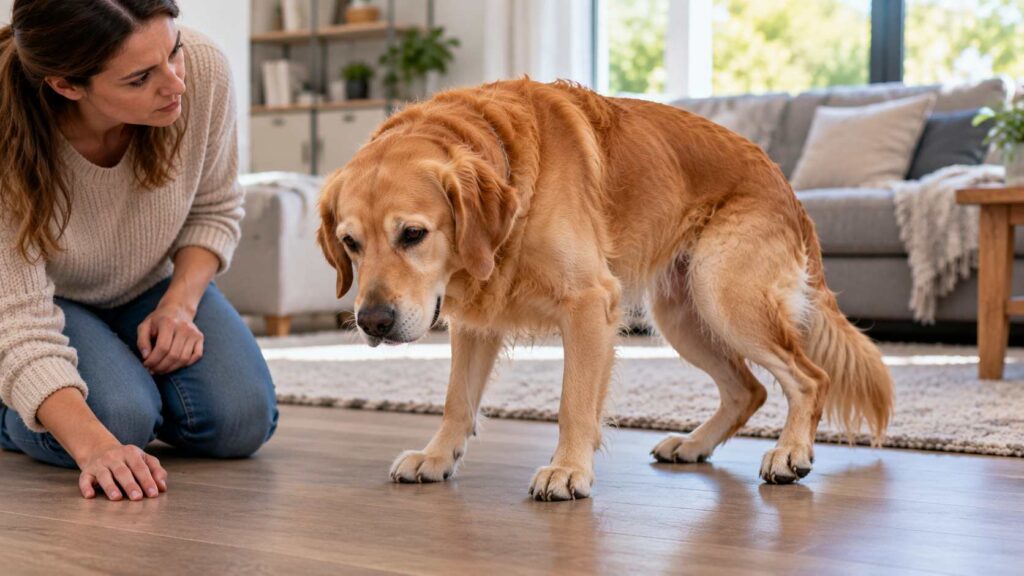
Your dog was trotting around the garden an hour ago. Now their back end wobbles, their legs fold underneath them, or one paw drags along the ground. It’s frightening, especially when the change seems to have come out of nowhere.
What causes sudden hind leg weakness in dogs? Possible causes include spinal cord problems such as intervertebral disc disease (IVDD), spinal strokes, injuries, nerve disorders, tick paralysis, and serious illnesses affecting the whole body. Sometimes, an existing condition becomes noticeably worse.
Sudden hind leg weakness needs prompt veterinary assessment. If your dog cannot stand or walk, is rapidly deteriorating, or has other serious symptoms, seek emergency veterinary care immediately.
This guide explains how to recognise urgent warning signs, protect your dog while arranging help, understand the possible causes, and prepare for the veterinary examination.
First, Decide How Urgent This Is
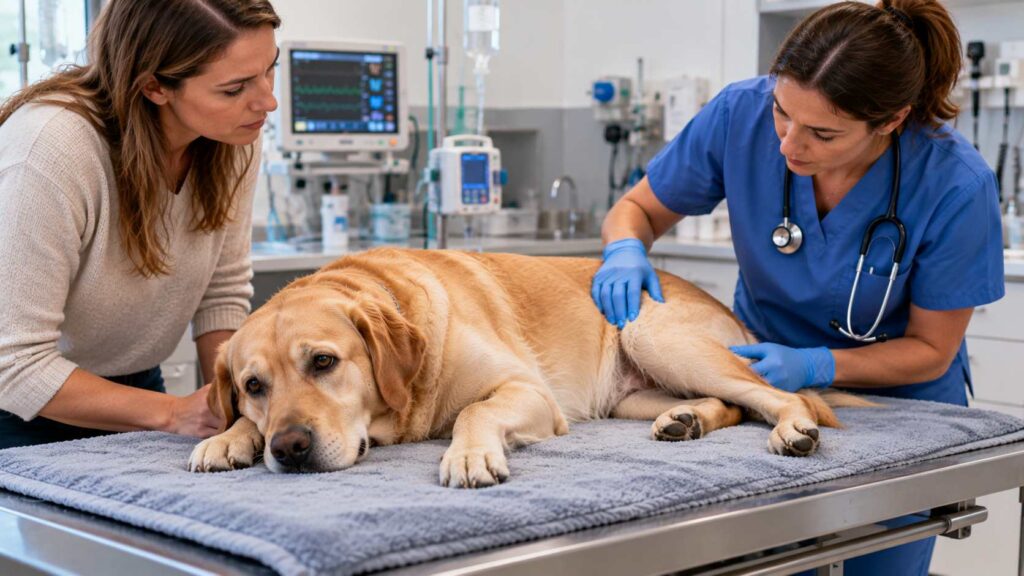
Work out how urgently your dog needs help before trying to identify the cause. You don’t need a diagnosis to recognise a possible emergency.
Go to an Emergency Vet Now if You See Any of These
- Your dog suddenly cannot stand or walk.
- The weakness is getting worse over minutes or hours.
- Your dog appears to have severe neck or back pain.
- There has been a fall, road accident, or suspected spinal injury.
- Your dog has collapsed or is unusually unresponsive.
- Breathing or swallowing becomes difficult.
- Your dog is trying to urinate but cannot pass urine.
- Weakness is spreading towards the front legs.
- Your dog has suddenly lost movement in one or both hind legs.
These signs can indicate serious neurological injury or another life-threatening condition. Contact an emergency veterinary hospital immediately.
If Your Dog Is Still Walking but Something Has Changed
New stumbling, hind legs that occasionally give way, dragging paws, knuckling, or sudden difficulty bearing weight still require prompt attention.
Some dogs with spinal cord disease can walk during the early stages, even when their neurological function is deteriorating.
Contact your veterinarian immediately for advice and arrange an urgent assessment. Do not assume that walking independently means the problem is minor.
Warning: Don’t Wait for Your Dog to Cry
Many owners delay seeking help because their dog isn’t yelping or appears comfortable.
However:
- Serious spinal cord problems can occur without obvious pain.
- A dog that can wag its tail may still have significant neurological damage.
- Some dogs continue eating and behaving normally despite weakness.
- Temporary improvement does not rule out a serious condition.
A lack of crying is not evidence that your dog is safe.
Protect Your Dog’s Back While You Get Help
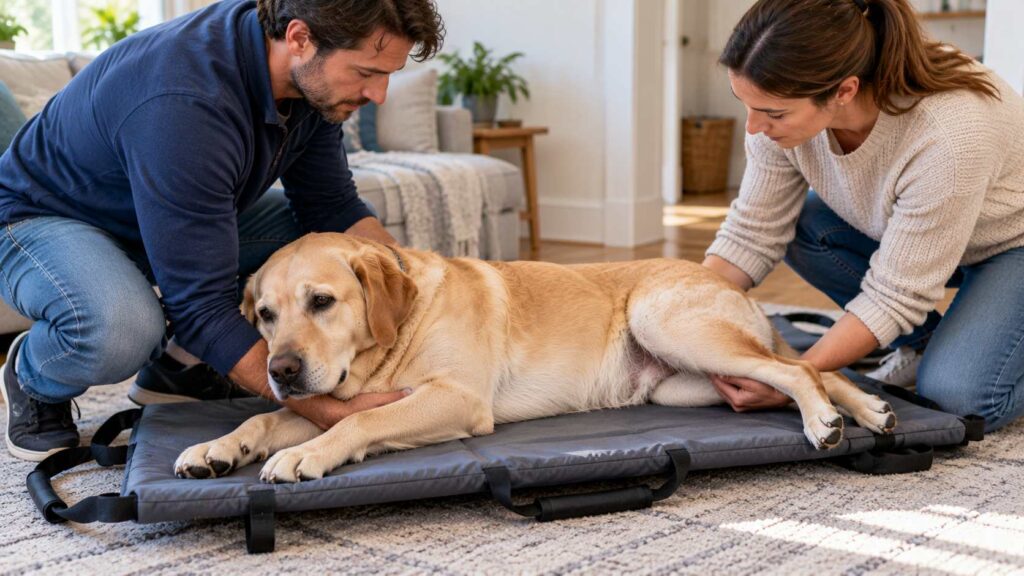
Until the cause is known, avoid unnecessary movement, particularly if a spinal injury is possible.
The goal is to prevent additional injury while arranging veterinary assessment—not to treat the weakness at home.
While You Arrange Care
Use this checklist:
- Call your veterinarian or the nearest emergency hospital.
- Keep your dog in a quiet, confined area.
- Prevent running, jumping, and stair climbing.
- Avoid encouraging repeated attempts to walk.
- Record approximately when the symptoms started.
- Gather information about current medications and existing conditions.
- Follow the clinic’s advice about food and water in case sedation or anaesthesia is needed.
- Arrange safe transport without delaying veterinary care.
Moving a Dog Who Can’t Stand
If your dog cannot walk, support their body carefully rather than allowing their hindquarters to drag.
For a small dog, support the chest and pelvis together, keeping the back as level as reasonably possible.
For a larger dog, ask another person to help. A firm board or appropriately supported stretcher may be useful, particularly when spinal trauma is suspected.
Avoid twisting the body or allowing the spine to sag during lifting.
If your dog has suffered significant trauma, is extremely painful, or cannot be moved safely, ask the emergency clinic for transport instructions.
Quick Tips: Three Priorities
- Minimise movement. Avoid unnecessary walking and handling.
- Arrange veterinary care promptly. Sudden neurological weakness can be time-sensitive.
- Avoid home treatment. Do not give medication, massage the spine, or perform stretching exercises without veterinary instructions.
What “Weak Back Legs” Can Look Like
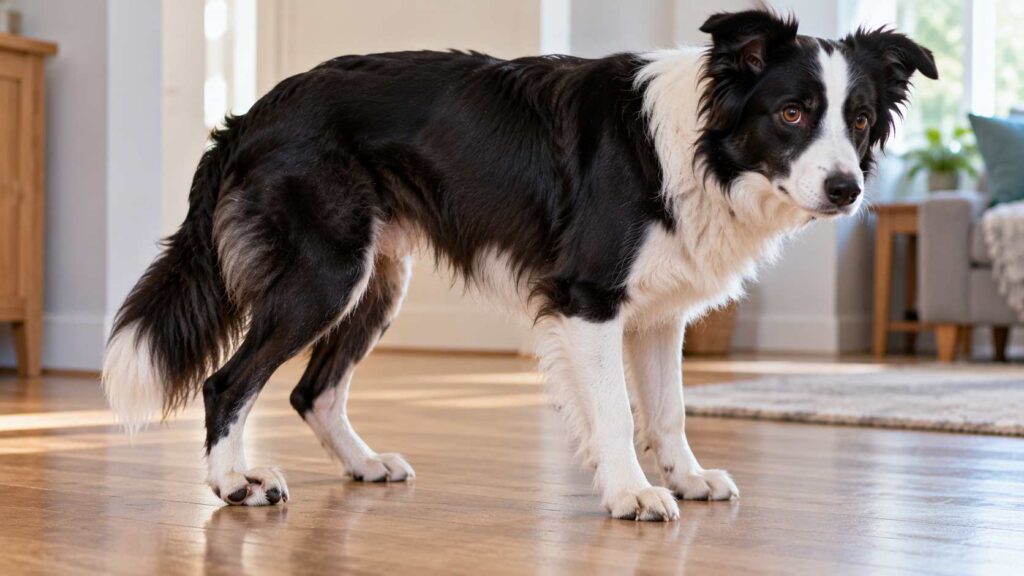
Dogs can appear weak for several different reasons. Some have genuine neurological weakness, while others struggle to walk because of pain, poor coordination, or an illness affecting the entire body.
Describing exactly what you observe can help your veterinarian narrow down the possibilities.
The Legs Move but Can’t Hold Weight
Your dog may struggle to rise, tremble while standing, or sink towards the floor when trying to walk.
Possible explanations include:
- Neurological weakness.
- Severe joint or muscle pain.
- Orthopaedic injury.
- Generalised weakness from systemic illness.
A dog that can move its legs but cannot support its weight still needs urgent assessment.
The Paws Drag, Cross, or Fold Under
Watch for:
- Scuffed toenails.
- Hind feet crossing during walking.
- Dragging one or both paws.
- Walking on the top of a paw, known as knuckling.
- Unsteady or poorly coordinated movements.
These signs may indicate a problem with the nervous system, including the spinal cord or peripheral nerves.
Do not repeatedly manipulate your dog’s paws to test their reactions. Leave neurological testing to your veterinarian.
One Back Leg Is Worse Than the Other
Uneven weakness can occur with an orthopaedic injury, peripheral nerve damage, or spinal cord disease.
Likewise, weakness affecting both hind legs does not automatically mean the problem is spinal.
The pattern provides clues, but it cannot confirm a diagnosis.
Comparison Table: Similar Symptoms, Different Possible Problems
| What you notice | What it might suggest | What to remember |
|---|---|---|
| One leg held off the ground | Painful orthopaedic injury | Neurological causes are still possible |
| Both hind legs wobble | Neurological or generalised weakness | Requires veterinary assessment |
| Paw knuckling or dragging | Possible neurological dysfunction | Do not perform home neurological tests |
| Sudden inability to stand | Serious neurological, painful, or systemic condition | Seek emergency care |
| Whole-body collapse | Cardiovascular, metabolic, or other systemic emergency | The problem may not originate in the legs |
These patterns overlap. They are useful observations, not reliable home diagnostic tests.
The Main Causes, Grouped by What’s Going On
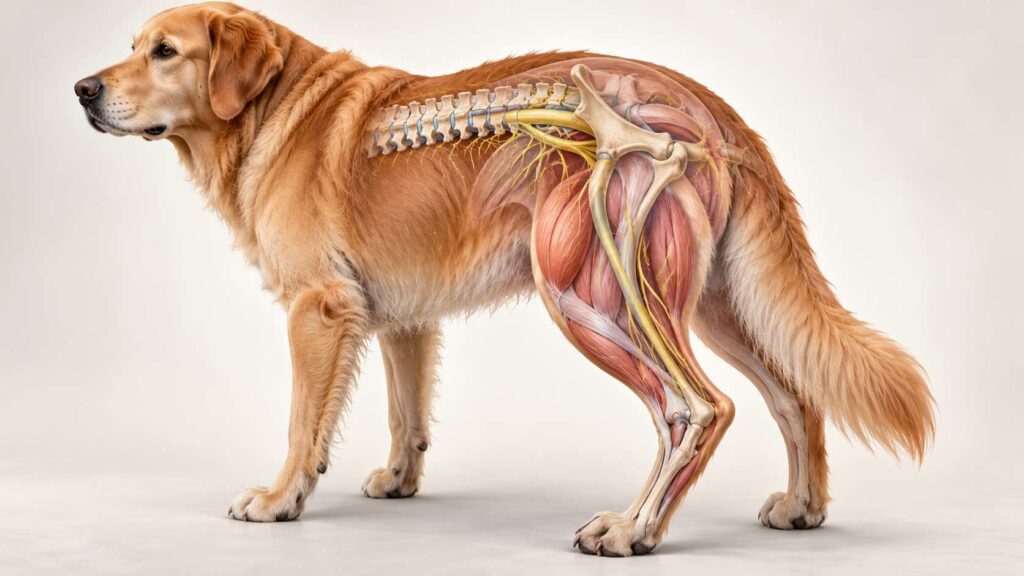
When the Spinal Cord Is Being Compressed: IVDD and Acute Disc Problems
Between the vertebrae are intervertebral discs that help cushion the spine.
With intervertebral disc disease (IVDD), disc material may protrude or suddenly extrude, compressing or injuring the spinal cord.
Depending on the location and severity, signs can include:
- Back or neck pain.
- Unsteady walking.
- Weakness in the hind legs.
- Paw dragging or knuckling.
- Partial or complete paralysis.
- Changes in bladder function.
Symptoms may develop suddenly or worsen over time.
Dachshunds, French Bulldogs, Corgis, and certain other breeds have an increased predisposition to some forms of disc disease. However, IVDD can affect dogs of many breeds.
The American College of Veterinary Surgeons identifies neurological severity as an important consideration in treatment and prognosis.
Why it matters: Spinal cord compression may require urgent intervention. Waiting to see whether the dog improves can delay appropriate treatment.
When the Spinal Cord Is Injured Without Ongoing Compression: FCE and ANNPE
Two conditions can cause sudden spinal cord dysfunction without persistent compression.
Fibrocartilaginous embolism (FCE) is sometimes called a spinal stroke. It occurs when material believed to originate from an intervertebral disc obstructs a blood vessel supplying part of the spinal cord.
Acute non-compressive nucleus pulposus extrusion (ANNPE) occurs when disc material suddenly escapes and impacts the spinal cord, causing injury without substantial ongoing compression.
Both conditions may develop abruptly, sometimes during exercise or play.
Possible signs include:
- Sudden weakness or paralysis.
- One hind leg being more affected than the other.
- Brief pain or vocalisation at the beginning.
- Limited ongoing spinal pain.
However, these findings are not exclusive to either condition.
According to VCA Animal Hospitals, fibrocartilaginous embolism can cause sudden weakness or paralysis, sometimes affecting one side more severely than the other. Initial pain may fade quickly, even when neurological problems remain.
Veterinarians often use neurological examination findings and MRI to distinguish these conditions from compressive disc disease and other spinal problems.
When an Injury Is the Problem
Not every dog with sudden hind leg weakness has a neurological disorder.
Possible injuries include:
- Spinal fractures or instability.
- Pelvic fractures.
- Leg fractures.
- Cranial cruciate ligament injuries.
- Severe joint or soft-tissue injuries.
A dog experiencing intense pain may refuse to bear weight, making the affected leg appear weak.
Sometimes an injury happens without the owner witnessing it.
Veterinary examination is needed to distinguish painful movement from genuine neurological weakness.
When Weakness Spreads Beyond the Back Legs
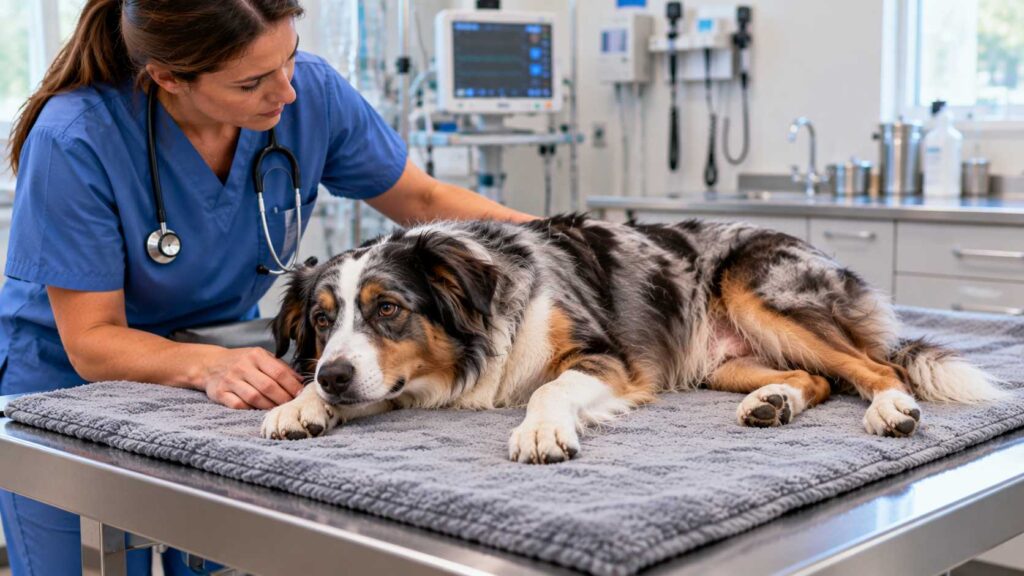
Some conditions affect nerves or muscles throughout the body.
The weakness may initially be most noticeable in the hind legs before progressing.
Tick paralysis
Certain ticks produce toxins that interfere with normal nerve function.
In Australia, paralysis ticks are a particular concern in affected regions, especially parts of the eastern coastal area.
Signs may include:
- Progressive limb weakness.
- Changes in voice.
- Difficulty swallowing.
- Breathing difficulties.
Australian tick paralysis is a veterinary emergency. Affected dogs may continue deteriorating even after a tick has been removed.
Tick-associated paralysis also occurs in parts of North America, although the responsible tick species and clinical circumstances differ.
Acute polyradiculoneuritis
This condition affects peripheral nerves and can cause rapidly progressing weakness.
Some affected dogs develop weakness in all four limbs, and severe cases may require intensive supportive care.
Toxins and other neuromuscular disorders
Certain toxins and disorders affecting nerve-to-muscle communication can also produce sudden or progressive weakness.
If you suspect exposure to a toxin, tell your veterinarian what your dog may have encountered and approximately when.
When the Whole Body Is Unwell
Sometimes the hind legs appear weak because the dog is experiencing a more widespread illness.
Possible causes include:
- Severe hypoglycaemia (low blood sugar).
- Significant electrolyte abnormalities.
- Shock or impaired circulation.
- Serious systemic illness.
- Certain metabolic disorders.
For example, a dog experiencing severe hypoglycaemia may become shaky, weak, disoriented, or unable to stand.
These conditions may require emergency stabilisation and blood testing rather than treatment directed at the legs.
When a Slow Problem Suddenly Becomes Noticeable
Some diseases typically develop gradually but can become more noticeable after a sudden deterioration.
Examples include:
- Degenerative myelopathy: Usually causes progressive neurological weakness rather than sudden paralysis.
- Arthritis: Commonly produces chronic pain and stiffness, although acute painful flare-ups can occur.
- Lumbosacral disease: May cause pain, weakness, or nerve dysfunction.
- Spinal tumours: Can produce progressive signs or occasionally sudden deterioration.
- Discospondylitis: Infection involving vertebrae and adjacent intervertebral discs that can cause pain and sometimes neurological deficits.
An older dog may also develop an entirely new acute condition unrelated to existing arthritis or stiffness.
Ageing alone is not a diagnosis. Sudden inability to walk should never automatically be dismissed as old age.
Why Pain Is Not a Reliable Severity Test
It’s natural to assume that a dog in severe pain has a serious problem, while a quiet dog is probably fine. Unfortunately, spinal cord injuries don’t always work that way.
A dog can have significant neurological damage with little or no obvious pain. Another may be extremely uncomfortable but still able to walk.
Veterinarians also distinguish between two important responses:
- Withdrawal reflex: The leg pulls away automatically when stimulated. This movement can occur without conscious awareness of pain.
- Conscious pain perception: The dog consciously recognises a painful stimulus, which requires functioning pathways between the affected area and the brain.
In dogs with severe spinal cord injuries, assessing conscious pain perception can help veterinarians evaluate neurological severity and prognosis.
Never try to test deep pain perception at home. Pinching toes or applying painful pressure can injure your dog, and a leg pulling away does not necessarily mean the dog consciously feels pain.
The safest approach is to let a trained veterinarian perform the neurological examination.
What Your Vet Will Want to Know
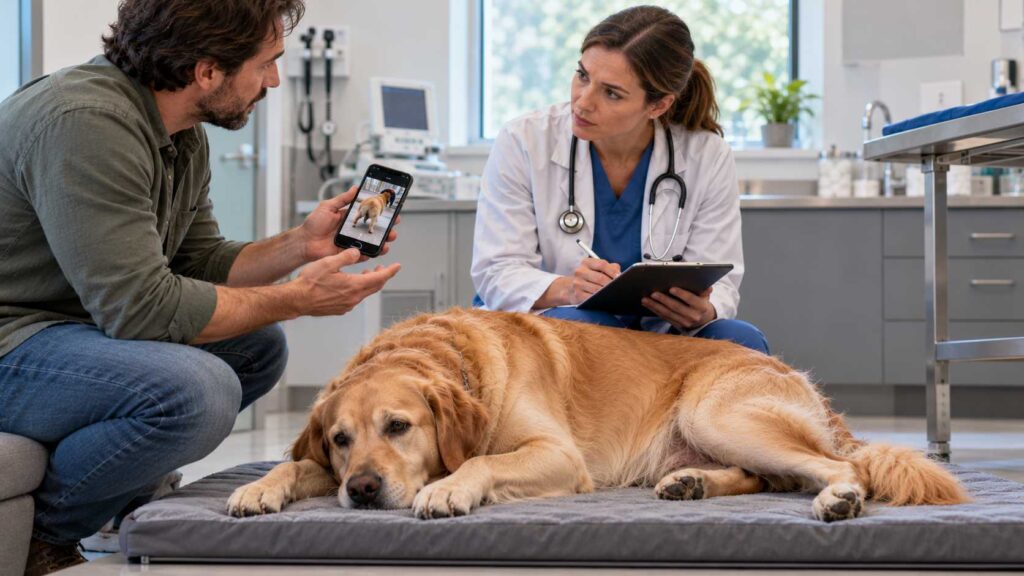
A clear history can help your veterinarian identify possible causes and decide which investigations are most appropriate.
You don’t need medical terminology. Simple observations about what changed and when are often the most useful.
The Timeline Matters
Try to answer these questions:
- When was your dog last walking normally?
- Did the weakness appear within minutes, hours, or several days?
- Is it improving, staying the same, or getting worse?
- Did it begin after jumping, running, rough play, or a fall?
- Was your dog already experiencing stiffness, pain, or gradual mobility problems?
The pattern matters. For example, weakness that develops abruptly during exercise may raise different concerns from difficulty walking that has gradually worsened over several months.
However, the timing alone cannot confirm a diagnosis.
Information to Bring
Before the appointment, gather the following details:
- Approximately when the weakness started and how it has changed.
- Whether one or both hind legs are affected.
- Whether the front legs are also becoming weak.
- Any signs of pain, trembling, or unusual behaviour.
- Changes in urination or bowel movements.
- Current medications, supplements, and existing health conditions.
- Recent injuries or possible exposure to ticks or toxins.
- A short video of the walking problem, if one was recorded safely.
Quick tip: Don’t make your dog walk just to record a video. If spinal injury is possible, unnecessary movement could worsen the situation. Your veterinarian can assess mobility safely during the examination.
How the Cause Gets Narrowed Down
The Exam Comes Before Any Scan
Your veterinarian will usually begin by checking your dog’s overall condition, including breathing, circulation, pain, and other signs of illness.
An orthopaedic examination helps identify problems involving bones, joints, muscles, and ligaments.
A neurological examination may assess:
- Posture and coordination.
- Walking ability, if movement is safe.
- Spinal reflexes.
- Paw placement and awareness of limb position.
- Muscle tone and strength.
- Spinal pain.
- Bladder function.
- Conscious pain perception, when clinically indicated.
These findings help determine whether the weakness originates in the nervous system, the musculoskeletal system, or elsewhere in the body.
They can also help the veterinarian identify which part of the nervous system may be affected.
What Tests Can and Can’t Tell You
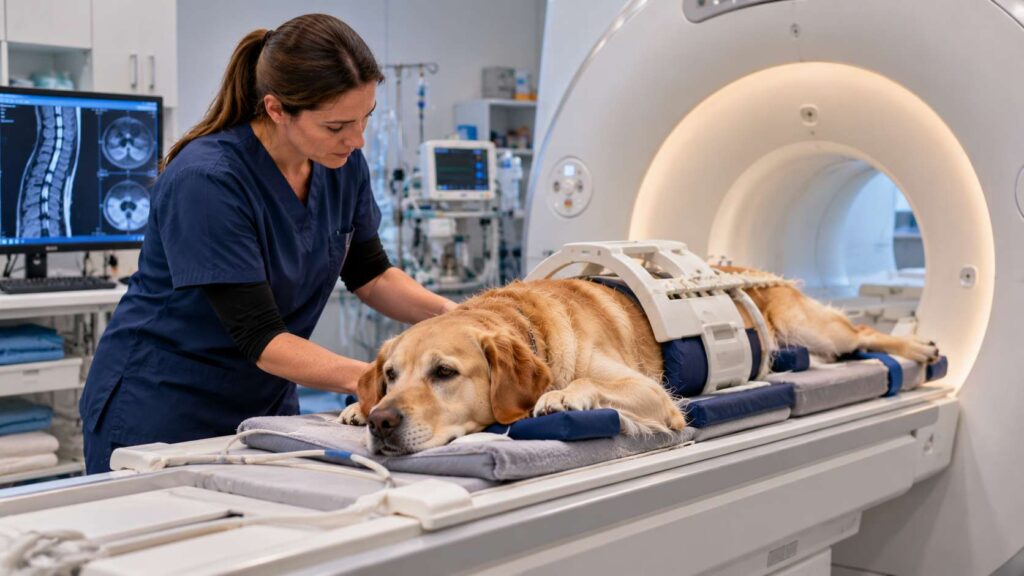
Not every dog needs every test. Your veterinarian will select investigations based on the examination findings and suspected causes.
| Diagnostic test | What it can help identify | Important limitation |
|---|---|---|
| Blood tests and urinalysis | Metabolic abnormalities, electrolyte problems, and certain systemic illnesses | Cannot rule out spinal cord injury |
| X-rays | Some fractures, dislocations, and skeletal abnormalities | Do not show the spinal cord clearly and cannot reliably exclude disc compression |
| CT scan | Detailed bone abnormalities and certain spinal or disc problems | Soft-tissue detail is generally more limited than MRI |
| MRI scan | Spinal cord injury, disc disease, and surrounding soft-tissue abnormalities | Usually requires general anaesthesia and may involve specialist referral |
| Cerebrospinal fluid (CSF) analysis | Evidence that may support investigation of certain inflammatory or infectious conditions | Not appropriate or necessary for every dog |
MRI is particularly valuable when a spinal cord disorder is suspected because it provides detailed images of the spinal cord and surrounding structures.
However, a normal or inconclusive X-ray does not mean the spinal cord is healthy. Further investigation may still be necessary.
When a Specialist May Come In
Your veterinarian may recommend referral to a veterinary neurologist or surgeon if:
- Severe spinal cord disease is suspected.
- Advanced imaging is needed.
- Surgery may be appropriate.
- The diagnosis remains uncertain.
- Your dog requires specialist neurological care.
Referral doesn’t automatically mean surgery. Sometimes the main benefit is obtaining a more precise diagnosis and an appropriate treatment plan.
What Happens After Diagnosis
There is no single treatment for sudden hind leg weakness in dogs. The right approach depends on the underlying condition, neurological severity, and your dog’s overall health.
Stabilisation Comes First
If your dog is seriously unwell, the veterinary team’s first priority is to stabilise them.
Depending on the problem, treatment may involve:
- Veterinary-prescribed pain relief.
- Breathing or circulatory support.
- Treatment for low blood sugar or electrolyte abnormalities.
- Careful handling and monitoring.
- Hospitalisation when necessary.
Some dogs need emergency treatment before advanced imaging can be performed.
Medication, Rest, or Surgery
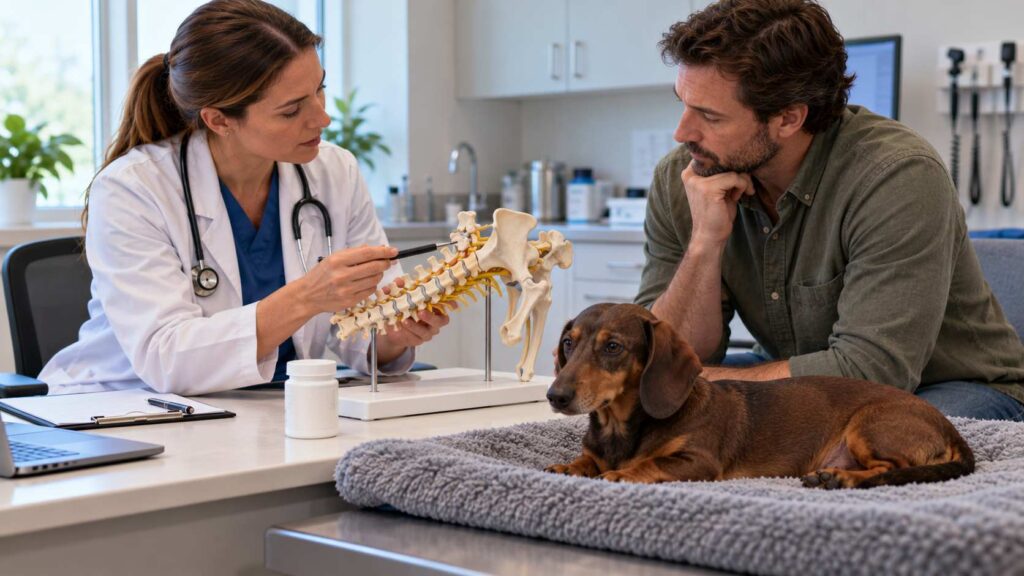
For selected conditions, veterinarians may recommend prescribed medication and strict activity restriction.
Other dogs, particularly those with significant spinal cord compression from IVDD, may need surgery to relieve pressure on the spinal cord.
Treatment also differs for other causes:
- FCE and ANNPE: Usually managed with supportive care and rehabilitation once the diagnosis is established.
- Tick paralysis: Requires urgent veterinary treatment, which may include tick antitoxin where appropriate and intensive supportive care.
- Spinal infections: May require targeted antimicrobial treatment and additional management.
- Metabolic illness: Requires treatment of the underlying abnormality.
Not every dog needs surgery, but rest alone is not a safe treatment plan until a veterinarian has identified the likely cause and assessed its severity.
Rehabilitation: When It Helps and When It Doesn’t
Once your dog has been diagnosed and is medically stable, veterinary rehabilitation may support recovery.
Depending on the condition, a rehabilitation programme might include:
- Assisted standing and walking.
- Controlled range-of-motion exercises.
- Balance and coordination training.
- Gradual strengthening.
- Carefully planned activity progression.
The timing matters. Exercises that are appropriate during recovery may be unsafe immediately after a suspected spinal injury.
Avoid starting massage, stretching, or strengthening exercises without veterinary guidance.
Be cautious about supplements and alternative therapies advertised as quick fixes. Evidence for many of these treatments is limited, and they should never replace necessary veterinary care.
Questions to Ask About Cost
Veterinary costs can vary considerably between clinics and countries, including the United States, United Kingdom, Canada, and Australia.
It’s reasonable to request an estimate covering:
- Emergency consultation and initial assessment.
- Blood tests and other investigations.
- MRI or CT imaging.
- Specialist referral.
- Hospitalisation.
- Surgery, if recommended.
- Rehabilitation and follow-up appointments.
Ask which tests are essential, what each investigation is intended to establish, and whether the proposed treatment plan may change after the results.
If you have pet insurance, contact your insurer early to check coverage, referral requirements, and any applicable limits.
Recovery Is About More Than Walking Again
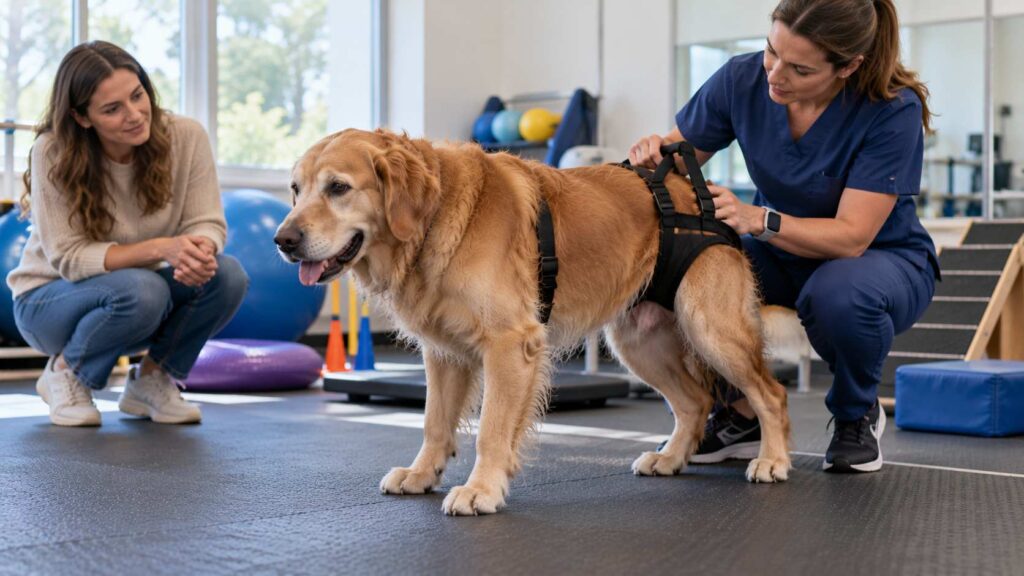
Recovery looks different for every dog.
For some, it means returning to independent walking with only mild coordination difficulties. For others, progress may involve standing with assistance, regaining bladder control, or living comfortably with ongoing mobility support.
What Influences Recovery?
Several factors can affect the outlook:
- The underlying diagnosis.
- The severity of neurological dysfunction.
- Whether the condition is stable or progressing.
- The presence of spinal cord compression.
- How promptly appropriate treatment is provided.
- Complications affecting recovery.
- The dog’s response to rehabilitation.
For certain severe spinal cord injuries, conscious pain perception is an important prognostic finding assessed by veterinarians.
However, no single sign guarantees recovery or proves that recovery is impossible.
A reliable prognosis requires a diagnosis and an assessment of neurological severity. Even then, the veterinary team may need to monitor progress before giving a clearer outlook.
Long-Term Support at Home
Some dogs need temporary assistance during recovery. Others benefit from longer-term changes to their environment.
Depending on your veterinarian’s recommendations, useful adjustments may include:
- Non-slip flooring: Rugs or mats can improve traction on slippery surfaces.
- Supportive bedding: Comfortable bedding helps dogs rest without unnecessary pressure.
- Appropriate harnesses: A veterinary-approved support harness may make assisted movement safer.
- Skin care: Dogs with limited mobility may need regular repositioning and checks for pressure sores.
- Toileting assistance: Some dogs need help managing bladder or bowel function under veterinary guidance.
- Mobility aids: Wheelchairs or other devices may improve mobility for selected dogs after proper assessment.
Never attempt to express your dog’s bladder without veterinary instruction. Incorrect technique can cause injury or leave the bladder inadequately emptied.
Improvement Doesn’t Always Mean the Problem Is Over
A dog that starts walking again may still have neurological deficits or an underlying condition that requires monitoring.
Some spinal disorders can recur, while others leave lasting weakness or coordination difficulties.
Follow-up examinations help your veterinarian assess recovery, adjust rehabilitation, and decide when normal activities can safely resume.
Even if your dog appears much better, avoid returning to running, jumping, or vigorous exercise until your veterinarian approves.
The goal isn’t simply to get your dog walking again. It’s to help them recover as safely and comfortably as possible while protecting their long-term quality of life.
Mistakes That Can Make Things Worse

When your dog’s back legs suddenly become weak, it’s tempting to try something at home before calling the vet. Unfortunately, a few common mistakes can make an already serious problem worse.
Blaming age. An older dog with arthritis who suddenly can’t stand may have developed a new spinal, neurological, or medical problem. Chronic stiffness doesn’t explain every sudden loss of mobility.
Testing the legs yourself. Repeatedly encouraging your dog to walk, pinching their toes, forcing their paws into position, or stretching their back can cause pain or worsen an existing injury. These home tests cannot reliably identify the problem.
Treating before you know the cause. Human painkillers such as ibuprofen and naproxen can be toxic to dogs. Leftover prescriptions, unsupervised exercises, supplements marketed as emergency treatments, and spinal massage may also cause harm or delay appropriate care.
Quick Tips: What to Avoid
- No stairs or jumping until your veterinarian advises otherwise.
- No forced walking tests to check whether the weakness is improving.
- No human pain medication unless specifically prescribed by your veterinarian.
- No spinal manipulation, massage, or stretching before the cause is assessed.
- No waiting for your dog to cry before seeking help.
The safest approach is to minimise unnecessary movement and arrange veterinary assessment promptly.
Four Hypothetical Situations
The following examples illustrate why similar symptoms can have different causes. They are hypothetical scenarios, not actual veterinary case studies or diagnoses.
A Dachshund Becomes Weak After Jumping Off the Sofa
A Dachshund jumps down from the sofa and suddenly struggles to support its hindquarters.
Because Dachshunds are predisposed to certain forms of intervertebral disc disease (IVDD), a spinal problem is an important concern.
However, the breed and the jump don’t prove that IVDD is responsible.
What matters: Restrict movement, support the dog’s body during transport, and seek urgent veterinary assessment.
A Large Dog Drags One Back Paw During Play
A previously healthy dog suddenly begins dragging a hind paw while running.
Conditions such as fibrocartilaginous embolism (FCE) or acute non-compressive nucleus pulposus extrusion (ANNPE) may be considered, alongside other spinal and nerve disorders.
The weakness may affect one side more than the other, and obvious pain may be absent.
What matters: Sudden, uneven weakness is useful information for the veterinarian, but it isn’t enough to identify the cause.
An Older Dog With Arthritis Suddenly Can’t Stand
An older dog has experienced stiffness for months but suddenly cannot rise from its bed.
An arthritis flare-up could contribute to the difficulty, but a new spinal injury, neurological condition, or systemic illness may also be responsible.
What matters: Don’t assume that existing arthritis explains a sudden loss of mobility. A dog that cannot stand needs emergency veterinary assessment.
A Dog in an Australian Tick-Risk Area Develops Progressive Weakness
A dog living in an area where paralysis ticks occur becomes increasingly unsteady. Later, its bark changes and swallowing becomes difficult.
Tick paralysis is an important possibility, although other serious conditions can cause similar signs.
What matters: Progressive weakness with swallowing or breathing difficulties is an emergency. Seek immediate veterinary care, even if a tick has already been removed.
Key Takeaways
- Sudden hind leg weakness is a symptom, not a diagnosis. Possible causes include spinal cord disease, injuries, nerve disorders, tick paralysis, and systemic illness.
- Seek emergency care if your dog cannot stand, is rapidly deteriorating, has severe pain, struggles to breathe or swallow, or cannot urinate.
- No obvious pain doesn’t mean the problem is mild. A wagging tail also doesn’t rule out spinal cord injury.
- Minimise unnecessary movement while arranging veterinary care. Avoid human medications and home neurological tests.
- Veterinary examination guides the diagnosis. Blood tests, X-rays, CT, or MRI may be recommended depending on the findings.
- Recovery depends on the underlying cause and severity. Rehabilitation should begin only when your veterinarian considers it appropriate.
Frequently Asked Questions
1. Can Sudden Hind Leg Weakness Go Away on Its Own?
Sometimes symptoms improve, but that doesn’t mean the underlying problem has resolved.
Certain spinal conditions can cause temporary improvement followed by further deterioration. Even if your dog begins walking normally again, contact your veterinarian promptly for advice and assessment.
2. Can a Dog Recover From Sudden Hind Leg Paralysis Without Surgery?
Yes, depending on the diagnosis and severity.
Conditions such as FCE and ANNPE are generally managed with supportive care and rehabilitation rather than surgery. However, some dogs with significant spinal cord compression from IVDD may require an operation.
Your veterinarian will assess neurological function and recommend treatment based on the findings.
3. Can a Dog Still Pee Normally With a Spinal Cord Injury?
Yes. Some dogs retain normal bladder control, while others develop urinary retention or incontinence.
A dog may also dribble urine because the bladder is overfilled rather than emptying normally.
If your dog is trying to urinate but cannot pass urine, seek emergency veterinary care. Never attempt bladder expression without veterinary instruction.
4. Can X-Rays Find the Cause?
X-rays can reveal certain fractures, dislocations, and abnormalities involving the bones of the spine.
However, they don’t show the spinal cord clearly and cannot reliably rule out spinal cord compression or injury.
Your veterinarian may recommend MRI or CT when more detailed imaging is necessary.
5. Should I Let My Dog Walk if Their Back Legs Seem Weak?
Avoid unnecessary walking until your veterinarian has assessed the problem.
If a spinal injury is possible, repeated walking attempts may be unsafe.
Contact your veterinarian for instructions about transport and toileting. Short, supported toilet breaks may be appropriate for some dogs, but only when the veterinary team considers them safe.
6. Is Sudden Hind Leg Weakness More Dangerous in Older Dogs?
Not necessarily. The seriousness depends on the cause rather than age alone.
However, older dogs may have additional medical conditions that affect diagnosis, treatment, or recovery.
Sudden weakness should never be dismissed as a normal part of ageing.
7. Can Arthritis Make a Dog’s Back Legs Suddenly Give Out?
Severe arthritis pain can make standing or walking difficult, and painful flare-ups may appear sudden.
However, arthritis doesn’t explain every episode of hind leg weakness. A dog with arthritis can also develop an unrelated neurological injury or systemic illness.
If your dog suddenly collapses or cannot stand, seek emergency veterinary assessment rather than assuming arthritis is responsible.
The Most Useful Next Step Isn’t Another Home Test
If your dog’s back legs have suddenly become weak, the priority isn’t to identify the exact cause yourself. It’s to make sure your dog receives appropriate veterinary care.
Call your veterinarian or the nearest emergency hospital. Explain when the weakness started, whether it’s getting worse, and whether your dog can stand, walk, or urinate normally.
Keep your dog calm, minimise unnecessary movement, and ask the veterinary team how to transport them safely. Bring details of existing medical conditions and current medications.
Some causes of sudden hind leg weakness respond well to treatment, while others require urgent intervention. The outcome depends on the underlying condition and the extent of any injury.
You can’t predict recovery from the symptoms alone, but prompt veterinary assessment gives your dog the best opportunity to receive the right treatment without unnecessary delay.
#. Related Articles:
1. How Much Exercise Should My Pet Get?