Bringing a new puppy home is one of the best feelings in the world — until you step on a warm, wet surprise on the kitchen floor at 7am.
Sound familiar? You’re not alone.
Potty training is the first big challenge every dog owner faces, and the number one question is always: how long is this actually going to take? The honest answer is: it depends. But the good news is, with the right approach, most puppies get there faster than you’d expect.
This guide gives you a real, no-fluff timeline, explains what slows things down, and walks you through exactly what to do so you’re not cleaning up accidents for months on end.
So, How Long Does It Take to Potty Train a Puppy?
For most puppies, basic potty training takes 4 to 8 weeks with consistent effort. Full reliability — where your pup genuinely understands and holds it — typically happens somewhere between 4 to 6 months of age.
That said, some puppies crack it in 2 weeks, and others take closer to a year. Neither means you’re doing something wrong (most of the time).
Here’s a rough breakdown of what to expect at each stage:
8–10 Weeks Old: Pure Survival Mode
At this age, a puppy’s bladder is tiny and their muscle control is almost non-existent. They genuinely cannot hold it for more than 30–60 minutes while awake. Don’t get frustrated — their body just isn’t ready yet.
Your job right now is to take them outside constantly and reward every single success. You’re building a habit, not expecting perfection.
10–16 Weeks Old: The Learning Window
This is when the magic starts happening. Puppies begin to understand the connection between going outside and getting praised or rewarded. You’ll see fewer accidents if your routine is solid.
They can now hold it for roughly 1–2 hours during the day. Nighttime is still a challenge, and that’s completely normal.
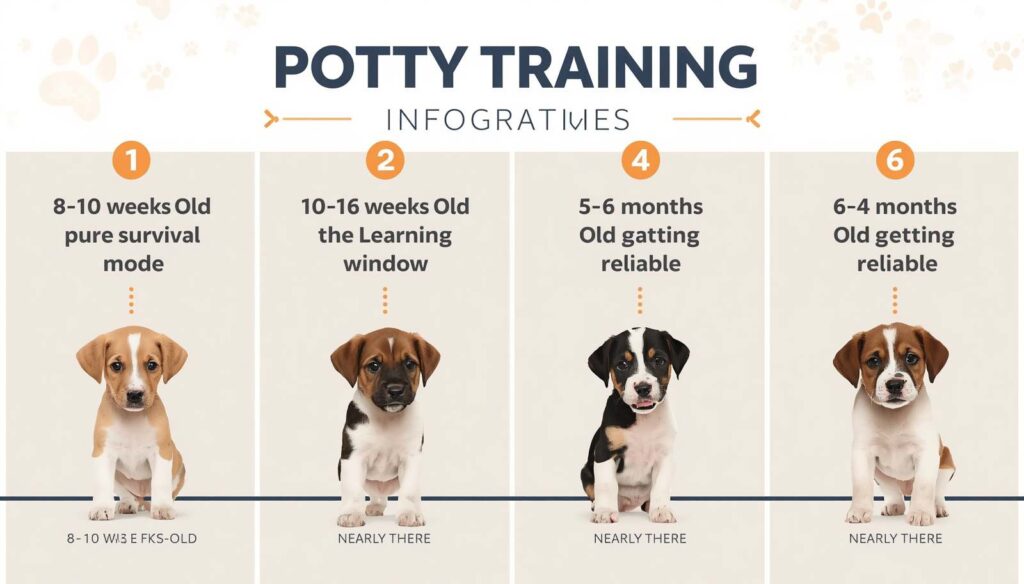
4–6 Months Old: Getting Reliable
Most puppies hit a real turning point here. They start signalling when they need to go (sniffing, circling, going to the door), and accidents become occasional rather than constant.
This is also the stage where some puppies have a “regression” — they’ll suddenly start having accidents again, especially if something in the home has changed. Don’t panic. Just go back to basics.
6–12 Months Old: Nearly There
By this point, the majority of puppies are reliably trained. A few might still have the odd accident overnight or when overly excited, but that’s not unusual and will fade.
Why Some Puppies Take Longer — Honestly
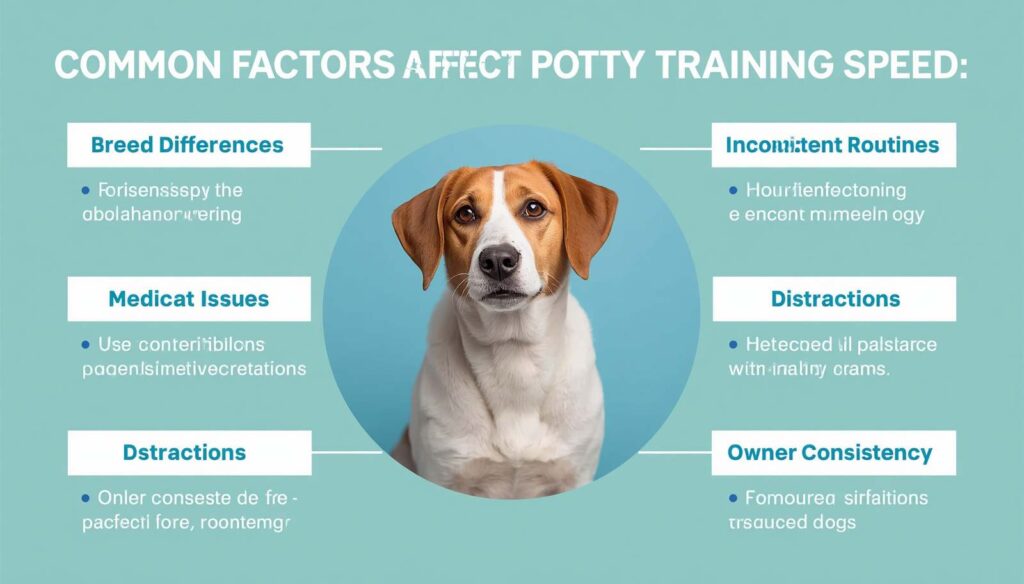
If your puppy seems to be taking forever to get it, here are the most common reasons:
Breed and size matter more than people think. Smaller breeds like Chihuahuas, Dachshunds, and Shih Tzus genuinely have smaller bladders. They need more frequent trips outside and can take longer to be fully reliable. This isn’t a training failure — it’s just biology.
Inconsistency is the number one training killer. If you’re taking your pup out every hour on weekdays but letting things slide on weekends, they’re getting mixed signals. Puppies learn through repetition. Break the routine and you reset a lot of the progress.
Where your puppy came from makes a difference. Puppies that spent their early weeks in a cage at a pet shop or were left in an unsanitary environment sometimes struggle more. They’ve already learned that it’s okay to go where they sleep — and unlearning that takes time and patience.
Diet affects everything. A puppy eating low-quality food or going through a diet change will have unpredictable bowel movements. Feeding at set times (rather than leaving food out all day) gives you much more control over when they’ll need to go.
A Simple Daily Routine That Actually Works
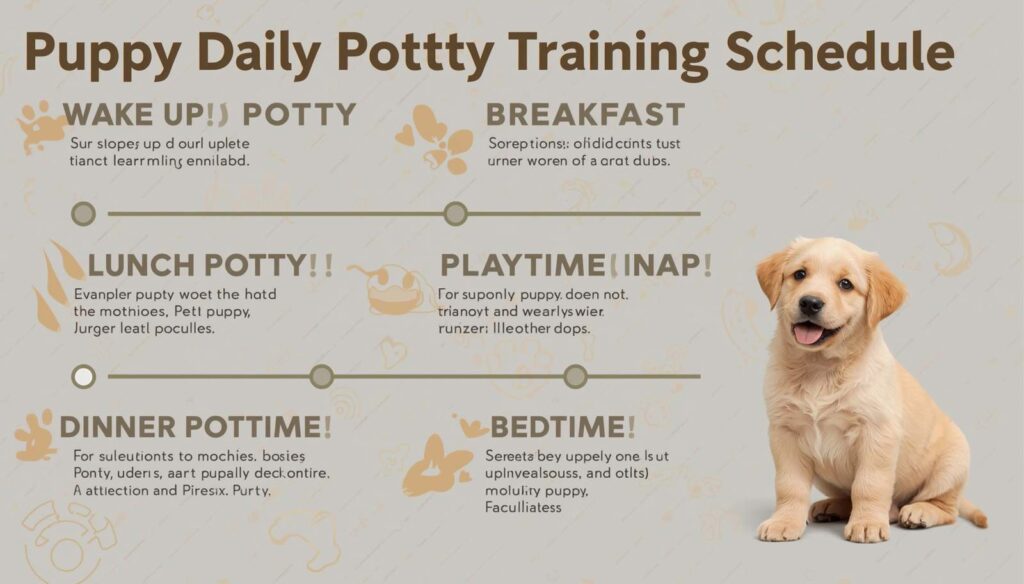
You don’t need a complicated system. You just need consistency. Here’s what a solid potty training day looks like:
- First thing in the morning — take them outside before anything else, even before you make coffee
- After every meal — puppies almost always need to go within 15–20 minutes of eating
- After naps — even a 20-minute snooze counts
- After playtime — excitement triggers the bladder
- Before bed — the last trip of the day
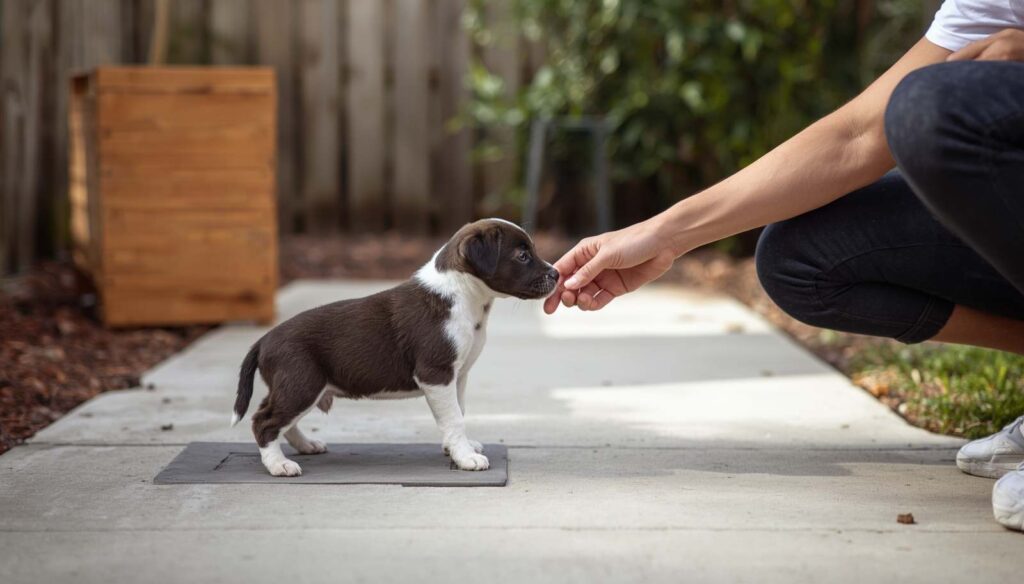
And here’s the bit most people overlook: always go to the same spot outside. The familiar smell helps trigger the right behaviour faster than you’d expect.
What to Do When They Get It Right (and Wrong)
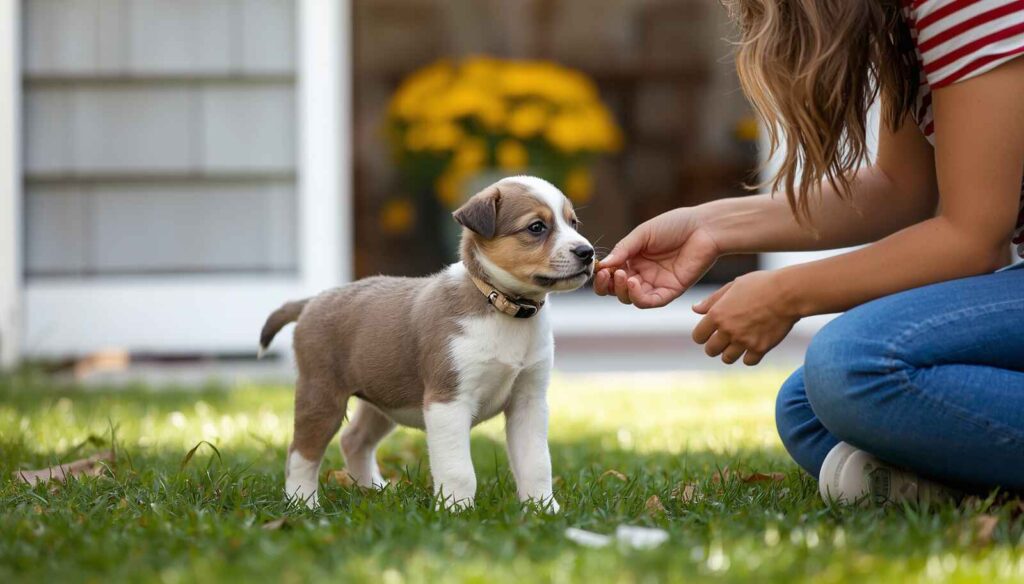
When they go outside: Praise them immediately and enthusiastically. Don’t wait until you’re back inside — the reward needs to happen within seconds of the behaviour. A small treat works brilliantly here.
When they have an accident inside: Say nothing, do nothing reactive. Calmly clean it up using an enzymatic cleaner (this is important — regular cleaning products don’t remove the scent properly, and your puppy will keep returning to the same spot).
Never rub their nose in it. Never shout. It doesn’t teach them anything useful and will only make them anxious around you.
Nighttime Potty Training: What to Expect
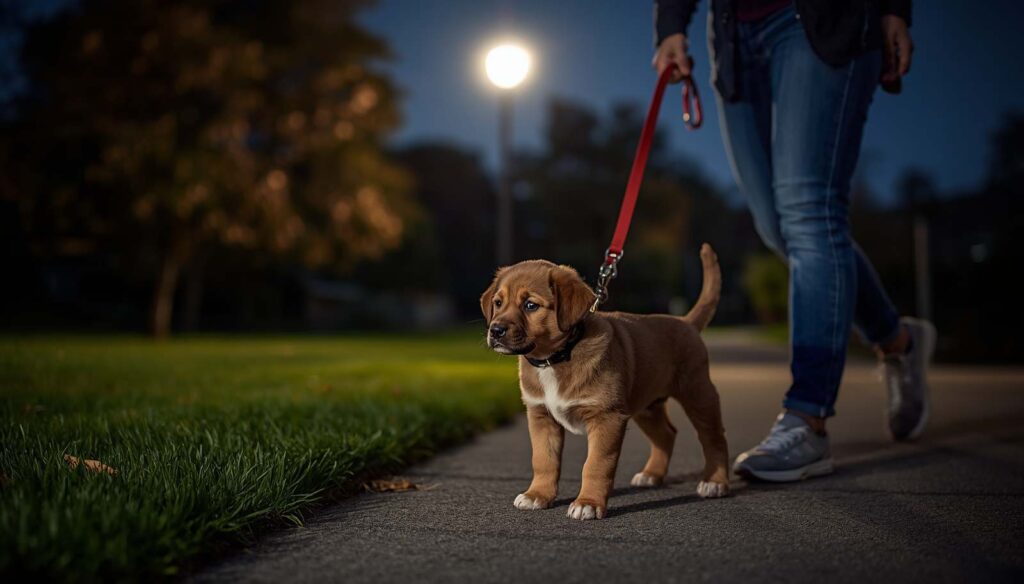
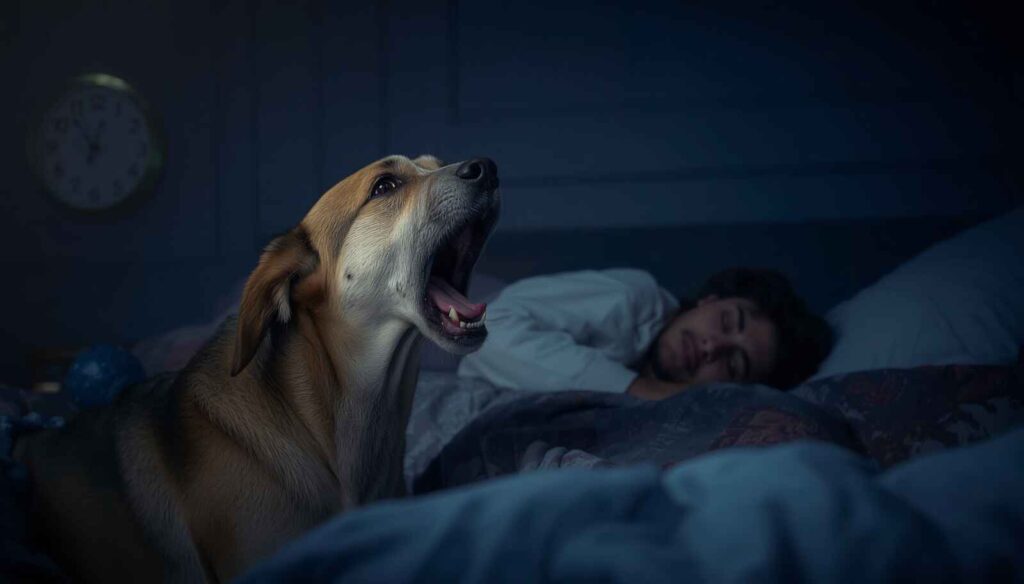
Night-time accidents are normal well into the 4–6 month stage. Most puppies can’t physically hold it through an 8-hour night until they’re around 3–4 months old, and some take longer.
A few things that help:
- Remove water 1.5–2 hours before bedtime (check with your vet first if your puppy is very young)
- Set an alarm to take them out once in the middle of the night during early weeks
- Keep a crate near your bed so you can hear them if they stir
- Make the midnight trip boring — no play, no fuss, just outside and straight back to bed
Using a Crate: The Underrated Potty Training Tool
Crate training and potty training go hand in hand. Dogs naturally avoid soiling where they sleep, so a properly sized crate (just big enough to stand up and turn around in) encourages them to hold it until you let them out.
It’s not cruel — used correctly, most dogs genuinely like their crate as a safe, calm space.
The key is: when they come out of the crate, the very first thing you do is go outside. Every time, without fail.
Signs Your Puppy Is Fully Trained
Here’s how you know you’ve genuinely cracked it:
- They signal clearly when they need to go (waiting by the door, whining, making eye contact)
- No accidents during the day for at least 4–6 consecutive weeks
- Sleeping through the night without an accident
- They can be left alone for a reasonable amount of time without incident
Frequently Asked Questions
1.How often should I take my puppy outside during potty training?
As a rule of thumb, every 30–60 minutes when they’re awake during the early weeks. As they get older and more reliable, you can gradually stretch this. Always go after meals, naps, and playtime — those are the three big triggers.
2.Can a puppy be fully potty trained at 8 weeks?
Not realistically. At 8 weeks, their bladder control is minimal. You can absolutely start building good habits at this age, but genuine reliability won’t happen until 4–6 months at the earliest.
3.What if my puppy keeps going in the same spot inside?
Use an enzymatic cleaner — products like Simple Solution or Biological Washing Powder work well. These break down the scent compounds that attract your puppy back to the same spot. Standard floor cleaners won’t do the job properly.
4.Are puppy pads a good idea?
They can be useful in certain situations (apartment living, very young pups in winter), but they can also create confusion. If your end goal is outdoor toileting, pads can slow things down by teaching your puppy that going inside is sometimes acceptable. If you use them, have a clear plan for phasing them out.
5.Do some breeds genuinely take longer to potty train?
Yes. Small breeds, brachycephalic breeds (like Bulldogs and Pugs), and independent breeds (like Basenjis or some terriers) often take longer. This isn’t impossible to work around — it just means being extra consistent and patient.
6.What if my puppy was doing well and suddenly started having accidents again?
Regression is common, especially during growth spurts, teething, changes at home, or around 6–7 months. Go back to basics — more trips outside, more supervision, more rewards for success. It usually resolves within a week or two.
7.Should I punish my puppy for accidents inside?
No. Punishment after the fact teaches them nothing — they can’t connect the correction to what they did a few minutes ago. The only thing it does is make them anxious. Focus entirely on rewarding the right behaviour and setting them up to succeed.
The Bottom Line
Potty training a puppy takes time, repetition, and a lot of patience — but it’s not as complicated as it can feel in those early weeks.How to Train a Puppy to Pee Outside
Stick to a consistent routine, reward every success generously, clean up accidents without drama, and remember that your puppy isn’t being naughty — they’re just learning. Most puppies get there, and so will yours.
The effort you put in during these first few months pays off for the next decade. Hang in there — it genuinely does get easier.
#. Related Articles:
1. How to Train a Puppy to Pee Outside?