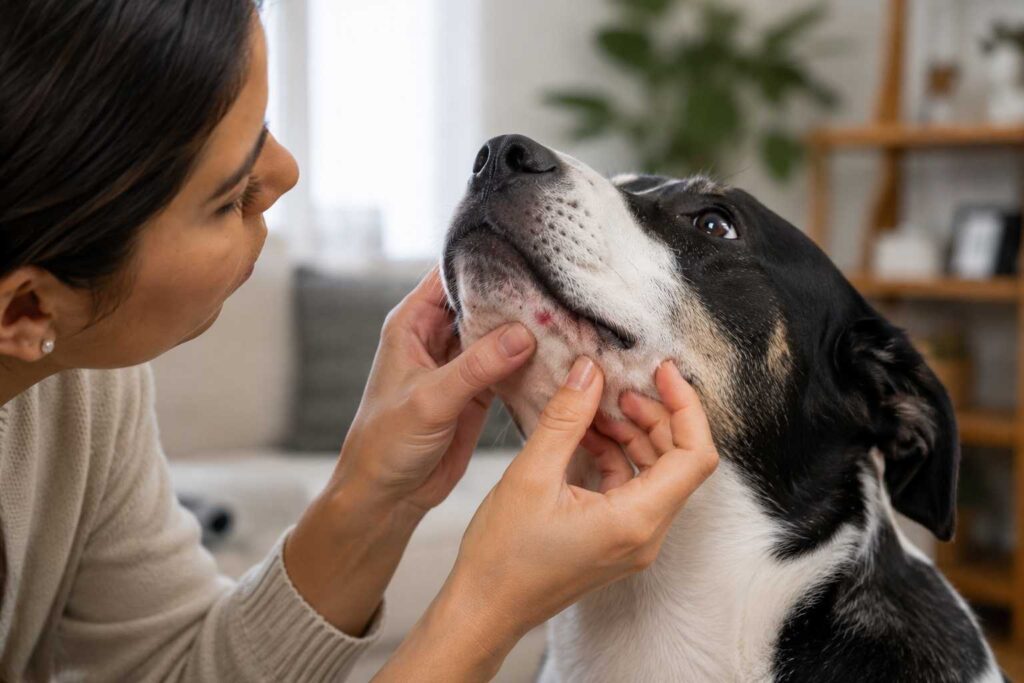
Can dogs get pimples? Yes, dogs can develop pimple-like bumps and true canine acne, especially around the chin, lips, and muzzle. You might notice one while rubbing your dog’s chin — a small, firm bump that wasn’t there a few days ago. But a bump that looks like a pimple isn’t automatically acne.
Bacterial skin infections, mites, cysts, fungal problems, and some skin growths can look surprisingly similar. That’s why where the bump is, how many there are, your dog’s age, and whether the area is painful, swollen, crusted, bleeding, or changing matter more than appearance alone.
Before you put anything on it, ask yourself four questions:
- Where is the bump — on the chin or muzzle, or somewhere else?
- Is it one isolated lump or several small bumps appearing together?
- Is your dog young, fully grown, or older?
- Is the area itchy, painful, swollen, crusted, bleeding, draining, or changing?
Those clues are often more useful than the bump’s appearance alone. They won’t give you a diagnosis, but they can help you judge whether you’re looking at a typical acne-like breakout or something that deserves veterinary attention.
Start With the Bump You Can Actually See
One Bump or a Breakout?
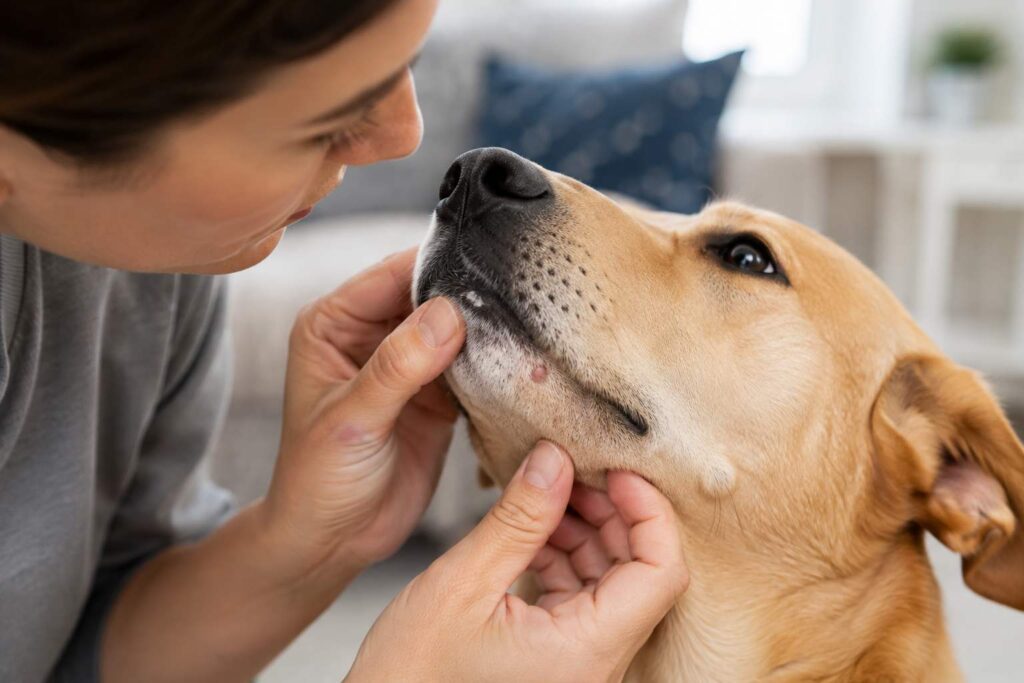
A single lump and a cluster of small bumps shouldn’t automatically be treated as the same problem.
Several similar-looking bumps clustered around the chin or lips of a young dog fit the usual pattern of canine acne more closely. One bump on its own — especially if it is firm, steadily enlarging, repeatedly changing, ulcerated, or still there after the surrounding skin has settled — has a broader range of possible causes and is worth having checked.
The important distinction isn’t simply small versus large. It’s whether the lesion behaves like part of a breakout or like an individual skin mass.
Where Is It on the Body?
Location provides useful context. Canine acne most often affects the chin, lips, and muzzle, where hair follicles can become inflamed and subjected to repeated friction or trauma.
Pimple-like bumps on the belly, back, paws, or elsewhere shouldn’t automatically be called acne. Depending on their appearance and distribution, possibilities may include bacterial folliculitis, allergies, parasites, fungal disease, cysts, or other skin conditions.
So if your dog has “pimples” well away from the face, broaden the question from “How do I treat acne?” to “What is causing these skin lesions?”
What Does It Look and Feel Like?
Have a good look before repeatedly touching or cleaning the area. Note whether you can see:
- Small red raised bumps
- Pus-filled bumps
- Dark, plugged pores that resemble blackheads
- Crusts or scabs
- Hair loss around the lesion
- Swelling
- Bleeding or discharge
- Several lesions spreading beyond the original area
Then watch your dog. Are they rubbing their face, scratching, flinching when the area is touched, or hesitating to eat because the muzzle seems sore?
None of those signs proves what the bump is. But location, number, appearance, discomfort, and change over time give your veterinarian far more useful information than “my dog has a pimple.”
When a “Pimple” Fits the Pattern of Canine Acne
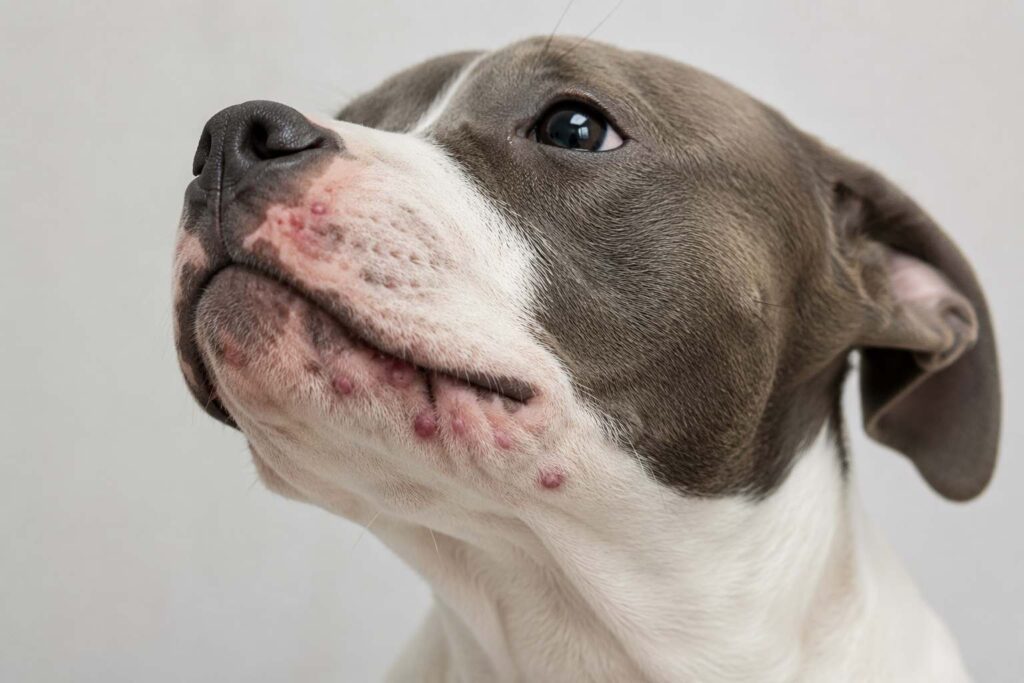
The Typical Canine Acne Picture
Canine acne commonly appears as small inflamed bumps around the chin, lips, and muzzle. These may include red papules, pustules containing pus, and sometimes blackhead-like comedones.
A mild case may look like only a few irritated follicles. More significant inflammation can lead to swelling, crusting, bleeding, pain, or deeper lesions. Once the area becomes noticeably sore, swollen, draining, or repeatedly damaged, it is no longer something to experiment with using home acne remedies.
Why Younger Dogs Fit This Pattern More Often
Canine acne is seen most often in young dogs, particularly during puppyhood and adolescence. Certain short-coated breeds, including Boxers, Bulldogs, Great Danes, Doberman Pinschers, and others, are reported more frequently, although any dog can develop acne-like lesions.
Age and breed are useful clues, not diagnostic rules. A young Boxer with several small chin bumps fits the classic pattern more closely than an older dog that develops one new persistent lump.
Canine acne also shouldn’t be explained simply as “teenage acne for dogs.” The underlying process is different from human acne, and hormones alone don’t fully explain why it develops.
Friction and Follicle Irritation
Repeated trauma to the muzzle may contribute. A dog that frequently rubs their chin on carpet, scratches at the face, roots through soil, or repeatedly presses the muzzle against rough surfaces can irritate hair follicles.
Once follicles become inflamed or damaged, the area can worsen and secondary bacterial infection may develop.
Quick tips while you’re keeping an eye on a mild bump:
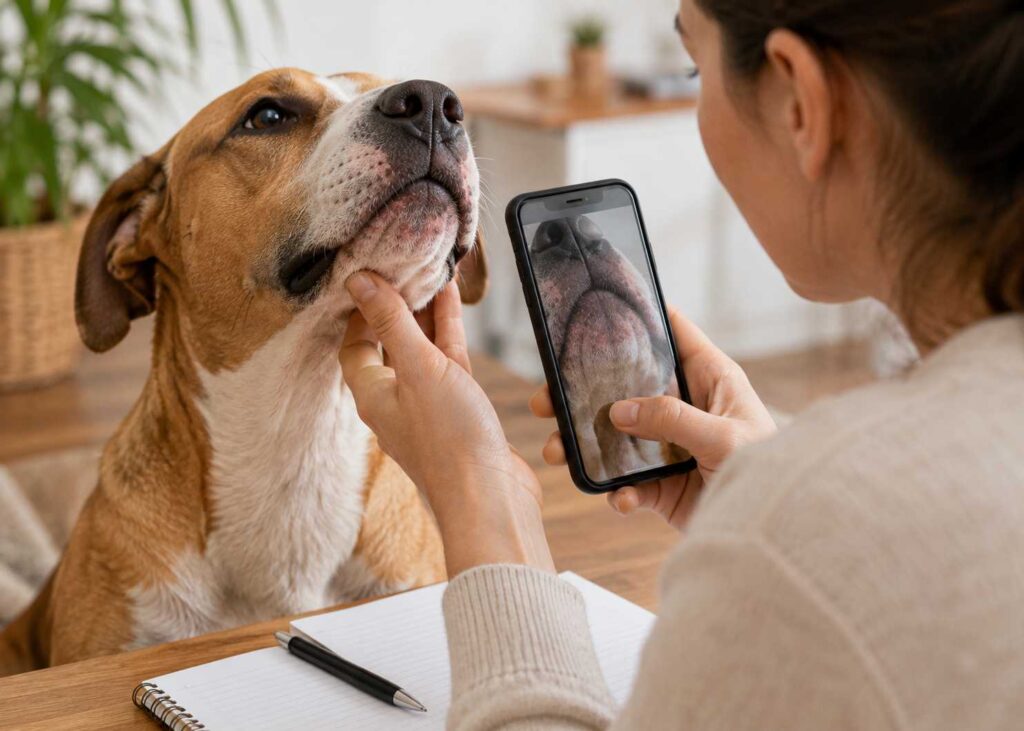
- Take a clear photo before manipulating the area so you have something to compare later.
- Note roughly how many bumps are present.
- Watch for changes in size, number, discharge, or crusting.
- Pay attention to behaviour — rubbing, flinching, or reluctance to eat matters.
- Keep food and water bowls reasonably clean.
- Don’t assume a particular bowl, food, or hygiene mistake caused the problem from one breakout alone.
Could It Be Something Other Than Acne?
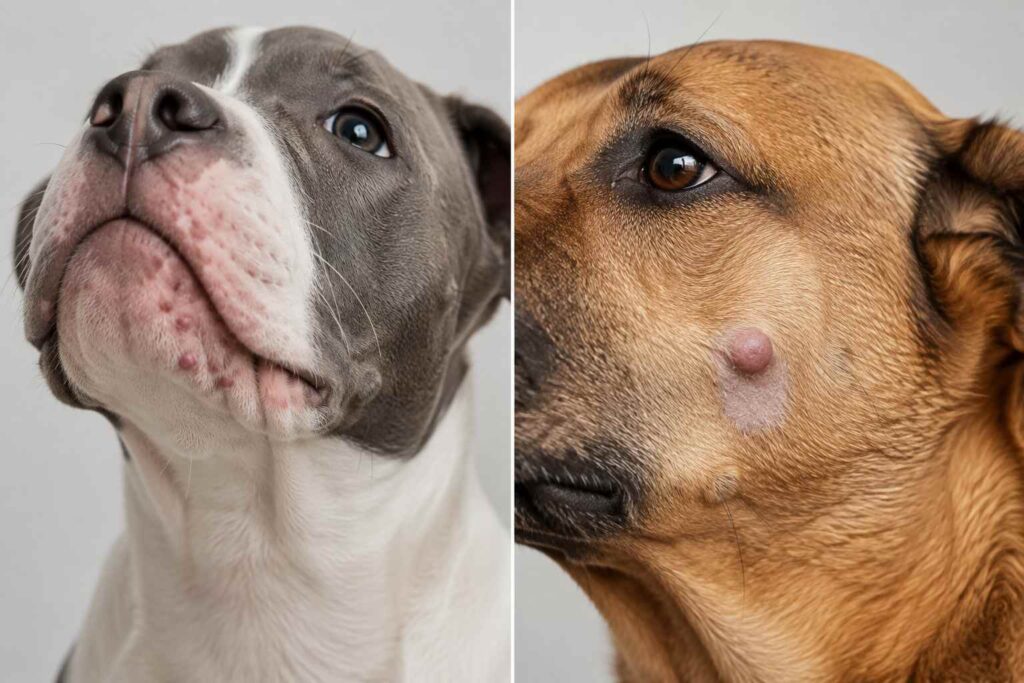
This distinction matters because several skin conditions can imitate acne closely enough that appearance alone isn’t reliable.
Bacterial Folliculitis or Pyoderma
Bacterial folliculitis or pyoderma can produce red bumps and pustules that resemble acne. Depending on severity, you may also see crusting, scaling, circular areas of hair loss, or spreading lesions.
Deeper bacterial infections can become swollen and painful and may release pus or blood. Recurrent or extensive lesions deserve veterinary investigation rather than repeated home treatment, because an underlying problem such as allergy, parasites, or another skin disorder may be contributing.
Demodex Mites
Demodicosis can affect the face, particularly in younger dogs, and may cause redness, hair loss, scaling, crusting, and acne-like bumps.
It can be difficult to distinguish from other follicular skin problems by sight alone. Veterinarians commonly use skin scrapings or other microscopic sampling methods to look for Demodex mites when the pattern raises suspicion.
Ringworm or Another Fungal Problem
Despite its name, ringworm is a fungal infection, not a worm. Dogs can develop areas of hair loss, scaling, redness, crusting, and small inflammatory lesions.
That distinction matters because dermatophyte infections can spread between animals and, in some circumstances, to people. If a supposedly simple “pimple” is accompanied by expanding areas of scaling or hair loss — particularly if another pet or person develops skin lesions — veterinary assessment is sensible.
Follicular Cyst or Comedone
Hair follicles can become blocked or damaged and form cyst-like lesions or comedones. A small follicular cyst may look remarkably like one large pimple, especially before it becomes more obvious.
Don’t squeeze or puncture an isolated lump to see what is inside. Doing so can cause inflammation, infection, or make the lesion harder to assess.
Histiocytoma or Another Skin Growth
A histiocytoma can appear quite suddenly as a solitary, round, red, “button-like” bump, particularly in younger dogs. Many histiocytomas are benign, but other skin masses can look similar from the outside.
That’s why a persistent solitary bump shouldn’t be diagnosed from a photograph or appearance alone. A veterinarian may recommend sampling the cells with a fine needle or performing another test if the lesion’s behaviour or appearance warrants it.
A Changing Lump That Needs Testing
A lump that continues to grow, repeatedly changes size or appearance, becomes ulcerated, bleeds without being scratched, or simply persists deserves veterinary examination.
This doesn’t mean you should assume a serious diagnosis. It means that once a lesion stops behaving like a temporary superficial breakout, testing is more useful than guessing.
A good rule of thumb is to treat “several small chin bumps” and “one persistent changing lump” as two different questions.
Puppy Facial Bumps Need Extra Context
Very young puppies deserve extra caution because juvenile cellulitis, often called puppy strangles, can initially resemble a severe facial breakout.
Affected puppies may develop pustules and marked swelling around the muzzle, lips, eyelids, or ears. Enlarged lymph nodes beneath the jaw, lethargy, fever, or reduced appetite can occur as well.
A puppy with widespread facial pustules or swelling — particularly if they seem unwell — needs prompt veterinary assessment rather than acne treatment at home.
Acne-Like Bumps: What the Pattern May Suggest
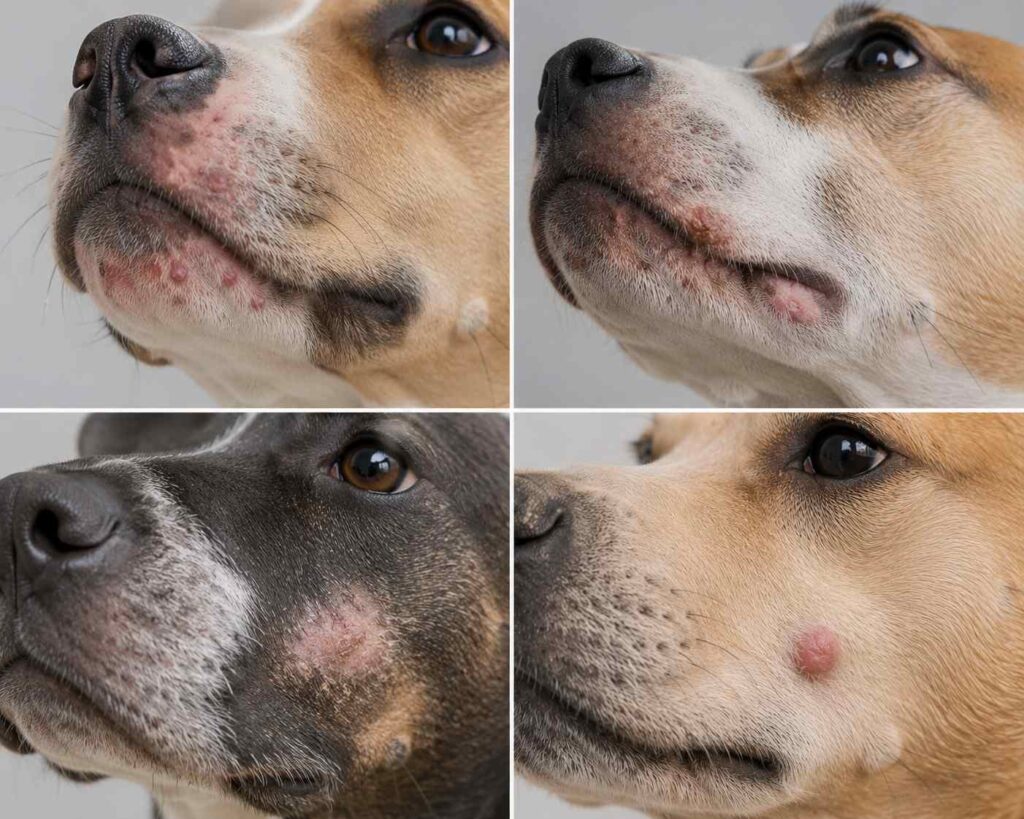
| What you notice | More compatible with | Clues that broaden the possibilities | Sensible next step |
|---|---|---|---|
| Several small bumps on the chin or muzzle | Canine acne | Pain, discharge, spreading lesions | Monitor mild changes; contact your vet if they worsen |
| Pustules with crusting and hair loss | Folliculitis or pyoderma | Odour, deeper swelling, discharge | Veterinary assessment |
| Facial bumps with patchy hair loss | Demodex possible | Scaling or crusting | Veterinary skin testing |
| Scaly, circular or hairless patches | Fungal disease possible | Other pets or people developing skin lesions | Veterinary diagnosis |
| One persistent, firm bump | Cyst or skin growth possible | Growth, repeated change, ulceration | Don’t treat it as ordinary acne |
| Puppy facial pustules with swelling | Juvenile cellulitis possible | Swollen lymph nodes, lethargy, fever, poor appetite | Prompt veterinary assessment |
Treat this table as a set of clues for deciding what to do next, not as a way to diagnose your dog at home. Several conditions can look surprisingly similar from the outside.
Use Age, Location and Behaviour as Clues
A young dog with several small chin bumps who is otherwise bright, comfortable, and eating normally fits the usual canine acne pattern reasonably well. That doesn’t confirm acne, but it is less concerning than a rapidly changing or painful lesion.
An older dog with one new lump is a different situation. Don’t default to calling it acne simply because it’s on the face. A solitary bump that persists, grows, changes, or ulcerates deserves a lower threshold for veterinary assessment.
Bumps on the belly, back, paws, or other areas are also outside the classic distribution of canine acne. In those cases, bacterial skin disease, parasites, allergies, fungal infection, and other causes move higher on the list.
Behaviour can be just as informative as appearance. Repeated face rubbing, flinching when the muzzle is touched, or hesitating to pick up food may indicate discomfort even when the skin changes look minor.
What Might Be Contributing to the Breakout?
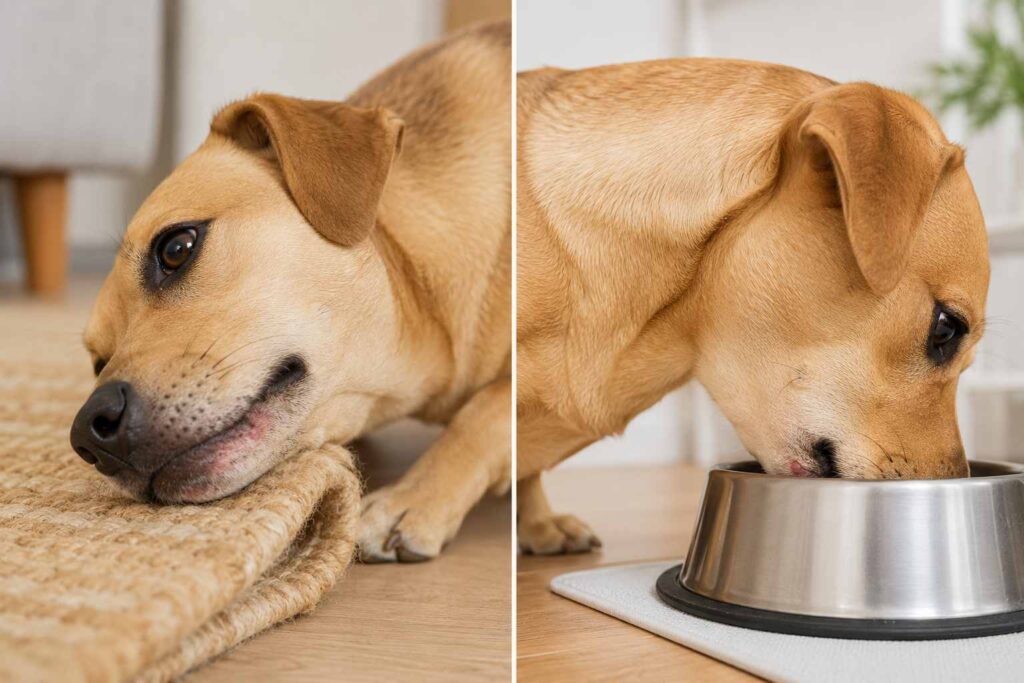
Repeated Friction or Trauma
Repeated chin-rubbing, scratching, digging, or contact with rough surfaces can irritate the same hair follicles again and again. Damaged follicles are more prone to inflammation and may become secondarily infected.
Secondary Bacterial Involvement
Once follicles are inflamed or the skin barrier is damaged, normal skin bacteria, including Staphylococcus species, may contribute to secondary infection. Increasing redness, pain, crusting, discharge, or swelling makes veterinary assessment more important.
Breed or Individual Predisposition
Some breeds appear more prone to canine acne, but predisposition isn’t certainty. Dogs from commonly affected breeds may never develop it, while dogs without an obvious breed risk still can.
What About Hormones?
Age-related hormonal changes have sometimes been discussed as a possible contributor because canine acne is seen most often in younger dogs. However, it shouldn’t be presented as the canine equivalent of human puberty acne or as the sole explanation. Follicular irritation, individual predisposition, and secondary infection can also matter.
Do Plastic Bowls Cause Dog Acne?
Not by themselves, and it’s worth being careful with this claim. Scratched or rough bowls can be harder to keep clean and may repeatedly irritate the chin, so switching to a smooth stainless-steel or well-maintained ceramic bowl can be a reasonable practical step.
But changing the bowl is not a guaranteed acne treatment, and a persistent breakout shouldn’t be blamed on plastic alone.
Is Poor Hygiene the Cause?
Not by itself. Keeping bowls and the chin reasonably clean is sensible, but canine acne isn’t simply a sign that a dog is dirty. Over-cleaning or scrubbing inflamed skin can actually make irritation worse.
Does Diet Cause Pimples?
One chin bump isn’t evidence of a food allergy, so an immediate diet change usually adds more confusion than useful information.
If skin problems are recurrent and your dog also has ongoing itching, ear problems, paw licking, or other signs that raise concern for allergy, discuss the broader pattern with your veterinarian rather than diagnosing the food from the acne-like bumps alone.
Before You Treat Anything, Run This Checklist
- Where exactly is the bump?
- Is it one lesion or a cluster?
- When did you first notice it?
- Is it getting larger?
- Are new bumps appearing?
- Is there pus or other discharge?
- Is it bleeding or crusted?
- Is there hair loss around it?
- Is the area swollen?
- Does touching it seem painful?
- Is your dog scratching or rubbing the area?
- Does eating seem uncomfortable?
- Is your dog otherwise behaving normally?
- Are there similar bumps elsewhere on the body?
- Has this happened before?
- Is your dog a very young puppy?
- Do you have a clear photo to compare with later?
Working through this before reaching for a cream or home remedy gives you a much clearer picture of whether the problem is stable, worsening, recurring, or behaving unlike ordinary acne.
Warning Box: Do Not Treat a Dog Pimple Like a Human Pimple
- Don’t squeeze or pop it.
- Don’t puncture it with a needle.
- Don’t scrape off crusts.
- Don’t use human acne products without veterinary guidance.
- Avoid DIY salicylic-acid treatments.
- Avoid repeated hydrogen peroxide use.
- Avoid rubbing alcohol.
- Avoid tea tree oil or other essential oils.
- Don’t use leftover antibiotics.
- Don’t use steroid creams unless your veterinarian has prescribed them for that condition.
- Avoid aggressive scrubbing.
- Don’t apply toothpaste or similar home remedies.
Squeezing an inflamed lesion can rupture affected follicles, worsen inflammation, and increase the chance of secondary infection. If a bump contains pus, feels painful, or looks as though it “needs draining,” that’s a reason to leave it alone and ask your veterinarian what it is.
What’s Reasonable to Do at Home Before the Vet
Protect the Area From More Irritation
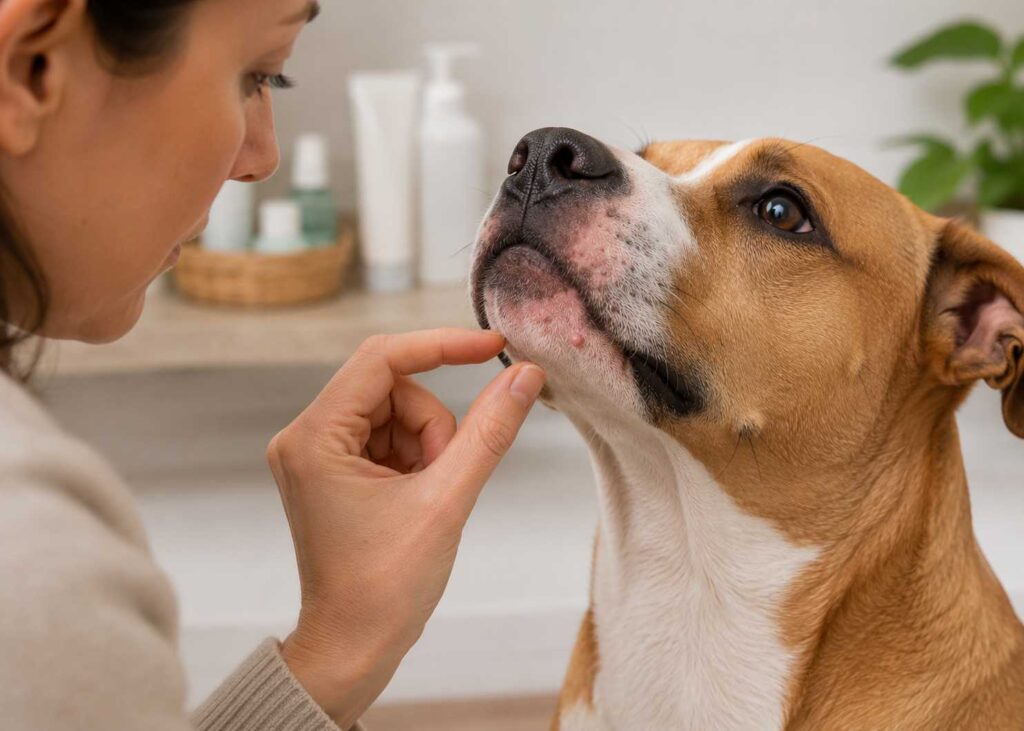
Don’t squeeze, pick, or repeatedly handle the lesion. Where practical, reduce rubbing against rough surfaces and watch for behaviours such as scratching or dragging the chin along furniture.
Keep the Area and Bowls Sensibly Clean
Gentle hygiene is reasonable. Keep food and water bowls clean and avoid aggressively scrubbing inflamed skin.
Think of this as basic skin care, not treatment. Cleaning alone won’t resolve mites, fungal disease, a deeper bacterial infection, or a skin mass.
Track Changes Instead of Experimenting With Products
Take a clear photo and note the size, number of bumps, discharge, crusting, and any changes in your dog’s behaviour. Tracking one lesion consistently is far more useful than trying several products at once and then not knowing what helped — or what made the irritation worse.
Know the Limit of Home Care
Observation and gentle hygiene are reasonable for a minor, stable skin change in a dog who otherwise feels well. They aren’t substitutes for diagnosis.
Arrange veterinary advice if the lesion is painful, spreading, repeatedly returning, draining, bleeding, rapidly changing, associated with significant hair loss or swelling, or simply not behaving like a short-lived superficial bump. A very young puppy with facial pustules, marked swelling, swollen lymph nodes, lethargy, or poor appetite should be assessed promptly.
When a Vet Should Look at the Bump
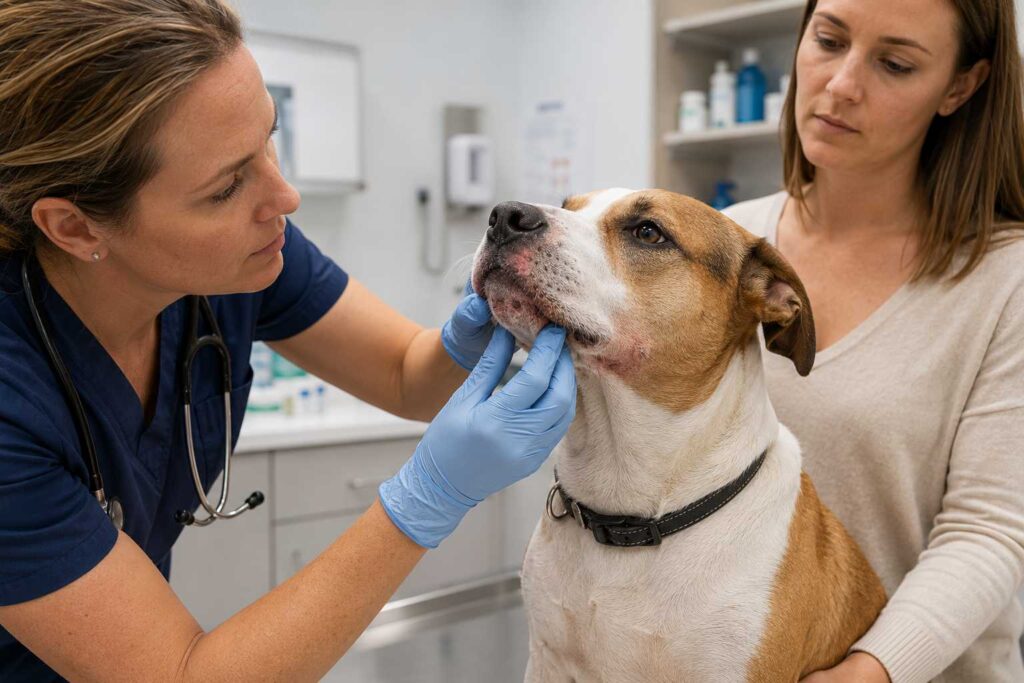
Book a veterinary appointment if the bumps persist, keep returning, or fail to improve with basic care. Recurrent acne-like lesions can point to an underlying problem such as allergies, parasites, chronic follicular inflammation, or another skin condition that needs proper diagnosis rather than repeated home treatment.
Contact your vet sooner if you notice:
- Increasing pain or tenderness
- Rapid swelling
- Pus or bloody discharge
- A foul smell
- Deep, open, or spreading lesions
- Difficulty eating
- Significant facial swelling
- Your dog becoming lethargic or otherwise unwell
Extra caution applies to puppies with facial pustules or swelling accompanied by enlarged lymph nodes, fever, lethargy, or poor appetite. That combination can occur with conditions such as juvenile cellulitis and warrants prompt veterinary assessment rather than a wait-and-see approach.
The same applies to a solitary lump that keeps growing, changes repeatedly, ulcerates, or bleeds without obvious trauma. That pattern is not typical of a simple acne breakout.
Why Your Vet May Test Rather Than Guess
Skin lesions can look surprisingly similar from the outside, so your vet may recommend testing rather than relying on appearance alone.
Skin Cytology
Skin cytology examines cells, bacteria, yeast, and inflammatory material under a microscope. It can help determine whether infection or inflammation is contributing to the lesion.
Skin Scraping
A skin scraping can help check for Demodex mites and other microscopic parasites when hair loss, scaling, or follicular bumps make them a possibility.
Bacterial Culture
For deep, recurrent, or treatment-resistant infections, a bacterial culture and susceptibility test may help identify the bacteria involved and guide antibiotic selection when needed.
Fine-Needle Aspiration
A fine-needle aspirate can collect cells from a solitary lump so the veterinarian can determine whether it behaves more like an inflammatory lesion, cyst, or skin mass.
Biopsy or Histopathology
Persistent, unusual, or difficult-to-identify lesions sometimes need a small tissue sample for a more definitive diagnosis.
Appearance can narrow the possibilities, but it cannot reliably confirm every skin diagnosis on its own. That is why a persistent or unusual “pimple” may need more than a visual examination.
Common Mistakes That Can Make the Situation Harder
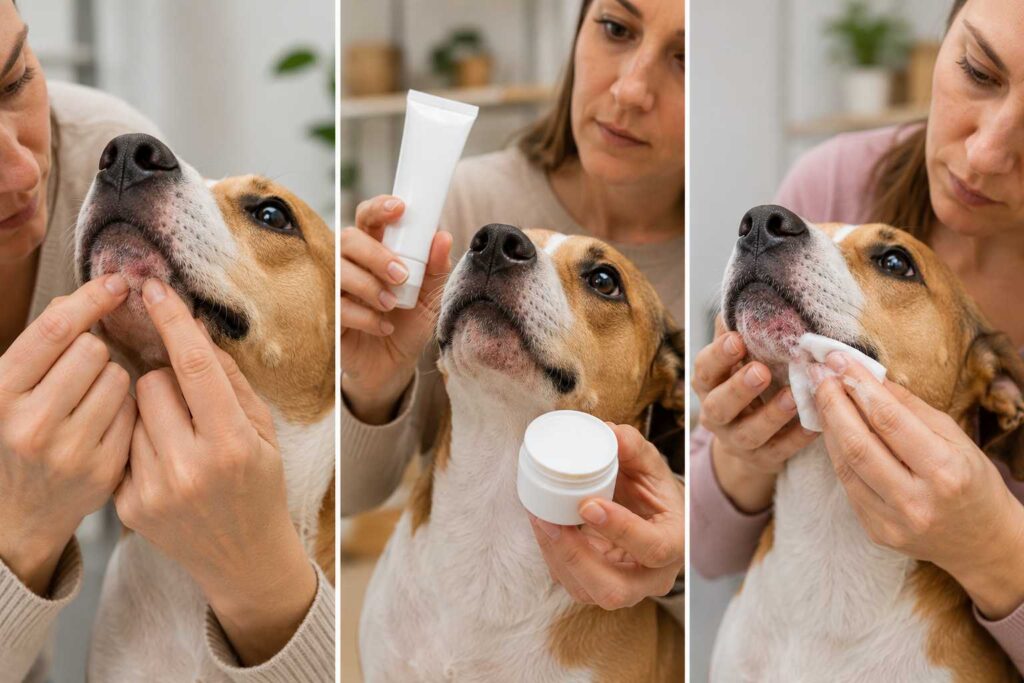
- Popping or squeezing the bump
- Treating every red spot as acne
- Using human skincare products
- Assuming plastic bowls are definitely the cause
- Changing the dog’s food after a single lesion
- Ignoring breakouts that keep returning
- Dismissing a growing lump because it looks like a zit
- Treating crusting or hair loss without considering infection, mites, or fungal disease
- Waiting too long when a puppy has facial swelling or seems unwell
A Quick Decision Guide
| What you’re seeing | Sensible next step |
|---|---|
| Small chin breakout and your dog is comfortable | Don’t manipulate it; track size, number, and changes |
| Painful, swollen, crusted, bleeding, or draining lesions | Arrange veterinary assessment |
| Bumps well away from the chin and muzzle | Don’t automatically assume acne; broader skin causes are possible |
| One persistent, enlarging, or changing lump | Veterinary examination, with sampling if recommended |
| Puppy with facial swelling, pustules, or signs of illness | Prompt veterinary assessment |
Key Takeaways
- Location and pattern matter more than appearance alone. Clusters around the chin and muzzle fit canine acne better than solitary lumps or bumps elsewhere.
- Age is a clue, not a diagnosis. Acne is more typical in younger dogs, but dogs of any age can develop skin lesions.
- Never pop, puncture, scrape, or treat a dog’s bump with human acne products.
- Persistent, painful, spreading, draining, or changing lesions need veterinary assessment rather than home experimentation.
- Puppies with facial swelling and signs of illness deserve prompt veterinary attention.
Reducing Future Skin Irritation
You cannot prevent every episode of canine acne, but reducing avoidable irritation may help:
- Keep food and water bowls clean.
- Check bowls for rough or damaged edges.
- Reduce repeated chin rubbing where practical.
- Avoid over-cleaning or aggressively scrubbing the skin.
- Don’t apply random topical products “just in case.”
- Address persistent itching or face rubbing rather than ignoring it.
- Complete veterinary treatment as prescribed when infection is diagnosed.
- Return for reassessment if lesions repeatedly come back.
Recurring breakouts are more useful as a clue to investigate an underlying problem than as a reason to keep trying different home remedies.
The Bottom Line
Finding a bump is easy. Working out what it actually is takes more context: where it is, whether there is one or several, how your dog feels, and how the lesion changes over time.
A few small chin or muzzle bumps in a young, otherwise comfortable dog may fit the pattern of canine acne. A solitary persistent lump, a lesion in an unusual location, a painful or draining breakout, or a puppy that seems unwell deserves a veterinary assessment rather than an assumption.
Frequently Asked Questions
1.Can Dogs Get Whiteheads and Blackheads?
Yes. Canine acne can produce pustules that resemble whiteheads and comedones that look like blackheads, particularly around the chin, lips, and muzzle.
2.Why Does My Dog Have Just One Pimple Rather Than Several?
A single bump can come from a blocked or inflamed follicle, but solitary lesions also have other possible causes, including cysts and skin growths. If it persists, enlarges, ulcerates, or changes, have your veterinarian examine it rather than assuming it is ordinary acne.
3.Can Dog Acne Be Contagious to People or Other Pets?
Canine acne itself is not considered contagious. However, some conditions that can resemble acne — particularly ringworm — can spread between animals and people, so an uncertain skin problem may still need diagnosis.
4.Can Allergies Cause Bumps That Look Like Acne?
Allergic skin disease can contribute to redness, itching, inflammation, and secondary bacterial infections that may produce acne-like bumps. Recurrent lesions accompanied by ongoing itching, paw licking, or ear problems deserve a broader veterinary assessment.
5.Should I Ever Pop or Squeeze My Dog’s Pimple?
No. Squeezing can rupture inflamed follicles, worsen irritation, and increase the risk of secondary infection. Leave the lesion alone and seek veterinary advice if it becomes painful, swollen, draining, or persistent.
6.Does Changing My Dog’s Food Bowl Cure Acne on Its Own?
Not reliably. Keeping bowls clean and replacing rough, damaged surfaces may reduce irritation, but changing bowl material is not a guaranteed treatment for canine acne.
7.How Long Should I Watch a Bump Before Calling the Vet?
There is no single safe time limit for every skin lesion. A small, stable bump in a dog who otherwise feels well can often be monitored briefly, but contact your veterinarian sooner if it grows, spreads, becomes painful, bleeds, drains, repeatedly returns, or is accompanied by swelling or changes in your dog’s behaviour or appetite.
#. Related Articles:
1. Dogs Lumps & Bumps The Complete?