

Can dogs eat ice cream? Generally, human ice cream isn’t a good treat for dogs, and some varieties can contain ingredients that are genuinely dangerous.
Your dog is sitting there, eyes locked on your bowl, tail going, absolutely convinced that one lick won’t hurt anyone. Maybe they’ve already had that lick. Maybe the tub’s half empty and you’re not entirely sure how it happened.
Here’s the short version: human ice cream isn’t something we’d recommend feeding your dog on purpose. But “not recommended” and “poisonous” are two very different things, and lumping them together is where a lot of advice online goes wrong. Some ice cream may do little more than trigger digestive upset in a sensitive dog. Other products contain ingredients that can cause a genuine poisoning emergency.
The difference comes down to five things: what’s actually in it, how much your dog ate, how big your dog is, whether they have any relevant health issues, and what symptoms — if any — they’re showing. Work through those in order and you’ll get a much more useful answer than any blanket yes-or-no rule.
If your dog’s already eaten some and you’re reading this with one eye on them right now, skip ahead to the five-point check below. Otherwise, start where most owners actually need to start: the label.
Before You Decide Anything, Check the Label — Not the Flavour Name
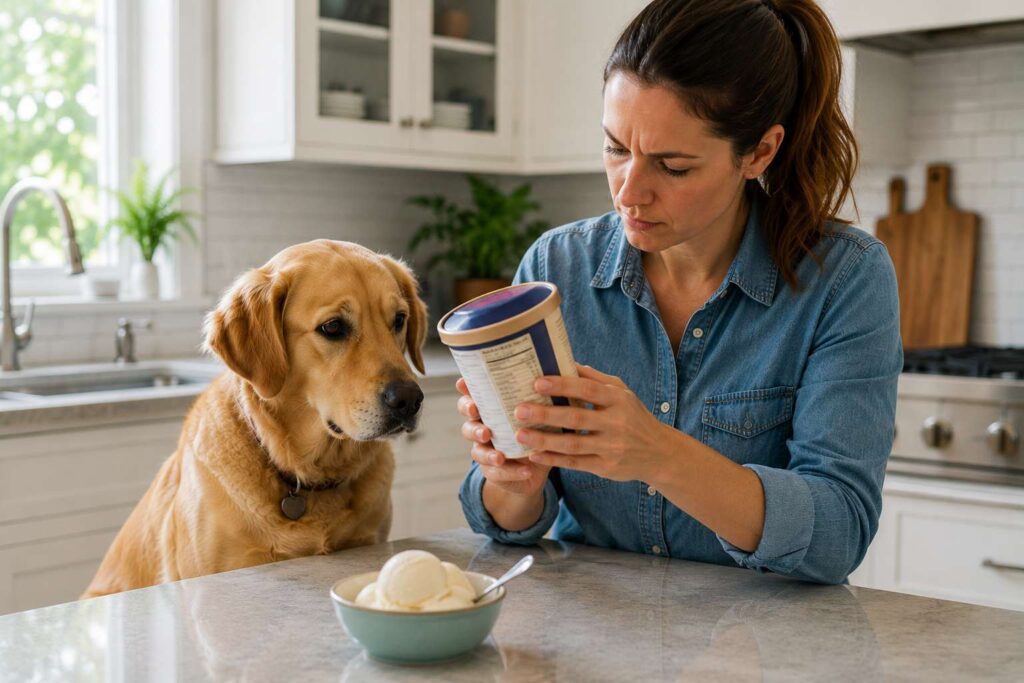
Start With the Ingredient List
“Vanilla ice cream” tells you surprisingly little on its own. Two tubs sold as plain vanilla can have different sweeteners, sauces, flavourings, or mix-ins once you get past the base ingredients. The flavour name on the front is not enough to judge what your dog actually ate.
Check the full ingredient list for:
- the dairy or plant-based base
- the sweetener used
- chocolate, cocoa, coffee, or espresso
- sauces or ripples
- cookie, brownie, or candy pieces
- raisins or other grape ingredients
- macadamia nuts
- peanut or nut butters
- toppings and cone pieces
If your dog has already eaten the product, keep the container or packaging. The exact ingredients and amount missing can be useful information if you need to call your vet.
Why “Vanilla” Doesn’t Automatically Mean Safe
A straightforward vanilla ice cream may avoid some of the more obvious toxic flavourings, but it still contains ingredients dogs don’t need, typically including dairy, sugar, and fat. Some dogs tolerate a small taste without any obvious problem; others develop gas, loose stools, vomiting, or abdominal discomfort.
So vanilla is better thought of as potentially lower-risk than certain flavoured products, not as a dog-safe food you can hand over freely.
Why Dairy-Free, Vegan, or Lactose-Free Still Needs a Look
This one catches people out. Removing lactose may reduce one possible digestive issue, but it doesn’t make the entire dessert suitable for dogs.
Plant-based, vegan, and lactose-free ice creams can still contain:
- large amounts of sugar or fat
- chocolate or cocoa
- coffee or caffeine
- raisins
- macadamia nuts
- unsafe sweeteners
“Vegan,” “dairy-free,” and “lactose-free” describe the product for human dietary purposes. They are not canine safety labels.
Three Very Different Problems Ice Cream Can Cause
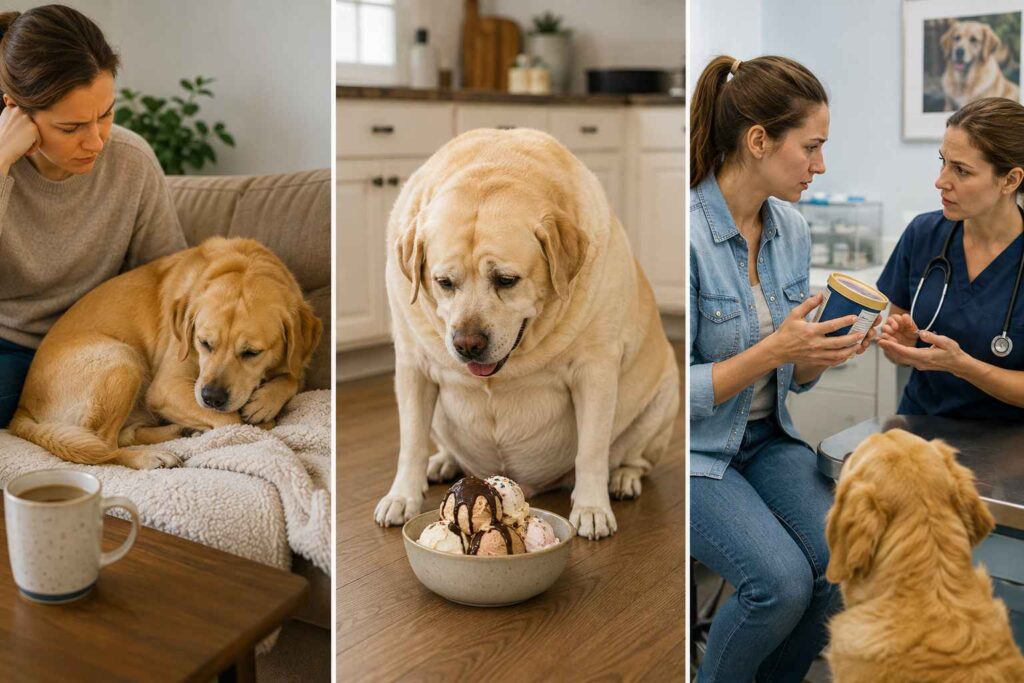
It helps to separate these out because they call for very different responses.
Digestive Upset From Dairy
Dogs vary in how well they tolerate lactose and rich dairy foods. A dog that doesn’t digest lactose well may develop:
- gas
- loose stools or diarrhea
- vomiting
- abdominal discomfort
This is digestive intolerance, not poisoning. And it isn’t identical in every dog. One dog may tolerate a lick without trouble while another develops an upset stomach after a relatively small amount.
Milk-protein allergy or another adverse food reaction is also different from lactose intolerance, so repeated problems with dairy shouldn’t automatically be blamed on lactose alone.
A Poor Nutritional Choice That Isn’t Toxic
Plenty of ice cream won’t poison your dog but still isn’t doing them any favours. Sugar, fat, and calories add up quickly relative to a dog’s size, especially when ice cream is added on top of an already complete diet.
That matters even more for dogs that are:
- overweight or on a weight-management plan
- prone to digestive upset
- on a prescribed therapeutic diet
- living with diabetes or another condition affected by diet
- being managed for previous pancreatitis or a low-fat dietary requirement
A high-fat food should not be described as guaranteed to cause pancreatitis, but it can be particularly inappropriate for dogs whose veterinary plan already restricts dietary fat.
Genuine Toxicity
This is a completely different category, and it’s the one that can require urgent veterinary attention.
Ice cream or its mix-ins may contain ingredients such as:
- xylitol
- chocolate or cocoa
- coffee or caffeine
- grapes or raisins
- macadamia nuts
Sugar-free products deserve especially careful checking. The FDA warns that xylitol may appear in sugar-free desserts, including some ice creams, and may also be listed as birch sugar, wood sugar, or birch bark extract. In dogs, xylitol can trigger a dangerous fall in blood sugar and may also cause serious liver injury.
Chocolate and coffee contain methylxanthines that can cause more than an upset stomach, while raisins and macadamia nuts carry their own toxic risks.
Getting these three categories confused is one of the biggest problems with generic advice about dogs and ice cream. A mild dairy reaction should not be treated like a poisoning emergency — but a genuine toxin exposure should not be dismissed as “just a tummy ache” either.
Quick Comparison: Not All Frozen Desserts Carry the Same Concerns

| Frozen Product | Main Thing to Check | Dairy Issue? | Toxic Ingredients Possible? | Bottom Line |
|---|---|---|---|---|
| Plain vanilla ice cream | Dairy, fat, sugar, full ingredient list | Yes | Yes | Lower-risk doesn’t mean dog-safe |
| Chocolate ice cream | Cocoa/chocolate plus dairy | Yes | Yes | Potential poisoning concern |
| Sugar-free ice cream | Exact sweetener used | Maybe | Yes | Always read the full label |
| Lactose-free ice cream | Sugar, fat, flavours, add-ins | Reduced | Yes | Lactose-free doesn’t mean dog-safe |
| Dairy-free / vegan ice cream | Sweeteners, flavourings, mix-ins | No or minimal | Yes | Plant-based doesn’t mean dog-safe |
| Frozen yoghurt | Dairy plus other ingredients | Usually | Yes | Judge the actual product |
| Gelato or soft serve | Dairy, sugar, fat, flavours | Usually | Yes | The same ingredient-first rule applies |
| Dog-specific frozen treat | Ingredients, calories, portion | Varies | Should still be checked | Made for dogs doesn’t mean unlimited |
The important distinction isn’t simply dairy versus dairy-free. A frozen dessert can be unsuitable because it’s rich or calorie-dense, while another can contain an ingredient that creates an actual poisoning risk. Check the product rather than relying on its category.
Ingredients That Change the Situation Immediately
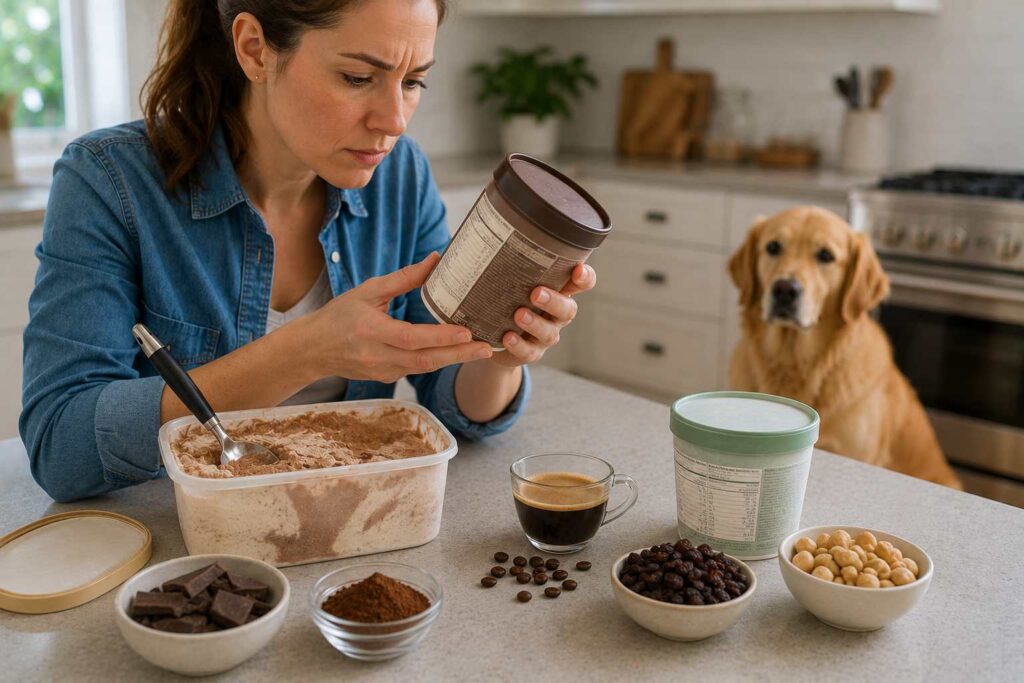
Xylitol
Not every sugar-free ice cream contains xylitol, but sugar-free and low-sugar products deserve an especially careful ingredient check. The FDA specifically lists sugar-free desserts, including some “skinny” ice creams, among products that may contain xylitol. On labels, xylitol may also appear as birch sugar, wood sugar, or birch bark extract.
In dogs, xylitol can trigger a rapid release of insulin followed by dangerously low blood sugar. Signs can develop quickly, although they may sometimes be delayed, and some exposures can also cause serious liver injury. If you know or suspect your dog ate xylitol, contact a vet, emergency veterinary clinic, or animal poison control service immediately rather than waiting for symptoms.
Chocolate, Cocoa, and Brownie Varieties
Chocolate ice cream, chocolate-chip varieties, cocoa, brownie pieces, and chocolate sauces can expose dogs to theobromine and caffeine. The risk isn’t determined by the word “chocolate” alone: the type and concentration of chocolate, the amount eaten, and the dog’s body weight all matter. The Merck Veterinary Manual explains that theobromine and caffeine are the toxic substances in chocolate, and their concentrations vary considerably between different types of chocolate. Cocoa powder and darker chocolates generally contain more methylxanthines than milk chocolate.
That means a large dog that sneaks a small taste and a small dog that finishes half a tub should not automatically be treated as equivalent exposures.
Coffee, Espresso, and Mocha Flavours
Coffee, espresso, and mocha frozen desserts need their own ingredient check. Caffeine is a methylxanthine that can be toxic to dogs, and mocha products may combine caffeine with chocolate, giving the vet more than one exposure to consider.
Grapes and Raisins
Rum-raisin ice cream and desserts containing actual raisins or grape ingredients deserve prompt veterinary attention. Grapes and raisins have been associated with acute kidney injury in dogs, and susceptibility can vary between individual dogs.
Don’t try to decide that an exposure is harmless simply because only a few raisins appear to be missing.
Macadamia Nuts
Macadamia nuts occasionally turn up in premium ice creams, cookies, and dessert-style mix-ins. In dogs, macadamia nut toxicosis can cause vomiting, weakness, poor coordination, tremors, and increased body temperature. Signs are often self-limiting, but a veterinarian should still guide you after a suspected exposure.
This warning is specific to macadamia nuts; there’s no benefit in treating every type of nut as though it carries exactly the same toxic risk.
Urgent Ingredient Warning
Contact a veterinarian or appropriate animal poison service promptly if you know or strongly suspect your dog has eaten xylitol, grapes or raisins, a concerning amount of chocolate/cocoa or caffeine-containing food, or if they’re developing worrying symptoms after eating an unknown frozen dessert.
Don’t wait for symptoms after a known xylitol exposure. Don’t try to make your dog vomit unless a veterinary professional specifically tells you to. Merck Veterinary Manual specifically advises against at-home attempts to induce vomiting after xylitol ingestion because hypoglycemia can develop rapidly.
Your Dog Already Ate Ice Cream: Run This Five-Point Check
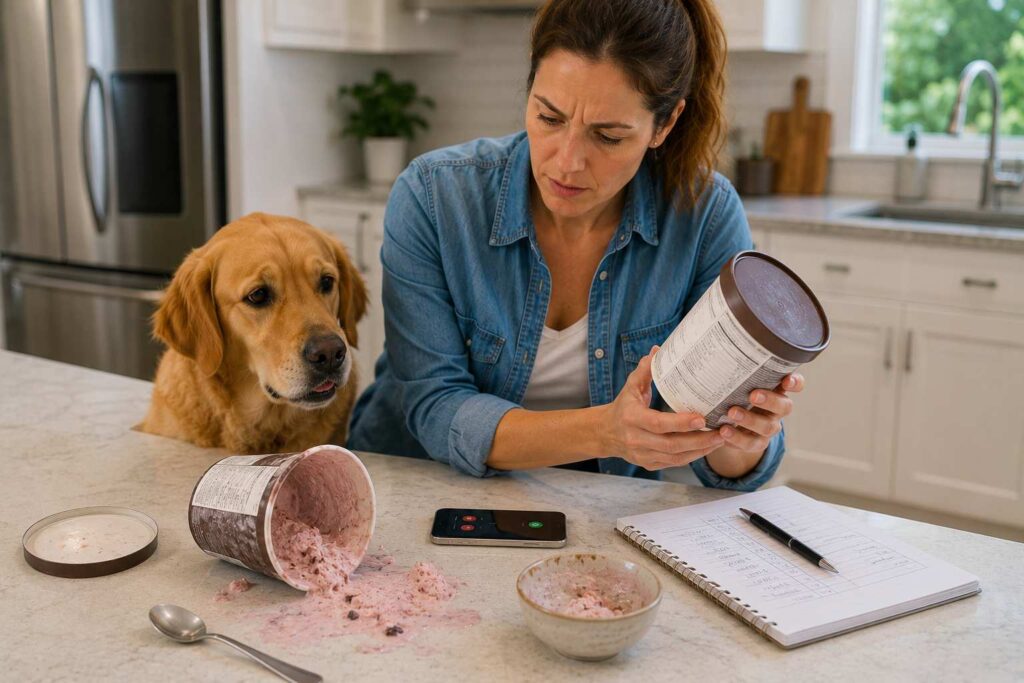
- What exactly was it? Find the tub or wrapper and check the brand, flavour, complete ingredient list, sweetener, toppings, mix-ins, and whether your dog ate any of the cone.
- How much is missing? One lick, several spoonfuls, half a bowl, and an entire tub are very different exposures. If you don’t know, tell the vet that rather than guessing.
- How big is your dog? The same spoonful represents a much larger exposure for a 5 kg (11 lb) terrier than for a 40 kg (88 lb) Labrador. Body weight becomes particularly important when a potentially toxic ingredient is involved.
- Does your dog have relevant health history? Previous pancreatitis, a prescribed low-fat diet, obesity, diabetes, chronic gastrointestinal disease, or a known food sensitivity can make an otherwise ordinary dietary indiscretion more concerning.
- Is your dog showing symptoms? Vomiting, diarrhea, marked weakness or lethargy, difficulty walking, tremors, seizures, collapse, or unusual behaviour are reasons to seek veterinary advice rather than assuming it’s simply lactose intolerance.
Keep the packaging. If you need veterinary help, having the exact product and ingredient list available is much more useful than trying to remember what was written on the tub.
One Lick, Several Spoonfuls, or a Whole Bowl Aren’t the Same Situation
A small lick of ordinary ice cream with no toxic ingredients is very different from a large accidental serving. A healthy adult dog may experience no obvious problem after a tiny taste, while another may develop gas, vomiting, or loose stools because dairy tolerance varies.
As the amount increases, so does the potential for digestive upset and the dietary load from fat, sugar, and calories. The same quantity also matters more relative to the body size of a small dog, and dogs with conditions such as previous pancreatitis or those on therapeutic diets deserve additional caution.
But quantity is only part of the decision. Once a potentially toxic ingredient such as xylitol, chocolate, caffeine, grapes, or raisins is involved, don’t use “it was only a little” as your safety test. The ingredient, concentration, amount eaten, and your dog’s body weight all need to be considered.
If you genuinely don’t know what was in the ice cream or how much disappeared, keep the container, note roughly when it happened, and contact your vet if a potentially harmful ingredient could be involved. The most useful question isn’t simply “How much ice cream did my dog eat?” It’s “What exactly did my dog eat, and how much of that ingredient might they have had?”
Checklist: What to Do After Accidental Ice Cream Ingestion

If your dog has already helped themselves, don’t start by guessing whether the flavour was “safe.” Work through what actually happened.
- Find the container or packaging
- Read the full ingredient list
- Check whether it’s labelled sugar-free
- Identify the sweetener by name
- Check for chocolate or cocoa
- Check for coffee or caffeine
- Check for raisins or grapes
- Check for macadamia nuts
- Check sauces, toppings, fillings, and mix-ins
- Estimate how much your dog ate
- Note roughly when it happened
- Know your dog’s approximate weight
- Consider relevant medical conditions or a prescribed diet
- Watch for symptoms only when home monitoring is genuinely appropriate
- Contact a vet promptly for any known or suspected toxic ingredient
Don’t wait for symptoms after a known xylitol exposure. Merck Veterinary Manual notes that xylitol can cause a rapid, severe drop in blood sugar in dogs, while liver injury may develop later. At-home attempts to induce vomiting aren’t recommended for xylitol exposure because signs of low blood sugar can develop quickly.
When Dairy Is the Real Problem, Not Poisoning
Lactose intolerance isn’t toxicity. It’s a digestive problem, and dogs vary in how well they tolerate dairy. Gas, loose stools, vomiting, or abdominal discomfort after ice cream may point to poor tolerance rather than poisoning.
A food allergy or other adverse reaction is different again. Merck Veterinary Manual distinguishes metabolic intolerance from hypersensitivity and toxic food reactions, so repeated problems with dairy shouldn’t automatically be labelled “lactose intolerance.”
Previous tolerance isn’t a guarantee either. A dog that once stole a lick of vanilla without a problem may react differently to a larger serving, a richer product, or a tub containing completely different ingredients.

Dogs That Deserve a More Cautious Answer
Dogs with a history of pancreatitis or a prescribed low-fat diet shouldn’t be given rich, high-fat treats such as human ice cream unless their veterinary team has said otherwise.
Dogs on weight-loss or therapeutic diets also need treats considered as part of the whole diet. WSAVA advises that treats generally make up no more than about 10% of a healthy dog’s daily calories and notes that dogs with medical conditions, dietary sensitivities, or veterinary-prescribed diets may need different advice.
Dogs with diabetes, chronic gastrointestinal problems, or other diet-sensitive conditions need guidance based on their individual treatment plan rather than a general serving rule.
Puppies don’t need human ice cream nutritionally, and because they’re smaller, a given amount can represent a much larger exposure relative to body weight.
And if your dog is on an elimination diet for suspected food reactions, even a seemingly harmless lick can introduce an ingredient you were deliberately trying to exclude.
Common Mistakes Dog Owners Make With Ice Cream
- Assuming “not toxic” means “healthy.”
- Assuming vanilla is automatically safe without checking the label.
- Choosing sugar-free because it sounds healthier.
- Assuming vegan or dairy-free automatically means dog-safe.
- Looking only at the flavour name instead of the ingredients.
- Forgetting sauces, toppings, cones, cookie pieces, or other mix-ins.
- Giving more next time because the dog seemed fine last time.
- Assuming every upset stomach after dairy must be lactose intolerance.
- Using ice cream as a way to treat a dog that’s overheating.
- Trying to induce vomiting at home after a suspected toxin exposure without veterinary instructions.
Human Ice Cream vs Dog-Specific Frozen Treats
A properly formulated dog frozen treat can avoid some of the problems associated with human ice cream, depending on its ingredients. But “made for dogs” doesn’t mean unlimited, calorie-free, or suitable for every dog.
Check the ingredients and feeding directions, particularly if your dog has allergies, digestive problems, weight concerns, or a veterinary-prescribed diet. A dog-specific treat is still a treat, not a necessary part of a balanced diet.
Safer Ways to Give Your Dog Something Cold

If your dog enjoys frozen treats, simpler options make it easier to know exactly what they’re eating:
- a small piece of plain frozen banana or strawberry
- a small frozen portion of a food your dog already tolerates
- a purpose-made dog frozen treat, given according to its feeding guidance
- a food-stuffed enrichment toy or lick mat made with part of your dog’s normal food and frozen
Introduce unfamiliar foods in small amounts rather than making a large frozen treat the dog’s first exposure to an ingredient.
And remember: a frozen snack is enrichment, not treatment for overheating or heatstroke. A dog that appears dangerously overheated needs appropriate cooling and veterinary attention, not ice cream.
What Helps Most When You Call the Vet
Have these details ready:
- exact product name
- full ingredient list
- flavour
- sweetener used
- toppings, sauces, or mix-ins
- approximate amount eaten
- approximate time it happened
- your dog’s weight and age
- relevant medical history
- symptoms you’ve noticed
Keep the packaging if you can. It’s much easier for a veterinary professional to assess an exposure from the actual ingredient list than from someone’s memory of a half-eaten tub.
Don’t simply wait and see if you know or suspect xylitol, grapes or raisins, or a potentially significant chocolate/cocoa or caffeine exposure. Merck identifies all of these among human-food hazards for dogs.
Seek prompt veterinary help if your dog develops concerning signs such as marked weakness, difficulty walking, tremors, seizures, collapse, or repeated vomiting.
A 30-Second Safety Check
Check the product → read the ingredients → estimate the amount → factor in your dog’s size and health → look for symptoms → contact a vet promptly if a toxic ingredient may be involved.
The Bottom Line
Human ice cream isn’t a treat worth putting on your dog’s regular menu, but an accidental taste of ordinary ice cream without toxic ingredients is very different from eating a sugar-free, chocolate, coffee, raisin, or otherwise hazardous product.
Instead of asking only how much ice cream disappeared, ask what was in it, how much was eaten, how big your dog is, whether their health history changes the risk, and how they’re behaving now.
For an ordinary dairy exposure, the main concern may be digestive upset. When a genuinely toxic ingredient is involved, don’t wait for symptoms before getting professional advice.
Frequently Asked Questions
1.Can dogs eat a small amount of plain vanilla ice cream?
A tiny taste of ordinary vanilla ice cream that contains no toxic ingredients may not cause a problem in an otherwise healthy adult dog, but it can still trigger digestive upset and isn’t worth making a regular treat.
2.My dog only licked the bowl — should I still worry?
Start with the ingredients. A lick of ordinary ice cream is very different from a lick of a product containing xylitol or another toxic ingredient. If the ingredient list is clear and contains nothing concerning, a small accidental lick may only require watching for digestive upset.
3.How long after eating ice cream might diarrhea start?
There isn’t one reliable timetable for every dog. Digestive signs can appear after eating a food they don’t tolerate, but timing and severity vary with the dog, product, and amount eaten. Don’t use the absence of diarrhea as proof that a suspected toxin exposure is safe.
4.Is lactose-free ice cream actually safe for dogs?
Not automatically. Removing lactose addresses only one potential digestive issue. The product may still contain a lot of fat or calories, as well as chocolate, unsafe sweeteners, or other ingredients that need checking.
5.Can dogs eat soft serve, gelato, or frozen yoghurt?
Don’t judge them by the name alone. Check the complete ingredient list, sweetener, flavourings, mix-ins, and portion just as you would with regular ice cream.
6.Should I try to make my dog vomit if they’ve eaten something toxic?
Not unless a veterinarian or animal poison professional specifically tells you to. The correct response depends on what was eaten and your dog’s condition. Merck specifically advises against at-home vomiting attempts after xylitol ingestion because hypoglycemia can develop rapidly.
7.Is dog-specific ice cream healthier than the human version?
It may be more appropriate, depending on its formulation, but “dog-specific” isn’t a guarantee that it’s right for every dog. Check the ingredients and portion size, and account for it as a treat rather than part of the dog’s essential diet.
#. Related Articles: