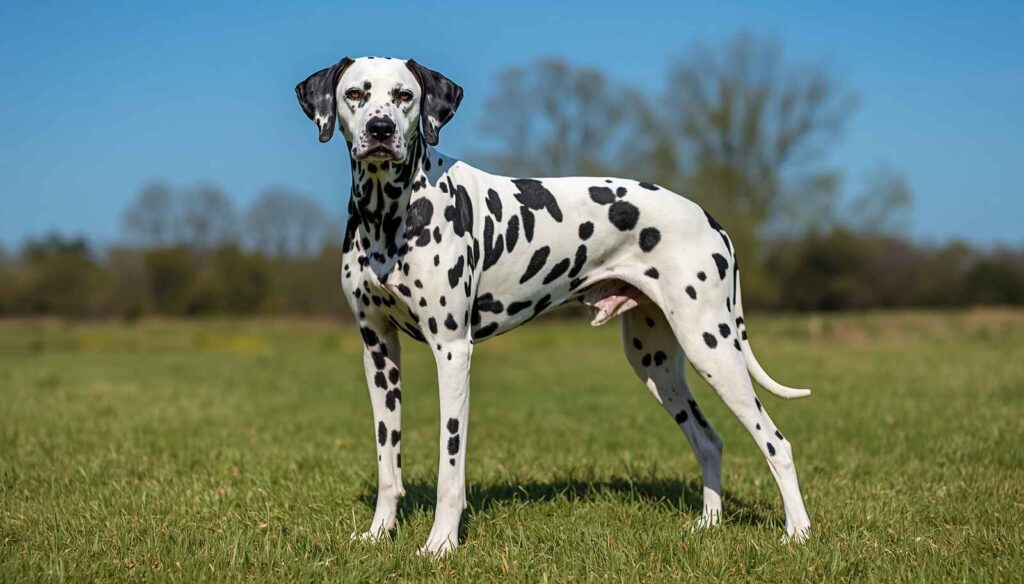
You’ve seen them in films, on firetrucks, and probably at your local park — dashing, spotted, and full of energy. But here’s what most Dalmatian articles won’t tell you upfront: this breed is wonderful and genuinely challenging. Before you fall head over heels for those spots, let’s talk about what life with a Dalmatian actually looks like.
Dalmatian Breed Overview & Quick Profile
The Dalmatian is one of the most recognisable dog breeds in the world — and one of the most misunderstood. Originally bred as carriage dogs in Croatia, they were used to trot alongside horse-drawn carriages for miles at a time. That history tells you a lot about what they need today: space, movement, and purpose.
They’re athletic, intelligent, and deeply loyal — but they’re also stubborn, sensitive, and prone to specific health issues that every owner needs to understand before bringing one home.
Size -> Medium–Large (23–70 lbs / 10–32 kg)
Height -> 19–24 inches (48–61 cm)
Lifespan -> 11–13 years
Coat -> Short, dense, heavy shedder
Energy Level -> Very High
Good with Kids? -> Yes, with supervision
Trainability -> Moderate (can be stubborn)
Best For -> Active, experienced owners
🇬🇧 UK Note: The Dalmatian is recognised by the Kennel Club UK under the Utility Group. In Australia and Canada, breed standards follow the ANKC and CKC respectively, with minor variations.
Temperament: The Real Personality Behind the Spots

Dalmatians are often described as “clownish, loyal, and dignified” — and honestly, all three are accurate at different times of the same day. They’re playful and goofy with their family, but can be reserved or even aloof with strangers until they’ve had time to warm up.
Are They Good Family Dogs?
Yes — but with caveats. Dalmatians thrive in active families where they’re included in daily life. They don’t do well left alone for long hours. Separation anxiety is a real risk with this breed, and a bored Dalmatian can become destructive fast.
With children, they’re generally affectionate, but their exuberance can accidentally knock over small kids. Always supervise young children with any dog, and even more so with a breed this energetic.
What About Aggression?
Dalmatians are not naturally aggressive, but they can be reactive — especially with other dogs — if not properly socialised from puppyhood. Early socialisation (before 12 weeks ideally) is not optional; it’s essential. A poorly socialised Dal may become snappy or anxious as an adult.
⚠️ Honest Reality: Dalmatians are NOT recommended for first-time dog owners. They test patience, require consistent training, and can develop problem behaviours quickly without firm, loving boundaries.
Prey Drive & Other Animals
Moderate to high prey drive is common. They can coexist with cats if raised with them, but smaller animals like rabbits or guinea pigs may not be safe. Always introduce any new animals slowly and carefully.
Health Issues You Must Know About Before Getting a Dalmatian
This is the section most “pretty” breed guides skip over. Don’t skip it. Dalmatians have specific and well-documented health vulnerabilities that can cost you emotionally and financially if you’re not prepared.
Common Health Conditions in Dalmatians
- Deafness — Affects around 8% bilaterally, 22–24% unilaterally
- Hyperuricosuria (HUU) — Unique uric acid metabolism leading to bladder/kidney stones
- Hip dysplasia — Requires OFA/PennHIP screening in parents
- Allergies & skin issues — Especially to certain proteins and environmental allergens
- Eye conditions — Including iris sphincter dysplasia (common in blue-eyed Dals)
- Epilepsy — Reported in the breed, though not as prevalent as in some other breeds
Deafness in Dalmatians: What Every Owner Needs to Understand

Deafness is the most well-known health concern in Dalmatians, and it’s directly linked to the same gene responsible for their iconic white coat and spots. The piebald gene affects melanocytes — the pigment-producing cells — and when those cells are absent from the inner ear, the result is hearing loss.
How Common Is It?
Studies show roughly 8% of Dalmatians are bilaterally deaf (both ears), while 22–24% are unilaterally deaf (one ear). That means nearly a third of all Dalmatians have some degree of hearing impairment. This is not rare — it’s common.
What Is BAER Testing?
BAER stands for Brainstem Auditory Evoked Response. It’s a painless, non-invasive test that measures electrical activity in the auditory pathway from the ear to the brain. It’s the only reliable way to determine whether a Dalmatian puppy can hear — in one or both ears.
Any responsible breeder will BAER test all puppies before they go to their new homes, typically at 5–6 weeks of age. Ask to see the results. If a breeder can’t produce them, walk away.
Can You Adopt a Deaf Dalmatian?
Absolutely. Many unilaterally deaf Dals live completely normal lives — the owner may never even notice. Bilaterally deaf Dals require more patience and specific training techniques (hand signals, vibration cues), but they can be wonderful, well-adjusted companions with the right owner.
✅ Tip: Blue-eyed Dalmatians have a higher statistical risk of deafness. This doesn’t mean every blue-eyed Dal is deaf, but it’s a useful flag when assessing a litter.
Diet & the Uric Acid Problem: What Dalmatians Can and Can’t Eat
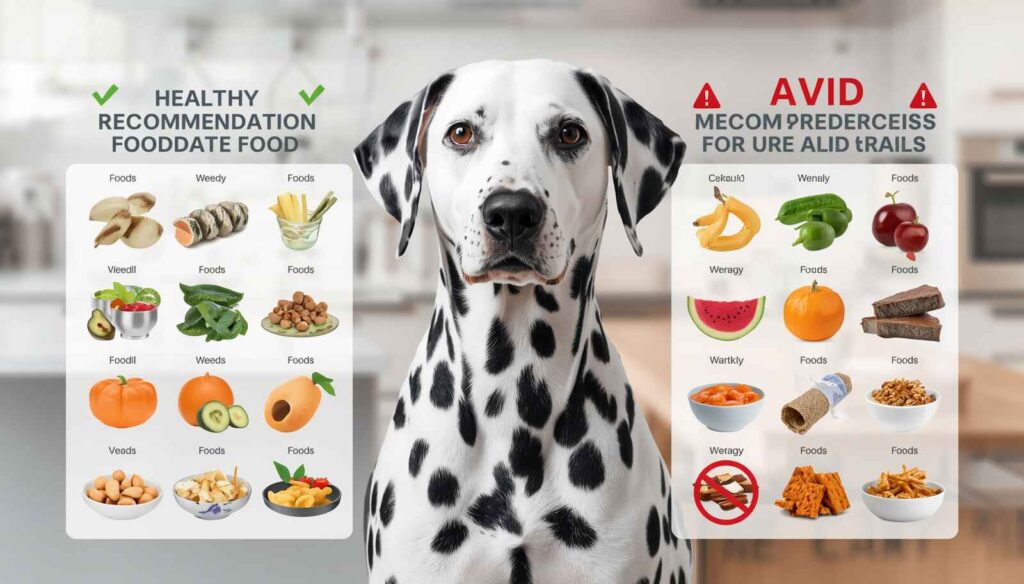
Here’s something that genuinely sets Dalmatians apart from almost every other breed: they process purines differently. While most dogs convert uric acid into a more soluble compound called allantoin, Dalmatians lack this ability. The result is that uric acid builds up and can form crystals or stones in the bladder and kidneys.
What Does This Mean for Feeding?
It means a standard high-protein dog food — especially one packed with organ meats and certain fish — can cause real problems. Dalmatians do better on a moderate-protein, low-purine diet.
Foods to minimise or avoid:
- Organ meats (liver, kidney, heart)
- Sardines, anchovies, mackerel
- Game meats (venison, rabbit in large amounts)
- Yeast-based products
Better protein sources for Dalmatians include chicken, turkey, eggs, and cottage cheese. Always ensure fresh water is available — hydration helps flush uric acid and reduces stone formation risk significantly.
LUA/NUA Dalmatians — What Are They?
LUA (Low Uric Acid) Dalmatians carry a different genetic variant that allows normal uric acid metabolism, like most other dog breeds. They were created through a controversial but now accepted backcross programme. NUA (Normal Uric Acid) is sometimes used interchangeably. These lines exist in the UK, North America, and Australia. Ask breeders about LUA status if urinary health is a major concern for you.
Training, Exercise & Mental Stimulation
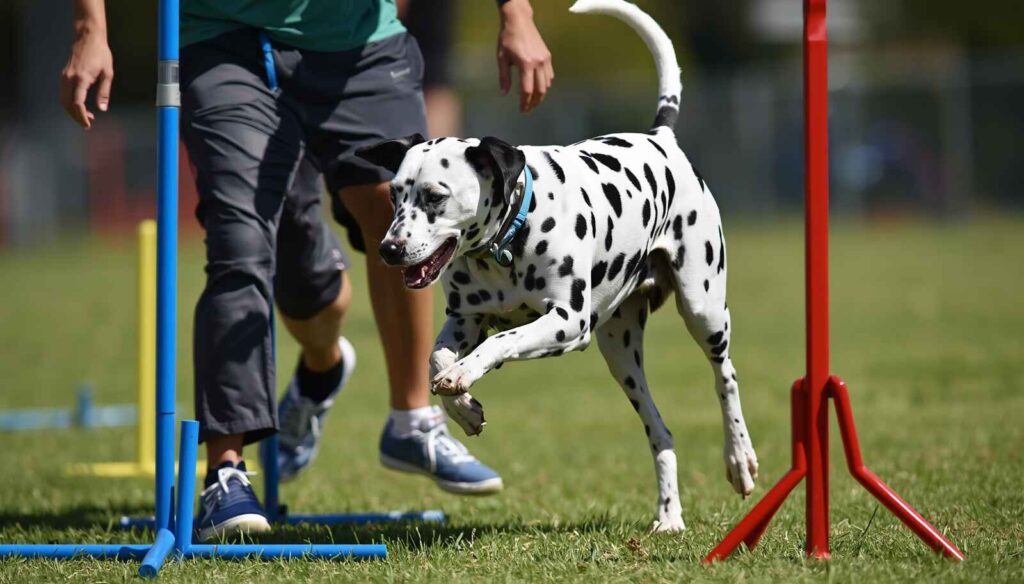
You cannot underestimate how much exercise a Dalmatian needs. These dogs were literally bred to run for miles beside a horse-drawn carriage. A 20-minute walk around the block? That’s a warm-up.
How Much Exercise Do They Need?
Adult Dalmatians need at least 2 hours of vigorous exercise daily — and “vigorous” is the key word. A good off-lead run, a cycle ride alongside you, or a swim will satisfy them far better than a slow plod on a lead. Mental stimulation matters too — nose work, puzzle feeders, and training sessions keep their active brains from going sideways.
Training: The Good and the Frustrating
Dalmatians are intelligent but independently minded. They learn quickly — but they also get bored quickly, which means short, varied, positive training sessions work best. Never use harsh methods; this breed shuts down or becomes anxious under pressure.
Positive reinforcement with high-value rewards (small treats, play, praise) works well. Consistency is everything. If the rules change depending on the day or the person, a Dalmatian will find every loophole.
✅ Sport Ideas for Dalmatians: Agility, flyball, canicross (running with your dog), and competitive obedience are all excellent outlets. Many Dals genuinely excel in these environments.
Responsible Dalmatian Breeding: What It Actually Looks Like

If you’re considering breeding your Dalmatian — or trying to understand how to identify a good breeder — this section is for you. Responsible breeding goes far beyond putting two spotted dogs together and hoping for healthy puppies.
Health Tests That Should Be Done Before Breeding
- BAER test — Both parents should be bilaterally hearing
- Hip & elbow scoring — OFA (North America), BVA (UK/Australia)
- Eye examination — Annual eye screening by a specialist
- HUU genetic test — To know the uric acid status of both parents
The Breeding Window & Progesterone Testing
Females typically come into season every 6–8 months. But the optimal breeding window is narrow — usually just 48–72 hours. Progesterone blood testing is the most accurate way to pinpoint ovulation timing and maximise conception rates. A responsible breeder uses this testing routinely — it’s not optional if you’re serious.
Whelping & What to Expect
Average litter size is 6–9 puppies, though larger litters of 10–15 are not unheard of. The mother’s temperature typically drops below 37°C (99°F) within 24 hours of whelping beginning. Have your whelping kit ready well in advance, and know your emergency vet contact before labour starts.
⚠️ When to Call the Vet Immediately: If the mother strains for more than 60 minutes without producing a puppy, if a puppy is stuck in the birth canal, if there’s green discharge before the first puppy, or if the mother seems extremely distressed — call your vet without delay.
Early Puppy Development
Puppies are born entirely white — the spots develop over the first few weeks of life. BAER testing happens at 5–6 weeks. Early Neurological Stimulation (ENS) from days 3–16 helps build resilience. By 8 weeks, socialisation should be well underway.
Finding a Good Dalmatian Breeder in the UK, Canada & Australia
This is where many people go wrong — and where the Dalmatian’s reputation often suffers. Puppy mills and inexperienced backyard breeders produce Dalmatians with unchecked health problems and poor temperaments. The good news is that finding a reputable breeder is straightforward once you know what to look for.
What a Good Breeder Will Do
- Provide full health test documentation for both parents
- Share BAER test results for each puppy in the litter
- Welcome you to visit and meet the mother (and ideally the sire)
- Ask you questions — they’ll want to know your experience level, lifestyle, and home situation
- Offer a health guarantee and take the dog back if you can’t keep them
- Stay available for support after you take the puppy home
Where to Start Your Search
- UK: The Kennel Club’s Find a Puppy service and The Dalmatian Club
- Canada: The Dalmatian Club of Canada (dalmatianclubofcanada.ca)
- Australia: Dalmatian Club of NSW, Dogs Victoria, or your state’s canine council
✅ Red Flag Checklist: No health tests? Multiple breeds always available? Puppies ready before 8 weeks? No interest in where the puppy is going? These are all signs to walk away.
Frequently Asked Questions
1.Are Dalmatians good for first-time dog owners?
Honestly, no — not typically. Dalmatians are high-energy, stubborn, and sensitive. They need an owner who can provide consistent training, significant daily exercise, and strong leadership. They do best with experienced dog owners. That said, if you go in with eyes wide open, a great support network, and proper training classes, it’s not impossible.
2.Do all Dalmatians have hearing problems?
No, but the rate is high enough that it’s a genuine concern. Around 8% are bilaterally deaf and around 22–24% are unilaterally deaf. BAER testing is the only way to know for certain. Always ask a breeder for BAER certificates for both parents and all puppies in the litter.
3.What is HUU and does it affect what Dalmatians eat?
HUU (Hyperuricosuria) is a genetic condition affecting all standard Dalmatians — they can’t convert uric acid into allantoin like other breeds. This means high-purine foods (organ meats, certain fish) can lead to bladder and kidney stones. A low-purine, moderate-protein diet with plenty of fresh water significantly reduces this risk. LUA/NUA lines have normal uric acid metabolism.
4.How much exercise does a Dalmatian really need?
More than most people expect — a minimum of 1.5 to 2 hours of vigorous activity daily. This is a breed built for endurance. Without adequate exercise and mental stimulation, Dalmatians become restless, anxious, and often destructive. Activities like running, cycling, agility, or fetch in a large space work best.
5.How many puppies do Dalmatians usually have?
Dalmatians typically have litters of 6–9 puppies, though some litters can be as large as 13–15. Large litters require careful monitoring of puppy weights and feeding to ensure all pups are thriving. An experienced breeder or vet should be involved throughout the whelping and early weeks.
6.Do Dalmatians shed a lot?
Yes — a lot. Despite their short coat, Dalmatians are year-round heavy shedders. Their short, stiff white hairs embed themselves in fabric and furniture. Weekly brushing with a rubber grooming mitt helps, but you will find dog hair on everything. Embrace it or reconsider.
7.Are Dalmatians good with other dogs?
They can be, with proper socialisation from a young age. Without it, some Dalmatians develop reactive or dominant behaviour around other dogs — especially same-sex dogs. Early puppy classes and ongoing positive socialisation experiences make a significant difference to how they interact as adults.
Final Thoughts
The Dalmatian is a remarkable breed — athletic, loyal, striking, and genuinely fun to live with when their needs are met. But they’re not a low-maintenance choice, and the spots don’t come without real responsibilities.
Know about the deafness. Understand the diet restrictions. Prepare for the exercise commitment. Choose your breeder carefully. Do all of that, and a Dalmatian can be one of the most rewarding companions you’ll ever have.
If you’re in the UK, Canada, or Australia and are seriously considering adding a Dalmatian to your family, start by contacting your national breed club. They’ll point you toward health-tested litters from breeders who genuinely care about the breed — not just the sale.
#. Related Articles: