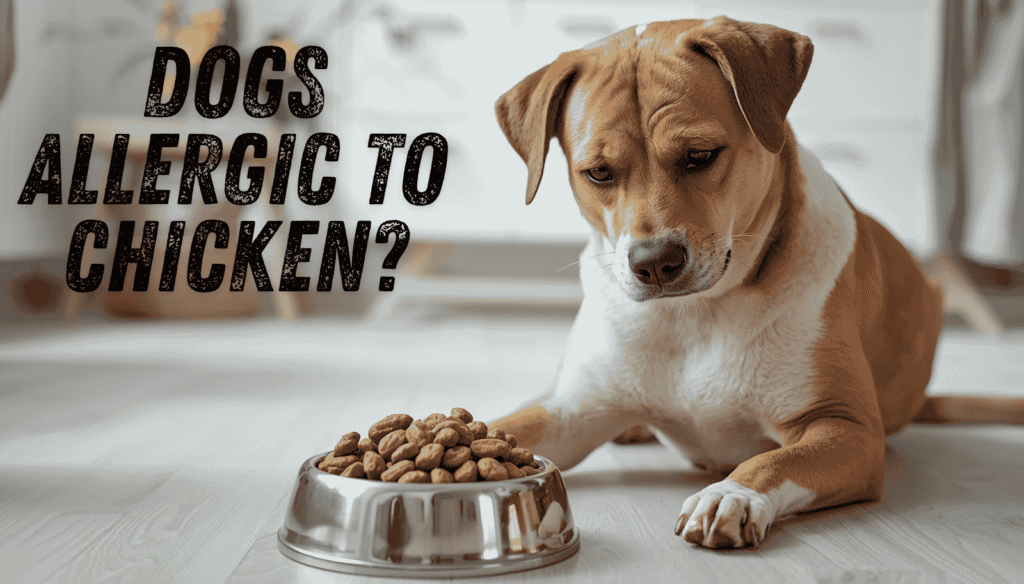
Are dogs allergic to chicken? It’s a question many owners ask when their dog suddenly develops itchy skin, recurring ear infections, or digestive problems after eating meals that once caused no issues.
Your dog will not stop licking their paws. Their ears keep flaring up despite two rounds of drops from the vet. You check the ingredients in their food, treats, and dental chews, and the same ingredient appears again and again: chicken.
It is understandable to suspect a connection and switch foods immediately. However, that can make the real cause harder to identify.
Some dogs are genuinely allergic to chicken protein, but most dogs tolerate chicken without a problem. Itchy skin, recurring ear trouble, vomiting, or diarrhoea cannot confirm a chicken allergy because fleas, environmental allergies, parasites, infections, and several digestive disorders can cause similar signs.
This guide explains which symptoms are worth investigating, what should be ruled out first, and how veterinarians confirm a suspected food allergy. Persistent, recurring, or severe symptoms should always be discussed with a vet rather than managed through repeated food changes at home.
The Quick Answer
- Dogs can be allergic to chicken, but chicken should not be blamed simply because it appears in their diet.
- A true food allergy involves an immune reaction, usually to chicken protein.
- Possible signs include chronic itching, paw licking, recurring ear or skin infections, vomiting, and diarrhoea.
- Fleas, pollen, mites, yeast, bacteria, and gastrointestinal disease can produce nearly identical symptoms.
- The most dependable diagnostic method is a strict elimination diet followed by a carefully planned food challenge.
- Improvement after changing food does not automatically prove that chicken was the trigger.
Allergy, Intolerance, or Just a Bad Day?

Before removing chicken, it helps to separate three problems that owners often describe as an “allergy.”
Chicken Allergy
A chicken allergy is an immune-mediated adverse food reaction. The immune system mistakenly identifies one or more chicken proteins as harmful and triggers inflammation.
Signs may affect:
- The skin
- The ears
- The paws
- The digestive tract
Some dogs have mostly skin symptoms, while others develop digestive signs or a combination of both.
Chicken Intolerance
Chicken intolerance does not necessarily involve the immune system. It is more likely to cause digestive problems and may relate to:
- Fat content
- Portion size
- Difficulty digesting a particular ingredient
- Another component in the food
- An abrupt diet change
A dog may therefore become unwell after eating a chicken-based meal without being allergic to chicken protein.
Ordinary Food Upset
One episode of vomiting or loose stool is not enough to diagnose either condition.
Temporary digestive upset may follow:
- A sudden food switch
- An unusually rich treat
- Overeating
- Spoiled food
- Scavenged rubbish
- Fatty leftovers
- Seasoned human food
These episodes often resolve once the immediate cause has passed, although persistent or severe symptoms still require veterinary attention.
| Comparison point | Chicken allergy | Chicken intolerance | Ordinary food upset |
|---|---|---|---|
| Immune system involved | Yes | Not necessarily | No |
| Common signs | Itching, paw licking, ear trouble, skin inflammation, vomiting or diarrhoea | Mainly digestive signs | Temporary vomiting, gas or loose stool |
| Typical pattern | Persistent or recurring | Repeats after eating the problem food | Often isolated |
| How it is assessed | Elimination diet followed by food challenge | Dietary history and exclusion of triggers | Recent feeding history and symptom resolution |
| Veterinary involvement | Recommended | Recommended if recurring | Needed if severe, painful or persistent |
| Long-term avoidance | Usually only after reasonable confirmation | May be needed | Usually unnecessary |
What Signs Might Make Chicken Worth Investigating?
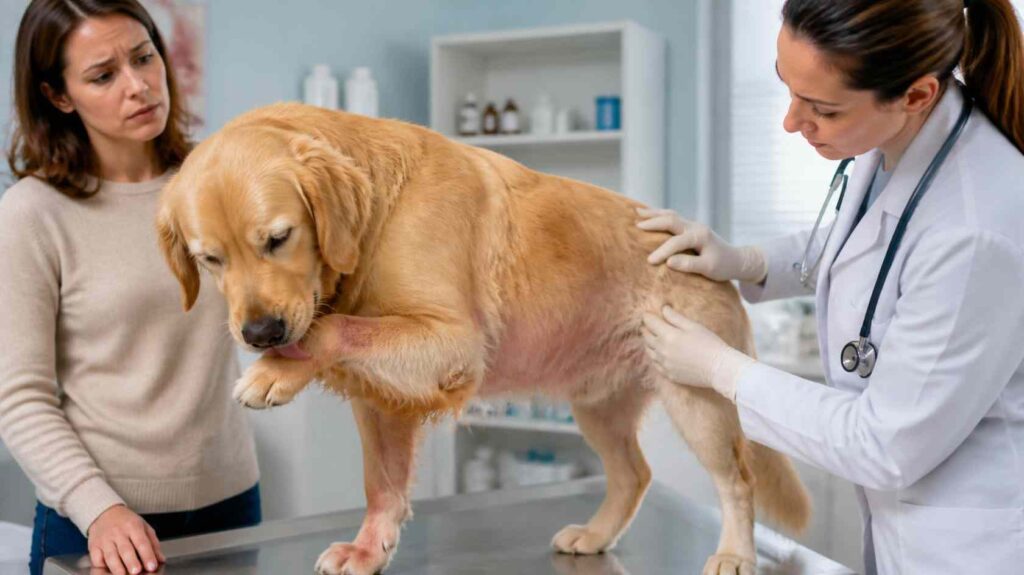
Chicken becomes more reasonable to investigate when symptoms are chronic, recur repeatedly, or return after treatment ends.
Skin and Coat Clues
Possible signs include:
- Persistent scratching
- Paw licking or chewing
- Red or inflamed skin
- Hair loss
- Scabs
- Hot spots
- Recurrent bacterial or yeast skin infections
- Itching that occurs throughout the year
A dog that scratches occasionally does not necessarily have an allergy. The pattern, severity, affected areas, and response to treatment matter more than one isolated symptom.
Ear-Related Clues
Recurring ear disease can occur alongside food allergy, although it is not proof that food is responsible.
Watch for:
- Redness
- Head shaking
- Ear scratching
- Dark or excessive discharge
- An unpleasant smell
- Pain when the ear is touched
- Ear infections that return after treatment
Removing chicken will not cure an established bacterial or yeast infection. Painful, swollen, or foul-smelling ears still need veterinary examination and treatment.
Digestive Clues
Possible gastrointestinal signs include:
- Vomiting
- Diarrhoea
- Persistently soft stools
- Excessive gas
- More frequent bowel movements
- Abdominal discomfort
- Reduced appetite
- Unexplained weight loss
Repeated vomiting, bloody diarrhoea, dehydration, abdominal swelling, marked pain, or inability to keep water down requires prompt veterinary care.
Behavioural Clues
Discomfort does not always look like obvious scratching. Owners may notice:
- Restlessness
- Interrupted sleep
- Irritability
- Repeated rubbing against carpets or furniture
- Difficulty settling
- Reluctance to walk because the paws are sore
- Reduced interest in play
These changes are useful to record, but they remain nonspecific.
Why These Signs Are Not Proof
None of these symptoms belongs exclusively to chicken allergy.
A dog may have:
- Flea allergy
- Environmental allergy
- Mites
- A bacterial or yeast infection
- Gastrointestinal parasites
- Another dietary trigger
- More than one problem at the same time
For example, a dog may improve slightly after chicken is removed but remain itchy because an ear infection or pollen allergy is still present. That partial response should not automatically be treated as proof of chicken allergy.
Symptom Checklist
Use this checklist to prepare for a veterinary consultation, not to diagnose your dog at home.
- Persistent paw licking
- Recurrent ear redness or discharge
- Ongoing scratching
- Red or inflamed skin
- Hair loss
- Repeated hot spots
- Recurring yeast or bacterial infections
- Vomiting
- Diarrhoea or persistently soft stool
- Excessive gas
- Symptoms that occur year-round
- Symptoms that return when medication ends
- Weight loss or reduced appetite
Before Blaming Chicken, Rule Out More Common Causes

This is the step many owners miss. Switching foods without checking for other causes can delay the correct treatment and make later testing harder to interpret.
Fleas and Flea Allergy
A flea-sensitive dog can develop intense itching after only a small number of bites. Fleas may also be difficult to spot because dogs groom them away.
Consistent flea control is important during any food investigation. Otherwise, continued flea exposure can make a successful diet trial appear to have failed.
Environmental Allergies
Pollen, grass, mould, and dust mites commonly cause:
- Paw licking
- Ear inflammation
- Facial rubbing
- Red skin
- Recurrent skin infections
Seasonal symptoms make environmental allergy more likely. However, year-round itching does not automatically prove food allergy because indoor allergens, fleas, and chronic infections can also persist throughout the year.
Parasites and Infections
Conditions that may resemble a food reaction include:
- Mites
- Intestinal parasites
- Bacterial skin infections
- Malassezia yeast overgrowth
- Ear infections
- Fungal skin disease
Secondary infections can also develop because an allergic dog has scratched and damaged the skin. These infections often need separate treatment even when the underlying trigger is being investigated.
Other Dietary Explanations
Chicken may be present in the food without being responsible for the symptoms.
Other possibilities include:
- Another animal protein
- A high-fat meal
- An abrupt food change
- Excessive treats
- Table scraps
- Spoiled food
- An ingredient the dog cannot digest well
- Several ingredients changing at the same time
A random switch from chicken food to fish food may also change the fat, fibre, additives, and calorie density. Improvement after the switch does not isolate chicken as the cause.
Underlying Medical Conditions
Digestive and skin symptoms can sometimes be linked to conditions that need more than a diet change, including:
- Chronic enteropathy
- Pancreatitis
- Gastrointestinal obstruction
- Endocrine disease
- Medication side effects
- Nutrient deficiencies
- Other inflammatory conditions
Dogs with repeated vomiting, weight loss, poor appetite, bloody stool, marked lethargy, or abdominal pain need veterinary investigation rather than dietary experimentation.
| Sign | Could chicken allergy cause it? | Other common explanations | Sensible next step |
|---|---|---|---|
| Itchy paws | Yes | Grass allergy, mites, yeast, contact irritation | Examine the paws and discuss any recurring pattern with a vet |
| Recurring ear infections | Yes | Yeast, bacteria, ear anatomy, environmental allergy | Arrange an ear examination and cytology if recommended |
| Diarrhoea | Yes | Parasites, infection, abrupt diet change, intolerance | Monitor severity and seek veterinary care if persistent |
| Vomiting | Yes | Dietary indiscretion, pancreatitis, obstruction, toxin exposure | Seek advice based on frequency, severity and accompanying signs |
| Red skin | Yes | Fleas, contact irritation, mites, bacterial infection | Request a skin and parasite assessment |
| Hair loss | Yes | Excessive scratching, parasites, infection, hormonal disease | Veterinary examination if ongoing or spreading |
Warning: Seek urgent veterinary help if your dog develops facial swelling, difficulty breathing, collapse, severe weakness, repeated vomiting, bloody diarrhoea, a swollen abdomen, or rapidly worsening symptoms. Do not deliberately feed chicken again at home if a previous reaction was sudden or severe.
Can a Dog Suddenly Become Allergic After Years of Eating Chicken?

Yes. A dog can tolerate chicken for years and later develop an adverse reaction to it. Previous tolerance does not guarantee lifelong tolerance because food allergies can develop after repeated exposure to a particular protein.
However, exposure is not the same as causation. Chicken appears frequently in suspected cases partly because it is widely used in dog food, treats, chews, and supplements. That does not mean regularly feeding chicken causes an allergy, and most dogs continue to tolerate it without difficulty.
A suspected chicken allergy can develop at any life stage, including in puppies, adults, and senior dogs. Breed alone cannot identify the trigger, and itching that begins later in life should still be assessed for fleas, environmental allergies, infections, parasites, and other medical causes.
Myth Check
Myth: Eating chicken regularly always leads to an allergy.
Reality: Most dogs continue to tolerate chicken throughout their lives.
Myth: A dog cannot become allergic after eating chicken safely for years.
Reality: Later-onset food reactions are possible and well recognised.
Myth: Every itchy dog has a food allergy.
Reality: Flea allergy, environmental allergy, parasites, and skin infections are often more likely explanations.
Myth: Chicken-free automatically means grain-free.
Reality: These are separate label claims. A food can be chicken-free and contain grains, or grain-free and still contain chicken.
Myth: Cooking chicken removes the allergen.
Reality: Cooking does not reliably destroy the proteins responsible for a true chicken allergy.
Myth: Probiotics can cure a chicken allergy.
Reality: Probiotics may support digestive health in some dogs, but they do not confirm, cure, or replace management of a food allergy.
How Vets Investigate a Suspected Chicken Allergy
A veterinarian will usually begin with a detailed medical and dietary history. This should include:
- Current and previous foods
- Treats and dental chews
- Table scraps
- Supplements
- Flavoured medications
- Foods given by other household members
- Previous symptoms and treatments
- Any improvement or relapse after diet changes
The vet may then look for other causes before blaming chicken. Depending on the symptoms, this can include:
- Flea and parasite assessment
- Skin examination
- Ear examination
- Skin or ear cytology
- Stool testing
- Treatment of bacterial or yeast infections
- Investigation of persistent vomiting, diarrhoea, weight loss, or poor appetite
Blood, saliva, hair, and many home allergy tests are not considered reliable for diagnosing food allergy. False-positive results can lead owners to remove multiple ingredients unnecessarily, creating expensive or nutritionally unbalanced diets.
A strict elimination diet followed by a controlled food challenge remains the most dependable way to investigate a suspected food reaction.
Referral to a veterinary dermatologist may be helpful when a dog has:
- Chronic or severe skin disease
- Recurrent ear infections
- Several suspected allergies
- Little improvement despite a correctly managed food trial
- A diagnosis that remains unclear after primary veterinary care
Vet Advice: Before the appointment, photograph ingredient labels and write down everything your dog eats, including occasional treats, chews, supplements, toothpaste, and flavoured medication. Do not stop prescribed treatment unless your veterinarian advises you to do so.
The Diagnostic Food Trial, Step by Step

1. Establish a Baseline
Before changing the diet, record:
- Itch severity
- Paw licking or chewing
- Ear redness, smell, or discharge
- Stool quality
- Vomiting frequency
- Skin lesions
- Current medication
- Body weight
Weekly photographs taken in similar lighting can make gradual changes easier to recognise.
2. Choose the Right Diet
The main options are:
- A veterinary hydrolysed-protein diet
- A veterinary novel-protein diet
- A professionally formulated home-prepared diagnostic diet
A protein is only novel if the dog has never eaten it before. Previous exposure may have occurred through mixed-protein foods, treats, chews, supplements, or flavoured medication.
3. Feed the Diet Exclusively
During the trial, the dog should receive only the approved diet and permitted extras.
Avoid:
- Ordinary treats
- Dental chews
- Table scraps
- Unapproved supplements
- Flavoured medication unless cleared by the vet
- Other pets’ food
- Shared food scoops or bowls
- Food dropped by children
- Training rewards outside the plan
Even small exposures can make the result difficult to interpret.
4. Monitor Consistently
Track:
- Stool quality each day
- Itching and paw licking
- Ear condition
- Vomiting
- Skin changes
- Medication use
- Accidental exposures
- Body weight
Do not rely on memory alone. Skin, ear, and digestive signs may improve at different rates.
5. Assess Improvement Carefully
Partial improvement can still be meaningful, especially when a dog has more than one condition. For example, removing a food trigger may reduce itching while an established yeast infection continues to cause redness and odour.
No improvement may suggest:
- Accidental exposure
- An unsuitable trial diet
- A trial that ended too early
- An untreated secondary infection
- Flea or environmental allergy
- A different medical condition
6. Complete a Vet-Guided Food Challenge
Improvement during the elimination phase suggests an adverse food reaction, but it does not prove chicken was responsible. Under veterinary guidance, the suspected ingredient may be reintroduced to see whether the original symptoms return.
This challenge helps separate a true chicken reaction from improvement caused by other changes, such as flea treatment, antibiotics, seasonal changes, or a different fat or fibre content in the new food.
Do not deliberately reintroduce chicken at home if the dog previously developed a rapid or severe reaction.
Warning: Seek urgent veterinary help for facial swelling, breathing difficulty, collapse, severe weakness, repeated vomiting, or rapidly worsening symptoms. Persistent vomiting, bloody diarrhoea, dehydration, unexplained weight loss, painful ears, or open infected skin also require veterinary care rather than continued dietary experimentation.
Why Food Trials Commonly Fail
Most unsuccessful elimination trials fail because the diet was not fully controlled, not because the method itself was ineffective.
Common reasons include:
- Hidden treats, dental sticks, rawhide, or pill pockets
- Flavoured wormers, supplements, toothpaste, or medication
- Access to another pet’s food
- Shared bowls, scoops, or treat containers
- Choosing a protein the dog has previously eaten
- Stopping the trial before skin symptoms have had time to respond
- Changing food, shampoo, supplements, and medication at the same time
- Using a retail diet that contains undeclared or additional animal proteins
For example, a dog may eat the correct hydrolysed food but receive one chicken-flavoured dental chew each evening. The owner may conclude that the diet failed even though the trial was never truly exclusive.
Common Mistakes Worth Avoiding

- Diagnosing an allergy after one episode of diarrhoea
- Assuming every itchy dog has a food allergy
- Switching foods every few days
- Reading only the front of the food package
- Assuming a “salmon recipe” cannot contain chicken
- Choosing grain-free food when chicken is the suspected issue
- Treating blood, saliva, hair, or home tests as final proof
- Rotating through many proteins without veterinary guidance
- Feeding an unformulated homemade diet long term
- Stopping ear or skin medication when the food trial begins
- Assuming turkey, duck, egg, or chicken fat must be safe
- Forgetting treats, chews, supplements, and flavoured medicines
Reading Labels for Hidden Chicken
Clear chicken-derived ingredients include:
- Chicken
- Chicken meal
- Chicken by-product meal
- Chicken liver
- Chicken broth
- Chicken stock
Broader terms that require caution include:
- Poultry
- Poultry meal
- Poultry fat
- Poultry digest
Less specific terms may need confirmation from the manufacturer:
- Animal digest
- Meat meal
- Natural flavour
- Animal protein
- Unspecified liver
- Unspecified broth
The front label is not enough. A food marketed as “salmon,” “lamb,” or “beef” may still contain chicken meal, poultry digest, or another chicken-derived ingredient further down the ingredient list.
Recipes can also change between purchases. During a strict diagnostic trial, veterinary diets generally provide better control over ingredients and manufacturing cross-contact than ordinary retail limited-ingredient foods.
| Ingredient term | Likely relevance | Recommendation during a strict trial |
|---|---|---|
| Chicken meal | Concentrated source of chicken protein | Avoid |
| Chicken broth | May contain chicken protein | Avoid unless the vet approves it |
| Poultry meal | Species may not be identified | Treat cautiously |
| Animal digest | Protein source may be unclear | Confirm with the manufacturer or avoid |
| Natural flavour | May be animal-derived | Investigate before feeding |
| Chicken fat | Usually contains little protein, but purity varies | Use only if specifically approved |
| Egg | Contains different proteins, but safety cannot be assumed | Do not introduce during the trial without approval |
| Turkey or duck | Separate poultry species with possible cross-reactivity or previous exposure | Base the decision on diet history and veterinary advice |
Chicken Fat, Eggs, Turkey, and Duck: The Grey Areas

Food allergies are usually triggered by proteins rather than fats, so highly purified chicken fat may contain very little residual chicken protein. However, purity and manufacturing controls vary. Do not assume chicken fat is safe during a diagnostic trial unless your veterinarian has approved the specific diet.
Egg contains different proteins from chicken meat, and some dogs with a confirmed chicken allergy tolerate egg without difficulty. Others may react to egg separately. Avoid introducing it during a strict elimination trial unless it is already part of the approved plan.
Turkey and duck are not automatically safe because they come from different birds, but they are not automatically unsafe either. Cross-reactivity between poultry proteins can occur, and previous exposure may also matter. The decision should be based on your dog’s complete diet history and veterinary guidance rather than a blanket poultry-free rule.
Hydrolysed chicken protein is different from ordinary chicken protein. It has been broken into smaller fragments that are less likely to trigger an immune response. This is why some veterinary hydrolysed diets may be suitable even when chicken is suspected. Suitability depends on the individual dog and the specific product, so use one only as part of a veterinarian-directed plan.
Choosing a Diet That Does Not Create New Problems
| Diet option | Diagnostic reliability | Cross-contact risk | Nutritional completeness | Veterinary supervision | Best use |
|---|---|---|---|---|---|
| Veterinary hydrolysed diet | High when fed exclusively | Low | Usually complete and balanced | Strongly recommended | Diagnostic food trial |
| Veterinary novel-protein diet | High when the protein is genuinely novel | Low | Usually complete and balanced | Recommended | Diagnostic food trial |
| Retail limited-ingredient diet | Variable | Moderate | Often complete, but labels must be checked | Helpful | Long-term feeding after diagnosis |
| Home-prepared trial diet | Variable | Depends on preparation | Risky if not professionally formulated | Essential | Selected cases |
| Random chicken-free food | Low | Variable | Variable | Not enough on its own | General feeding, not diagnosis |
A long-term diet should be:
- Free from the confirmed trigger
- Complete and balanced for the dog’s life stage
- Appropriate for any other medical conditions
- Suitable in calorie and fat content
- Affordable and practical to feed consistently
- Palatable enough that the dog will eat it reliably
Avoid creating a diet that is unnecessarily restrictive. Removing multiple proteins without evidence can make future food trials harder and may limit suitable feeding options.
Why a Dog Might Still Itch After Chicken Is Removed

Removing chicken will not help if chicken was not the cause. Continued or partial symptoms may also result from:
- Hidden exposure through treats, chews, supplements, or another pet’s food
- A bacterial or yeast infection that needs separate treatment
- Flea allergy or environmental allergy
- Another dietary ingredient being responsible
- An unsuitable or incomplete food trial
- Stopping prescribed skin or ear treatment too soon
- Poor tracking that makes gradual improvement difficult to recognise
For example, a dog may scratch less after a diet change but still have red, painful ears because an established yeast infection has not been treated. That does not automatically mean the diet failed.
Special Situations
Puppies
Puppies have high nutritional demands for growth. Improvised or poorly balanced restriction can cause deficiencies, so elimination diets should be chosen with veterinary guidance from the start.
Senior Dogs
Older dogs may have kidney, liver, dental, or digestive conditions that affect food choice. Their medications and supplements should also be checked for flavourings that could interfere with a trial.
Dogs With Pancreatitis
A novel protein does not automatically make a food suitable for pancreatitis. Fat content may be just as important as the protein source, and the diet should be selected with veterinary input.
Pregnant or Nursing Dogs
Pregnant and nursing dogs should not be placed on an improvised restrictive diet. Their energy and nutrient requirements are higher, and any diet change should be supervised professionally.
Dogs With Multiple Suspected Allergies
Dogs with severe skin disease, repeated ear infections, several suspected food triggers, or an unclear response to previous trials may benefit from referral to a veterinary dermatologist rather than prolonged trial and error at home.
Safe Long-Term Management After Confirmation
Once chicken has been reasonably confirmed as the trigger:
- Keep a clear list of approved and avoided ingredients.
- Recheck labels regularly because recipes can change.
- Continue flea control and treatment for any environmental allergies.
- Make sure treats, chews, supplements, and medications fit the diet.
- Keep the main food complete and balanced.
- Add the allergy to your dog’s veterinary record.
- Inform groomers, pet sitters, kennels, and family members.
- Avoid testing new poultry ingredients without a clear reason or veterinary plan.
A confirmed allergy usually requires ongoing avoidance rather than a temporary break from chicken. Accidental exposure may cause symptoms to return, although the severity and timing can vary between dogs.
Quick Tips
- Photograph every ingredient panel before changing foods.
- Use pieces of the approved diet as treats.
- Store trial food separately with a dedicated scoop and bowl.
- Record accidental exposures honestly.
- Track ears, paws, skin, stool, and vomiting separately.
- Check medication and supplement flavourings with your veterinary clinic.
- Avoid changing several treatments at once unless your vet advises it.
The Bottom Line
Chicken can genuinely trigger an allergy in some dogs, but it is often blamed before more common causes such as fleas, environmental allergies, yeast, or bacterial infections have been ruled out.
The most reliable approach is to investigate the whole dog rather than simply switching to a food labelled “chicken-free.” Work with your vet to rule out other causes, complete a properly controlled elimination diet, and use a supervised food challenge when appropriate.
It takes more effort than changing bags at the pet shop, but it gives you a far better chance of identifying the real trigger and choosing a safe, nutritionally complete diet your dog can stay on long term.
Frequently Asked Questions
1.Can dogs suddenly become allergic to chicken after eating it for years?
Yes. A dog can tolerate chicken for years and later develop an immune reaction to it. However, new itching or digestive symptoms should not be blamed on chicken without first considering fleas, environmental allergies, infections, parasites, and other medical causes.
2.Does improvement after removing chicken prove it was the cause?
No. Improvement may be related to several changes in the new diet, treatment of a secondary infection, better flea control, or natural variation in symptoms. A veterinarian-guided reintroduction of chicken is usually needed to confirm that it was the trigger.
3.Are at-home allergy tests using blood, saliva, or hair reliable?
These tests are not considered dependable for diagnosing food allergy. False-positive results can lead to unnecessary restrictions. A strict elimination diet followed by a controlled food challenge remains the most useful diagnostic approach.
4.Can a dog with a chicken allergy safely eat turkey or duck?
Possibly, but it should not be assumed. Some dogs tolerate other poultry species, while others may react because of cross-reactivity or previous exposure. Base the decision on the dog’s diet history and veterinary advice.
5.Is it safe to feed boiled chicken and rice if chicken allergy is suspected?
No. Boiled chicken may be used for some short-term digestive problems, but it is unsuitable when chicken itself is being investigated. Feeding it during an elimination trial would interfere with the results.
6.How long does a proper elimination diet trial usually need to run?
The exact duration depends on the dog’s symptoms and veterinary plan. Digestive signs may improve sooner than skin or ear problems, which often need more time. Do not end the trial early just because improvement is gradual.
7.Does chicken-free dog food automatically mean it is grain-free?
No. Chicken-free and grain-free are separate claims. A grain-free food may still contain chicken, while a chicken-free diet may contain grains. Always check the complete ingredient list rather than relying on the front label.
#. Related Articles:
1. Best Dog Food for Acid Reflux?