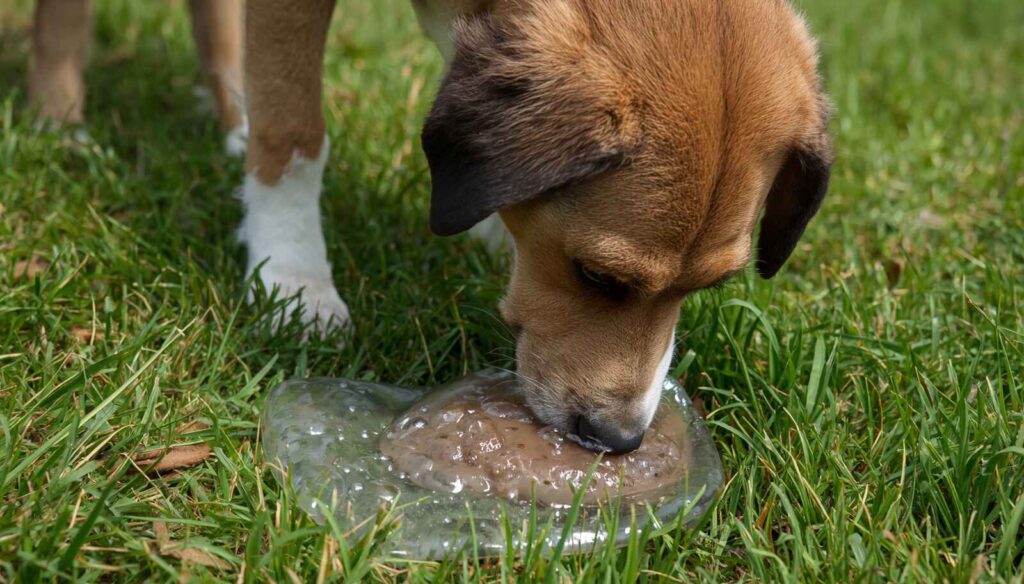
Mucus in dog poop can be unsettling to find, especially when you notice a shiny, jelly-like coating on a stool that otherwise looks normal. A small amount of visible mucus occasionally isn’t necessarily a sign of illness. But mucus accompanied by diarrhoea, blood, repeated straining or changes in your dog’s behaviour deserves closer attention.
What matters most isn’t just how the mucus looks. It’s how your dog feels, how often it happens and what other symptoms appear.
This guide will help you recognise different stool patterns, understand possible causes, decide when veterinary care is needed and avoid common mistakes when managing digestive problems.
Before You Study the Poop, Check Your Dog
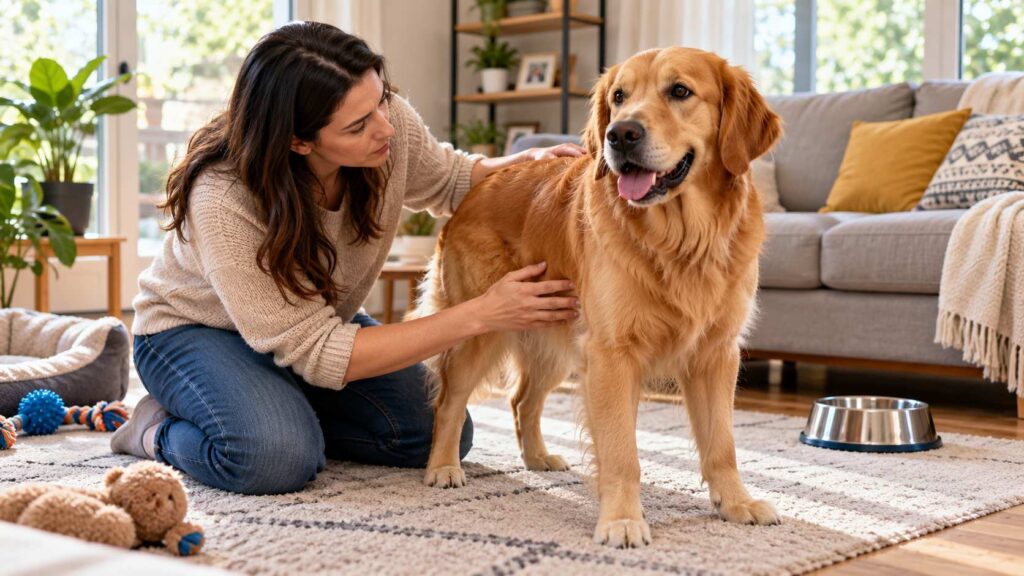
It’s tempting to focus entirely on what’s in the stool, but start by looking at your dog. A few simple observations can help you decide what to do next.
Three Questions That Change What You Should Do
- Is your dog acting normally? Eating, drinking and behaving as usual are reassuring signs. Hiding, unusual restlessness, weakness, abdominal discomfort or refusing food are more concerning.
- Is this a one-off or a repeated change? A single mucus-coated stool is different from mucus appearing repeatedly over several days.
- Are there other symptoms? Blood, vomiting, diarrhoea, repeated straining or a swollen, painful abdomen can change how urgently your dog needs veterinary attention.
Normal behaviour is reassuring, but it doesn’t completely rule out an underlying digestive problem.
A Quick Decision Guide
| Situation | Suggested action |
|---|---|
| One small amount of mucus on formed stool in an otherwise healthy adult dog | Brief, close observation may be reasonable |
| Repeated mucus, persistent diarrhoea, reduced appetite or fresh blood | Contact your vet promptly |
| Collapse, severe bloody diarrhoea, severe abdominal pain or repeated vomiting with inability to keep water down | Seek emergency veterinary care |
| Puppy, senior dog or medically vulnerable dog with gastrointestinal symptoms | Seek veterinary advice earlier |
| Repeated unproductive straining or possible inability to urinate | Seek urgent assessment; inability to urinate is an emergency |
Warning: Don’t Wait for the Next Bowel Movement
If your dog collapses, develops severe abdominal pain, passes substantial amounts of blood or cannot keep water down, contact an emergency veterinarian immediately.
Puppies, particularly very young or incompletely vaccinated puppies, need extra caution when diarrhoea or other signs of illness appear.
Any recommendation to observe your dog at home stops applying when serious warning signs develop.
The Cornell University College of Veterinary Medicine also recommends seeking veterinary attention when diarrhoea is accompanied by concerning symptoms such as vomiting, lethargy, loss of appetite or black, tarry stool. These warning signs can indicate a more serious problem and should not be ignored.
Which of These Five Poop Patterns Are You Seeing?
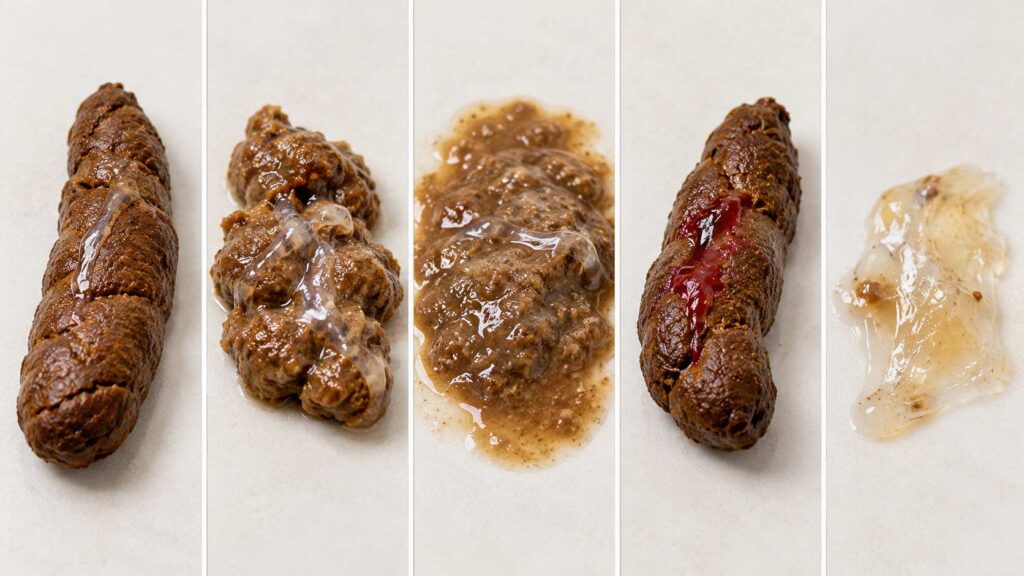
Not all mucus looks the same. The stool’s consistency, frequency and accompanying symptoms often provide more useful clues than the mucus itself.
Formed Poop With a Thin, Clear Coating
The stool has a normal shape, but there’s a slippery, transparent film around it.
In an otherwise healthy adult dog, a single episode may reflect temporary intestinal irritation. If your dog remains comfortable, eats normally and has no other symptoms, brief observation may be appropriate.
Watch the next few bowel movements. Increasing mucus, recurring episodes or new symptoms warrant veterinary advice.
Soft or Watery Poop Mixed With Mucus
When mucus appears alongside diarrhoea, it suggests a broader digestive disturbance.
Pay attention to how frequently your dog defecates, whether they are drinking normally and whether they seem uncomfortable.
Frequent watery diarrhoea can cause dehydration, particularly in puppies, small dogs and dogs with existing medical conditions.
Don’t assume the problem is minor simply because your dog still wants to eat.
Frequent Small Poops With Mucus
A dog that repeatedly asks to go outside, produces small amounts of stool and strains or seems unusually urgent may have irritation involving the large intestine.
As explained in the Merck Veterinary Manual, veterinarians commonly associate this pattern with large-bowel diarrhoea, including colitis.
However, mucus and straining are clinical clues, not proof of colitis. Other conditions can produce similar signs.
Mucus With Fresh Blood or Black Stool
Fresh red blood may indicate bleeding in the lower digestive tract, although its appearance cannot reliably identify the exact location or cause.
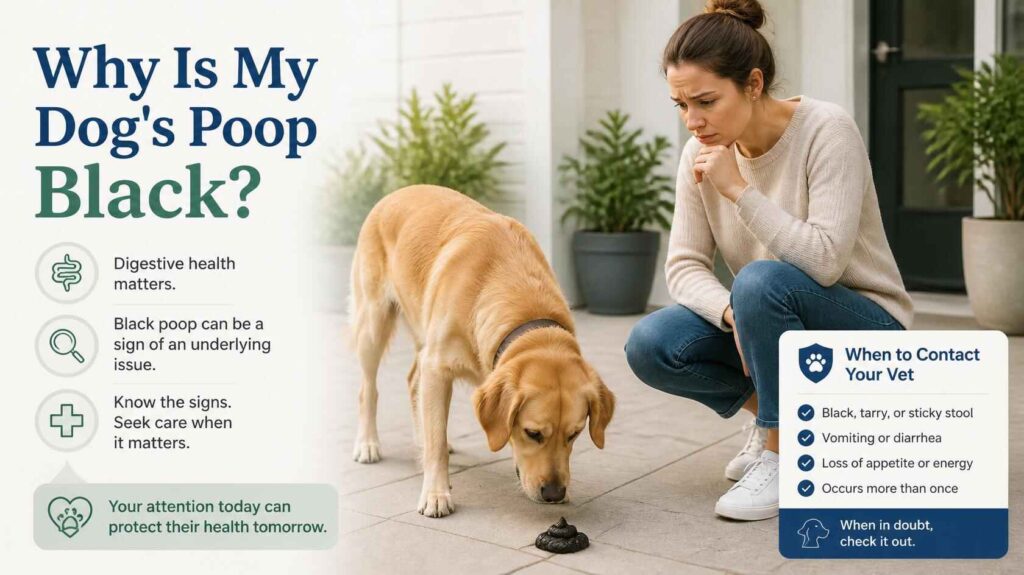
Black, sticky, tar-like stool is different. It may indicate digested blood, a finding called melena, which can be associated with bleeding higher in the gastrointestinal tract.
Certain foods or medications can also darken stool, but suspected melena requires prompt veterinary assessment.
If blood appears with mucus, contact your veterinarian. Severe bleeding, weakness, pale gums or collapse requires emergency care.
Repeated Squatting but Only Mucus Comes Out
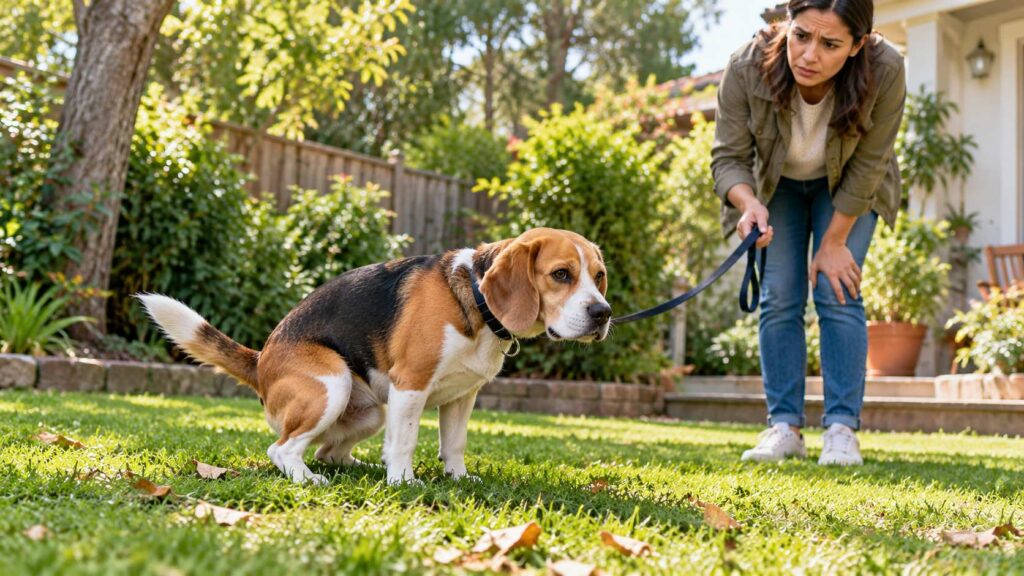
Repeated attempts to defecate with little or no stool may occur with colonic irritation, constipation or other problems affecting the digestive tract.
A blockage is another possibility, particularly when vomiting, abdominal pain or worsening illness accompanies the straining.
Importantly, owners sometimes mistake difficulty urinating for difficulty defecating. A dog that cannot pass urine needs emergency veterinary treatment.
If you cannot tell which problem your dog is experiencing, seek urgent veterinary advice.
| Stool pattern | Potential clue | Important limitation |
|---|---|---|
| Formed stool with mucus | Temporary intestinal irritation | Does not establish the cause |
| Frequent small stools with mucus | Possible large-bowel involvement | Not proof of colitis |
| Watery diarrhoea with mucus | Gastrointestinal disturbance | Many possible causes |
| Blood with mucus | Bleeding or inflammation | Severity and other symptoms matter |
| Mucus without meaningful stool | Straining or lower-bowel problem | Needs veterinary assessment when repeated |
The Slime Itself Can Be Misleading
What Intestinal Mucus Actually Does
Mucus isn’t a foreign substance that has somehow entered your dog’s digestive system.
The intestinal lining naturally produces mucus, particularly in the large intestine. It helps lubricate stool and protects the intestinal surface.
Normally, you may not notice it. When the bowel becomes irritated or inflamed, mucus production can increase, making it more visible.
A small amount doesn’t automatically indicate disease, but repeated or excessive mucus deserves attention.
Clear, White, Yellow or Pink: What Colour Can’t Tell You
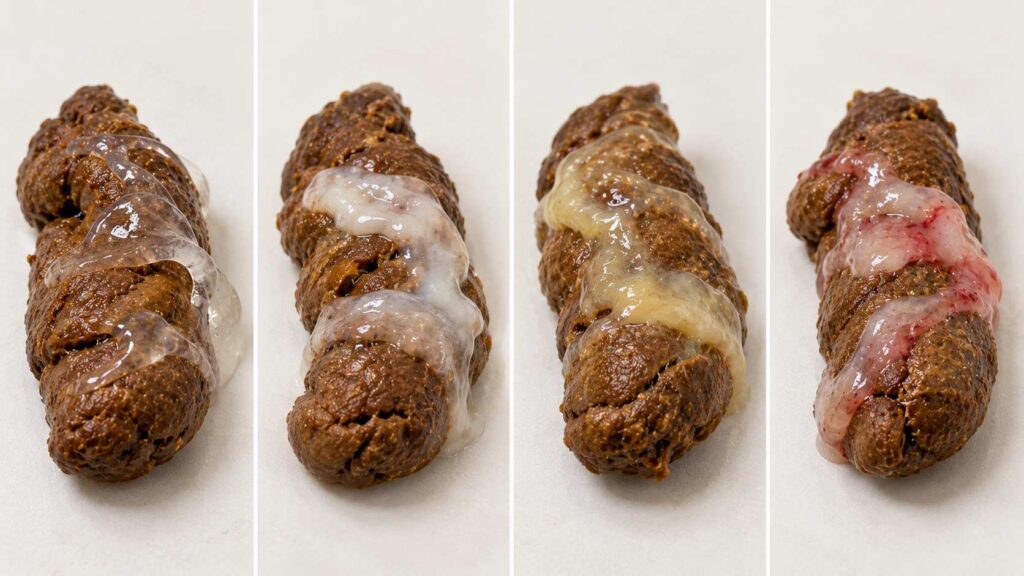
Owners understandably look for clues in mucus colour.
- Clear or white: May be ordinary intestinal mucus that has become visible.
- Yellowish or greenish: May reflect staining from intestinal contents, but colour alone cannot identify the cause.
- Pink or red: May indicate blood mixed with mucus and warrants veterinary advice.
- Brown or black material: May be stained by stool; genuinely black, tarry faeces require prompt assessment.
Diet, bile and intestinal transit can affect stool appearance.
Mucus colour cannot reliably distinguish parasites, infections, food reactions or inflammatory disease. The surrounding symptoms and stool pattern matter more.
Mucus, Worms or Undigested Food?
Mucus usually appears glossy, slippery or jelly-like. However, other substances can be mistaken for it.
Tapeworm segments may resemble small grains of rice, while adult roundworms can look like pale strands of spaghetti. Undigested food fibres may also resemble strings.
A photograph can help your vet assess what you’re seeing, but visual appearance alone cannot confirm every parasite or intestinal condition.
If you notice suspicious material, collect a fresh stool sample if practical and ask your veterinarian whether testing is needed.
What Could Be Irritating Your Dog’s Gut?
There isn’t one explanation for mucus in stool. A useful starting point is whether the change appeared suddenly or has been recurring.
Recent Changes That May Explain a Sudden Episode
Think about what happened before the first unusual bowel movement.
- New food or treats: Sudden dietary changes can disturb digestion, particularly in sensitive dogs.
- Scavenging: Eating discarded food, rubbish or unfamiliar material outdoors can irritate the gastrointestinal tract.
- Stressful events: Boarding, travel, fireworks or major routine changes may contribute to stress-associated colitis in some dogs.
- Medication changes: Certain medications, including some antibiotics, may cause gastrointestinal side effects.
A recent change provides a clue, not a diagnosis.
For example, mucus appearing after a boarding stay could be stress-related, but exposure to an intestinal infection or parasite may also be relevant.
Causes That May Need Veterinary Testing
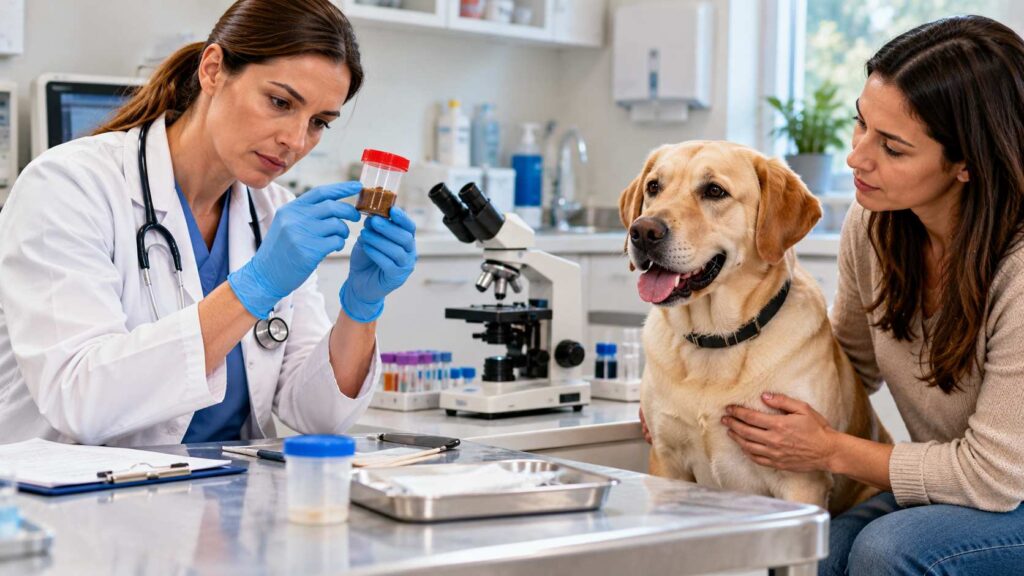
Several medical conditions can produce mucus in dog stool.
- Intestinal parasites: Giardia, whipworms and coccidia can cause gastrointestinal signs, although symptoms vary.
- Gastrointestinal infections: Certain bacterial and viral infections may cause diarrhoea, mucus and other symptoms.
- Colitis: Inflammation of the colon may produce mucus, urgency, straining and sometimes fresh blood.
- Constipation: Irritation associated with difficult bowel movements may result in mucus.
- Rectal or intestinal disorders: Less common structural problems may also affect defecation.
Giardia can cause intermittent diarrhoea, sometimes with mucus, but not every infected dog has obvious symptoms.
Routine deworming does not necessarily protect against every intestinal parasite. Your vet may recommend specific tests based on your dog’s history and symptoms.
Causes to Consider When Mucus Keeps Returning
If mucus disappears and returns over weeks or months, repeated short-term home remedies are unlikely to answer the underlying question.
Possible causes include chronic enteropathy, adverse food reactions, persistent parasitic infections and other gastrointestinal disorders.
Less commonly, structural disease involving the colon or rectum may need investigation.
Mucus alone cannot diagnose inflammatory bowel disease (IBD) or food allergy.
Veterinarians may use dietary history, faecal testing, blood tests, imaging or a carefully controlled diet trial to investigate persistent symptoms.
Recurring mucus deserves veterinary attention even when your dog seems completely normal between episodes.
Why a Puppy Changes the Decision
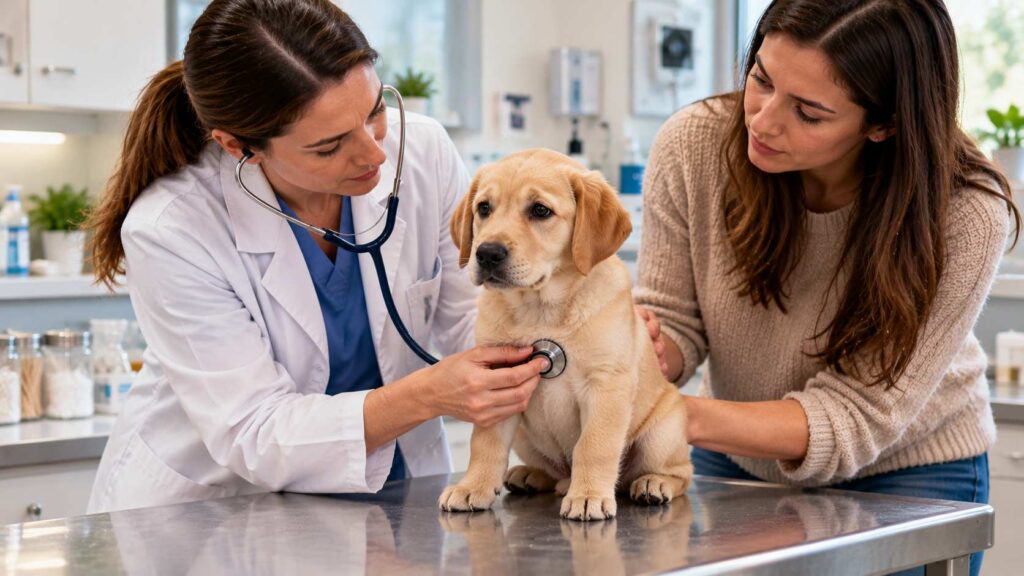
Greater Risks in Young Dogs
Puppies can become dehydrated more quickly than healthy adult dogs, may carry intestinal parasites and often haven’t completed their vaccinations.
That last point is particularly important. Serious infections such as canine parvovirus can cause diarrhoea, sometimes bloody, along with vomiting, loss of appetite and lethargy. Mucus alone doesn’t indicate parvovirus, but it shouldn’t be dismissed when a puppy has other symptoms.
If a young or incompletely vaccinated puppy develops mucus with diarrhoea, contact your veterinarian the same day. If the puppy is weak, repeatedly vomiting or showing signs of dehydration, seek emergency care.
Other Dogs That Need Extra Caution
Be quicker to contact your vet if your dog is:
- A senior, particularly if they are frail.
- Living with a chronic health condition.
- Taking medication that affects immunity or gastrointestinal health.
- Vomiting repeatedly or eating and drinking significantly less than usual.
These dogs may tolerate digestive illness less well, and symptoms that appear mild initially can become more concerning.
What You Can Safely Do While Arranging Advice
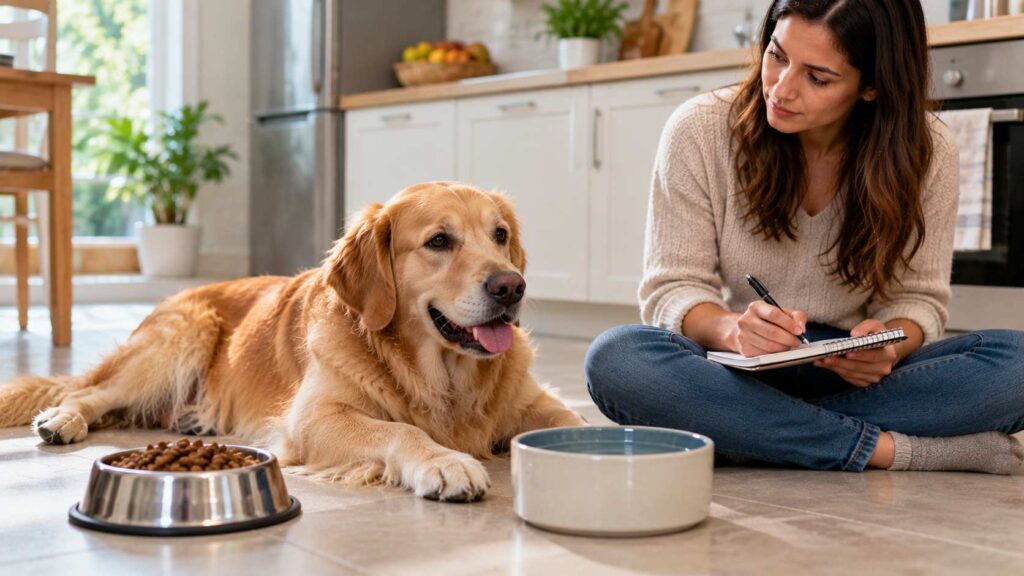
Keep the Situation Simple
If your dog is bright, comfortable and showing only mild symptoms, a few sensible steps may help while you monitor them or arrange veterinary advice:
- Keep fresh water available. Don’t force your dog to drink.
- Pause unnecessary extras. Avoid new treats, rich chews and table scraps.
- Don’t keep changing foods. Repeated dietary changes can make digestive problems harder to assess.
- Ask before changing your dog’s diet. Your vet can advise whether the usual food or a temporary dietary adjustment is appropriate.
- Watch your dog as well as the stool. Changes in appetite, energy, comfort or bowel habits may matter more than the amount of mucus.
Home monitoring is appropriate only when your dog is otherwise well and no warning signs are present.
Home Remedies That Need More Caution Than They Get
Plenty of online advice sounds harmless, but some commonly recommended remedies aren’t suitable for every dog.
- Pumpkin and fibre: May help certain digestive conditions, but extra fibre can be inappropriate or unhelpful in others. The amount and type matter.
- Probiotics: Some veterinary probiotic products may help particular gastrointestinal problems. However, benefits depend on the product, bacterial strains and condition being treated. They don’t replace a diagnosis.
- Bland diets and fasting: A temporary dietary change may be appropriate in selected cases, but prolonged fasting can be risky, especially for puppies, small dogs and medically vulnerable animals. Ask your vet before withholding food.
- Human anti-diarrhoea medicines: Never give these without veterinary guidance. Some dogs, including certain herding breeds with an MDR1 (ABCB1) gene variant, are particularly sensitive to medications such as loperamide.
- Leftover antibiotics or dewormers: These may cause side effects, be ineffective against the actual problem or complicate diagnosis. Use them only as directed by your veterinarian.
Vet Advice: Don’t assume that mucus means your dog needs antibiotics, deworming or a probiotic. Treatment depends on the underlying cause, and unnecessary medication can create additional problems.
Practical Monitoring Checklist
If your dog is well enough for home observation, use this checklist to track changes:
- Appetite and energy remain normal.
- No vomiting, abdominal discomfort or unusual behaviour.
- Stool consistency and bowel movement frequency are recorded.
- Any mucus, blood or straining is noted.
- Recent changes to food, treats or medication are documented.
- A clear photograph is taken if the stool looks abnormal.
- Veterinary advice is sought if symptoms continue, return or worsen.
Quick Tip: Record the time of each unusual bowel movement. A dog passing small amounts of mucus repeatedly may need a different assessment from one that passes a single mucus-coated stool.
The Information That Makes a Vet Visit More Useful
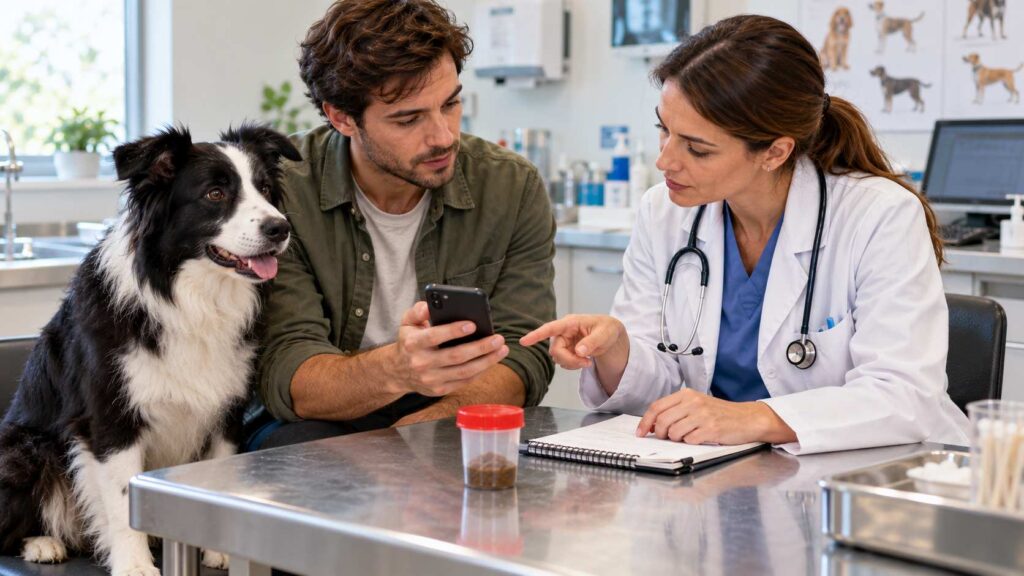
What to Record Before the Appointment
Veterinarians rely heavily on your dog’s history, particularly when digestive symptoms come and go.
A few notes can make the consultation more productive:
- When it started: The first abnormal stool and how many episodes have occurred.
- Stool appearance: Consistency, approximate volume, mucus and any visible blood.
- Bowel habits: Increased frequency, urgency or straining.
- General health: Appetite, water intake, energy, vomiting and discomfort.
- Diet and medication: Regular food, new treats, supplements, prescriptions and recent changes.
- Possible exposures: Scavenging, travel, boarding or contact with other dogs.
For example, mucus appearing after a new food and resolving quickly provides a different history from mucus that returns every few weeks despite an unchanged diet. Neither pattern proves a cause, but the distinction helps guide further investigation.
Collecting a Stool Sample Without Contaminating It
If your vet requests a sample, use a clean scoop or a bag over your hand to collect a small amount of fresh stool.
Place it in a clean, leakproof container and label it with your dog’s name and the collection date and time.
Avoid collecting soil, grass or other debris with the sample.
Ask your clinic how quickly the sample should arrive and whether refrigeration is appropriate. Storage requirements can vary depending on the test, and some examinations require particularly fresh material.
Wash your hands thoroughly afterwards and clean any equipment used.
What Veterinary Tests May Reveal
Your veterinarian will usually begin with a physical examination and questions about your dog’s symptoms, diet and medical history.
Depending on the findings, they may recommend:
- Faecal flotation: Looks for eggs or other detectable stages of certain intestinal parasites.
- Giardia antigen testing: Helps identify Giardia infection.
- Selected faecal PCR tests: May detect genetic material from particular infectious organisms when clinically indicated.
- Blood tests: Can help assess dehydration, inflammation, organ function or other health concerns.
- Imaging: X-rays or ultrasound may be useful when obstruction, structural disease or another abdominal problem is suspected.
Not every dog needs every test.
A negative faecal result also doesn’t rule out all intestinal parasites. Some organisms are shed intermittently, and different tests detect different targets. Your vet may recommend repeat sampling or additional testing if suspicion remains.
Vet Advice: If mucus keeps returning despite apparently normal test results, ask your veterinarian what conditions have been ruled out and whether further investigation or a supervised dietary trial is appropriate.
Four Situations That Look Similar but Need Different Responses
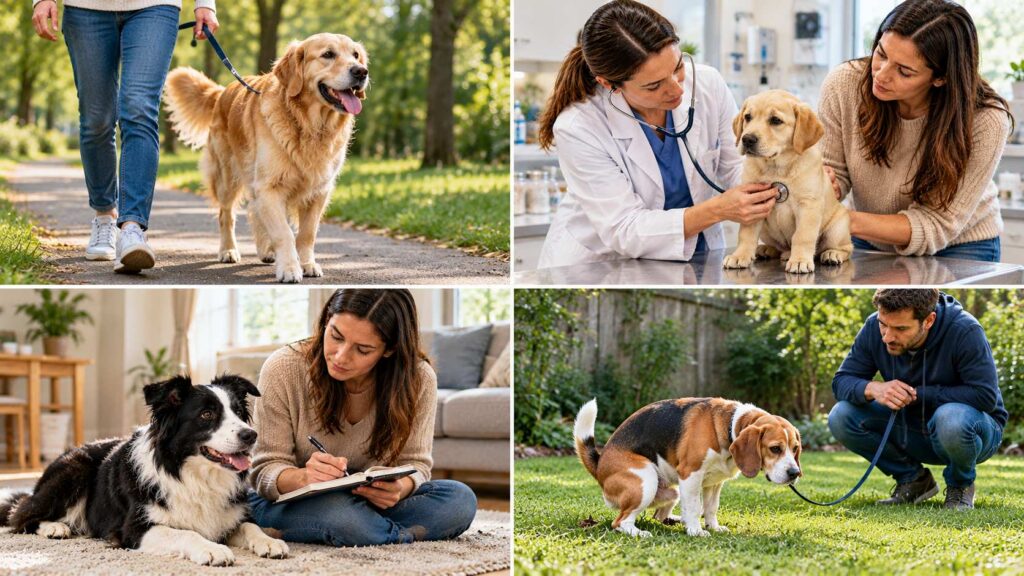
These hypothetical examples show why the same symptom can lead to different decisions. They aren’t diagnoses.
A Healthy Adult Dog With One Mucus-Coated Stool
A healthy adult dog passes one formed stool with a thin, clear coating. They eat dinner normally, drink water and remain playful.
In this situation, a brief period of careful observation may be reasonable. If the next bowel movements are normal and no other symptoms develop, the episode may have been temporary.
However, repeated mucus, blood or changes in behaviour would warrant veterinary advice.
A Puppy With Mucus and Watery Diarrhoea
A young puppy develops watery stools containing mucus and seems quieter than usual.
This isn’t a situation to monitor casually at home. Puppies can become dehydrated quickly, and intestinal parasites or serious infections may be involved.
Contact a veterinarian immediately for advice on assessment. If the puppy is weak, repeatedly vomiting or deteriorating, seek emergency care.
A Dog With Mucus Every Few Weeks
An adult dog has mucus in their stool for a day or two. It disappears, but several weeks later the same thing happens again.
Repeatedly trying pumpkin, probiotics or different foods may make the history harder to interpret without addressing the cause.
A veterinary appointment is appropriate, even if the dog seems well between episodes. A record of diet, symptoms and timing can help guide testing.
A Dog Repeatedly Straining Without Passing Normal Stool
A dog keeps squatting during walks, strains repeatedly and produces only a little mucus.
This needs urgent veterinary assessment. Colonic irritation, constipation or a more serious intestinal problem could be involved.
If there’s any possibility the dog is struggling to urinate rather than defecate, treat it as an emergency.
The key difference in all four situations is not simply the presence of mucus. It’s the dog’s age, overall condition, accompanying symptoms and whether the problem is isolated or recurring.
Mistakes That Can Make a Simple Problem Harder to Solve
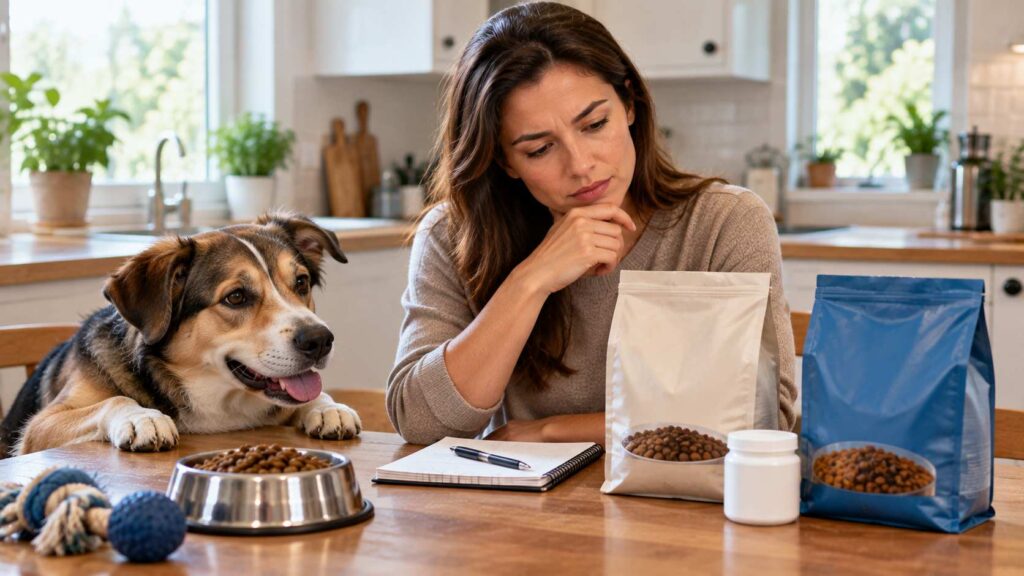
Assuming the Cause From Appearance Alone
Colour and texture can be misleading. Mucus doesn’t automatically mean worms, colitis or a bacterial infection.
Clear, white or yellowish mucus may appear with several different digestive problems. Even when you can see something unusual in the stool, appearance alone rarely identifies the cause.
The mistake is treating what you see as a diagnosis. That can lead to unnecessary treatments or delay appropriate veterinary testing.
Trying Too Many Fixes at Once
Switching food, adding pumpkin, starting probiotics and trying a bland diet all at once makes it difficult to know what’s helping—or making things worse.
Human anti-diarrhoea medicines, leftover antibiotics and unnecessary fasting can introduce additional risks.
If your dog is otherwise well and your vet recommends a dietary adjustment, follow a consistent plan rather than repeatedly changing products.
Don’t experiment with home remedies when your dog has blood in their stool, persistent vomiting, significant pain or other warning signs.
Ignoring the Pattern Once the Poop Looks Normal Again
It’s easy to forget an unusual bowel movement when the next stool looks normal.
But mucus that disappears and returns every few weeks may indicate an ongoing problem, even if your dog seems healthy between episodes.
Keep a brief record of when it happens, what your dog ate and whether other symptoms appeared. Those details may help your veterinarian identify patterns that aren’t obvious during an appointment.
Quick Tips:
- Watch your dog’s appetite, energy and behaviour—not just the stool.
- Record dietary and medication changes before introducing new products.
- Don’t assume routine deworming rules out every intestinal parasite.
- Take a clear photograph of unusual stool when practical.
- Arrange veterinary advice if mucus keeps returning.
What Progress Should Look Like, and What to Watch Next
Changes That May Be Reassuring
If your dog has experienced a mild digestive upset, encouraging signs include:
- Stools gradually returning to their usual consistency.
- Less urgency or straining during bowel movements.
- Normal appetite, drinking and activity.
- No further mucus or concerning symptoms.
Improvement should involve your dog’s overall condition, not simply the disappearance of visible mucus.
Recovery time varies with the underlying cause. A temporary dietary upset may settle relatively quickly, while infections or chronic gastrointestinal conditions may require veterinary treatment and follow-up.
When Apparent Improvement Is Not Enough
Even if the stool looks better, contact your veterinarian if you notice:
- Mucus repeatedly disappearing and returning.
- Unexplained weight loss.
- Persistent straining or difficulty passing stool.
- Recurring blood in the stool.
- Vomiting, reduced appetite or other ongoing digestive symptoms.
A short period of improvement doesn’t necessarily mean an underlying condition has resolved.
Reducing Avoidable Future Upsets
Not every cause of mucus in dog poop is preventable, but a few habits can reduce common digestive risks.
- Change foods gradually. Introduce new diets over an appropriate transition period, unless your vet advises otherwise.
- Maintain parasite prevention. Ask your vet about a prevention and testing plan suited to your dog’s age, lifestyle and local risks.
- Practise good hygiene. Pick up waste promptly and wash your hands after handling faeces.
- Reduce scavenging. Keep rubbish, spoiled food and potentially harmful substances out of reach.
- Keep feeding routines consistent. Avoid frequent, unnecessary changes to food and treats.
- Follow up when needed. Recurring digestive symptoms deserve investigation rather than repeated attempts at home treatment.
These measures support digestive health, but they cannot guarantee that mucus will never appear again.
Frequently Asked Questions About Mucus in Dog Poop
1. Does Yellow or White Mucus Mean My Dog Has an Infection?
Not necessarily. Yellow or white mucus can appear with intestinal irritation, dietary changes, inflammation or infection.
Mucus colour alone cannot identify the cause. Your dog’s behaviour, stool consistency, bowel movement frequency and accompanying symptoms are more informative.
If mucus persists, returns frequently or appears with diarrhoea, blood or other signs of illness, contact your veterinarian. Faecal testing may be useful when parasites or certain infections are suspected.
2. Can Constipation Cause Mucus in Dog Poop?
Yes. Constipation can irritate the lower digestive tract, and some dogs may pass small amounts of mucus while straining.
You might notice hard, dry stools, repeated attempts to defecate or discomfort.
However, straining doesn’t always mean constipation. Colitis and other intestinal problems can produce similar behaviour.
If your dog repeatedly strains without passing normal stool, appears painful or has a swollen abdomen, seek prompt veterinary assessment. If you’re unsure whether your dog is struggling to urinate, treat the situation as urgent.
3. Can a Dog Still Have Parasites After Being Dewormed?
Yes. Different deworming medications target different parasites, and routine treatment doesn’t prevent every infection or reinfection.
For example, Giardia is a microscopic intestinal parasite that isn’t reliably treated by many standard intestinal worming products.
Some infected dogs have intermittent symptoms, while others show few obvious signs.
If mucus continues after deworming, don’t automatically repeat the medication. Ask your veterinarian whether a faecal examination or specific parasite test is appropriate.
4. Why Does Mucus Keep Returning Even After the Stool Improves?
Recurring mucus may mean the underlying trigger hasn’t been identified or fully resolved.
Possible explanations include dietary intolerance, intestinal parasites, recurring colitis or chronic gastrointestinal disease.
A dog may have normal bowel movements between episodes, so occasional improvement doesn’t rule out an ongoing problem.
Record when the mucus appears, how long it lasts and whether there are changes in food, treats, medications or behaviour.
Repeated episodes deserve veterinary investigation, even when your dog seems well between them.
5. Should I Change My Dog’s Food After One Mucus-Covered Stool?
Usually, an immediate food change isn’t necessary after a single mucus-coated stool in an otherwise healthy adult dog.
One episode doesn’t establish a food allergy or intolerance. Switching diets unnecessarily may cause further digestive upset.
If your dog remains well, monitoring may be more useful than introducing a new food.
If mucus persists or recurs, ask your veterinarian whether dietary changes are appropriate. When a new diet is recommended, follow the transition instructions unless your vet advises a different approach.
6. Can a Stool Test Miss the Cause of Recurring Mucus?
Yes. Some parasites shed detectable material intermittently, meaning a single faecal sample may not identify an infection.
Different tests also look for different organisms, and many non-infectious digestive conditions cannot be diagnosed through stool testing alone.
If symptoms continue despite a negative result, your veterinarian may recommend repeat faecal samples, targeted parasite testing, blood work or imaging.
A negative stool test is useful information, but it doesn’t automatically rule out every gastrointestinal problem.
7. Can Intestinal Infections Spread to Other Pets or People?
Some can. Certain intestinal pathogens, including some strains of Salmonella and Campylobacter, can infect both animals and people.
Giardia can also infect dogs and humans, although transmission from dogs to people is generally considered uncommon because different Giardia types may be involved.
To reduce potential exposure:
Collect and dispose of dog waste promptly.
Wash your hands thoroughly after handling faeces.
Clean contaminated surfaces and equipment appropriately.
Prevent other pets from accessing contaminated waste.
Ask your veterinarian whether additional precautions are needed.
Young children, older adults and people with weakened immune systems may be more vulnerable to certain infections.
Not every cause of mucus is contagious, so avoid assuming that your dog has an infectious disease without veterinary assessment.
The Question to Ask Before the Next Walk
Before your next walk, ask yourself: Is my dog otherwise well, and is this getting better, staying the same or becoming more concerning?
Mucus is a symptom, not a diagnosis. A single small amount in an otherwise healthy adult dog may be temporary, but recurring mucus or additional symptoms deserve veterinary attention.
Use the monitoring checklist to record what you’ve noticed, including stool changes, appetite, behaviour and possible triggers. Share those details with your veterinarian if the problem persists or returns.
And if your dog develops severe pain, collapse, significant bloody diarrhoea or difficulty passing urine, don’t wait for another bowel movement. Seek emergency veterinary care.
#. Related Articles: