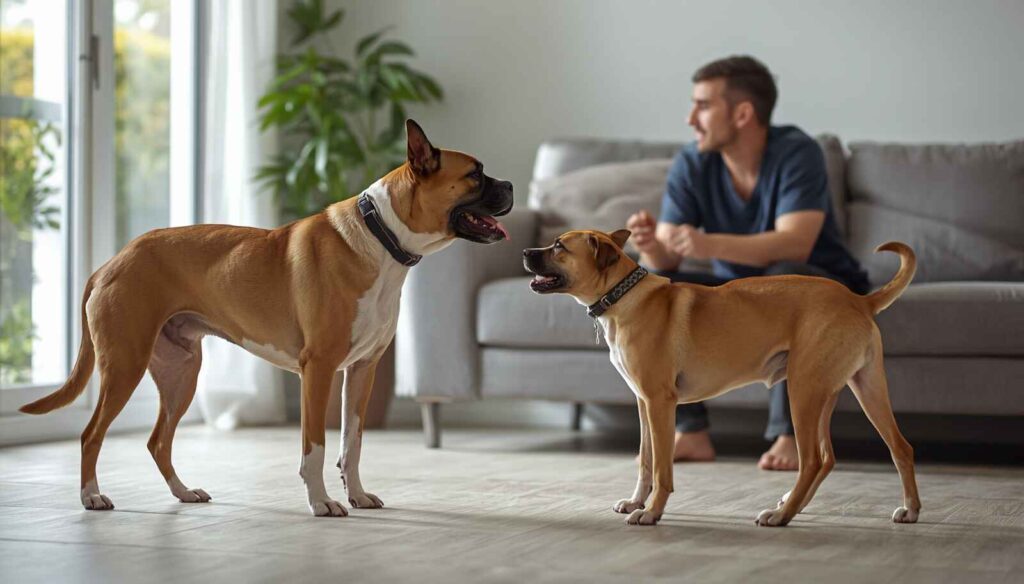
How to stop dogs from fighting in the same household isn’t always as simple as separating them after an argument. The first time your dogs go at each other in the living room, something in your chest drops. Maybe it’s over in four seconds. Maybe it feels like four minutes. Either way, you’re left standing there with your heart pounding, wondering if you now own two dogs who can’t be trusted around each other—or if this was just a bad moment that got out of hand.
Here’s the thing nobody tells you: dogs that have lived together peacefully for years can suddenly start fighting, and it’s rarely as simple as “they don’t like each other anymore.” There’s almost always a reason, and figuring out that reason is half the battle. The other half is knowing what to actually do about it—safely, calmly, and without making things worse.
This guide walks you through both. You’ll learn why household dog aggression happens, how to tell the difference between normal disagreements and dangerous fights, when a veterinary visit is essential, and what steps can help your dogs live together more peacefully again.
Step One: Figure Out How Serious This Actually Is
Not every scuffle is a “fight” in the dangerous sense. Dogs disagree. They may snap over a dropped chicken bone, growl when one steals the other’s favorite spot on the couch, or briefly argue over a toy. In many cases, the interaction ends within seconds, and neither dog is injured. That’s part of normal canine communication.
What matters is the pattern, not just the incident.
Ask yourself:
- Is this happening once every few months over an obvious trigger, or is it becoming more frequent?
- Are the dogs able to disengage on their own?
- Is one dog repeatedly targeting the other?
- Are there puncture wounds or other injuries?
- Does tension linger long after the interaction ends?
Dogs involved in genuine fights—not just brief disagreements—often escalate quickly, repeatedly target vulnerable areas such as the face, neck, or legs, and continue attacking even after the other dog tries to back away or shows submissive signals.
If that’s what you’re seeing, it’s time to actively manage the situation rather than hoping they’ll “work it out themselves.”
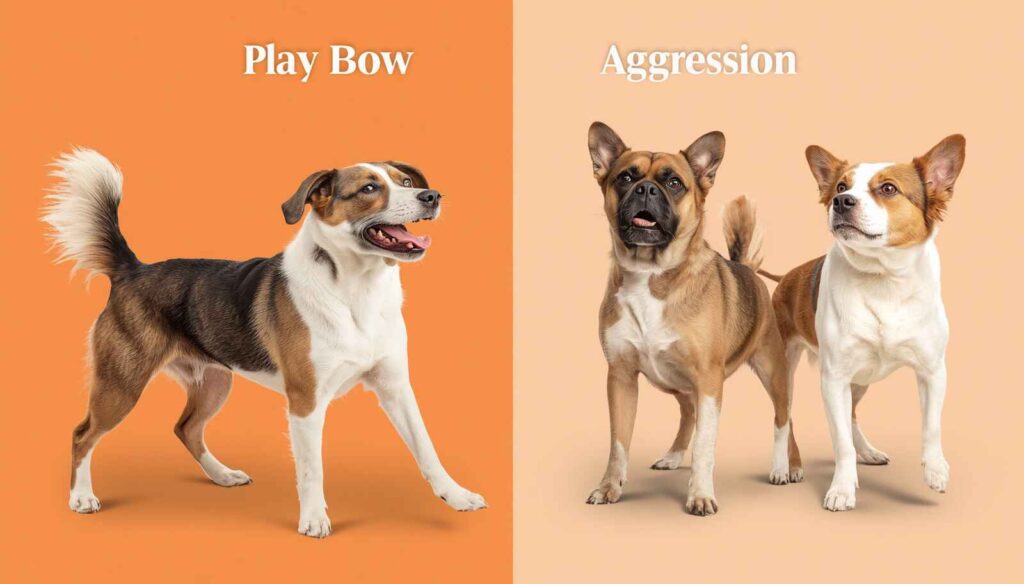
Play vs. Real Aggression
Owners confuse rough play with aggression all the time, and that’s understandable. Both can be loud, fast, and physical.
The key difference is the dogs’ body language before, during, and after the interaction.
| Body Language | Healthy Play | Concerning Aggression |
|---|---|---|
| Body posture | Loose, bouncy, exaggerated movements | Stiff, rigid body with tense posture |
| Tail | Relaxed, wagging naturally | Held high and rigid or tucked tightly |
| Vocalizations | High-pitched growls, playful barking | Deep growls, snarling, or sudden silence before contact |
| Turn-taking | Dogs switch who chases, wrestles, or pins | One dog consistently corners, pursues, or targets the other |
| Recovery afterward | Shake off, relax, and return to normal within minutes | Continued staring, avoidance, hiding, or lingering tension |
| Risk of injury | Minor accidental scratches at most | Repeated bites, puncture wounds, bruising, or shaking attacks |
A good rule of thumb: Healthy play includes frequent pauses. Dogs willingly stop, check in with each other, and then continue playing. Aggressive encounters become increasingly intense instead of naturally settling down.
Why Dogs That Live Together Start Fighting
There’s rarely one single cause. More often, several small factors build on each other until one incident pushes a dog past its comfort level.
Understanding the underlying trigger is one of the most important steps toward preventing future fights.
Resource Guarding
Food bowls, chew toys, beds, favorite sleeping spots—and sometimes even people—can all become valuable resources worth protecting from another dog.
You might notice one dog stiffen, freeze, or stare when the other approaches. If the second dog ignores those warning signals, the situation can escalate into snapping or fighting.
Resource guarding is one of the most common causes of aggression in multi-dog households, but it’s also one of the most manageable once identified.
Competing for Your Attention
Two dogs trying to climb into your lap, pushing each other away for petting, or crowding around you when you come home can create conflict.
While many dogs share attention without issue, dogs that are naturally competitive or have existing tension may see your attention as another valuable resource.
Social Maturity and Hormones
One of the biggest surprises for owners is that dogs who grew up together can begin fighting as adults.
Many dogs reach social maturity between one and three years of age. During this period, relationships between housemates can change, especially if the dogs are close in age or littermates.
What looked like harmless puppy squabbles can suddenly become more serious as adult social dynamics develop.
Hormones may contribute in some dogs, particularly intact males, but they’re rarely the only explanation.
Fear
Fear doesn’t always look like retreating.
A frightened dog may growl, snap, or bite if it feels trapped, overwhelmed, or unable to escape.
For example:
- A dog cornered in a hallway
- A nervous dog surprised while sleeping
- A dog recovering from illness that wants more personal space
Aggression in these situations is often defensive rather than offensive.
Trigger Stacking
This is one of the most overlooked causes of household aggression.
Like people, dogs have a limited ability to cope with stress.
Imagine this sequence:
- A noisy morning walk
- A veterinary appointment
- Construction noise outside
- A thunderstorm
- Visitors arriving in the evening
None of these events alone may trigger aggression. Together, they can leave a dog emotionally overloaded with very little patience left for another dog’s normal behavior.
This concept is often called trigger stacking or a dog’s stress bucket.
If fights seem to happen “out of nowhere,” look at the entire day’s events—not just the final few seconds before the fight.
History Repeating Itself
Unfortunately, aggression can become easier to trigger after the first serious fight.
Dogs remember emotionally significant experiences.
After a fight, both dogs may become more alert around each other. Normal behaviors that previously went unnoticed—such as prolonged staring, walking too close, or approaching a favorite resting place—may now be interpreted as threats.
Without careful management, this cycle can repeat and gradually intensify.
When It Starts Suddenly, After Years of Peace
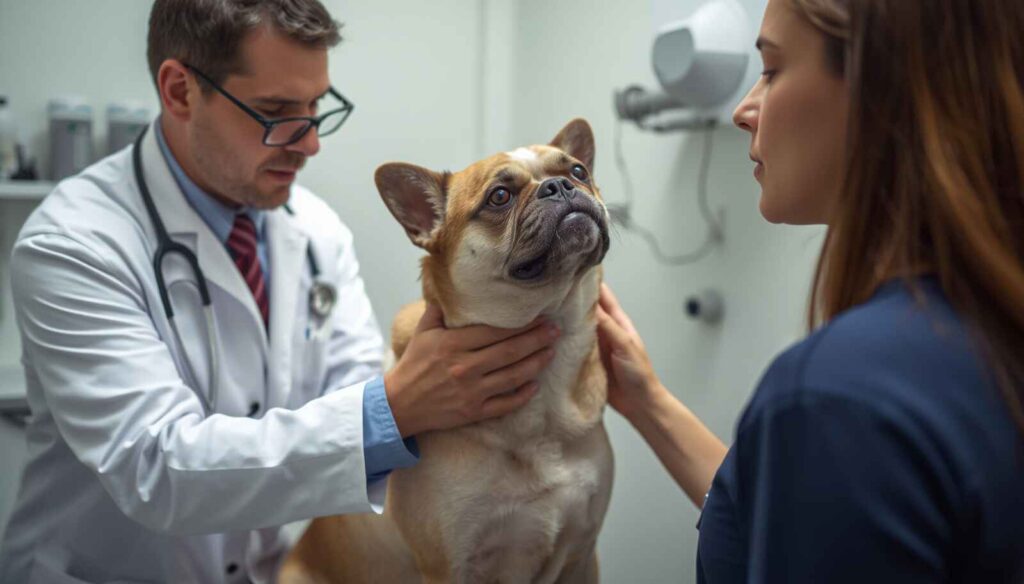
This situation deserves extra attention.
If two dogs have lived together peacefully for years and suddenly begin fighting, don’t assume it’s purely a training problem.
A sudden change in behavior often warrants a veterinary examination before beginning behavior modification.
Both the American Veterinary Medical Association (AVMA) and the Merck Veterinary Manual emphasize that pain, illness, and neurological disease can contribute to changes in canine behavior, including aggression.
According to the American Veterinary Medical Association (AVMA), sudden changes in a dog’s behavior can sometimes be linked to underlying medical conditions, making a veterinary examination an important first step.
Pain Changes Behavior
Pain is one of the most common medical reasons for sudden aggression.
A dog with:
- Arthritis
- Hip or elbow pain
- Dental disease
- Ear infections
- Back pain
- Soft tissue injuries
may react defensively when another dog bumps into them, jumps on them, or invades their personal space.
From the owner’s perspective, it may appear that the dog has “become aggressive overnight,” when in reality they’re trying to avoid painful contact.
Senior Dogs Often Become Less Tolerant
As dogs age, normal age-related changes can affect their interactions with housemates.
These include:
- Reduced vision
- Hearing loss
- Slower movement
- Increased startle responses
- Reduced mobility
An older dog may misinterpret another dog’s playful approach or become frustrated when they can’t move away comfortably.
Cognitive Decline Can Affect Social Behavior
Older dogs may also develop Canine Cognitive Dysfunction (CCD), sometimes compared to dementia in humans.
Signs can include:
- Confusion
- Disorientation
- Changes in sleep patterns
- Reduced recognition of familiar dogs
- Increased irritability
A dog experiencing cognitive decline may react aggressively because they’re confused rather than intentionally hostile.
Veterinary Advice
If your dog’s personality changes suddenly and you can’t identify an obvious reason—such as a move, new pet, or major household change—schedule a veterinary examination before assuming it’s a behavioral issue.
Conditions including arthritis, dental pain, endocrine disorders, neurological disease, ear infections, and other painful medical problems can all present as “suddenly grumpy” or “suddenly snappy.” Treating the behavior without addressing the underlying medical cause often leads to frustration for both owners and dogs.
According to the Merck Veterinary Manual, cognitive dysfunction syndrome can alter a senior dog’s interactions with other pets.
A Common Real-Life Example
Imagine a 10-year-old Labrador who has peacefully lived with a younger dog for years. Recently, the younger dog jumps onto the couch and lands against the older dog’s hips. The older dog immediately snaps.
To the owner, it looks like unprovoked aggression.
To a veterinarian, it may be a dog with previously undiagnosed arthritis protecting painful joints.
The behavior isn’t necessarily about dominance or dislike—it’s a warning that something may be physically wrong.
That’s why a medical evaluation should always be one of the first steps whenever aggression appears suddenly or becomes significantly worse.
What to Do the Moment a Fight Breaks Out
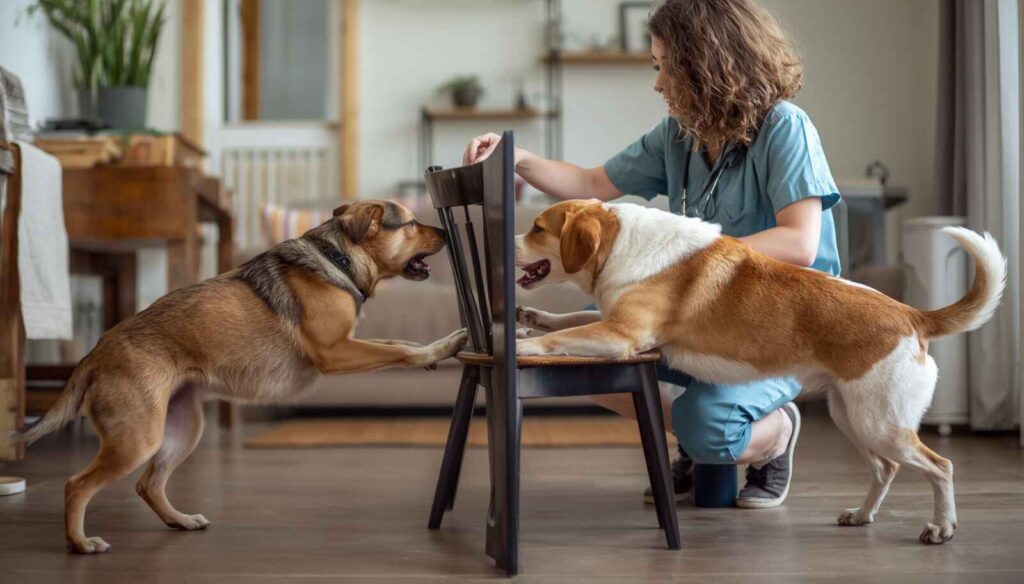
This is where many serious injuries happen—not from the dogs fighting each other, but from owners trying to separate them in unsafe ways.
Your first priority is protecting yourself. An otherwise friendly dog may bite unintentionally during a fight because it’s highly aroused and focused on the other dog. These are called redirected bites, and they can happen even if your dog has never bitten a person before.
Take a breath, stay as calm as you can, and focus on creating distance rather than physically grabbing the dogs.
What Never to Do
- Don’t put your hands between the dogs. This is one of the most common ways owners are bitten.
- Don’t grab collars during an active fight. A redirected bite can land on your hand or arm before either dog realizes you’re there.
- Don’t reach toward their heads or mouths. Even gentle dogs may react instinctively.
- Don’t scream or panic. Loud, emotional reactions can increase the dogs’ arousal instead of interrupting it.
- Don’t let children or bystanders try to intervene. Move them to a safe area immediately.
- Don’t hit, kick, or punish either dog. Physical punishment may intensify the fight, increase fear, and damage trust without addressing the underlying cause.
Safety First
If the fight is severe and you cannot safely separate the dogs, prioritize your own safety and call for help if another adult is nearby. No bite injury is worth risking your life or permanent damage.
What Actually Works
The safest methods create distance or distraction without placing your body between the dogs.
Depending on the situation, you can try:
- A sudden loud noise such as clapping, banging a metal pot, or using an air horn if one is readily available. This may briefly interrupt their focus, although it won’t work in every fight.
- A visual barrier, such as a large piece of cardboard, a sturdy chair, a laundry basket, or another large object, slid carefully between the dogs to separate their line of sight.
- The wheelbarrow technique, but only if two adults are present. Each person lifts one dog’s back legs and steadily walks backward, forcing the dogs to disengage while reducing the risk of bites compared to grabbing collars.
Avoid attempting the wheelbarrow method alone with two large or powerful dogs. If you’re by yourself, creating distance with barriers or safely confining one dog is generally the safer approach.
Once the dogs are separated, place them in completely different rooms or behind secure barriers so they cannot immediately re-engage.
The First 72 Hours After a Fight
What happens during the next few days often has a significant impact on whether future interactions improve or become more difficult.
Resist the urge to prove everything is “back to normal.” Giving both dogs time to decompress is usually the safer choice.
Your Immediate Checklist
- Separate the dogs completely. Different rooms with secure doors or baby gates are much safer than opposite ends of the same room.
- Check both dogs carefully for injuries. Part the fur and look for puncture wounds, swelling, bleeding, limping, or signs of pain. Bite wounds can appear deceptively small while causing significant tissue damage underneath.
- Contact your veterinarian if the skin has been broken. Dog bite wounds introduce bacteria deep beneath the skin, and infections may develop within hours. Same-day or next-day veterinary care is generally recommended.
- Allow both dogs time to decompress. Keep routines calm and predictable while avoiding unnecessary excitement.
- Avoid immediate reintroductions. Even if both dogs seem relaxed, adrenaline can remain elevated after a fight.
- Document what happened. Write down:
- Time of day
- Location
- What each dog was doing immediately beforehand
- People or animals nearby
- Objects involved (food, toys, furniture, etc.)
- Any stressful events earlier that day
These notes often reveal patterns that aren’t obvious after a single incident.
Veterinary Advice
If either dog seems unusually quiet, reluctant to move, cries when touched, develops swelling, or stops eating after a fight, schedule a veterinary examination even if you can’t see an obvious wound. Internal injuries and hidden punctures are common after dog fights.
Finding the Actual Trigger
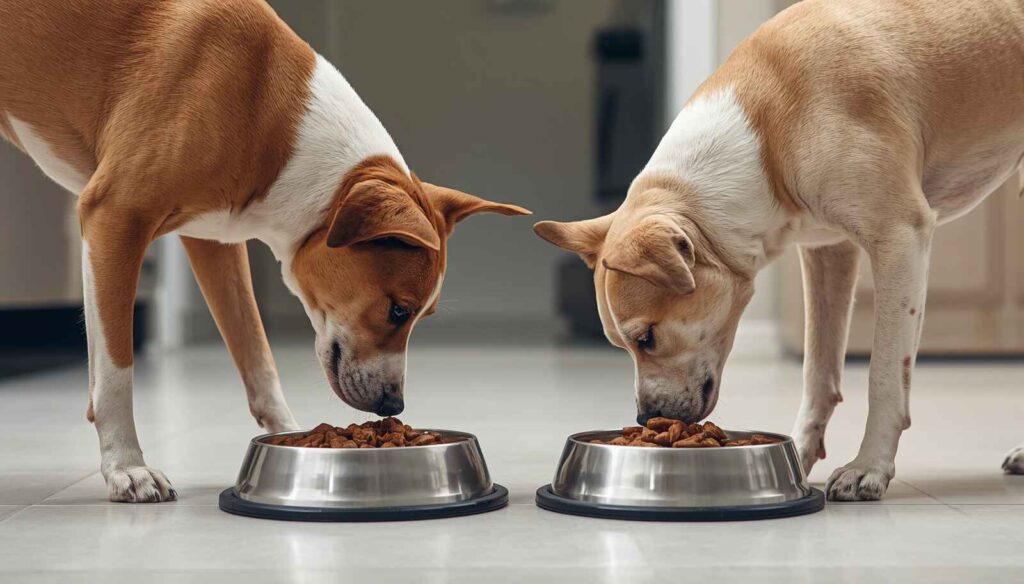
Sometimes the cause is obvious—a dropped piece of steak, a prized chew toy, or a favorite sleeping spot.
Other times, it takes a week or two of careful observation before a clear pattern emerges.
Keeping a simple journal can make identifying triggers much easier.
Common triggers include:
- Food bowls placed too close together. Even dogs that normally eat peacefully may become uncomfortable when another dog approaches during meals.
- Doorways, hallways, and narrow spaces. Dogs rushing through confined areas can accidentally block each other’s movement or personal space.
- Owners arriving home. Excitement combined with competition for attention is a common recipe for conflict.
- Visitors entering the house. New people often increase excitement, stress, and unpredictability.
- High-value treats or chew toys. Items that aren’t usually available may trigger resource guarding.
- Crowded resting areas. One dog unintentionally invading another’s sleeping space can spark an argument.
Sometimes the trigger isn’t obvious because the real issue started much earlier.
For example, an older dog that suddenly snaps whenever a younger dog jumps against them may not have developed a behavioral problem at all. They may simply be protecting painful hips or arthritic joints. That’s an important observation to share with your veterinarian, not just your trainer.
Building a Household System That Actually Prevents Fights
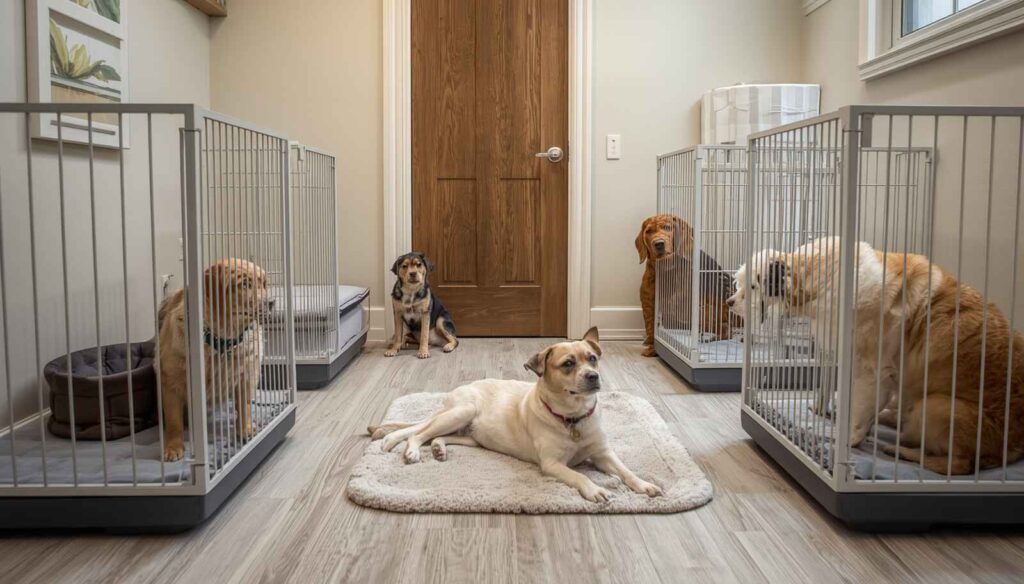
This is the part many owners overlook—and it’s often the part that makes the biggest long-term difference.
Good management doesn’t eliminate every disagreement, but it greatly reduces opportunities for conflict while helping both dogs feel secure.
Build Daily Habits That Reduce Tension
- Feed dogs in separate rooms or far enough apart that they can’t watch each other eat.
- Pick up food bowls immediately after meals instead of leaving leftovers available.
- Rotate high-value chews and toys rather than leaving them out all day.
- Give each dog a dedicated resting area, such as a bed, crate, or quiet corner where they won’t be disturbed.
- Use baby gates, exercise pens, or crates during predictable high-arousal situations like mealtimes, guest arrivals, or deliveries.
- Keep daily routines consistent. Predictable schedules reduce stress and help dogs know what to expect.
- Supervise interactions involving valuable resources, especially if the dogs have fought over them before.
Common Owner Mistakes to Avoid
Many owners accidentally increase tension by:
- Forcing dogs to “share” everything.
- Leaving bones or long-lasting chews out unattended.
- Encouraging excited greetings around the front door.
- Assuming one peaceful week means supervision is no longer necessary.
- Punishing growling instead of addressing the underlying reason for it.
Remember that growling is communication. While it shouldn’t be ignored, punishing a warning signal can teach a dog to skip the warning next time.
Management Is Not Failure
Many successful multi-dog households rely on long-term management strategies. Separate feeding stations, baby gates, crates, and structured routines aren’t signs that you’ve failed—they’re practical tools that prevent repeated conflict.
In some homes, a permanent “crate and rotate” routine allows dogs with a history of aggression to live safe, happy, low-stress lives. Preventing repeated fights is often more effective than repeatedly trying to “test” whether the dogs are ready to be together again.
Rebuilding Trust Between Your Dogs
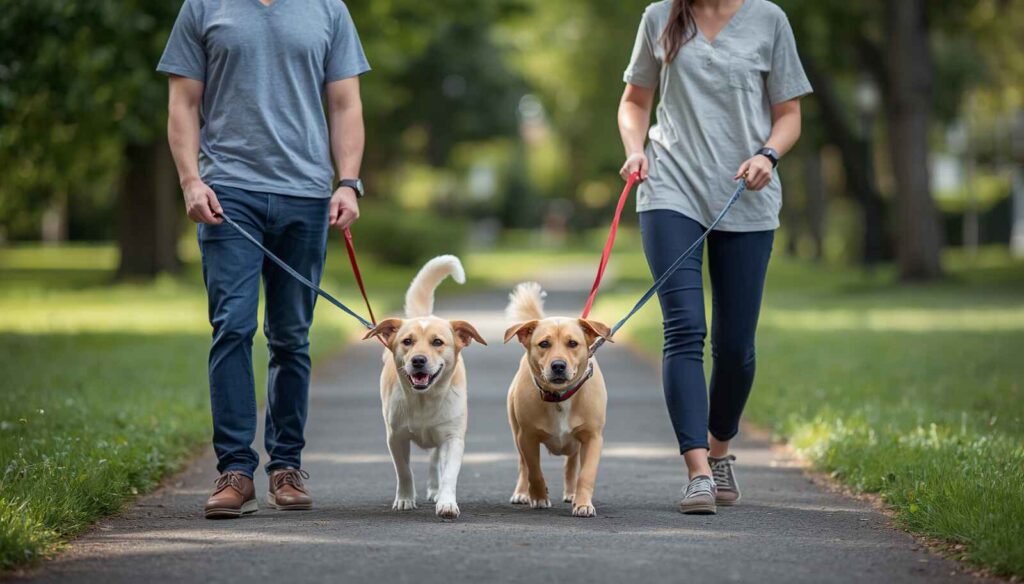
One of the biggest mistakes owners make is trying to put the dogs back together too soon because they “seem fine.” After a fight, both dogs may still be stressed even if they’re no longer growling or barking.
Successful reunions are usually slow, structured, and carefully supervised. The goal isn’t to force the dogs to become friends again overnight—it’s to help them learn that being around each other is safe and predictable.
Start With Parallel Walks
Walking the dogs in the same direction, with separate handlers whenever possible, is often one of the safest ways to begin rebuilding positive associations.
Start at a distance where both dogs remain relaxed. As they consistently show loose body language and calm behavior, gradually decrease the distance over several sessions.
Avoid face-to-face greetings early on. Walking side by side is generally much less confrontational than approaching head-on.
Keep Early Interactions Short
When you’re ready to allow the dogs together again:
- Keep sessions brief.
- Supervise every interaction.
- End the session while both dogs are still calm.
It’s far better to have five successful minutes than thirty minutes that end in another confrontation.
Reward Calm, Not Just Obedience
Many owners remember to reward commands like “sit” or “stay” but overlook the behavior they actually want more of.
Praise and reward your dogs for:
- Relaxed body language
- Choosing to ignore each other peacefully
- Walking past one another calmly
- Resting comfortably in the same room
- Looking away instead of staring
These quiet moments help build new, positive associations.
Professional Tip
If either dog becomes stiff, fixates on the other, or seems increasingly tense, calmly create more distance before the situation escalates. Successful behavior modification focuses on preventing rehearsals of aggression, not testing how much the dogs can tolerate.
What Progress Really Looks Like
Recovery is rarely a straight line.
Some days will feel encouraging, while others may seem like setbacks. That’s normal.
Positive signs include:
- Less staring and body tension
- Softer, more relaxed body language
- Dogs choosing to share space without conflict
- Faster recovery after brief disagreements
- Fewer management interventions needed over time
For many households, success means peaceful coexistence—not necessarily becoming inseparable playmates again.
Warning Signs Most Owners Miss
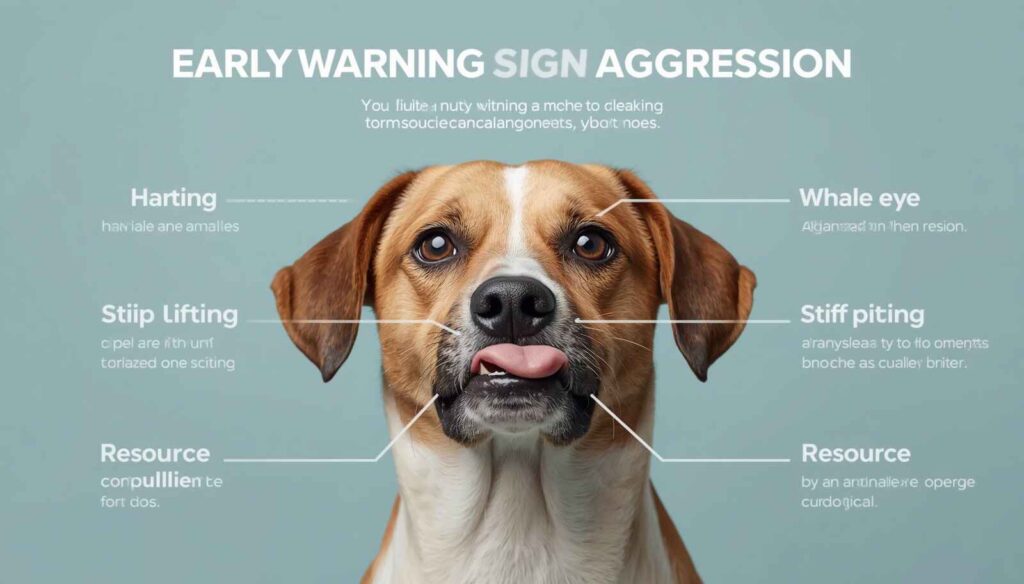
Serious fights rarely happen without warning.
Dogs usually communicate discomfort long before they bite. Learning to recognize these subtle signals gives you the opportunity to intervene early.
Watch for:
- Hard staring — Fixed, unblinking eye contact directed at the other dog.
- Freezing — Sudden stillness, especially around food, toys, resting places, or people.
- Whale eye — The whites of the eyes becoming visible, often indicating stress or discomfort.
- Lip lifting — A slight curl of the lip before a growl or snap.
- Blocking — Standing between another dog and a valued resource or person.
- Stiff posture — Reduced movement, tense muscles, and a rigid tail.
- Repeated mounting or bullying behavior — Persistent harassment that the other dog clearly wants to avoid.
Don’t wait for growling or biting.
Simply calling one dog away, removing a valuable item, redirecting both dogs to separate activities, or increasing distance can prevent many conflicts before they begin.
When Training Alone Isn’t Enough
Some situations require professional help, and seeking that help early often leads to better outcomes.
Here’s who can help—and when.
| Professional | Best For | Limitations |
|---|---|---|
| Veterinarian | Ruling out pain, illness, hormonal issues, or sudden behavior changes | Usually doesn’t provide detailed behavior modification plans |
| Certified Dog Trainer | Teaching obedience, impulse control, management skills, and reward-based training | May not be qualified to manage complex aggression cases |
| Veterinary Behaviorist | Diagnosing aggression, developing comprehensive treatment plans, prescribing medication when appropriate | Limited availability and may require referral |
The American College of Veterinary Behaviorists (ACVB) recommends veterinary evaluation for dogs showing new or worsening aggression, particularly when injuries are occurring or behavior changes appear sudden.
Seek professional help promptly if:
- Fights are becoming more frequent.
- Bite injuries are becoming more severe.
- One dog appears fearful of the other all the time.
- Aggression occurs without an obvious trigger.
- You no longer feel safe managing the dogs yourself.
- Children or vulnerable family members are at risk.
Early intervention is almost always easier than trying to reverse months or years of repeated aggression.
Can Dogs Be Friends Again?
Sometimes, yes.
With patience, structured management, and consistent positive experiences, many dogs return to living together comfortably.
In other cases, the goal changes.
Instead of becoming best friends again, the dogs learn to peacefully coexist. They may sleep in the same room, walk together, and live safely without regularly playing or interacting closely.
That’s still a successful outcome.
There are also situations where permanent management is the kindest choice.
If repeated fights continue despite veterinary care, behavior modification, and careful management, keeping the dogs separated long-term may provide the safest and least stressful life for everyone involved.
In rare cases—particularly when severe injuries continue despite professional intervention—rehoming one dog may be considered. This decision should be made thoughtfully, with guidance from veterinary and behavior professionals, and always with the welfare of both dogs in mind.
Choosing safety is not giving up.
It’s making a responsible decision based on the needs of the animals in your care.
Quick Reference: Keeping the Peace
✔ Feed dogs separately.
✔ Remove food bowls after meals.
✔ Rotate high-value toys and chews.
✔ Watch for subtle warning signals every day.
✔ Reward calm coexistence, not just obedience.
✔ Keep routines predictable.
✔ Give each dog its own safe resting space.
✔ Schedule a veterinary examination after any sudden behavior change.
✔ Keep a simple log of incidents and possible triggers.
✔ Use gates, crates, or separate rooms without guilt when needed.
Living with dogs that have fought each other is emotionally exhausting. It’s easy to second-guess every interaction and worry about the next disagreement.
The encouraging news is that many households improve with a combination of thoughtful management, veterinary care when needed, and patient, reward-based training. Progress often comes in small steps rather than dramatic breakthroughs, but those small improvements add up over time.
By learning to recognize your dogs’ body language, reducing unnecessary conflict, and addressing problems early, you’re giving them the best chance to live together safely and with less stress—for them and for you.
Frequently Asked Questions
1. Does neutering or spaying stop dogs from fighting?
Sometimes, but not reliably. If the aggression is driven by hormone-related competition between two intact males, neutering can reduce tension over time. But if the fighting is rooted in fear, resource guarding, or a learned pattern from past fights, surgery won’t touch it. Female-female aggression in particular often persists after spaying, since it’s usually more about personality clashes than hormones. Think of neutering as one possible piece of the puzzle, not a fix on its own — it works best alongside management and training, not instead of them.
2. Is aggression between two female dogs more serious than between males?
Anecdotally, many trainers and behaviorists report that female-female conflicts tend to be more intense and harder to resolve than male-male ones. Females often fight over longer-standing social tension rather than a single trigger, and reconciliation between two females can take longer. That said, this isn’t a hard rule — plenty of male pairs have serious, dangerous conflicts too. Sex is one factor among many, and it shouldn’t be used to predict how bad a specific situation will get. Individual temperament and history matter more.
3. Can anxiety medication help dogs who fight with each other?
In some cases, yes. If a veterinary behaviorist determines that one dog’s aggression is fear- or anxiety-driven, medication can lower overall stress enough for training and management to actually work. It’s rarely used as a standalone fix — it’s typically paired with a behavior modification plan. Medication isn’t something to start on your own; it requires a proper evaluation, since the wrong choice can make some dogs more reactive, not less. This is a conversation to have with a vet or veterinary behaviorist, not a first-line home remedy.
4. Is it safe to leave fighting dogs alone together unsupervised?
Not until you’ve seen consistent, calm behavior over an extended period — weeks, not days. Even after things seem to have settled, an unsupervised moment is exactly when a resource conflict or startled reaction can turn into a fight with nobody there to intervene. Many households find it’s safer to use gates or crates whenever they’re not home, even long after the dogs seem to be getting along, simply because the risk of an unsupervised fight is higher than the inconvenience of separating them.
5. Does more exercise fix aggression between household dogs?
Physical exercise helps, but it’s not a cure by itself. A tired dog is often calmer, sure, but if the root issue is resource guarding, fear, or pain, running your dog for an hour won’t resolve it. What tends to help more is mental enrichment — sniffing walks, puzzle toys, and training sessions that tire the brain, not just the body. Pairing physical activity with these calmer, more mentally engaging activities does more for household harmony than exercise alone.
6. How do I manage fighting in a household with three or more dogs?
Multi-dog households add a layer of complexity, because dogs can form alliances, and one dog joining in on another’s fight is a real risk. Management needs to be more structured — separate feeding stations for every dog, closer supervision during high-arousal moments like doorbell rings, and careful attention to which combinations of dogs get along and which don’t. If tension exists between any two dogs in the group, treat that pair with the same care you would in a two-dog household, since group dynamics can make conflicts spread faster than they would one-on-one.
7. Should I use a muzzle while working on aggression between my dogs?
A properly fitted basket muzzle, introduced gradually and positively, can be a useful safety tool during supervised reintroduction sessions — it lets both dogs interact with less risk of injury while you rebuild trust. It’s not a punishment and shouldn’t be used that way; the goal is to make everyone, including you, safer while training happens. Muzzle training takes time, so introduce it well before you actually need it, using treats and short sessions, so the dog associates it with something positive rather than restriction.
#. Related Articles: