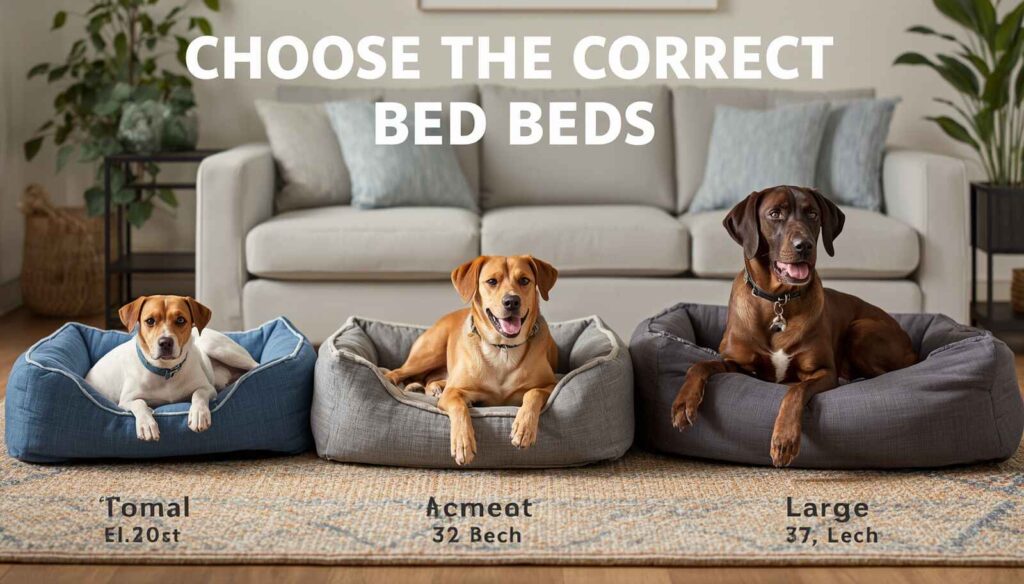
You’d think choosing a dog bed would be simple. You pick something that looks comfy, your dog curls up, everyone’s happy. But then you bring it home, and your Labrador is half hanging off the edge — or your little terrier is completely swallowed by a bed the size of a small country.
Getting the size right actually matters more than most people realise. A poorly sized bed affects your dog’s sleep quality, joint health, and even their sense of security. This guide walks you through everything you need to know — from measuring your dog properly to picking the right size based on how they actually sleep.
Why the Right Bed Size Matters More Than You Think
Dogs spend anywhere from 12 to 16 hours sleeping each day. That’s a lot of time on a surface that either supports them properly or doesn’t.
A bed that’s too small forces your dog into cramped, awkward positions. Over time, this can put strain on their joints — especially important for older dogs or breeds prone to arthritis like German Shepherds and Labradors.
A bed that’s too large isn’t always better either. Small dogs often feel more secure in a snug space. A massive bed can actually make an anxious dog feel exposed and unsettled.
Getting it right is one of the simplest things you can do for your dog’s long-term comfort.
Step One: Measure Your Dog (Don’t Skip This)
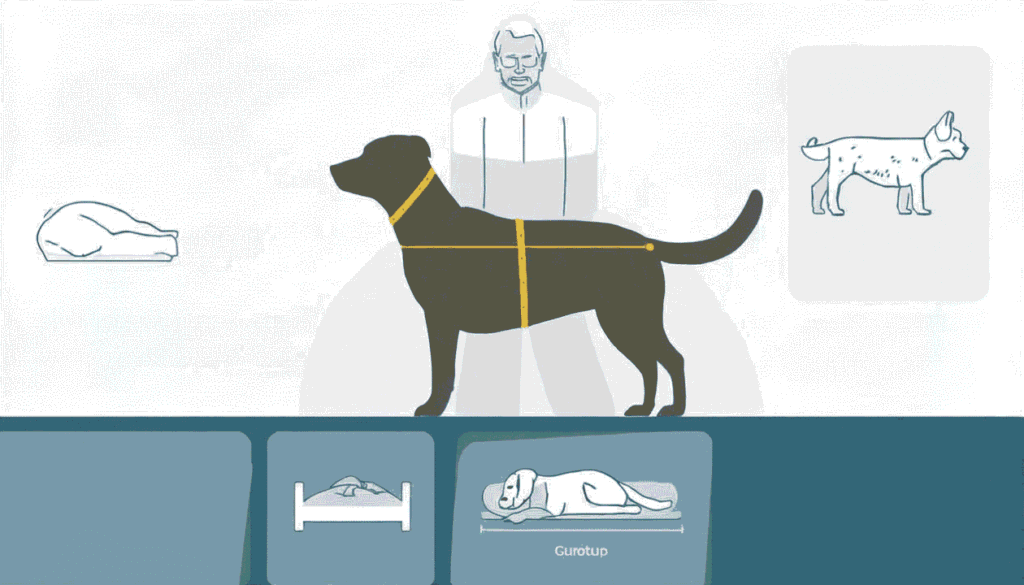
Before you look at any size chart, grab a soft tape measure and spend two minutes doing this properly. It makes everything else easy.
Here’s what to measure:
- Length: Have your dog stand naturally. Measure from the tip of their nose to the base of their tail (not including the tail itself).
- Width/Height: Measure your dog’s height from floor to the top of their shoulders (the withers).
Write both numbers down.
Now here’s the key rule: add 20–30 cm (about 8–12 inches) to your dog’s nose-to-tail length. That’s your minimum bed length.
So if your dog measures 65 cm from nose to tail, you’re looking for a bed that’s at least 85–95 cm long.
This extra space accounts for the natural stretching most dogs do when they settle in for a deep sleep. Even dogs that usually curl up will occasionally sprawl out — and when they do, they need room.
How Your Dog Sleeps Changes Everything
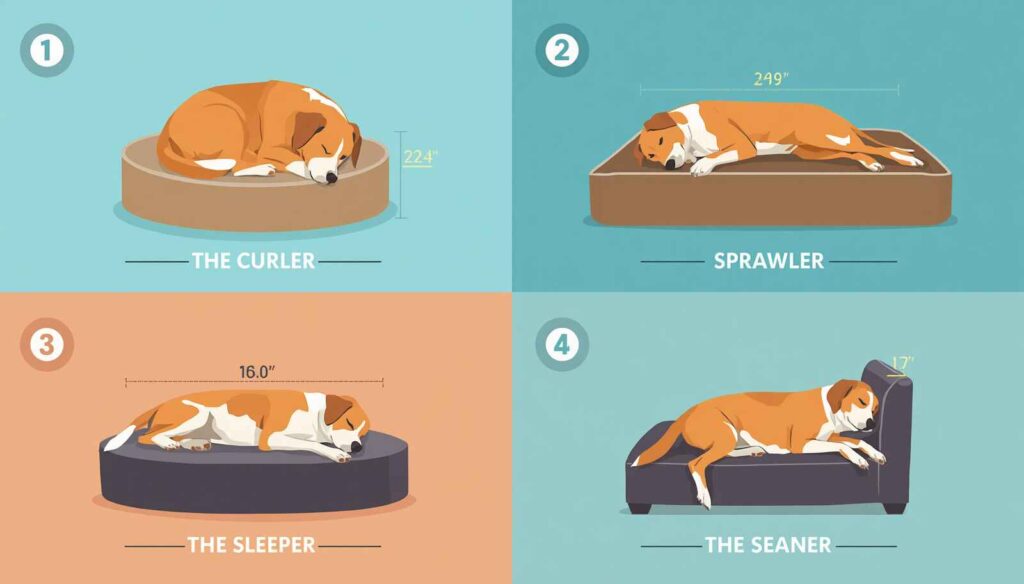
This is the part most guides skip over, and it’s genuinely one of the most important factors.
The Curler
Some dogs always sleep curled up tight, nose tucked near their tail. If your dog does this consistently, you can go slightly smaller — roughly your dog’s length, plus 15 cm.
Breeds that tend to curl: Greyhounds, Whippets, Spaniels, many terriers.
A bolster bed or one with raised edges works perfectly for curlers — they love having something to lean against.
The Sprawler
These dogs fling themselves out flat, sometimes on their back with legs in the air. Sprawlers need generous space. Add the full 30 cm to their length, and consider the width too — a dog stretched sideways can take up a surprising amount of room.
Breeds that tend to sprawl: Bulldogs, Boxers, Golden Retrievers, most large breeds.
The Side Sleeper
Side sleepers fall somewhere in the middle. They lie flat but not dramatically stretched. Go with the standard +20 cm and you’ll be fine.
The Leaner
Some dogs don’t just sleep on their bed — they sleep against things. If your dog always wedges themselves into a corner or presses against the sofa, look at beds with bolster sides on multiple edges. The size matters less than the structure here.
Dog Bed Size Guide by Weight and Breed
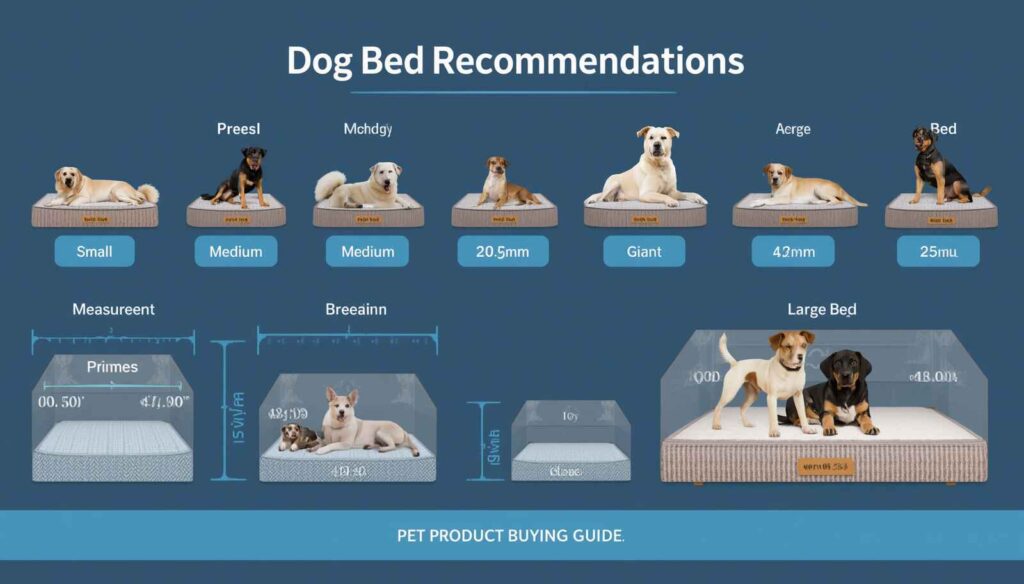
Use this as a starting point, not a hard rule. Always cross-reference with your measurements.
| Dog Size | Weight | Bed Size (approx.) | Example Breeds |
|---|---|---|---|
| Extra Small | Under 5 kg | 45 × 35 cm | Chihuahua, Yorkshire Terrier |
| Small | 5–10 kg | 60 × 45 cm | Dachshund, Jack Russell, Shih Tzu |
| Medium | 10–25 kg | 80 × 60 cm | Border Collie, Springer Spaniel, Beagle |
| Large | 25–40 kg | 100 × 75 cm | Labrador, Golden Retriever, Husky |
| Extra Large | 40–55 kg | 120 × 90 cm | German Shepherd, Rottweiler, Weimaraner |
| Giant | 55 kg+ | 140 × 110 cm+ | Great Dane, St Bernard, Irish Wolfhound |
Quick notes on popular breeds:
- Labrador Retriever: Go large (100 × 75 cm minimum). Labs are notorious sprawlers and tend to grow bigger than owners expect.
- German Shepherd: Extra large is usually the right call, especially if they’re working or active dogs with muscular builds.
- Golden Retriever: Large bed, and consider memory foam — Goldens are prone to hip issues later in life.
- Jack Russell Terrier: Small, but with bolster edges. Jack Russells are burrowers and like feeling enclosed.
- Dachshund: Small to medium, but prioritise low-entry beds — their long backs and short legs make climbing difficult.
Sizing for Puppies: Plan Ahead, But Not Too Far Ahead
This is a genuine dilemma. Do you buy a bed that fits your puppy now, or one that fits the adult dog they’ll become?
The honest answer: buy for now, then upgrade.
A giant bed for a tiny puppy can feel overwhelming and make them feel unsafe. Puppies also need the security of a snugger space, especially in the first few weeks in a new home.
That said, if budget is a concern, you can buy a larger bed and temporarily section off part of it with a rolled-up blanket. This gives your puppy a cosy corner without wasting money on a bed they’ll outgrow in three months.
Check your breed’s expected adult weight online (or ask your vet) so you know what you’re aiming for when it’s time to upgrade.
Foam Thickness and Support: Often Overlooked
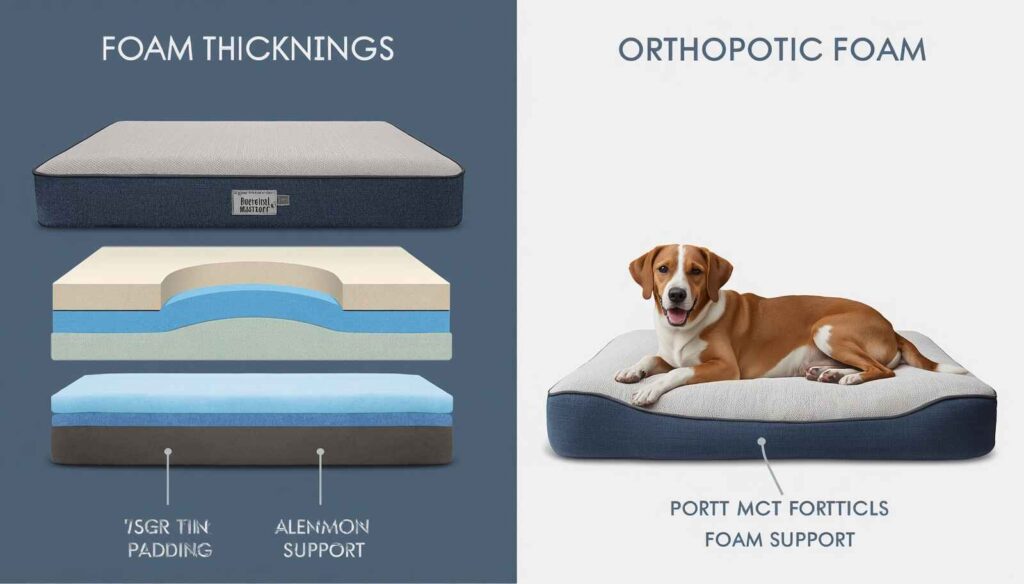
The size of a bed is just one part of the equation. The depth of the mattress matters too, particularly for:
- Senior dogs (7+ years) — look for memory foam at least 7–10 cm deep
- Large and giant breeds — thinner foam compresses completely under their weight and offers no support
- Dogs with arthritis or hip dysplasia — orthopedic foam is worth the extra cost
A dog bed that’s the right size but made of flimsy 3 cm foam isn’t doing your dog any real favours. Think of it like the difference between a camping mat and a proper mattress.
Signs Your Dog’s Bed Is the Wrong Size
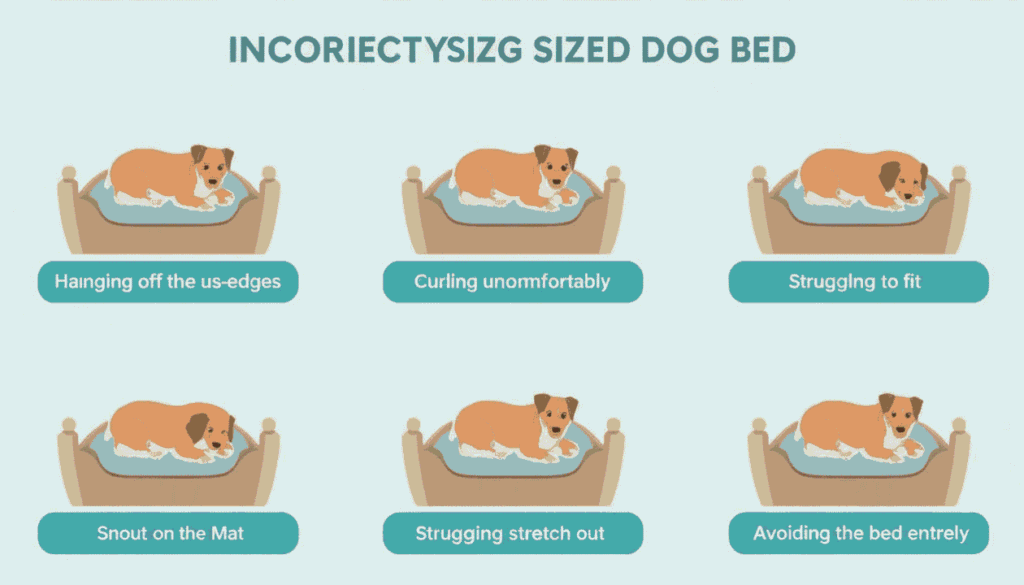
Sometimes it’s easier to spot the problem after the fact. Look out for these:
- Constantly falling off the edge — bed is too small
- Avoids the bed entirely or circles without settling — possibly too large, or wrong shape
- Sleeps half on the bed, half on the floor — almost certainly too small
- Seems restless overnight — could be size, but also firmness or warmth
- Always ends up on the sofa or your bed — the bed isn’t meeting their comfort needs
If your dog is consistently avoiding their bed, size is usually the first thing to check before assuming it’s a behaviour issue.
Multi-Dog Households: When Dogs Share
Some dogs genuinely like sleeping together — it’s comforting and natural. If your dogs share a bed by choice, measure them both and calculate as if they’re one larger dog.
Add the length of both dogs together, plus at least 30 cm. Width should accommodate both dogs lying side by side.
That said, always provide individual beds too. Dogs need the option to have their own space, even if they don’t always use it.
Frequently Asked Questions
1.How big should a dog bed be compared to my dog?
At minimum, the bed should be as long as your dog’s nose-to-tail measurement, plus 20–30 cm extra. This gives them room to stretch without hanging off the edge.
2.What size dog bed for a Labrador?
Most Labradors need a large bed — around 100 × 75 cm. Some bigger male Labs will need extra large (120 × 90 cm). Always measure your specific dog rather than going purely by breed.
3.What size dog bed for a German Shepherd?
German Shepherds typically need an extra large bed, around 110–120 cm in length. They’re muscular, active dogs and need proper support — consider orthopaedic memory foam, especially as they age.
4.What size dog bed for a 50 lb dog (approx. 23 kg)?
That’s a medium-to-large dog. A bed around 90–100 cm long should work well. Measure from nose to tail first and add 20–25 cm to confirm.
5.Can a dog bed be too big?
Yes, especially for small breeds and puppies. A bed that’s too large can make a dog feel exposed and anxious. Small dogs often feel safer in a snugger space with raised sides. If you do size up, add some blankets or a bolster insert to make the space feel cosier.
6.Should I measure my dog while they’re sleeping?
It’s actually really useful! If you can catch your dog mid-sleep when they’re fully relaxed and stretched out, that gives you an accurate real-world measurement of the space they actually use.
7.Do I need a different size for an older dog?
Not necessarily a different size — but you should reassess support. Older dogs may need the same footprint but with thicker, firmer memory foam underneath them. Some also appreciate lower-sided beds that are easier to climb in and out of.
The Bottom Line
Figuring out what size dog bed to get for your dog doesn’t have to be complicated. Measure your dog (nose to tail, plus 20–30 cm), note how they sleep, and cross-reference with a size guide for their breed and weight.
Then think about support — foam depth matters just as much as surface area, especially for larger breeds and older dogs.
The right bed won’t just make your dog more comfortable. It’ll mean they actually use it — which, if you’ve ever spent money on a dog bed that became an expensive floor ornament, is worth quite a lot.
When in doubt, go slightly larger rather than smaller. Dogs can always curl up on a big bed. They can’t un-hang their legs from one that’s too small.
#. Related Articles:
1. Are Automatic Dog Feeders Worth It?