You’re rushing out the door, already late, and your dog is staring at you with those eyes. The bowl is empty. Again.
If this sounds familiar, you’ve probably wondered whether an automatic dog feeder could solve the problem — or whether it’s just another gadget that looks good on paper but collects dust in the corner.
The honest answer? It depends on your dog, your lifestyle, and how you use one. This guide walks you through everything you need to know — the real benefits, the genuine risks, and how to decide if an automatic feeder is actually worth buying for your situation.
What Is an Automatic Dog Feeder, Actually?
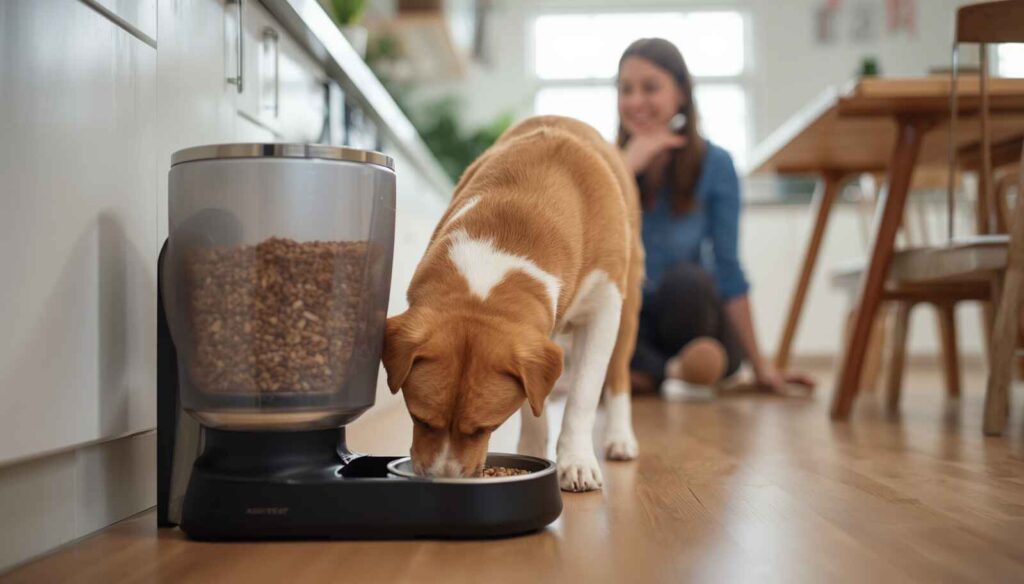
An automatic dog feeder is a device that dispenses a set amount of food at a scheduled time — without you needing to be there. Think of it as a programmable alarm clock for your dog’s meals.
Most models let you set 1–6 meals per day, control portion sizes, and some even let you record a voice message so your dog hears your voice when the food drops. Higher-end models connect to your phone via Wi-Fi, so you can adjust meals remotely.
There are three main types:
- Gravity feeders – The simplest and cheapest. Food flows down as your dog eats. No schedule, no portion control — just a constant supply of food.
- Programmable electronic feeders – You set specific meal times and portions. These run on a timer and are ideal for dogs on a structured diet.
- Smart Wi-Fi feeders – App-controlled, often with cameras, portion logs, and remote feeding. Great for tech-savvy owners who travel frequently.
The Real Benefits of Automatic Dog Feeders
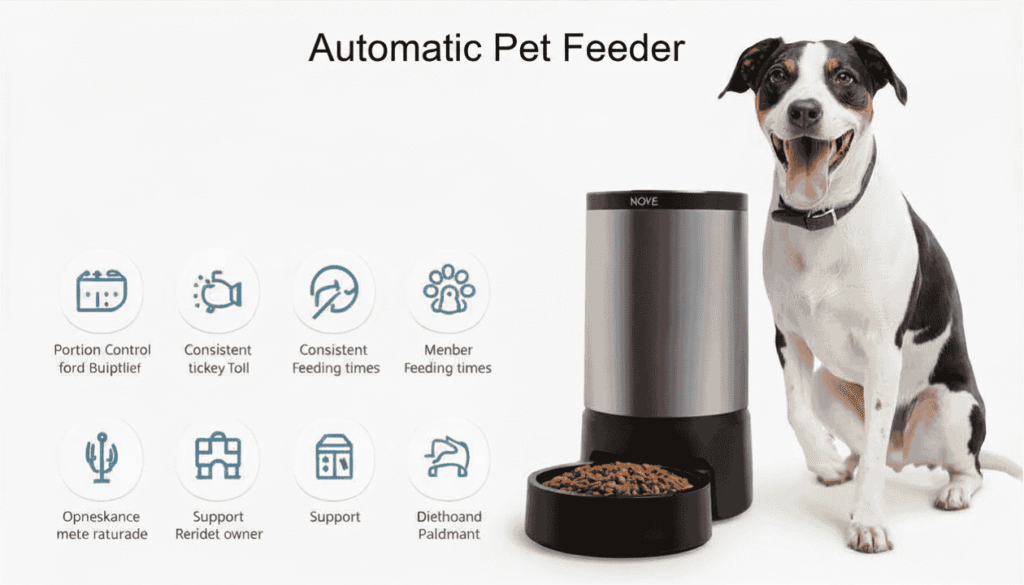
1. Consistent Meal Times (Even When Life Gets Messy)
Dogs thrive on routine. Their digestive systems, energy levels, and behaviour are all tied to predictable feeding times. When meals are irregular — sometimes 7am, sometimes 10am — it can cause anxiety, begging, and even digestive upset.
An automatic feeder keeps meals consistent to the minute, whether you’re in a meeting, stuck in traffic, or sleeping in on a Saturday.
This is especially useful for owners in the UK who commute long hours, or in Australia and Canada where rural dog owners might have unpredictable schedules.
2. Portion Control That Actually Works
One in three dogs in the UK is overweight, according to veterinary surveys. Overfeeding — even by a small amount each meal — adds up fast.
Automatic feeders dispense exact portions every time. There’s no “a little extra won’t hurt” guesswork. If your vet says your Labrador needs 250g of kibble per day, the feeder delivers exactly that.
This is particularly helpful if multiple people in the household feed the dog — no more accidentally doubling meals.
3. Independence Without Guilt
Leaving your dog alone for 8–10 hours? That’s a long stretch for any dog to wait for food. An automatic feeder can split meals across the day so your dog isn’t starving by the time you get home.
It doesn’t replace walks or human company, but it does mean your dog isn’t going hungry while you work.
4. Helps During Health and Recovery Situations
If your dog has diabetes, pancreatitis, or needs medication with food at specific times, an automatic feeder takes the pressure off remembering. It becomes a medical tool, not just a convenience gadget.
Older dogs or dogs with digestive conditions often benefit enormously from meals delivered at the exact same time each day.
5. Reduces Food Obsession and Begging
Many dogs beg because they’ve learned that staring at their owner produces food. When a machine feeds them instead, the begging behaviour often reduces over time — because there’s no human to stare at.
Are Automatic Dog Feeders Bad for Dogs? The Honest Risks
No piece of kit is perfect. Here’s what you genuinely need to watch out for.
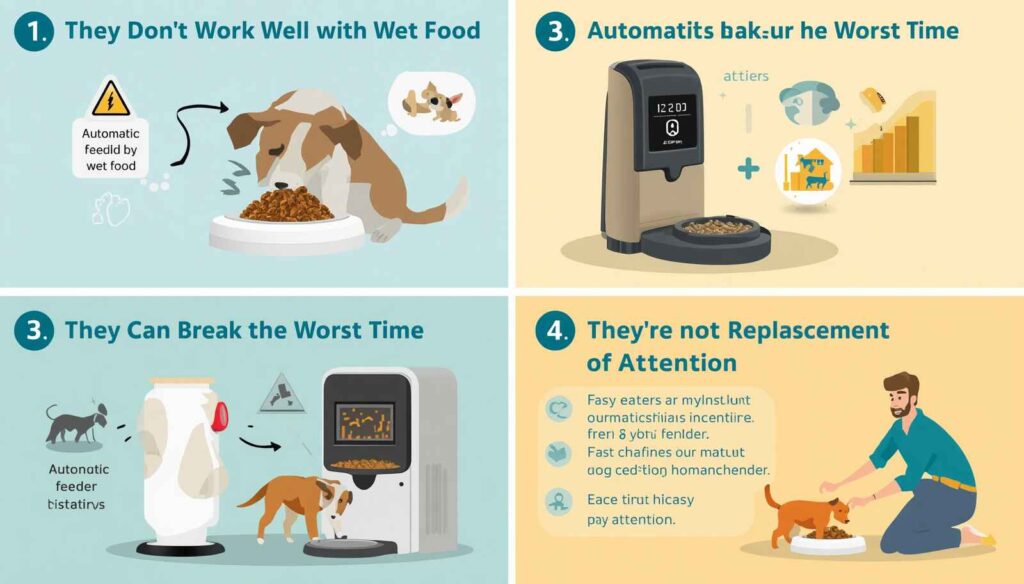
They Don’t Work Well with Wet Food
Most automatic feeders are designed for dry kibble. Wet food clogs the mechanism, spoils quickly at room temperature, and can cause the feeder to malfunction. If your dog eats wet food or raw food, a standard auto feeder won’t work for you without specialist equipment.
They Can Break (at the Worst Time)
A jammed feeder means a hungry dog. Power cuts, mechanical failures, or software glitches can mean your dog misses a meal entirely. Always have a backup plan — a trusted neighbour, a pet sitter, or a secondary feeder.
Fast Eaters Are Still at Risk
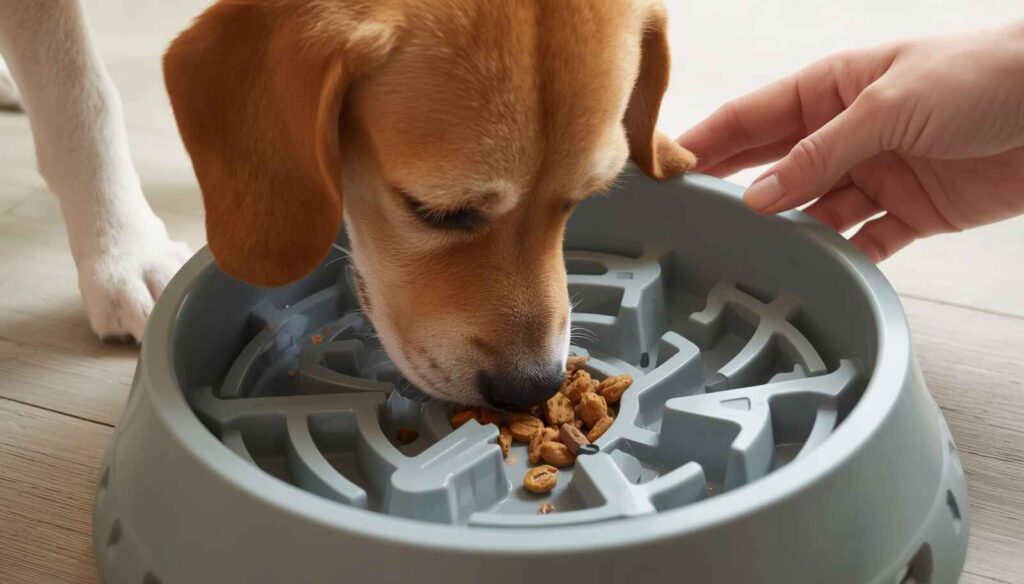
Automatic feeders don’t slow down dogs who bolt their food. If your dog inhales their meals in 30 seconds, you still need a slow feeder bowl or a puzzle feeder placed at the dispenser end. Bloat (GDV) is a genuine risk in large-breed dogs who eat too quickly.
They’re Not a Replacement for Attention
A feeder can replace a bowl — it cannot replace you. Dogs who are home alone all day still need enrichment, interaction, and exercise. Don’t let the feeder become a reason to avoid addressing separation anxiety or loneliness.
How Much Do Automatic Dog Feeders Cost? Is It Worth the Price?
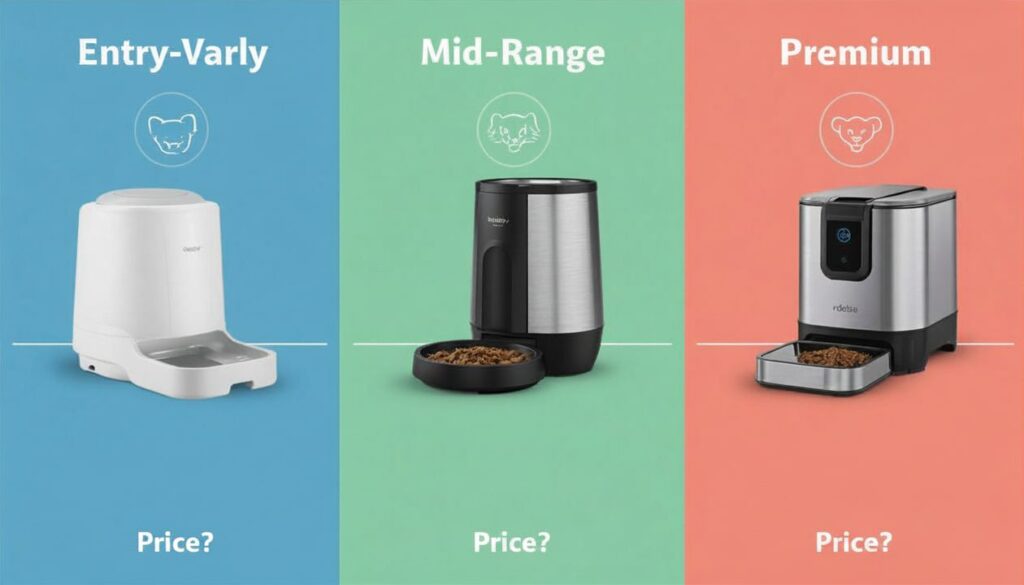
Here’s a rough breakdown for UK, Canadian, and Australian buyers:
| Type | Price Range (Approx.) | Best For |
|---|---|---|
| Gravity feeder | £10–£30 / CA$15–$40 / AU$20–$50 | Free-feeding dogs, multiple-dog households |
| Programmable electronic | £30–£80 / CA$50–$110 / AU$60–$130 | Dogs needing scheduled meals |
| Smart Wi-Fi feeder | £80–£200+ / CA$120–$280 / AU$150–$320 | Frequent travellers, tech-forward owners |
The long-term value is real. Proper portion control alone can reduce food costs by 10–15% and potentially save thousands in vet bills linked to obesity. A £60 feeder that prevents even one obesity-related vet visit has already paid for itself.
How to Introduce Your Dog to an Automatic Feeder (Without the Drama)
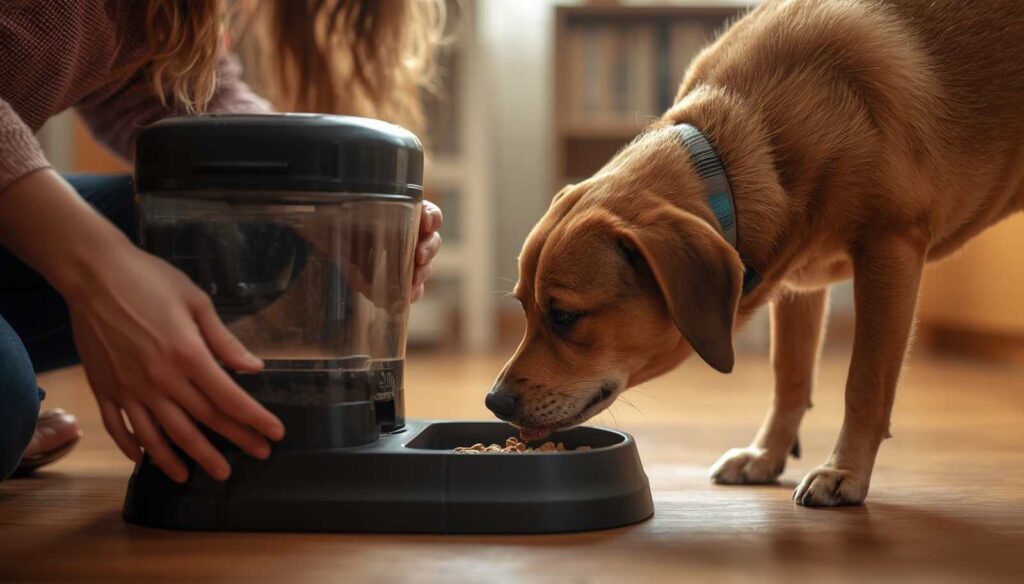
Some dogs adapt instantly. Others need a slow introduction — especially anxious dogs or those who associate feeding with owner interaction.
Here’s a simple 5-step approach:
- Place the feeder near their usual feeding spot without turning it on. Let them sniff it.
- Put treats near and inside the feeder so they associate it with good things.
- Run it manually a few times while you’re present, so the sound doesn’t startle them.
- Set the timer for one meal while you’re home. Watch how they respond.
- Gradually transition all meals to the feeder over 5–7 days.
Never just disappear and leave your dog to figure it out. The transition matters.
When an Automatic Dog Feeder Is Absolutely Worth It
- You work long or unpredictable hours
- Your dog is on a weight management or medical feeding plan
- Multiple family members share feeding duties and portion control is inconsistent
- You travel short distances (weekends away) and need bridge feeding support
- Your dog is anxious about erratic meal timing
When You Probably Don’t Need One
- You work from home and can feed your dog at set times reliably
- Your dog eats wet or raw food exclusively
- You have a puppy under 12 weeks (they need more frequent monitoring)
- Your dog has severe separation anxiety — a feeder won’t address the root issue
FAQ: Automatic Dog Feeders
1.Can I leave my dog alone for a full day with an automatic feeder?
Automatic feeders can handle meals, but dogs shouldn’t be left completely alone for 8+ hours without toilet breaks, exercise, and companionship. Use a feeder alongside a dog walker or doggy daycare for long absences — not instead of them.
2.Are automatic feeders safe if the power goes out?
Most battery-operated or dual-power feeders have backup batteries. Check before you buy. If your model runs only on mains power, keep an emergency contact who can manually feed your dog.
3.Can I use an automatic feeder for puppies?
Yes, but with caution. Puppies under 6 months often need 3–4 meals a day and close monitoring. Choose a programmable feeder (not a gravity feeder) and make sure meal sizes are appropriate for their age and breed.
4.Will my dog be confused or stressed by an automatic feeder?
Initially, some dogs are startled by the noise. With a slow introduction (as outlined above), most dogs adapt within a week. Dogs who are already food-motivated tend to adjust very quickly.
5.What’s the best automatic feeder for large breed dogs?
Look for feeders with large capacity hoppers (4kg+), sturdy anti-tamper construction, and programmable portion control. Brands like PetSafe and SureFeed have solid options available across the UK, Canada, and Australia.
6.Do automatic feeders work for dogs who eat too fast?
Standard auto feeders don’t slow eating. Pair your feeder with a slow-feed bowl attachment or a puzzle insert at the dispensing point to reduce gulping risk.
7.Are cheap automatic feeders reliable?
Entry-level feeders (under £30) are fine for occasional use, but cheap plastics, weak motors, and limited programming can mean problems. For daily use, spending £50–£80 on a mid-range model is usually a better long-term investment.
The Bottom Line: Are Automatic Dog Feeders Worth It?
For most dog owners — yes, genuinely.
If you want consistent meal times, better portion control, or just the peace of mind that your dog is fed while you’re out, an automatic feeder delivers on all of those things. It’s not a luxury gadget; for many dogs, it’s actually a healthier way to eat.
The key is choosing the right type for your dog’s needs, introducing it properly, and not treating it as a substitute for real care and attention.
Your dog still needs you. The feeder just makes sure dinner is never late.
#. Related Articles:
1. Are Elevated Dog Bowls Better for Dogs?