You probably don’t think about replacing your dog’s toys until something goes horribly wrong — like finding your Labrador chewing a squeaker that’s half the size of a grape. Been there. It’s a gut-drop moment.
Here’s the thing: most dog owners replace toys too late. Not because they don’t care, but because they genuinely don’t know what to look for. This guide will change that.
Whether you’re in the UK, Canada, or Australia — and whether you’ve got a gentle Golden Retriever or a jaw-of-steel Staffy — this is everything you need to know about when to replace dog toys, how to spot danger signs early, and how to build a simple toy-checking habit that takes less than two minutes a week.
Why Dog Toy Safety Actually Matters (More Than You Think)
A worn-out dog toy isn’t just a sad, floppy thing at the bottom of the toy basket. It can be a real hazard.
Dogs don’t understand that a toy is “past its prime.” They’ll chew a rope toy down to individual fibres and still think it’s the best thing in the world. Those loose fibres can cause intestinal blockages if swallowed — and emergency vet visits are expensive, stressful, and completely preventable.
Common risks from old or broken toys:
- Swallowed stuffing causing digestive blockages
- Broken plastic leaving sharp edges that cut gums
- Small squeakers becoming choking hazards
- Frayed rope fibres wrapping around teeth or swallowed in chunks
- Mould growing inside rubber or fabric toys (yes, really)
This isn’t meant to scare you — it’s meant to give you the confidence to make better decisions. Once you know what to look for, it becomes second nature.
How Often Should You Replace Dog Toys?
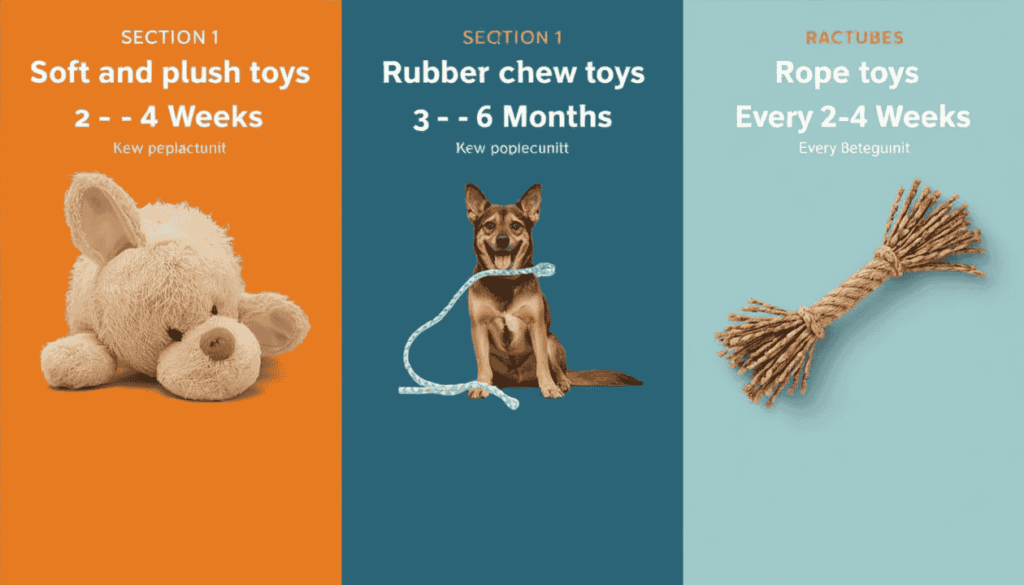
There’s no single answer that fits every dog, and anyone who tells you otherwise is oversimplifying. The honest answer depends on your dog’s chewing style, the toy material, and how often it’s used.
Here’s a practical breakdown:
Soft and Plush Toys
Replace every 2–4 weeks for heavy chewers, or when you notice tears, exposed stuffing, or ripped seams. For gentle dogs who carry plush toys around without destroying them, monthly checks are usually enough — replace when visibly worn.
Rubber Chew Toys (like Kongs or Nylabones)
These are the workhorses of the toy world. A well-made rubber toy can last 3–6 months with regular use. Check weekly for deep gouges, cracks, or chunks missing. If you can peel a piece off with your fingernail, it’s time to go.
Rope Toys
Replace every 2–4 weeks, or sooner. These fray fast, and the individual cotton strands can wrap around a dog’s intestines if swallowed. Once you see significant fraying — loose threads longer than 2–3 cm — bin it.
Squeaky Toys
Squeakers are usually the first thing to go. Replace the whole toy the moment a squeaker becomes accessible. Once your dog has punctured the outer layer and can reach the squeaker, it’s a choking risk.
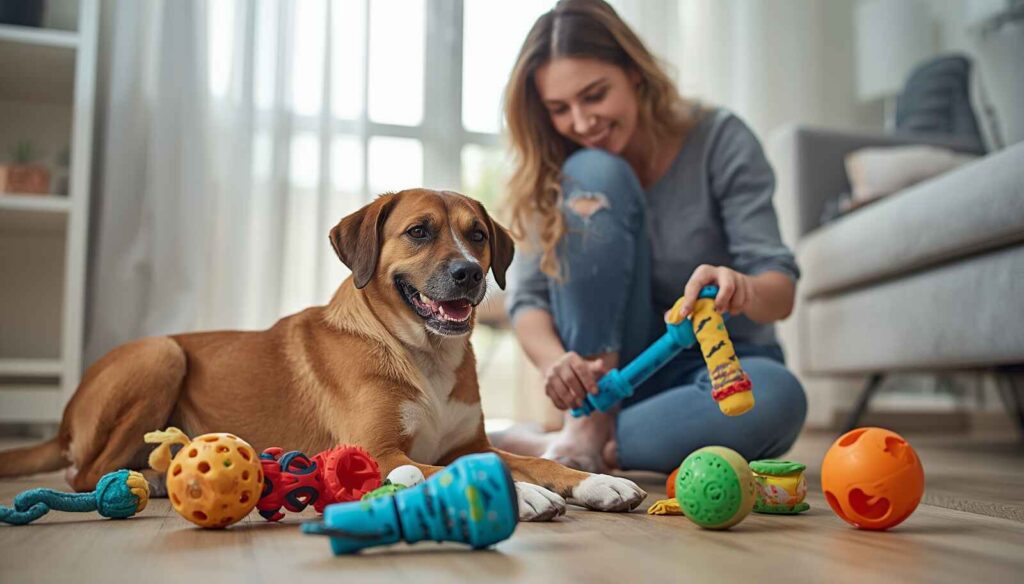
Interactive and Puzzle Toys
These tend to last longer because dogs aren’t typically chewing them aggressively. Inspect monthly for cracked plastic, broken compartments, or pieces that can be bitten off. Replace any that have lost structural integrity.
Tennis Balls and Fetch Toys
Tennis balls can wear down surprisingly fast with aggressive chewers. The fuzz can pill off and be swallowed, and the inner rubber can split. Replace every 1–2 months for keen chewers, or when you notice the ball is no longer perfectly round.
6 Clear Signs It’s Time to Replace a Dog Toy Right Now
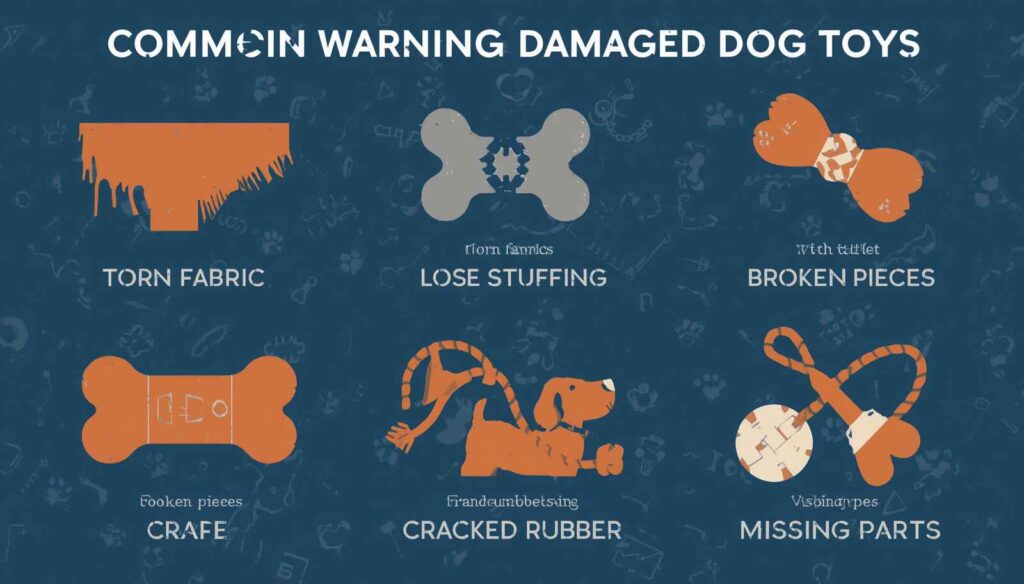
Don’t wait for your scheduled check — these are the signs that mean today is the day.
1. Exposed Stuffing or Inner Material
The moment stuffing is visible, the toy is done. Dogs will pull it all out and some will eat it. Polyester filling isn’t toxic, but it’s not digestible either.
2. Missing Chunks
If part of the toy has disappeared and you can’t find it on the floor… it’s probably been swallowed. Check your dog, and if you notice bloating, vomiting, or a change in bowel movements, call your vet.
3. Sharp or Jagged Edges
Run your hand across the toy. If anything snags your skin, it will cut your dog’s mouth or throat. Bin it immediately.
4. A Smell That Won’t Wash Out
Most toys can be cleaned (more on that below). But if a toy still smells off after washing — musty, sour, or just wrong — it’s likely harbouring mould or bacteria inside the material. Out it goes.
5. Squeaker or Rattle That’s Become Accessible
As soon as a dog can access the noisemaker inside a toy, replace the whole thing. Squeakers are a choking hazard, especially for smaller dogs.
6. Your Dog Has Lost All Interest
Sometimes dogs lose interest in a toy because it’s genuinely boring. But sometimes it’s because the texture has changed, it smells different, or something about it feels off to them. Dogs are often better at detecting when something’s wrong than we are.
Different Dogs, Different Timelines
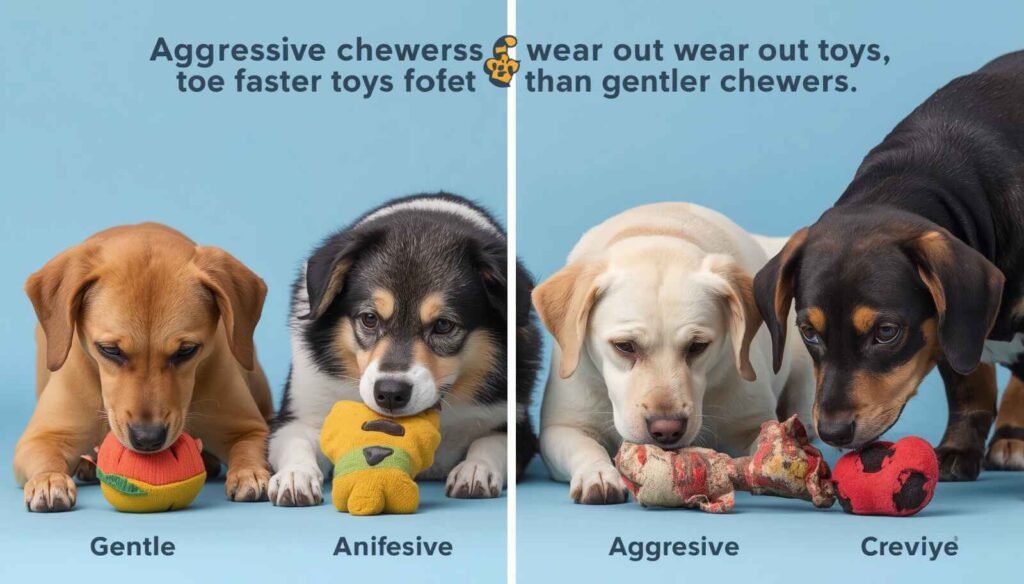
This is something competitors gloss over, but it genuinely matters.
Puppies go through a heavy chewing phase between 3–6 months while teething. During this period, inspect toys every couple of days. Puppies are also more likely to swallow bits of toy because they’re still learning what’s food and what isn’t.
Senior dogs tend to chew less aggressively, so toys may last longer. However, senior dogs can have more sensitive gums, so rough or abrasive toys should be swapped out more frequently if you notice any mouth sensitivity.
Power chewers (Staffies, Bulldogs, German Shepherds, Labradors) will destroy most soft toys in under 10 minutes. Focus on heavy-duty rubber toys rated for aggressive chewers, and check them weekly at minimum.
Toy breeds and gentle chewers (Bichons, Cavaliers, Shih Tzus) can often keep soft toys for months safely. Monthly checks are usually enough.
The 2-Minute Weekly Toy Check (Build This Habit)
You don’t need a complicated system. Just do this once a week — Sunday evenings work well for most people.
- Gather all toys in one spot
- Run your hand over each toy — feel for rough edges, missing chunks, deep cuts
- Sniff test — anything that smells like mould or rot goes in the bin
- Squeeze rubber toys — listen for cracking sounds, feel for give that wasn’t there before
- Check rope toys — measure fraying with your finger, more than 2–3 cm of loose thread is the threshold
- Bin anything suspicious — when in doubt, throw it out
That’s it. Two minutes, once a week. It becomes second nature after a month.
How to Make Toys Last Longer (Without Compromising Safety)
You don’t always need to replace — sometimes you need to clean and rotate.
Wash soft toys in a pillowcase on a gentle machine cycle every 1–2 weeks. Use unscented, pet-safe detergent. Air dry completely before giving back to your dog — damp toys grow mould fast.
Clean rubber toys with warm water and a drop of dish soap, or pop them in the dishwasher (top rack, no detergent). Rinse thoroughly.
Rotate toys instead of leaving all of them out at once. Keep 4–5 available and swap others in and out weekly. This keeps toys feeling “new” to your dog and means each toy gets less daily wear.
Buy quality over quantity. A £15 Kong will outlast five £2 toys from a discount shop — and the cheap ones often use dyes and materials that aren’t pet-safe.
How Many Toys Does a Dog Actually Need?
This comes up a lot. The honest answer: 5–8 toys in rotation at any one time is plenty for most dogs. That gives you variety (something to chew, something to fetch, something interactive, something soft to cuddle) without overwhelming them or you.
More toys doesn’t always mean more fun. Dogs actually engage more with toys when they don’t have unlimited access to all of them at once. Rotate them and each toy feels special again.
FAQ: Replacing Dog Toys
1.How often should I replace my dog’s toys?
It depends on the toy type and your dog’s chewing style. Soft toys: every 2–4 weeks for heavy chewers. Rubber toys: every 3–6 months. Rope toys: every 2–4 weeks. Always replace immediately if you see missing chunks, sharp edges, or exposed inner parts.
2.Is it safe to wash and reuse dog toys?
Yes — for most toys. Rubber and hard plastic toys can be washed and reused safely. Soft toys can go in the washing machine in a pillowcase. Rope toys are harder to clean properly; if they smell or are heavily frayed, replace rather than wash.
3.My dog swallowed part of a toy — what should I do?
Call your vet immediately if you suspect your dog has swallowed a piece of toy. Watch for signs of blockage: vomiting, lethargy, loss of appetite, bloating, or straining to go to the toilet. Don’t wait to see if it “passes” — get professional advice straight away.
4.Are expensive dog toys worth it?
Generally, yes — especially for heavy chewers. Look for toys rated for “aggressive chewers” or “power chewers” from reputable brands. They use safer, more durable materials and tend to last significantly longer than budget options.
5.My dog destroys every toy within minutes. What should I do?
First, check the toy is actually rated for your dog’s size and chewing strength. If they’re still destroying everything, try natural chews (like bully sticks or yak chews) which are designed to be consumed safely. Limit unsupervised toy time for very destructive chewers.
6.Do I need different rules for puppies vs adult dogs?
Yes. Puppies in the teething phase (3–6 months) need more frequent toy checks — every few days. They chew harder, are more likely to swallow bits, and go through toys faster. Senior dogs may need softer toys and more frequent replacement if their gums become sensitive.
7.Can I donate old dog toys instead of throwing them away?
Only if they’re still genuinely safe — no exposed stuffing, no sharp edges, no missing pieces. Many animal shelters accept gently used toys. If you’re unsure whether it’s safe, err on the side of disposing of it rather than passing on a potential hazard.
Final Thoughts
Replacing dog toys isn’t about spending more money — it’s about paying attention. A quick weekly check, a clear rule about when something goes in the bin, and a small rotation of quality toys will keep your dog safer and happier than any amount of impulse buying.
When in doubt, throw it out. Your dog won’t mourn it, and you’ll sleep better knowing they’re safe.
The best toy is always the one that’s safe, engaging, and right for your dog’s size and chewing style. Everything else is secondary.
#. Related Articles:
1. What Is the Best Chew Toy for Aggressive Chewers?