You’ve said “sit” fourteen times. Your dog is staring at you like you’re speaking Mandarin. You’ve got a treat in your hand, your best encouraging voice on, and yet — nothing. Just a tail wag and a blank look.ji
Sound familiar?
If you’re struggling to train a stubborn dog to sit, you’re not alone — and more importantly, it’s not your fault. What most guides won’t tell you is that “stubbornness” in dogs is almost never about attitude. It’s about communication, motivation, and timing. Once you understand that, everything changes.
This guide walks you through exactly how to train a stubborn dog to sit, with practical, beginner-friendly steps that actually work — whether you have a wilful Beagle in Birmingham, a headstrong Husky in Toronto, or an independent-minded Staffy in Sydney.
Why Your Dog Seems “Stubborn” in the First Place
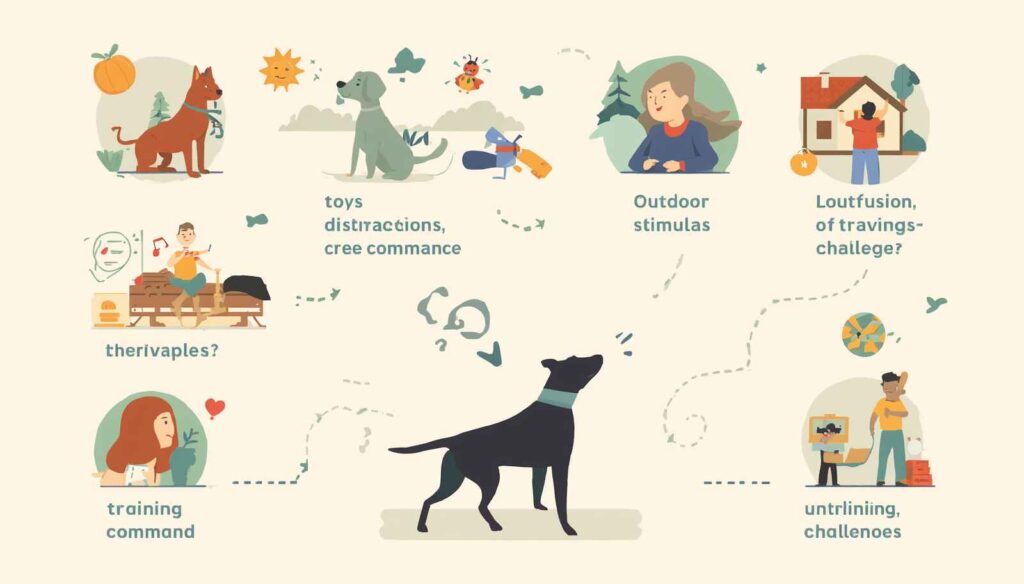
Before jumping into training, let’s clear something up: dogs don’t sit out of spite. When your dog doesn’t respond to your command, it usually means one of these things:
- They don’t fully understand what you’re asking yet — “Sit” is a sound to them, not a concept, until it’s been properly paired with the action.
- The environment is too distracting — Asking a dog to sit in a busy park when they’ve only practised at home is like sitting an exam with no revision.
- The reward isn’t worth it to them — If your treat is dry kibble and a pigeon just walked by, you’ve already lost.
- They’ve learned that ignoring you works — If you repeat the command five times before anything happens, your dog has trained you to say it five times.
Understanding this shifts your mindset completely. You’re not dealing with a defiant dog — you’re dealing with a dog who needs clearer communication and better incentives.
What You’ll Need Before You Start
Keep it simple. You don’t need expensive equipment. Here’s what works:
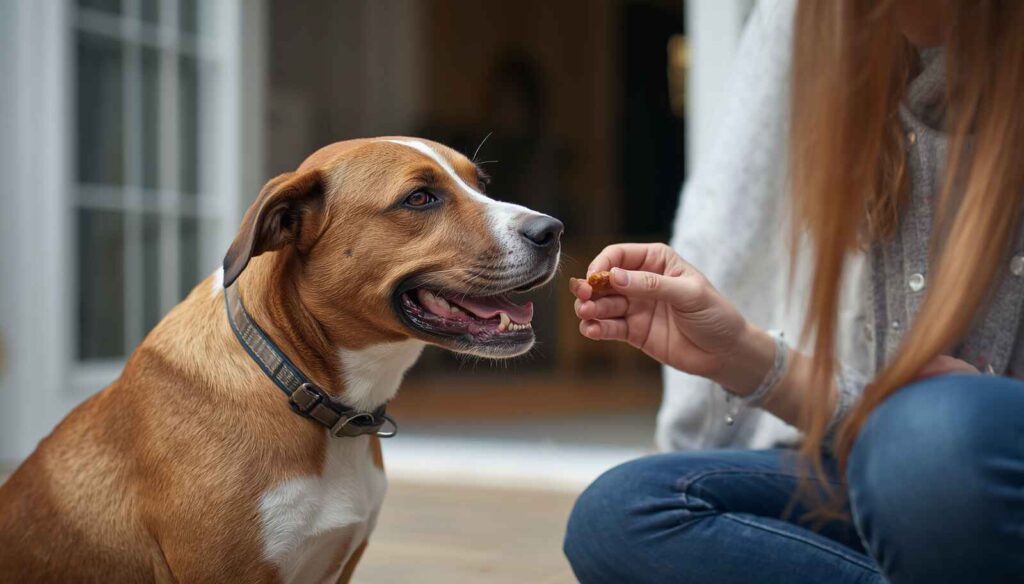
- High-value treats — Small, soft, smelly treats (think cooked chicken, cheese, or liver treats). These are a game-changer for reluctant dogs.
- A quiet space to start — Low distractions mean faster learning. Start indoors.
- A consistent cue word — Pick “sit” and stick with it. Don’t swap between “sit,” “sit down,” and “park yourself.”
- Short sessions — 5 minutes, twice a day. That’s it. Dogs learn better in short bursts.
Step-by-Step: How to Train a Stubborn Dog to Sit
Step 1 — Lure, Don’t Force
Never push your dog’s bottom down. It can cause discomfort and it builds zero understanding. Instead, use what trainers call “luring.”
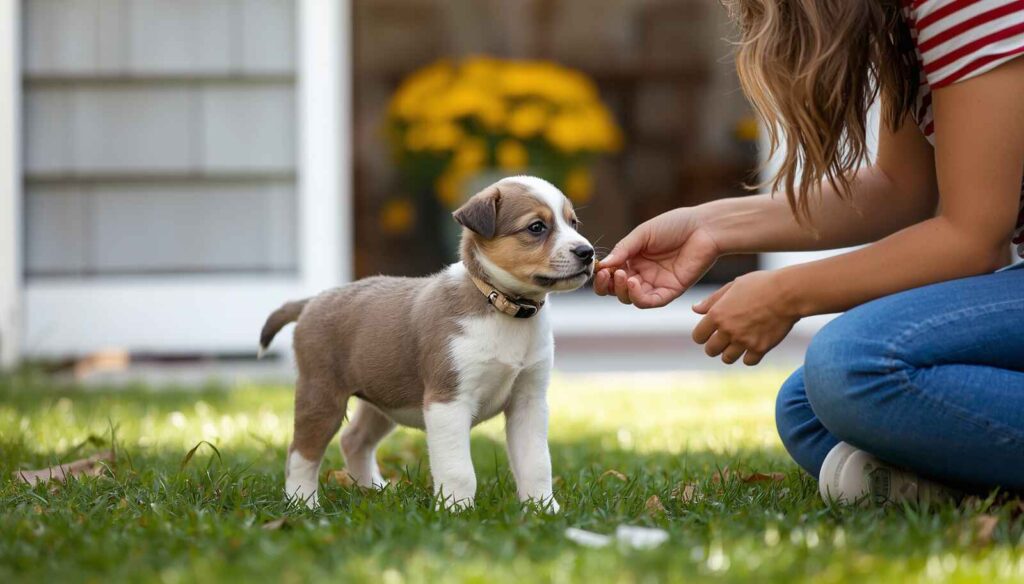
Hold a treat close to your dog’s nose. Slowly move it upward and slightly back over their head. As their nose follows the treat upward, their bottom naturally goes down. The moment it touches the floor — treat and praise immediately.
The key here is timing. The reward must come within 1–2 seconds of the bottom hitting the floor, or the dog won’t connect the action to the reward.
Do this 5–6 times in a row. Don’t say “sit” yet — just practise the movement.
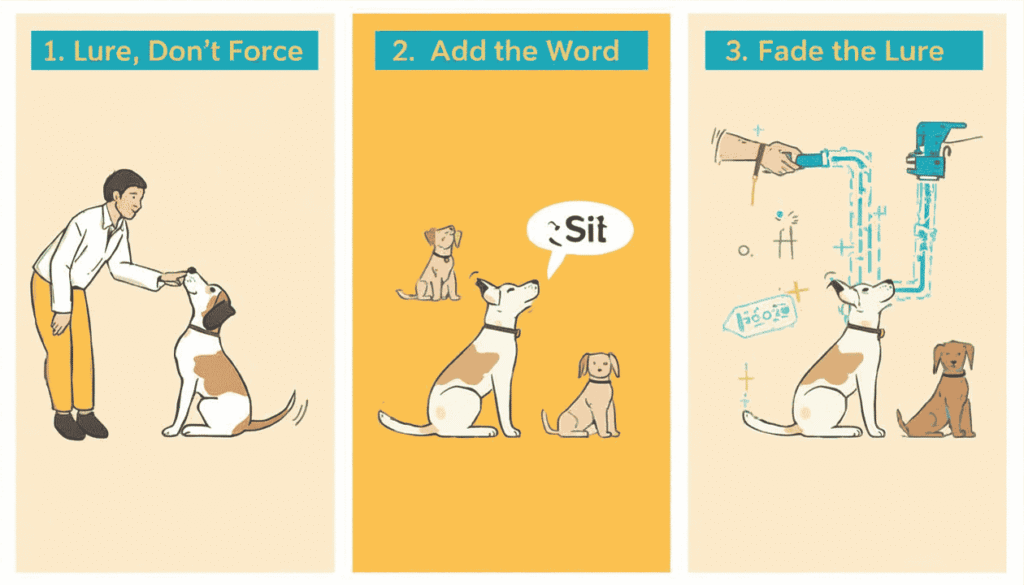
Step 2 — Add the Word
Once your dog is consistently following the lure and sitting, it’s time to introduce the cue.
Say “sit” once — calmly, clearly — then do the lure. Repeat this 10–15 times across a few sessions. You’re building the association between the word and the action.
Important: Say it once. If they don’t respond, don’t repeat it. Simply guide them with the lure again. Repeating the command teaches them they don’t need to respond the first time.
Step 3 — Fade the Lure
After several successful sessions, start reducing the lure. Instead of a treat in your hand, use an empty hand in the same upward motion. Reward from your other hand or pocket after they sit.
This step is where many owners get stuck — they keep using the treat as a lure forever. Fading it out teaches your dog to respond to the hand signal and word, not just the food in your fingers.
Step 4 — Practise in New Places
Once your dog sits reliably at home, take it to slightly harder environments. The back garden first, then the front garden, then a quiet street, then a park.
Each new location is basically a fresh start — expect some regression, and that’s normal. Just go back to basics briefly, and your dog will catch up quickly.
Step 5 — Increase Duration and Distance
Eventually, you want your dog to sit and stay sitting, not just plonk down and immediately bounce back up.
After they sit, wait one second before rewarding. Then two. Then five. Build slowly. You can also gradually take a step back before rewarding, which starts building the foundation for a solid stay.
The Real Reason Training Isn’t Working (And How to Fix It)
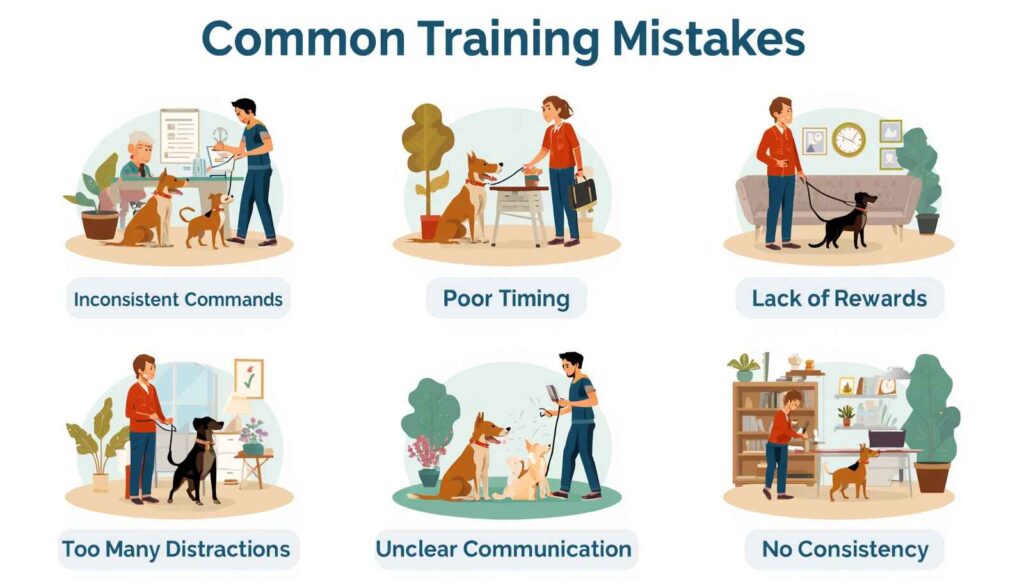
You’re Probably Repeating Commands
This is the most common mistake with stubborn dogs. The moment you say “sit, sit, SIT” — your dog learns that the real cue is the third, louder version.
Fix it: Say the cue once. If they don’t respond in 3 seconds, reset (take a step, let them move around) and try again. Never punish — just try again.
Your Rewards Aren’t High Enough
Dry biscuits during a garden session might work fine. But if you’re competing with squirrels, smells, or other dogs, you need something your dog goes absolutely crazy for.
Ask yourself: “On a scale of 1–10, how much does my dog love this treat?” For training a stubborn dog, you need an 8, 9, or 10. Cooked chicken, cheese cubes, and frankfurter slices tend to hit that mark.
You’re Training Too Long
Five-minute sessions feel too short, but they’re ideal. Dogs — especially stubborn ones — switch off after too many repetitions. They stop engaging because they’re mentally tired or bored.
End every session on a success. If they’re struggling, make it easier (closer treat, slower lure) so the session ends positively.
Your Energy Is Off
Dogs are extraordinarily sensitive to your mood. If you’re frustrated, they feel it — and they associate training with that tension. Keep sessions upbeat, almost playful. Act like they’re doing brilliantly even when they’re not quite there yet.
Breed-Specific Notes for UK, Canadian & Australian Dog Owners
Some breeds that are particularly popular in the UK, Canada, and Australia are also famously independent thinkers:
- Beagles — Scent-driven. Train away from strong smells, and use food they go wild for.
- Siberian Huskies — Highly intelligent but get bored easily. Keep sessions fast-paced and interesting.
- Staffordshire Bull Terriers — Eager to please but excitable. Calm, clear signals work best.
- Australian Cattle Dogs — Brilliant but need mental challenge. Pair “sit” with problem-solving games.
- Basset Hounds — Slow but deeply food motivated. Patience and great treats go a long way.
The training method is the same for all of them — but knowing your breed helps you set realistic expectations and choose the right rewards.
When to Get Extra Help
Most dogs will learn to sit reliably within 1–3 weeks of consistent training. If you’re seeing none of the following after two weeks:
- Any interest in the treats
- Any attempt to follow the lure
- Any engagement with you during sessions
It may be worth ruling out a health issue (hip or joint discomfort can make sitting painful) or working with a certified dog trainer or behaviourist. Look for someone who uses positive reinforcement methods — in the UK, check the APDT; in Australia, the PPGA; in Canada, the IAABC.
FAQ: Training a Stubborn Dog to Sit
1.My dog sits at home but won’t sit outside. What’s wrong?
Nothing is wrong — this is called a lack of “generalisation.” Dogs learn behaviours in context. You need to practise “sit” in many different environments. Start in low-distraction outdoor spaces and work up gradually.
2.How long does it take to train a stubborn dog to sit?
Most dogs pick up the basic sit within a week of daily practice. “Stubborn” dogs might take two to three weeks, especially if old habits (like ignoring commands) need to be unlearned first.
3.Should I use a clicker for training a stubborn dog?
Clicker training can be very effective because the click marks the exact moment of correct behaviour. It’s not essential, but if your timing with treats feels off, a clicker is worth trying. You can pair any reward with it.
4.My dog sits for treats but ignores me without them. Help?
This is a luring dependency — the dog has learned to respond to the food, not the cue. Start fading the lure (empty hand signals) and randomising rewards so they never know if a treat is coming. Dogs actually try harder when rewards are unpredictable.
5.Is it too late to train an older dog to sit?
Absolutely not. The saying “you can’t teach an old dog new tricks” is genuinely a myth. Older dogs can learn sit just as well as puppies — and they often have better focus and impulse control. It may just take a little more patience.
6.What if my dog jumps up instead of sitting?
Turn away and ignore the jumping completely. No eye contact, no talking, no pushing them down. Only reward them when all four paws are on the floor. Jumping gets them nothing; calm behaviour gets them everything.
7.Can I train a stubborn dog without treats?
Treats are the most effective tool, especially early on. But if your dog isn’t food motivated, try play (a quick tug session), praise combined with physical affection, or access to something they want (going through a gate, getting the lead clipped on). Find what makes your dog light up.
Conclusion
Training a stubborn dog to sit isn’t about dominance, force, or endless repetition. It’s about becoming a better communicator.
Once you understand that your dog isn’t being difficult — they just need clearer signals, better motivation, and consistent practice — the whole thing gets a lot less frustrating and a lot more enjoyable.
Start small. Use high-value treats. Say the command once. Keep sessions short and always end on a win.
You’ll get there. And when your dog finally locks eyes with you and drops into a perfect sit without hesitation? That’s one of the best feelings in dog ownership — and it was worth every patient, five-minute session to get there.
#. Related Articles:
1. How to Teach a Dog to Come When Called?