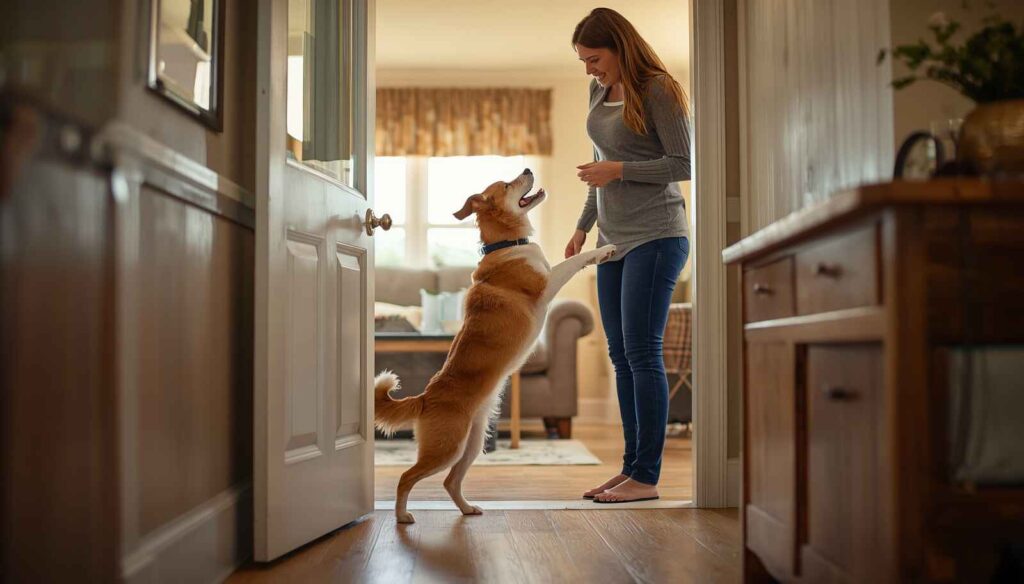
You open the front door, and before you can even say hello, your dog launches at your guest like a missile. Your guest stumbles back. You panic. The dog is delighted. Sound familiar?
Teaching your dog to stop jumping on guests is one of the most common challenges dog owners face — and one of the most frustrating. Especially when your dog is sweet and friendly, and you know the jumping comes from love. But love or not, a 30kg Labrador knocking over your elderly neighbour is a problem that needs solving.
The good news? This is very fixable. You don’t need to hire a professional trainer or spend a fortune on gadgets. You just need to understand why your dog does it, and then apply a consistent approach that actually works.
Why Your Dog Jumps on Guests in the First Place
Dogs jump to greet people — it’s as simple as that. As puppies, they jump up to reach their mum’s face. That behaviour carries into adulthood. When someone arrives, your dog is excited and wants to be close to their face.
Here’s the part most people miss: your dog has been rewarded for jumping without you realising it.
Every time someone says “oh, it’s okay!” and pets the dog mid-jump, or even pushes the dog away (which is attention), your dog learns that jumping = interaction. That’s a pretty solid reward from a dog’s point of view.
The excitement also builds before the door even opens. The doorbell, the sound of footsteps, you reaching for the handle — all of these become signals that something exciting is about to happen. By the time the guest walks in, your dog is already at peak arousal.
The Mistake Almost Every Owner Makes
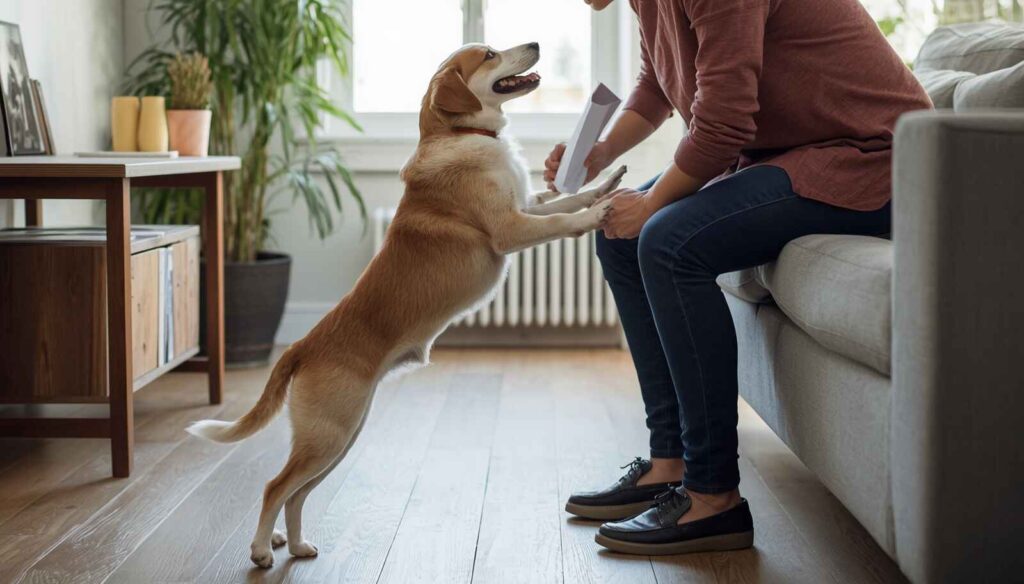
Most owners default to saying “No!” or “Down!” when the dog jumps. And it feels logical — you’re correcting the behaviour.
But here’s the problem: you’re still giving attention. Your dog doesn’t process “No” as a punishment when they’re in a state of excitement. They process it as engagement. Even negative attention feeds the cycle.
Punishment also creates confusion. Your dog doesn’t understand why jumping is fine when it’s just the two of you on the sofa, but wrong at the front door. Inconsistency is the enemy of training.
What actually works is removing what your dog wants (attention) when they jump, and providing it generously when they don’t.
What to Do Instead: Practical Training That Actually Works
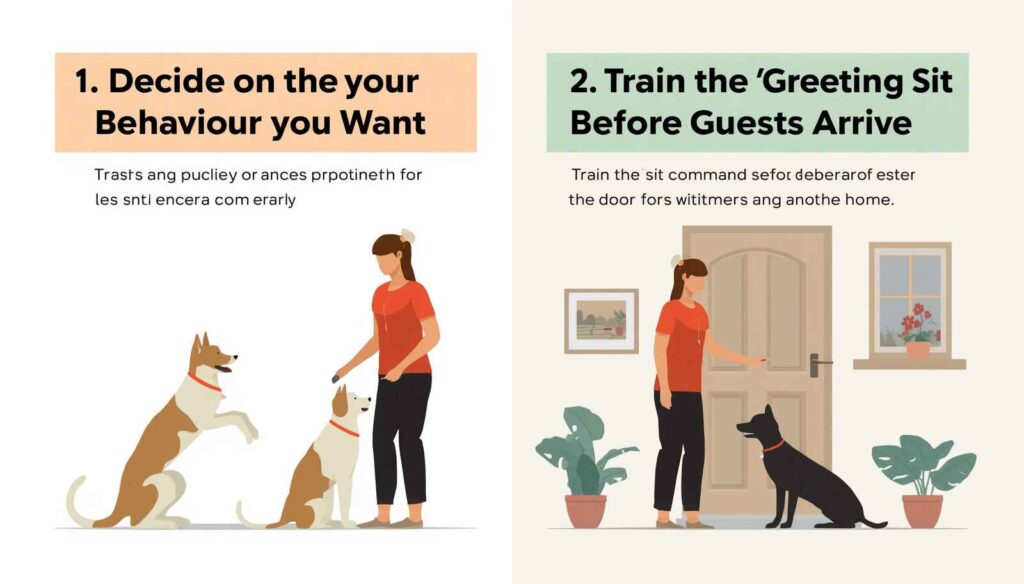
Step 1 — Decide on the Behaviour You Want
Before you start, be specific. Do you want your dog to sit when guests arrive? Stand calmly? Go to a bed? Pick one clear target behaviour, because that’s what you’re going to reward. Switching between goals confuses dogs fast.
A sit is the most popular choice — it’s incompatible with jumping. A dog cannot sit and jump at the same time.
Step 2 — Train the “Greeting Sit” Before Guests Arrive
Don’t try to teach your dog a new behaviour in the middle of an exciting situation. That’s like trying to teach someone to swim during a tsunami.
Practise the sit in calm moments first. Then gradually introduce mild excitement — a knock on the wall, a ring of a bell — and ask for a sit before any reward.
Work up slowly. The goal is for “excitement = sit” to become automatic.
Step 3 — Use the Turn-Away Method the Moment They Jump
The second your dog’s paws leave the floor:
- Turn your back completely
- Cross your arms
- Say nothing
- Don’t make eye contact
The moment all four paws hit the floor, calmly turn back and reward with a treat or quiet praise. If they jump again, repeat. This teaches your dog that jumping makes people boring, and calm feet make people interesting.
Be warned — this gets worse before it gets better. Your dog may jump more initially, because they’re confused about why the old trick isn’t working. Stick with it.
Step 4 — Set Up Controlled Practice Sessions
This is the step most owners skip, and it’s honestly the most important one.
Don’t wait for real guests and hope for the best. Set up fake arrivals. Ask a friend or family member to knock on the door or ring the bell repeatedly, come in, and follow the turn-away method with you.
Repeat this 10–15 times in one session. Your dog will start to understand the pattern far faster in deliberate practice than through random real-world events.
Step 5 — Brief Your Guests (This Is Non-Negotiable)
Here’s the honest truth: if your guests don’t follow the rules, your training will stall.
Tell guests before they arrive:
- “Please ignore the dog completely if he jumps. Don’t say anything, don’t push him away, just turn sideways and look away.”
- “When he has four paws on the floor, you can calmly greet him.”
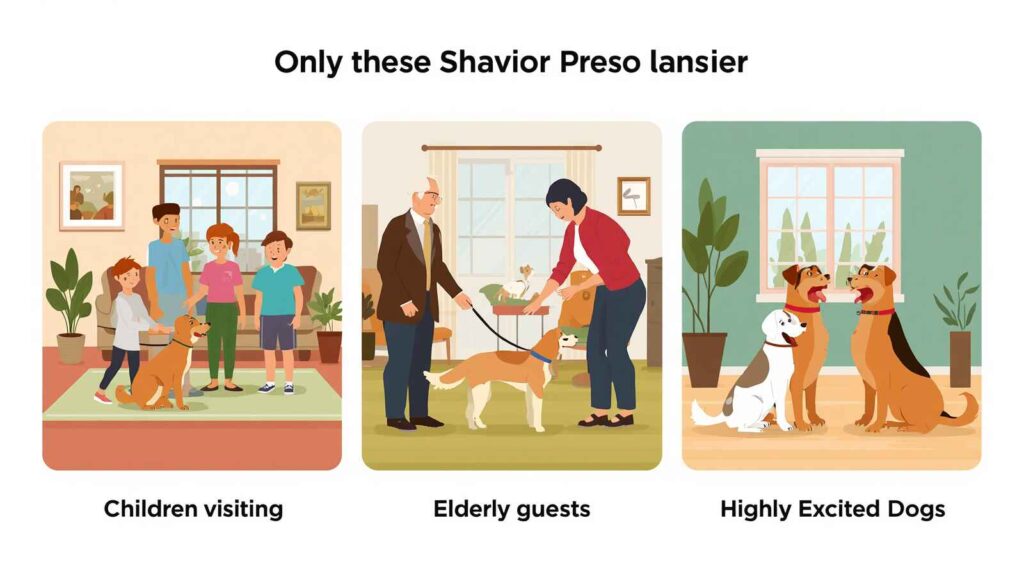
Most people want to help. Give them a simple job and they’ll usually do it. Some guests (especially children or dog lovers) will struggle to ignore an excited dog. That’s when management tools come in.
Managing the Environment While You Train
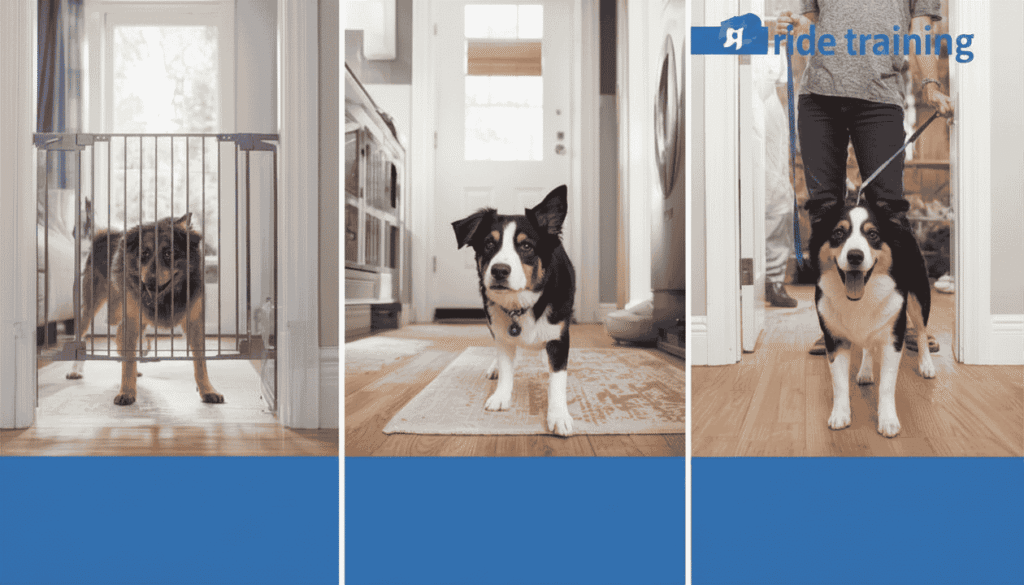
Training takes time. In the meantime, you need to manage situations so your dog isn’t repeatedly practising the wrong thing.
Use a lead at the door. Pop your dog on a short lead before guests arrive. This lets you calmly guide them into a sit without wrestling them.
Create a “go to your place” routine. Teach your dog to go to a specific mat or bed on cue. Send them there before opening the door. Reward heavily for staying. This gives your dog something to do instead of jumping.
Baby gate or separate room. For gatherings, guests who aren’t on board with training, or highly excitable dogs — put the dog in a different room with a chew toy until the initial excitement passes. There’s no shame in this. It protects your guests and prevents your dog from rehearsing bad habits.
Exercise before guests arrive. A tired dog is a calmer dog. Take your dog for a walk or have a good play session 30–60 minutes before guests arrive. You won’t eliminate excitement, but you’ll take the edge off.
Special Situations Worth Knowing About
When Your Dog Only Jumps on Certain People
Some dogs jump on strangers but not on family members they see daily. Others target tall people, or people in hats, or people who react dramatically. Pay attention to the pattern — the common thread is usually who gives the biggest reaction.
For guests who get targeted, coach them specifically. The more consistent that person is, the faster your dog generalises the rule.
Puppies vs. Adult Dogs
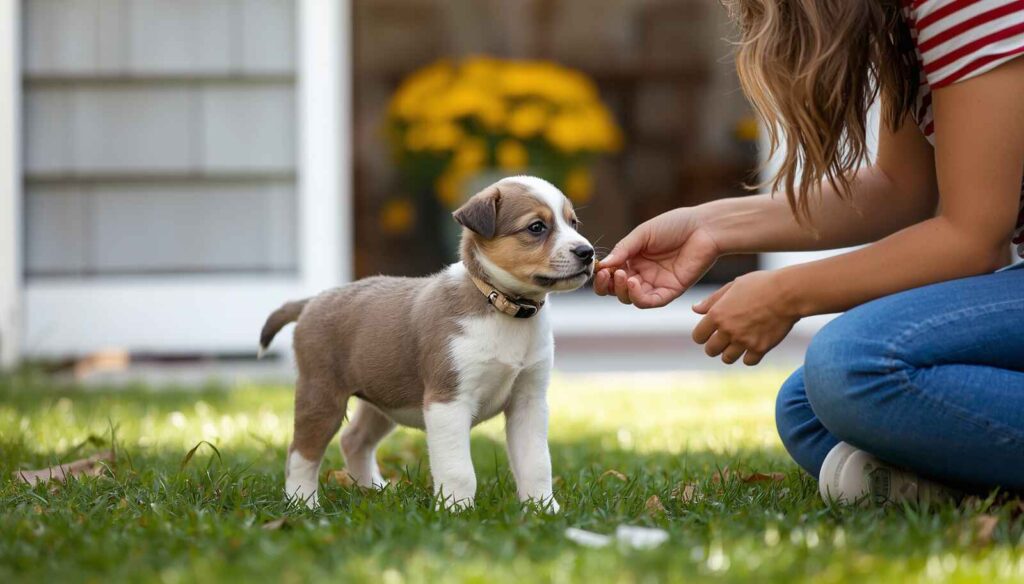
Puppies should be redirected early and often. It seems cute at 8 weeks; it’s a liability at 8 months. The same methods apply — withhold attention for jumping, reward four paws on the floor.
Adult dogs who’ve been jumping for years can absolutely learn new habits. It just takes longer. Expect 4–8 weeks of consistent practice before you see a reliable change in a well-established behaviour.
High-Energy Breeds
Border Collies, Springer Spaniels, Vizslas, and similar breeds have high physical and mental needs. For these dogs, exercise and mental stimulation aren’t optional extras — they’re prerequisites for good manners. Channel their energy into training games, agility, or scent work, and you’ll find obedience comes much more easily.
A Note on Timing and Consistency
The two biggest reasons training fails:
- Bad timing — the reward or the turn-away comes a second too late, and your dog doesn’t connect it to the behaviour.
- Inconsistency — one family member allows jumping, the others don’t. Your dog gets mixed messages and can’t learn the rule.
Every person in the household — including children — needs to be on the same page. One person letting the dog jump “just this once” can undo a week of training.
Frequently Asked Questions
1.How long does it take to stop a dog from jumping on guests?
For most dogs, you’ll see meaningful improvement within 2–4 weeks of consistent training. However, if your dog has been jumping for years or has had inconsistent training, expect 6–8 weeks. The key word is consistent — daily practice with clear rules applied by everyone in the household speeds everything up.
2.What if my guests won’t cooperate with the training?
Manage the situation instead of relying on your guests to train for you. Use a lead, put your dog behind a gate, or keep them in a separate room until initial greetings are done. Guests who ignore instructions (however well-meaning) will always slow down your progress.
3.My dog is big and the jumping is dangerous. What’s the fastest approach?
Combine management (lead at the door, gate) with the turn-away method, and teach the “place” command simultaneously. For large, powerful dogs, a front-clip harness can help you guide them into a calm position without a struggle. Never use physical punishment — it can cause fear or aggression and won’t fix the root behaviour.
4.Is it too late to train my adult dog?
Absolutely not. Dogs are learners their whole lives. Adult dogs can actually be easier to train than puppies because they have longer attention spans. The habit is more ingrained, which means it takes more repetition — but there is no age where training stops being possible.
5.Should I say “No” or “Off” when my dog jumps?
It’s better not to say anything. Words are attention, and attention rewards jumping in an excited dog. Instead, silence + turn-away is more powerful. If you do use a word, “off” (meaning feet on floor) is more useful than “no” — but only once your dog already knows what “off” means from prior training.
6.Can I use treats to stop the jumping?
Yes — but use them to reward calm behaviour, not to lure your dog away from jumping mid-leap. Timing matters. Treat the moment all four paws are on the floor. Over time, you’ll fade the treats and the calm greeting becomes its own reward.
7.What if my dog jumps on strangers during walks, not just guests at home?
The same principles apply, but you’ll need to practise in public. Ask strangers (politely) if they’d be willing to help — most dog people love being asked. Walk away the moment your dog jumps, return when they’re calm. Carry treats on walks and reward check-ins and calm greetings consistently.
Conclusion
Stopping your dog from jumping on guests isn’t about dominance, punishment, or shouting. It’s about being clear, consistent, and patient — and making sure the humans in the situation are as well-trained as the dog.
Start with what you want your dog to do instead, practise it in low-stakes situations, and build up to the real thing. Brief your guests, manage the environment, and exercise your dog beforehand.
You won’t get perfection overnight. But with a few weeks of honest, consistent effort, you’ll have a dog who greets guests with four paws on the floor — which is good for your guests, better for your stress levels, and honestly, a much nicer experience for the dog too.
#. Related Articles:
1. How to Teach a Dog to Come When Called?