You just brought home the fluffiest, most adorable creature you’ve ever seen — and within twenty minutes, there’s a puddle on your kitchen floor.
Welcome to puppyhood.
Potty training a puppy is one of those things that sounds simple but can feel completely overwhelming when you’re in the middle of it. There’s conflicting advice everywhere, and every dog seems to have their own stubborn little personality about it.
This guide cuts through the noise. No fluff, no overly optimistic timelines — just real, practical advice that works whether you’re home all day or juggling a full-time job, whether you have a tiny flat in London or a garden in Melbourne.
Why Potty Training Feels Harder Than It Should
Here’s something most guides won’t tell you: the frustration isn’t your fault, and it isn’t your puppy’s fault either.
Puppies under 12 weeks physically cannot hold their bladder for more than an hour. Their bodies simply aren’t developed enough. Expecting them to “get it” quickly sets both of you up for failure.
What actually works is building a habit through repetition, not punishment. Think of it less like teaching and more like scheduling.
Before You Start: Set Up for Success
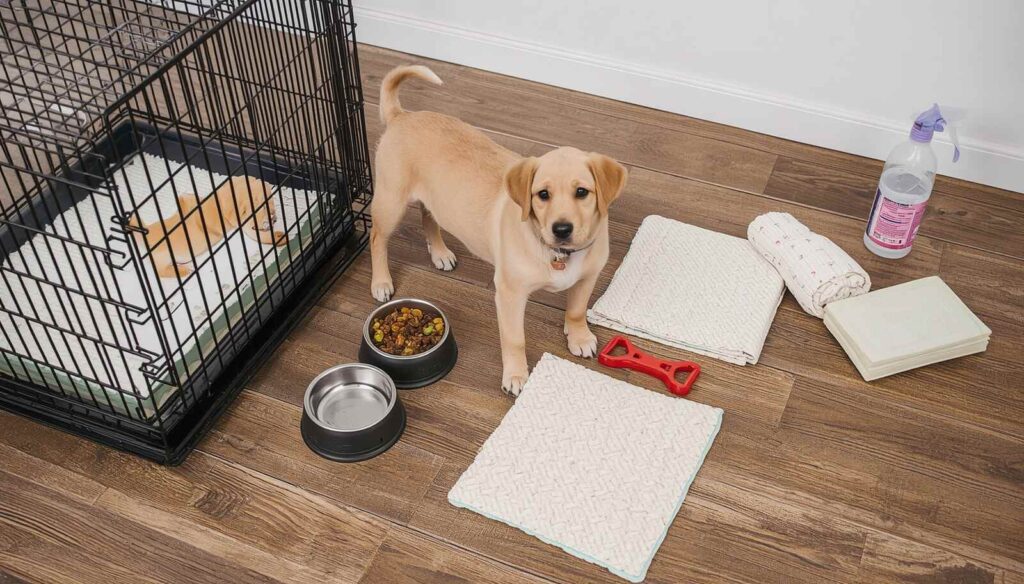
Getting the right setup in place before your puppy comes home makes a massive difference. Here’s what you need:
- A crate (more on this below — it’s genuinely useful)
- An enzyme-based cleaner — regular cleaners don’t fully remove the scent, so your puppy will keep going back to the same spot
- Small, soft treats for instant rewards
- A consistent outdoor spot — pick one area and stick to it
If you’re in a flat or don’t have garden access, decide upfront whether you’re using indoor pads or training for outside from the start. Mixing both can confuse puppies, so commit to one approach early.
Understanding Your Puppy’s Signals
Most accidents happen because we miss the signs. Before your puppy squats, they’ll usually:
- Sniff the ground in a focused, circular way
- Start circling or pacing
- Suddenly stop playing and look distracted
- Whine quietly or move toward a corner
The moment you see any of these, say your chosen cue word calmly (something like “outside” or “wee wees” — yes, people really do say this) and move them to their potty spot quickly.
Timing is everything. The faster you redirect, the faster they learn.
The Routine That Actually Works
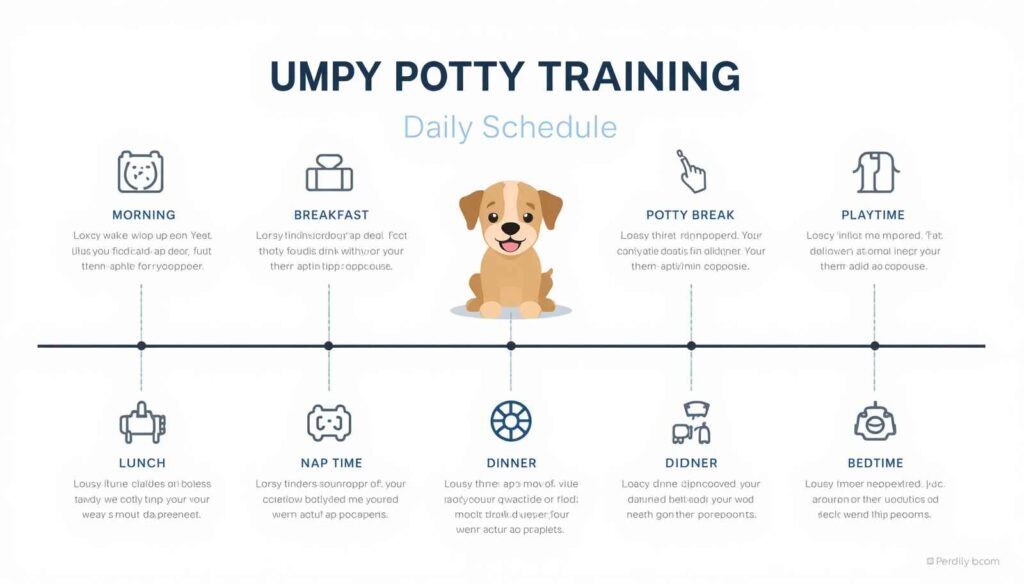
Puppies do best with predictability. Their bladder schedule is actually pretty easy to predict once you know the triggers:
Always take your puppy out:
- First thing in the morning (before anything else)
- After every meal (usually within 15–20 minutes)
- After every nap
- After play sessions
- Before bed
- Every 1–2 hours in between, for very young pups
Write it down if you need to. A simple timetable on your fridge can genuinely save your carpet.
As your puppy gets older (around 4–5 months), their bladder control improves and you can stretch the gaps. But in those first weeks, consistency is your best tool.
Crate Training: Why It Works and How to Do It Right
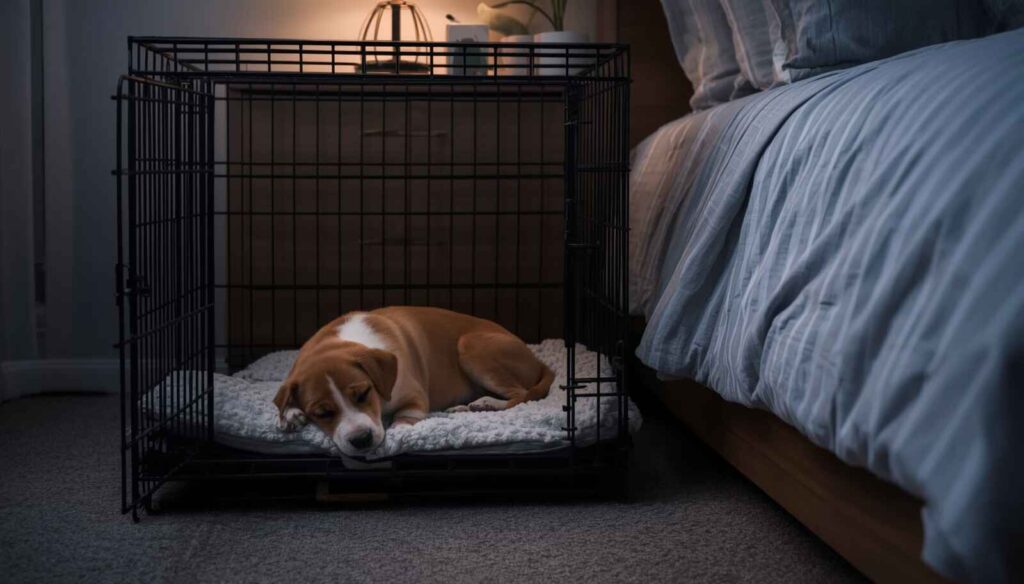
Crates get a bad reputation, but when used correctly, they’re one of the most effective tools for potty training — and most dogs genuinely come to love their crate as a safe, cosy den.
Dogs have a natural instinct to avoid soiling where they sleep. A crate taps into that instinct. It teaches your puppy to hold on until they’re taken outside.
A few important rules:
- The crate should be just big enough for your puppy to stand, turn around, and lie down. Too big and they’ll use a corner as a toilet.
- Never use the crate as punishment. It needs to be a positive place.
- Don’t leave a young puppy in a crate for longer than their age in months plus one (so a 2-month-old puppy = max 3 hours).
- Make it comfortable: a soft blanket, maybe an old t-shirt with your scent on it.
When you take them out of the crate, go straight to the potty spot. Don’t stop to play or chat — get them outside first.
What to Do When You Work Full Time
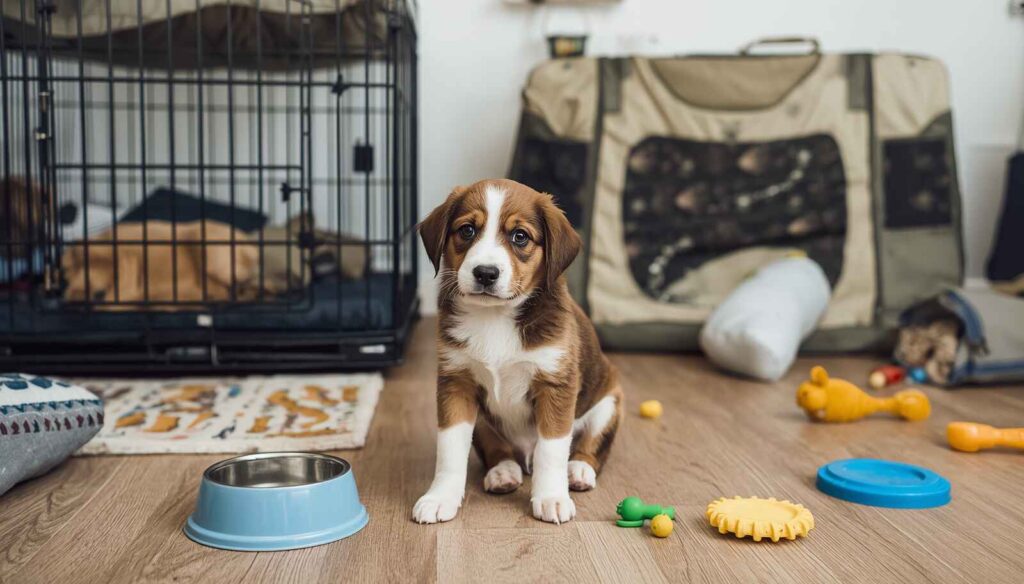
This is a real challenge, and it’s worth being honest: puppies need frequent toilet breaks, and a standard 9–5 workday is too long for a young pup to go without one.
Your options:
- Come home at lunch if you can — even a quick 20-minute visit makes a huge difference
- Ask a neighbour, friend, or family member to pop in mid-morning and mid-afternoon
- Hire a dog walker or puppy sitter for the first few months
- Use a puppy pen with an indoor training pad as a backup — not ideal long-term, but better than accidents on flooring all day
If you’re using pads indoors, place them near the door you eventually want your dog to use for outdoor toileting. Over time, gradually move the pad closer to the door, then outside. Most dogs transition successfully with patience.
Positive Reinforcement: What It Looks Like in Practice
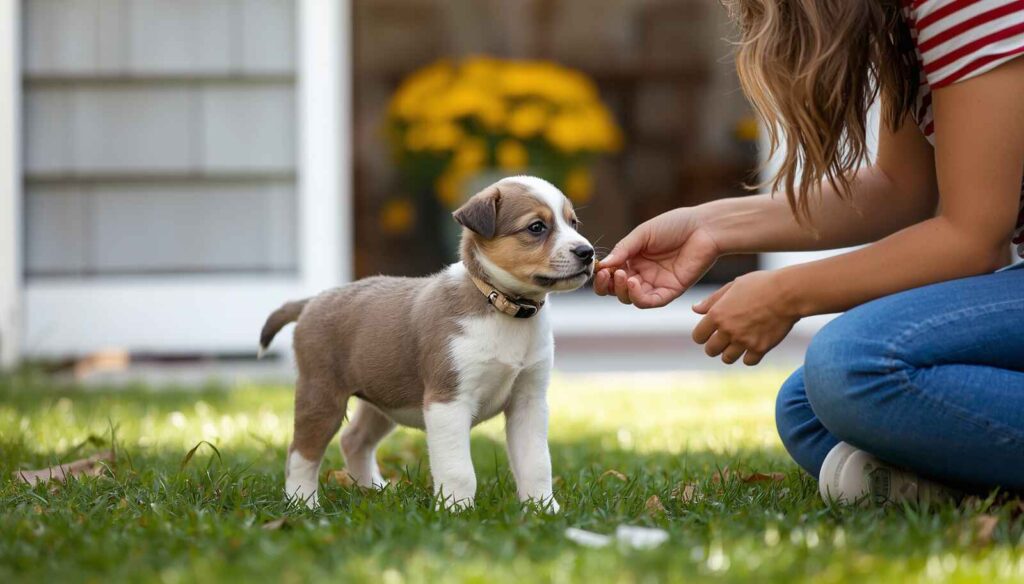
Every time your puppy goes in the right spot, reward them immediately — within 2–3 seconds. Their memory is that short in the moment.
A small treat, calm verbal praise (“good girl!”, “yes!”), or a quick gentle stroke works well. You don’t need to go overboard. Calm and consistent beats excitable and unpredictable every time.
What you should never do: punish accidents after the fact. If you find a puddle five minutes later and scold your puppy, they genuinely cannot connect the scolding to what they did. All you teach them is that you’re unpredictable and scary — which makes training harder.
If you catch them mid-accident, a calm “ah-ah” and quick redirect outside is enough.
Accidents: Cleaning Up Properly Matters More Than You Think
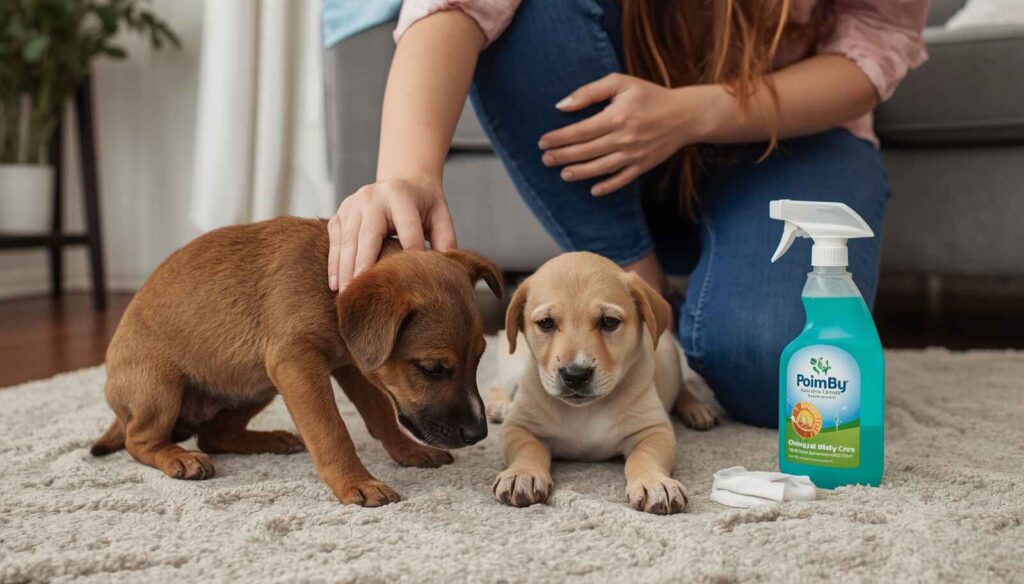
Using the wrong cleaner is one of the most common reasons training stalls. Dogs can smell residue we can’t, and it draws them back to the same spot.
Always use an enzyme-based pet stain cleaner (widely available at Bunnings, Pets at Home, PetSmart Canada, etc.). Spray generously, let it sit for a few minutes, then blot dry.
Avoid ammonia-based cleaners — urine contains ammonia, so it can actually attract your puppy back to the spot.
How Long Does Puppy Potty Training Take?
Honestly? Most puppies take 4 to 6 months to be reliably house trained. Some take closer to a year, especially smaller breeds who have tinier bladders.
Factors that affect the timeline:
- Age when you start — 8–12 weeks is the ideal window, but it’s never too late
- Breed — some breeds are notoriously stubborn (looking at you, dachshunds and pugs)
- Consistency — the more consistent your routine, the faster they learn
- Past experiences — rescue dogs or puppies from pet shops may have learned to go in their sleeping area, which takes longer to undo
Progress rarely looks like a straight line. Most owners see things going well for a week, then have a bad patch — this is completely normal. Don’t reset your expectations every time there’s a setback.
When to Talk to Your Vet
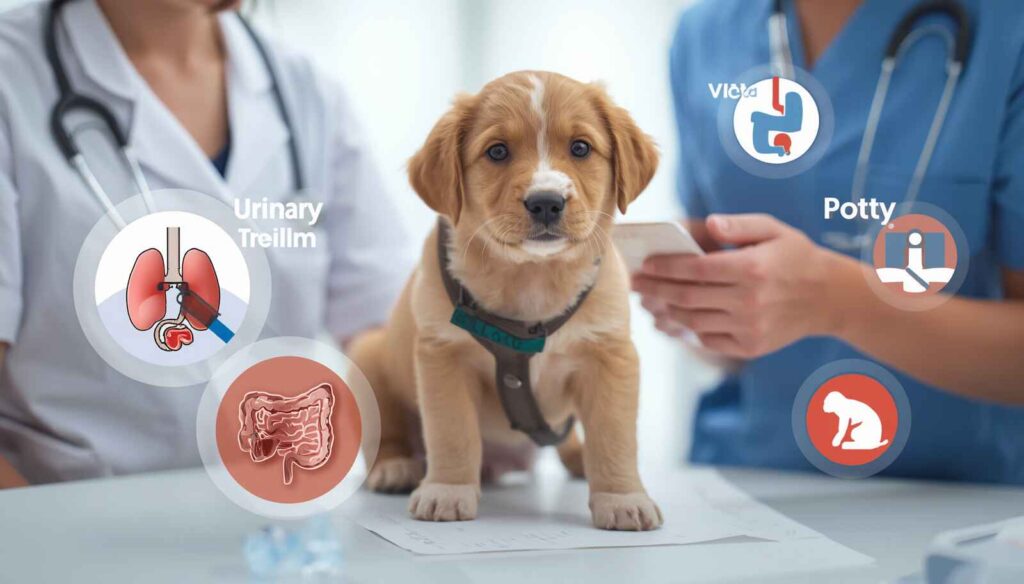
Occasional accidents are normal. But if your puppy seems to urinate constantly, has blood in their urine, or seems to be straining, these can be signs of a urinary tract infection — which is common in puppies and needs treatment.
If training was going well and suddenly falls apart, a health issue is often the culprit. Always worth a vet check before assuming it’s a training problem.
FAQ: Real Questions, Honest Answers
1.How often should I take my puppy outside?
Every 1–2 hours for pups under 12 weeks, plus after every meal, nap, and play session. As they get older and gain better bladder control, you can stretch this out.
2.Is it too late to potty train an older puppy or adult dog?
Not at all. Adult dogs can absolutely be house trained — it often just takes a little more patience because you may need to undo old habits first. The same routine-based approach works.
3.My puppy goes outside, then comes in and has an accident. Why?
This is really common. Sometimes puppies get distracted outside and don’t fully empty their bladder. Wait longer outside — even if they’ve already gone once. A short walk often helps them fully “finish.”
4.Should I use puppy pads?
They’re useful as a short-term backup (especially in flats or if you work full time), but they can slow down outdoor training if used long-term. If you use them, have a clear plan for phasing them out.
5.Why does my puppy keep going in the same spot inside?
Scent. Dogs are drawn back to areas where they’ve previously gone. Make sure you’re using an enzyme cleaner, and if possible, block access to that area temporarily while training continues.
6.Can I potty train a puppy without a crate?
Yes, though it’s harder. Without a crate, you’ll need to keep your puppy in a very small, controlled space (like a puppy pen) and watch them like a hawk. The key is preventing access to the rest of the house until they’re more reliable.
7.At what age can I expect my puppy to be fully house trained?
Most dogs are reliably clean in the house by 6 months, though some aren’t fully there until 12 months. Smaller breeds often take longer due to smaller bladders. Consistency matters more than any specific age milestone.
The Bottom Line
Potty training a puppy isn’t glamorous, and some days it genuinely tests your patience. But it’s also one of those things that, once cracked, makes everything else easier.
Stick to a routine. Clean up accidents properly. Reward the good stuff immediately. And give your puppy — and yourself — some grace. They’re not being naughty. They’re just a baby learning an entirely new world.
You’ve got this. And so have they.
#. Related Articles: