You’re stroking your dog’s fur and your fingers catch something — a small, firm lump under the skin. Your stomach drops. Before you spiral into worst-case-scenario mode, take a breath. Most lumps in dogs are completely harmless. But knowing the difference between a benign bump and something that needs a vet’s attention? That’s what this guide is all about.
Why dogs get lumps — the short answer
Dogs develop lumps and bumps for dozens of reasons. Age plays a big role — older dogs (especially Labradors, Golden Retrievers, and Boxers) are more prone to skin growths than puppies. Genetics, sun exposure, hormones, and even minor trauma can all trigger a growth.
The good news: the majority of lumps found during routine petting are benign. The tricky part is that you can’t tell the difference by feel alone — and neither can your vet without a proper test.
Common types of lumps and bumps in dogs
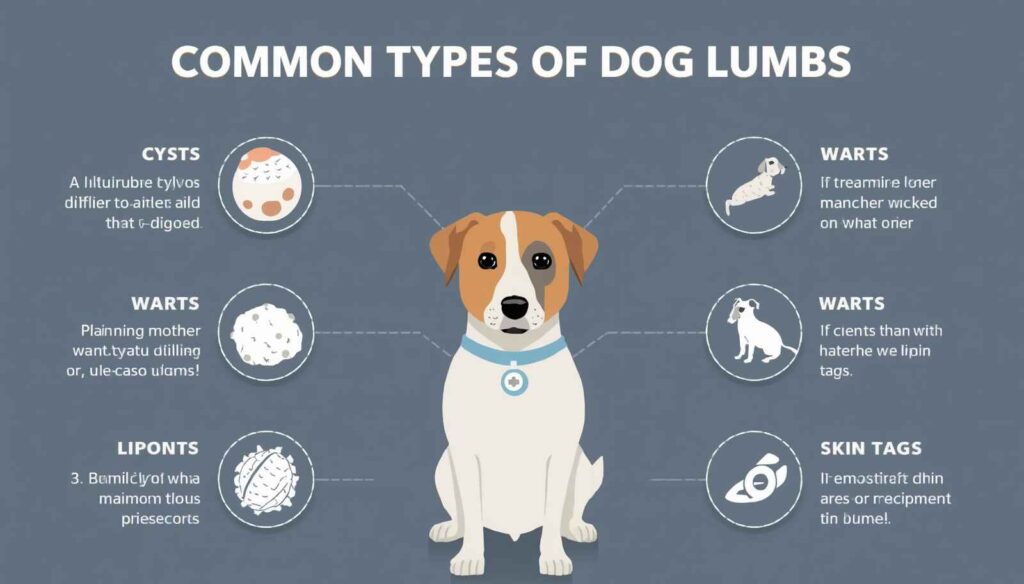
Here’s a plain-English breakdown of the most frequently seen growths:
Lipoma Usually benign -> Soft, moveable fatty lumps that sit just under the skin. Very common in middle-aged to older dogs. They grow slowly and feel like a small water balloon. Often found on the chest, belly, and legs.
Sebaceous cyst Usually benign -> Blocked skin glands that form a firm, round bump — sometimes with a white or cheesy discharge. They can rupture on their own. More common in Cocker Spaniels and Poodles.
Abscess Needs treatment -> A painful, warm lump filled with pus — usually from a bite wound or foreign object under the skin. Often comes with fever, swelling, and foul smell. Requires antibiotics or drainage.
Wart (papilloma) Usually benign -> Cauliflower-textured growths caused by a virus. Very common in puppies and elderly dogs. Most disappear on their own within a few months.
Histiocytoma Benign -> A red, button-shaped growth that appears suddenly, usually in dogs under 3 years. Often resolves on its own within 3 months — but always get it confirmed by a vet first.
Mast cell tumour Needs urgent eval -> The most common malignant skin tumour in dogs. Can look like almost anything — a soft bump, a raised red spot, or an ulcer. Grades vary from low-risk to aggressive. Never assume it’s harmless.
How to check your dog for lumps at home
You don’t need to be a vet to do a basic check. Make it part of your dog’s regular grooming routine — once a month is ideal.
The 5-minute home check
- Start at the head — run your fingers over the muzzle, cheeks, and under the jaw.
- Move to the neck and chest, feeling under the fur rather than just on top of it.
- Check the armpits and groin (lymph nodes here can swell when something’s wrong).
- Run both hands along the belly and ribcage.
- Don’t forget the tail base, paws, and between the toes.
Practical tip
Keep a simple phone note or photo log of any lumps you find — date, size, location. Vets find this incredibly helpful. You can estimate size by placing a coin next to the lump and photographing it. A 5p, cent, or 5c coin works perfectly.
Warning signs: when to call your vet
Most lumps can wait for a routine appointment, but some need to be seen sooner. Here’s the real-world guide:
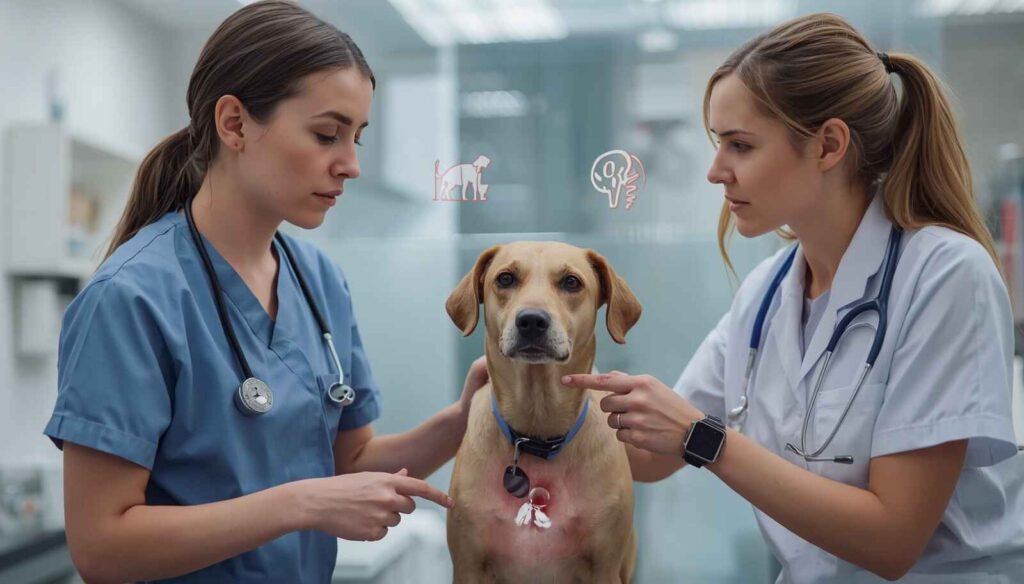
Book a standard appointment if:
- A new lump appears that you haven’t seen before
- A known lump is slowly growing over weeks or months
- The lump is firm or fixed to the skin/underlying tissue (doesn’t move when you nudge it)
- Your dog is over 7 years old — older dogs need more vigilant monitoring
- The lump appears in a new location with no obvious cause
Seek same-day or emergency care if:
Act quickly
The lump is growing noticeably within days, not weeks — or it starts bleeding, oozing, or develops an open sore that won’t heal. Also urgent: your dog becomes lethargic, loses appetite, or the lump is causing visible pain or difficulty moving.
What your vet will do — and what to expect
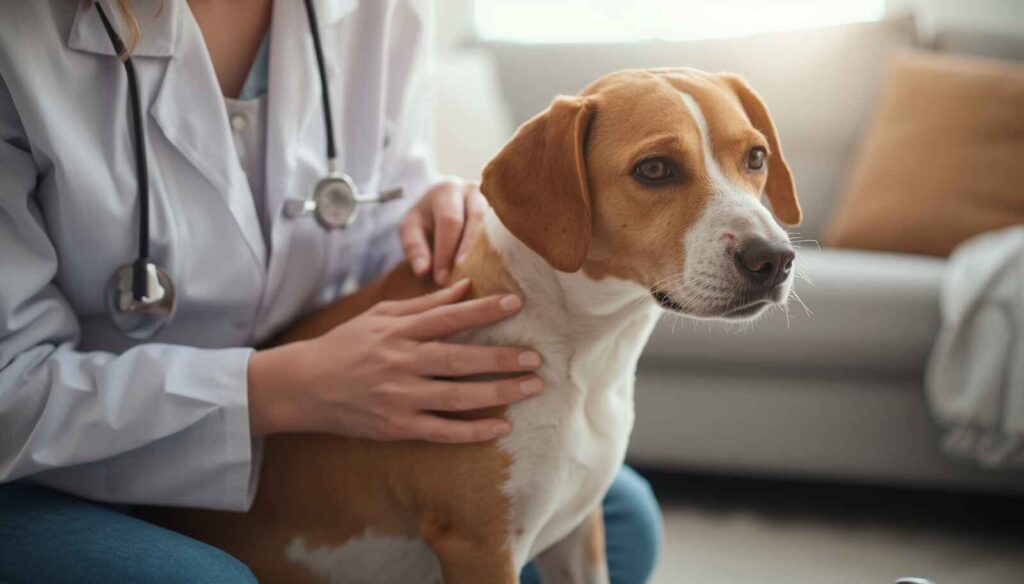
Your vet won’t just look at the lump and guess. Here’s how diagnosis typically works:
Fine needle aspirate (FNA)
This is the first port of call. A thin needle draws a sample of cells from the lump, which is then examined under a microscope. It’s quick, cheap, and doesn’t require sedation in most cases. Not every lump gives a clear result this way, but it’s a great starting point.
Biopsy
A small piece of tissue is removed and sent to a specialist lab. This gives a definitive diagnosis. It requires local or general anaesthetic depending on location and size.
Imaging (ultrasound or X-ray)
Used when the vet wants to check if a lump has spread internally, or if the lump is deep in the body. Particularly relevant when mast cell tumours or lymphoma is suspected.
What to tell your vet
Come prepared with: when you first noticed the lump, whether it’s changed in size or appearance, your dog’s age and breed, any recent insect bites or injuries near the area, and whether your dog has been acting differently.
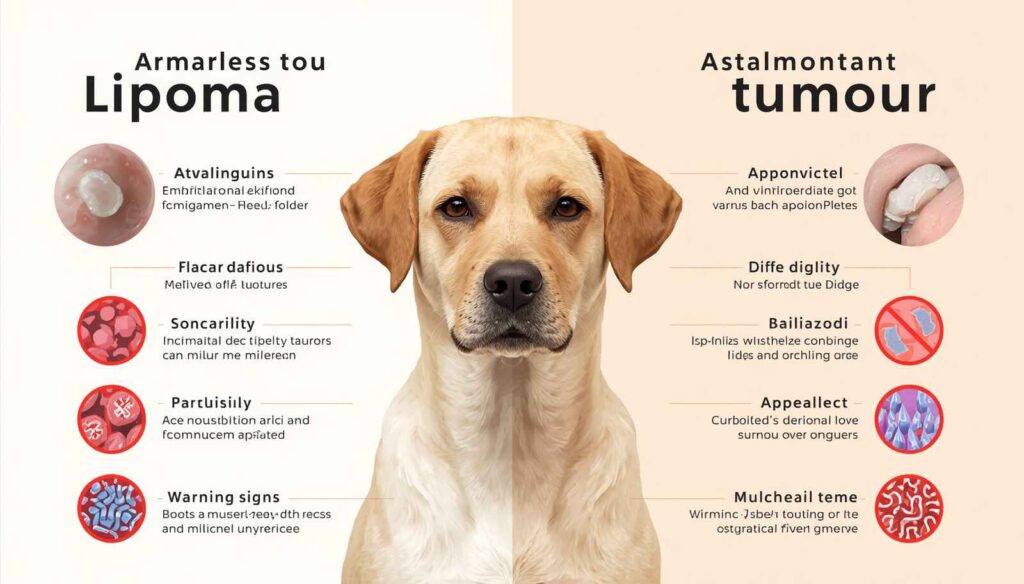
Lipoma vs. malignant tumour — the key differences
| Feature | Lipoma (benign fat lump) | Malignant tumour |
|---|---|---|
| Texture | Soft, squishy | Firm, irregular |
| Edges | Smooth, clear borders | Poorly defined |
| Movement | Moves freely under skin | Often fixed in place |
| Growth rate | Slow (months to years) | Often fast (days to weeks) |
| Pain | Usually painless | May be sore to touch |
| Skin appearance | Normal skin over it | May ulcerate or discolour |
Important caveat: these are general patterns, not rules. Mast cell tumours are notorious for mimicking lipomas. Always get a new lump tested — the table above is for awareness, not diagnosis.
Treatment options — a simple overview
Not every lump needs treatment. Here’s how decisions are typically made:
- Watch and wait — small, benign-appearing lipomas in older dogs are often just monitored with periodic measurement rather than removed.
- Surgical removal — recommended when a lump is growing, affecting mobility, in a high-risk location (eyelid, paw, near a joint), or confirmed as malignant.
- Medical treatment — steroids or targeted therapy for certain tumour types, particularly mast cell tumours.
- Drainage — for abscesses or cysts that are causing discomfort.
The right approach depends entirely on the diagnosis, your dog’s age and health, and the lump’s location. Your vet will talk you through the options clearly once there’s a result.
Can you reduce the risk of lumps developing?
You can’t prevent all growths — genetics play a large role. But a few habits genuinely help:
- Keep your dog at a healthy weight. Obese dogs develop more lipomas.
- Limit sun exposure for light-coated breeds prone to solar-induced skin tumours — relevant in Australia especially.
- Stay up to date with annual vet checks. Vets often catch lumps before owners do.
- Act quickly on any bite wounds or skin injuries — untreated wounds can develop into abscesses.
Frequently asked questions
1.My dog has a pea-sized lump — should I worry?
Not necessarily, but don’t ignore it either. Small doesn’t mean harmless — some aggressive tumours start small. If you notice it, mention it at your dog’s next vet visit, or sooner if it grows rapidly or changes appearance.
2.Can a benign lump turn cancerous over time?
Lipomas and cysts rarely turn malignant. However, any lump that suddenly changes behaviour — growing faster, ulcerating, hardening — should be re-evaluated even if it was previously diagnosed as benign. Circumstances can change.
3.Are cancer lumps on dogs hard or soft?
Both. Mast cell tumours, the most common malignant skin tumour, can feel completely soft and squishy — just like a lipoma. This is exactly why you can’t rely on feel alone. Testing is the only reliable way to know.
4.Do dog lumps go away on their own?
Some do — histiocytomas and warts often resolve without treatment. Abscesses may burst and drain naturally. But most lumps don’t disappear, and some that seem to shrink may just be changing internally. Always have a new lump assessed before assuming it’s gone for good.
5.My dog’s lump has started bleeding — what should I do?
A bleeding lump is an urgent situation. Cover it loosely with a clean cloth and get to a vet the same day. Don’t try to drain or pop it yourself. Bleeding can signal ulceration in a tumour, trauma, or a ruptured cyst — all of which need professional assessment.
6.How often should I check my dog for lumps?
Once a month is ideal for most dogs. For older dogs (8+) or breeds prone to tumours like Boxers, Golden Retrievers, and Labrador Retrievers, a thorough check every two weeks during brushing is worth building into your routine.
7.Is surgery always necessary when a lump is found?
No — many lumps are simply monitored. Surgery is recommended when a lump is confirmed malignant, growing rapidly, causing discomfort, or in a problematic location. Your vet will weigh up the risks of surgery against the risks of leaving it and discuss the options with you.
Bottom line
Finding a lump on your dog is never fun — but knowledge genuinely reduces fear. Most lumps are harmless. The ones that aren’t are far more treatable when caught early. So keep your hands on your dog, keep a record of anything new, and don’t hesitate to pick up the phone to your vet. You’re not being paranoid — you’re being a good owner. And that makes all the difference.
#. Related Articles:
1. Can You Put Sudocrem on a Dog?