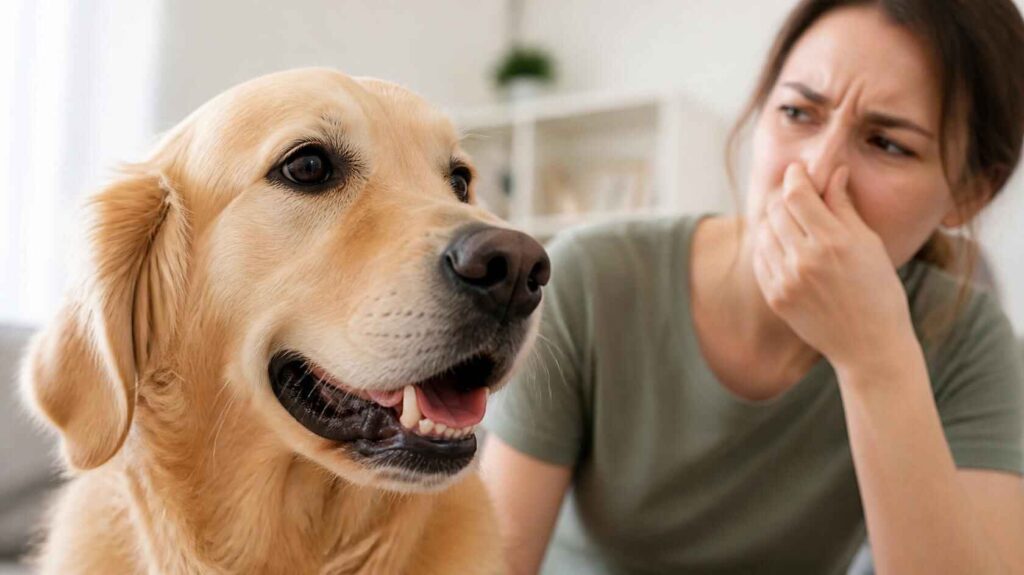
You lean in to give your dog a cuddle and — whoa. Their breath could clear a room. But it’s not just regular bad breath. It smells genuinely fishy, like something crawled in and decided to stay. Sound familiar?
You’re not alone. This is one of the most common things dog owners notice and quietly panic about. The good news is it’s usually fixable. The slightly less good news? That fishy smell is your dog’s body trying to tell you something — and it’s worth listening to.dog b
This guide walks you through every real cause of fishy dog breath, what you can do about it at home, and the signs that mean you should get to a vet sooner rather than later.
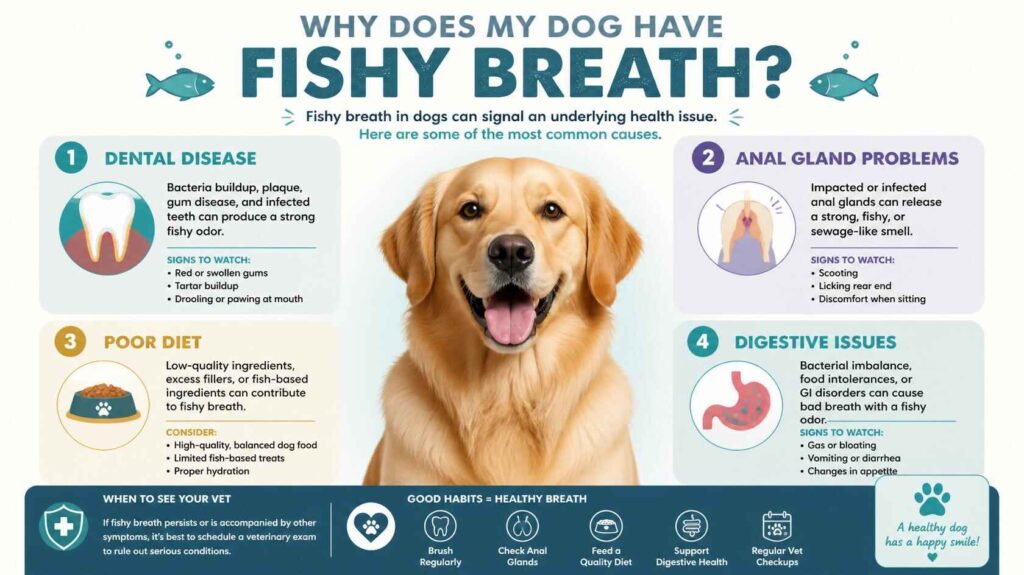
The Main Causes of Fishy Dog Breath
Before we go further, it helps to know that “fishy” breath is a distinct smell — different from the classic “doggy breath” caused by bacteria. That fishy odour usually traces back to one (or more) of these specific sources.
🐟 Anal Gland Secretions
The most surprising and most common culprit. When dogs lick themselves, the scent can transfer directly to their mouth.
🦷 Dental Disease
Tartar, plaque, and infected gums all cause foul odours — including a fishy or rotten smell.
🥣 Fish-Based Diet
Simple but often overlooked. If their food or treats contain salmon, tuna, or other fish, that smell lingers.
💊 Gastrointestinal Issues
Gut problems can cause gases that smell unusual — including that unmistakable fishy odour.
🫀 Kidney or Liver Disease
In serious cases, organ issues can cause breath that smells like ammonia, fish, or “off” in a way that’s hard to describe.
🧼 Eating Something Gross
Dogs will eat almost anything. Dead animals, faeces, or rotting food all leave behind a distinctly foul, sometimes fishy smell.
The Anal Gland Culprit — This Surprises Most Owners
Here’s something most dog owners don’t know: dogs have two small sacs on either side of their bottom called anal glands (also called anal sacs). These glands produce a strong-smelling, oily secretion that dogs use to mark territory and identify each other — it’s why dogs sniff each other’s behinds.
Normally, these glands empty on their own when a dog passes a firm stool. But if the stools are soft, or if the glands don’t empty properly, the fluid builds up and becomes impacted. When that happens, two things occur:
- The glands smell very strongly of fish — sometimes described as a rotting, sour fish odour.
- Your dog will lick or bite at their rear end to relieve the discomfort, transferring that scent directly to their mouth.
⚠️ Watch for These Signs of Anal Gland Problems
- Scooting their bottom along the floor or grass
- Licking or biting at the base of their tail or rear end
- A strong, fishy smell coming from their back end even when they haven’t recently passed stools
- Swelling, redness, or discharge near the anus
If your dog’s breath smells like fish and they’ve been scooting or licking their bottom, anal glands are almost certainly the reason.
What to Do About It
Anal glands usually need to be manually expressed (emptied) by a vet or groomer. Most vets in the UK, Australia, and Canada recommend leaving this to a professional — doing it incorrectly at home can cause injury or infection. If your dog has recurring issues, your vet may recommend dietary changes (more fibre for firmer stools) or, in persistent cases, surgical removal.
A high-fibre diet helps stools be firm enough to naturally press against the anal glands during elimination, reducing build-up over time.
Dental Disease and Oral Health
Dogs don’t brush their teeth. Which means, over time, bacteria and food particles build up on their teeth and gums — forming plaque, then hardening into tartar. This isn’t just cosmetic. It’s a genuine health issue.
Up to 80% of dogs over the age of three have some degree of dental disease. The bacteria responsible produce sulphur compounds that smell foul — sometimes rotten, sometimes fishy, depending on the bacteria involved.
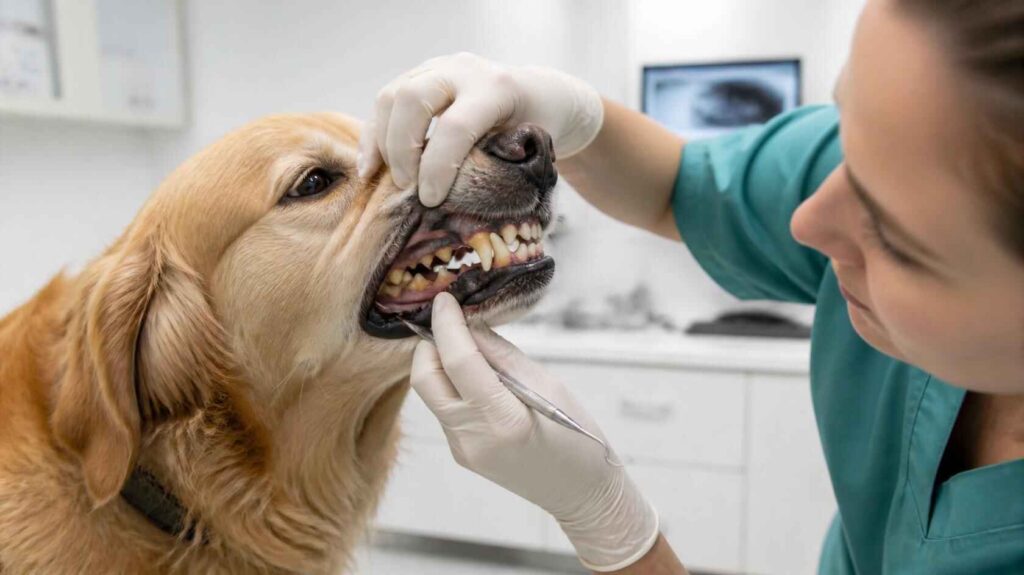
Signs of Dental Problems in Dogs
- Persistent bad breath that doesn’t go away after eating
- Yellow or brown build-up on teeth (tartar)
- Red, swollen, or bleeding gums
- Difficulty chewing, or dropping food from their mouth
- Pawing at the mouth or face
- Teeth that look loose or are missing
✅ Breed Note
Small breeds — including Chihuahuas, Dachshunds, Pugs, and French Bulldogs — are disproportionately prone to dental disease because their teeth are crowded into a small jaw. If you have a small dog with fishy breath, dental disease should be near the top of your list.
How Often Should Dogs Have Their Teeth Cleaned?
Ideally, you’re brushing your dog’s teeth at home every day, or at minimum 3–4 times per week. Use a dog-safe toothpaste (never human toothpaste — it contains xylitol, which is toxic to dogs). Many vets in Australia, the UK, and Canada also recommend a professional dental scale-and-polish once a year under anaesthetic for dogs with significant build-up.
Diet and Digestion: What Your Dog Eats Matters More Than You Think
Sometimes the answer is refreshingly simple: your dog eats fish-based food.
Many premium dog foods — especially those marketed as “sensitive stomach,” “hypoallergenic,” or “omega-rich” — use salmon, trout, sardines, or whitefish as a protein source. These foods are genuinely good for dogs. But they can absolutely cause fishy-smelling breath, particularly right after eating.
Similarly, fish oil supplements (commonly given for coat health and joint support) are a frequent cause of fishy breath that owners overlook.
Other Dietary Triggers
- Eating faeces (coprophagia): Dogs that eat their own or other animals’ faeces often have breath with a distinctly foul, sometimes fishy smell. It’s a behaviour issue worth addressing separately.
- Eating dead animals or rubbish: Dogs who scavenge — especially common in outdoor or rural settings — pick up all sorts of bacteria and odours.
- Cheap food with low-quality protein: Certain fillers and rendered meats can produce gases that smell odd on the way back up.
If you recently switched to a fish-based food and the breath change followed, you’ve likely found your answer. Try switching to a poultry or beef-based food for 2–3 weeks and see if the smell improves.

When Fishy Breath Points to a Health Problem
Most of the time, fishy breath has a fairly mundane cause. But occasionally, it’s a symptom of something that genuinely needs attention.
Kidney Disease
When the kidneys aren’t working properly, waste products (like urea) build up in the bloodstream. This can produce a fishy, urine-like, or ammonia-tinged odour on the breath. It’s more common in older dogs and is usually accompanied by other symptoms like increased thirst, frequent urination, and lethargy.
Liver Disease
The liver filters toxins from the body. When it’s not doing its job properly, the resulting breath can be described as “musty,” “sweet-sour,” or fish-like. Again, you’d typically see other signs too — yellowing of the whites of the eyes, loss of appetite, vomiting, or unusual behaviour.
Diabetes
Diabetic dogs often have breath that smells sweet or fruity, but in some cases it can have an unusual chemical or fishy quality. Other signs include excessive thirst, weight loss despite eating, and frequent urination.
Oral Tumours or Infections
Growths or infected tissue in the mouth can produce a very strong, foul odour. If you notice lumps, sores, or anything that looks unusual inside your dog’s mouth alongside the bad breath, see a vet promptly.
🚨 Seek Vet Advice Promptly If You Notice
- Fishy breath combined with excessive thirst or urination
- Loss of appetite or significant weight loss
- Yellow or orange tinge to the skin, gums, or eyes
- Unusual lumps or sores inside the mouth
- Vomiting or diarrhoea alongside the bad breath
- Lethargy, confusion, or uncoordinated movement
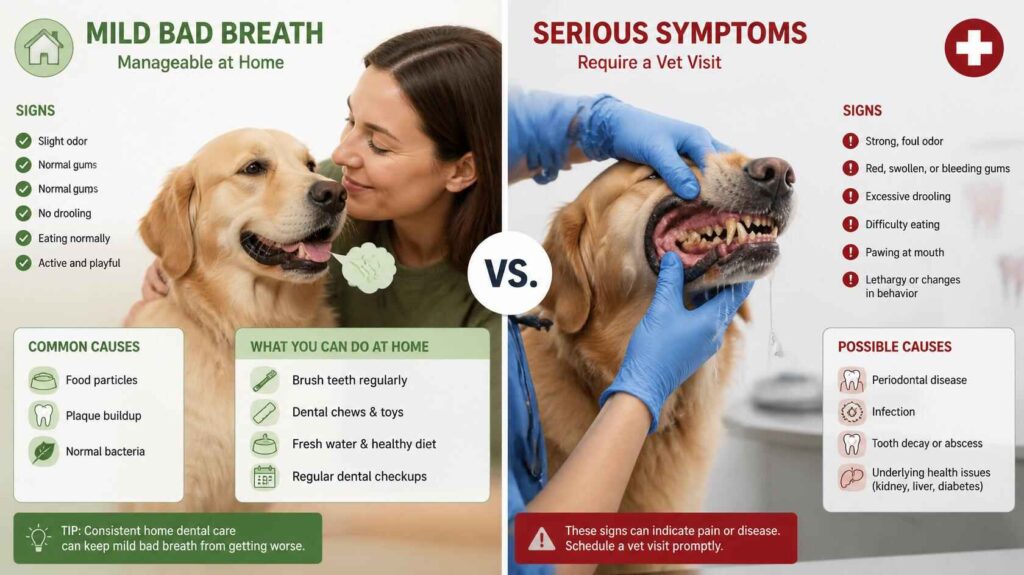
When to See a Vet (And When You Can Wait)
Not every case of fishy dog breath requires an emergency vet visit. Here’s a practical guide to help you judge the situation.
Probably Fine to Monitor at Home
- Smell started after switching to a fish-based food
- Smell is occasional and your dog is otherwise well
- You’ve started giving fish oil supplements recently
Book a Routine Vet Appointment
- Persistent fishy smell that doesn’t connect to diet
- Dog is scooting or constantly licking their rear
- Signs of tartar build-up or gum inflammation
- Hasn’t had a dental check in over a year
See a Vet Within 24–48 Hours
- Any of the serious warning signs above (thirst, weight loss, yellowing)
- Visible swelling, redness, or discharge near the anus
- Your dog seems in pain or is straining to pass stools
- The smell appeared suddenly and is very strong
Practical Fixes: How to Get Rid of Fishy Dog Breath
1. Get the Anal Glands Checked
If scooting or licking is happening, this is your first port of call. Book a vet or groomer appointment. Once expressed, many dogs are dramatically better within a day or two.
2. Start a Real Dental Routine
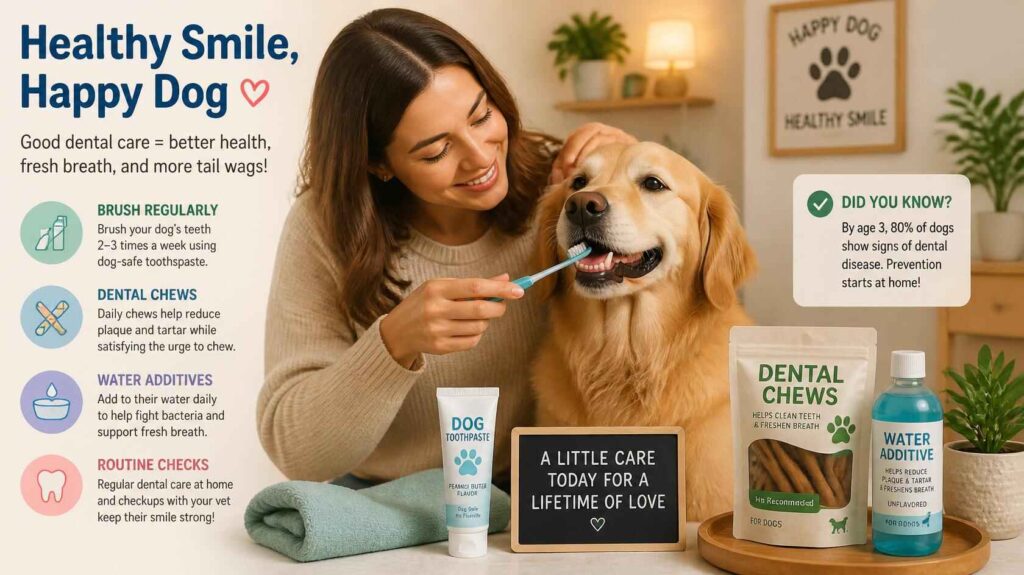
Brushing daily is ideal, but even a few times a week makes a genuine difference. Start slow — use a finger brush and let your dog get used to the taste of the toothpaste first. Build up gradually to a full brush. Consistency over weeks is what creates change.
3. Use Dental Chews and Toys
Dental chews (look for the VOHC seal — Veterinary Oral Health Council — which verifies products actually work) help reduce plaque. Hard rubber chew toys also mechanically clean teeth as dogs chew. These aren’t a replacement for brushing, but they’re a good supplement.
4. Add Fresh Water Daily
Stale water becomes a breeding ground for bacteria. Change your dog’s water bowl fresh at least once a day — and wash the bowl regularly. Bacteria in a dirty water bowl can contribute to bad breath over time.
5. Look at What You’re Feeding
If the smell started with a new food, switch back or try a non-fish protein source. If you’re giving fish oil, try switching to a plant-based omega supplement (like flaxseed oil) and see if the smell reduces.
6. Add a Dog-Safe Breath Freshener
There are water additives and oral sprays designed specifically for dogs that can help with day-to-day freshness. These aren’t a substitute for addressing the root cause, but they can make life more pleasant while you’re working on the underlying issue. Always choose products specifically formulated for dogs.
7. Consider Probiotics
Emerging evidence suggests that gut and oral microbiome health affects breath quality. Dog-specific probiotics (available from most vet practices and pet shops) may help balance bacteria in the digestive tract — though they’re more of a supporting measure than a standalone fix.
Frequently Asked Questions
1.Why does my dog’s breath smell like fish even after brushing?
If brushing doesn’t fix it, the smell is probably not coming from the mouth at all. The most common cause is anal gland secretions — your dog licks their rear, then licks their face, and the smell travels. It can also point to a gut issue or, in older dogs, an early kidney or liver problem. If brushing makes no difference, get the anal glands checked first.
2.Can fish oil supplements cause fishy breath in dogs?
Yes, absolutely. Fish oil supplements — even high-quality ones — are a very common and often-missed cause of fishy breath. The omega-3 fatty acids are great for coat and joint health, but they do produce that smell. Try switching to a plant-derived omega supplement and see if the smell reduces within a week or two.
3.Is fishy dog breath a sign of illness?
It can be, but it usually isn’t anything serious. Most cases trace back to anal glands, diet, or dental disease — all of which are manageable. However, if the fishy smell is accompanied by increased thirst, weight loss, vomiting, or lethargy, it could indicate a kidney, liver, or diabetic issue. In those cases, see a vet without delay.
4.How often should I have my dog’s anal glands expressed?
It depends on the individual dog. Some dogs never need manual expression — their glands empty naturally. Others need it every 4–8 weeks. Your vet can advise based on your dog’s history. A high-fibre diet that produces firm stools naturally helps glands express on their own, which is the ideal outcome.
5.Are some dog breeds more prone to fishy breath?
Small breeds (Chihuahuas, Pugs, Dachshunds, Shih Tzus) are more prone to dental disease due to crowded teeth, which can cause bad breath including fishy smells. Breeds with naturally sensitive or soft stools — like some spaniels — tend to have more anal gland issues. Knowing your breed’s tendencies helps you stay ahead of the problem.
6.Can I express my dog’s anal glands at home?
Technically yes, but most vets — particularly in the UK and Australia — advise against it unless you’ve been specifically trained to do so. Doing it incorrectly can push the secretion back inside, cause pain, or lead to infection. Let a vet or professional groomer handle it, at least initially. They can also show you the technique if your vet thinks home expression is appropriate for your dog.
7.How do I get rid of fishy dog breath naturally?
Start by brushing their teeth regularly with dog-safe toothpaste. Fresh parsley (a small sprig) can act as a natural breath freshener and is safe for dogs in small amounts. Switching away from fish-based food or supplements often makes an immediate difference. And don’t underestimate hydration — fresh water every day really does help. If the smell persists, it’s worth a vet check to make sure nothing’s being missed.
The Bottom Line
A fishy smell on your dog’s breath is almost always telling you something — whether that’s “my anal glands need emptying,” “I’ve been eating fish-flavoured food,” or “my teeth could use some attention.” In most cases, it’s fixable with a vet visit and a few consistent habits at home.
Don’t ignore it, but don’t panic either. Start with the most likely causes — anal glands and diet — then work through the others if the smell persists. And if you’re ever unsure, your vet is always the right call. That’s what they’re there for.
Remember: fresh breath isn’t just about the smell — it’s a window into your dog’s overall health. A few minutes of attention each week goes a long way.
#. Related Articles:
1. Why Does My Puppy Pee on My Bed?