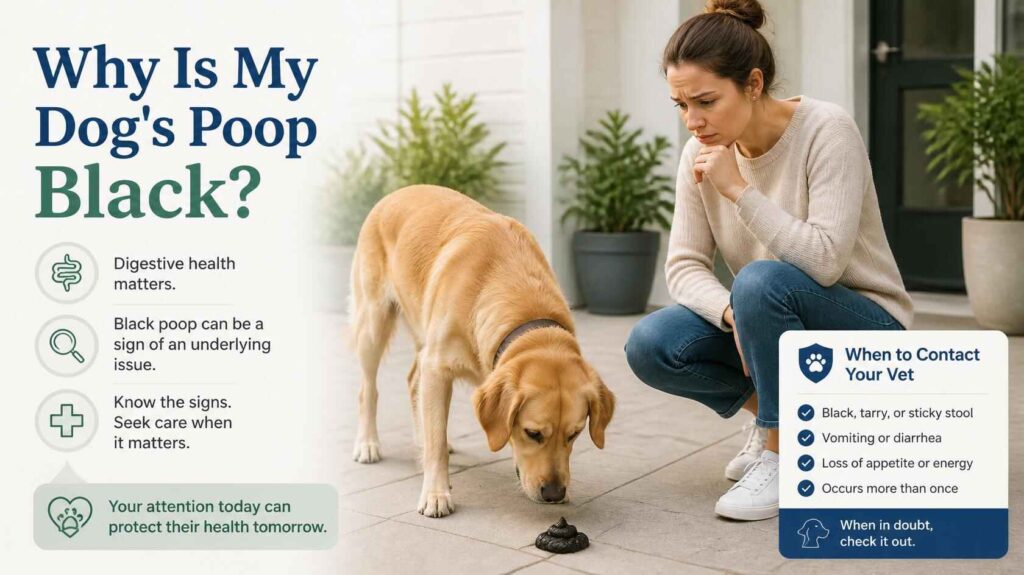
Why is my dog’s poop black? Sometimes the colour comes from something your dog ate or took as a medication or supplement. In other cases, genuinely black, tarry stool can contain digested blood from higher in the digestive tract. The tricky part is that stool that looks dark inside a poo bag isn’t necessarily the same as true black, tar-like stool.
That distinction matters. The veterinary term for black, tarry stool containing digested blood is melena. However, not every unusually dark stool is melena.
This guide helps you make three decisions: what you actually saw, what other clues matter, and how urgently you should contact your vet. Stool appearance alone cannot diagnose the cause, but careful observations can help your veterinary team decide what needs investigating.
First, Decide What “Black” Means in Your Dog’s Stool
Look at the Colour in Good Light
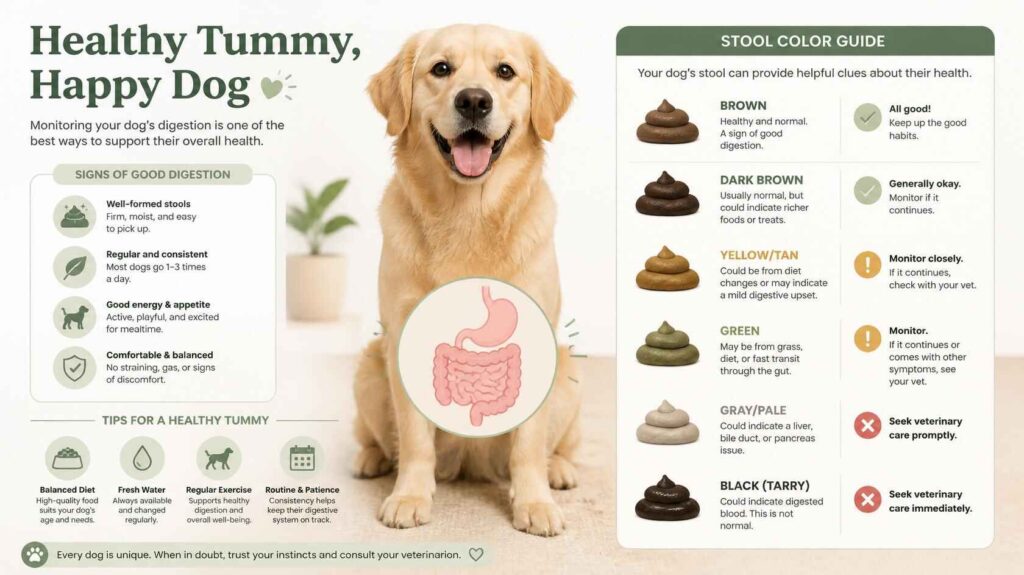
Poo bags, dusk walks and shady corners of the garden can all make stool look darker than it really is. If possible, look at it again in daylight or under a bright light.
Try to place it in one of these groups:
- Normal brown
- Very dark brown that still looks brown when light hits it
- Genuinely black, with little or no brown visible
- Black with a sticky, glossy or tar-like appearance
Very dark brown isn’t automatically melena. Truly black, tarry stool deserves more attention, particularly if it happens repeatedly or your dog has other symptoms.
Texture Can Matter as Much as Colour
A firm, formed stool that’s simply darker than usual is a different finding from black stool that’s sticky, shiny or tar-like. Melena is often described as black and tarry rather than merely dark.
Note whether the stool is:
- Formed
- Soft
- Watery
- Sticky or tar-like
Don’t rely on smell to decide whether blood is present. An unusually strong smell may accompany a change in stool, but it isn’t specific enough to diagnose melena.
One Dark Patch or the Whole Stool?
A dark fleck or isolated patch in otherwise brown stool isn’t the same observation as an entire bowel movement that is uniformly black and tarry.
Neither appearance identifies the cause on its own, but telling your vet whether the whole stool changed or only part of it did can make your description much more useful.
What Did You Actually See?
| What you saw | Texture | What it may suggest | What else to check |
|---|---|---|---|
| Normal brown | Formed | Typical baseline | Normal behaviour and appetite |
| Very dark brown | Formed or soft | Not necessarily melena | Recent food, treats and whether it repeats |
| Black and tarry | Sticky or glossy | Digested blood becomes an important concern | Repeat episodes, medications and other symptoms |
| Fresh red blood | Streaks, drops or mixed in | A different bleeding pattern | Amount, diarrhoea and other symptoms |
Appearance alone cannot tell you the cause. This comparison is meant to help you describe what you’re seeing, not diagnose your dog at home.
The Five-Clue Check Before You Search for a Cause

Instead of scrolling through a frightening list of diseases, collect five pieces of information. Together, they are far more useful than stool colour alone.
Clue 1: Appearance
How dark is the stool in good light? Is it simply dark brown or genuinely black? Is it sticky or tar-like? Is it formed, soft or watery?
Clue 2: Repetition
Note whether this is the first unusual stool or whether you’ve seen several black stools in a row. Also record whether the colour and consistency are changing.
A single unusual bowel movement and repeated black, tarry stools are different clinical situations, but one episode should not automatically be dismissed as harmless.
Clue 3: How Your Dog Is Acting
Look at the dog, not just the stool. Check for changes such as:
- Reduced appetite
- Unusual tiredness or weakness
- Vomiting
- Abdominal discomfort
- Restlessness
- Reluctance to be touched around the abdomen
A dog acting normally provides useful information, but it does not prove that black stool is harmless.
Clue 4: What Changed Recently
Think about recent changes involving:
- Food or diet
- Treats and chews
- Supplements
- New medications
- Medication dose changes
- Medicines that were recently stopped
Write down the actual product and medication names where possible rather than simply telling your vet that your dog “takes some tablets.”
Clue 5: What Your Dog Could Have Reached
Think beyond your dog’s normal meals. Consider whether they could have accessed:
- Rubbish or discarded food
- Bones or food scraps
- Toys, fabric or other foreign material
- Human medications
- Household or garden chemicals
- Rodent-control products
- Something scavenged outdoors
Dogs can’t tell us what they swallowed, so possible access can be an important part of the history even when you didn’t witness the ingestion.
Before You Clean It Up

If practical, do these first:
- Check the stool in good lighting
- Take a clear photo for your vet
- Note the date and approximate time
- Record whether this is the first episode
- Note whether it was formed, loose or tar-like
- List medications and supplements
- Record vomiting, appetite changes or unusual tiredness
- Note anything unusual your dog may have eaten or accessed
A photograph can help your vet understand what you mean by “black,” but it cannot confirm the source or cause of bleeding.
When Black Stool May Actually Be Digested Blood
What Melena Means
Melena is black, tarry stool containing digested blood. When bleeding occurs higher in the gastrointestinal tract, the blood can be altered as it passes through the digestive system. By the time it appears in the stool, it may look black rather than bright red.
That’s why melena is more specific than simply saying a stool looks dark.
Fresh red blood in or around stool is a different finding, often called hematochezia. The appearance of blood can provide clues about where bleeding may be occurring, but it cannot identify the underlying cause by itself.
Where Could the Blood Have Come From?
Melena is commonly associated with bleeding higher in the digestive tract, such as the stomach or small intestine.
Possible reasons for gastrointestinal bleeding include inflammation, ulceration, injury, foreign material and other underlying disease. These possibilities are not equally likely in every dog. Age, medical history, medications, recent exposures and accompanying symptoms all influence what a veterinarian considers.
Why Swallowed Blood Is Easy to Miss
The digestive tract isn’t always where the bleeding started.
A dog may swallow blood from:
- A nosebleed
- Bleeding gums
- An injury inside the mouth
- Another source of oral or respiratory-tract bleeding
Because dogs frequently lick and swallow, owners may never notice much external blood. Tell your vet about any recent nose or mouth bleeding, even if it seemed minor at the time.
Why the Stool May Have Turned Black
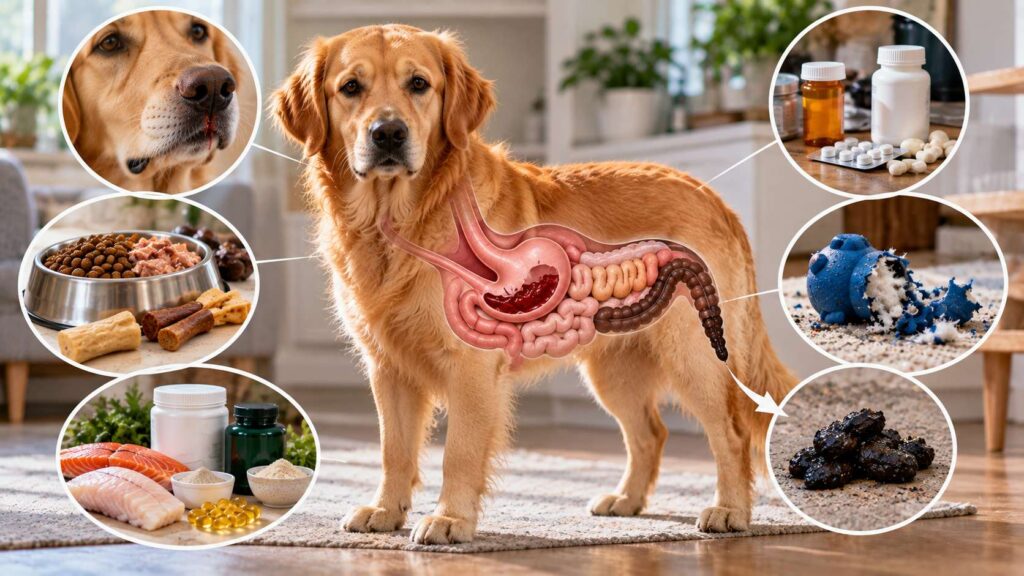
A list of possible causes can make everything sound equally likely when it isn’t. Your vet will weigh possible explanations against your dog’s age, medical history, stool appearance, symptoms and recent exposures.
It’s more useful to think about how the stool could have become dark than to try to match it to a disease yourself.
Something Changed the Colour Without Bleeding
Food, supplements and some medications can change stool colour without gastrointestinal bleeding.
For example, iron-containing products and bismuth-containing medicines can darken stool. Activated charcoal can also make stool appear black.
The important point is not to assume that a recent food or product automatically explains a black, tarry bowel movement. If the stool is genuinely tar-like, keeps recurring or appears alongside other concerning signs, contact your veterinarian rather than writing it off as diet.
Something May Be Irritating or Bleeding in the Digestive Tract
Bleeding can occur when tissue in the stomach or intestine becomes damaged or ulcerated. Gastrointestinal inflammation, ulcers and other injuries to the gut wall are among the problems a veterinarian may consider when melena is suspected.
Medication history matters here too. Some drugs can contribute to gastrointestinal irritation or ulceration in dogs, so tell your vet about everything your dog receives, including prescription medicines, supplements and any possible accidental exposure to human medication.
Something May Have Been Swallowed
Foreign material can injure the digestive tract or, in some cases, contribute to an obstruction. The significance depends on what was swallowed, where it is and whether it has caused damage.
Tell your vet promptly if your dog may have swallowed:
- Bone fragments
- Toy pieces
- Fabric or clothing
- Other non-food objects
Also mention recent nose or mouth bleeding because swallowed blood can later appear as dark stool.
Medication or Toxic Exposure May Be Part of the Story
Review more than your dog’s prescribed medication. Consider:
- Current veterinary medicines
- Recently changed or stopped medicines
- Supplements
- Human medications your dog could have reached
- Rodent-control products or other possible toxins
Human painkillers and anti-inflammatory medicines can be dangerous to dogs, and some exposures can contribute to gastrointestinal injury or bleeding. Certain rodent-control products can also interfere with normal blood clotting.
Do not give human painkillers, stomach remedies or other medications in an attempt to treat black stool unless your veterinarian specifically tells you to do so.
Warning: Contact a veterinarian promptly if black or tarry stool occurs with marked weakness, pale gums, collapse, repeated vomiting, vomiting blood or coffee-ground-like material, abdominal pain, breathing difficulty, significant ongoing diarrhoea, refusal to eat, unusual bruising or bleeding, or suspected medication, toxin or foreign-object ingestion. Repeated or persistent black, tarry stools also warrant veterinary attention. The appropriate urgency depends on the whole situation rather than a fixed “wait 24 hours” rule.
Less Common but Important Medical Causes
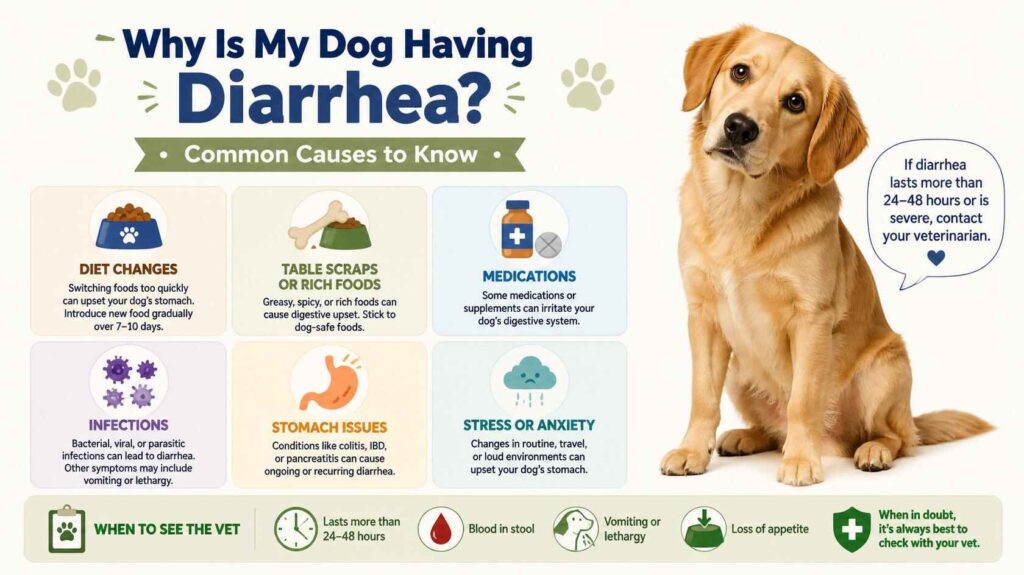
Some causes are less common but still important because they can affect how urgently your dog needs veterinary care:
- Clotting disorders, which can cause abnormal bleeding
- Certain infections that may affect the digestive tract or blood clotting
- Parasites, depending on your dog’s location, exposure and preventive care
- Systemic illness that can contribute to gastrointestinal disease or bleeding
- Tumours or other growths in the digestive tract, which may be considered particularly in older dogs or when signs persist
In the UK, lungworm is one example vets may consider when unexplained bleeding occurs, depending on a dog’s exposure and preventive treatment.
This list doesn’t mean your dog has one of these conditions. It explains why your vet may ask questions that seem unrelated to the stool itself and why the underlying cause can’t be identified from colour alone.
The Same Black Stool Can Mean Different Things in Different Situations
The surrounding clues often matter more than the colour by itself. These examples show how the picture can change; they are not diagnoses.
One Very Dark, Formed Stool After a Diet Change
If your dog is bright, eating normally and has passed one unusually dark but otherwise formed stool after a diet change, food may be part of the explanation.
However, don’t assume diet is responsible if the stool is genuinely black or tarry. Note what your dog ate, photograph the stool if possible, and contact your vet if the change repeats or you’re unsure whether you’re seeing melena.
Repeated Black, Sticky Stools With Reduced Appetite
Repeated stools that are genuinely black, sticky or tar-like are more concerning, particularly when your dog is also eating less or behaving differently.
That combination deserves prompt veterinary advice rather than continued home monitoring.
Black Stool With Vomiting
Vomiting alongside black stool adds another important clinical sign. Contact your vet, particularly if the vomiting is repeated or your dog seems unwell.
Vomiting fresh blood or dark material resembling coffee grounds is a red flag and requires prompt veterinary attention.
Black Stool With Pale Gums or Weakness
Pale or white gums, marked weakness or collapse alongside black, tarry stool can indicate significant illness or blood loss.
Treat this as an emergency and seek veterinary care immediately rather than waiting for another bowel movement.
Black Stool After Nose or Mouth Bleeding
Blood swallowed during a nosebleed or from bleeding inside the mouth can later be digested and contribute to dark stool.
That doesn’t mean the situation should automatically be dismissed. Your vet may still need to determine why the original bleeding occurred, especially if it was unexplained, heavy or recurrent.
Possible Access to Human Medication, Toxins or a Foreign Object
If your dog may have swallowed human medication, rodent-control products or a foreign object, don’t wait for more symptoms before seeking professional advice.
Contact your veterinarian or an emergency veterinary service promptly. If you have the packaging or product label, keep it available and be ready to explain what your dog may have swallowed, approximately how much and when it happened. Don’t induce vomiting or give a home remedy unless a veterinary professional specifically instructs you to do so.
Signs That Change the Situation

Veterinary Warning
Seek urgent veterinary advice if black or tarry stool occurs with:
- Pale or white gums
- Marked weakness, unusual lethargy or collapse
- Repeated vomiting
- Fresh blood or coffee-ground-like material in vomit
- A painful, tense or swollen abdomen
- Difficulty breathing
- Significant or continuing diarrhoea
- Refusal to eat
- Unusual bruising or bleeding elsewhere
- Suspected poison or human-medication exposure
- Suspected foreign-object ingestion
- Repeated or persistent black, tarry stools
Collapse, breathing difficulty, marked weakness, very pale gums or suspected serious poisoning should be treated as emergencies.
“But My Dog Is Acting Normal”: What Does That Tell You?
Normal Behaviour Is Useful Information, Not an All-Clear
A dog that remains bright, active and interested in food gives your vet useful information. However, normal behaviour doesn’t rule out gastrointestinal bleeding or another underlying problem, particularly early in its course.
Use behaviour as one clue alongside stool appearance, recurrence, medications, possible exposures and other symptoms—not as proof that everything is fine.
What If It Happened Only Once?
One unusually dark stool and repeated black, tarry stools are different situations, but there isn’t a reliable rule that says a single episode is automatically safe.
If the stool was simply darker than usual and your dog remains well, record what you saw and watch carefully for further changes. If it was genuinely black and tarry, you can’t explain the change, or you’re uncertain whether it could be melena, contact your vet for case-specific advice.
What If the Stool Is Black but Firm?
Being formed doesn’t rule out melena. A stool can hold its shape and still contain digested blood.
Pay attention to the combination of colour, stickiness or tar-like appearance, recurrence and how your dog is behaving, rather than using firmness alone to decide whether the stool is concerning.
What If There’s No Diarrhoea?
Melena doesn’t have to occur with diarrhoea. A dog can pass formed black or tarry stool.
There’s also no universal “wait 24 hours” rule for unexplained black stool. Your dog’s age, medical history, medications, possible exposures, stool appearance and accompanying symptoms all affect urgency.
What to Record Before Speaking to Your Vet
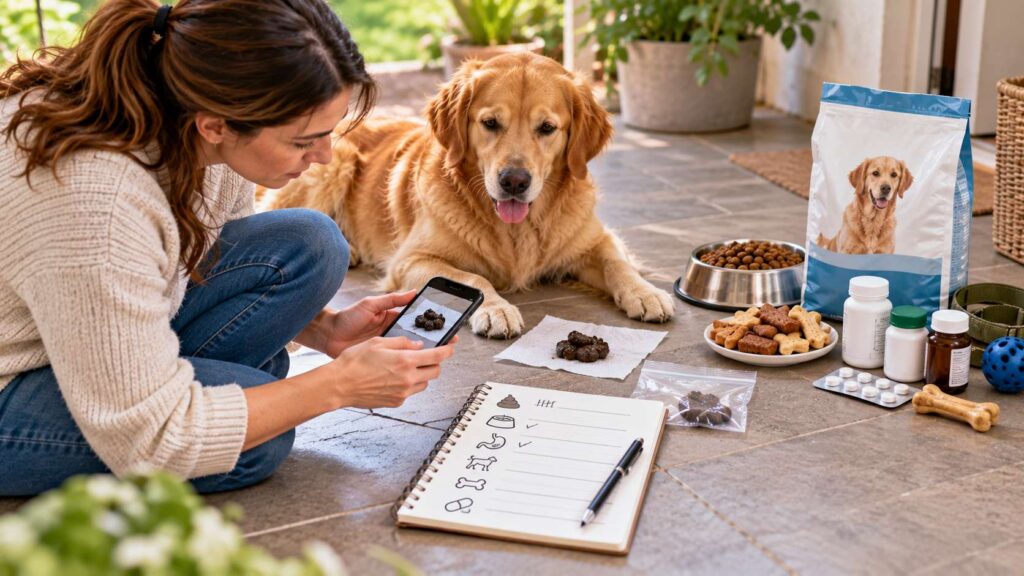
A short timeline can be more useful than trying to remember everything during the appointment. Record:
- When the last normal bowel movement occurred
- When you first noticed dark or black stool
- How many abnormal stools your dog has passed
- Whether the stool was dark brown or genuinely black
- Whether it was formed, soft, watery, sticky or tar-like
- A clear photograph, if available
- Vomiting, appetite changes, weakness or abdominal discomfort
- Recent food, treat or chew changes
- Current medications
- Recently started, changed or stopped medications
- Supplements
- Possible access to human medication or toxins
- Bin raiding or scavenging
- Anything your dog might have swallowed
- Recent nose or mouth bleeding
- Unusual bruising or bleeding elsewhere
If you can safely collect a fresh stool sample and your veterinary clinic wants one, follow their instructions for storing and bringing it in.
What Your Veterinarian May Need to Work Out
The History Comes First
Your observations can narrow the possibilities before testing begins. Your vet will want to know about the timeline, stool appearance, diet, medications, possible exposures and any other symptoms.
Mention anything unusual even if it seems unrelated. A recent nosebleed, medication change or missing household item can sometimes be an important clue.
Physical Examination
Your veterinarian may assess your dog’s gum colour, hydration, heart rate and abdomen, alongside other findings relevant to the history.
This helps put the stool change into context and determine whether further investigation is needed.
Tests Depend on What the Vet Finds

Not every dog with dark stool needs every test. Depending on the history and examination, your vet may recommend:
- Blood tests, including a complete blood count and biochemistry profile
- Urinalysis
- Faecal or parasite testing
- X-rays
- Abdominal ultrasound
- Endoscopy or other investigations when indicated
The aim isn’t simply to confirm that the stool is black. It’s to determine whether bleeding is occurring, how your dog has been affected and what underlying problem needs treatment.
Treatment Depends on the Cause
There is no single treatment for black stool because black stool is a sign, not a diagnosis.
Treatment may involve addressing a medication or dietary issue, treating gastrointestinal disease, managing an ingested foreign object or toxin, or providing supportive or hospital care when a dog is significantly unwell. What happens next depends on the underlying cause and your dog’s condition.
Don’t start, stop or change prescribed medication without speaking to the veterinarian who is treating your dog.
Common Mistakes That Make Things Harder to Assess
- Assuming every dark stool means internal bleeding
- Assuming dark food definitely explains black stool
- Looking at colour without considering texture and recurrence
- Waiting for bright red blood before taking bleeding seriously
- Treating normal appetite or behaviour as proof that nothing is wrong
- Giving human stomach remedies or pain medication
- Leaving supplements off the medication list
- Forgetting about possible accidental human-medication exposure
- Changing several foods at once while trying to identify the cause
- Ignoring recent nose or mouth bleeding
- Cleaning up before taking a useful photo or recording what you saw
- Trying to diagnose the underlying disease from a stool photograph

Quick Tips for Making a Better Decision
- Think pattern, not colour alone
- Compare the stool with what’s normal for your dog
- Pay attention to texture and recurrence
- Check your dog’s behaviour and other symptoms
- Review medications, supplements and possible exposures
- Photograph unusual stool and record when it happened
- Don’t self-medicate suspected gastrointestinal bleeding
- Contact your vet when you’re uncertain, especially if red flags are present
A Better Question Than “Why Is It Black?”
It’s natural to wonder which disease caused the change. A more useful question is: what did the stool actually look like, has it happened again, how is my dog otherwise, and what could they have eaten or accessed?
That gives you four useful clues: appearance, recurrence, accompanying signs and exposure history. Looking at them together is more informative than trying to diagnose the problem from colour alone, and it gives your vet a much clearer starting point.
Key Takeaways
- Dark stool and genuinely black, tarry stool aren’t the same thing.
- Melena is black, tarry stool containing digested blood; other things can also make stool look unusually dark.
- Food, supplements, medications and swallowed blood can affect stool colour.
- Repeated black, sticky or tarry stools warrant veterinary advice.
- Pale gums, marked weakness, collapse, repeated vomiting or suspected poisoning can make the situation urgent.
- A dog acting normally is useful information, but it doesn’t rule out an underlying problem.
- Photos, timing, symptoms and a complete medication and supplement list can help your vet assess the situation.
Final Thoughts
Finding unexpectedly black poop can be worrying, but the colour alone doesn’t tell you what’s wrong. Sometimes there’s a straightforward explanation, such as something your dog ate or a product they’re taking. In other cases, black, tarry stool can be a sign of digested blood that needs veterinary investigation.
You don’t need to diagnose the cause yourself. Look at the stool carefully, check your dog as a whole, record anything that has changed, and consider what they may have eaten or accessed. If the stool is genuinely black and tarry, keeps happening, has no clear explanation or appears alongside warning signs, contact your vet.
If you’re learning more about canine digestive health, related topics such as blood in dog stool, vomiting, poisoning, diarrhoea and when to seek veterinary care can provide useful context.
Frequently Asked Questions
1. Can a Dog’s Poop Be Black Without It Being Blood?
Yes. Some foods, iron-containing supplements, activated charcoal and certain medications or products can make stool look unusually dark or black.
However, don’t use a recent food or supplement as proof that bleeding isn’t involved. If the stool is genuinely black and tarry, keeps recurring or your dog has other symptoms, contact your vet for advice.
2. Can Swallowed Blood From a Nosebleed Turn Poop Black?
Yes. Blood swallowed from the nose or mouth can be digested as it passes through the gastrointestinal tract and may contribute to dark or black stool.
Tell your vet about any recent nosebleed, bleeding gums or mouth injury. Even if swallowed blood explains the stool colour, the reason your dog was bleeding may still need investigation.
3. Can a Dog Have Melena Without Diarrhoea?
Yes. Melena refers to black, tarry stool containing digested blood; it doesn’t mean the stool must be watery.
A dog can pass stool that still holds its shape while having characteristics concerning for melena. That’s why colour and texture should be considered together.
4. Is Black Stool More Worrying in a Puppy?
Black or tarry stool in a puppy deserves prompt veterinary advice, particularly if it occurs with vomiting, diarrhoea, poor appetite, weakness or unusual behaviour.
Young puppies can become unwell quickly when gastrointestinal illness causes fluid loss or reduced food intake, so avoid relying on prolonged home monitoring when concerning signs are present.
5. Should I Take a Stool Sample or a Photo to the Vet?
A clear photo can be very useful because it records the stool’s original colour and appearance. Your veterinarian may also request a fresh stool sample if testing is appropriate.
If possible, photograph the stool in good lighting and ask your veterinary clinic whether they want a sample and how they would like it collected and stored.
6. Can Medications or Supplements Turn Dog Poop Black?
Yes. Iron-containing supplements and some products containing bismuth can darken stool. Other medications may be relevant for a different reason: certain drugs can contribute to gastrointestinal irritation, ulceration or bleeding in some dogs.
Give your vet a complete list of prescription medicines, supplements, recently changed or stopped medications, and anything your dog may have accessed accidentally. Don’t give human medicines or stop a prescribed veterinary medication without professional advice.
7. What If My Dog Only Had One Black Bowel Movement?
One unusually dark stool is different from repeated black, tarry stools, but there isn’t a reliable rule that says a single episode is automatically harmless.
If the stool was simply darker than normal and your dog remains well, record what you saw and watch carefully for further changes. If it was genuinely black and tarry, you can’t explain the change, or your dog develops vomiting, weakness, pale gums, appetite loss or other concerning signs, contact your veterinarian rather than waiting for another episode.
#. Related Articles: