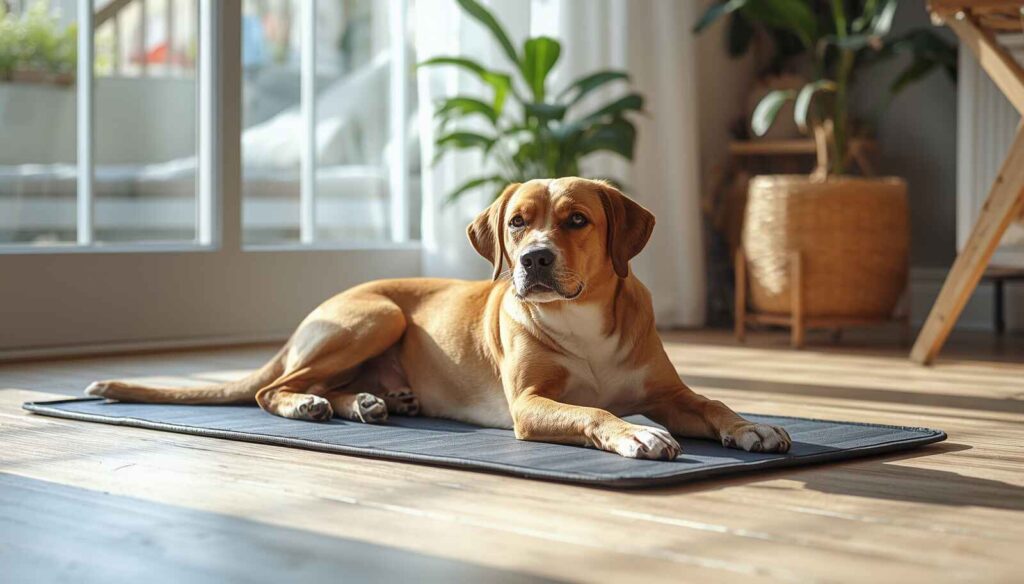
How does a pet cooling mat work? It works by transferring heat away from your dog’s body through direct contact, helping them rest more comfortably in warm conditions.
Your dog has abandoned their expensive orthopaedic bed again and stretched out on the kitchen tiles. Sound familiar? Dogs naturally seek cooler surfaces when they feel warm, and a cooling mat is designed to offer the same kind of relief in a softer, more portable form.
A cooling mat does not manufacture cold like a refrigerator. Most models work by allowing heat to move from your dog’s warmer body into a cooler material that temporarily absorbs and spreads it. The effect is limited, however, and depends on the mat’s design, the room temperature, how much of your dog’s body touches it, and how long it has been in use.
Understanding those limits helps you choose the right mat, use it safely, and recognise when your dog needs more than a cooler place to lie down. A cooling mat may improve comfort in warm conditions, but it cannot prevent every case of overheating or treat heatstroke.
Quick Answer: How Cooling Mats Actually Work
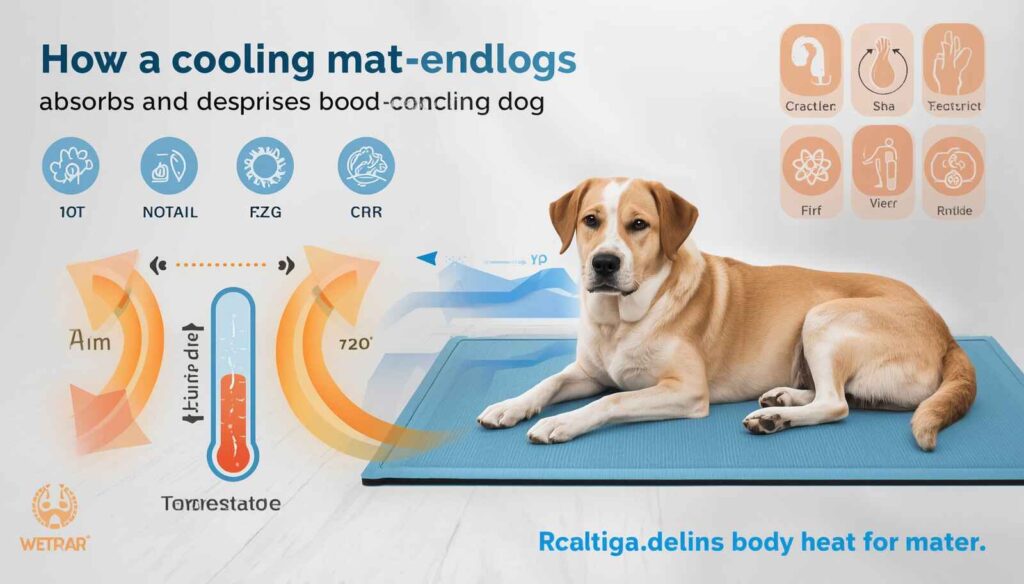
In one sentence: Heat naturally moves from your dog’s warmer body into the cooler mat, much as a cold drink gradually warms when left on a table.
- Electricity needed? Only for powered cooling beds; most cooling mats require none.
- Refrigeration needed? It depends on the design. Many gel and water-filled mats work at room temperature, while refrigerated inserts must be chilled before use.
- Best used for: Comfortable resting in a warm but otherwise safe, shaded and ventilated environment.
- Not suitable for: Treating a dog that is already showing signs of heatstroke.
- Golden rule: Your dog should always be able to move on and off the mat voluntarily.
The Science: Where Does the Heat Actually Go?
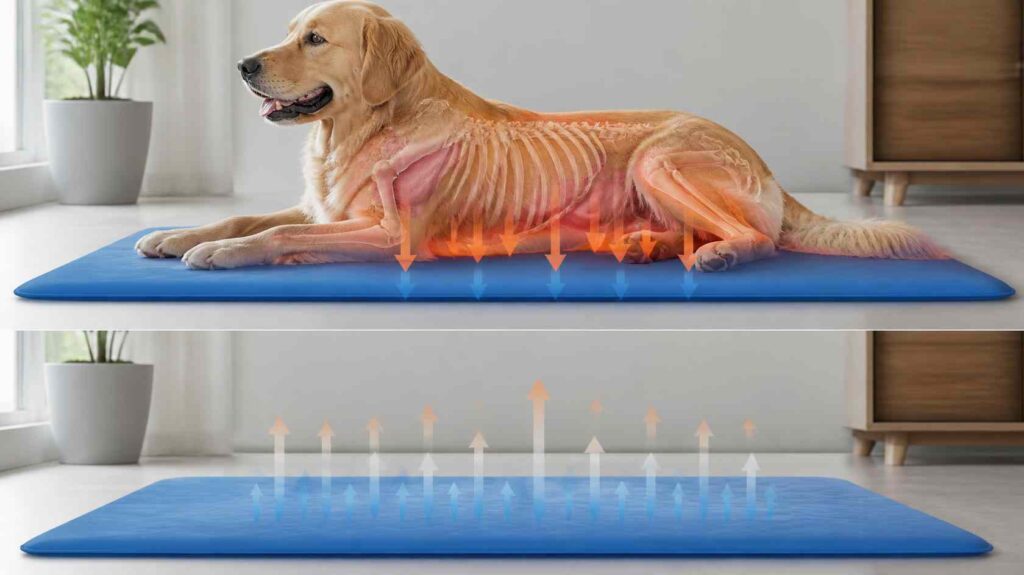
Most passive cooling mats rely on conduction, which is the transfer of heat between surfaces that touch.
Your dog’s body is warmer than the mat. When the chest, abdomen, flank or inner thighs rest against the surface, heat begins moving from the warmer body into the cooler material. The larger the contact area, the more opportunity there is for heat transfer. This is why a mat that only fits beneath your dog’s paws is unlikely to provide the same benefit as one that supports most of the torso.
As the mat absorbs heat, it gradually warms. The temperature difference between your dog and the mat becomes smaller, so heat transfer slows and the cooling sensation fades. That is normal and does not necessarily mean the product has stopped working.
Once your dog moves away, a passive mat can release some of its stored heat into the surrounding environment. Manufacturers often describe this rest period as “recharging.” Recovery is generally faster in a cool, shaded and well-ventilated room than in a hot, enclosed space. A passive mat cannot remain substantially cooler than its surroundings indefinitely.
You may also see gel mats described as pressure-activated. Your dog’s weight can improve contact with the surface and help distribute the internal gel, but pressure alone does not create unlimited cold. Unless a manufacturer identifies a specific pressure-triggered mechanism, the main process is still heat moving from the dog into the mat.
Not All Cooling Mats Work the Same Way
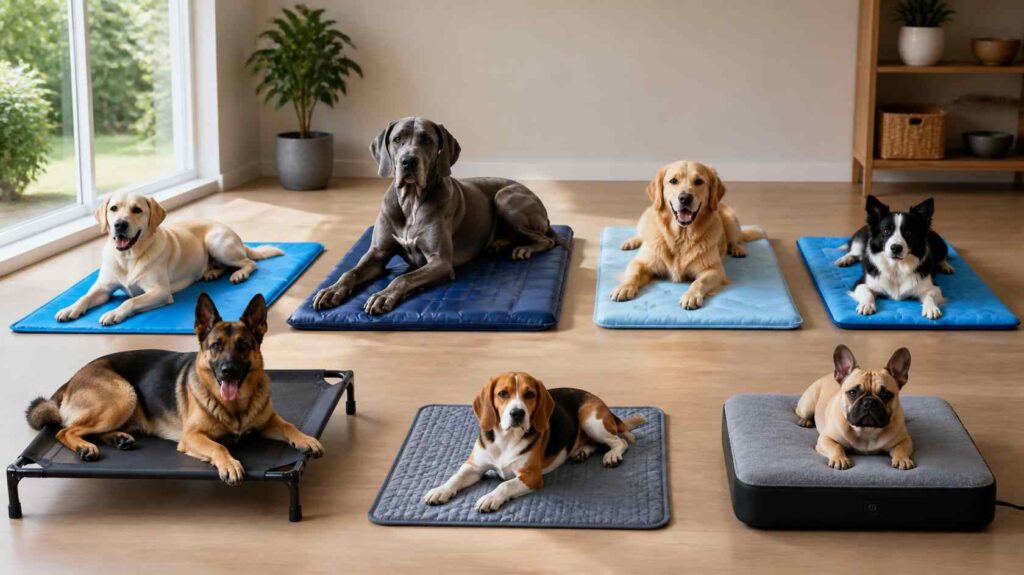
The right option depends on your dog’s size, mobility, chewing habits, environment and how the mat will be used.
Self-Cooling Gel Mats
Gel mats absorb body heat through direct contact. Most require no water, electricity or refrigeration, making them convenient for indoor use, crates and travel breaks.
Their cooling effect becomes weaker as the gel warms, so the mat may need a period without the dog on it before it feels cooler again. Recharge times vary by product and room conditions; follow the manufacturer’s instructions rather than relying on a universal estimate.
Gel mats are not suitable for every pet. Puppies, diggers and determined chewers may puncture the cover and gain access to the filling. Even when a gel is labelled non-toxic, it should not be treated as safe to swallow.
Water-Filled Cooling Pads
Water-filled pads use water’s capacity to absorb and store heat. The owner usually fills the pad and may be able to adjust the amount of water to change its firmness.
These pads can provide a broad, supportive surface for larger dogs, but they are heavier to move and may be awkward for travel. They can also leak if damaged. Most do not need refrigeration unless the manufacturer specifically recommends it.
Phase-Change Mats
Phase-change mats contain a material designed to change physical state within a particular temperature range. This can provide steadier, more controlled cooling than a basic gel mat.
Performance, preparation and recharge requirements vary widely. Some activate at room temperature, while others need refrigeration. They are often more expensive, so owners should check the stated operating temperature, active cooling area and care instructions before buying.
Ice-Insert or Refrigerated Pads
These products contain removable inserts or materials that store cold after being chilled. They usually provide a stronger initial cooling sensation than a passive room-temperature mat.
They also require preparation and closer supervision. Condensation may make the surface slippery, and frozen inserts can become hard or excessively cold against thin-skinned, very young, elderly or immobile pets. Never freeze a product unless its instructions specifically allow it.
Elevated Mesh Beds
Elevated beds work differently. Instead of drawing heat into a gel or water layer, they lift the dog away from warm flooring and allow air to circulate underneath.
They may be useful for dogs that chew soft mats or live in humid environments where evaporative products work poorly. However, they offer less direct contact cooling and may be difficult for dogs with arthritis, weakness or poor balance to climb onto.
Evaporative Fabric Mats
Evaporative mats are soaked or dampened before use. As water evaporates from the fabric, it carries away heat.
They are lightweight and can work well in dry, breezy conditions. Their effectiveness drops in high humidity because water evaporates more slowly. They also need regular rewetting and should not remain damp against the skin for prolonged periods without checking for irritation.
Powered Cooling Beds
Powered cooling beds use a fan, circulating water system or another active mechanism to provide more continuous cooling.
They may be useful in controlled indoor settings, but they require electricity and careful setup. Cables must be protected from chewing, electrical components must remain dry, and the unit should be used exactly as directed by the manufacturer.
Comparison: Which Cooling Type Suits Your Dog?
| Cooling Type | How It Cools | Setup Needed | Best For | Main Downside |
|---|---|---|---|---|
| Gel mat | Absorbs body heat through direct contact | None for most products | Indoor rest breaks and travel | Warms during use; puncture and chewing risk |
| Water-filled pad | Water absorbs and stores heat | Filling and adjustment required | Larger or heavier dogs | Heavy to move and may leak |
| Phase-change mat | Uses material that changes state within a set temperature range | Usually minimal, but product-specific | Repeated daily use and steadier cooling | Higher cost |
| Ice-insert pad | Uses cold stored through refrigeration or freezing | Pre-chilling required | Short, supervised cooling sessions | Condensation; may become hard or excessively cold |
| Elevated mesh bed | Increases airflow beneath the body | Light assembly | Humid climates, outdoor shade and chewers | Less direct contact cooling |
| Evaporative fabric | Removes heat as water evaporates | Must be soaked or dampened | Dry, breezy conditions | Less effective in high humidity |
| Powered bed | Uses a fan, pump or circulating water system | Electricity and safe cable placement | More continuous indoor cooling | Higher cost, cables and maintenance |
What Affects How Well a Mat Performs
Everyday conditions often matter as much as the product itself.
- Room temperature: Passive mats work best when the surrounding air is cooler than your dog. In a hot, enclosed room, the mat warms faster and may recharge slowly.
- Contact area: A mat supporting the chest, abdomen or side of the body offers more useful heat transfer than one touching only the paws.
- Coat and body type: Thick fur acts as insulation, so heat may move into the mat more slowly. Large and overweight dogs may also warm a small mat quickly.
- Surface underneath: A cool, hard floor generally supports better performance than thick carpet, which traps heat and insulates the underside.
- Covers and blankets: Thick bedding between your dog and the mat reduces direct contact and weakens conductive cooling.
- Airflow: Ventilation helps the mat release stored heat between uses. An enclosed crate, conservatory or parked vehicle can quickly become unsafe regardless of the mat.
- Direct sunlight: Sunlight can heat the mat before your dog lies on it, reducing or reversing the benefit.
- Recent activity: A dog returning from exercise may be warmer than usual and should first be moved into a cool, shaded area and monitored carefully. A mat should support recovery, not replace assessment for overheating.
Matching the Mat to Your Dog
Flat-Faced Breeds
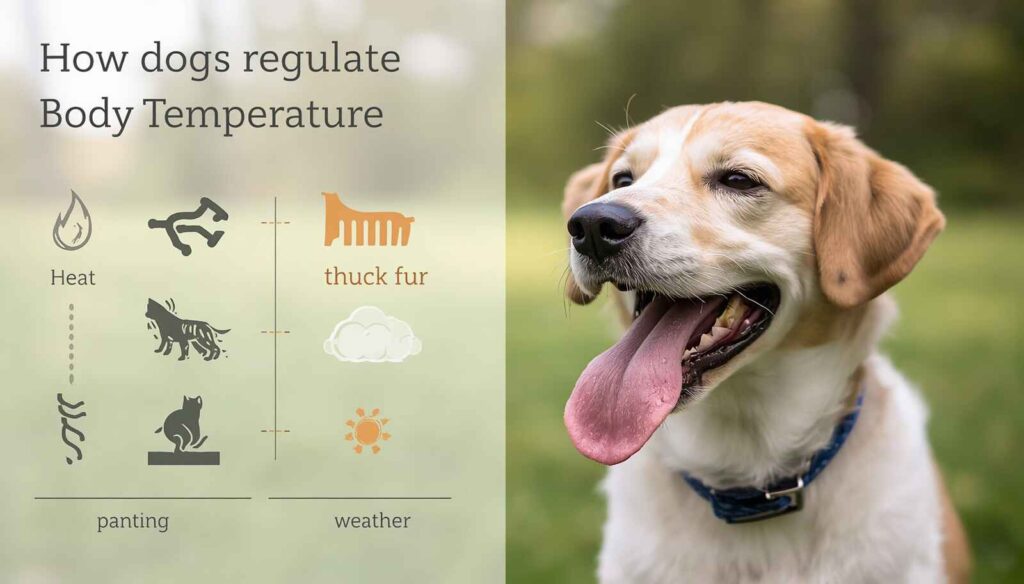
Bulldogs, Pugs, French Bulldogs and other brachycephalic dogs can struggle to lose heat efficiently because of their shortened airways. A cooling mat may improve comfort, but it should be only one part of a wider plan that includes shade, ventilation, access to water and avoiding exercise during hot periods.
Senior Dogs
For older dogs, stability and ease of movement matter as much as cooling. Look for a low-profile mat with a non-slip base and enough space for the dog to reposition comfortably. Avoid surfaces that slide, bunch or curl at the edges.
Dogs With Arthritis
A thin gel mat may feel cool but offer little joint support. Many arthritic dogs are more comfortable on an orthopaedic bed with a cooling layer or on a supportive bed positioned in a cooler part of the home.
Puppies and Chewers
Puppies and dogs that chew, scratch or dig should not use gel-filled mats unsupervised. A durable elevated mesh bed may be a safer option, although no soft product should be considered completely chew-proof.
Large or Thick-Coated Dogs
Measure your dog while they are lying naturally, not standing. The active cooling area should be large enough for meaningful torso contact. Check whether the advertised dimensions include seams or borders that do not cool.
Cats and Small Pets
Cats may use a cooling mat voluntarily, often choosing only part of the surface. Small mammals may chew the cover or have different temperature needs, so use only a suitable product and seek species-specific veterinary advice where needed.
Setting It Up Safely
Before first use, inspect the mat for:
- Tears or punctures
- Bulging or separated layers
- Hardened or uneven filling
- Leaks
- Strong or unusual odours
- Damaged cables on powered products
Place it on a flat, stable surface in a shaded, well-ventilated area. Keep it away from direct sunlight, heaters and hot windows.
Introduce the mat gradually. Put it beside your dog’s usual bed, allow them to investigate it at their own pace and reward calm, voluntary contact. Never force or restrain a pet on the surface.
Keep part of the resting area uncooled so your dog can move away whenever they choose. In a crate, make sure the mat does not block ventilation, bunch beneath the dog or cover the entire floor if no warmer resting area remains.
Mistakes That Undo the Benefit
Expecting an Ice-Cold Surface
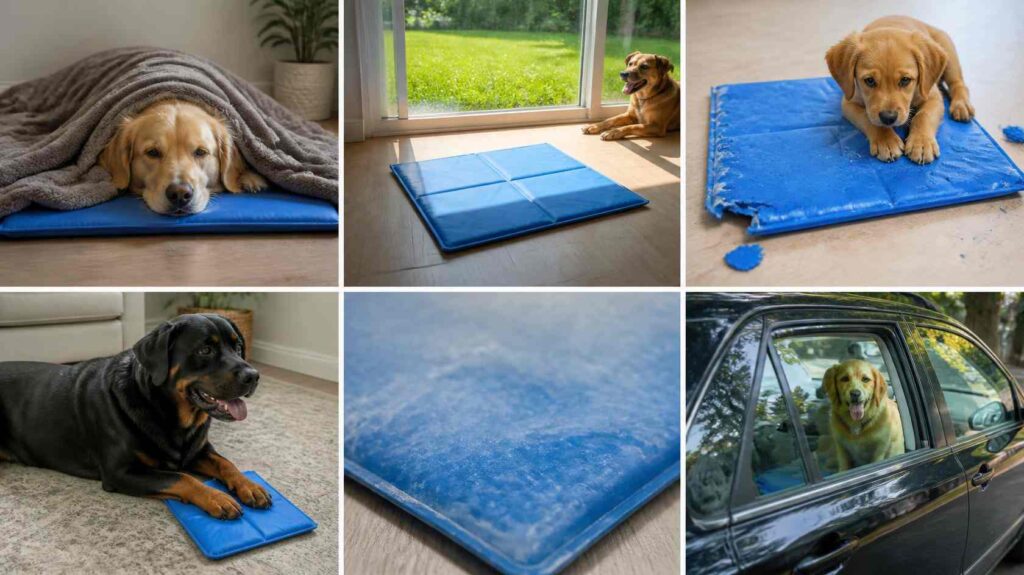
Most passive mats provide moderate, temporary cooling rather than a refrigerated sensation. A mat that feels less cool after use may simply have absorbed heat and need time to reset.
Buying a Mat That Is Too Small
A mat that fits only under the paws provides limited contact cooling. Choose one that supports the chest, abdomen or side of the body.
Covering It With Thick Bedding
A thick towel, blanket or padded bed acts as insulation and reduces heat transfer. Use a cover only if the manufacturer permits it, and choose the thinnest practical option.
Leaving It in Direct Sunlight
A mat exposed to sun or placed on hot decking, asphalt or artificial grass may absorb environmental heat and become uncomfortable.
Freezing the Wrong Product
Freezing a mat that is not designed for it can damage the seams or filling, create hard pressure points and make the surface excessively cold. Always follow the product instructions.
Ignoring Chew Damage
Remove the mat immediately if it is punctured or leaking. “Non-toxic” does not mean safe to swallow, and damaged material may still cause digestive upset or a blockage.
Relying on the Mat During Heatstroke
A cooling mat is not first aid for a dog with persistent heavy panting, excessive drooling, weakness, vomiting, confusion, poor coordination, collapse or seizures. Move the dog out of the heat and contact a veterinarian immediately rather than waiting to see whether the mat helps.
When a Mat Isn’t Enough: Vet Guidance
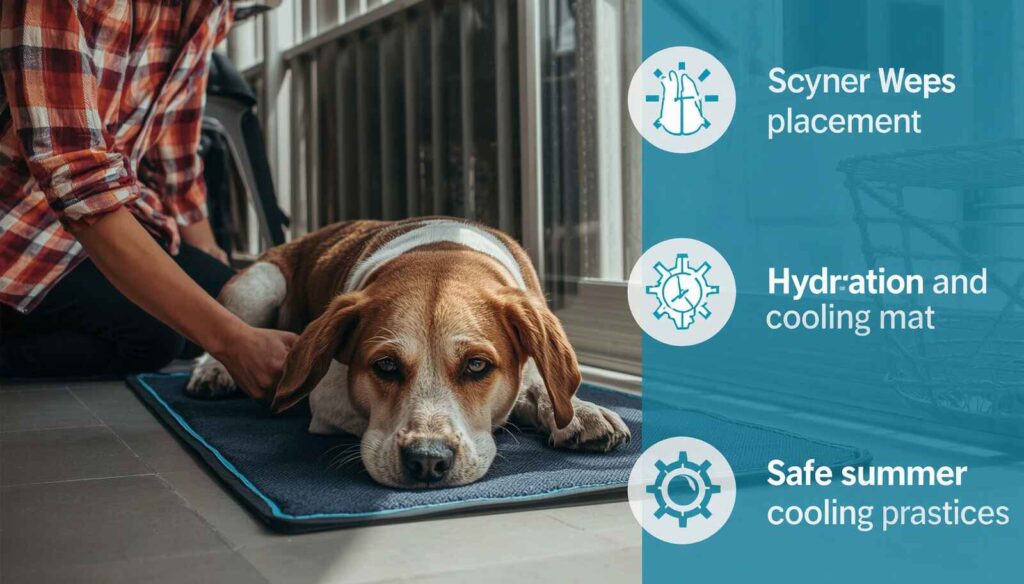
A cooling mat is appropriate when your dog is alert, responsive, breathing comfortably and simply choosing a cooler place to rest. It is not a treatment for overheating or heatstroke.
Seek urgent veterinary help if your dog develops:
- Heavy or frantic panting that does not settle
- Excessive drooling
- Bright red, very pale or bluish gums
- Vomiting or diarrhoea
- Weakness or unusual drowsiness
- Confusion or poor coordination
- Collapse or seizures
The PDSA’s guidance on the signs of heatstroke in dogs explains why symptoms such as frantic panting, excessive drooling, vomiting, weakness, confusion and collapse should never be ignored.
Move your dog to a shaded, well-ventilated area, contact a veterinarian immediately and follow their first-aid instructions while arranging transport. Do not wait to see whether a cooling mat improves the symptoms. Heatstroke can continue damaging the brain, kidneys, liver and clotting system even after a dog appears to cool down, so veterinary assessment is essential.
Dogs at greater risk include flat-faced breeds, overweight dogs, puppies, seniors, thick-coated breeds and pets with heart, airway or mobility problems. These dogs may overheat sooner and should be monitored particularly closely in warm weather.
Warning: Never leave a dog in a parked vehicle because they have a cooling mat, water or an open window. A mat cannot prevent the rapid and dangerous rise in temperature inside a car.
The Bottom Line
A cooling mat is a useful comfort aid, not a medical device. It works by allowing heat to move away from your dog’s body through direct contact, and its performance depends on the mat type, room temperature, airflow, size and your dog’s coat.
Used alongside fresh water, shade, suitable exercise times and good ventilation, a cooling mat can make warm-weather rest more comfortable. Used instead of those precautions, it will not protect a dog from overheating.
Frequently Asked Questions
1.How long does a cooling mat actually stay cool?
It depends on the design, room temperature, your dog’s size and how long they remain on it. A passive gel mat may feel less cool after a relatively short period of continuous use, while water-filled or powered products may remain effective longer. Use the manufacturer’s stated cooling and recharge times rather than assuming every mat performs the same way.
2.Can I put my dog’s cooling mat in the freezer?
Only if the manufacturer specifically says the product is freezer-safe. Freezing an unsuitable mat can damage its seams or filling and create hard, excessively cold pressure points.
3.Does a cooling mat work through a thick double coat?
Yes, but heat transfer may be slower because dense fur acts as insulation. A correctly sized mat that allows contact with the abdomen, chest or inner thighs is likely to be more useful than one that touches only heavily coated areas.
4.Is it safe to leave a cooling mat in my dog’s crate all day?
Only when the product is suitable for crate use and your dog can move away from it. Avoid covering the entire floor, especially for puppies, seniors and dogs with limited mobility. Inspect the mat regularly for chewing, leaks, bunching or damage, and make sure it does not restrict ventilation.
5.My dog won’t go near the new cooling mat. What should I do?
Do not force them onto it. Place the mat beside a familiar bed or in a spot they already choose when warm. Allow your dog to sniff and explore it freely, and reward voluntary contact. Some dogs need time to adjust to the unfamiliar smell, sound or texture.
6.Are cooling mats safe for puppies?
They can be, but supervision is important. Puppies are more likely to chew, scratch or puncture soft mats. If your puppy is destructive, a durable elevated bed may be safer than a gel-filled product. Remove any damaged mat immediately.
7.Can a cooling mat prevent or treat heatstroke?
No. A mat may help a comfortable dog rest in warm conditions, but it cannot reliably prevent heatstroke and should never be used to treat it. Persistent heavy panting, drooling, weakness, vomiting, poor coordination or collapse require immediate veterinary attention.
#. Related Articles:
1. What Size Dog Bed Should I Get for My Dog?