You’re at the park. You call your dog’s name. They glance at you, then sprint toward a pigeon like you simply don’t exist. Sound familiar?
If your dog is perfectly behaved at home but acts like a completely different animal outdoors, you’re not alone — and you haven’t failed as an owner. This is one of the most common frustrations dog owners in the UK, Canada, and Australia experience, regardless of the breed or how much training they’ve done indoors.
The good news? There’s a clear explanation, and it’s fixable. Let’s break it down.
Your Dog Isn’t Being Stubborn — Here’s What’s Actually Happening
The first thing to understand is this: your dog is not ignoring you out of spite or dominance. That’s an outdated idea.
When a dog who listens perfectly at home suddenly “forgets” everything outside, it usually comes down to one core issue — the training hasn’t transferred to the new environment yet.
Dogs don’t naturally take a skill learned in one place and apply it everywhere. A “sit” learned in your kitchen doesn’t automatically mean “sit” at the local oval or on a busy high street. This is called lack of generalisation, and it’s completely normal in dog behaviour.
Think of it like this: if you learned to ride a bike on a quiet driveway, you’d still need practice before confidently riding through city traffic. Your dog is no different.
The Outside World Is Overwhelming — And Wildly Rewarding
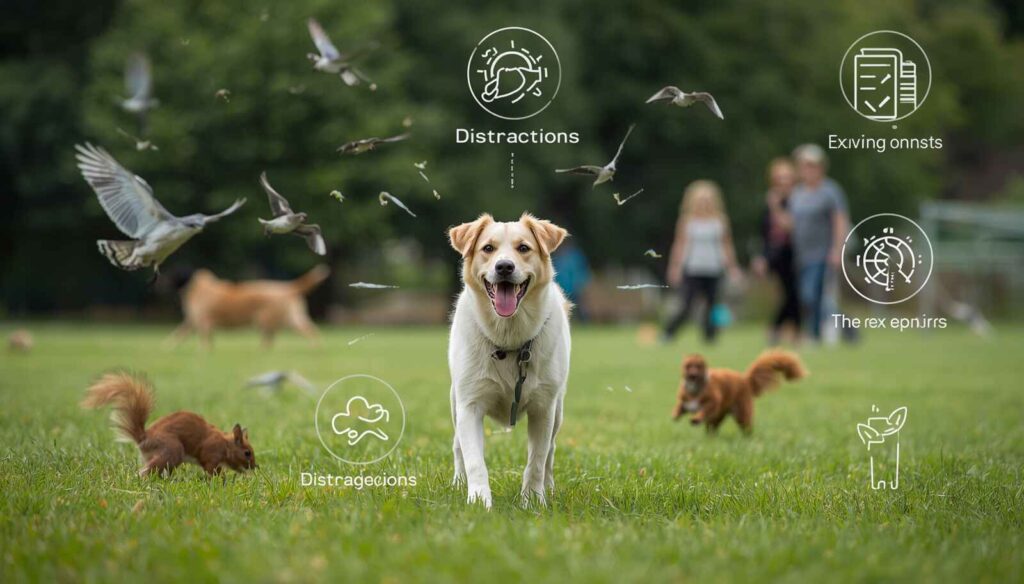
Here’s something most owners don’t realise: the outdoors is competing with you, and it’s winning.
Outside, your dog is hit with a flood of:
- Fresh smells from dozens of other animals
- The excitement of movement — birds, cyclists, other dogs
- New sounds, textures, and social opportunities
- Freedom (finally, no walls!)
All of this is deeply stimulating for a dog’s brain. Their arousal level shoots up, and in that state, the part of their brain that processes learned cues essentially goes offline.
When you ask your dog to “come” at the park and they ignore you, they’re not thinking “I know this command and I’m choosing not to comply.” They’re thinking absolutely nothing — they’re too flooded with sensory input to process language at all.
You May Be Asking Too Much, Too Soon
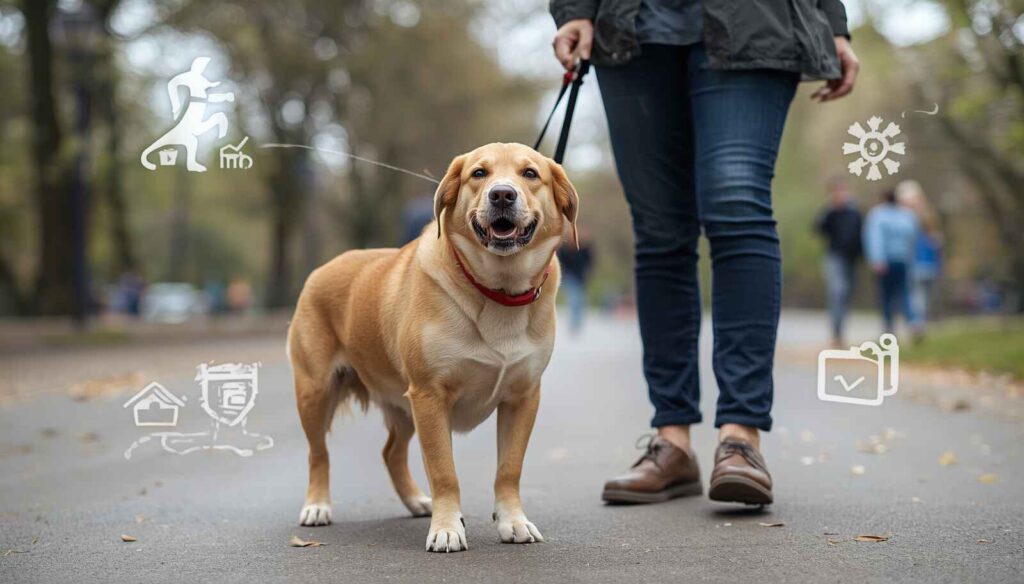
A lot of owners make the jump from indoor training straight to off-lead practice in a busy park. That’s a big leap.
It’s a bit like teaching someone to drive in an empty car park, then handing them the keys on a motorway roundabout. The skill is there — the environment is just too intense.
Outdoor training needs to be built in stages:
- Low-distraction outdoor spaces first — your back garden, a quiet street early in the morning
- On-lead practice in slightly busier areas before off-lead work
- Gradually increase distraction levels as your dog succeeds at each stage
Most dogs need far more repetitions in varied environments than owners expect. Don’t be disheartened — consistency is what closes the gap.
Your Rewards Might Not Be Competing
At home, a small kibble is exciting. Outside, that same treat barely registers.
When the environment is offering a smorgasbord of excitement — sniffs, sights, other dogs — your reward needs to be genuinely worth your dog’s attention.
High-value rewards that tend to work outdoors:
- Small pieces of cooked chicken or beef
- Cheese (a firm favourite in UK and Canadian training circles)
- Tuna paste squeezed from a tube
- A short game of tug with a favourite toy
The general rule: if your dog can take or leave it, the treat isn’t valuable enough for that setting. Save your dog’s absolute favourites exclusively for outdoor training — scarcity increases value.
Repeating the Command Makes Things Worse
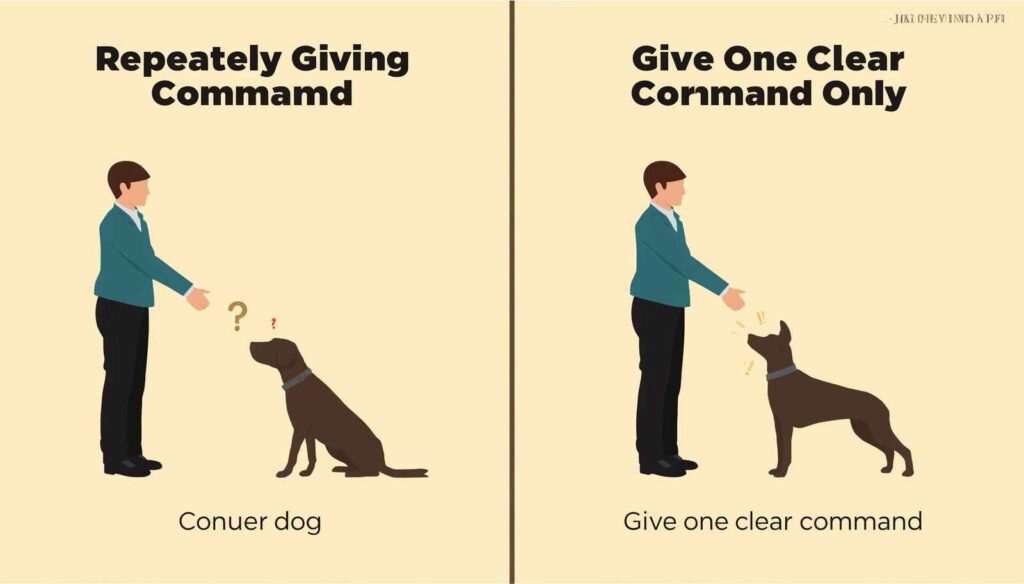
This is a trap almost every owner falls into. Your dog doesn’t sit, so you say “sit, sit, SIT!” — louder each time.
What this actually teaches your dog is that the first (or second, or third) cue doesn’t really matter. They learn to wait for the version with your frustrated tone — or they simply tune out the word entirely.
The fix: Say the cue once, clearly. If they don’t respond, don’t repeat it. Instead, use movement — take a step back, make yourself interesting, crouch down — then try again.
If they’re consistently not responding, the distraction level is too high. Move somewhere quieter and rebuild from there.
Could It Be Stress, Fear, or Over-Arousal?
Sometimes “ignoring” isn’t about training at all. It’s about emotional state.
A dog who seems to switch off or zone out outdoors might actually be operating in a state of anxiety or hyper-arousal. In that headspace, they literally cannot process commands — it’s a neurological response, not a choice.
Signs your dog might be emotionally overwhelmed outside:
- Panting heavily despite cool weather
- Constantly scanning the environment (can’t settle)
- Pulling frantically on the lead
- Freezing or refusing to move
- Barking or lunging at things
If this sounds like your dog, the priority isn’t obedience training — it’s helping them feel safe and calm first. A force-free trainer or behaviourist can help you identify triggers and work through them systematically.
What Actually Works: Practical Steps You Can Start Today
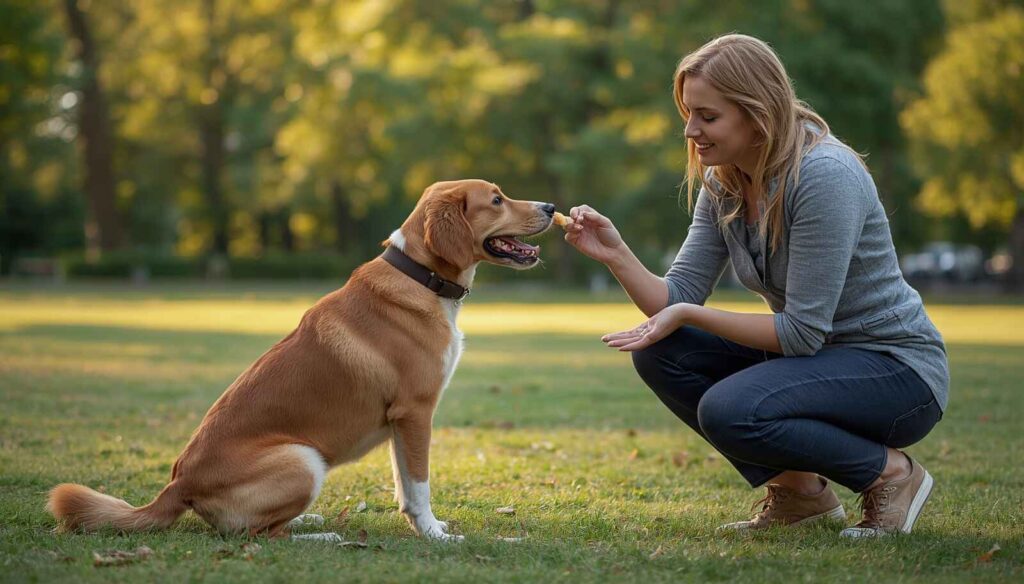
Start Where They Can Succeed
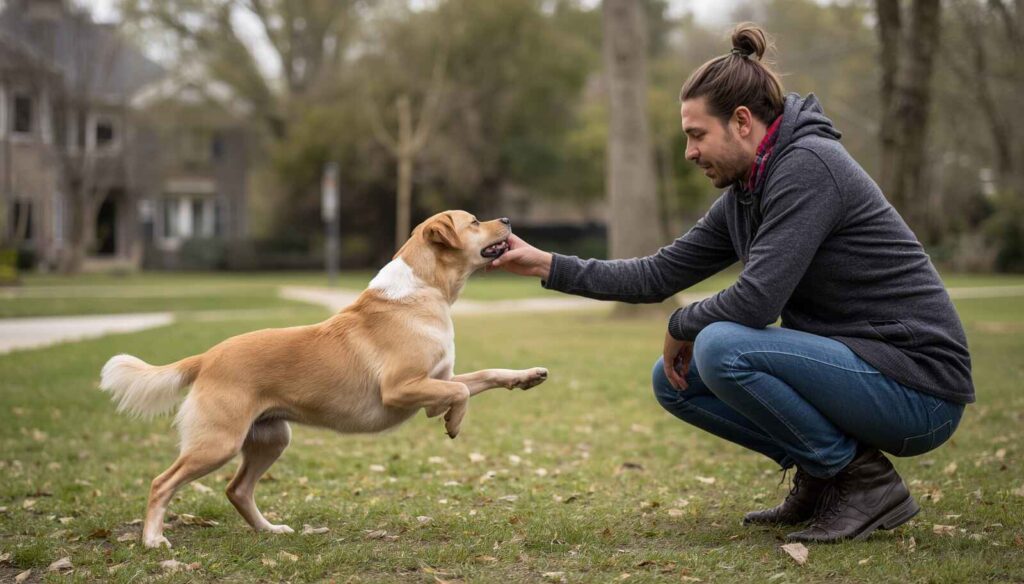
Take your dog to the quietest outdoor space you can find. A dead-end street at 7am. Your front garden. A field with no other dogs. Practice the same commands you’ve been doing indoors and reward generously.
The goal is to build a history of success in outdoor settings, one calm environment at a time.
Make Yourself More Interesting Than the Environment
Dogs respond to movement, unpredictability, and enthusiasm. If you stand still calling your dog’s name in a flat voice, you’re offering the least interesting thing in the entire park.
Try moving in the opposite direction. Crouch down. Make a funny sound. Be the most exciting option available. When your dog comes to you — celebrate like they’ve done something extraordinary (because to them, they have).
Reward Every Check-In
Does your dog glance back at you on a walk? Reward it. Every single time.
This builds what trainers call attention value — your dog starts to think that checking in with you is reliably worth doing. Over time, this becomes a habit that holds even in busier environments.
Use a Long Line for Safety and Training
A 5–10 metre long line gives your dog freedom to explore while keeping you in control and able to follow through on recall practice. It’s an essential tool for outdoor training and widely used by trainers across the UK, Australia, and Canada.
It lets you reward real-world behaviour without the risk of your dog running off entirely.
When to Get Professional Help

If you’ve been working consistently for several weeks and your dog’s recall outdoors is still unreliable — especially if they’re running off, ignoring an emergency cue, or showing signs of anxiety — it’s worth bringing in a professional.
Look for a trainer who uses reward-based, force-free methods. In the UK, check the APDT (Association of Pet Dog Trainers). In Australia, look for PPGA-affiliated trainers. In Canada, CAPPDT is a good starting point.
There’s no shame in getting help. It often saves months of frustration.
Frequently Asked Questions
1.My dog listens perfectly at home — why does everything fall apart outside?
Because the skill hasn’t been generalised yet. Dogs need to practise commands in many different environments before they can respond reliably anywhere. Home training is just the starting point.
2.Is my dog being deliberately disobedient?
Almost certainly not. Dogs don’t “defy” commands out of spite. What looks like defiance is usually a dog who is overwhelmed, undertrained in that environment, or responding to a reward that isn’t valuable enough.
3.Should I use better treats outside?
Yes — this is one of the simplest and most effective changes you can make. Save your dog’s absolute favourite treats exclusively for outdoor training sessions.
4.Why does repeating the command not help?
Repeating a cue teaches your dog to ignore the first few repetitions. Say it once, wait, and if there’s no response, reduce the distraction level instead of raising your voice.
5.My dog is fine off-lead in the garden. Can I go straight to off-lead at the park?
It’s better not to make that jump too quickly. The park has far more distractions, smells, and excitement than your garden. Build up gradually — on-lead in new environments first, then a long line, then off-lead as recall becomes reliable.
6.Could something medical be causing my dog to ignore me?
In some cases, yes. Hearing issues, pain, or neurological conditions can affect a dog’s responsiveness. If your dog has suddenly become less responsive after previously being reliable, a vet check is a sensible first step.
7.How long does it take to fix recall outdoors?
It varies hugely depending on the dog and the consistency of training. Some dogs improve in a few weeks; others take several months. Short, frequent training sessions in progressively busier environments tend to get results faster than infrequent long sessions.
Conclusion
If your dog ignores commands outside, it doesn’t mean you’ve done something wrong or that your dog is untrainable. It almost always comes down to the fact that outdoor environments are a completely different classroom — one your dog hasn’t fully graduated from yet.
The fix isn’t more repetition or louder commands. It’s building up slowly, rewarding generously, and making yourself worth listening to.
Start small. Be patient. Celebrate the small wins. Your dog wants to work with you — they just need the right conditions to show it.
#. Related Articles:
1. How to Train a Stubborn Dog to Sit?